


Selling clothing in the European Union involves more than selecting the right fabrics, developing a collection, and meeting quality expectations. Fashion brands must also demonstrate that their products are safe, identifiable, and supported by appropriate documentation.
The EU General Product Safety Regulation (GPSR) has made these responsibilities more explicit, particularly for brands selling online or sourcing garments from manufacturers outside the European Union.
For fashion businesses producing clothing in Turkey, understanding EU GPSR clothing compliance is an important part of preparing products for the European market. Manufacturers, importers, and brand owners need clear procedures for assessing safety, identifying products, maintaining records, and responding when problems arise.
This guide explains how the GPSR applies to clothing, which businesses are responsible for compliance, and how fashion brands can work with manufacturing partners to establish practical product safety procedures.
What Is the EU General Product Safety Regulation (GPSR)?
The General Product Safety Regulation (EU) 2023/988 establishes safety requirements for consumer products placed or made available on the European Union market.
It became applicable on 13 December 2024, replacing the former General Product Safety Directive (2001/95/EC).
The regulation aims to ensure that consumer products are safe under normal or reasonably foreseeable conditions of use, regardless of where they are manufactured or whether they are sold in physical stores or online.
For fashion brands, this means considering product safety throughout the commercial lifecycle, from garment development to distribution and after-sales monitoring.
The GPSR addresses several important areas:
-
Product safety: Consumer products must be assessed for potential risks.
-
Technical documentation: Manufacturers must maintain documentation supporting product safety.
-
Traceability: Products must carry identifying information so they can be traced.
-
Economic operator responsibilities: Manufacturers, importers, distributors, and relevant EU-based operators have defined obligations.
-
Online sales: Distance-selling offers must display specified product and contact information.
-
Post-market safety: Businesses must investigate safety concerns and take corrective action when necessary.
The regulation also requires a responsible economic operator established in the EU for products within its scope.
Does the GPSR Apply to Clothing?
Yes. Ordinary consumer clothing generally falls within the scope of the GPSR, including garments manufactured outside the European Union and subsequently marketed to EU consumers.
Examples include:
-
T-shirts, hoodies, and sweatshirts.
-
Jeans, trousers, and sweatpants.
-
Jackets, coats, and casual outerwear.
-
Dresses, skirts, and everyday fashion garments.
-
Children’s clothing and baby garments.
-
Consumer textile accessories and certain other textile products.
The GPSR is particularly relevant where product risks are not fully addressed by more specific EU safety legislation.
Some specialised products, such as protective clothing classified as personal protective equipment, are subject to additional sector-specific rules.
For an ordinary streetwear brand manufacturing hoodies in Istanbul and selling them in Germany, the GPSR will normally form part of the applicable product safety framework.
Important distinction: GPSR compliance does not replace other EU requirements, including the Textile Labelling Regulation or applicable restrictions under REACH. A garment may need to comply with several regulatory frameworks simultaneously.
Who Is Responsible for GPSR Compliance in the Clothing Supply Chain?
One of the most important questions for fashion brands is who carries the legal responsibility when garments are manufactured outside the EU.
Under the GPSR, responsibilities depend on a business’s actual role in placing products on the market, rather than simply who operates the production machinery.
1. Manufacturers and Private Label Brands
The manufacturer is responsible for ensuring that a product has been designed and manufactured safely.
Its responsibilities include:
-
Conducting an internal product safety risk assessment.
-
Preparing and maintaining appropriate technical documentation.
-
Ensuring that production remains consistent with safety requirements.
-
Providing product identification and manufacturer contact information.
-
Investigating product safety complaints.
-
Taking corrective action when unsafe products are identified.
An important detail concerns private label clothing.
Under Article 13 of the GPSR, a company that places a product on the market under its own name or trademark is considered a manufacturer for the purposes of the regulation.
For example, a German streetwear brand selling hoodies under its own trademark may carry the GPSR obligations of a manufacturer, even when the garments are physically produced by a factory in Turkey.
The Turkish production partner can support the brand by providing manufacturing records, material specifications, testing information, and traceability data. However, outsourcing production does not automatically transfer the brand’s legal responsibilities to the factory.
2. Importers
An importer is an EU-established business that places a product originating from outside the EU on the Union market.
Importers must verify that the applicable safety requirements have been met before products are placed on the market.
Their responsibilities include checking the manufacturer’s documentation and product identification, providing importer contact details, and ensuring that necessary safety information accompanies the garments.
If an importer identifies a potentially dangerous product, it must take appropriate action rather than proceeding with distribution.
3. Distributors and Retailers
Distributors are responsible for checking that relevant manufacturer and importer identification requirements have been fulfilled.
They must also ensure that storage and transportation conditions do not compromise product safety.
For example, a European wholesale distributor supplying garments to independent fashion boutiques must respond appropriately if a safety concern is discovered in a clothing collection.
4. The EU Responsible Person
Products covered by the GPSR must have an economic operator established within the European Union responsible for specified product safety tasks.
Depending on the supply chain, this may be:
-
An EU-established manufacturer.
-
An EU importer.
-
An authorised representative appointed through a written mandate.
-
An EU-based fulfilment service provider, where the relevant legal conditions are met.
The responsible person must be able to cooperate with market surveillance authorities and help ensure that required technical documentation is available.
For US fashion brands shipping directly from Turkey to EU consumers, identifying the appropriate EU responsible person should be part of their market-entry planning.
Product Safety Assessments for Clothing
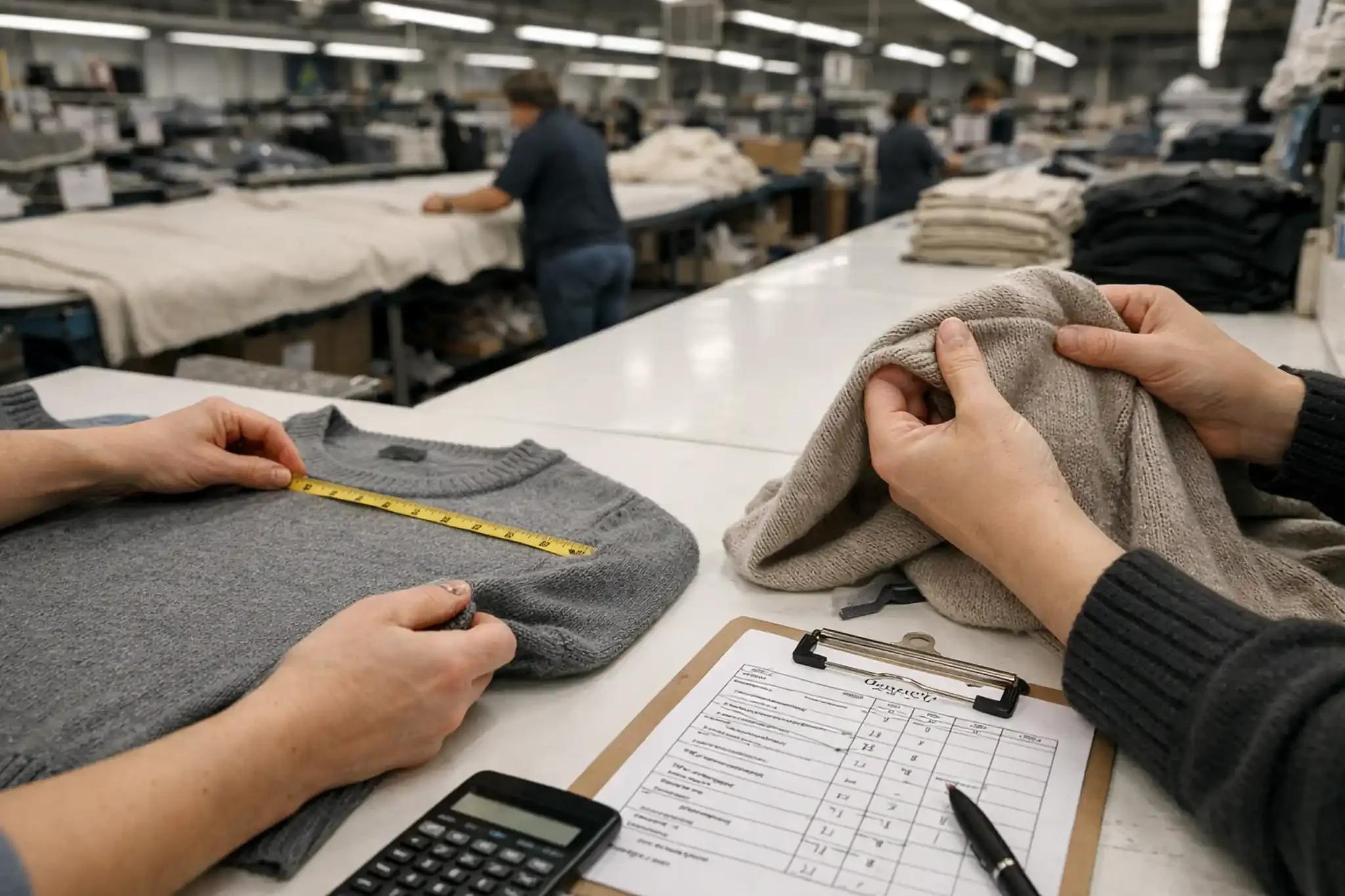
A central requirement of EU GPSR clothing compliance is evaluating whether a product could create unacceptable risks during normal or reasonably foreseeable use.
A garment does not become safe simply because its stitching looks good or its fabric passes a visual inspection.
Product safety considers the garment’s materials, construction, intended users, and possible hazards.
Common Product Safety Risks in Apparel
| Potential Risk | Clothing Example | Possible Control |
|---|---|---|
| Mechanical hazards | Loose buttons or detachable decorations | Attachment testing and design adjustments |
| Drawstring hazards | Cords around children’s necklines | Age-appropriate design and relevant safety standards |
| Chemical exposure | Restricted substances in dyes or finishes | Supplier declarations and risk-based laboratory testing |
| Flammability | Materials used in garments with particular fire risks | Material selection and appropriate testing |
| Skin irritation | Problematic coatings or chemical finishes | Material review and relevant chemical testing |
| Small components | Easily detached decorations on infant clothing | Component assessment and secure attachment |
The appropriate controls depend on the garment’s intended use, target consumer, construction, and relevant EU or national requirements.
Practical Example: Children’s Hoodies
Consider a fashion brand preparing a children’s hoodie collection in Istanbul for distribution in France and Germany.
The brand and its manufacturing partner should assess the garment’s construction before approving bulk production.
Particular attention may be needed for neckline cords, decorative attachments, chemical finishes, and components that could detach.
The assessment should refer to relevant safety standards where applicable, including standards addressing cords and drawstrings in children’s clothing.
A final quality inspection cannot replace a product safety assessment. Some risks must be eliminated during design and development, before production begins.
Technical Documentation Required Under the GPSR
Manufacturers must prepare technical documentation before placing covered products on the EU market.
The documentation must contain at least a general product description and its essential safety-relevant characteristics. Additional risk analysis, test results, and standards information are included as appropriate to the identified risks.
The European Commission’s guidance explains that documentation should be proportionate to the product’s complexity and potential hazards.

What Should a Clothing Technical File Contain?
A practical technical file for a clothing collection may include:
-
Product identification: Product name, style code, photographs, and relevant model information.
-
Material specifications: Fabric composition, trims, accessories, and finishes.
-
Risk assessment: Identified hazards, affected consumers, and risk mitigation measures.
-
Testing documentation: Relevant laboratory reports and applicable test results.
-
Manufacturing information: Supplier records, production specifications, and quality procedures.
-
Applicable standards: Standards or other methods used to assess product safety.
-
Labelling information: Product identifiers, contact information, and necessary safety warnings.
Not every garment requires the same testing programme. A basic adult cotton T-shirt and a children’s jacket with detachable accessories present different safety considerations.
A technical file should also reflect material design changes. If a brand replaces a fabric, introduces a new chemical finish, or changes safety-relevant accessories, the documentation and risk assessment should be reviewed.
Record retention: Manufacturers must keep GPSR technical documentation available to market surveillance authorities for 10 years after the product has been placed on the market. Importers also have corresponding documentation retention obligations.
Clothing Labelling, Product Identification and Traceability

Product traceability allows businesses to identify affected products when a safety issue occurs.
Under the GPSR, manufacturers must provide an identifying element such as a type, batch, or serial number, or another suitable product identifier.
The identification should be easily visible and legible. Where the size or nature of the product does not allow this, the regulation provides for identification on the packaging or an accompanying document.
Manufacturers must also indicate their name or registered trade name or trademark, postal address, and electronic contact address. Importers have separate contact-information obligations.
Example of a Clothing Traceability System
A streetwear brand manufacturing hoodies in Turkey might maintain the following internal records:
ILLUSTRATIVE PRODUCT RECORD
Premium Fleece Hoodie
HD-026
TR-1126-01
Turkey
80% Cotton / 20% Polyester
November 2026
By connecting the batch identifier to fabric suppliers, production records, and distribution information, the business can identify which garments may be affected by a particular problem.
These records support corrective actions and help limit unnecessary disruption.
Under Article 15, the GPSR also establishes specific requirements for retaining information about supply-chain partners. Relevant supplier and customer traceability information must generally be available for six years after the applicable supply transaction.
GPSR vs. EU Textile Labelling Requirements
These rules serve different purposes.
The EU Textile Labelling Regulation (EU) No 1007/2011 primarily governs textile fibre names and fibre composition labelling.
The GPSR addresses product safety, identification, traceability, and economic operator responsibilities.
A garment label showing 100% Cotton may satisfy an element of textile composition labelling, but that information alone does not demonstrate GPSR compliance.
Similarly, ordinary fashion garments do not generally require CE marking simply because they are covered by the GPSR. CE marking applies where specific legislation requires it, such as for certain protective equipment.
GPSR Requirements for Online Clothing Sales
The GPSR has specific requirements for products offered through online stores and other distance-selling channels.
Article 19 requires relevant product offers to clearly and visibly display:
-
The manufacturer’s name or registered trade name or trademark, postal address, and electronic address.
-
The EU responsible person’s name and contact details when the manufacturer is not established in the EU.
-
Product identification information, including an image, product type, and other product identifiers.
-
Applicable warnings and safety information in the language required for the relevant market.
These requirements are relevant to fashion brands selling through their own e-commerce websites and online marketplaces.

Example: Selling Turkish-Made Clothing in Germany
A US-based fashion brand manufacturing garments in Istanbul and selling through a German-language online store should review each product page before launching.
Alongside the usual photographs, descriptions, sizes, and prices, the listing should display the required manufacturer details and relevant EU responsible person information.
Any required safety warnings should also appear in a language appropriate for German consumers.
Simply publishing the information in a shipping policy or keeping it in an internal supplier file may not satisfy the requirement for clearly visible information in the product offer.
Handling Product Safety Complaints, Incidents and Recalls
Product safety responsibility continues after clothing has been sold.
Manufacturers must maintain processes for investigating relevant safety complaints and recording corrective actions.
For fashion brands, a practical procedure should include:
-
Receiving and documenting safety-related complaints.
-
Identifying the relevant product model and batch.
-
Reviewing manufacturing records and available test results.
-
Assessing whether other products may be affected.
-
Deciding whether corrective action, withdrawal, or recall is necessary.
-
Notifying consumers and competent authorities when legally required.
The Safety Business Gateway is the EU system businesses use to communicate specified dangerous-product information to market surveillance authorities.
Accidents causing death or serious adverse health and safety effects are also subject to reporting obligations under Article 20.
Where a safety recall is necessary, affected consumers must be informed in accordance with the regulation, including direct notification where they can be identified.
Why Batch Traceability Matters
Imagine a brand discovers that a particular batch of decorative accessories can detach from children’s garments.
If production records identify the affected batch, the business can investigate which units were manufactured, where they were shipped, and which customers may need to be contacted.
Without reliable records, the company may struggle to establish the scope of the problem.
This is why traceability should be considered during production planning rather than introduced only after an incident.
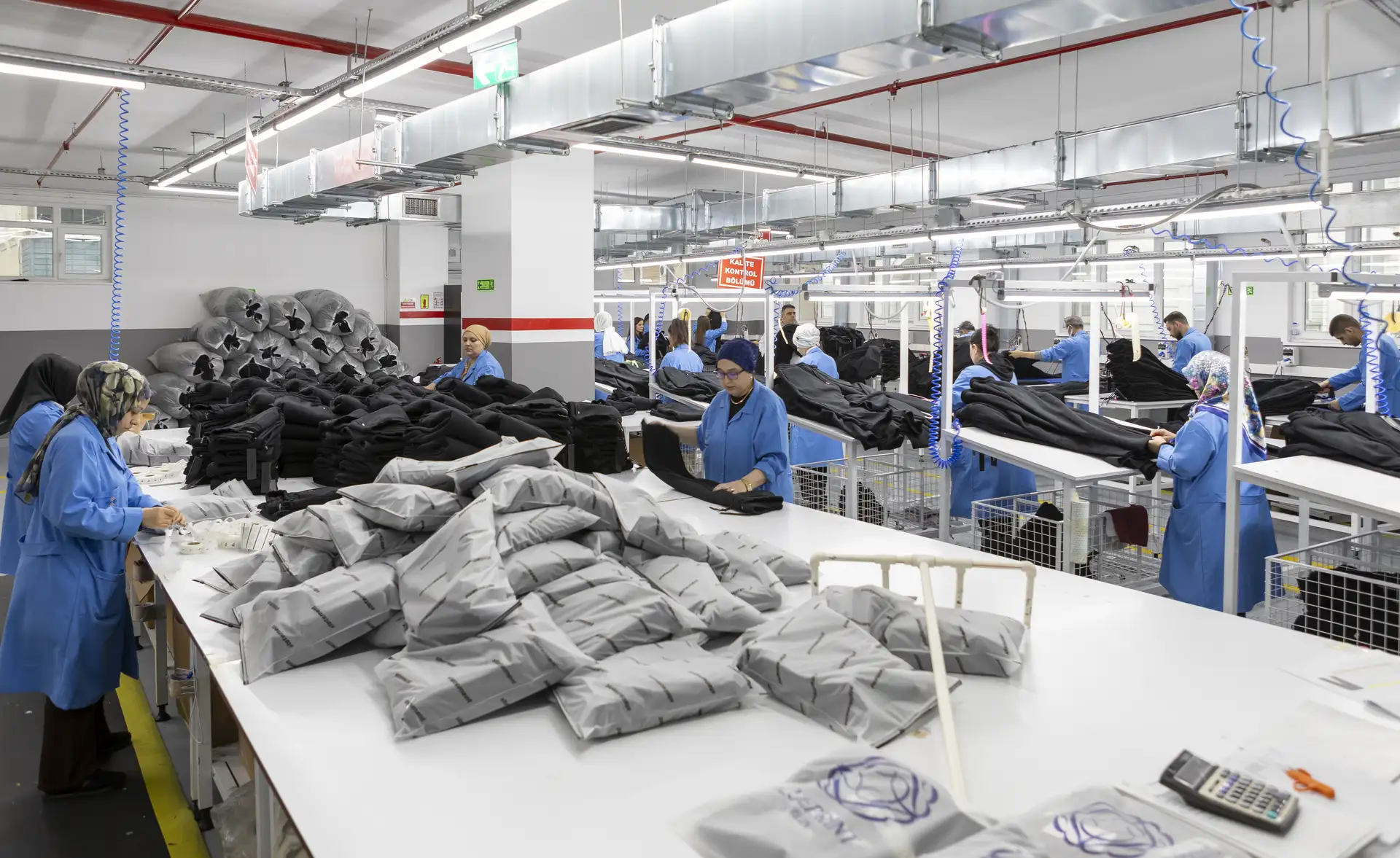
How to Prepare for GPSR Compliance When Manufacturing Clothing in Turkey
Turkey is an established sourcing destination for European clothing brands, offering textile manufacturing capabilities, material suppliers, and geographical proximity to EU markets.
However, manufacturing in Turkey does not automatically mean that finished clothing complies with EU product safety legislation.
The brand and its production partners need to establish the relevant requirements before garments enter the European market.
Step 1: Define Legal Responsibilities
Determine which business is legally considered the manufacturer, who will act as importer where applicable, and which EU economic operator will fulfil the responsible-person requirements.
Record these arrangements clearly.
Step 2: Review the Product Before Sampling
Evaluate fabrics, trims, accessories, finishes, intended consumers, and foreseeable product hazards.
For higher-risk garments, identify appropriate tests and design requirements early in development.
Step 3: Establish Documentation Requirements
Agree with the manufacturing partner which documents and production records must be supplied.
This may include fabric specifications, supplier declarations, inspection results, and relevant test reports.
The legally responsible manufacturer should ensure that the complete technical documentation meets GPSR requirements.
Step 4: Approve Product Identification and Labelling
Before bulk production, check product identifiers, manufacturer information, importer details where required, and any necessary safety warnings.
Product information should be consistent with the technical file and online sales listings.
Step 5: Maintain Production and Quality Records
Ensure that approved samples, final specifications, production batches, and relevant inspection results are recorded.
Quality controls should verify that bulk production remains consistent with the approved product.
Step 6: Establish an After-Sales Safety Procedure
Agree how safety complaints will be communicated, who will investigate them, and how the brand and manufacturer will cooperate if corrective action is necessary.
A clear communication process can make a substantial difference when a problem must be addressed quickly.
Practical GPSR Compliance Checklist for Fashion Brands
Pre-market compliance checklist
This checklist provides a practical starting point. The exact requirements depend on the product, the company’s legal role, and the markets where the garments are sold.
How Istanbul Factory Supports EU-Focused Clothing Production
For fashion brands sourcing in Turkey, product safety planning is more effective when it begins during product development rather than shortly before shipment.
At Istanbul Factory, we work with startups, streetwear brands, and established fashion labels seeking a reliable clothing manufacturing partner in Istanbul.
Our end-to-end production services include fabric sourcing, sampling and prototyping, custom garment manufacturing, print and embroidery, branding and labelling, and quality control coordination.
These services can support the manufacturing-side information and processes that brands need when preparing clothing for European markets.
We encourage brands to establish their product specifications, documentation requirements, and applicable safety expectations before approving bulk production.
Istanbul Factory is a manufacturing partner, not a substitute for an EU responsible person, accredited testing laboratory, or independent regulatory adviser.
Planning a Clothing Collection for the EU Market?
Whether you are developing a private label streetwear collection or expanding an established clothing brand, clear production requirements help build a stronger foundation for your next collection.
Contact Istanbul Factory to discuss your designs, fabric requirements, sampling needs, production quantities, and quality expectations.
Our team can help you plan the manufacturing process in Istanbul with European market requirements in mind.
Frequently Asked Questions About EU GPSR Clothing Compliance
1. Does the EU GPSR apply to clothing manufactured in Turkey?
Yes. Consumer clothing manufactured in Turkey and placed on the EU market generally falls within the scope of the GPSR. The relevant businesses must fulfil their applicable product safety, documentation, traceability, and information obligations.
2. Is a GPSR certificate mandatory for clothing?
The GPSR does not establish a universal mandatory GPSR certificate for ordinary clothing. Manufacturers must carry out a risk analysis and prepare appropriate technical documentation. Relevant testing may be necessary depending on the product’s risks and other applicable legislation.
3. Who is responsible for GPSR compliance for private label clothing?
A fashion brand placing clothing on the market under its own name or trademark is treated as the manufacturer under the GPSR. It must fulfil the corresponding legal obligations, even if a third-party factory produces the garments.
4. Do clothing brands need an EU responsible person?
Products covered by the GPSR must have a responsible economic operator established in the EU. This may be an EU manufacturer, importer, authorised representative, or qualifying fulfilment service provider, depending on the supply chain.
5. Does GPSR compliance replace REACH or textile labelling requirements?
No. The GPSR addresses general consumer product safety, while REACH regulates chemical substances and restrictions, and the EU Textile Labelling Regulation governs matters such as textile fibre composition information. All applicable requirements must be considered.
6. How long must GPSR technical documentation be retained?
Manufacturers must keep technical documentation available to market surveillance authorities for 10 years after the product has been placed on the market. Importers have corresponding documentation retention obligations.
7. Can a Turkish clothing manufacturer help with GPSR documentation?
Yes. A Turkish manufacturing partner can supply relevant information such as fabric specifications, manufacturing records, product identifiers, and available testing reports. However, the legal responsibility for preparing and maintaining compliant documentation remains with the economic operators identified under the regulation.