

For fashion brands, timing is more than a production detail. It affects launch dates, seasonal drops, cash flow, marketing campaigns, wholesale commitments, and customer expectations.
A collection that arrives two weeks late can miss a campaign window. A rushed sample can lead to poor fit. A production order started before fabric approval can create costly mistakes. This is why understanding the real timeline of clothing manufacturing is essential before starting any apparel project.
Most brands want a simple answer: how long does clothing manufacturing take?
In most cases, a full clothing manufacturing project can take 8 to 16 weeks from initial development to finished goods, depending on the product type, fabric availability, sampling complexity, production quantity, revisions, and shipping method.
A simple private label T-shirt order using available fabrics may move faster. A fully custom streetwear collection with heavyweight fabric, custom dyeing, embroidery, trims, sampling revisions, and international shipping will naturally take longer.
This guide explains each stage of the clothing manufacturing timeline so US and European fashion brands can plan their collections more realistically.
Typical Clothing Manufacturing Timeline at a Glance
While every project is different, a realistic clothing manufacturing timeline often looks like this:
- Design and tech pack preparation: 1–3 weeks
- Fabric sourcing and material selection: 1–3 weeks
- Garment sampling: 1–3 weeks
- Sample review and revisions: 1–3 weeks
- Bulk fabric and trim preparation: 1–3 weeks
- Bulk clothing production: 4–6 weeks
- Quality control: 3–7 days
- Packing and final preparation: 2–5 days
- Shipping to Europe or the US: depends on destination and method
For many brands, the complete process usually takes around 10 to 14 weeks when development, sampling, production, and logistics are all included.
The key point is that manufacturing time is not only sewing time. It includes planning, sourcing, testing, approvals, corrections, finishing, packing, and delivery.
Stage 1: Design, Product Details, and Tech Pack Preparation
Typical timeline: 1–3 weeks
The clothing manufacturing process starts before the factory begins cutting fabric. It starts with clear product information.
A manufacturer needs to understand what the brand wants to produce. This includes the garment type, fit, fabric direction, sizing, colors, branding details, finishing preferences, and target quality level.
For a basic product, such as a standard T-shirt or sweatshirt, this stage can be quick. For a custom hoodie, oversized streetwear set, activewear piece, jacket, or premium capsule collection, more detail is required.
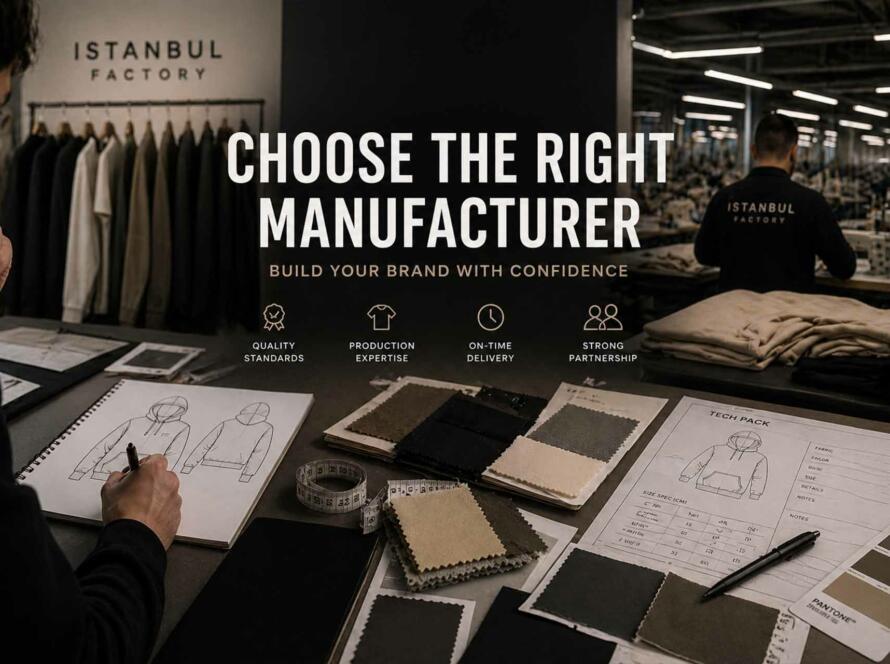
A strong tech pack usually includes:
- Product sketches or reference images
- Measurements and size specifications
- Fabric composition and GSM preferences
- Color references
- Print or embroidery placement
- Label and trim details
- Stitching and finishing instructions
- Packaging requirements
The more complete the tech pack is, the faster the manufacturer can move. When information is missing, the factory must ask questions, make assumptions, or prepare development suggestions. This can add days or weeks to the timeline.
For startup brands, this stage often takes longer because product ideas may still be evolving. A good manufacturing partner can help translate creative direction into production-ready details.
Stage 2: Fabric Sourcing and Material Selection
Typical timeline: 1–3 weeks
Fabric is one of the biggest factors affecting the clothing manufacturing timeline.
If the fabric is available in stock, sourcing can be completed quickly. If the fabric needs to be custom knitted, dyed, finished, washed, or specially developed, the timeline becomes longer.
For example, sourcing a standard cotton jersey for T-shirts may take less time than developing a custom heavyweight French terry for oversized hoodies. Sustainable fabrics, recycled materials, organic cotton, technical blends, or special washes may also require additional availability checks.
During this stage, brands usually review:
- Fabric composition
- GSM and weight
- Hand feel
- Stretch and recovery
- Shrinkage behavior
- Color options
- Minimum order quantity
- Price level
- Suitability for print or embroidery
Fabric choice directly affects the final garment. A hoodie made with the wrong fleece can feel too thin. A T-shirt made with unstable jersey can twist after washing. A sweatpant fabric with poor recovery can lose shape after wear.
This is why fabric sourcing should not be rushed.
For brands working with a clothing manufacturer in Turkey, Istanbul offers an important advantage. The city has access to a strong textile supply chain, including fabric suppliers, dye houses, trimming suppliers, printing workshops, embroidery facilities, and finishing services. This can help reduce delays compared with production regions where materials are harder to coordinate.
Stage 3: Garment Sampling
Typical timeline: 1–3 weeks
Sampling is the stage where the idea becomes a physical garment.
A sample allows the brand to check fit, fabric, construction, proportions, details, and overall product feel before bulk production begins.
This stage is especially important for custom clothing manufacturing. Even when the design looks clear on paper, the first sample often reveals details that need adjustment. A hoodie may need a deeper hood. A T-shirt may need a wider sleeve. A jogger may need a better waistband structure. A sweatshirt may need a different rib quality.
Common sample types include:
Prototype Sample
This is the first physical version of the garment. It is used to test the concept, fit, construction, and general direction.
Fit Sample
This sample focuses on measurements, body shape, proportions, and comfort. Fit samples are important for brands that have a specific silhouette, such as oversized streetwear or premium basics.
Pre-Production Sample
The pre-production sample is usually made before bulk production begins. It should represent the final approved garment as closely as possible, including fabric, color, trims, print, embroidery, labels, and finishing.
Sampling is not a delay. It is protection.
Skipping sampling may look faster at the beginning, but it increases the risk of production errors, poor fit, inconsistent sizing, and unsellable stock.
Stage 4: Sample Review and Revisions
Typical timeline: 1–3 weeks
After the sample is made, the brand reviews it carefully. This stage depends heavily on communication speed.
If the brand reviews the sample quickly and gives clear feedback, revisions can move smoothly. If feedback is unclear or delayed, the timeline expands.
Typical revision points include:
- Body length
- Sleeve length
- Shoulder width
- Hood size
- Neck opening
- Fabric weight
- Print size or position
- Embroidery density
- Label placement
- Rib quality
- Overall fit and silhouette
For US and European brands, shipping samples back and forth can also add time. Some approvals may be done through detailed photos, videos, measurements, and video calls, but final physical approval is often recommended for premium products.
A realistic clothing manufacturing plan should include time for at least one sample review round. More complex collections may require two or more revisions.
For example, a private label clothing production order using an existing blank pattern may need fewer revisions. A custom streetwear hoodie with a unique oversized fit, heavy fabric, embroidery, and custom trims may need more development.
Stage 5: Bulk Fabric and Trim Preparation
Typical timeline: 1–3 weeks
Once the sample is approved, the manufacturer prepares materials for bulk production.
This includes fabric ordering, fabric inspection, cutting preparation, trims, labels, zippers, drawcords, buttons, packaging materials, and any custom branding components.
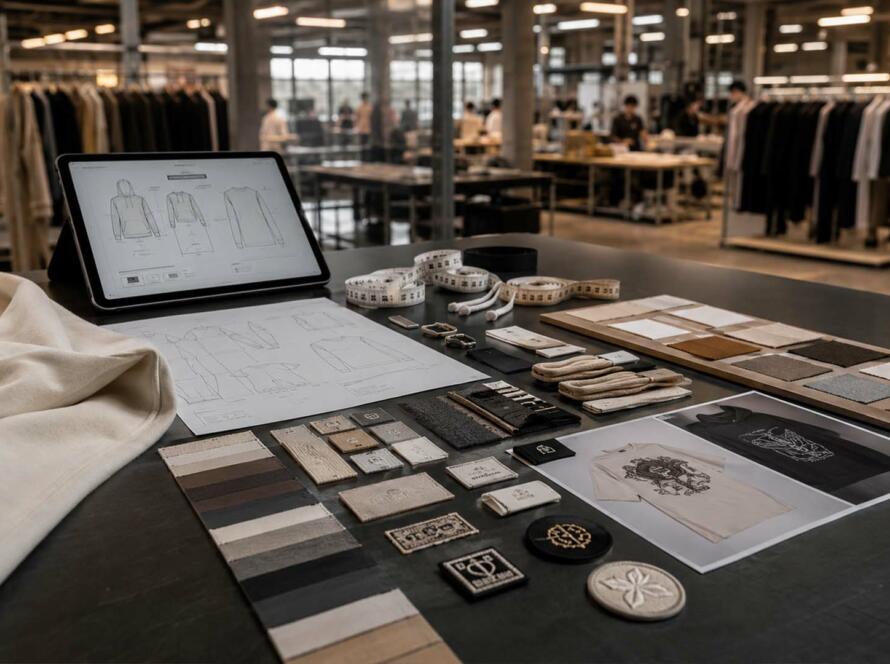
For private label production, trims may include:
- Woven neck labels
- Care labels
- Size labels
- Hang tags
- Branded poly bags
- Stickers
- Packaging inserts
- Custom cartons
For custom clothing manufacturing, the preparation stage may also include custom-dyed fabric, special rib development, custom drawcords, metal accessories, or special wash testing.
This is a critical stage because production should not begin until all key materials are ready and approved.
Starting bulk production with incomplete trims or uncertain fabric can lead to delays during sewing, finishing, or packing.
Stage 6: Bulk Clothing Production
Typical timeline: 4–6 weeks
Bulk production is the stage most people think of when they hear “clothing manufacturing.” It includes cutting, sewing, printing, embroidery, finishing, pressing, and internal checks.
For many apparel categories, bulk clothing production takes around 4 to 6 weeks after sample approval and material readiness.
The timeline depends on several factors:
- Order quantity
- Number of styles
- Number of colors
- Fabric type
- Complexity of construction
- Print or embroidery requirements
- Factory capacity
- Seasonality
- Quality expectations
A simple T-shirt order can move faster than a multi-style streetwear collection. A hoodie with embroidery, custom labels, garment washing, and premium packaging requires more steps than a basic blank sweatshirt.
Production also needs proper sequencing. Fabric must be cut accurately. Sewing lines must follow approved specifications. Print and embroidery must match approved artwork. Labels must be attached correctly. Measurements must remain within tolerance.
A professional clothing manufacturer does not simply produce fast. It produces consistently.
For brands planning seasonal drops, it is safer to reserve production time early instead of waiting until the final launch window. Manufacturers often have busy periods before spring/summer and autumn/winter deliveries, so early planning helps avoid capacity pressure.
Stage 7: Print, Embroidery, and Branding Details
Typical timeline: included in production, sometimes adds 1–2 weeks
Print and embroidery can strongly affect the clothing manufacturing timeline.
A simple chest print may be easy to schedule. Large screen prints, puff prints, embroidery, appliqué, washed effects, or multi-position branding require more testing and production coordination.
Common branding techniques include:
- Screen printing
- Digital printing
- Puff print
- Embroidery
- Appliqué
- Heat transfer
- Woven labels
- Rubber patches
- Custom hang tags
Before bulk production, artwork should be checked for size, placement, color accuracy, and durability. Embroidery should be tested for density, thread quality, and fabric compatibility.
For example, embroidery on heavyweight fleece behaves differently than embroidery on lightweight jersey. A large print on stretch fabric must be tested carefully to avoid cracking or distortion.
Branding details are often what make a garment feel premium, but they also require proper planning.
Stage 8: Quality Control
Typical timeline: 3–7 days
Quality control is one of the most important stages in clothing manufacturing.
Once production is complete, garments should be checked before packing and shipping. This protects the brand from receiving products with preventable issues.
Quality control may include:
- Measurement checks
- Stitching inspection
- Fabric defect inspection
- Print and embroidery checks
- Label and trim verification
- Color consistency review
- Size ratio checks
- Finishing and pressing control
- Packaging inspection
For premium fashion labels and streetwear brands, QC is especially important because customers notice details. A slightly crooked label, poor stitching, weak rib, or inconsistent print can affect brand perception.
A reliable manufacturer follows quality standards throughout the process, not only at the end. However, final QC remains essential before goods leave the factory.
European and US brands often expect consistent sizing, clean finishing, and professional presentation. This is one reason many brands choose clothing production in Turkey: the production culture is closely aligned with European quality expectations and delivery standards.
Stage 9: Packing and Shipping Preparation
Typical timeline: 2–5 days
After quality control, garments are folded, packed, labeled, counted, and prepared for shipment.
Packing can be simple or highly customized depending on the brand.
Standard packing may include folded garments in poly bags and export cartons. Premium private label clothing production may include branded packaging, hang tags, tissue paper, barcode stickers, size stickers, or special carton labeling.
Packing must match the brand’s sales channel. A wholesale order may require different carton preparation than a direct-to-consumer e-commerce drop. Retailers may request specific packing lists, carton marks, SKU labels, or barcode requirements.
This stage may look small, but it matters. Good packing helps avoid confusion, protects garments during transport, and makes fulfillment easier after delivery.
Stage 10: Shipping to Europe or the United States
Typical timeline: depends on method and destination
Shipping time depends on destination, transportation method, customs process, and the shipment size.
For European brands, Turkey offers a strong logistical advantage. Istanbul is close to major European markets, which can make transport faster and more flexible compared with distant production regions.
Shipping options may include:
- Express courier for samples or urgent small shipments
- Road freight to European destinations
- Air freight for faster bulk delivery
- Sea freight for larger international shipments
For US brands, air freight is faster but more expensive. Sea freight is more cost-effective for larger orders but requires more planning.
Brands should also consider customs documents, commercial invoices, packing lists, HS codes, and import duties. A professional production partner can help prepare export documentation clearly, but brands should also work with their logistics provider or customs broker in their destination country.
Shipping should never be treated as an afterthought. It is part of the full clothing manufacturing timeline.
What Can Delay Clothing Manufacturing?
Most delays happen because key decisions are not finalized early enough.
Common reasons for delays include:
- Incomplete tech packs
- Slow feedback after sampling
- Fabric changes after approval
- Artwork changes during production
- Late label or packaging decisions
- Custom trims with long lead times
- Unclear size specifications
- Last-minute order quantity changes
- Delayed payments or approvals
- Peak season factory capacity
The best way to avoid delays is to prepare clearly, approve quickly, and communicate with the manufacturer in detail.
A good manufacturing partner will guide the brand through each stage, but the brand’s internal decision-making also affects the final timeline.
How Brands Can Plan a Better Production Calendar
For US and European fashion brands, planning should start earlier than the intended launch date.
A practical timeline may look like this:
For a Simple Private Label Drop
A private label T-shirt, sweatshirt, or hoodie order using existing fabrics and standard fits may take around 6 to 10 weeks, depending on sampling, branding, and production capacity.
For a Custom Streetwear Collection
A custom hoodie, T-shirt, sweatpant, or oversized capsule collection may take around 10 to 16 weeks, especially if there are custom fabrics, embroidery, print testing, or multiple sample revisions.
For a Seasonal Retail Collection
A more detailed seasonal collection with several styles, fabrics, trims, and size ranges may need 4 to 6 months from concept to delivery.
Brands should work backward from the launch date. If the collection must be available in October, development should not start in September. Sampling, production, QC, packing, and logistics all need space.
The safest approach is to build a timeline that includes buffer time. Fashion production involves many moving parts, and small adjustments are normal.
Why Turkey and Istanbul Are Strong for Clothing Production
Turkey has become an important production hub for fashion brands that want quality, flexibility, and proximity to Europe.
Istanbul is especially valuable because many parts of the supply chain are located close to each other. Fabric suppliers, pattern makers, sampling teams, sewing workshops, printers, embroidery houses, packaging suppliers, and export logistics providers can work in a coordinated way.
For brands in Europe, this can reduce communication issues and long waiting periods. For US brands, Turkey offers an alternative to distant manufacturing regions while still providing strong textile experience and premium apparel capabilities.
Working with a clothing manufacturer in Turkey can be especially useful for:
- Streetwear brands producing hoodies, T-shirts, sweatpants, and oversized fits
- Premium labels needing fabric sourcing and quality finishing
- Startup brands that need guidance through sampling and production
- Private label brands looking for flexible production support
- Fashion companies planning seasonal or capsule drops
The advantage is not only geography. It is the combination of textile know-how, supplier access, skilled production, and international manufacturing experience.
How Istanbul Factory Supports a Smoother Timeline
Istanbul Factory works as a fashion manufacturing partner for brands that need reliable clothing production in Turkey.
The process can support brands from early development to final delivery, including:
- Product development guidance
- Fabric sourcing
- Garment sampling
- Custom clothing manufacturing
- Private label clothing production
- Print and embroidery
- Quality control
- Packing and export preparation
For brands that already have tech packs, Istanbul Factory can help move the project into sampling and production more efficiently. For brands still developing their first collection, the team can help clarify fabrics, fits, production details, and realistic timelines.
The goal is not to rush production at the cost of quality. The goal is to create a clear, professional process so the brand knows what happens at each stage and can plan with confidence.
If you are preparing a seasonal drop, streetwear collection, private label line, or premium apparel project, Istanbul Factory can help you understand the right production timeline before you commit to launch dates.
Final Thoughts
Clothing manufacturing takes time because every stage affects the final product. Design, sourcing, sampling, revisions, production, quality control, packing, and shipping all need proper planning.
For most fashion brands, a realistic timeline is usually 8 to 16 weeks, depending on product complexity and approval speed. Simpler private label projects may move faster, while custom collections need more development time.
The strongest brands do not plan production at the last minute. They build clear calendars, approve samples carefully, and work with manufacturing partners who understand quality, communication, and delivery.
For US and European brands, working with an experienced clothing manufacturer in Istanbul can offer a valuable balance of quality, flexibility, and supply chain access.
FAQ
How long does clothing manufacturing usually take?
Clothing manufacturing usually takes 8 to 16 weeks from product development to finished goods. The exact timeline depends on design complexity, fabric sourcing, sampling, revisions, production quantity, quality control, packing, and shipping.
How long does bulk clothing production take?
Bulk clothing production often takes around 4 to 6 weeks after the sample is approved and all materials are ready. Complex garments, custom fabrics, embroidery, printing, or larger orders may require more time.
Can clothing manufacturing be completed faster?
Yes, some projects can move faster if the design is simple, fabrics are available, samples are approved quickly, and the production line has capacity. However, rushing the process can increase the risk of fit, quality, or finishing issues.
What stage causes the most delays in clothing production?
The most common delays happen during tech pack preparation, fabric sourcing, sample revisions, artwork approval, custom trim preparation, and late changes from the brand. Clear information and fast approvals help keep the timeline on track.
How long does garment sampling take?
Garment sampling usually takes 1 to 3 weeks depending on the product type, fabric availability, and construction details. Additional revisions can add more time, especially for custom fits or premium garments.
Is Turkey a good country for clothing manufacturing?
Yes. Turkey is a strong clothing manufacturing destination for European and US brands because of its textile expertise, skilled production, fabric sourcing network, and proximity to Europe. Istanbul is especially important because many suppliers and production services are located close together.
When should a fashion brand start planning production?
A fashion brand should ideally start planning production at least 3 to 4 months before the intended launch date. More complex seasonal collections may need 4 to 6 months from concept to delivery.
Does private label clothing production take less time than custom clothing manufacturing?
Private label clothing production can be faster because it may use existing patterns, fabrics, or product bases. Custom clothing manufacturing usually takes longer because the garment is developed from the brand’s specific design, fit, fabric, and finishing requirements.