


Choosing the right fabric is one of the most important decisions a fashion brand makes before production begins. A strong design can lose its value if the fabric feels cheap, shrinks after washing, stretches out of shape, fades too quickly, or does not match the intended fit.
For fashion brands, fabric sourcing is not just about finding a beautiful material. It is about choosing a fabric that supports the garment’s design, price point, quality expectations, production method, and customer experience.
This is especially important for streetwear brands, private label clothing brands, premium fashion labels, and startups preparing their first collection. The right fabric can make a hoodie feel more structured, a T-shirt feel softer, a tracksuit feel more premium, or a capsule collection feel more consistent.
At Istanbul Factory, fabric sourcing is treated as part of the product development process, not as a separate purchasing step. Before production starts, the fabric needs to be evaluated carefully from technical, visual, commercial, and practical angles.
This guide explains what fashion brands should look at when choosing fabric before manufacturing.
What Is Fabric Sourcing for Fashion Brands?

Fabric sourcing for fashion brands is the process of selecting, evaluating, and securing the right textiles for garment production. It includes reviewing fabric composition, GSM, hand feel, stretch, durability, shrinkage, color performance, price, availability, MOQ, and production lead time.
A good fabric sourcing process helps brands answer practical questions such as:
- Does this fabric match the design?
- Will it hold the shape after washing?
- Is it suitable for printing or embroidery?
- Does the GSM feel premium enough?
- Can it be produced within the required timeline?
- Is the MOQ realistic for the brand’s order size?
- Will the final garment meet the expectations of the target customer?
Fabric sourcing is where design ideas become real products. If this stage is rushed, problems often appear later during sampling, bulk production, or after customers start wearing the garment.
Why Fabric Choice Matters Before Production
Fabric affects almost every part of a garment.
It influences how the garment fits, how it drapes, how warm it feels, how long it lasts, how it reacts to washing, how it accepts color, and how customers perceive the brand.
For example, two hoodies can use the same pattern but feel completely different if one is made from lightweight French terry and the other from heavyweight fleece. A T-shirt made from compact cotton will not feel the same as one made from a basic open-end cotton jersey. A stretch fabric with poor recovery may look good at first but lose shape after repeated wear.
For fashion brands, fabric choice also affects:
- Sampling accuracy
- Bulk production quality
- Retail pricing
- Brand positioning
- Customer satisfaction
- Return rates
- Production cost
- Delivery timeline
The goal is not always to choose the most expensive fabric. The goal is to choose the most suitable fabric for the product, market, and brand identity.
Start With the Garment Purpose
Before choosing a fabric, define what the garment needs to do.
A premium oversized hoodie, a lightweight summer T-shirt, a fitted activewear top, and a structured overshirt all require different fabric decisions. Even if they look simple on a moodboard, their technical needs are not the same.
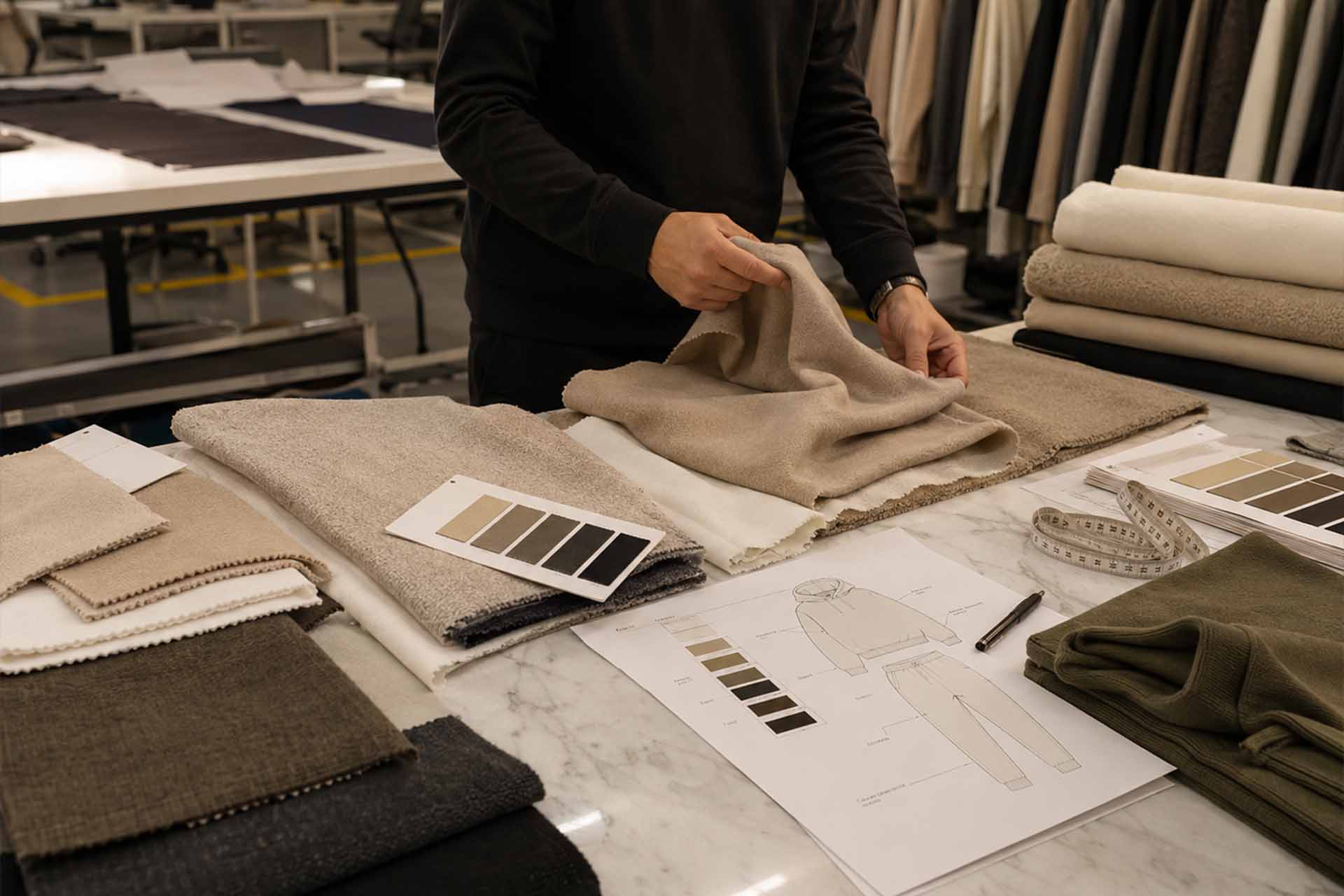
Ask These Questions First
Before sourcing fabric, a brand should clarify:
- Is the garment casual, premium, active, formal, or performance-focused?
- Should it feel soft, structured, heavy, breathable, stretchy, or crisp?
- Will it be printed, embroidered, washed, dyed, or treated?
- Is the fit oversized, regular, slim, relaxed, or boxy?
- What season is the product made for?
- What price point should the final garment reach?
- What quality level does the customer expect?
A streetwear brand may want heavyweight cotton fleece for structure and volume. A resortwear brand may need breathable linen blends or lightweight cotton. A premium basics brand may focus on softness, stability, and long-term wash performance.
Fabric should always support the product idea, not fight against it.
Understand Fabric Composition
Fabric composition tells you what fibers the fabric is made from. This is one of the first things fashion brands should review because composition affects comfort, durability, shrinkage, breathability, cost, and care instructions.
Common fabric compositions include:
- 100% cotton
- Cotton-polyester blends
- Organic cotton
- Recycled polyester blends
- Viscose
- Modal
- Linen
- Wool blends
- Elastane blends
- Nylon blends
Each composition has advantages and limitations.
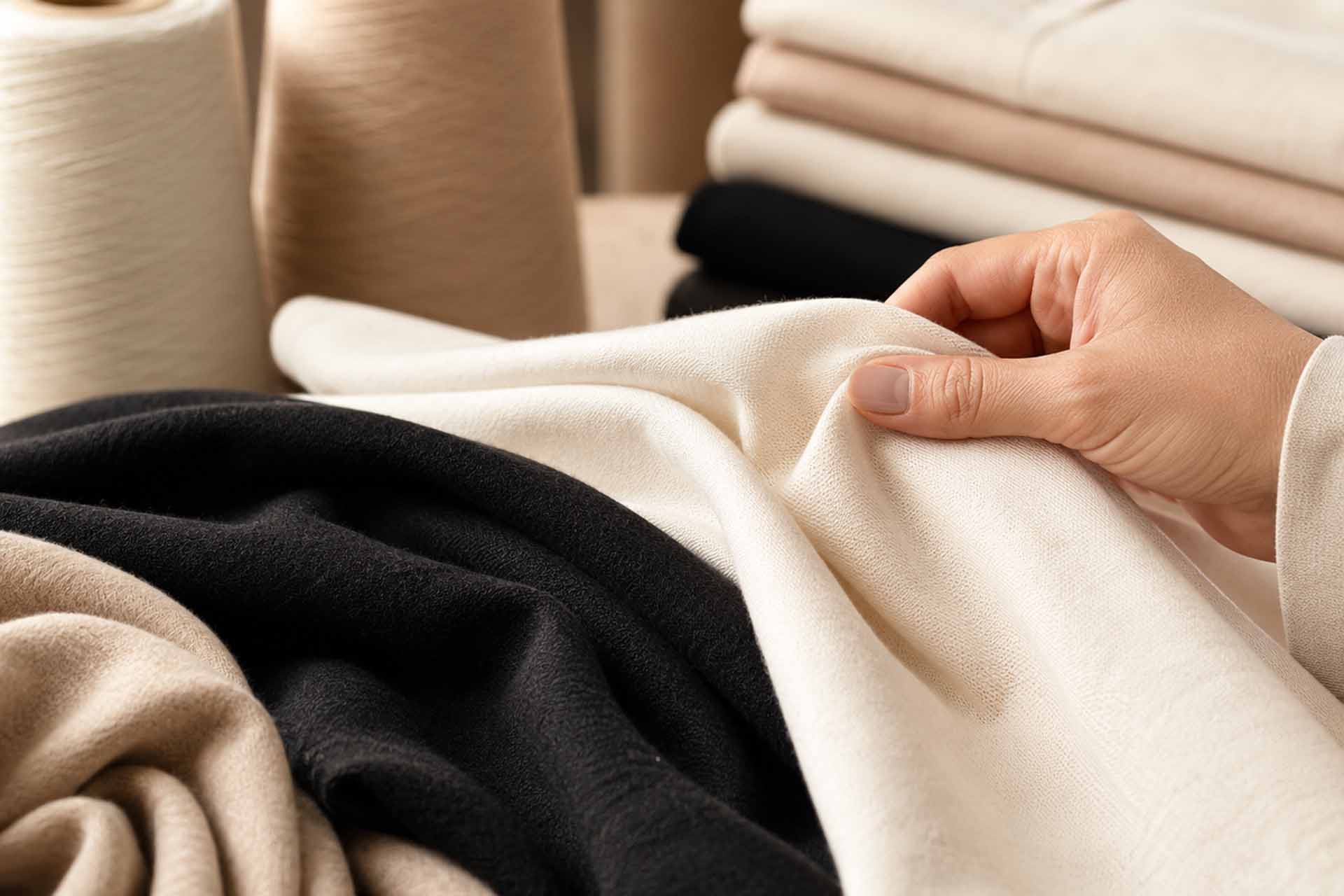
Cotton
Cotton is widely used for T-shirts, hoodies, sweatshirts, joggers, and casualwear. It is breathable, comfortable, and familiar to customers. However, cotton can shrink if it is not properly treated, and the final feel depends heavily on yarn quality, knitting, finishing, and weight.
Cotton-Polyester Blends
Cotton-polyester blends can improve durability, reduce shrinkage, and support easier care. They are common in sweatshirts, fleece, uniforms, and casual apparel. The balance between cotton and polyester changes the feel of the fabric.
A high cotton percentage usually feels more natural. A higher polyester percentage may improve stability and reduce cost, but it can feel less premium depending on the fabric construction.
Elastane Blends
Elastane adds stretch and flexibility. It is often used in fitted garments, activewear, leggings, rib fabrics, and pieces that need comfort with movement.
The key point is recovery. A stretch fabric should return to its original shape after being pulled. Poor recovery can cause knees, elbows, collars, or waistbands to lose shape.
Viscose, Modal, and Similar Fibers
These fibers can create a smooth, soft, and flowing feel. They are often used for dresses, blouses, lightweight tops, and premium basics. They can drape beautifully, but they need careful testing for shrinkage, pilling, and dimensional stability.
Check GSM: Fabric Weight Matters
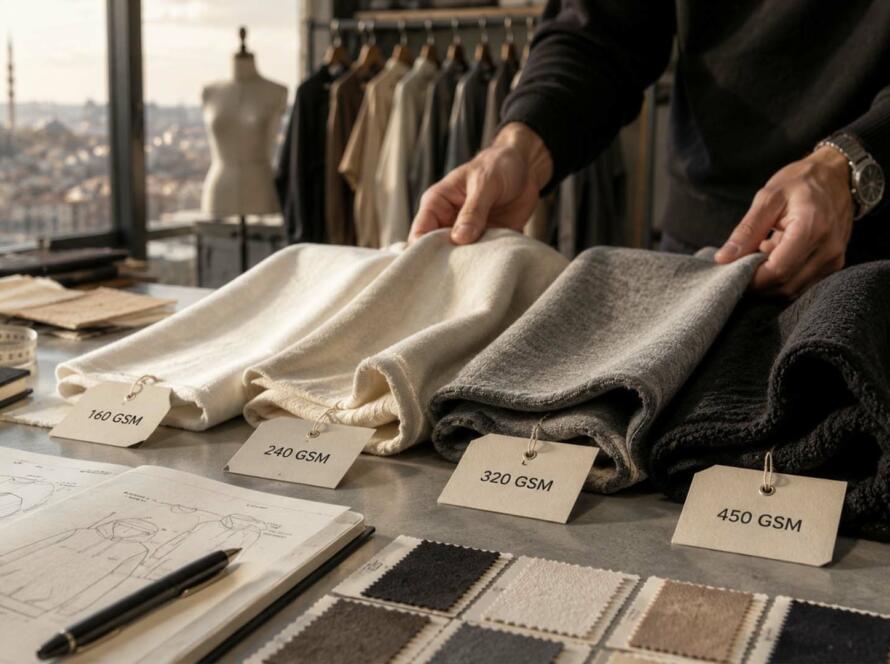
GSM means grams per square meter. It measures fabric weight.
For fashion brands, GSM is one of the easiest ways to understand whether a fabric feels lightweight, medium, or heavy. However, GSM should not be judged alone. Two fabrics with the same GSM can feel different depending on fiber, yarn, knitting, finishing, and brushing.
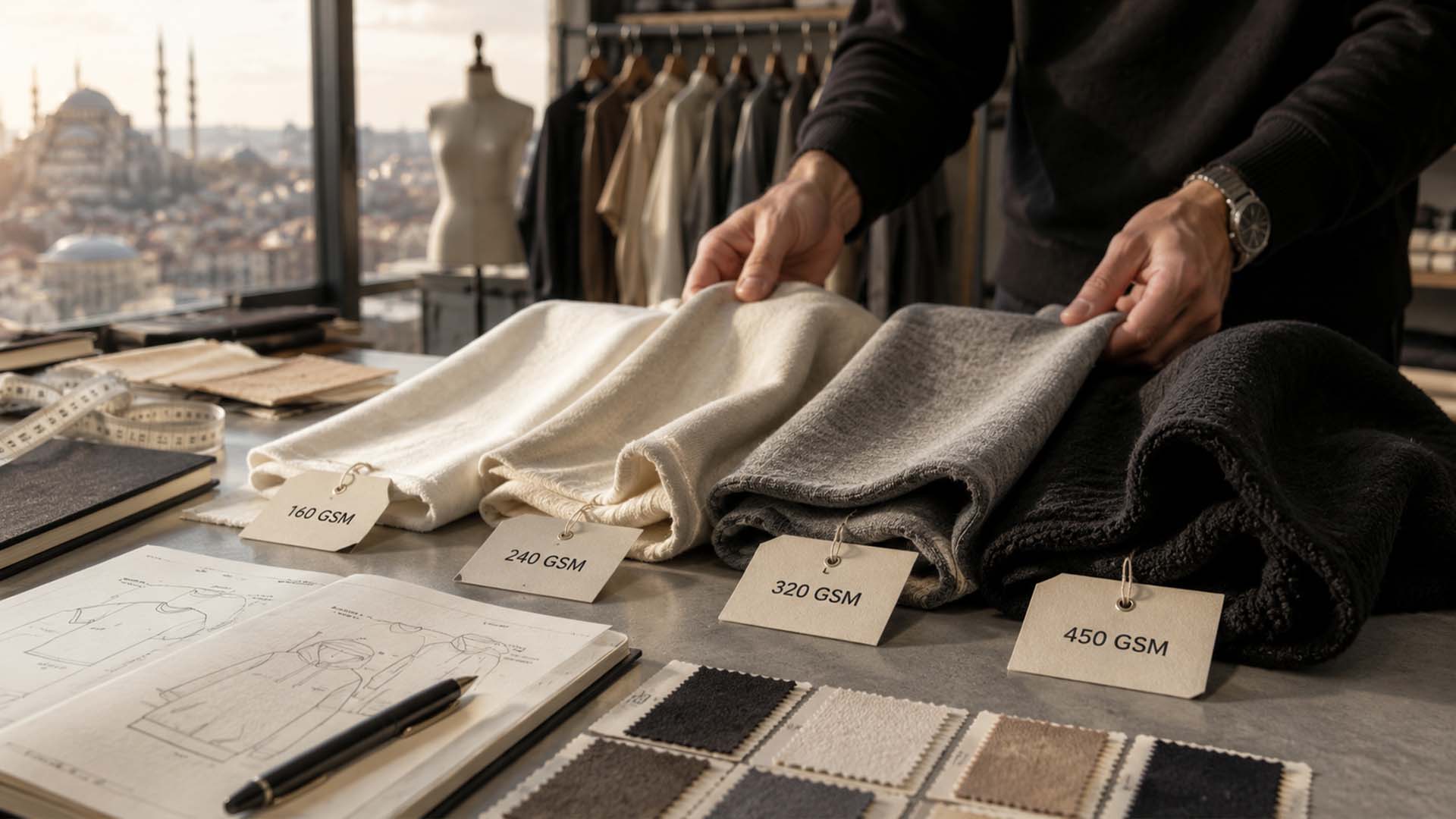
Common GSM Examples
As a general guide:
- Lightweight T-shirts: around 140–170 GSM
- Premium T-shirts: around 180–240 GSM
- Sweatshirts: around 280–380 GSM
- Hoodies: around 320–450+ GSM
- Heavy streetwear fleece: often 400 GSM and above
These are not strict rules. The right GSM depends on the brand’s aesthetic and the garment’s purpose.
A luxury basics brand may prefer a dense 220 GSM cotton jersey for a clean T-shirt. A streetwear label may choose 420 GSM fleece for a structured hoodie. A summer collection may need something lighter and more breathable.
GSM and Cost
Higher GSM usually means more fiber is used, which often increases cost. It can also affect cutting, sewing, shipping weight, and production handling.
A heavier fabric may feel more premium, but it is not always better. For warm climates, layering pieces, or relaxed summer collections, a lighter fabric may perform better.
Evaluate Texture and Hand Feel
Texture is how the fabric looks and feels on the surface. Hand feel is the way the fabric feels when touched, stretched, folded, or worn.
For fashion brands, this is where the emotional side of fabric sourcing becomes important. Customers often judge quality within seconds of touching a garment.
A fabric can feel:
- Soft
- Dry
- Smooth
- Brushed
- Compact
- Heavy
- Crisp
- Stretchy
- Ribbed
- Slubbed
- Washed
- Structured
A premium hoodie may need a dense outer surface and a soft brushed inner side. A high-quality T-shirt may need a clean surface that prints well and feels smooth on the skin. A casual overshirt may need more body and structure.
Why Hand Feel Should Be Checked Physically
Photos are not enough for fabric sourcing. A fabric can look beautiful on screen but feel too thin, too shiny, too stiff, or too unstable in real life.
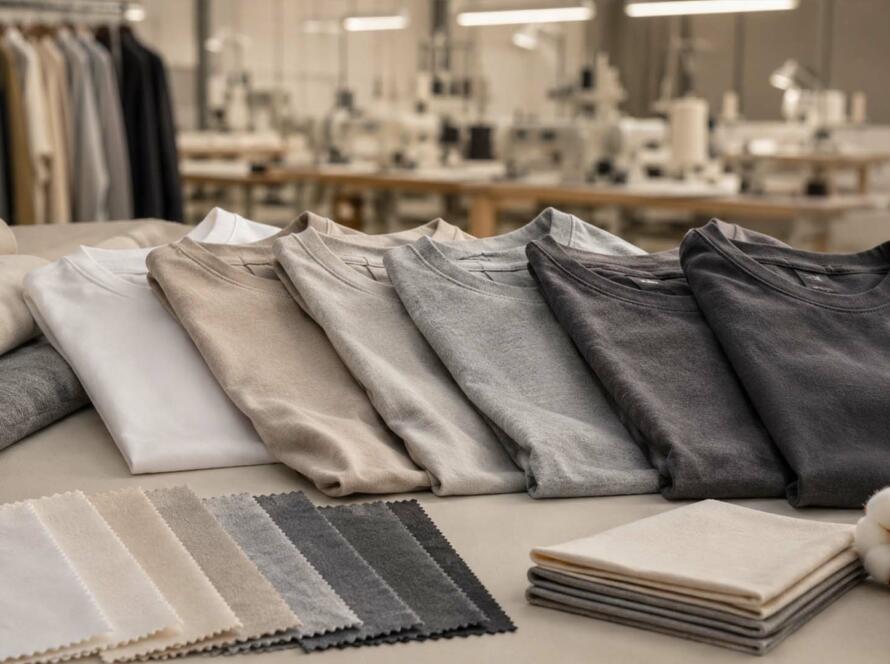
That is why professional fabric sourcing usually involves swatches, sample meters, or lab dips before final approval. Brands should touch the fabric, stretch it, fold it, test it against the body, and compare it with reference garments.
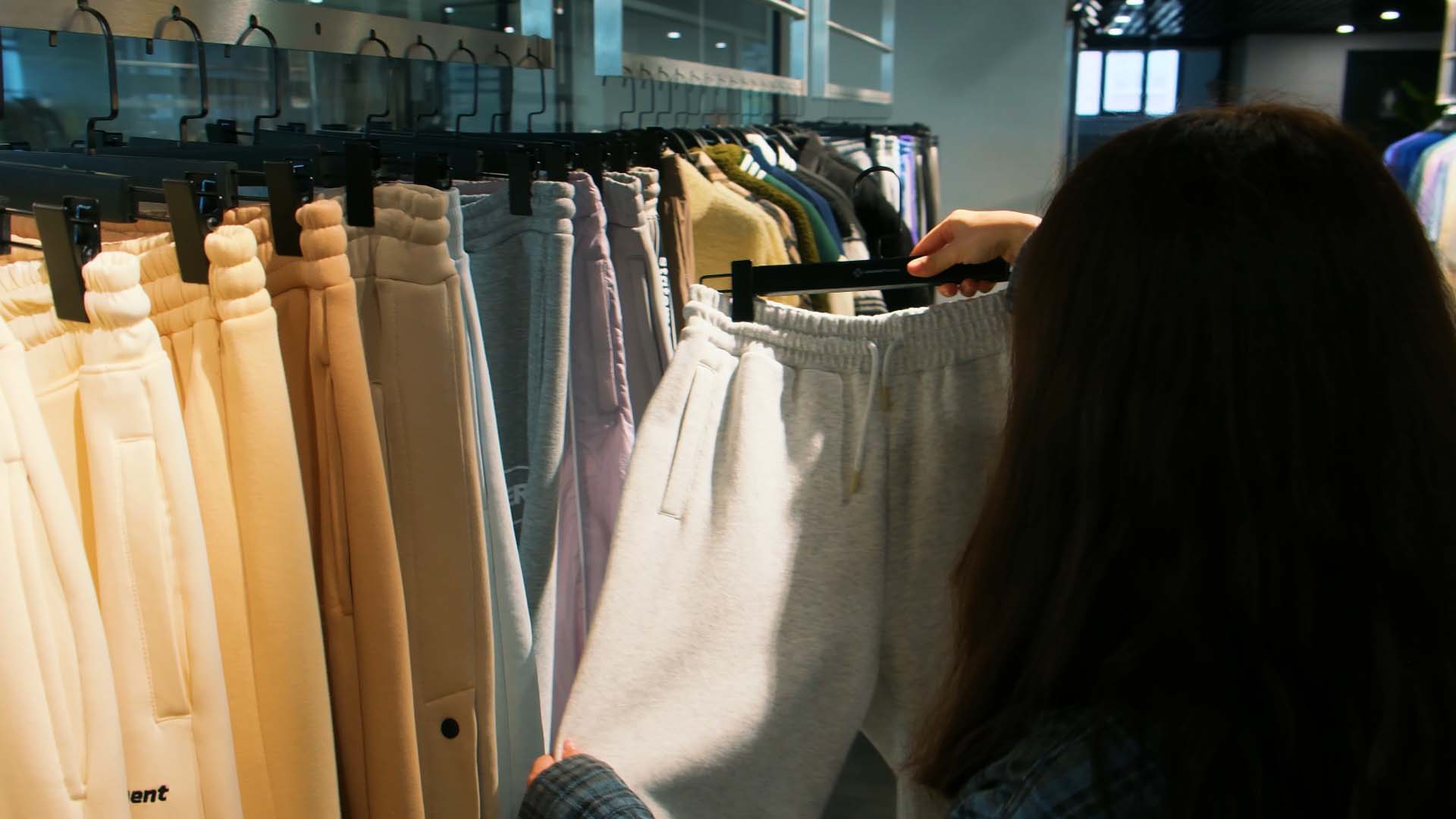
Stretch and Recovery
Stretch is important for comfort, movement, and fit. But stretch alone is not enough. Recovery is just as important.
Recovery means how well the fabric returns to its original shape after being stretched.
This matters for:
- Rib cuffs
- Waistbands
- Leggings
- Slim-fit tops
- Activewear
- Fitted dresses
- Stretch trousers
- Jersey garments
A fabric with good stretch but poor recovery may become loose after wear. This can affect the look of the garment and reduce customer satisfaction.
For example, joggers with poor knee recovery may start looking worn after a short time. A ribbed tank top may lose its shape around the neckline. A fitted T-shirt may become wider after washing and wearing.
Brands should test stretch fabrics before bulk production, especially when fit is part of the product’s value.
Durability and Pilling Resistance
Durability is one of the biggest differences between a garment that looks good at first and a garment that keeps its quality over time.
When sourcing fabric, brands should consider how the material will react to:
- Washing
- Rubbing
- Stretching
- Wearing
- Printing
- Embroidery
- Heat
- Packing
- Daily use
Pilling is a common issue, especially in knitwear, fleece, sweatshirts, and blended fabrics. Pilling happens when small fiber balls form on the fabric surface after friction.
Some pilling is normal in certain fabrics, but excessive pilling can make a garment look cheap quickly. This is especially harmful for premium brands that sell based on quality and long-term value.
Durability should be reviewed during sampling and testing, not after bulk production has started.
Shrinkage: A Small Percentage Can Change the Fit
Shrinkage is one of the most important technical factors in fabric sourcing for fashion brands.
If a fabric shrinks too much after washing, the final garment may become shorter, tighter, or distorted. Even a few centimeters can change the fit of a T-shirt, hoodie, or sweatshirt.
Shrinkage can affect:
- Body length
- Sleeve length
- Shoulder width
- Waistband fit
- Side seams
- Print position
- Label placement
- Overall sizing consistency
This is why pre-production testing matters. Fabric should be checked for shrinkage before final patterns are approved for bulk production.
In many cases, manufacturers adjust patterns based on expected shrinkage. If shrinkage is ignored, the approved sample and the final washed garment may not match.
Color Fastness and Shade Consistency
Color is part of brand identity. A black hoodie should stay rich after washing. A cream sweatshirt should not shift too much between production batches. A red T-shirt should not bleed onto lighter garments.
Color fastness refers to how well a fabric holds its color under conditions such as washing, rubbing, perspiration, light, or heat.
Poor color fastness can lead to:
- Fading
- Color bleeding
- Staining
- Uneven shade
- Customer complaints
- Problems with matching sets
For matching products, such as hoodie and jogger sets, shade consistency is especially important. The top and bottom should look like part of the same set, even if different fabric constructions are used.
Brands should also be careful with custom dye colors. Lab dips, strike-offs, and bulk shade approvals help reduce risk before production.
Fabric and Decoration Compatibility
Not every fabric works well with every decoration method.
If the garment will include printing, embroidery, washing, distressing, appliqué, puff print, screen print, digital print, or silicone print, the fabric must be suitable for that technique.
Printing
For printing, the surface should be stable and clean enough to hold the artwork properly. Some fabrics absorb ink differently. Some stretch fabrics may crack if the print is not suitable. Dark fabrics may require special preparation or additional print layers.
Embroidery
For embroidery, the fabric needs enough stability to hold stitches without distortion. Lightweight or very stretchy fabrics may need backing or special handling. Heavy embroidery on thin fabric can pull the garment out of shape.
Washing and Garment Dye
Garment dyeing, enzyme washing, stone washing, and vintage treatments can change the fabric’s feel, color, and measurements. These processes should be planned early because they can affect shrinkage, shade, and final garment appearance.
The best fabric is not just the one that looks good. It is the one that works with the full production plan.
Price: Look Beyond the Fabric Cost Per Meter
Fabric price is important, but it should not be reviewed in isolation.
A cheaper fabric can become expensive if it causes high shrinkage, poor sewing performance, high defect rates, color problems, or customer returns. A more expensive fabric may be the better business decision if it improves quality, reduces production issues, and supports a higher retail price.
When evaluating fabric cost, brands should consider:
- Fabric price per meter or kilogram
- Fabric width
- Consumption per garment
- Cutting waste
- Shrinkage allowance
- Dyeing or finishing cost
- Testing cost
- MOQ
- Lead time
- Reorder availability
Fabric sourcing should connect directly to the target garment cost. A premium brand may accept a higher fabric cost if the final product justifies the retail price. A startup may need to balance quality with realistic order quantities and cash flow.
MOQ and Availability
MOQ means minimum order quantity. In fabric sourcing, MOQ can apply to ready-stock fabrics, custom colors, special compositions, custom knitting, dyeing, finishing, or certified materials.
Ready-stock fabrics usually have lower barriers and faster availability. Custom fabrics often require higher MOQs and longer lead times.
Fashion brands should understand the difference between:
- Stock fabric
- Stock fabric in custom color
- Custom-developed fabric
- Certified fabric
- Seasonal fabric
- Reorderable fabric
A startup brand may begin with high-quality stock fabrics to reduce risk. An established brand may develop custom fabrics to create a more unique product.
The key question is not only whether the fabric is available today. The brand should also ask whether it can be reordered later if the product sells well.
Lead Times: Fabric Can Control the Production Calendar
Fabric lead time affects the entire production schedule.
If fabric is already available, sampling and production can move faster. If fabric needs custom dyeing, special finishing, certification documents, or import coordination, the timeline becomes longer.
Lead times can be affected by:
- Yarn availability
- Knitting or weaving schedule
- Dyeing capacity
- Finishing process
- Testing requirements
- Custom color approvals
- Supplier workload
- Transportation
- Holiday periods
Brands should confirm fabric timing before promising launch dates, campaign shoots, wholesale delivery windows, or retail drops.
A strong manufacturer will guide the brand honestly. It is better to adjust the production calendar early than to rush fabric sourcing and risk quality issues later.
Why Istanbul and Turkey Matter for Fabric Sourcing
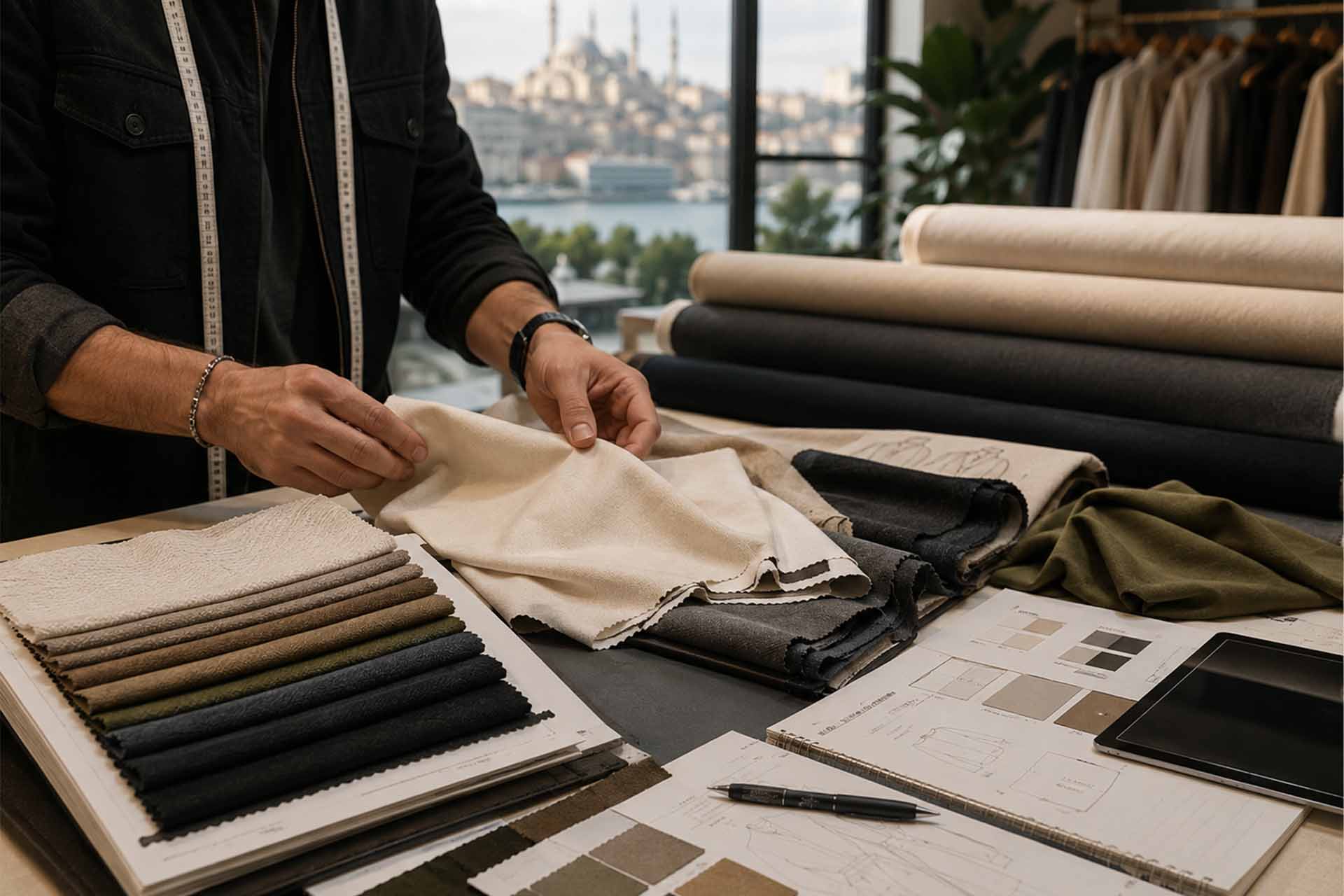
Turkey has a strong textile and apparel ecosystem, and Istanbul is one of its most important business and production centers. For US and European fashion brands, this creates practical advantages.
Istanbul offers access to a wide range of fabrics, including cotton jersey, fleece, French terry, rib, woven fabrics, shirting, denim, outerwear materials, and more specialized textile options.
For many brands, Turkey is attractive because it combines manufacturing knowledge, fabric availability, skilled production teams, and geographic proximity to Europe. This can make communication, sampling, development, and shipping more efficient compared with distant sourcing markets.
For brands producing private label clothing, streetwear, premium basics, or custom collections, fabric sourcing in Istanbul can support a faster and more controlled development process.
At Istanbul Factory, this local textile network is one of the strengths behind the production process. Brands can move from fabric selection to sampling, pattern development, print and embroidery, quality control, and bulk production with one coordinated partner.
A Practical Fabric Sourcing Checklist for Fashion Brands
Before approving fabric for production, fashion brands should review the following points:
- Composition: What fibers are used?
- GSM: Is the weight suitable for the product?
- Texture: Does the surface match the design?
- Hand feel: Does it feel right for the target customer?
- Stretch: Does the fabric move as needed?
- Recovery: Does it return to shape after stretching?
- Shrinkage: Has it been tested before production?
- Color fastness: Will the color hold after washing and wear?
- Shade consistency: Can the color be repeated in bulk?
- Durability: Will it resist pilling, rubbing, and daily use?
- Decoration compatibility: Is it suitable for printing or embroidery?
- MOQ: Does the minimum quantity match the brand’s plan?
- Price: Does it fit the target garment cost?
- Lead time: Can it meet the production calendar?
- Reorder potential: Can the fabric be used again in future drops?
This checklist helps brands avoid emotional decisions based only on appearance. Fabric should be approved because it looks good, performs well, fits the budget, and supports production.
Common Fabric Sourcing Mistakes to Avoid
Many production problems begin before sewing starts. These are some of the most common mistakes brands make when choosing fabric.
Choosing Only by Look
A fabric may look perfect in a photo but fail in stretch, shrinkage, or durability. Always check physical swatches or sample meters.
Ignoring Shrinkage
If shrinkage is not considered before pattern approval, the final garment may not match the intended fit.
Selecting Fabric Too Late
Fabric should be discussed early in product development. Late fabric changes can delay sampling and increase cost.
Forgetting Decoration Requirements
A fabric that is suitable for plain garments may not work well for heavy embroidery, puff print, or garment dyeing.
Choosing the Cheapest Option
Low-cost fabric can reduce quality, damage brand perception, and create issues after washing.
Not Planning Reorders
If a fabric is only available once, a successful product may be difficult to restock later.
How Istanbul Factory Supports Fabric Sourcing

Istanbul Factory helps fashion brands choose fabrics that match their design, quality expectations, budget, and production goals.
Our team supports brands with:
- Fabric sourcing in Istanbul and Turkey
- Fabric swatch review
- Composition and GSM guidance
- Fabric options for T-shirts, hoodies, sweatshirts, joggers, shorts, outerwear, and more
- Private label clothing production
- Custom clothing manufacturing
- Print and embroidery compatibility
- Garment sampling
- Pattern and fit development
- Quality control before and during production
- Packaging and labeling support
For startup brands, we help simplify the process and avoid costly early mistakes. For established fashion labels, we support consistency, development speed, and production quality.
Fabric sourcing is not only about finding material. It is about building the foundation for a garment that feels right, fits correctly, performs well, and represents the brand properly.
Work With Istanbul Factory
If you are developing a fashion collection and need help choosing the right fabric before production, Istanbul Factory can support you from concept to finished garment.
Based in Istanbul, we work with fashion brands, streetwear labels, startups, and premium apparel companies across Europe and the United States.
Whether you need fabric sourcing, sampling, private label production, custom clothing manufacturing, print and embroidery, or full-package garment production, our team can guide you through each step with a professional and quality-focused approach.
Your fabric choice shapes the final product. Istanbul Factory helps you make that choice with clarity, experience, and production knowledge.
FAQ
What is fabric sourcing for fashion brands?
Fabric sourcing for fashion brands is the process of finding, evaluating, and selecting the right fabric before garment production. It includes checking composition, GSM, texture, stretch, shrinkage, color fastness, durability, price, MOQ, and lead time.
Why is fabric sourcing important before clothing production?
Fabric sourcing is important because fabric affects fit, comfort, durability, printing, embroidery, shrinkage, cost, and customer satisfaction. Choosing the wrong fabric can lead to production delays, quality issues, and poor product performance.
What does GSM mean in fabric sourcing?
GSM means grams per square meter. It measures fabric weight. A higher GSM usually means a heavier fabric, while a lower GSM usually means a lighter fabric. However, GSM should be evaluated together with composition, knitting, finishing, and hand feel.
How do I choose the right fabric for my clothing brand?
Start with the garment purpose, target customer, season, fit, decoration method, and price point. Then evaluate fabric composition, GSM, texture, stretch, shrinkage, color fastness, durability, MOQ, and production lead time.
What fabric is best for premium hoodies?
Premium hoodies often use heavyweight cotton fleece or French terry, commonly with a dense surface and soft inner feel. The best choice depends on the desired structure, warmth, fit, budget, and decoration method.
What should fashion brands test before approving fabric?
Fashion brands should test shrinkage, color fastness, stretch recovery, pilling resistance, durability, hand feel, and compatibility with printing or embroidery before approving fabric for bulk production.
Is Turkey a good place for fabric sourcing?
Yes. Turkey has a strong textile and apparel manufacturing ecosystem, and Istanbul offers access to many fabric options, skilled production teams, and efficient communication for European and US fashion brands.
Can Istanbul Factory help with fabric sourcing and production?
Yes. Istanbul Factory supports fashion brands with fabric sourcing, garment sampling, private label production, custom clothing manufacturing, print and embroidery, quality control, packaging, and end-to-end apparel production in Istanbul.

2 Comments