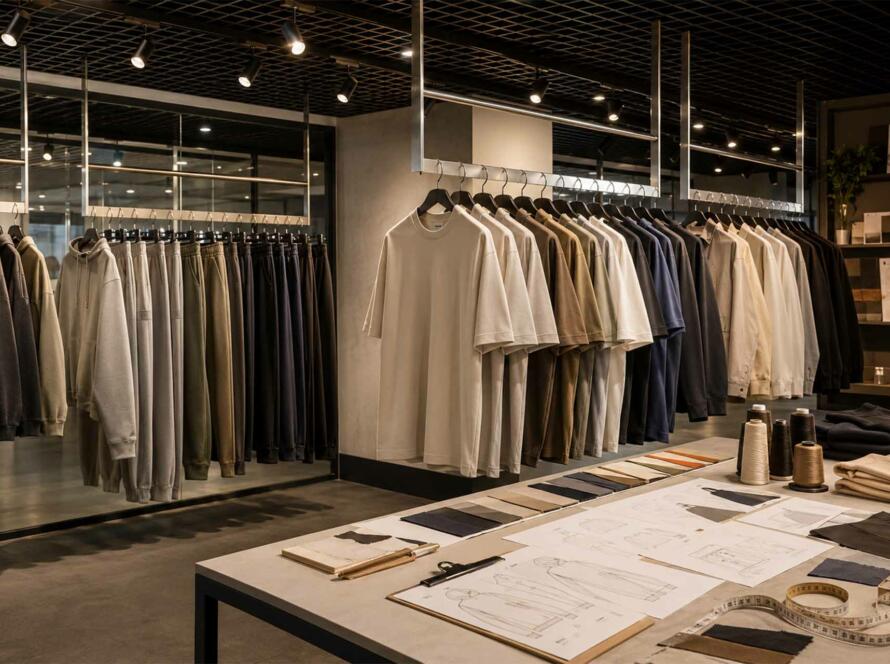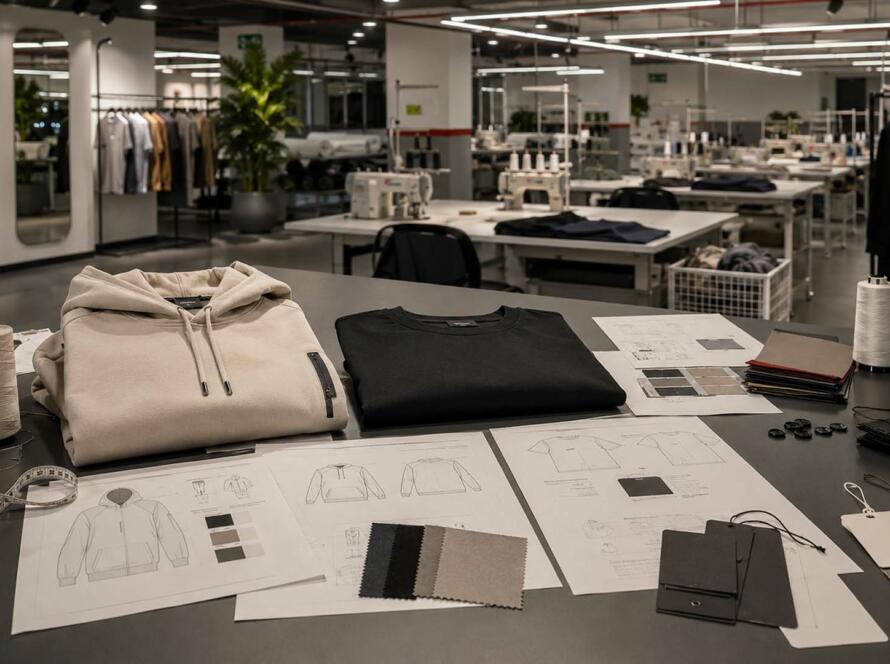


Choosing the right production model is one of the first serious decisions a fashion brand makes. Before fabrics, colors, labels, packaging, or campaign photos, you need to understand how your garments will be developed.
Many brands compare two options: working with a custom clothing manufacturer or choosing a private label manufacturer. Both can help you bring a collection to market, but they serve different needs.
A private label model is usually based on ready-developed or semi-developed products that can be branded and adjusted. A custom clothing model is built around original development, including patterns, measurements, fabrics, construction details, and finishing.
The right choice depends on your brand stage, budget, timeline, design complexity, and how much product uniqueness you need.
What Is a Private Label Manufacturer?
A private label manufacturer produces garments that are already developed or partly developed, then customizes them for your brand. This can include your logo, neck label, care label, packaging, print, embroidery, colors, or small design adjustments.
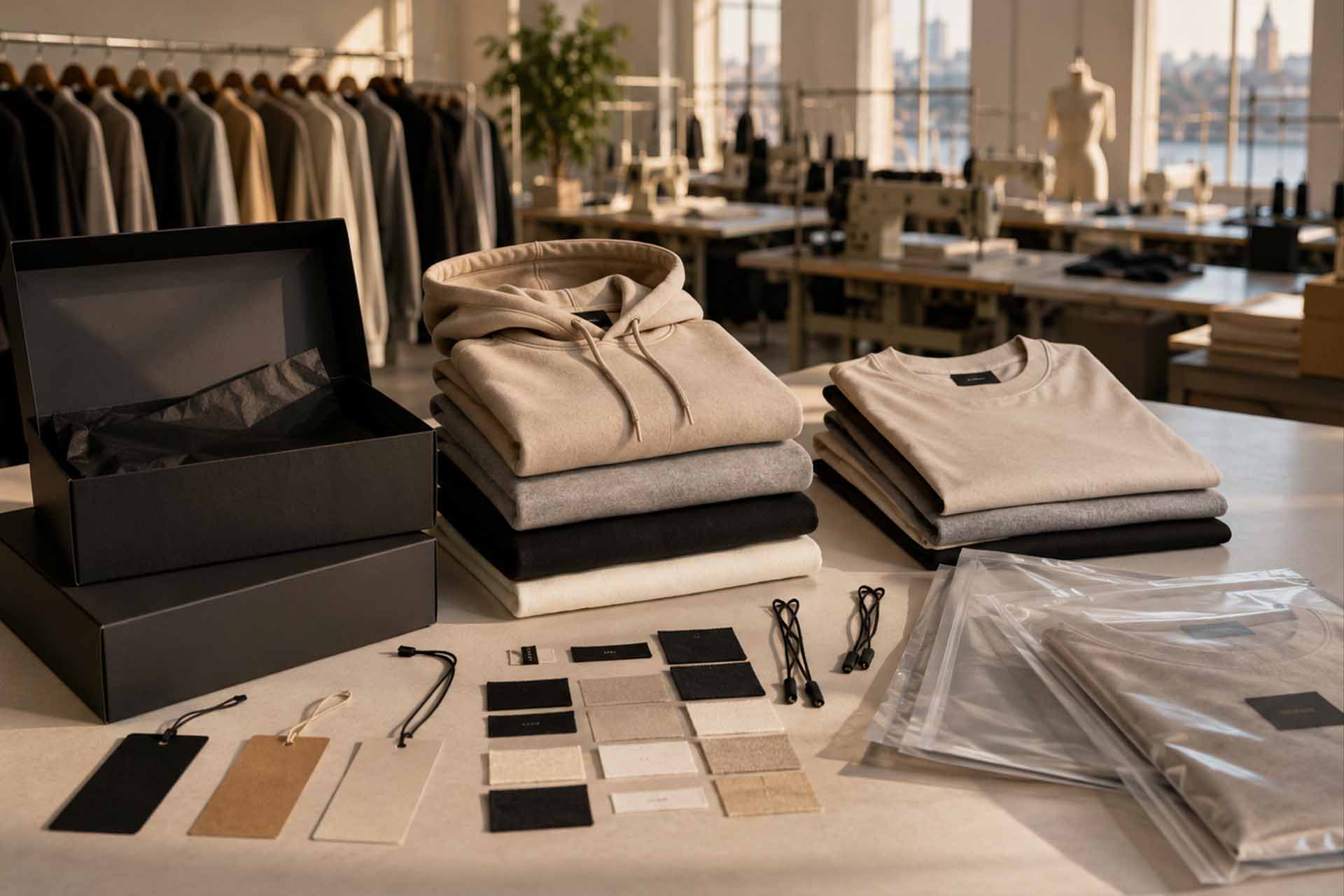
For example, a fashion startup may choose an existing heavyweight hoodie shape, add its own label, adjust the color, apply embroidery, and launch faster than building the hoodie from zero.
Private label manufacturing is popular for:
- Startup clothing brands
- Streetwear brands launching their first collection
- Brands testing a new market
- Businesses that need faster production
- Labels focused on branding, marketing, and sales rather than technical product development
The key advantage is speed. Since the base product already exists, development is simpler. Sampling can be faster, decisions are easier, and production risks are lower.
Private label does not mean “generic” when done well. A strong manufacturer can still help with fabric quality, fit selection, finishing, labels, packaging, and premium branding. The difference is that the product foundation is already established.
What Is a Custom Clothing Manufacturer?
A custom clothing manufacturer develops garments according to your original design, measurements, technical requirements, and brand standards. This model is more detailed because the product is created specifically for you.
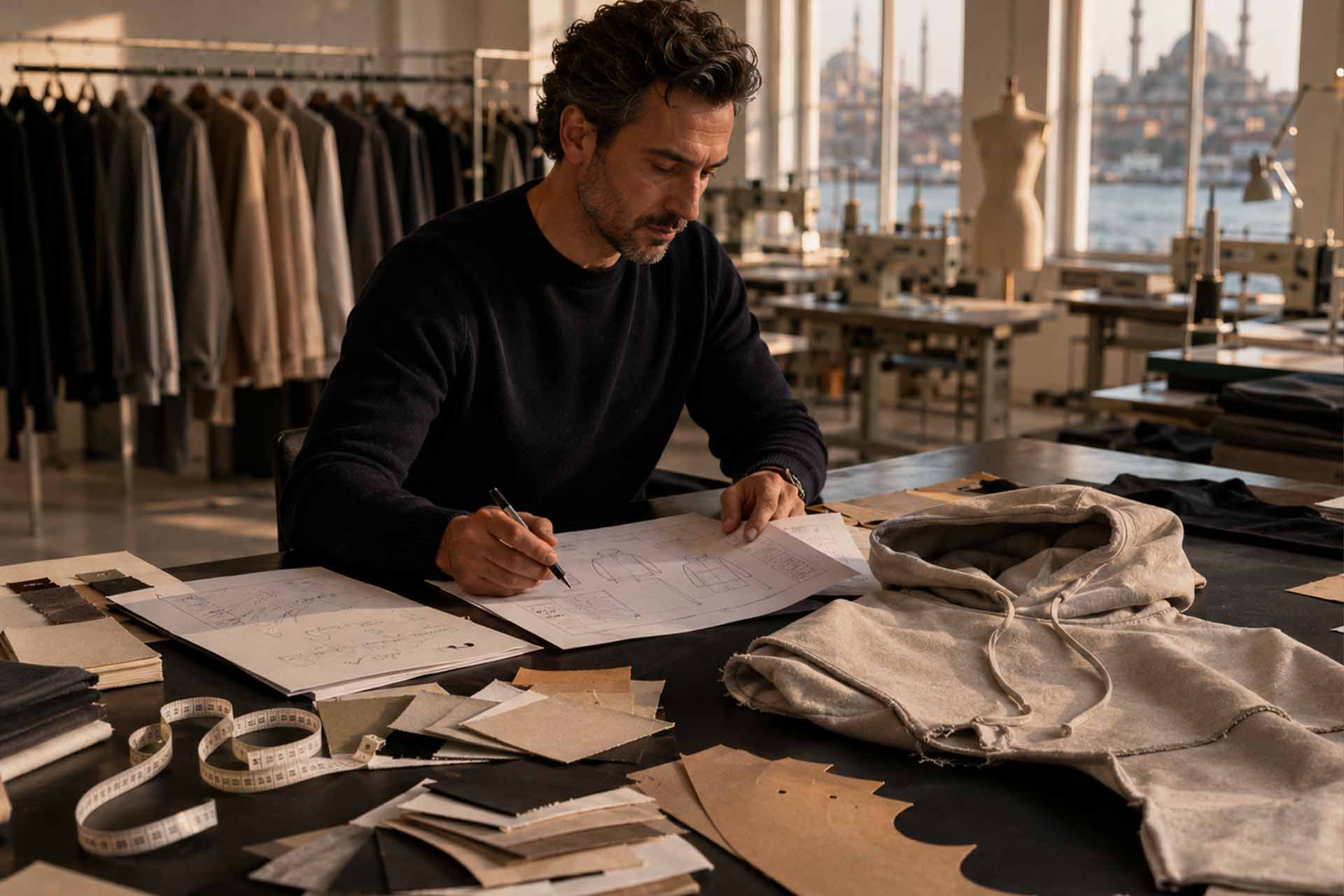
Custom production may involve:
- Original patterns
- Custom fit development
- Special fabric sourcing
- Unique cuts or silhouettes
- Custom trims and accessories
- Specific stitching or construction methods
- Custom print, embroidery, wash, or finishing
- Multiple sampling rounds
- Size grading and fit corrections
For example, a premium streetwear brand may want an oversized hoodie with a specific shoulder drop, heavy fleece fabric, custom rib quality, special pocket construction, and embroidery placement. That project usually requires custom development rather than a ready private label base.
Custom clothing manufacturing is ideal when product identity matters. If the garment itself is part of your brand DNA, custom production gives you more control.
The Main Difference Between Custom Clothing and Private Label Manufacturing
The simplest way to understand the difference is this:
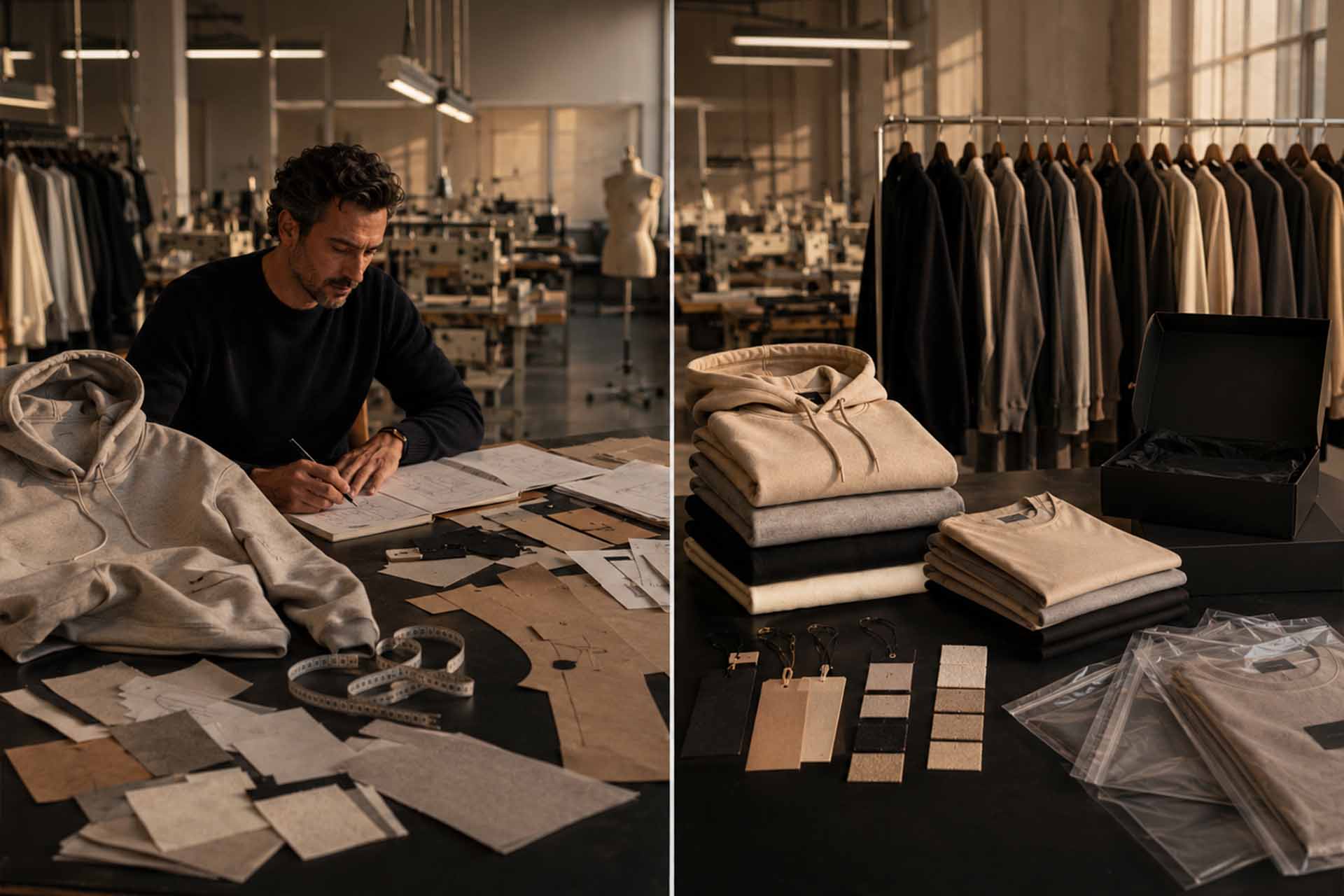
Private label is usually faster, simpler, and more accessible. Custom manufacturing gives more creative and technical control, but it requires more development time, clearer specifications, and a stronger sampling process.
Custom Clothing vs Private Label: Quick Comparison
| Feature | Private Label Manufacturing |
Custom Clothing Manufacturing
|
| Product base | Ready-developed or semi-developed |
Developed from scratch
|
| Best for | Faster launch, tested styles, first collections |
Unique designs, premium fit, original products
|
| Design control | Medium | High |
| Development time | Shorter | Longer |
| Sampling complexity | Lower | Higher |
| Fabric flexibility | Moderate | High |
| Pattern development | Usually not required | Usually required |
| Branding | Labels, packaging, prints, embroidery |
Full product and brand control
|
| Cost structure | Often more predictable |
Depends on development complexity
|
| Best brand stage | Startup or market testing |
Established brands or serious product-led startups
|
Both models can be professional. The question is not which one is better. The question is which one fits your current business goal.
When Should You Choose Private Label Manufacturing?
Private label manufacturing is a strong option when your priority is entering the market efficiently.
You may choose private label if:
- You want to launch quickly
- You are building your first collection
- You need proven garment shapes
- You want to reduce product development risk
- Your main focus is branding and marketing
- You do not yet have complete tech packs
- You want to test demand before investing in full custom development
This model works especially well for essentials such as T-shirts, hoodies, sweatshirts, sweatpants, shorts, and basic streetwear pieces. These categories can still look premium when fabric, fit, printing, embroidery, labeling, and packaging are handled carefully.
A private label hoodie, for example, can become brand-specific through heavyweight fabric, custom drawcords, embroidery, inside neck print, woven labels, and premium packaging. The base may be developed, but the final presentation can still feel exclusive.
When Should You Choose Custom Clothing Manufacturing?
Custom clothing manufacturing is the better choice when your garment needs to be distinctive from the beginning.
You may need a custom clothing manufacturer if:
- Your design has a unique silhouette
- Fit is central to your brand identity
- You require special fabrics
- You have detailed tech packs
- You want custom patterns
- You need specific trims, washes, or construction
- Your product cannot be built from an existing base
- You are creating a long-term signature style
Custom production is common for premium fashion labels, advanced streetwear brands, outerwear projects, tailored pieces, technical garments, and collections where details matter.
A custom jacket, for example, may require original pattern development, lining selection, hardware sourcing, testing, grading, and several sample corrections. This process takes more time, but it creates a product that competitors cannot easily copy.
The Role of Tech Packs in Both Models
A tech pack is useful in both private label and custom clothing manufacturing, but it plays a different role.
For private label production, a tech pack may include branding placement, colors, print files, embroidery details, label instructions, packaging notes, and size requirements.
For custom clothing production, a tech pack becomes much more technical. It may include measurements, pattern details, construction methods, stitch types, fabric specifications, trims, grading rules, and artwork placement.
If you do not have a complete tech pack, a manufacturer with product development experience can help you structure the information. At Istanbul Factory, this step is especially important because clear communication at the beginning reduces sampling errors later.
Fabric Sourcing: Standard Options vs Custom Development
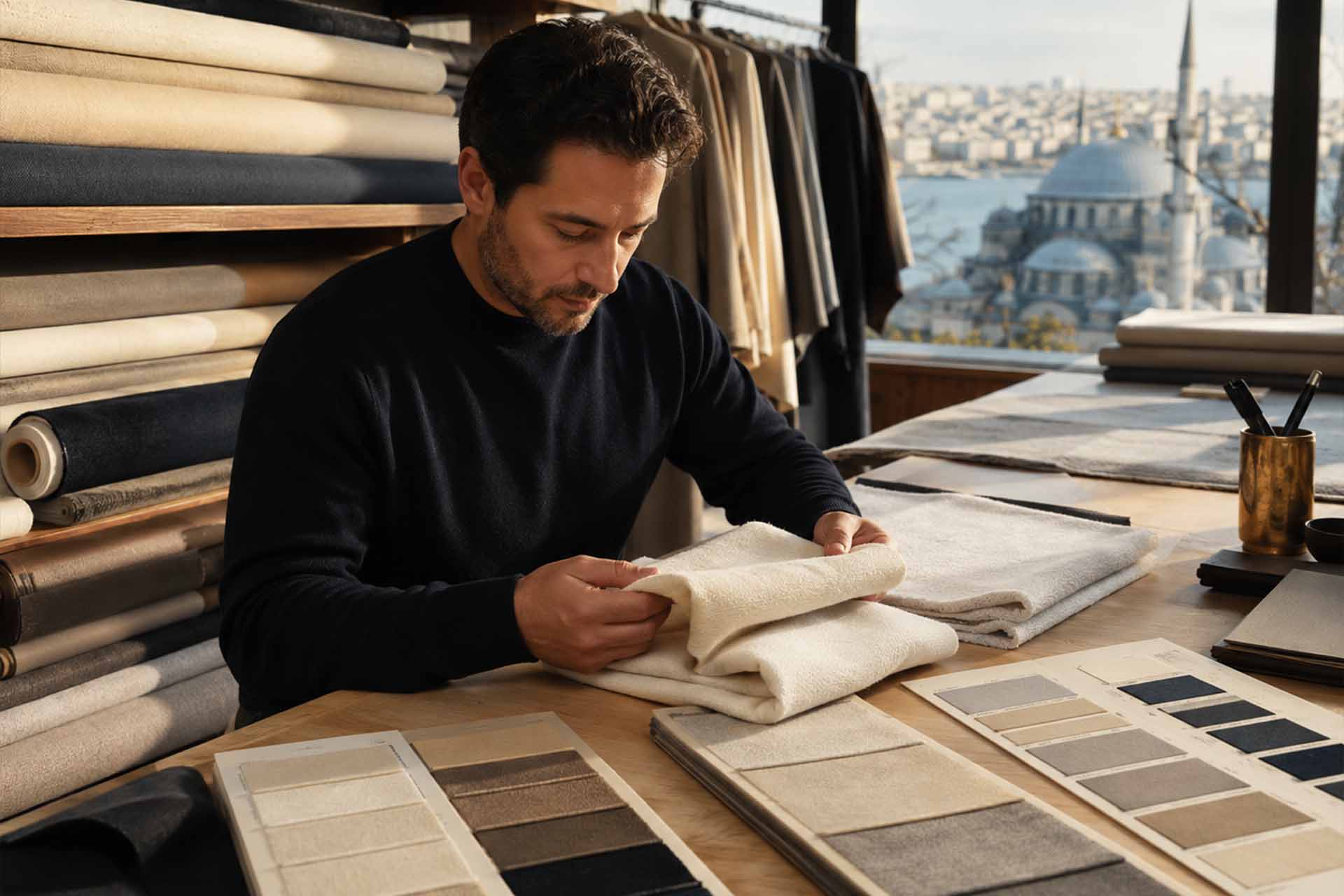
Fabric is another major difference between the two models.
Private label production often uses available or commonly sourced fabrics. This helps keep the process efficient. Brands can choose from suitable qualities such as cotton jersey, French terry, fleece, polar fleece, rib, woven fabrics, or blended materials, depending on the product.
Custom clothing production may require more specific fabric sourcing. This could include a certain GSM, texture, stretch level, composition, color, hand feel, shrinkage behavior, or sustainability requirement.
For example, a brand developing a premium oversized sweatshirt may request a specific heavyweight French terry with a soft brushed back, stable recovery, and low shrinkage. That level of detail usually belongs to custom production.
Branding Options in Private Label and Custom Clothing
Branding is possible in both models, but custom clothing gives wider control.
Private label branding may include:
- Woven neck labels
- Printed neck labels
- Hang tags
- Care labels
- Packaging
- Screen printing
- Embroidery
- Heat transfer prints
- Custom colors where possible
Custom clothing branding can go further:
- Original garment shape
- Signature fit
- Custom trims
- Special stitching details
- Branded hardware
- Custom fabric development
- Unique finishing
- Product-specific packaging
If your brand identity is mostly visual, private label may be enough. If your brand identity depends on fit, construction, texture, and detail, custom clothing manufacturing is usually the stronger route.
Cost and Timeline Considerations
Private label manufacturing is usually more predictable because the development process is simpler. Sampling may be faster, and fewer technical decisions are needed before production.
Custom manufacturing takes longer because the product must be developed, tested, corrected, and approved. The more complex the garment, the more important the sampling stage becomes.
For serious brands, this extra time is often worthwhile. A well-developed custom product can improve customer satisfaction, reduce returns, and strengthen brand positioning.
The practical advice is simple: choose private label when speed and market testing matter most. Choose custom production when product uniqueness and long-term brand value matter most.
Why Istanbul and Turkey Are Strong for Both Models
Turkey has become an important manufacturing destination for European and US fashion brands because it offers a strong balance of quality, flexibility, communication, and logistics.
For European brands, Istanbul provides a major advantage compared with distant production markets: shorter travel distance, easier communication, faster shipping routes, and a production culture familiar with European quality expectations.
For US brands, Turkey can offer strong textile expertise, premium garment production, and access to a wide fabric and finishing network.
Istanbul is especially valuable because it connects fabric suppliers, pattern makers, sampling teams, print and embroidery facilities, packaging suppliers, and export experience within one production ecosystem.
That makes the city suitable for both private label collections and fully custom clothing development.
How Istanbul Factory Supports Both Production Models
Istanbul Factory works with fashion brands, streetwear labels, startups, and established companies that need reliable clothing manufacturing in Istanbul.
For private label projects, Istanbul Factory can support brands with ready or semi-developed garment options, fabric guidance, branding, print, embroidery, labeling, packaging, and production planning.
For custom clothing projects, the process can include product development, fabric sourcing, sampling, fit adjustments, custom details, quality control, and bulk production.
The goal is not to push every brand into the same model. A startup testing its first hoodie collection may need a different path than a premium label developing a signature garment from scratch.
A good manufacturing partner should help you understand what is realistic, what will affect cost, and where your product needs more technical development.
Which Model Is Right for Your Brand?
Choose private label manufacturing if you want a faster launch, simpler development, and a reliable product base that can be branded professionally.
Choose custom clothing manufacturing if you need original fits, unique fabrics, custom patterns, or special construction details that make your product stand apart.
For many brands, the best path is gradual. You may start with private label production to test the market, then move into custom development once you understand your customers, sizing, pricing, and product direction.
That approach reduces risk while still leaving room for long-term brand growth.
Work With Istanbul Factory
If you are unsure whether your project needs private label production or fully custom clothing manufacturing, Istanbul Factory can help you evaluate the best route.
From fabric sourcing and garment sampling to print, embroidery, quality control, and bulk production, Istanbul Factory supports fashion brands looking for a professional manufacturing partner in Turkey.
Whether you are launching your first streetwear collection or developing a premium custom line, the right production model can save time, reduce mistakes, and help your brand move forward with confidence.
FAQ
What is the difference between a custom clothing manufacturer and a private label manufacturer?
A private label manufacturer usually works with ready-developed or semi-developed products that can be branded for your company. A custom clothing manufacturer develops garments from your original design, including patterns, fabrics, fit, construction, and details.
Is private label clothing good for startup fashion brands?
Yes. Private label clothing can be a smart option for startups because it allows brands to launch faster, reduce development complexity, and test the market before investing in fully custom products.
When should a brand choose custom clothing manufacturing?
A brand should choose custom clothing manufacturing when it needs unique patterns, special fabrics, original silhouettes, specific fit requirements, or product details that cannot be achieved with a ready-developed base.
Is custom clothing manufacturing more expensive than private label?
Custom clothing manufacturing is often more expensive because it requires product development, sampling, pattern work, fabric sourcing, and technical adjustments. The final cost depends on garment complexity, materials, quantities, and finishing requirements.
Can Istanbul Factory help with both private label and custom clothing production?
Yes. Istanbul Factory supports both private label and custom clothing production, including fabric sourcing, sampling, print and embroidery, garment production, quality control, labeling, and packaging.
Which model is faster: private label or custom clothing?
Private label manufacturing is usually faster because the product base already exists. Custom clothing production takes longer because the garment must be developed, sampled, corrected, and approved before bulk production.
Can a private label product still look premium?
Yes. A private label product can look premium when the fabric, fit, finishing, branding, labels, print, embroidery, and packaging are handled professionally.