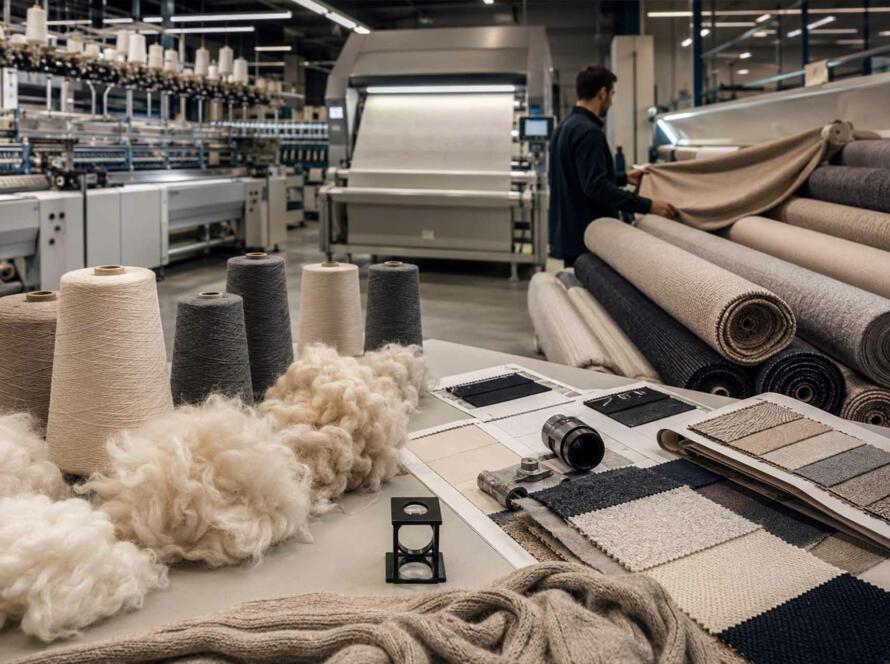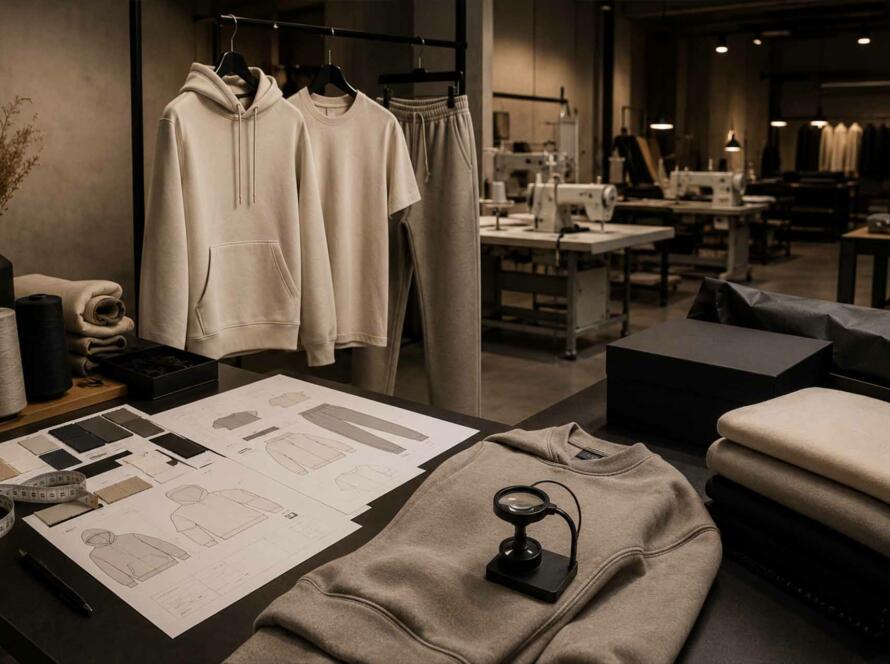


For a clothing brand, one of the earliest production decisions is also one of the most important: should you manufacture the garment from the ground up, or buy an existing blank garment and customise it with printing, embroidery or branding?
Both approaches can produce commercially successful products, but they serve very different purposes.
Cut and sew manufacturing gives a brand control over the garment itself: the fabric, fit, pattern, measurements, construction, trims, finishing and overall identity.
Ready-made blanks, sometimes called stock blanks, are garments that have already been manufactured. The brand purchases an existing T-shirt, hoodie, sweatshirt or similar product and adds decoration or branding afterward.
The right choice depends on your quantity, budget, launch schedule and how distinctive you want the finished product to be.
For fashion labels building a long-term product identity, understanding this difference is essential before starting sampling or requesting production quotations.
What Is Cut and Sew Manufacturing?
Cut and sew manufacturing is a production method in which a garment is created from fabric rather than purchased as a finished blank.
The process generally starts with a design, specification sheet or tech pack. Fabric is sourced, patterns are developed, garment panels are cut, individual components are sewn together, and the finished product is inspected and prepared for delivery.
Depending on the project, the process may include:
- Fabric sourcing or fabric development
- Pattern making
- Prototype development
- Fit sampling
- Size grading
- Cutting
- Sewing and assembly
- Printing or embroidery
- Custom labels and trims
- Washing or garment finishing
- Quality control
- Packaging
This approach allows a brand to influence almost every physical characteristic of the garment.
A streetwear label, for example, may want a heavyweight oversized hoodie with dropped shoulders, a wider body, a particular hood shape, thick ribbing and a custom embroidery placement.
Those characteristics are difficult to achieve simply by decorating a stock hoodie.
With cut and sew manufacturing, they can be developed as part of the product itself.
What Are Ready-Made or Stock Blanks?
Ready-made blanks are finished garments manufactured in advance and sold without significant branding.
Common blank products include:
- T-shirts
- Hoodies
- Sweatshirts
- Polo shirts
- Tank tops
- Tote bags
- Basic sportswear
A brand purchases the garment in available sizes and colours and then adds customisation such as:
- Screen printing
- Embroidery
- Heat transfer
- DTF printing
- Woven labels
- Neck labels
- Hangtags
- Packaging
This model is widely used for merchandise, promotional clothing, events, creator brands and small product launches because development work is limited.
There is usually no pattern development, fit approval or extensive sampling process because the garment already exists.
The main question becomes: Is the existing blank good enough for the product you want to sell?
For some brands, the answer is yes.
For others, especially those competing through fit, fabric and product design, the limitations become noticeable very quickly.
Cut and Sew Manufacturing vs Ready-Made Blanks: The Main Difference
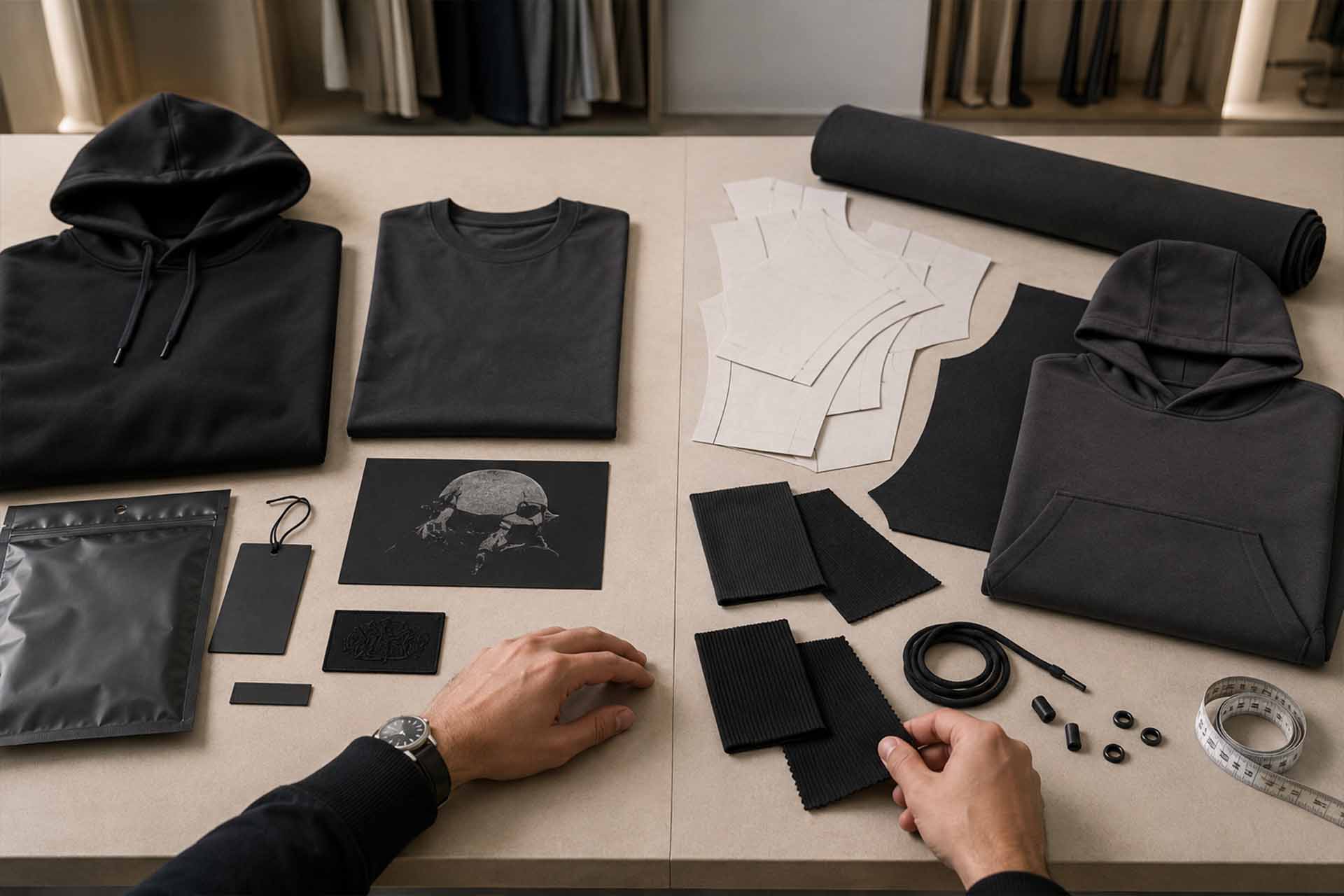
The simplest distinction is this:
With cut and sew manufacturing, you customise the garment. With ready-made blanks, you customise an existing garment.
That difference influences virtually every production decision.
| Area | Cut and Sew Manufacturing | Ready-Made Blanks |
|---|---|---|
| Fabric | Custom selection | Predetermined |
| Fit | Customisable | Fixed |
| Pattern | Developed for brand | Existing |
| Construction | Customisable | Limited |
| Colours | More flexibility | Stock colours |
| Printing | Highly flexible | Usually flexible |
| Embroidery | Highly flexible | Usually flexible |
| Labels | Fully integrated | Often replaced or added |
| MOQ | Usually higher | Usually lower |
| Sampling | Development required | Limited |
| Lead time | Longer | Faster |
| Product uniqueness | High | Limited |
| Brand differentiation | Strong | Mainly visual |
For brands comparing production options, this table often provides the fastest way to understand the commercial difference.
The details, however, matter.
Fabric Selection: One of the Biggest Differences
Fabric is one of the strongest reasons brands move from blanks to cut and sew manufacturing.
When you purchase a stock blank, the fabric has already been chosen by the blank manufacturer.
You may be able to select between several product lines, but you usually cannot specify exactly what you want.
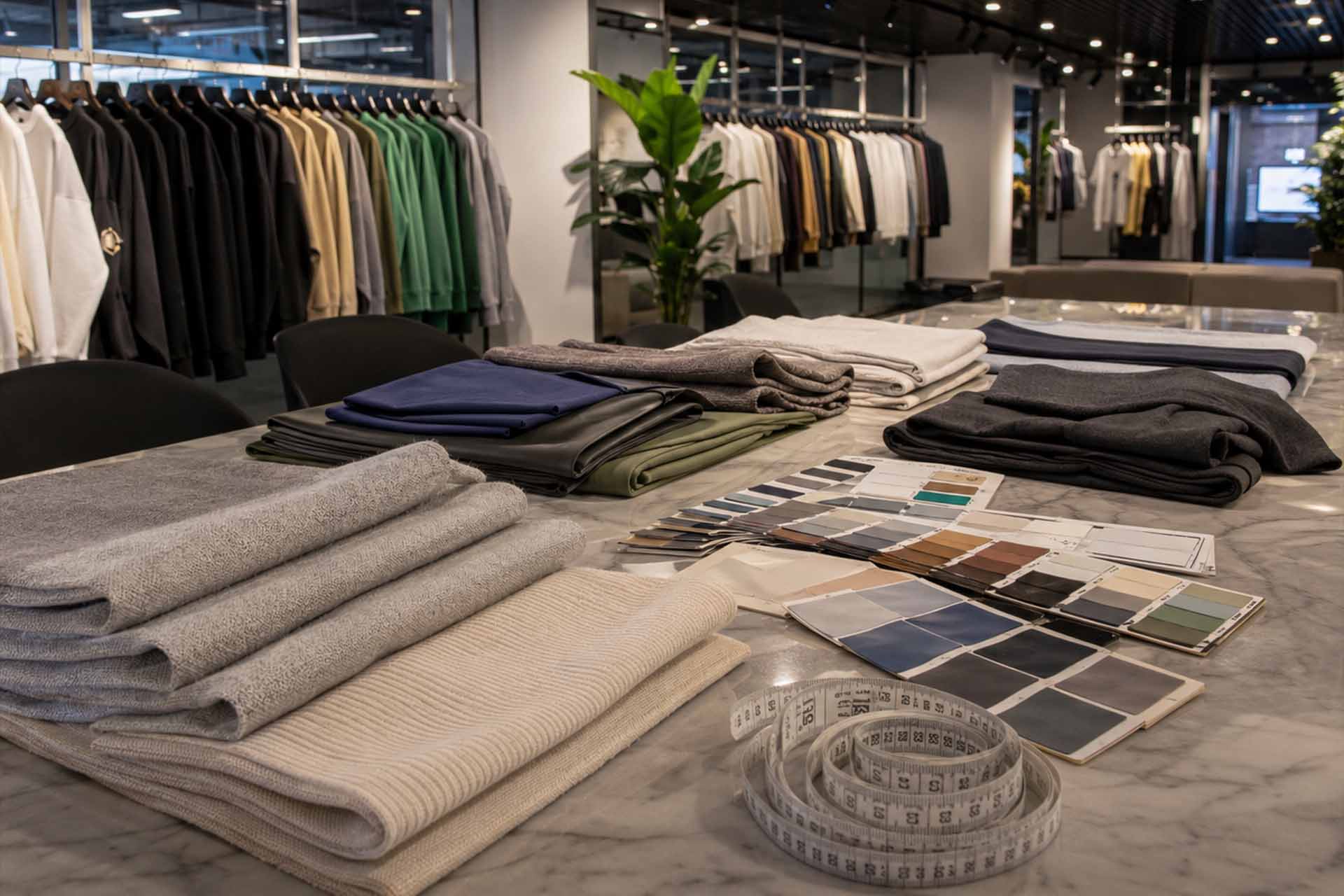
For example, your choices may be limited to:
- 180 GSM cotton jersey
- 240 GSM sweatshirt fabric
- 320 GSM fleece
- Standard cotton-polyester blends
With custom cut and sew production, fabric can be selected specifically for your project.
A manufacturer may work with you on factors such as:
- Fibre composition
- GSM
- Fabric weight
- Knit structure
- Surface texture
- Stretch
- Recovery
- Brushing
- Shrinkage
- Colour
- Hand feel
- Washing behaviour
A premium streetwear brand might request a 400 GSM heavyweight French Terry with a dry hand feel and structured drape.
A luxury basics label might prioritise compact cotton jersey with a smoother surface.
A sustainable brand may request certified organic cotton or recycled fibre options.
These decisions influence how the garment looks, feels, wears and positions itself in the market.
Control Over Fit, Pattern and Measurements
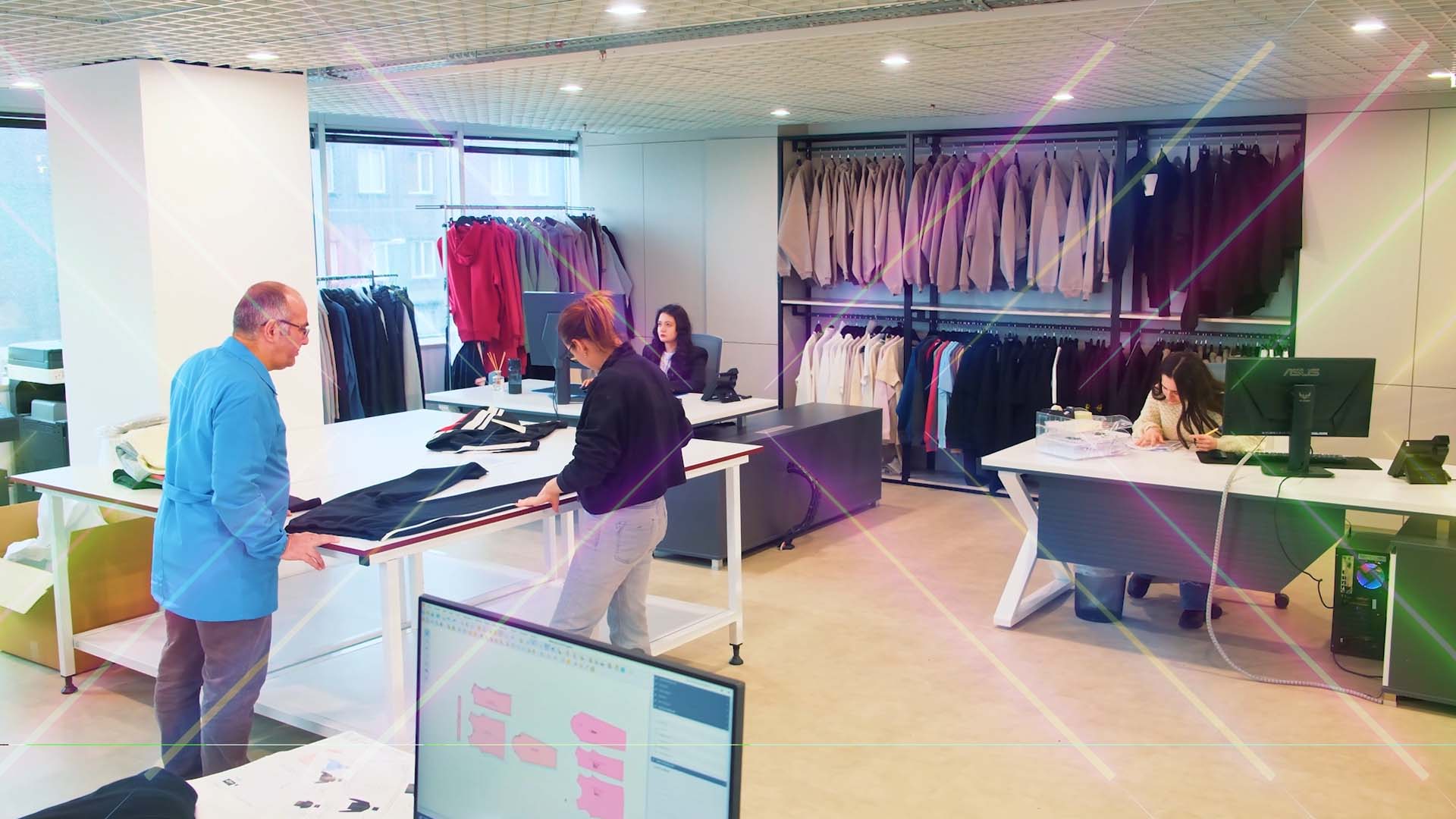
Two garments can use similar fabric and still feel completely different because of pattern engineering.
Fit is one of the areas where blanks create the greatest restriction.
With a blank garment, measurements are determined by the supplier.
You may be able to choose between regular fit, oversized fit or relaxed fit products, but you cannot normally control every measurement.
Cut and sew manufacturing allows you to develop your own fit.
That can include adjustments to:
- Chest width
- Body length
- Shoulder width
- Sleeve length
- Armhole depth
- Neck opening
- Hood dimensions
- Rib height
- Cuff width
- Hem construction
- Overall silhouette
This matters particularly for brands whose customers recognise them through a consistent fit.
If your oversized T-shirt has a specific shoulder drop and body proportion, or your hoodie uses a distinctive cropped silhouette, the pattern becomes part of your intellectual product identity.
A blank cannot provide that same level of ownership.
Garment Construction Can Be Customised
Cut and sew manufacturing also gives brands control over how the garment is built.
A garment is more than fabric and measurements.
Construction details influence durability, appearance and perceived quality.
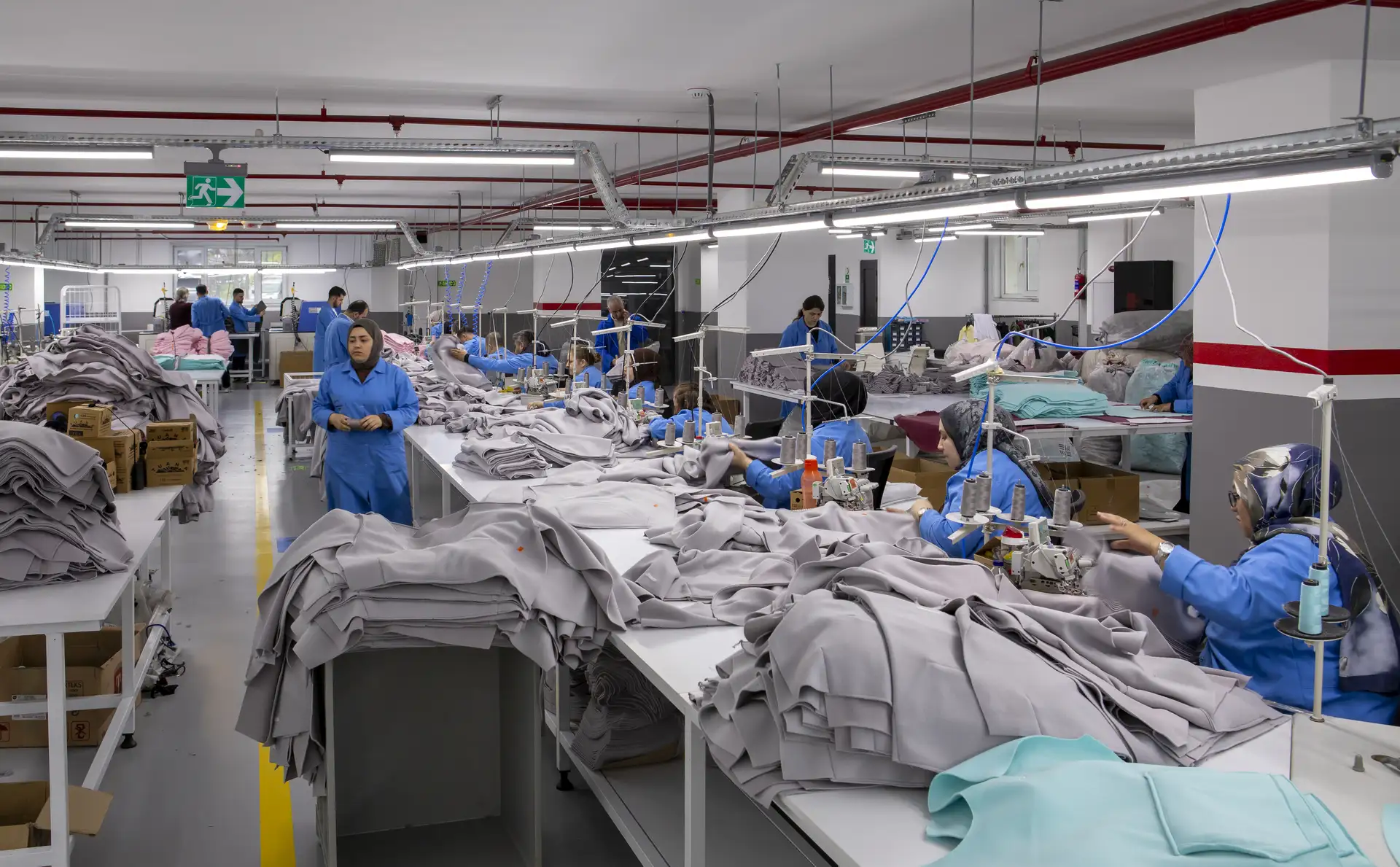
Depending on the design, brands may specify:
- Seam construction
- Topstitching
- Rib construction
- Reinforcement
- Pocket shape
- Hood construction
- Zipper type
- Drawcord specifications
- Panels
- Inserts
- Side seams
- Raw edges
- Binding
- Lining
These details may seem small individually, but together they create the character of a product.
For premium brands, this distinction is significant.
A custom garment can be engineered around the intended aesthetic rather than adapted to whatever construction already exists on a blank.
Printing and Embroidery: Both Models Can Work
Printing and embroidery are areas where both production methods can offer strong customisation.
A ready-made blank can usually be decorated with:
- Screen printing
- Puff printing
- Plastisol printing
- Water-based printing
- DTF
- Heat transfer
- Embroidery
- Patches
For simple graphic merchandise, this may be completely sufficient.
A band T-shirt, corporate hoodie or limited event collection may not require a custom garment pattern.
However, cut and sew production offers more freedom because decoration can be considered before the garment is assembled.
For example, printing or embroidery can sometimes be applied to cut panels before sewing.
This can make it easier to create:
- Oversized graphics crossing unusual areas
- Embroidery close to seams
- Sleeve artwork
- Large back applications
- Multi-panel designs
- Custom pocket details
The decoration becomes part of the product development process rather than a treatment added after manufacturing.
MOQ Differences
Minimum order quantity is often one of the strongest reasons early-stage brands start with blanks.
Ready-made blanks may be available in relatively small quantities because the garment supplier has already produced the inventory.
A decorator may therefore be able to print or embroider small runs.
Cut and sew manufacturing usually requires higher production quantities.
Why?
Because a factory must set up production specifically for your garment.
This may involve:
- Fabric purchasing
- Pattern preparation
- Cutting setup
- Size grading
- Sample approval
- Machine preparation
- Sewing line planning
- Quality control
- Packaging preparation
The cost of these steps needs to be distributed across the production quantity.
For this reason, cut and sew manufacturing becomes economically more practical when a brand is ready to produce at commercial scale.
Brands should therefore avoid comparing only the price per garment.
The real question is whether the production method matches the intended business model.
Sampling and Product Development
Blanks require relatively little product development.
A typical blank-based project might involve:
- Choosing the blank.
- Selecting the colour.
- Preparing artwork.
- Creating a print or embroidery sample.
- Approving production.
Cut and sew development is more detailed.
A typical process may include:
- Tech pack review.
- Fabric selection.
- Pattern development.
- First prototype.
- Fit review.
- Corrections.
- Size grading.
- Pre-production approval.
- Bulk manufacturing.
For new brands, this process may initially feel slower.
But the development stage is where much of the product’s value is created.
Measurements are refined.
Fabric behaviour is evaluated.
Construction details are corrected.
Branding positions are confirmed.
Potential production problems can be identified before bulk manufacturing begins.
Strong sampling is therefore not simply an additional cost. It is a risk-control stage.
Production Cost: Why Blanks Are Usually Cheaper to Start
For very small quantities, ready-made blanks are usually the easier financial entry point.
There is no need to fund full garment development.
You purchase the existing garment, pay for decoration and add branding.
Cut and sew manufacturing includes more development and production stages.
Cost may be influenced by:
- Fabric type
- Fabric composition
- GSM
- Garment complexity
- Order quantity
- Number of colours
- Number of sizes
- Pattern development
- Sampling
- Printing
- Embroidery
- Custom trims
- Washing
- Packaging
- Quality requirements
This does not mean cut and sew is automatically expensive.
At commercial production volumes, the economics can become very different.
A brand is purchasing manufacturing capacity rather than a finished garment plus a distributor’s margin.
The more useful comparison is therefore total value, not simply the lowest starting cost.
Lead Times: Blanks Are Usually Faster
If the priority is speed, ready-made blanks have a clear advantage.
The garment has already been manufactured.
If inventory is available, the project can move quickly to printing, embroidery and packaging.
Cut and sew manufacturing takes longer because the garment still needs to be developed and produced.
The timeline may include:
- Material sourcing
- Sampling
- Fit corrections
- Approval
- Bulk fabric preparation
- Cutting
- Sewing
- Decoration
- Finishing
- Inspection
- Packing
For planned seasonal collections, this is normal.
For an event happening in two weeks, it may not be practical.
This is why production strategy should always begin with the intended launch date.
Branding Potential and Product Exclusivity
A blank garment can carry your logo.
A custom garment can carry your product identity.
That distinction becomes increasingly important as a clothing brand grows.
With blanks, competitors may be purchasing exactly the same T-shirt or hoodie from the same supplier.
The main difference between the products may be the graphic printed on top.
With cut and sew manufacturing, differentiation can come from:
- Fabric
- Weight
- Fit
- Shape
- Colour
- Construction
- Stitching
- Labels
- Trims
- Washing
- Embroidery
- Packaging
The entire product becomes proprietary to the brand.
For businesses trying to build repeat customers rather than simply sell artwork, this can be a major advantage.
A customer may return because they like how your hoodie fits, how the fabric feels or how your T-shirt falls on the body.
Those product qualities are difficult to control with generic blanks.
When Ready-Made Blanks Make Sense
Blanks are not an inferior production method.
They are simply designed for a different purpose.
Ready-made blanks may be the better option when:
- You need a very small quantity.
- You are testing a concept.
- Your launch timeline is very short.
- The graphic is more important than the garment.
- You are producing event merchandise.
- You are creating corporate clothing.
- You want minimal development cost.
- A suitable existing blank already matches your quality expectations.
For example, a company producing 50 hoodies for a conference probably does not need custom pattern development.
Likewise, a creator testing whether their audience will purchase merchandise may sensibly begin with blanks before investing in custom manufacturing.
When Cut and Sew Manufacturing Makes More Sense
Cut and sew manufacturing becomes more attractive when the garment itself is part of the brand proposition.
It is generally better suited to brands that want:
- Custom fit
- Custom fabric
- Specific GSM
- Original silhouettes
- Custom construction
- Private label identity
- Exclusive colours
- Custom trims
- Consistent sizing
- Long-term product development
- Greater control over quality
This includes many:
- Streetwear brands
- Premium basics brands
- Fashion labels
- Sportswear brands
- Lifestyle brands
- Established private labels
- Growing direct-to-consumer brands
If customers are expected to notice the fit, fabric and construction, developing the garment from the beginning usually offers greater long-term value.
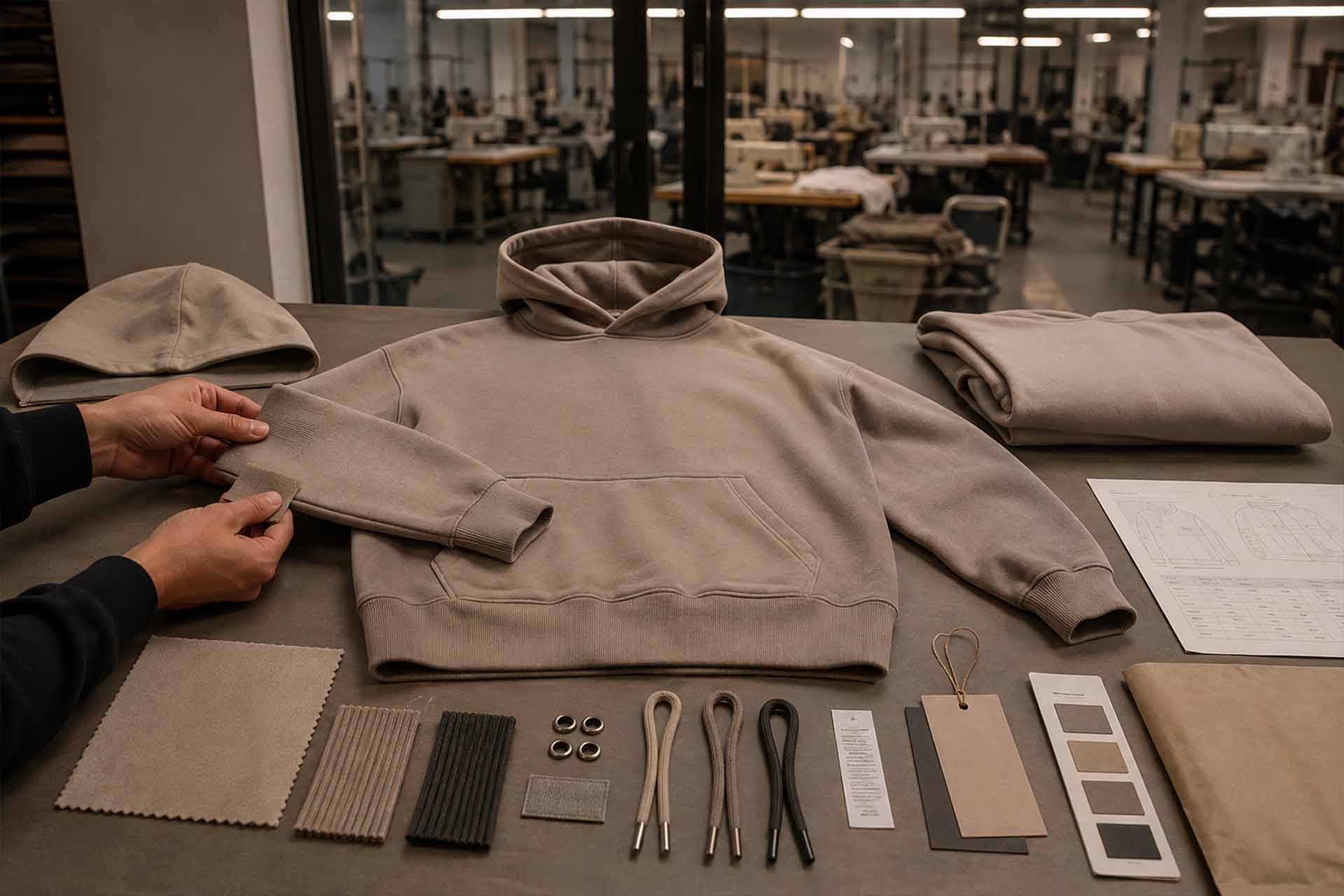
A Practical Example: Building a Premium Hoodie
Imagine two brands producing a premium streetwear hoodie.
Brand A Uses a Stock Blank
The brand selects an existing heavyweight hoodie.
It chooses black and grey stock colours.
The supplier determines:
- Fabric
- Fit
- Hood shape
- Rib
- Measurements
- Pocket construction
The brand adds a chest embroidery, neck label and hangtag.
The product can launch relatively quickly.
Brand B Uses Cut and Sew Manufacturing
The brand develops its hoodie from the beginning.
It specifies:
- 430 GSM French Terry
- Oversized fit
- Dropped shoulders
- Wider sleeves
- Double-layer hood
- Custom rib dimensions
- Tonal embroidery
- Custom woven labels
- Custom colour
- Branded packaging
The project requires more development and a higher production commitment.
But the finished hoodie is far more difficult for another brand to replicate.
For a fashion business trying to build a recognisable product language, Brand B has significantly more control.
Can a Brand Start With Blanks and Move to Cut and Sew Later?
Yes, and many successful brands follow exactly this path.
A brand may begin with blanks to test:
- Design demand
- Customer acquisition
- Pricing
- Branding
- Sales channels
Once demand becomes more predictable, the business can move selected products into custom manufacturing.
This reduces early-stage risk while creating a path toward better differentiation.
The transition often happens when a founder begins asking questions such as:
- Can the hoodie be heavier?
- Can the shoulders be wider?
- Can the body be shorter?
- Can we create our own colour?
- Can we improve the rib?
- Can we change the hood shape?
- Can we control shrinkage?
Once those questions become important, the limitations of blanks become clearer.
Why Turkey Is Well Positioned for Cut and Sew Manufacturing
For European and international fashion brands, Turkey occupies a useful position between large-scale offshore manufacturing and nearshore European production.
Istanbul in particular has a dense clothing and textile ecosystem that includes fabric suppliers, knitting facilities, dye houses, pattern makers, sampling teams, embroidery specialists, printers and garment manufacturers.
This concentration can be valuable during custom product development because multiple stages of production need to work together.
Turkey is also geographically close to major European fashion markets, making it attractive for brands that want closer communication and more manageable supply-chain distances than many Asian sourcing destinations.
For brands producing custom garments, proximity can matter because development often involves physical samples, fabric approvals, colour decisions and product corrections before bulk production.
What Should a Brand Ask Before Choosing?
Before deciding between blanks and custom manufacturing, answer four questions.
1. What Quantity Do You Need?
If you require only a few dozen garments, blanks may be more practical.
If you are building a commercial collection at production scale, cut and sew manufacturing becomes more realistic.
2. How Important Is the Garment Itself?
If customers are buying mainly because of the printed artwork, a quality blank may be sufficient.
If fabric, fit and construction are central to the product, custom manufacturing offers greater control.
3. How Quickly Do You Need to Launch?
A short deadline favours blanks.
A planned collection with sufficient development time can take advantage of cut and sew production.
4. Are You Building Merchandise or a Product?
This may be the most important question.
Merchandise often puts the graphic first.
Fashion products usually need the garment itself to contribute to the brand identity.
The closer you move toward product development, the stronger the case for custom manufacturing becomes.
Cut and Sew Manufacturing With Istanbul Factory
Istanbul Factory works with fashion brands, streetwear labels, startups and established companies that want to develop garments rather than simply decorate existing products.
Our manufacturing process can support projects involving:
- Fabric sourcing
- Custom garment development
- Pattern making
- Sampling and prototyping
- Fit development
- Size grading
- Cut and sew production
- Printing and embroidery
- Custom labels and branding
- Quality control
- Packaging
Being based in Istanbul gives brands access to an established textile manufacturing ecosystem while maintaining close communication throughout development and production.
For brands in Europe and the United States looking for a manufacturing partner in Turkey, the objective should be more than finding someone who can sew garments.
A reliable partner should help translate a design into a product that can be reproduced consistently at bulk-production scale.
Planning a Custom Clothing Collection?
If your brand is moving beyond stock blanks and needs greater control over fabric, fit, construction and branding, Istanbul Factory can support the development and production process from sampling through bulk manufacturing.
Share your product specifications, tech pack, reference garment or collection concept with our team to discuss the most suitable manufacturing approach.
Frequently Asked Questions
What is cut and sew manufacturing?
Cut and sew manufacturing is the process of producing a garment from fabric rather than decorating a finished stock garment. Fabric is cut into pattern pieces, sewn together and developed according to the brand’s specifications.
What is the difference between cut and sew and private label clothing?
Cut and sew refers to how the garment is manufactured. Private label refers to the branding and commercial identity applied to the product. A private label collection can be produced using custom cut and sew manufacturing.
Are ready-made blanks cheaper than cut and sew manufacturing?
For small quantities, blanks are usually cheaper because pattern development, fabric sourcing and full garment production are not required. At larger production volumes, the cost comparison depends on fabric, construction, quantity and other specifications.
Do cut and sew garments require higher MOQs?
Usually yes. Custom manufacturing requires fabric purchasing, pattern development, cutting and dedicated production setup, so minimum order quantities are generally higher than for decorating stock garments.
Can you customise the fit of a blank T-shirt or hoodie?
Only to a limited extent. The garment’s pattern and measurements are already fixed. Significant changes to body width, shoulder shape, sleeve length or overall silhouette require custom garment manufacturing.
Is cut and sew manufacturing better for streetwear brands?
It is often better suited to established or growing streetwear brands because it allows greater control over oversized fits, heavyweight fabrics, custom colours, rib construction, hoods, trims and other design details.
Can embroidery and printing be used on both blanks and cut and sew garments?
Yes. Both can use screen printing, embroidery and other decoration methods. Cut and sew manufacturing can provide additional flexibility because decoration can be planned as part of the garment construction process.
Should a startup clothing brand use blanks or cut and sew manufacturing?
A startup testing demand with a very small quantity may benefit from blanks. A startup that already has a clear product concept, sufficient production quantity and a strong emphasis on fit and fabric may be better suited to cut and sew manufacturing.