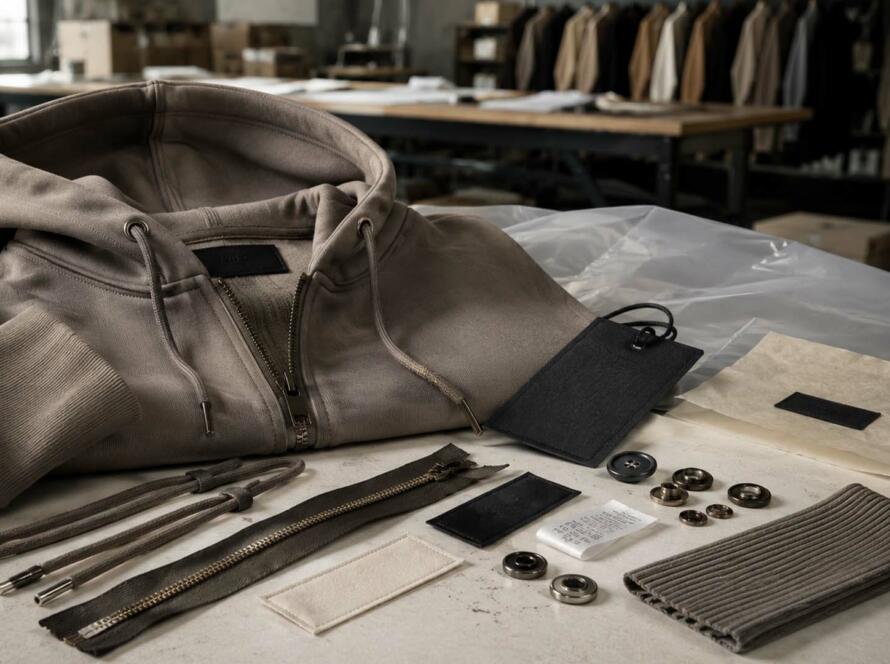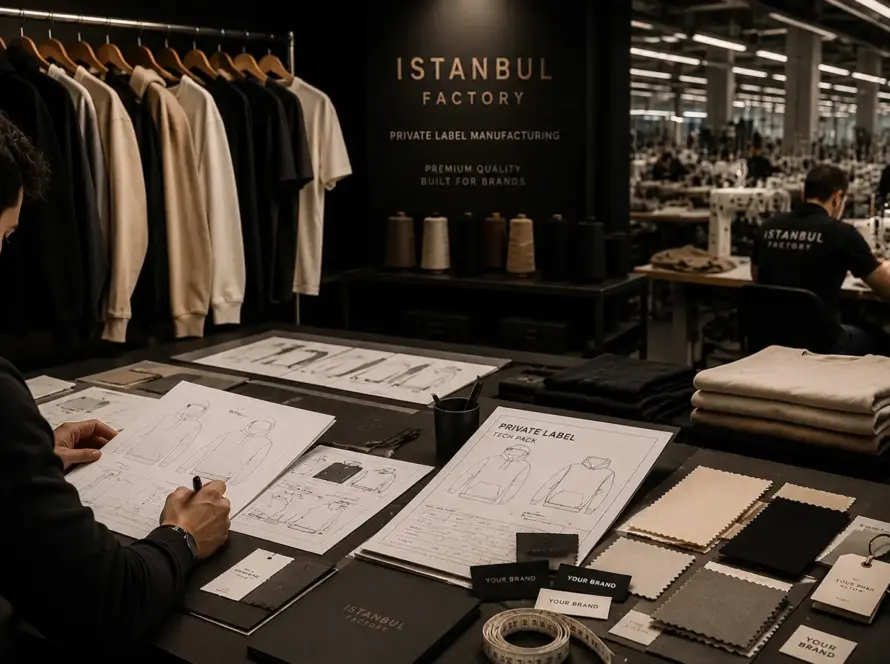


A hoodie may be labelled “100% cotton,” but that description reveals only a small part of how the garment will feel, perform and age.
Two fabrics made from the same fibre composition can have very different levels of softness, structure, durability, shrinkage and colour stability. These differences are created during the textile manufacturing process, long before the fabric reaches a cutting table.
Fibre selection matters, but so do yarn count, spinning method, fabric construction, knitting density, dyeing, washing, finishing and quality testing.
For fashion brands, understanding these stages makes it easier to select the right fabric, communicate with manufacturers and avoid costly production problems.
This guide explains how textile fibres become finished fabric and how that fabric is evaluated before it is approved for T-shirts, hoodies, sweatshirts and other garments.
What Is the Textile Manufacturing Process?
The textile manufacturing process is the series of technical stages used to transform natural, synthetic or recycled fibres into finished fabric.
The process generally includes:
- Fibre selection and preparation
- Yarn spinning or filament production
- Yarn selection and testing
- Knitting or weaving
- Fabric dyeing
- Washing and finishing
- Performance testing
- Fabric inspection
- Approval for cutting
The exact sequence depends on the fibre, fabric construction and intended product.
A lightweight cotton jersey for a premium T-shirt, for example, requires different yarns and finishing treatments from a heavyweight brushed fleece used for an oversized hoodie.
Textile Manufacturing vs Garment Manufacturing
Textile manufacturing and garment manufacturing are connected, but they are not the same process.
Textile manufacturing creates the fabric.
It covers fibre preparation, yarn production, knitting or weaving, dyeing, finishing and fabric testing.
And Garment manufacturing transforms the fabric into clothing.
It includes pattern making, fabric cutting, sewing, printing, embroidery, labelling, pressing, quality control and packaging.
This distinction is important because many garment defects begin with fabric decisions.
A sewing team cannot fully correct a fabric that shrinks excessively, twists after washing, pills quickly or lacks the required recovery. Garment quality therefore starts with the textile manufacturing process rather than with cutting and sewing.
1. Selecting the Textile Fibre
Every fabric begins with a fibre. The fibre determines many of the fabric’s basic characteristics, including softness, moisture management, strength, elasticity and environmental profile.
Natural Fibres
Natural textile fibres come from plant or animal sources.
Common examples include:
- Cotton
- Organic cotton
- Linen
- Wool
- Silk
- Hemp
Cotton is one of the most widely used fibres in casualwear, streetwear and premium basics. It is breathable, comfortable and suitable for jersey, French terry, fleece and rib fabrics.
The quality of cotton can vary significantly. Fibre length, cleanliness, maturity and consistency all affect the yarn and finished fabric.
Longer cotton fibres can usually be spun into smoother, stronger yarns. Shorter fibres may create a more irregular surface and can increase the risk of pilling if the yarn and finishing processes are not properly controlled.
Synthetic Fibres
Synthetic fibres are manufactured through chemical processes.
The most common examples include:
- Polyester
- Nylon
- Acrylic
- Elastane
Polyester is frequently blended with cotton to improve strength, dimensional stability, drying speed or cost efficiency. Elastane may be added to jersey, rib and woven fabrics when extra stretch and recovery are required.
Synthetic fibres can improve certain performance characteristics, but their use should be aligned with the product’s intended function.
A small percentage of elastane may be useful in fitted garments or neck ribs. The same composition may be unnecessary for a relaxed heavyweight T-shirt designed to hold a structured silhouette.
Recycled Fibres
Recycled textiles can be produced from pre-consumer or post-consumer materials.
Examples include:
- Recycled cotton
- Recycled polyester
- Recycled nylon
- Regenerated fibre blends
Recycled cotton is often blended with virgin cotton because the recycling process shortens and weakens the fibres. Combining recycled material with stronger virgin fibres can improve spinning performance and fabric durability.
For brands developing sustainable collections, the recycled percentage should be considered alongside fabric quality, traceability, certification and the garment’s expected lifespan.
A higher recycled content is not automatically the best technical choice if the resulting garment wears out too quickly.
2. Fibre Preparation and Yarn Spinning
Before fibres can become yarn, they must be cleaned, opened, blended and aligned.
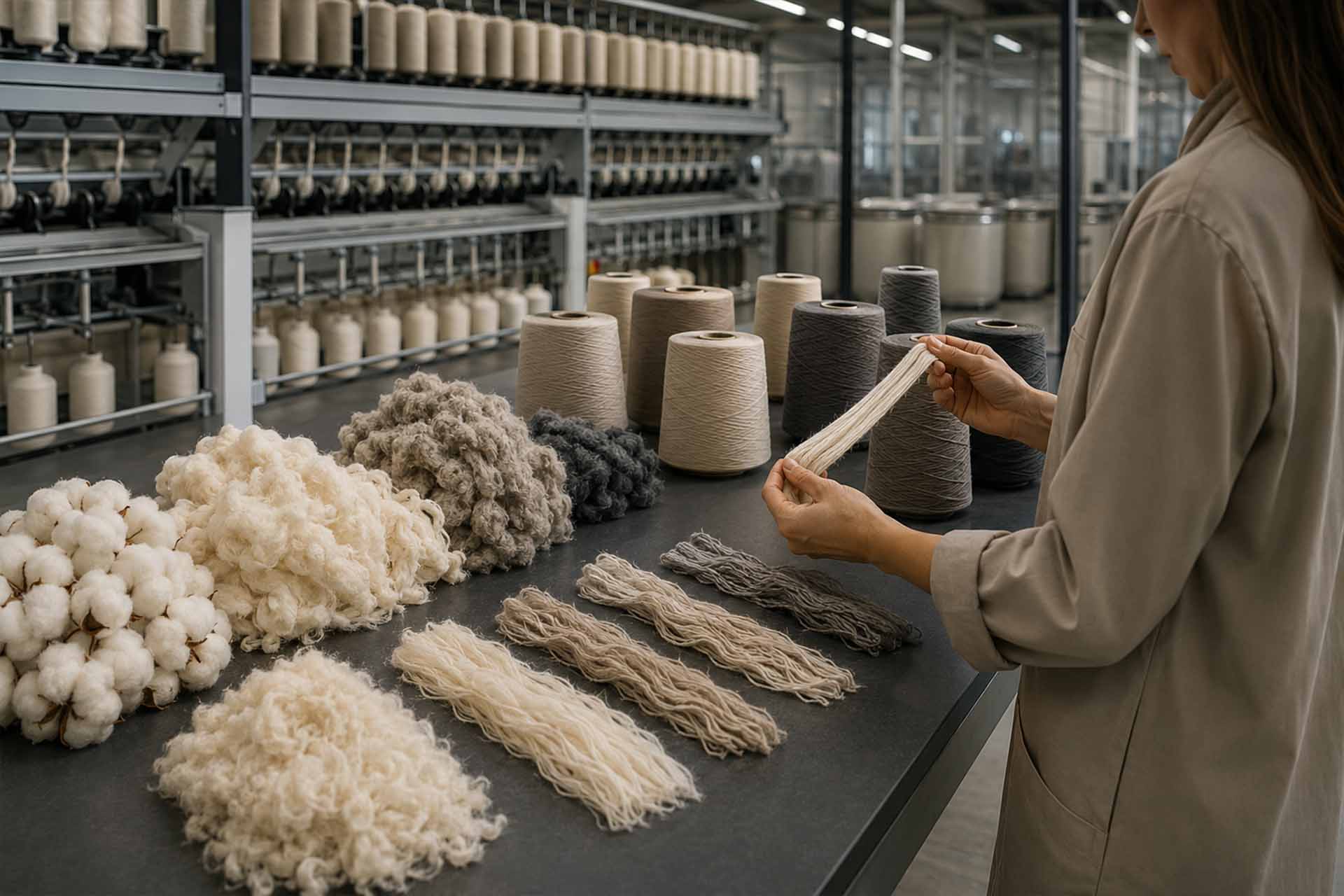
For cotton, this may include processes such as:
- Opening compressed fibre bales
- Removing impurities
- Blending fibres for consistency
- Carding
- Combing, when required
- Drawing and aligning the fibres
- Spinning the fibres into yarn
Carding separates and aligns the fibres while removing some impurities. Combing is an additional process that removes more short fibres and improves fibre alignment.
Combed cotton yarn is generally smoother, cleaner and more uniform than basic carded yarn. It is commonly selected for premium T-shirts, refined jersey fabrics and garments that require a cleaner surface.
However, fibre type alone does not define yarn quality. The spinning system also influences the result.
Common Yarn Spinning Methods
Ring-spun yarn is widely used for premium apparel fabrics. It usually offers good strength, softness and a relatively smooth surface.
Open-end yarn, sometimes called rotor-spun yarn, can be produced efficiently and is suitable for many casual fabrics. It often has a slightly bulkier or more textured character than ring-spun yarn.
Compact-spun yarn is engineered to reduce loose fibres around the yarn body. This can create a cleaner surface, better strength and reduced hairiness.
The appropriate spinning method depends on the required fabric appearance, performance and price position.
3. Yarn Count and Its Effect on Fabric
Yarn count describes the fineness or thickness of a yarn.
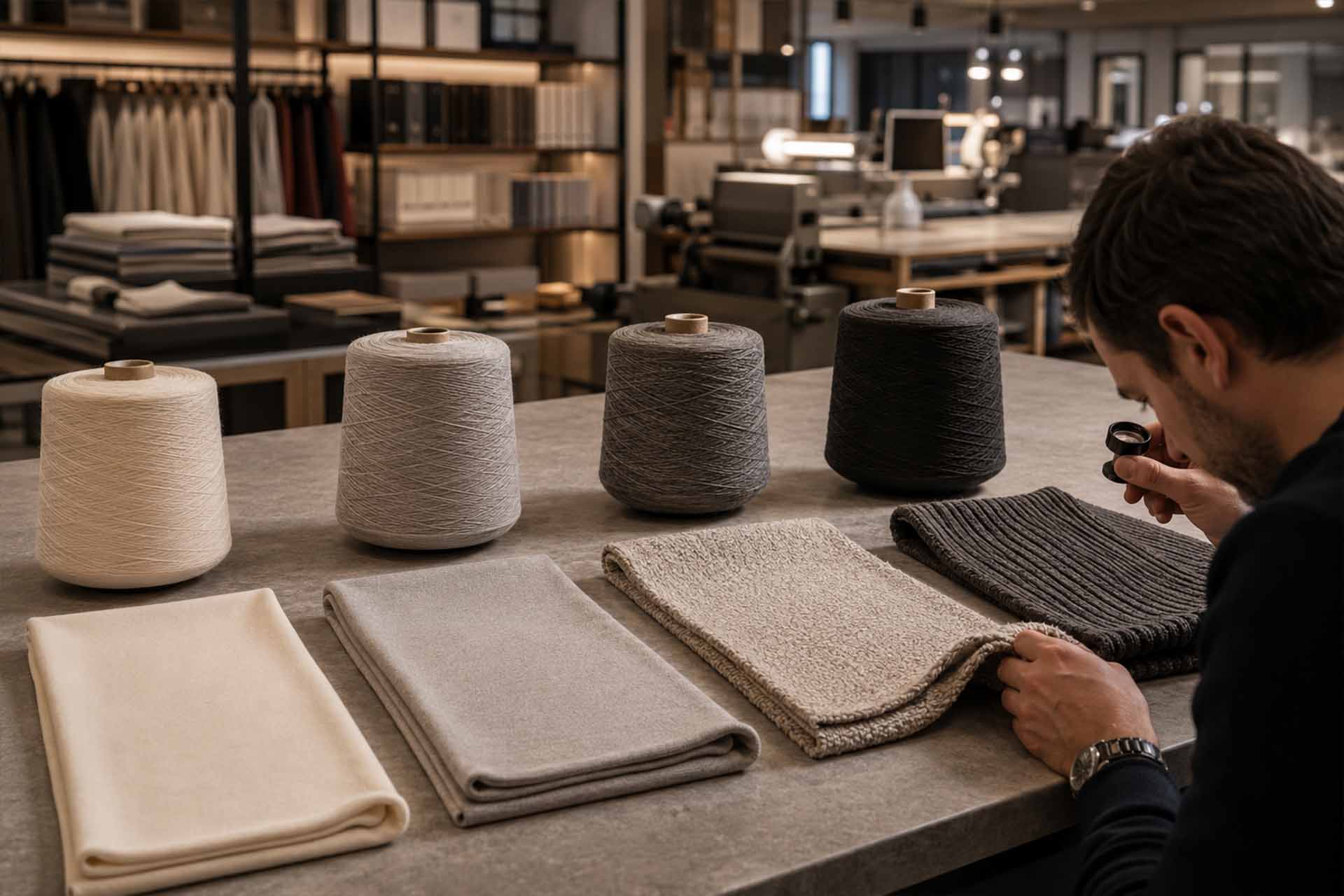
Different count systems are used internationally, including Ne, Nm, denier and tex. Fashion brands do not necessarily need to calculate these systems, but they should understand the practical principle:
A finer yarn can create a smoother and lighter fabric, while a thicker yarn can create more bulk, texture or weight.
Yarn count affects:
- Fabric softness
- Surface appearance
- Fabric weight
- Knitting density
- Draping behaviour
- Print quality
- Durability
- Pilling performance
A lightweight premium T-shirt might use a relatively fine combed cotton yarn knitted into a dense single jersey.
A heavyweight streetwear T-shirt may use a thicker yarn, a denser construction or a combination of both to produce a more structured fabric.
For hoodies and sweatshirts, the face yarn, binding yarn and loop yarn may have different counts. This helps textile engineers control the fabric’s outer appearance, internal structure and final hand feel.
Yarn Twist
The amount of twist applied during spinning also matters.
More twist can improve yarn strength, but excessive twist may make the fabric feel harder or create unwanted spirality. Lower twist can produce softness and bulk, although insufficient twist may reduce durability.
The correct balance depends on the fibre, yarn count and fabric construction.
4. Knitting and Weaving
Once the yarn has been prepared, it is transformed into fabric through knitting or weaving.
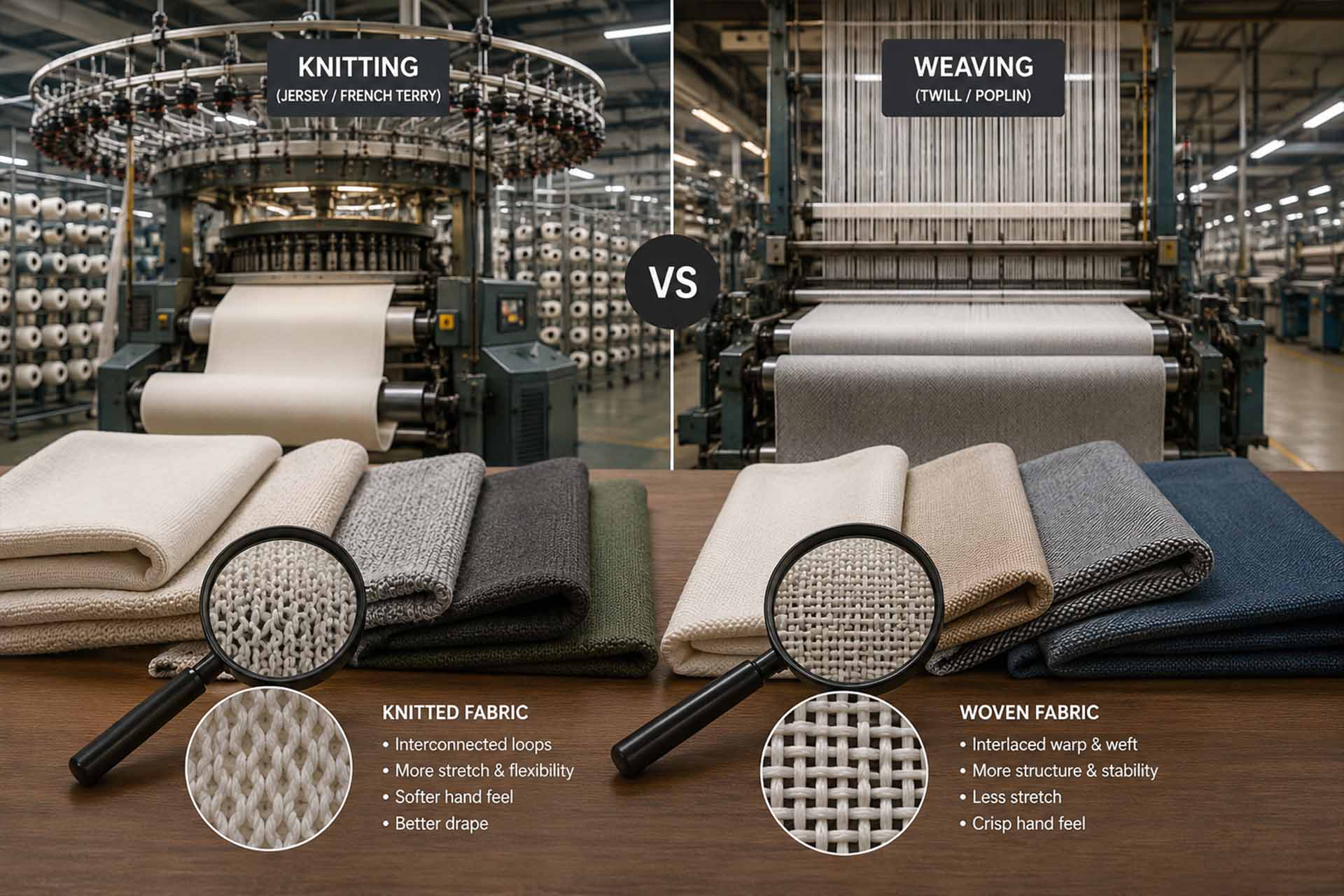
Knitted Fabrics
Knitted fabrics are made by forming interconnected loops of yarn.
They are widely used for:
- T-shirts
- Hoodies
- Sweatshirts
- Joggers
- Polo shirts
- Activewear
- Underwear
- Casual dresses
Common knitted constructions include:
Single Jersey
Single jersey is frequently used for T-shirts and lightweight tops. It has a smooth face and a visibly different reverse side.
Its performance depends on the yarn, stitch length, machine gauge, knitting density and finishing process.
Interlock
Interlock is a double-knit construction with a smoother and more stable structure. It is generally thicker and less prone to curling than single jersey.
It can be used for premium T-shirts, polos, dresses and structured casualwear.
French Terry
French terry has a smooth outer surface and visible loops on the inside. It is commonly used for sweatshirts, hoodies, shorts and joggers.
The size and density of the internal loops influence absorbency, weight and softness.
Fleece
Sweatshirt fleece is usually produced from a loopback fabric that is brushed on the inside. Brushing opens the internal loops and creates a soft, warm surface.
The brushing intensity must be controlled carefully. Heavy brushing can improve softness and volume, but poor control may weaken the fabric or increase fibre shedding.
Rib Fabric
Rib is used for cuffs, waistbands, neckbands and fitted garments. It provides stretch through its knitted structure and may include elastane for improved recovery.
Matching rib quality with the main body fabric is essential. A weak rib can stretch out, while an overly tight rib can distort the garment shape.
Woven Fabrics
Woven fabrics are created by interlacing two yarn systems: warp yarns and weft yarns.
They are commonly used for:
- Shirts
- Trousers
- Jackets
- Overshirts
- Dresses
- Workwear
- Coats
Common woven constructions include plain weave, twill, satin, canvas and poplin.
Woven fabrics generally offer more dimensional stability than knitted fabrics, although their exact behaviour depends on yarn type, weave construction and finishing.
5. Fabric Construction, Density and GSM
GSM means grams per square metre. It measures fabric weight.
It is useful, but it should never be used as the only quality indicator.
Two fabrics can both weigh 300 GSM and still feel completely different because of variations in:
- Fibre quality
- Yarn count
- Yarn twist
- Knitting density
- Loop structure
- Brushing
- Compacting
- Silicone treatment
- Moisture content
- Finishing chemicals
A loosely knitted 300 GSM fabric may feel bulky but lose shape over time. A denser 300 GSM fabric may feel more compact, stable and structured.
For this reason, fashion brands should evaluate fabric construction alongside GSM.
When developing a heavyweight hoodie, for example, the brand may need to specify:
- Target GSM
- Cotton or cotton-blend composition
- Outer surface quality
- Internal loop or brushed finish
- Shrinkage tolerance
- Pilling performance
- Required structure and drape
- Rib weight and recovery
This gives the manufacturer a clearer technical target than simply requesting “a premium 400 GSM fabric.”
Fabric GSM Explained: How Fabric Weight Affects Clothing Quality
6. Fabric Dyeing and Colour Development
Colour development begins before bulk fabric is dyed.
The brand may provide a Pantone reference, physical swatch or approved garment sample. The dye house then develops laboratory colour trials, commonly called lab dips.
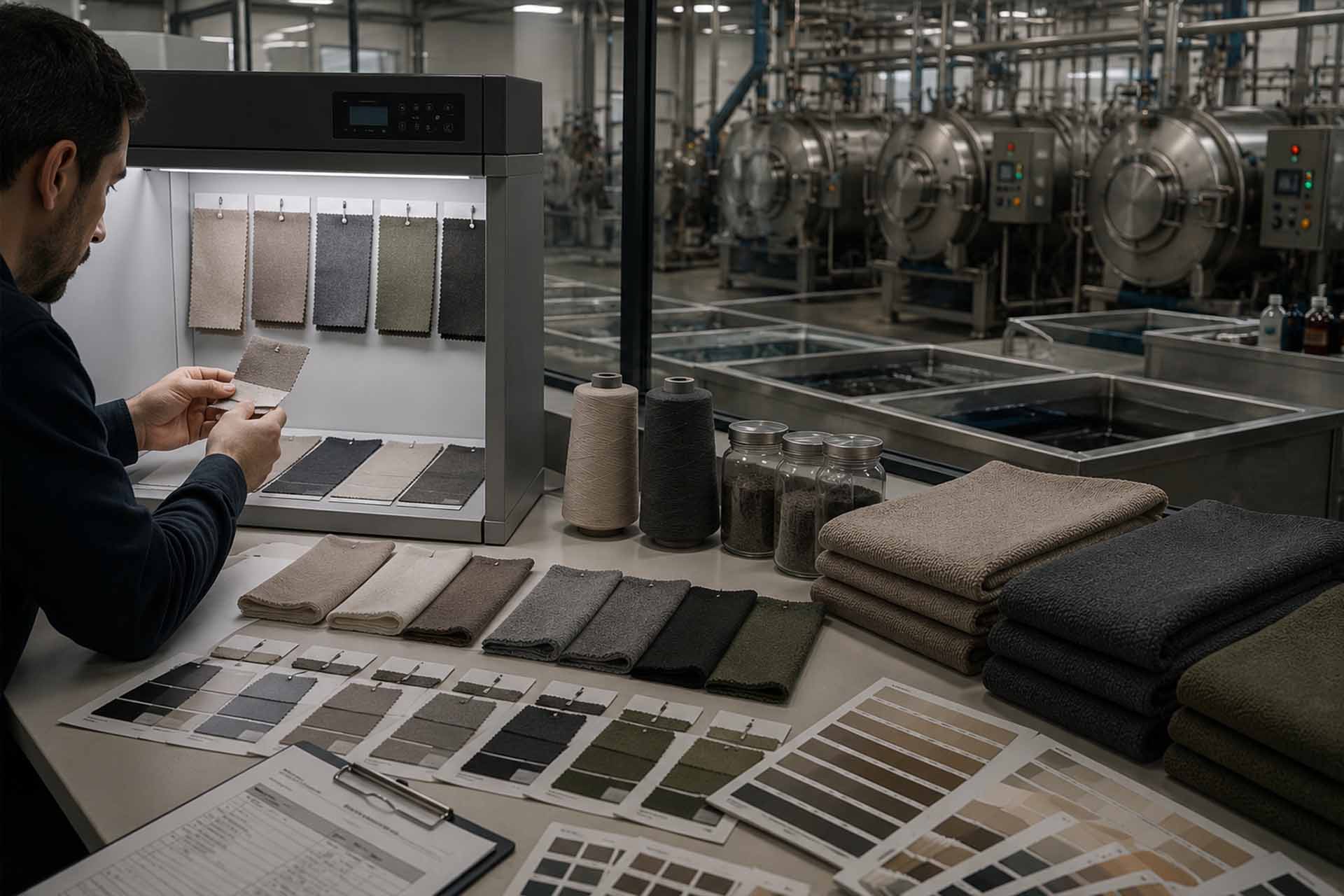
Lab Dip Approval
A lab dip is a small dyed textile sample used to evaluate the proposed colour before bulk dyeing.
The brand or manufacturer checks:
- Colour accuracy
- Undertone
- Depth
- Appearance under different lighting
- Compatibility with trims and prints
- Expected behaviour after finishing
Colour should ideally be evaluated under controlled lighting because a shade can appear different under daylight, store lighting and warm indoor lighting.
Common Dyeing Methods
Fibre dyeing colours the fibres before they are spun.
Yarn dyeing colours the yarn before knitting or weaving. It is often used for stripes, checks and melange effects.
Piece dyeing colours the fabric after it has been knitted or woven. It is widely used for solid-colour apparel fabrics.
Garment dyeing colours the completed garment. It can create a softer, washed or vintage appearance, but requires careful control of shrinkage, stitching and trim compatibility.
The correct method depends on the design, order quantity, desired appearance and required colour consistency.
7. Washing and Fabric Finishing
After dyeing, fabrics may feel stiff, unstable or different from the final material expected by the brand.
Finishing treatments are used to adjust the fabric’s appearance, hand feel, stability and performance.
Common processes include:
- Washing
- Softening
- Enzyme treatment
- Silicone treatment
- Brushing
- Raising
- Shearing
- Peaching
- Sueding
- Compacting
- Heat setting
- Anti-pilling treatment
- Water-repellent finishing
Compacting and Shrinkage Control
Compacting is particularly important for knitted cotton fabrics. It mechanically controls the fabric dimensions and helps reduce residual shrinkage.
A fabric may look correct before washing but shrink significantly after the first customer wash if it has not been properly stabilised.
Shrinkage should therefore be tested after the intended finishing process, not only on untreated fabric.
Hand Feel Development
Hand feel refers to how the fabric feels when touched, handled or worn.
A soft finish may improve the first impression, but excessive softener can sometimes mask weak construction or reduce absorbency. The finish should support the fabric’s purpose rather than simply create temporary softness.
Premium fabric development balances immediate touch with long-term performance.
8. Fabric Performance Testing
Before fabric is approved for garment production, it should be tested according to the product’s requirements.
Shrinkage
Shrinkage testing measures dimensional changes after washing and drying.
The fabric is marked, washed under defined conditions and measured again. The results help the pattern and production teams account for expected dimensional changes.
Pilling
Pilling occurs when loose fibres form small balls on the fabric surface through friction and wear.
Testing helps assess how the fabric may perform during use. Fibre length, yarn quality, knitting construction and finishing all affect pilling resistance.
Colourfastness
Colourfastness tests evaluate whether colour remains stable when exposed to:
- Washing
- Rubbing
- Perspiration
- Water
- Light
- Dry cleaning, when relevant
Poor colourfastness can cause visible fading or colour transfer onto other garments, furniture or skin.
Dimensional Stability
Dimensional stability describes the fabric’s ability to maintain its shape and measurements.
Testing may reveal:
- Length shrinkage
- Width shrinkage
- Growth
- Skewing
- Spirality
- Bowing
Spirality is particularly relevant for knitted garments. A T-shirt side seam may twist toward the front or back after washing if the yarn, knitting and finishing processes are not adequately controlled.
Additional Tests
Depending on the product, brands may also require tests for:
- Fabric strength
- Tear resistance
- Abrasion resistance
- Stretch and recovery
- Seam slippage
- Fabric weight
- Composition
- Restricted substances
- Print or embroidery compatibility
Testing requirements should reflect the garment’s intended use rather than following the same checklist for every product.
9. Fabric Inspection Before Garment Production
Approved laboratory results do not replace physical bulk fabric inspection.
The delivered fabric rolls should be checked before cutting begins.
Inspection may identify:
- Holes
- Knitting lines
- Weaving defects
- Oil marks
- Dyeing variations
- Uneven width
- Shading between rolls
- Creases
- Contamination
- Surface irregularities
Roll-to-roll shade variation is especially important. Fabric from different dye lots, or even different rolls within one lot, may show subtle colour differences.
If panels from noticeably different shades are used in the same garment, the final product may appear mismatched.
A controlled manufacturing process records fabric rolls and manages shade groups before spreading and cutting.
10. How Finished Fabric Is Approved for Cutting
Finished fabric should be approved only after its technical and visual requirements have been reviewed.
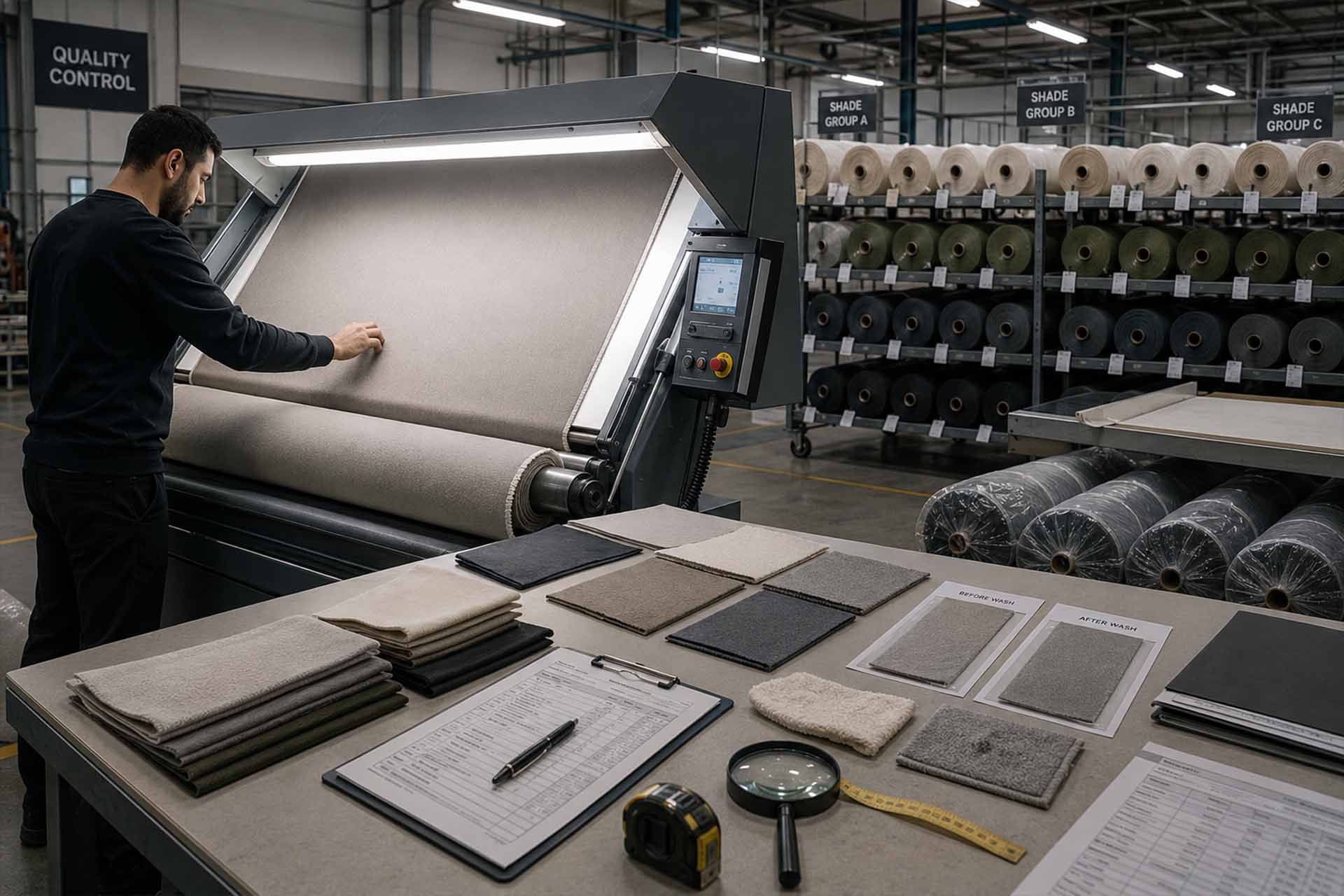
A practical fabric approval process may include:
- Confirming the correct fibre composition
- Measuring the finished GSM
- Checking fabric width
- Reviewing colour against the approved standard
- Evaluating hand feel and surface appearance
- Confirming shrinkage results
- Reviewing pilling and colourfastness tests
- Inspecting bulk rolls for defects
- Separating shade groups
- Relaxing the fabric before cutting
Fabric relaxation is particularly important for knitted materials. Fabric can remain under tension after production, finishing and rolling.
Allowing the rolls to relax before cutting helps the material return to a more stable condition. Cutting fabric while it is still under tension can cause measurement differences after the panels are released or sewn.
The approved fabric should also be compared with the approved garment sample. The sample, test results and fabric specification together form the reference for bulk production.
Practical Example: Heavyweight Hoodie Fabric
Consider a fashion brand developing a 420 GSM oversized hoodie.
The brand might initially focus on composition and weight:
- 100% cotton
- 420 GSM
- Brushed interior
Those details are useful, but they are not enough to guarantee the expected result.
The manufacturer must also consider:
- Whether the cotton is carded, combed or compact-spun
- Yarn counts for the face and backing
- Knitting density
- Surface smoothness for printing
- Brushing intensity
- Shrinkage after washing
- Pilling performance
- Fabric recovery
- Rib composition and weight
- Colourfastness
- Whether the fabric drapes or holds structure
A dense 420 GSM fabric with controlled shrinkage may create a premium, structured silhouette. A poorly stabilised fabric of the same weight may become shorter, wider or twisted after washing.
This is why fabric development must be connected to the garment design and fit.
Why Istanbul Is Important for Textile and Fabric Development
Istanbul connects fashion brands with a broad textile manufacturing network that includes yarn suppliers, knitting mills, weaving facilities, dye houses, finishing specialists, print and embroidery workshops, and garment manufacturers.
Turkey’s integrated textile industry can help brands coordinate fabric development and garment production within the same regional supply chain.
This is particularly valuable when a project requires:
- Custom fabric weights
- Special colour development
- Heavyweight jersey or fleece
- Coordinated rib fabrics
- Garment washing
- Print and embroidery sampling
- Lower-volume collection development
- Faster communication between textile and garment teams
Geographic proximity to European markets also supports factory visits, sample reviews and more direct production communication.
The value, however, comes from selecting the right suppliers and managing the stages carefully. A strong textile ecosystem still requires clear specifications, testing and quality control.
Fabric Development with Istanbul Factory
Istanbul Factory supports fashion brands through both textile development and garment manufacturing.
Our team helps coordinate:
- Fabric sourcing
- Custom fabric development
- Yarn and construction selection
- GSM and hand-feel evaluation
- Colour development
- Lab dip approvals
- Fabric testing
- Garment sampling
- Printing and embroidery
- Bulk clothing production
- Quality control
We work with startup brands, streetwear labels and established fashion companies across Europe and the United States.
The objective is to select or develop fabric that supports the intended garment rather than treating fabric as a separate purchasing decision.
A premium T-shirt, hoodie or sweatshirt begins with a clear product concept, but it succeeds through controlled textile development, sampling and production.
Start Your Clothing Production Project in Istanbul
The right fabric should match your design, target price, customer expectations and quality standards.
Istanbul Factory helps fashion brands move from fabric selection and garment sampling to controlled bulk production in Istanbul.
Share your tech pack, reference garment or collection concept with our team to discuss suitable fabrics, production requirements and the next steps for your project.
Frequently Asked Questions
What is the textile manufacturing process?
The textile manufacturing process transforms natural, synthetic or recycled fibres into finished fabric. It includes fibre preparation, yarn production, knitting or weaving, dyeing, finishing, testing and inspection.
What is the difference between textile and garment manufacturing?
Textile manufacturing creates yarn and fabric. Garment manufacturing uses finished fabric to produce clothing through cutting, sewing, printing, embroidery, finishing and packaging.
Does a higher GSM mean better fabric quality?
No. GSM measures fabric weight, not overall quality. Yarn quality, construction, density, dyeing, finishing, shrinkage and pilling resistance also influence fabric performance.
Why is yarn count important in fabric production?
Yarn count affects fabric thickness, softness, weight, surface appearance, strength and drape. The correct yarn count depends on the fabric construction and intended garment.
How is fabric colour approved before production?
The dye house develops lab dips based on a colour reference. The selected lab dip is approved before bulk dyeing, and the finished fabric is checked again for shade accuracy and consistency.
What fabric tests are important for fashion brands?
Common tests include shrinkage, pilling, colourfastness, dimensional stability, fabric weight, strength, stretch and recovery. The required tests depend on the garment and its intended use.
Why should fabric be relaxed before cutting?
Fabric may remain under tension after knitting, finishing and rolling. Relaxation allows it to stabilise before cutting, reducing the risk of measurement changes and garment distortion.
Can Istanbul Factory develop custom fabrics?
Yes. Istanbul Factory can support fabric sourcing and custom fabric development based on the required composition, GSM, construction, colour, finish and garment application.