


A garment can be made from excellent fabric and sewn accurately, yet still feel inexpensive if the smaller components are wrong.
A lightweight zipper on a heavyweight hoodie, a poorly woven neck label, weak snaps, mismatched rib, or a cheap-looking hangtag can change how customers perceive the entire product.
This is why professional clothing production looks beyond fabric and stitching.
Garment trims and accessories include the functional, decorative, branding, and packaging components added to a garment during or after production. They can include labels, zippers, buttons, snaps, drawcords, eyelets, elastic, rib, hangtags, and packaging materials.
For fashion brands, specifying these components correctly is essential for product quality, consistency, cost control, and repeat production.
This guide explains the main types of garment trims and accessories, what brands should consider when selecting them, and how they should be documented in a tech pack.
What Are Garment Trims and Accessories?
In apparel manufacturing, trims generally refer to components attached to or incorporated into the garment.
Common examples include:
- Woven and printed labels
- Care labels
- Zippers
- Buttons
- Snaps
- Drawcords
- Eyelets
- Elastic
- Rib trims
- Patches
- Velcro and fastening components
Accessories can also include items associated with presentation, branding, packing, and shipment, such as:
- Hangtags
- Hangtag strings
- Stickers
- Tissue paper
- Polybags
- Boxes
- Size stickers
- Barcode labels
The terminology can vary between factories. Some manufacturers use “trims” as an umbrella term covering almost every non-main-fabric component.
For a fashion brand, the terminology matters less than making sure every component is clearly specified and approved before bulk production.
Why Garment Trims Matter More Than Many Brands Expect
Trims are small individually, but collectively they influence several important characteristics of the finished garment.
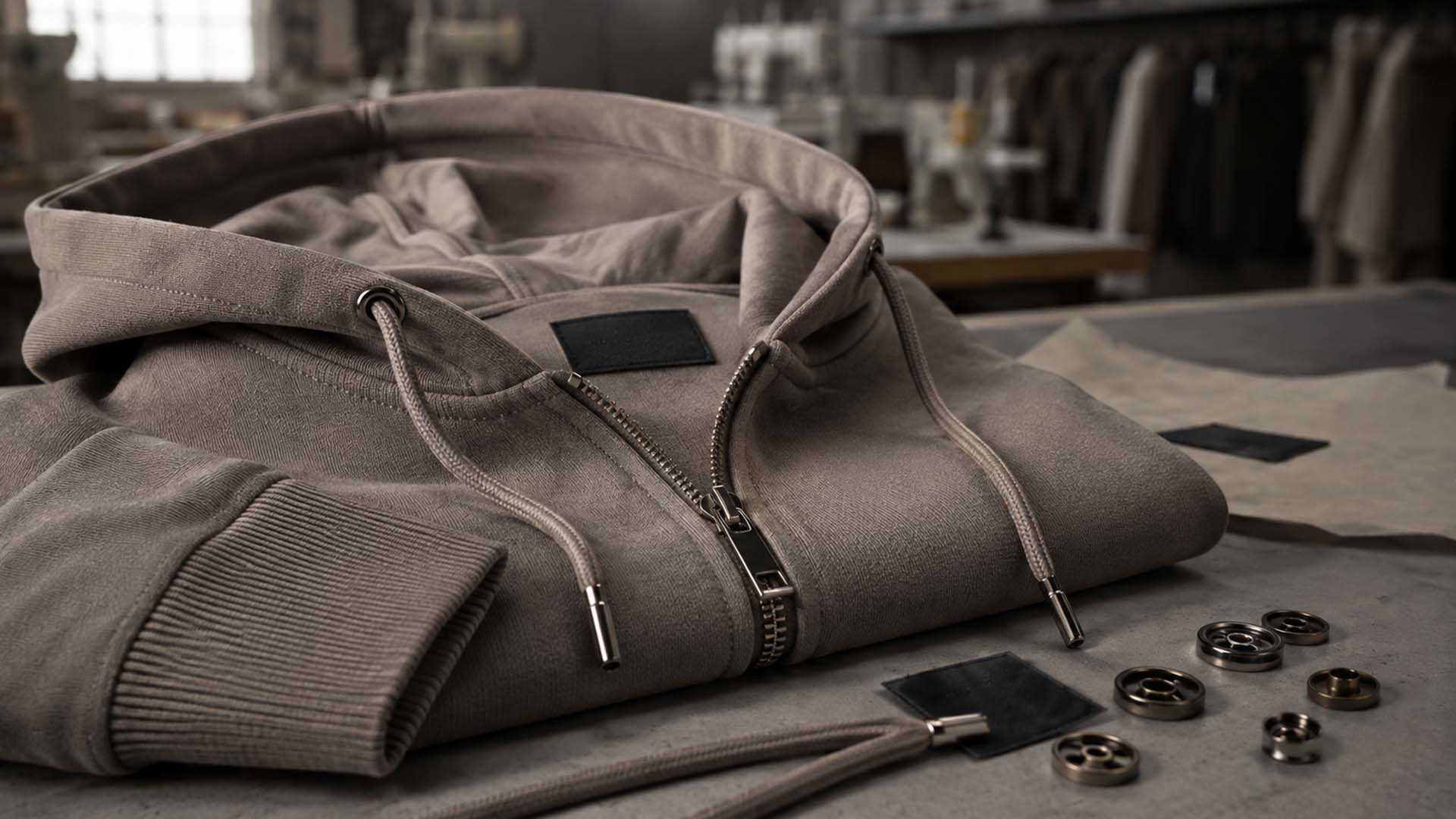
Product appearance
Buttons, zippers, cords, labels, and metal hardware contribute directly to the visual identity of a product.
Two hoodies made from exactly the same fabric can feel completely different depending on the zipper finish, drawcord construction, eyelets, and branding details.
Functionality
Many trims perform mechanical functions.
A zipper must open smoothly. A snap must withstand repeated opening. Elastic must recover after stretching. Drawcords need appropriate strength and dimensions.
Poor trim selection can therefore create product failures even when garment construction itself is correct.
Brand perception
Customers physically interact with many trims.
They touch the zipper puller, see the neck label, remove the hangtag, adjust the drawcord, and open the packaging.
For premium brands in particular, these details influence perceived value.
Production consistency
Trims must also remain consistent between production runs.
If a brand produces a sweatshirt today and reorders it six months later, vague instructions such as “black drawcord” or “silver zipper” are rarely enough to guarantee the same result.
Precise specifications create repeatability.
Woven and Printed Labels
Brand labels are among the most visible garment trims and accessories.
Woven labels
Woven labels are produced by weaving threads together to create the artwork and text.
They are commonly used for:
- Main brand labels
- Neck labels
- Hem labels
- Logo labels
- Premium branding details
They can provide a refined appearance and generally work well when the artwork does not require extremely complex photographic detail.
Brands should specify details such as:
- Finished dimensions
- Label shape
- Base and artwork colors
- Fold type
- Placement
- Sewing method
- Artwork file
Common constructions include center-fold, end-fold, loop-fold, and straight-cut labels.
Printed labels
Printed labels place the artwork onto materials such as satin, cotton, polyester, or similar label substrates.
They can work especially well when a design contains fine text or detailed information.
Printed labels are commonly used for branding as well as care and composition information.
The decision between woven and printed labels should be based on the desired appearance, comfort, durability, artwork complexity, and garment positioning rather than price alone.
Care Labels
Care labels provide important product information and should be treated as a technical component rather than an afterthought.
Depending on the destination market and product, they may contain information such as:
- Fibre composition
- Washing instructions
- Drying instructions
- Ironing instructions
- Bleaching instructions
- Dry-cleaning information
- Country of origin
- Manufacturer or responsible company information
- Size or internal product references
For garments sold in the United States, the FTC requires covered apparel manufacturers and importers to provide appropriate care instructions, and labels generally need to remain attached and legible throughout the useful life of the product.
Textile products marketed in the European Union are subject to textile fibre composition labelling requirements, including requirements concerning how fibre composition is communicated to consumers.
Brands should therefore confirm the applicable regulations for every target market instead of copying a care label from another garment.
The final care instructions should also reflect how the complete garment performs—not simply the theoretical care requirements of the main fabric.
Prints, embroidery, coatings, trims, rib, and other components can influence appropriate care instructions.
Hangtags
A hangtag is technically removed before the garment is worn, but it remains an important part of the customer experience.
Hangtags can communicate:
- Brand identity
- Product name
- Size
- Price
- Barcode or SKU
- Sustainability information
- Fabric details
- Product story
- Website or social channels
When specifying a hangtag, consider:
- Dimensions
- Paper thickness
- Paper finish
- Printing method
- Number of printed sides
- Hole position
- String or cord type
- Attachment method
- Special finishes such as embossing or foil
For premium brands, material feel and printing quality often matter as much as graphic design.
Zippers
Zippers are one of the most technical trim decisions in garment manufacturing.
They may appear on:
- Hoodies
- Jackets
- Trousers
- Skirts
- Dresses
- Pockets
- Bags and accessories
A zipper specification should go beyond simply stating “black zipper.”
Important variables include:
- Zipper type
- Teeth or coil construction
- Size
- Length
- Tape color
- Teeth color
- Slider type
- Puller design
- Open-end or closed-end construction
- One-way or two-way operation
- Brand or approved supplier when required
A heavyweight zip hoodie, for example, may need a more substantial zipper than a lightweight fashion top.
The visual weight of the zipper should also fit the garment design.
Buttons and Snaps
Buttons and snaps combine visual design with functional performance.
Buttons may be made from materials such as:
- Plastic
- Metal
- Wood
- Shell-type materials
- Covered fabric
- Recycled materials
Specifications should include diameter, thickness, color, finish, hole configuration, artwork, and attachment requirements.
Snaps require additional attention because the cap, socket, stud, and post must work correctly as a complete system.
For metal components, brands should also discuss relevant material and compliance requirements with their manufacturer based on the intended destination market.
A premium-looking metal snap that fails after repeated use is still a poor-quality trim.
Drawcords and Eyelets
Drawcords are particularly important in hoodies, sweatpants, shorts, jackets, and streetwear.
Brands can choose between different:
- Cord materials
- Weaves
- Diameters
- Flat or round constructions
- Colors
- Lengths
- End finishes
Ends may be finished using knots, folded stitching, plastic tips, metal aglets, or other custom solutions.
Eyelets should be coordinated with the drawcord diameter and overall garment design.
A matte black eyelet with a thick cotton cord creates a very different appearance from polished metal hardware and a thin polyester cord.
These combinations should ideally be evaluated during sampling rather than selected independently.
Elastic and Rib
Elastic influences both fit and long-term garment performance.
It can be used inside:
- Waistbands
- Cuffs
- Underwear
- Sportswear
- Dresses
- Adjustable components
Brands should specify its width, construction, stretch characteristics, placement, and finished measurement.
Rib is frequently used at hoodie cuffs, sweatshirt waistbands, necklines, and bomber jacket details.
Although rib is technically a knitted fabric component rather than a conventional accessory, factories often manage it alongside garment trims during development.
The rib should coordinate with the main fabric in:
- Color
- Weight
- Stretch
- Recovery
- Texture
- Finished appearance
Poor rib recovery can make an otherwise well-made sweatshirt lose its shape quickly.
Packaging Accessories
Garment production does not finish at the sewing line.
Packaging determines how products are identified, protected, packed, and eventually received by the brand.
Typical packaging accessories include:
- Polybags
- Recycled or alternative packaging bags
- Size stickers
- Barcode stickers
- Tissue paper
- Cartons
- Branded boxes
- Packing inserts
- Hangtag attachments
- Protective materials
Packaging requirements should be established before production is completed.
For example, a brand shipping inventory directly to a fulfillment center may require specific barcode positioning, carton markings, SKU identification, or pack quantities.
Sustainability goals can also influence packaging choices, including material reduction, recycled content, and avoiding unnecessary components.
How Garment Trims Should Be Specified in a Tech Pack

One of the most common development mistakes is providing detailed garment measurements while leaving trim instructions vague.
Your tech pack should contain a dedicated Bill of Materials (BOM) or trim specification section.
A basic trim specification might include:
| Component | What to Specify |
|---|---|
| Main label | Material, dimensions, colors, fold, artwork, placement |
| Care label | Material, dimensions, content, language, placement |
| Zipper | Type, size, length, tape color, teeth finish, slider |
| Button | Material, diameter, color, finish, artwork |
| Drawcord | Material, diameter, color, length, end finish |
| Eyelet | Diameter, material, finish, placement |
| Elastic | Width, construction, measurement, stretch requirement |
| Rib | Composition, weight, color, stretch, dimensions |
| Hangtag | Size, paper, artwork, finish, attachment |
| Packaging | Bag type, stickers, barcodes, folding and carton requirements |
Whenever possible, include:
- Reference images
- Pantone or other approved color references
- Technical drawings
- Exact dimensions
- Supplier references
- Physical samples
- Approved prototypes
Avoid specifications such as:
“Premium zipper.”
Instead use measurable, reproducible information.
The objective is simple: another production team should be able to read the tech pack months later and understand exactly which component needs to be sourced.
Approve Trims During Sampling, Not During Bulk Production
The best moment to identify trim problems is before bulk production begins.
During garment sampling, evaluate components together with the finished garment.
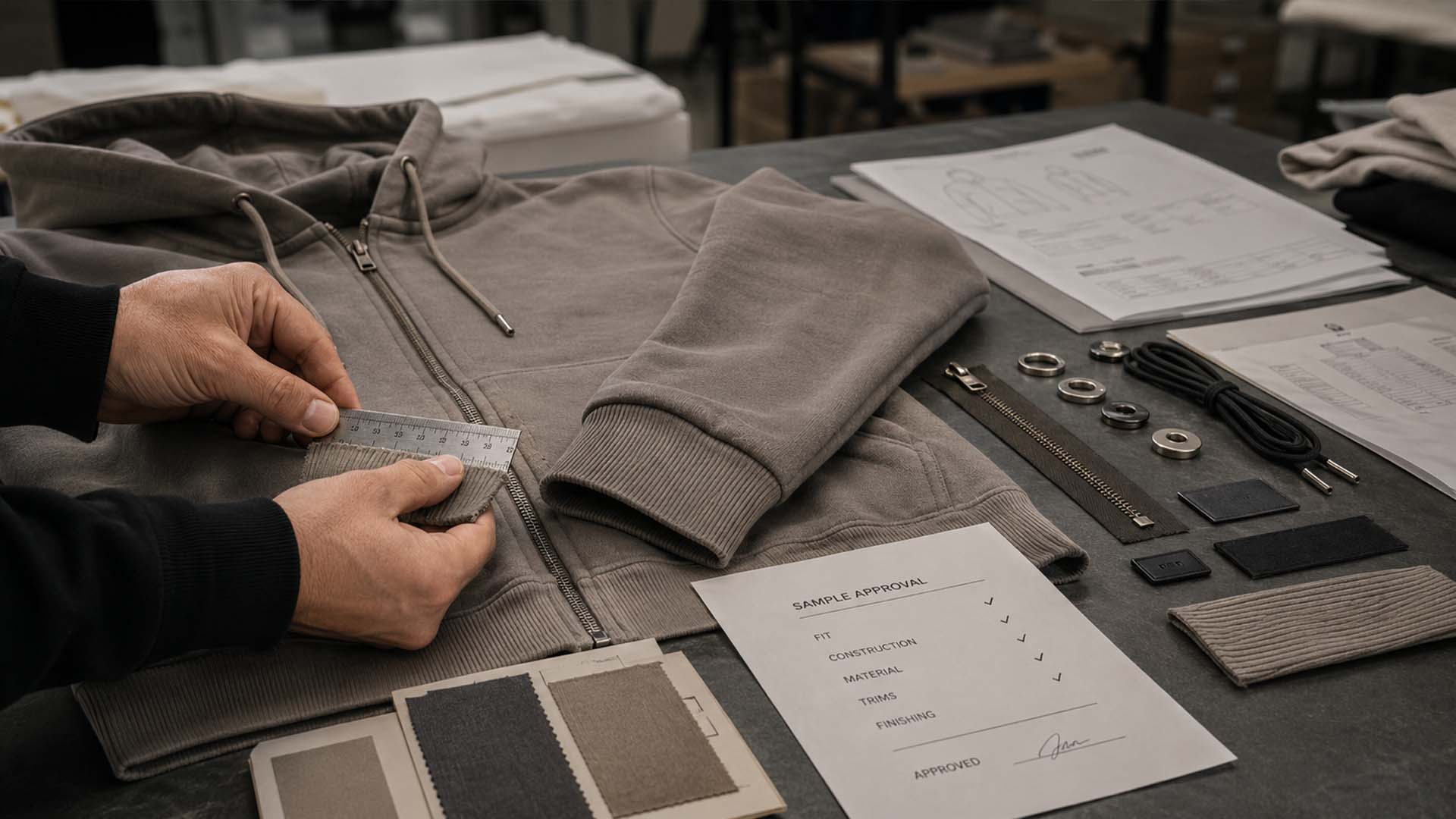
Check whether:
- The zipper operates smoothly
- Metal finishes match
- Buttons feel proportionate
- Labels are comfortable
- Drawcords have the correct length
- Rib has sufficient recovery
- Snaps hold securely
- Colors coordinate under consistent lighting
- Packaging matches the required presentation
For custom-developed trims, brands may also require dedicated approvals before the final production sample.
Keeping an approved physical trim reference can be especially valuable for repeat orders.
Garment Trim Sourcing in Turkey
Turkey has a developed textile and apparel manufacturing ecosystem that allows garment production to be supported by a wide range of related suppliers.
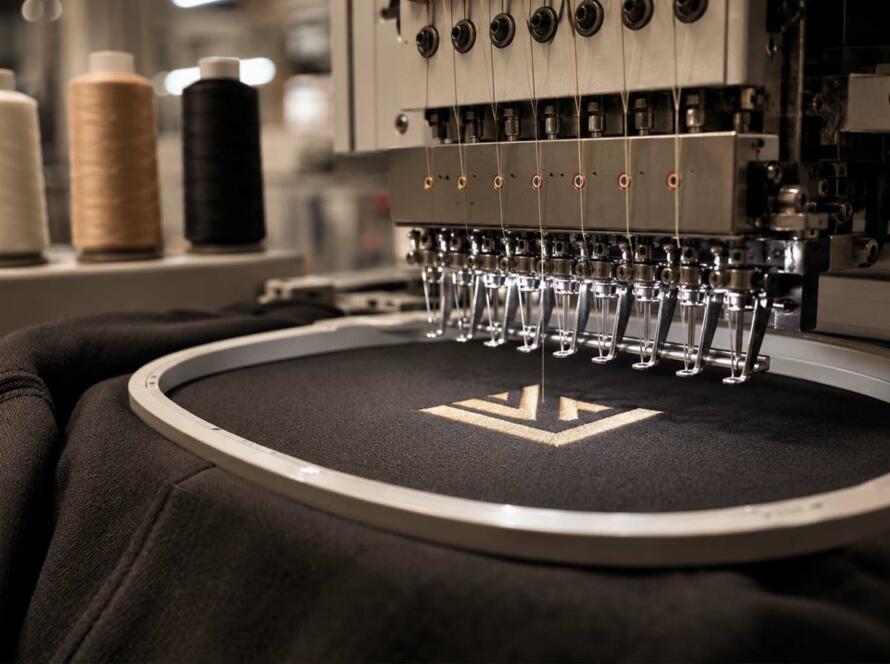
For European brands especially, working with a manufacturing partner in Istanbul can make it easier to coordinate fabric sourcing, trims, sampling, garment production, printing, embroidery, quality control, and packaging within the same production process.
The greatest advantage, however, comes from coordination.
A trim supplier may produce an excellent component, but the garment manufacturer still needs to ensure that its dimensions, color, performance, and attachment method work correctly with the final product.
That is why trims should be considered part of product development rather than a separate purchasing task.
Develop Your Garments with Istanbul Factory
At Istanbul Factory, we support fashion brands through garment development and production in Istanbul, from fabric sourcing and sampling to trims, printing, embroidery, quality control, and final production.
Whether you are developing a premium hoodie, streetwear collection, private-label range, or a complete apparel line, we help translate your design specifications into production-ready garments.
A strong product is built through dozens of coordinated decisions—and the smallest components often make a visible difference.
If you are preparing a collection for production, send us your designs and tech pack to discuss your project.
Frequently Asked Questions
What are garment trims and accessories?
Garment trims and accessories are components used alongside the main garment fabric, including labels, zippers, buttons, snaps, drawcords, eyelets, elastic, rib, hangtags, and packaging materials.
What is the difference between trims and accessories in garments?
Trims usually refer to components attached to or incorporated into the garment, such as zippers and buttons. Accessories often include supporting or presentation items such as hangtags and packaging. In practice, manufacturers sometimes use “trims” to describe both groups.
What garment trims should be included in a tech pack?
A tech pack should identify every required trim and specify its material, dimensions, color, finish, placement, construction, supplier reference, artwork, and any other information needed to reproduce it consistently.
Should trims be approved before bulk production?
Yes. Major trims should ideally be reviewed during sampling and approved before bulk production. This helps identify problems involving color, proportions, functionality, comfort, compatibility, or appearance before large quantities are produced.
Can a clothing manufacturer source custom trims?
Yes. Full-service clothing manufacturers can often source or develop components such as custom woven labels, printed labels, branded buttons, zipper pullers, drawcords, hangtags, and packaging. Customization options and minimum quantities depend on the trim and supplier.


1 Comment