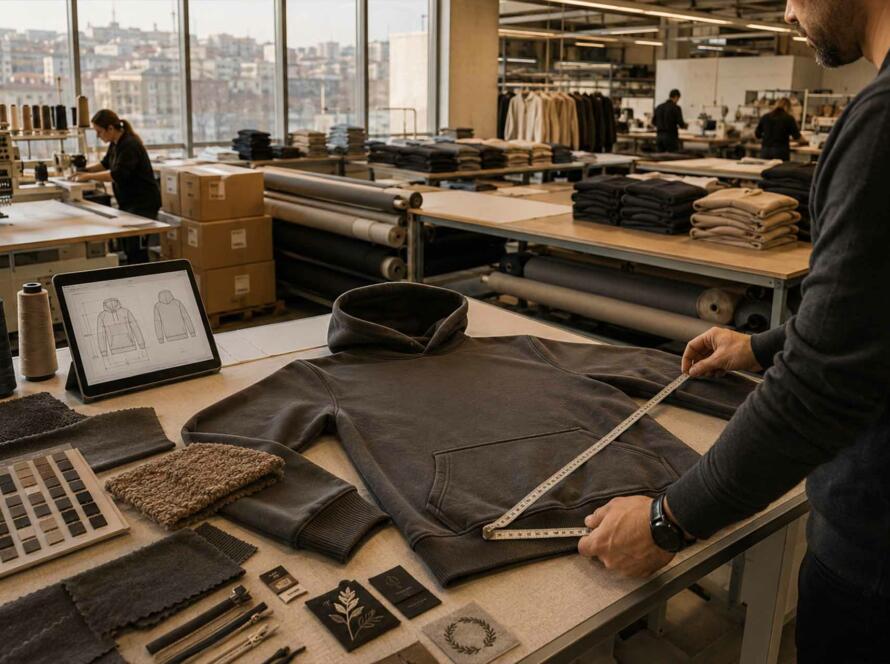


For European fashion brands, sourcing decisions are becoming less about factory price alone.
Lead times, communication, reorder speed, freight options, inventory exposure, and the ability to react to real demand now play a much larger role in manufacturing strategy.
That is why more brands are considering nearshore clothing manufacturing in Türkiye as an alternative to relying entirely on distant sourcing markets.
Türkiye offers European brands something valuable: proximity without giving up access to an established textile and garment manufacturing base.
For many fashion companies, the advantage is not simply that Türkiye is closer. It is that a shorter and more connected supply chain can make product development, production management, and replenishment easier to control.
What Is Nearshoring in Clothing Manufacturing?
Nearshoring means moving production closer to the market where the products will ultimately be sold.
For a fashion brand based in Germany, France, the Netherlands, Belgium, Scandinavia, Austria, Switzerland, or other European markets, Türkiye can serve as a nearshore production location compared with manufacturing in distant Asian sourcing hubs.
In practical terms, nearshoring can help reduce the geographical distance between:
- design and product development teams;
- the manufacturing facility;
- the warehouse or distribution centre;
- and the final customer market.
The goal is not necessarily to find the lowest production cost.
The goal is to create a more responsive and manageable supply chain.
That distinction matters.
A garment with a lower factory price can still become expensive if the brand carries excessive stock, depends on long freight cycles, misses a selling window, or cannot replenish a successful product quickly enough.
Why Türkiye Is Relevant for European Fashion Brands
Türkiye has a long-established textile and apparel industry and remains closely connected to European fashion markets.
Its strength comes from the combination of manufacturing capability and a broad regional supply ecosystem. For brands evaluating the material side of this ecosystem, our guide to fabric sourcing in Türkiye explains how fabrics, suppliers, sampling, and garment production connect.
Depending on the product, brands can often source or coordinate:
- knitted and woven fabrics;
- garment manufacturing;
- garment dyeing and washing;
- printing;
- embroidery;
- labels and trims;
- sampling;
- finishing;
- quality control;
- and international transport.
This matters because production problems are easier to solve when key suppliers and specialists are geographically close to one another.
If a trim needs to change, a fabric needs to be replaced, or a print sample needs to be corrected, the solution may be available within the same manufacturing ecosystem rather than requiring coordination across several countries.
1. Shorter Development Cycles
One of the strongest reasons to nearshore clothing production is the potential to shorten product-development cycles.
Garment development rarely moves from design to production without adjustments. Brands that want to understand how these stages connect can review the full garment production process from design and sampling through bulk production and delivery.
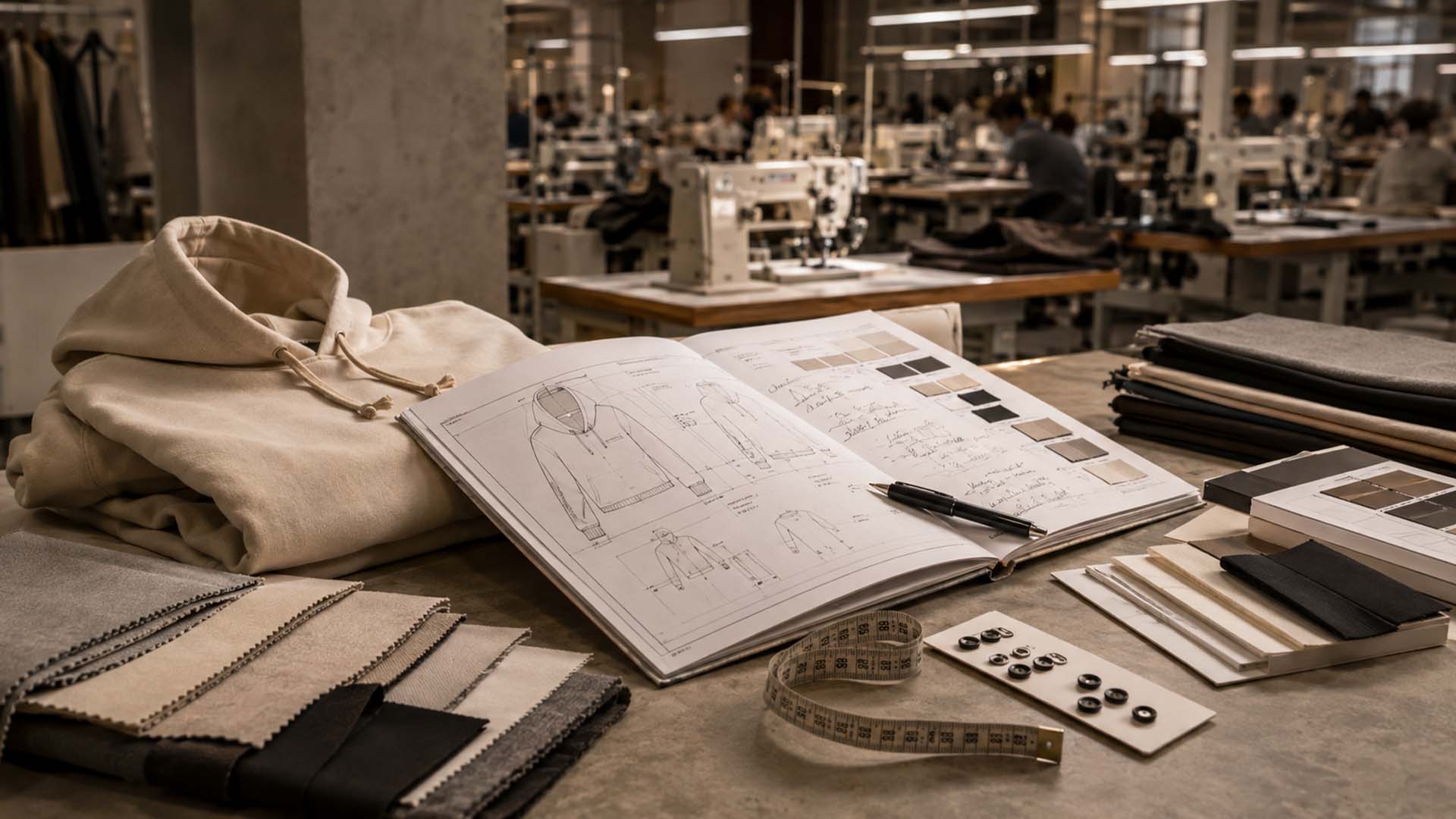
A first sample may reveal issues with:
- fit;
- fabric weight;
- garment measurements;
- neckline construction;
- print placement;
- embroidery scale;
- wash effect;
- trims;
- colour;
- or sewing details.
Each revision creates another communication and approval cycle.
When the factory is closer to the brand’s market, these cycles can become easier to manage.
European brands working with Turkish manufacturers also benefit from significant overlap in working hours. That makes it easier to discuss technical issues, review comments, and make decisions during the same business day.
For product developers and sourcing teams, this can be more valuable than it first appears.
A shorter development loop can help a brand reach bulk-production approval earlier and reduce delays before launch.
2. Nearshoring Can Make Reorders More Responsive
A fashion brand cannot always predict which product will become the bestseller.
This is where nearshoring becomes commercially important.
Consider a streetwear brand launching three hoodie colours. Two perform as expected, but one colour sells much faster than forecast.
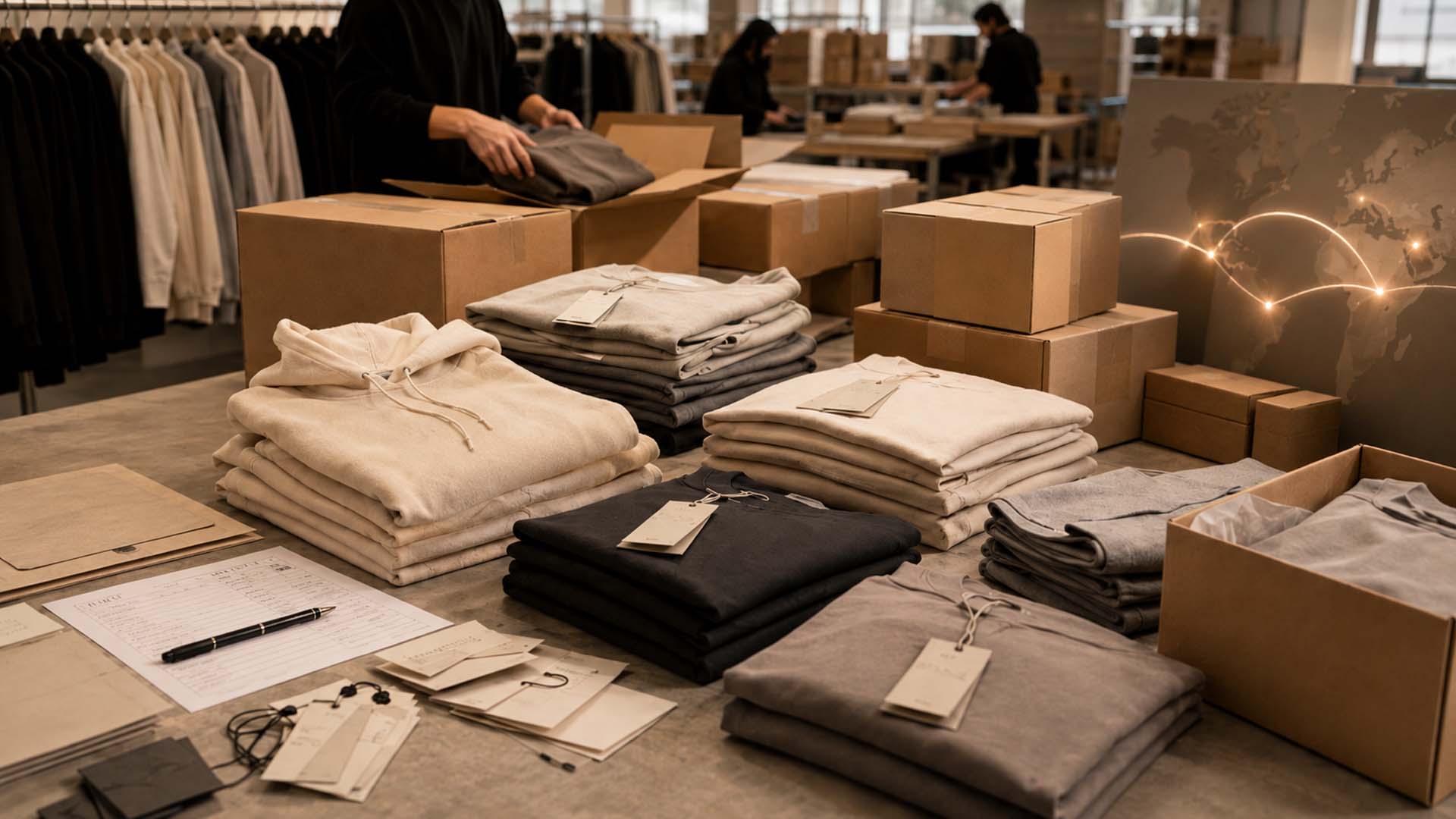
The brand now faces a decision:
Should it reorder while demand is still strong?
With a distant sourcing model, the production lead time may be followed by a lengthy freight cycle. By the time the new stock arrives, the commercial opportunity may have weakened.
A nearer production base can make replenishment more practical.
This is particularly relevant for brands that:
- launch frequent drops;
- operate direct-to-consumer stores;
- sell evergreen products;
- test new styles before scaling;
- maintain core basics;
- or want to reduce initial inventory commitments.
Nearshoring does not make reorders automatic or immediate.
Fabric availability, production capacity, dye-house schedules, trims, and minimum quantities still matter.
However, reducing transport distance gives the brand one less constraint to manage.
3. Freight Becomes More Flexible
Freight should be considered before production begins, not after the garments are finished.
When sourcing from Türkiye, European fashion brands can often evaluate road transport alongside other freight methods.
This gives sourcing teams more flexibility when balancing:
- delivery speed;
- shipping cost;
- order size;
- launch deadlines;
- and urgency.
The value here is not one specific transport method.
It is having more realistic options.
For example, a planned seasonal order may follow the standard transport route, while a smaller replenishment order may require a faster solution.
That flexibility can be particularly useful when a launch date changes or a successful style needs additional stock.
4. Nearshoring Can Support Leaner Inventory Planning
Nearshoring can also change how a brand thinks about inventory.
Traditional long-distance sourcing often encourages larger commitments because replenishment takes time.
A nearer supply chain can make staged production more realistic.
A simplified model might look like this:
Initial production → product launch → sales data → targeted reorder
This approach allows brands to make some purchasing decisions based on actual demand rather than relying entirely on forecasts prepared months earlier.
It can be particularly useful for:
- streetwear;
- premium basics;
- capsule collections;
- seasonal drops;
- core T-shirts;
- hoodies and sweatshirts;
- and repeatable product lines.
The approach still requires planning.
Factories need production visibility, fabrics may need to be reserved, and some materials require longer procurement times.
Nearshoring improves responsiveness, but it does not remove the need for forecasting and production planning.
Türkiye vs. Distant Sourcing Markets
A serious sourcing strategy should not treat Türkiye and Asia as a simple either-or decision.
For another regional sourcing perspective, see our comparison of clothing manufacturing in Turkey vs. Europe.
Different production markets serve different needs.
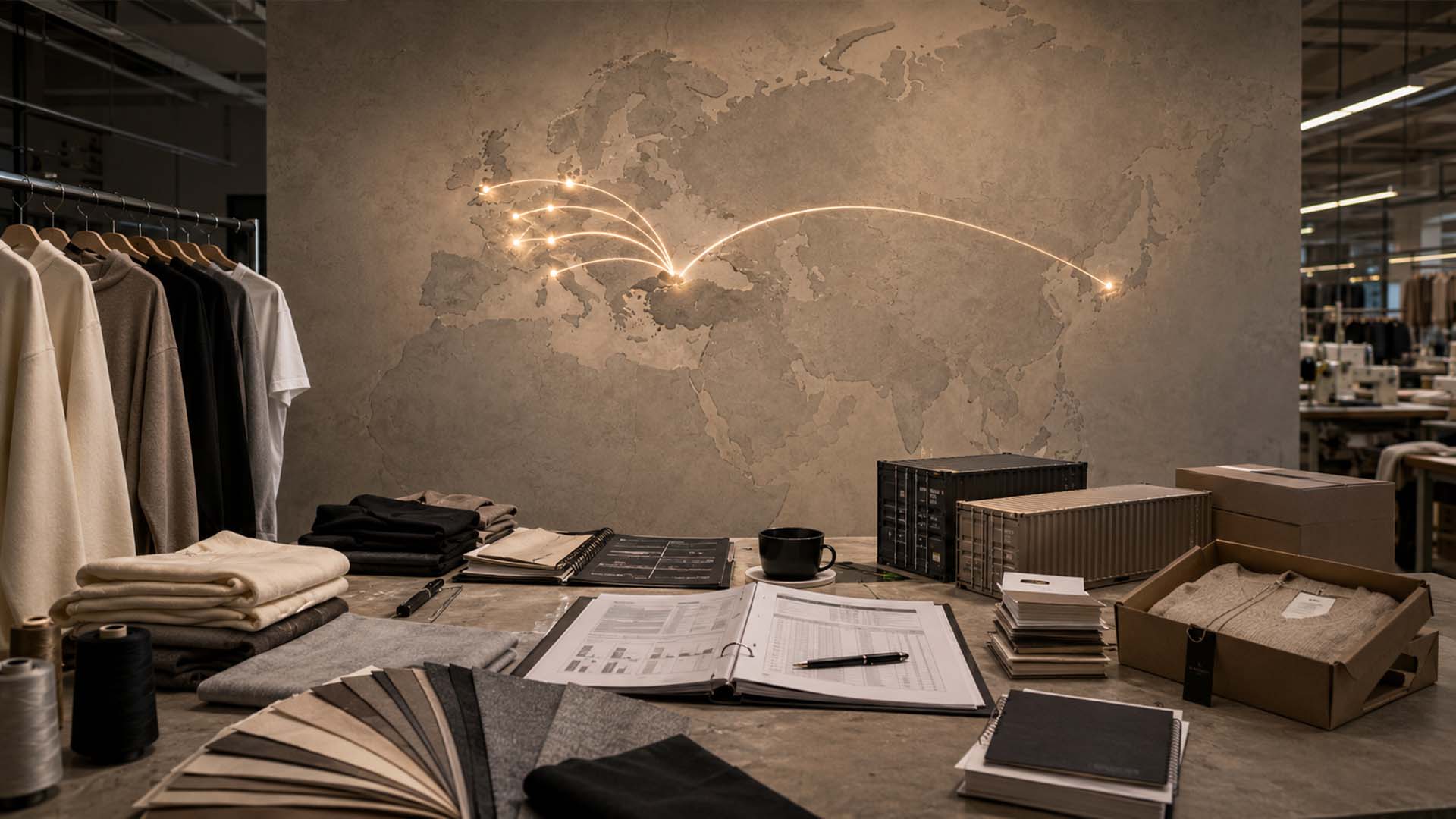
Large Asian manufacturing centres may remain highly competitive for very high-volume programs, highly specialised supply chains, or products where large-scale manufacturing has a significant effect on unit cost.
Türkiye can become more attractive when the brand values:
- shorter development cycles;
- closer communication;
- faster replenishment;
- regional transport options;
- production visibility;
- flexibility;
- and proximity to European markets.
A useful question is therefore not:
“Which country is cheaper?”
A better question is:
“Which sourcing model creates the best commercial outcome for this product?”
That includes factory price, but also freight, development time, stock risk, missed-sales risk, communication, quality, and reorder potential.
Some brands use a hybrid model.
High-volume, predictable products may be produced in distant sourcing markets, while Türkiye is used for faster-moving collections, premium styles, product launches, or time-sensitive replenishment.
Which Brands Benefit Most from Nearshoring to Türkiye?
Nearshore clothing manufacturing in Türkiye tends to make the most sense for brands that value responsiveness and closer manufacturing control.
Streetwear brands
Streetwear businesses often operate around drops, limited collections, fast-moving demand, and repeatable garment categories such as hoodies, T-shirts, sweatshirts, and joggers.
A shorter regional supply chain can support these cycles more effectively.
Startup fashion brands
New brands often require more communication during sampling and development.
Working with a closer manufacturer can make fit corrections, material decisions, and production approvals easier to coordinate.
Premium labels
Premium brands usually pay closer attention to construction, fabric quality, finishing, garment feel, and consistency.
They may therefore value closer development and production oversight more than the lowest possible unit price.
Direct-to-consumer brands
DTC brands receive customer demand signals quickly.
When sales data shows that a product is outperforming expectations, a shorter supply chain can make replenishment decisions more actionable.
What Should Brands Evaluate Before Nearshoring?
Nearshoring should never replace supplier due diligence.
Before selecting a clothing manufacturer in Türkiye, brands should evaluate:
- garment categories and technical capability;
- fabric sourcing options;
- sampling quality;
- minimum order quantities;
- production lead times;
- quality-control procedures;
- available capacity;
- finishing capabilities;
- print and embroidery options;
- payment terms;
- communication processes;
- and shipping arrangements.
The right manufacturer should be able to explain what is realistic, where the limitations are, and which parts of the project require early decisions.
Clear production expectations are usually a stronger trust signal than broad promises.
Why Istanbul Matters in the Nearshoring Model
Istanbul is an important production hub because manufacturers operate within a dense network of textile suppliers and specialist service providers.
For fashion brands, this can reduce the number of disconnected steps in product development.
Fabric sourcing, trims, printing, embroidery, sampling, garment manufacturing, finishing, and quality control may all be coordinated within the same regional ecosystem.
That creates practical advantages when changes are required.
A replacement rib fabric, revised embroidery sample, different label construction, or new colour test can often be handled without rebuilding the entire supply chain.
For European sourcing teams, this can mean clearer communication and better visibility during production.
Nearshore Clothing Manufacturing with Istanbul Factory
Istanbul Factory supports fashion brands, streetwear labels, startups, and established businesses looking to manufacture clothing in Türkiye.
Our role is not simply to quote a product and move directly into bulk production.
We first look at the production requirements behind the garment:
Product type → fabric → construction → quantity → branding → quality level → timeline → delivery market
From there, we can support the process through:
- fabric sourcing;
- garment sampling;
- custom clothing manufacturing;
- private label production;
- printing and embroidery;
- production coordination;
- and quality control.
For brands considering nearshoring, this approach is important because every collection has different commercial priorities.
A streetwear drop requiring responsive reorders should not be planned in the same way as a large seasonal order with predictable demand.
Considering Türkiye for Your Next Production Run?
If your brand is reviewing its current sourcing model, Istanbul Factory can help you assess whether production in Türkiye fits your collection, quantities, quality requirements, and timeline.
Share your tech pack, reference samples, estimated quantities, fabric requirements, or initial product concept with our team.
We can then review the project and help you understand the most practical route from development to production.
Frequently Asked Questions
What is nearshore clothing manufacturing?
Nearshore clothing manufacturing means producing garments in a country located relatively close to the brand’s main sales market. For European fashion companies, Türkiye can be considered a nearshore production location because of its proximity to Europe and established apparel industry.
Why do European brands manufacture clothing in Türkiye?
European brands often consider Türkiye because of its textile infrastructure, proximity to European markets, communication advantages, fabric sourcing capabilities, flexible transport options, and experience in garment production.
Is Türkiye suitable for fast fashion reorders?
Türkiye can be suitable for faster replenishment because transport distances to Europe are shorter than from many distant sourcing regions. Actual reorder speed still depends on fabric availability, production capacity, trims, and garment complexity.
Is clothing manufacturing in Türkiye cheaper than in Asia?
Not always. Certain Asian markets may offer lower factory prices, especially at very high volumes. Türkiye can become competitive when brands consider total landed cost, freight, lead time, inventory risk, development efficiency, and reorder flexibility.
What types of brands benefit most from nearshoring to Türkiye?
Streetwear brands, premium labels, direct-to-consumer companies, startups, and brands with frequent launches or replenishment needs often benefit most from nearshore production.
What products are commonly suitable for nearshore production in Türkiye?
Türkiye is well suited to many knitted and woven apparel categories, including T-shirts, hoodies, sweatshirts, joggers, dresses, shirts, casualwear, streetwear, and private label collections. Capabilities vary by manufacturer.
Does nearshoring reduce supply-chain risk?
Nearshoring can reduce certain risks related to transport distance, communication delays, and long replenishment cycles. It does not eliminate production risk, which is why supplier evaluation, quality control, material planning, and realistic timelines remain essential.