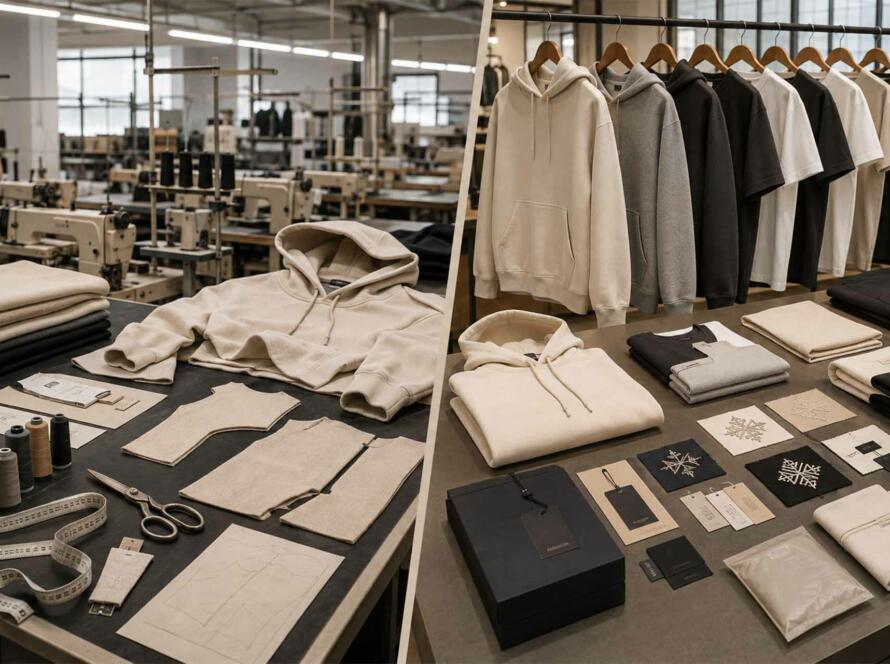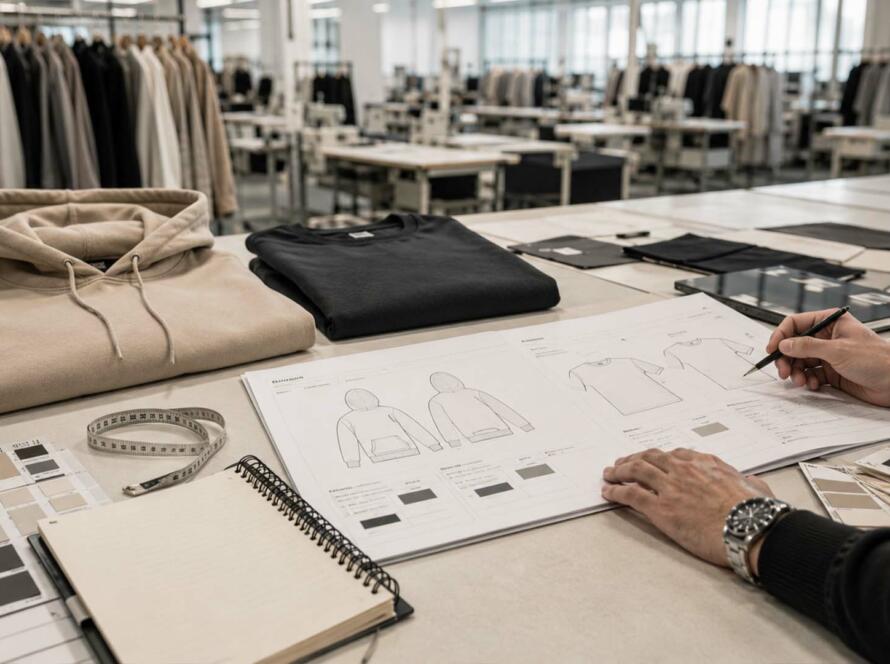


Choosing where to manufacture your clothing collection is one of the most important decisions a fashion brand will make.
For European and US brands, the choice often comes down to two strong options: producing inside Europe or working with a clothing manufacturer in Turkey.
Both can be excellent choices. Europe offers proximity, established quality expectations, and a strong manufacturing heritage in several countries. Turkey offers a powerful balance of quality, cost efficiency, flexibility, fabric access, and shorter lead times compared with many overseas production hubs.
The best option depends on your product type, target price, quality expectations, order volume, and how involved you want your manufacturing partner to be.
This guide compares Europe and Turkey across the areas that matter most: cost, quality, lead time, flexibility, communication, shipping, and production capabilities. It is written for fashion brands, streetwear labels, startups, and premium brands that want to make a smart, commercially realistic production decision.
Quick Answer: Europe or Turkey?
For many fashion brands, Turkey works as a smart middle point between European manufacturing and low-cost overseas production.
A European manufacturer may be the right choice if your brand needs very small production runs, local production claims, or close physical access to the factory.
A clothing manufacturer in Turkey may be the better option if your brand wants European-level quality expectations, competitive production costs, strong textile capabilities, flexible development, and easier logistics to Europe compared with Asia.
Turkey is especially attractive for:
- Streetwear brands
- Private label clothing brands
- Premium basics
- Hoodie and sweatshirt production
- T-shirt collections
- Knitwear and jersey-based products
- Brands that need fabric sourcing and sampling support
- European brands looking for a nearshore production partner
- US brands looking for reliable apparel manufacturing outside Asia
Why the Manufacturing Location Matters
The country you choose affects more than the unit price.
It influences:
- Fabric options
- Sampling speed
- Production quality
- Minimum order quantities
- Communication rhythm
- Delivery time
- Shipping cost
- Product consistency
- Ability to make changes
- Long-term scalability
A low unit price can become expensive if the manufacturer cannot control sizing, fabric shrinkage, stitching quality, or delivery schedules. On the other hand, a premium production location may not be commercially realistic if the final retail price cannot support the cost.
The goal is not simply to find the cheapest factory. The goal is to find a production partner that fits your brand’s market position, collection type, and growth plan.
Cost Comparison: Europe vs Turkey
Cost is usually the first question brands ask, but it should be viewed carefully.
Manufacturing in Europe
European clothing production can offer strong quality, but costs are often higher. This may be due to labor costs, facility expenses, regulations, energy prices, and smaller production capacity in some categories.
For premium or luxury brands, this cost may be acceptable. If a brand sells at high retail prices and wants a “Made in Europe” positioning, European production can make sense.
However, for many startup brands, streetwear labels, and growing fashion companies, European production can make margins difficult. This is especially true for products such as hoodies, sweatpants, T-shirts, oversized garments, and private label collections where price sensitivity is high.
Manufacturing in Turkey
Turkey is often more cost-efficient while still offering high production standards. This is one of the main reasons many brands search for a clothing manufacturer in Turkey.
The advantage is not only lower cost. Turkey also has a developed textile ecosystem, which can reduce hidden expenses in sourcing, sampling, fabric development, printing, embroidery, and finishing.
For example, a streetwear brand producing heavyweight hoodies may need fleece fabric, rib, drawcords, embroidery, screen printing, labels, packaging, and quality control. If these services are available through one coordinated production partner, the brand can save time and avoid unnecessary development mistakes.
Practical Cost Insight
The cheapest production option is not always the most profitable.
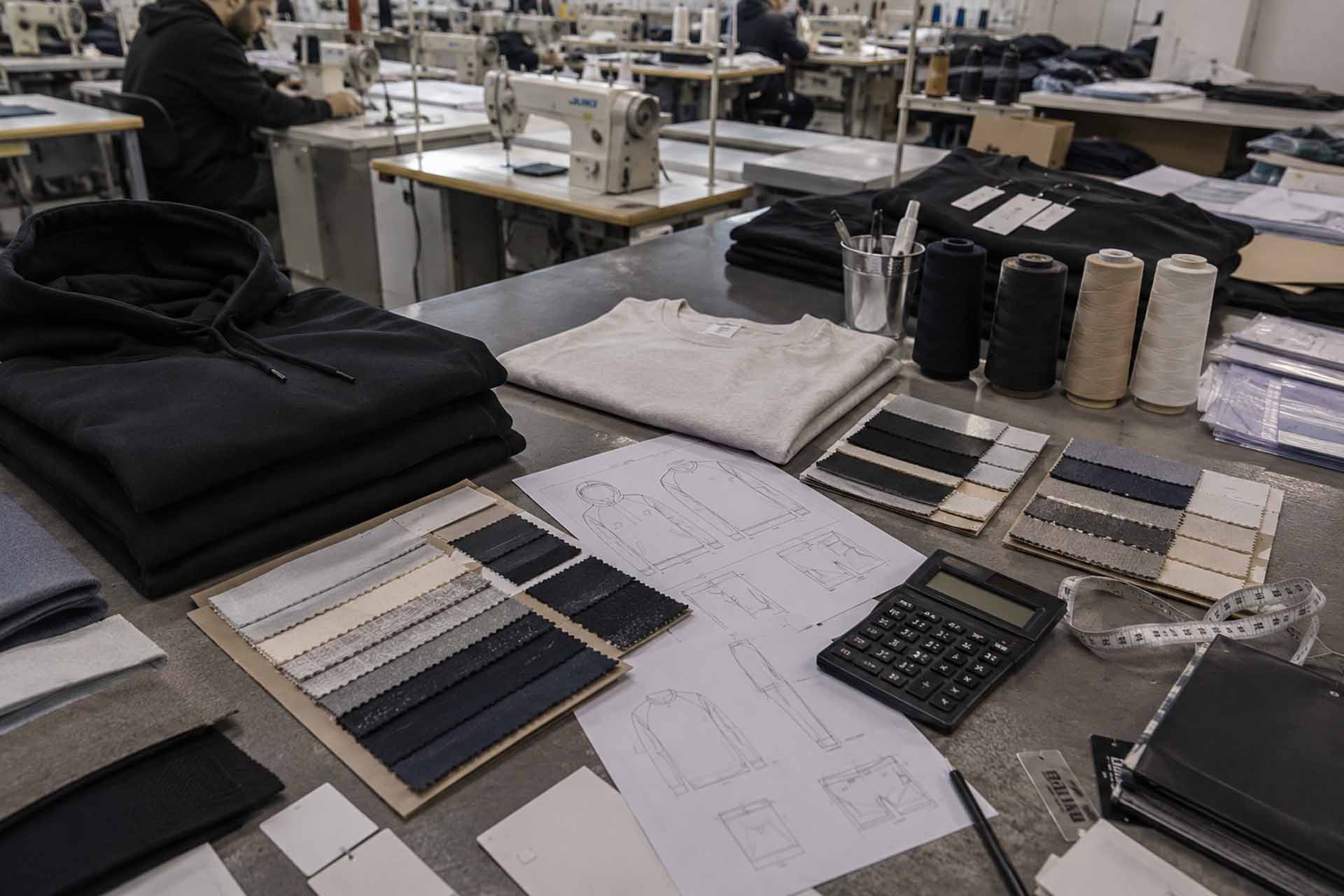
A brand should calculate the full landed cost, including:
- Garment production
- Sampling
- Fabric sourcing
- Printing or embroidery
- Labels and trims
- Packaging
- Quality control
- Shipping
- Customs and duties
- Delays or remake risks
Turkey often performs well when brands look at the complete production picture rather than only comparing unit prices.
Quality Standards: Can Turkey Match European Expectations?
Quality is one of the biggest concerns when choosing any production country.
European buyers often ask whether Turkey can meet their quality standards. The answer is yes, provided the brand works with the right manufacturer.
Turkey has a long textile and garment production history. Many Turkish manufacturers work with European brands and understand expectations around fabric quality, sizing, stitching, finishing, packaging, and delivery discipline.
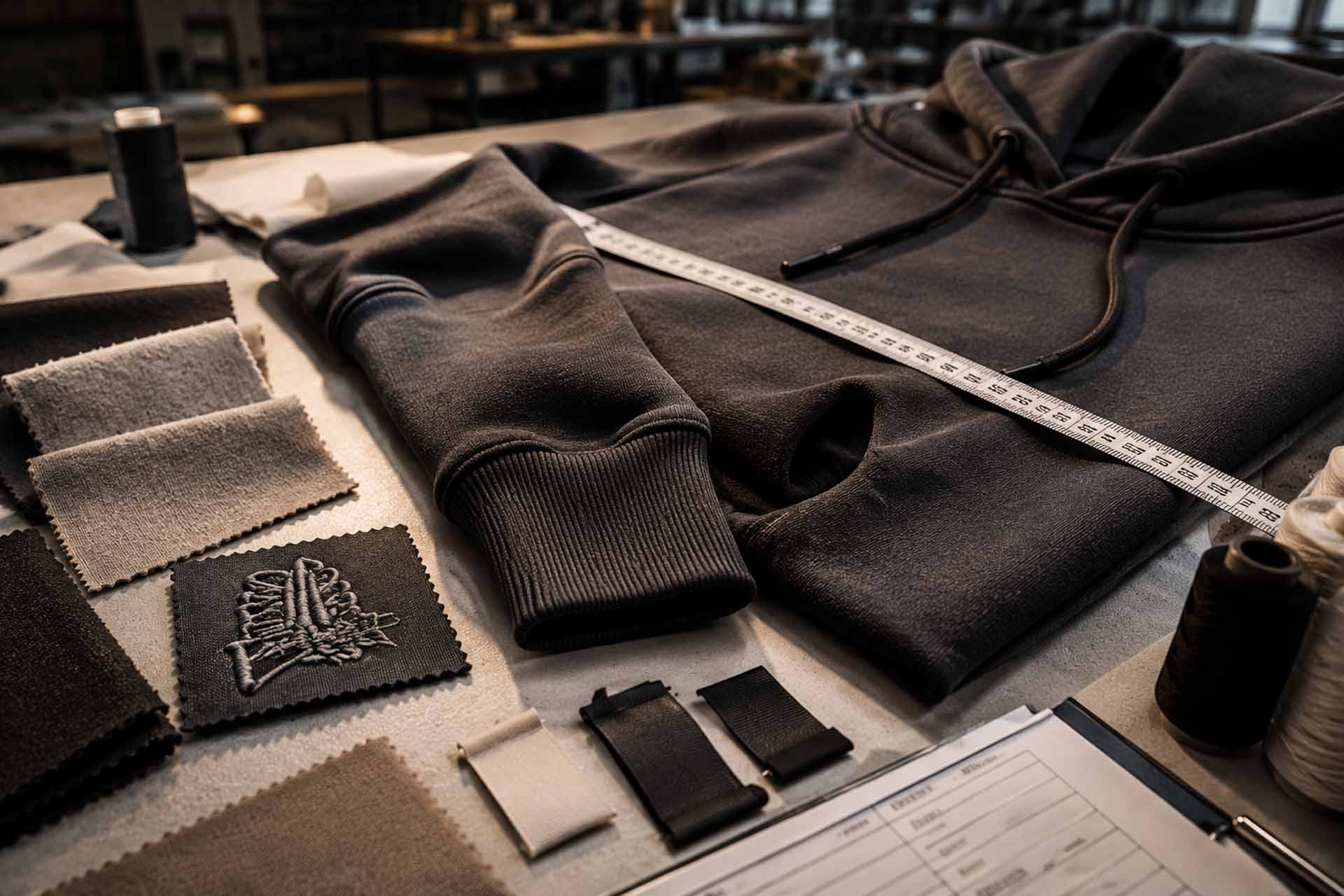
A strong clothing manufacturer in Turkey should be able to support:
- Fabric inspection
- Measurement control
- Fit sample development
- Size set approval
- Pre-production samples
- Stitching checks
- Print and embroidery testing
- Shrinkage control
- Color consistency
- Final quality control before shipment
Quality in Europe
European factories can offer excellent quality, especially in specialized categories. Some are highly experienced in luxury tailoring, technical garments, knitwear, or small-batch premium production.
The challenge is often cost and capacity. Some European factories may not be suitable for brands that need a balance between premium quality and competitive pricing.
Quality in Turkey
Turkey is strong in categories such as jersey, fleece, cotton garments, streetwear, casualwear, private label production, and premium everyday clothing.
The key is to work with a manufacturer that has structured production processes, not just sewing capacity.
At Istanbul Factory, quality is approached as a full production system. Fabric, fit, measurements, decoration, stitching, and packaging are controlled step by step so brands can build collections with confidence.
Lead Time: Which Option Is Faster?
Lead time depends on fabric availability, sampling complexity, production capacity, and order size.
European Production Lead Times
For brands located in Europe, local manufacturing may offer logistical speed. Factory visits can be easier, and shipping distance is shorter.
However, production speed depends on the factory’s capacity. Some European factories have limited availability, especially for growing brands that need flexible quantities or quick production windows.
Turkish Production Lead Times
Turkey is geographically close to Europe and has strong access to fabrics, trims, printing, embroidery, and garment production facilities. This can make the full development process faster than many brands expect.
For European brands, Turkey can be a practical nearshore manufacturing solution. Products can move faster than long-distance overseas shipments, and communication time zones are easier to manage.
For US brands, Turkey can also be attractive because it offers a different sourcing option from Asia while still giving access to experienced apparel production.
Practical Lead Time Insight
Sampling often determines the real timeline.
A brand may think bulk production is the main schedule risk, but delays usually start earlier:
- Tech pack is incomplete
- Fabric is not confirmed
- Fit comments are unclear
- Print artwork is not production-ready
- Labels or packaging are delayed
- Size set approval takes too long
A reliable manufacturer helps prevent these issues before bulk production begins.
Flexibility: Which Location Supports Growing Brands Better?
Flexibility is critical for startups, streetwear brands, and fashion labels testing new collections.
Europe and Small Runs
Some European manufacturers are good for small production runs. This can be useful for early-stage brands that need very limited quantities.
However, small-run production in Europe can be expensive. The brand may gain flexibility but lose margin.
Turkey and Scalable Flexibility
Turkey can offer a strong balance between flexibility and scalability. A clothing manufacturer in Turkey may support sampling, private label production, custom development, and bulk production under one production structure.
This is valuable for brands that want to start with a focused collection and grow over time.
For example, a streetwear brand may begin with:
- One oversized hoodie
- One heavyweight T-shirt
- One sweatpant
- Two colorways
- Custom neck labels
- Embroidery on the chest
- Branded packaging
A capable Turkish manufacturer can help develop the collection, test samples, adjust fit, source suitable fabrics, and prepare the product for bulk production.
Communication and Project Management
Good production depends on clear communication.
Misunderstandings can affect fit, color, fabric weight, logo placement, measurements, and delivery timing.
Communication with European Manufacturers
European manufacturers may offer easy communication for brands in nearby countries. Shared business culture and travel access can be advantages.
However, communication quality still depends on the individual factory. A local factory is not automatically organized, responsive, or experienced in brand development.
Communication with Turkish Manufacturers
Turkey is well positioned for communication with European brands because of time zone compatibility and long experience working with international buyers.
For US brands, the time zone difference requires planning, but it is manageable with structured communication.
A professional manufacturer should communicate clearly about:
- Fabric options
- MOQ
- Sample cost
- Production cost
- Timeline
- Fit comments
- Artwork requirements
- Label and packaging details
- Quality control stages
- Shipping terms
At Istanbul Factory, communication is part of the production service. The goal is to help brands understand what is possible, what affects cost, and what needs to be approved before production moves forward.
Shipping Distance and Logistics
Shipping distance affects cost, speed, and risk.
Europe to Europe
For European brands, producing inside Europe usually provides the shortest delivery distance. This can be helpful for urgent replenishment, local positioning, or very small batches.
Turkey to Europe
Turkey offers a strong logistics advantage for European brands. It is close enough for efficient transport while still offering competitive production economics.
For many brands, this is one of Turkey’s strongest advantages. It provides nearshore production without the same cost structure as many Western European manufacturing locations.
Turkey to the United States
For US brands, Turkey is farther than local production but can still be a reliable sourcing option. Brands that want alternatives to Asian production may consider Turkey for premium casualwear, streetwear, and private label collections.
The decision should be based on product value, order volume, delivery expectations, and the importance of quality control.
Production Capabilities: What Can Each Option Offer?
A manufacturing location is only as strong as its ecosystem.
European Production Capabilities
Europe has excellent specialists in certain categories. Some countries are known for luxury apparel, tailoring, knitwear, technical outerwear, or heritage textile production.
For high-end niche production, Europe may be the best fit.
However, not every European factory offers full-service apparel development. Some may only handle cutting and sewing. Others may require the brand to manage fabric sourcing, trims, labels, printing, embroidery, and logistics separately.
Turkish Production Capabilities
Turkey has a broad textile and garment manufacturing ecosystem. This makes it suitable for brands that need more than basic production.
A strong clothing manufacturer in Turkey can often support:
- Fabric sourcing
- Pattern development
- Garment sampling
- Private label production
- Custom clothing manufacturing
- Cutting and sewing
- Print and embroidery
- Labels and trims
- Washing and finishing
- Quality control
- Packaging
- Export preparation
This is especially useful for brands that want one coordinated production partner instead of managing many suppliers separately.
Private Label Production: Europe vs Turkey
Private label production is a major area where Turkey can be highly competitive.
A private label brand usually wants to produce garments under its own brand name, using custom labels, trims, packaging, and sometimes adjusted fits or fabrics.
For this model, Turkey can be a strong choice because the production ecosystem supports both garment manufacturing and brand finishing.
A brand can develop:
- Custom neck labels
- Woven labels
- Hang tags
- Branded packaging
- Embroidery
- Screen printing
- Fabric selection
- Fit adjustments
- Collection-based production
Europe can also support private label production, but costs may be higher, and not all factories offer end-to-end services.
For brands that want premium results without overextending their budget, Turkey is often a practical option.
Streetwear Manufacturing: Why Turkey Is Strong
Streetwear production requires more than basic sewing.
A strong streetwear product often depends on:
- Fabric weight
- Oversized fit
- Shoulder drop
- Hood shape
- Rib quality
- Print durability
- Embroidery placement
- Wash feel
- Shrinkage control
- Packaging presentation
Turkey is well suited for streetwear because of its access to cotton-based fabrics, fleece, French terry, jersey, rib, and decoration techniques.
For a streetwear brand, working with a clothing manufacturer in Turkey can help connect design ideas with real production decisions.
For example, if a brand wants a premium oversized hoodie, the manufacturer can guide decisions such as GSM, fleece type, rib structure, print method, embroidery size, and fit sample adjustments.
These details directly affect the final product.
Sustainability and Responsible Production
Sustainability is becoming more important for fashion brands in Europe and the United States.
Both Europe and Turkey can support more responsible production, depending on the factory and supply chain.
A sustainable production approach may include:
- Better fabric selection
- Organic or recycled materials
- Lower-waste production planning
- Controlled dyeing and finishing
- Durable garment construction
- Quality control that reduces defective goods
- Efficient packaging choices
Sustainability should be practical, not just promotional.
A garment that fits poorly, shrinks too much, or fails after a few washes creates waste. Quality and sustainability are closely connected.
Istanbul Factory supports brands that want to make smarter production decisions, including fabric selection, sampling discipline, and quality control before bulk production.
When Europe May Be the Better Choice
Europe may be the better option if your brand needs:
- Very small production runs
- Local manufacturing claims
- Luxury niche production
- Frequent in-person factory visits
- Ultra-short local delivery
- Highly specialized European craftsmanship
- Production for a market where “Made in Europe” is central to pricing
For some premium brands, the higher cost is part of the brand positioning.
If your customers expect local production and are willing to pay for it, Europe can be the right choice.
When Turkey May Be the Better Choice
Turkey may be the better option if your brand wants:
- Competitive production costs
- Strong quality standards
- Nearshore access to Europe
- Full-service garment production
- Fabric sourcing support
- Sampling and product development
- Private label production
- Streetwear and casualwear expertise
- Better balance between quality and price
- Scalable manufacturing for growth
For many fashion brands, Turkey offers the practical balance they need: quality close to European expectations, cost structures that protect margins, and logistics that are easier than distant overseas production.
Comparison Table: Europe vs Turkey for Clothing Manufacturing
| Factor | Europe | Turkey |
|---|---|---|
| Cost | Usually higher | More competitive |
| Quality | Strong, especially in specialist categories | Strong when working with the right manufacturer |
| Lead Time | Can be fast locally | Strong nearshore option for Europe |
| Flexibility | Good for small runs, often expensive | Good balance of flexibility and scalability |
| Communication | Easy for European brands | Strong international experience and time zone compatibility |
| Shipping | Shortest for European brands | Efficient access to Europe |
| Production Capabilities | Strong but may be specialized | Broad textile and garment ecosystem |
| Best For | Luxury, local production, small niche runs | Private label, streetwear, premium casualwear, scalable production |
Why Istanbul Matters in Clothing Manufacturing
Istanbul is one of Turkey’s most important fashion and textile business centers.
For international brands, Istanbul offers access to manufacturers, fabric suppliers, trim providers, printing services, embroidery workshops, logistics partners, and export experience.
This makes the city especially useful for brands that want a complete production solution rather than separate suppliers.
A brand can manage fabric sourcing, sample development, fit adjustments, production, quality control, and packaging through a more connected process.
That connection reduces friction.
For fashion brands, fewer disconnected suppliers often means fewer mistakes, clearer timelines, and better control over the final product.
How to Choose the Right Manufacturing Partner
The country matters, but the manufacturer matters more.
Before choosing a factory, ask these questions:
- Do they understand your product category?
- Can they source the right fabric?
- Do they offer sampling before bulk production?
- Can they explain MOQ clearly?
- Do they control measurements and fit?
- Do they handle print and embroidery?
- Do they offer quality control?
- Can they support labels and packaging?
- Do they communicate clearly?
- Can they scale with your brand?
A good production partner should help you make better decisions, not simply quote a price.
Read More:
How to Choose the Right Clothing Manufacturer for Your Fashion Brand
Work With Istanbul Factory
Istanbul Factory is a clothing manufacturing partner based in Istanbul, Turkey, working with fashion brands, streetwear labels, startups, and established companies.
We support brands with end-to-end production services, including clothing manufacturing, private label production, custom clothing manufacturing, fabric sourcing, print and embroidery, garment sampling, quality control, and sustainable textile production.
If your brand is comparing Europe and Turkey, Istanbul Factory can help you understand what is realistic for your collection, your budget, and your quality expectations.
Whether you are developing premium basics, streetwear, private label garments, or a custom collection, our team can guide the production process from first sample to bulk delivery.
Start your clothing production journey with Istanbul Factory and build your next collection with a trusted manufacturing partner in Turkey.
FAQ
Is Turkey a good country for clothing manufacturing?
Yes. Turkey is a strong clothing manufacturing country, especially for brands that need quality, flexibility, fabric access, and competitive production costs. Many European and international brands work with Turkish manufacturers for private label clothing, streetwear, casualwear, and premium basics.
Is a clothing manufacturer in Turkey cheaper than Europe?
In many cases, yes. A clothing manufacturer in Turkey can offer more competitive production costs than many European factories. The final cost depends on fabric, order quantity, garment complexity, print or embroidery, labels, packaging, and quality requirements.
Can Turkish manufacturers meet European quality standards?
Yes, the right Turkish manufacturer can meet strong European quality expectations. Brands should look for structured sampling, measurement control, fabric inspection, stitching checks, print and embroidery testing, and final quality control before shipment.
Is Turkey better than Asia for European fashion brands?
Turkey can be a better option for European brands that want shorter shipping distances, easier communication, faster development, and nearshore production. Asia may still be suitable for very large orders with highly cost-driven products, but Turkey often offers a better balance for premium and mid-market brands.
What type of clothing is Turkey strong in producing?
Turkey is strong in T-shirts, hoodies, sweatshirts, sweatpants, streetwear, jersey garments, cotton-based products, private label clothing, premium casualwear, and custom clothing production.
Why should fashion brands work with Istanbul Factory?
Istanbul Factory offers end-to-end clothing production services in Istanbul, including fabric sourcing, sampling, private label production, custom manufacturing, print and embroidery, quality control, and packaging. This helps brands manage production through one coordinated partner.