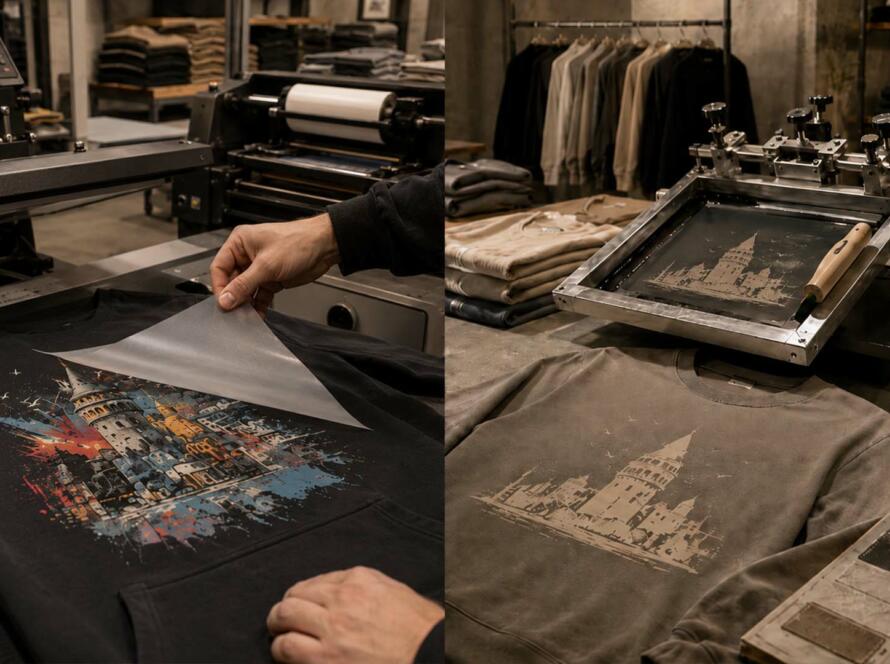


Screen printing clothing remains one of the most trusted decoration methods for fashion brands, streetwear labels, startup clothing companies, and premium apparel businesses that want strong color, long-lasting prints, and consistent results across bulk production.
For many new fashion founders, the printing method can feel like a small design choice. In real production, it affects cost, fabric selection, minimum quantities, lead time, quality control, and the final customer experience. A hoodie with a cracked print, a T-shirt with weak color coverage, or a design placed slightly off-center can make the whole product feel less professional.
That is why screen printing should be planned early in the clothing production process, especially when developing collections for retail, wholesale, online drops, or private label programs.
At Istanbul Factory, screen printing is often used for streetwear collections, branded T-shirts, sweatshirts, hoodies, joggers, shorts, uniforms, and promotional apparel where durability and visual impact matter.
What Is Screen Printing Clothing?
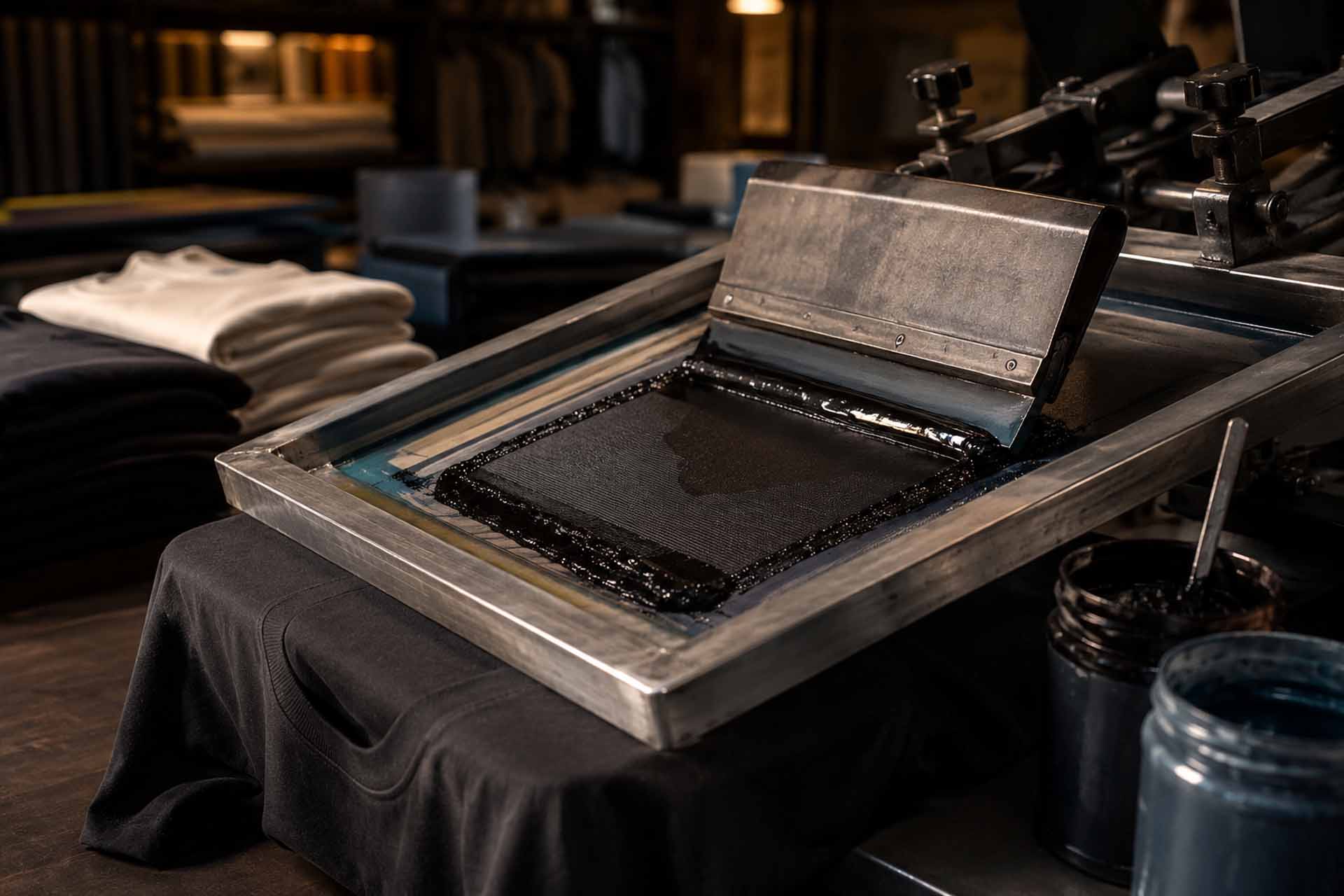
Screen printing clothing is a print method where ink is pushed through a prepared mesh screen onto fabric. Each color in the design usually requires its own screen. The ink is then cured with heat so it bonds properly to the garment.
This method is especially strong for bulk clothing production because once the screens are prepared, the same design can be repeated consistently across many pieces.
In simple terms:
- One screen is prepared for each print color.
- Ink is applied through the screen onto the garment.
- The print is cured using heat.
- The result is a durable, vibrant, and repeatable print.
Screen printing works best for designs that need strong color coverage, clear shapes, brand logos, bold graphics, typography, and streetwear-style artwork.
Why Fashion Brands Use Screen Printing
Screen printing has stayed relevant because it solves practical problems for fashion brands. It offers a strong balance between quality, cost efficiency, durability, and visual consistency.
For streetwear brands, it is especially valuable because graphics are often central to the product. A heavyweight T-shirt or oversized hoodie may depend on the print to define the collection’s identity.
For private label brands, screen printing makes it possible to add brand artwork, slogans, logos, or seasonal graphics to existing garment styles. For custom clothing manufacturing, it allows a brand to develop unique pieces with controlled decoration and repeatable quality.
Screen printing is commonly used for:
- Oversized streetwear T-shirts
- Heavyweight cotton T-shirts
- Hoodies and sweatshirts
- Tracksuits and joggers
- Shorts and relaxed basics
- Capsule collections
- Brand merchandise
- Retail-ready private label products
- Promotional clothing
- Uniforms and event apparel
When planned correctly, screen printing gives fashion brands a production-ready decoration method that feels professional and scalable.
Durability: Why Screen Printing Lasts
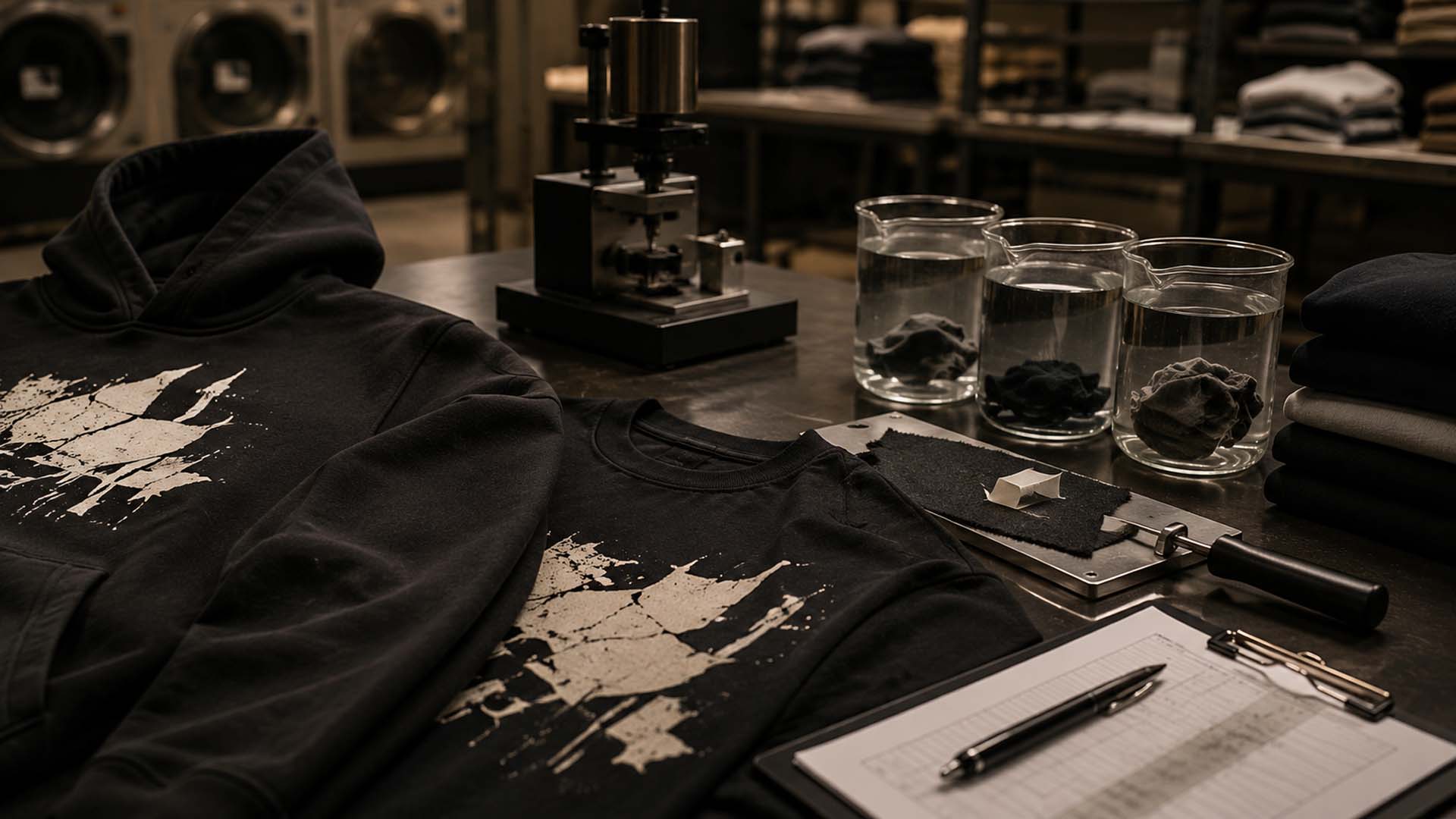
Durability is one of the main reasons brands choose screen printing clothing over some other print methods.
A good screen print does not simply sit weakly on the surface. The ink is applied with controlled pressure and cured with heat so it can withstand regular wearing and washing. When the fabric, ink type, curing temperature, and washing behavior are aligned, screen printing can hold up very well over time.
Durability depends on several factors:
- Fabric composition
- Ink quality
- Print thickness
- Curing temperature
- Washing instructions
- Print placement
- Garment construction
- Quality control during production
For example, a cotton T-shirt with a properly cured plastisol or water-based print can perform very well in retail conditions. A poorly cured print, however, may crack, peel, or fade faster than expected.
This is why professional production control matters. Screen printing is not just about placing artwork on a garment. It requires testing, curing accuracy, and inspection before bulk production is approved.
Color Vibrancy and Print Impact
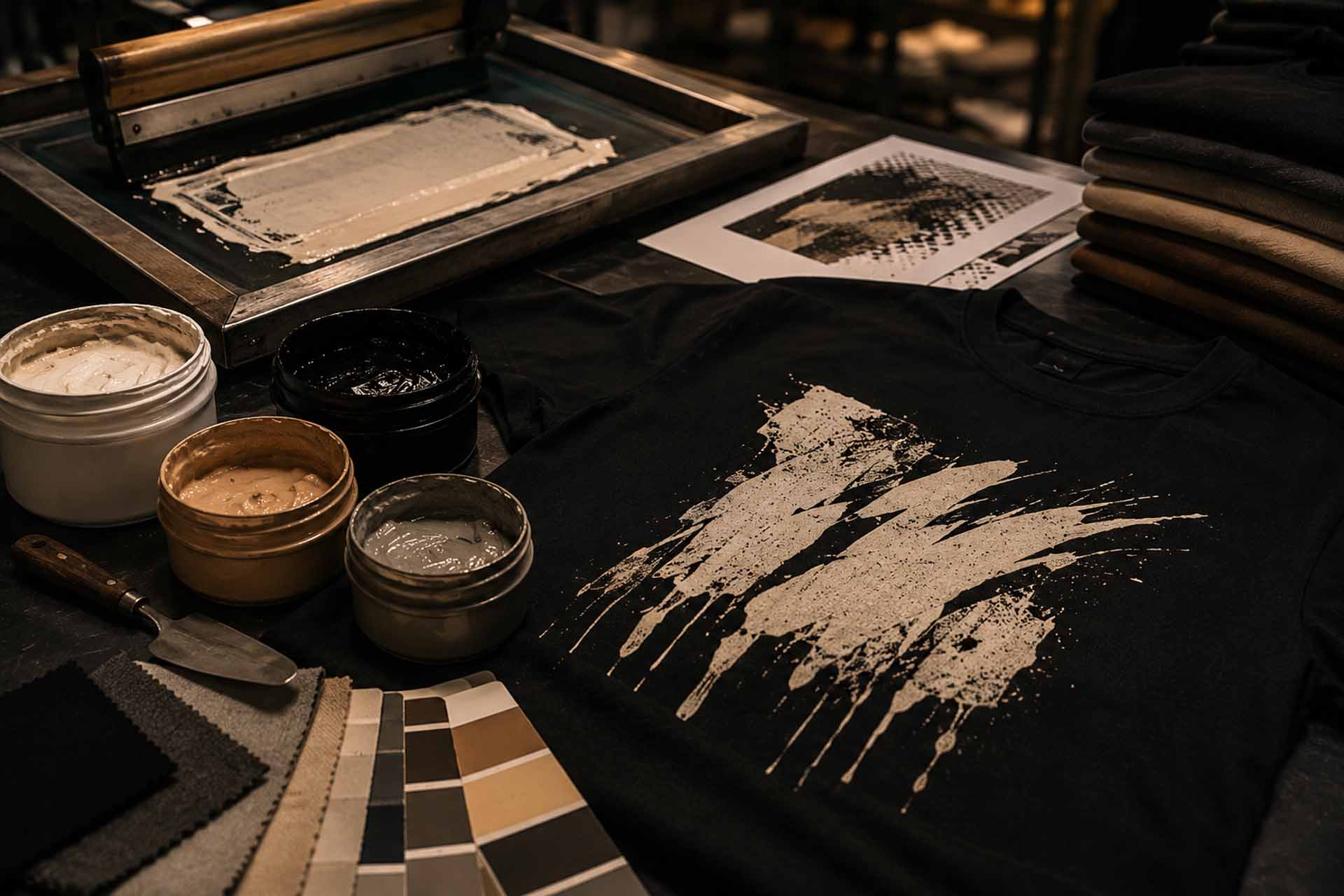
One of the biggest advantages of screen printing is color strength.
Screen printing can produce rich, bold, and vibrant colors, especially on cotton and cotton-rich garments. This makes it ideal for streetwear graphics, brand logos, large chest prints, back prints, sleeve artwork, and statement pieces.
Color vibrancy is especially important when printing on darker garments. A white print on a black hoodie, for example, needs enough opacity to look clean and premium. If the ink coverage is weak, the design may look grey, uneven, or unfinished.
To improve print impact, manufacturers may use:
- Underbase layers for dark garments
- Special ink types
- Correct mesh selection
- Proper curing
- Pantone color matching
- Print tests before bulk production
For fashion brands, this is where communication matters. The artwork file, desired color, garment fabric, and final look should be confirmed before production begins.
A digital mockup is useful, but it does not always show how ink behaves on real fabric. A physical sample gives a much better understanding of color, texture, hand feel, and final appearance.
Minimum Quantities and Why They Matter
Screen printing is highly effective for bulk clothing production, but it is usually less practical for very small quantities.
The reason is simple: screen printing has setup work. Screens need to be prepared, artwork needs to be separated by color, machines need to be adjusted, inks need to be prepared, and print placement needs to be tested.
Because of this setup, the cost per piece becomes more efficient as the quantity increases.
For example, printing 30 pieces with a three-color design may feel expensive because the same screen setup is needed whether the order is small or large. Printing 500 pieces allows the setup cost to be spread across more garments, making the unit cost more attractive.
This is why screen printing is commonly recommended for:
- Bulk clothing production
- Brand drops
- Retail collections
- Wholesale orders
- Private label clothing production
- Repeatable core products
- Seasonal capsule collections
For new fashion founders, the best approach is often to start with fewer designs and stronger quantities per design. Instead of producing ten different graphics in very low numbers, it may be smarter to produce two or three strong designs with better volume and better cost control.
Setup Costs: What Brands Should Understand
Setup costs are a normal part of screen printing clothing.
These costs may include screen preparation, artwork separation, test printing, machine setup, ink preparation, and placement adjustment. The more colors a design has, the more complex the setup usually becomes.
A one-color chest logo is simpler than a five-color full-back graphic. A small left-chest print is usually easier to manage than a large oversized print across a hoodie seam.
Setup cost is influenced by:
- Number of print colors
- Size of the artwork
- Print location
- Garment type
- Ink type
- Quantity
- Complexity of artwork
- Required color matching
- Number of garment colors
This does not mean brands should avoid complex artwork. It means complexity should be intentional.
For a premium streetwear brand, a large multi-color back print may be worth the cost because it defines the garment. For a minimalist private label brand, a clean one-color logo print may be more aligned with the product and target customer.
The key is to choose print details that support the product strategy.
Fabric Compatibility: Which Fabrics Work Best?
Screen printing works best on cotton and cotton-rich fabrics. This is why it is widely used for T-shirts, hoodies, sweatshirts, and streetwear basics.
Common screen printing fabrics include:
- 100% cotton jersey
- Cotton-polyester blends
- French terry
- Fleece
- Heavyweight jersey
- Rib fabrics
- Interlock fabrics
- Some woven cotton fabrics
Cotton usually gives strong print absorption and a natural finish. Heavyweight cotton is especially popular in streetwear because it supports bold graphics and gives the garment a premium feel.
However, fabric compatibility should always be checked before production. Some synthetic fabrics, stretch materials, coated surfaces, or textured fabrics may require special ink or testing.
For example, printing on a heavyweight cotton hoodie is different from printing on a polyester performance T-shirt. Heat sensitivity, stretch, surface texture, and ink adhesion all affect the final result.
This is why fabric sourcing and print planning should happen together. A design may look perfect on a screen, but the real question is how it performs on the chosen fabric.
Print Placement: Small Details That Affect Quality
Print placement can change the entire look of a garment.
A logo that is one centimeter too high, a back print that sits too low, or a sleeve print that twists after wearing can make the product feel less refined. For premium fashion brands, these details matter.
Common screen print placements include:
- Center chest
- Left chest
- Full front
- Full back
- Neck print
- Sleeve print
- Hem print
- Leg print on joggers or shorts
- Oversized streetwear placement
Each placement has practical limits. Seams, pockets, zippers, rib cuffs, drawcords, and garment shape can affect what is possible.
For hoodies, printing across the front pocket area can be difficult depending on construction. For oversized T-shirts, the body width allows larger artwork, but placement must still match the fit and size grading.
A professional manufacturer should confirm placement through measurements, samples, and production references before bulk printing starts.
Screen Printing for Streetwear Brands
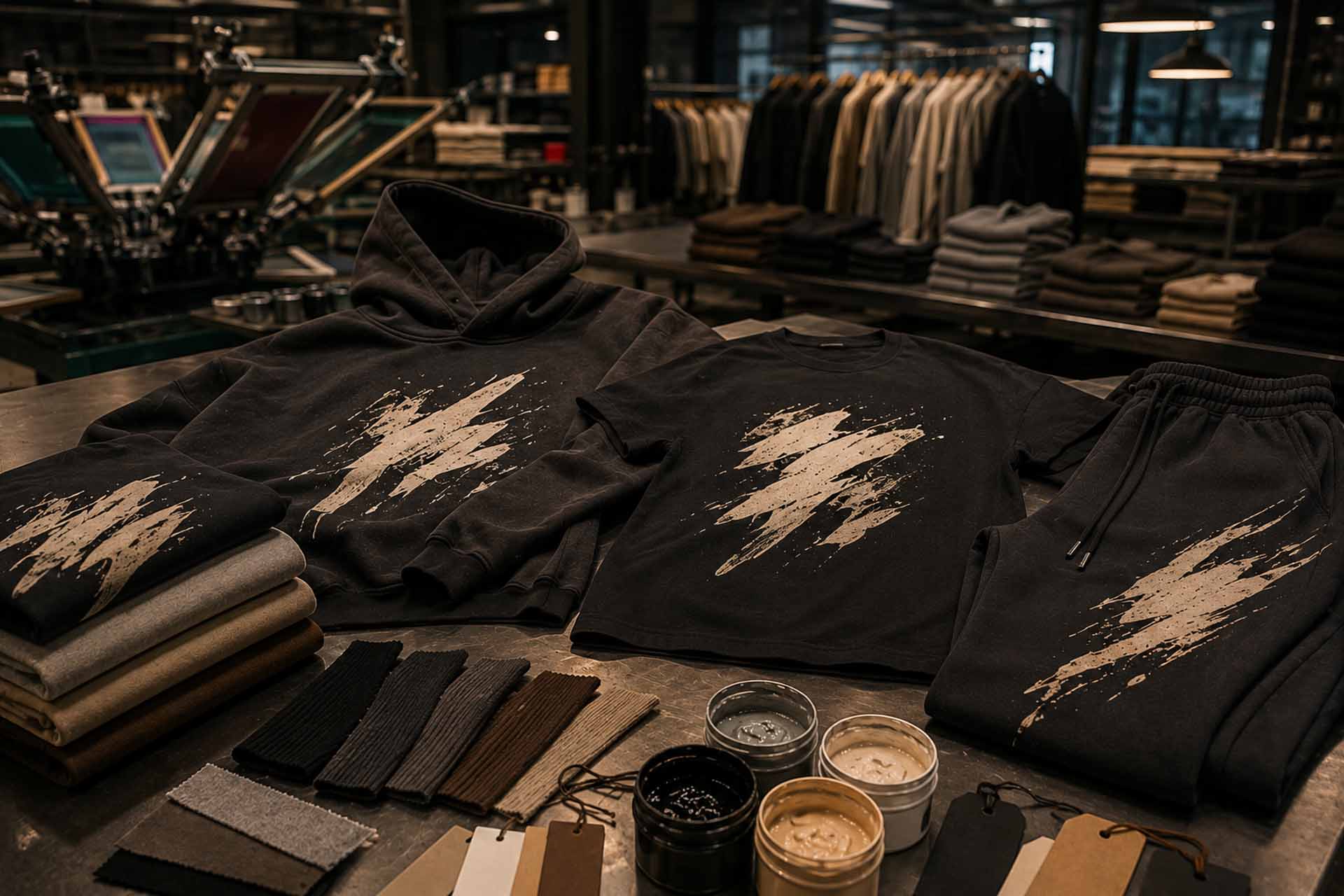
Streetwear depends heavily on graphics, fabric weight, fit, and attitude. Screen printing fits naturally into this category because it can deliver strong visuals on premium blanks and custom-developed garments.
Popular streetwear screen printing applications include:
- Large back graphics
- Bold front logos
- Drop-shoulder T-shirts
- Oversized hoodies
- Washed cotton garments
- Heavyweight fleece pieces
- Sleeve artwork
- Limited capsule graphics
- Matching hoodie and sweatpants sets
For streetwear brands, the print should be developed together with the garment. The best result usually comes when fabric GSM, fit, print size, color, and placement are planned as one product.
A 240 GSM oversized T-shirt with a bold back print creates a different impression than a lightweight promotional tee with the same artwork. The same design can feel premium or cheap depending on the base garment.
Screen Printing for Private Label Clothing Production
In Private Label Clothing Production, screen printing is often used to customize ready-developed styles with brand identity.
This can be useful for brands that want to launch faster without building every garment from zero. A brand may choose an existing T-shirt, hoodie, sweatshirt, or short style, then add screen printing, woven labels, hang tags, packaging, and other branding elements.
This approach works well when the brand wants:
- Faster product development
- Controlled production cost
- Lower complexity
- Consistent garment quality
- Branded graphics
- Retail-ready presentation
For many startup clothing brands, private label with screen printing can be a practical first step. It allows them to test the market with strong branded products before investing in fully custom patterns and complex development.
Screen Printing for Custom Clothing Manufacturing
A Custom Clothing Manufacturer may use screen printing as part of a fully developed garment project.
In this case, the garment is not simply selected from an existing base. The fit, pattern, fabric, GSM, stitching, trims, labels, and print details can all be developed around the brand’s concept.
This is especially useful for brands that want a unique product identity.
For example, a premium streetwear label may develop:
- A custom oversized hoodie pattern
- Heavyweight fleece fabric
- Special rib structure
- Custom hood shape
- Screen-printed back artwork
- Embroidered chest logo
- Branded neck label
- Custom packaging
In this type of project, screen printing becomes one part of the complete product development process.
How Screen Printing Works in Bulk Clothing Production
Screen printing is strongest when the production plan is clear before bulk starts.
A typical process may include:
- Artwork review
The manufacturer checks file quality, colors, size, and print feasibility. - Fabric and garment confirmation
The garment type, fabric composition, GSM, color, and construction are reviewed. - Print method selection
The correct ink type, screen setup, and print technique are chosen. - Sampling
A physical sample is produced to confirm color, placement, texture, and durability. - Approval
The brand reviews the sample and approves it before bulk production. - Bulk printing
Approved artwork and placement are repeated across the full order. - Curing and quality control
Prints are cured and checked for adhesion, alignment, opacity, and consistency. - Finishing and packaging
Garments are folded, labeled, packed, and prepared for delivery.
This process helps reduce mistakes and protects the brand from costly production issues.
Common Mistakes Brands Should Avoid
Screen printing can deliver excellent results, but mistakes often happen when brands rush the planning stage.
Common mistakes include:
- Using low-resolution artwork
- Choosing too many colors for a small order
- Ignoring setup costs
- Printing on unsuitable fabric
- Skipping physical samples
- Choosing poor print placement
- Not checking wash durability
- Approving digital mockups without real testing
- Changing artwork after screens are prepared
The best way to avoid these issues is to treat printing as part of product development, not as a final decoration step.
Why Clothing Production Turkey Matters for Screen Printing
Turkey has become an important production destination for fashion brands because it offers a strong mix of textile knowledge, manufacturing capacity, material access, skilled labor, and proximity to Europe.
For US and European brands, Clothing Production Turkey can be attractive because it supports communication, sampling, bulk production, fabric sourcing, garment finishing, and logistics within a professional manufacturing environment.
Istanbul is especially important because it connects textile suppliers, garment manufacturers, printing facilities, embroidery workshops, packaging suppliers, and export logistics in one city.
For fashion brands, this can make production more efficient. Instead of managing fabric in one country, printing in another, and assembly somewhere else, a brand can often manage development and production through one coordinated manufacturing partner.
Why Work with Istanbul Factory?
Istanbul Factory supports fashion brands, streetwear labels, startups, and established companies with end-to-end clothing production services in Istanbul.
For screen printing clothing projects, Istanbul Factory can help brands connect the right garment, fabric, artwork, placement, and production method from the beginning.
Services include:
- Clothing manufacturing
- Private label clothing production
- Custom clothing manufacturing
- Fabric sourcing
- Screen printing & Embroidery
- Garment sampling
- Quality control
- Sustainable textile production
- Bulk production management
- Packaging and finishing support
The goal is not just to print artwork on garments. The goal is to help brands create products that look professional, feel consistent, and meet the quality expectations of European and US markets.
For brands preparing a streetwear drop, private label collection, or custom apparel project, screen printing can be a strong production method when it is planned correctly.
Start Your Screen Printing Clothing Project
If you are developing a fashion collection, streetwear drop, or private label apparel line, Istanbul Factory can help you plan screen printing as part of a complete production strategy.
From fabric sourcing and garment sampling to print testing, bulk production, quality control, and packaging, our team supports brands through each stage of the process.
Contact Istanbul Factory to discuss your screen printing clothing project and build a production plan that fits your brand, quantity, quality target, and timeline.
FAQ: Screen Printing Clothing
What is screen printing clothing?
Screen printing clothing is a method of applying ink to garments through a prepared mesh screen. It is commonly used for T-shirts, hoodies, sweatshirts, joggers, shorts, and streetwear products because it creates strong, durable, and vibrant prints.
Is screen printing good for streetwear brands?
Yes. Screen printing is one of the most popular methods for streetwear because it works well for bold graphics, oversized T-shirts, heavyweight hoodies, logo prints, back prints, and capsule collections.
Is screen printing durable?
Screen printing can be very durable when the correct ink, fabric, curing temperature, and washing instructions are used. Proper quality control is essential to prevent cracking, fading, or peeling.
What fabrics are best for screen printing?
Cotton and cotton-rich fabrics are usually best for screen printing. Heavyweight jersey, French terry, fleece, and cotton T-shirts are common choices for fashion and streetwear brands.
Does screen printing have minimum quantities?
Yes. Screen printing usually has minimum quantities because screens must be prepared before production. It becomes more cost-effective as the order quantity increases, making it a strong option for bulk clothing production.
Why does screen printing have setup costs?
Setup costs come from preparing screens, separating artwork by color, setting up machines, preparing inks, testing placement, and checking print quality before bulk production begins.
Can screen printing be used for private label clothing?
Yes. Screen printing is often used in Private Label Clothing Production to add brand logos, graphics, slogans, and artwork to ready-developed garments such as T-shirts, hoodies, sweatshirts, and shorts.
Can Istanbul Factory help with screen printing clothing?
Yes. Istanbul Factory supports screen printing clothing projects as part of complete apparel production, including fabric sourcing, garment sampling, custom clothing manufacturing, private label production, print testing, quality control, and bulk manufacturing in Istanbul.