

Launching a clothing brand becomes much more concrete once you start speaking with manufacturers.
A mood board, logo and product idea may be enough to define the creative direction of a startup. A factory, however, needs production information.
What exactly are you making? How should it fit? Which fabric should be used? How many pieces do you need? What type of branding is required? What is your budget? When do you expect delivery?
If you are looking for a clothing manufacturer for startups, preparing these details before your first factory inquiry can significantly improve the quality of the conversation.
You do not need to be a garment technician or arrive with every specification finalized. A capable manufacturing partner can support areas such as fabric sourcing, sampling and product development.
But the clearer your project is, the easier it becomes for a manufacturer to evaluate feasibility, estimate costs and recommend the right next step.
This guide explains what startup fashion brands should prepare before contacting a factory—and how to recognize when a collection is genuinely ready to move into manufacturing.
Quick Answer: What Should a Startup Prepare Before Contacting a Clothing Manufacturer?
Before contacting a clothing manufacturer, a startup should ideally prepare:
- A clear product concept
- Sketches, tech packs or reference garments
- Preferred fabrics or fabric characteristics
- Approximate quantities
- Colors and size range
- Print, embroidery or branding requirements
- Target budget
- Target delivery date
- Destination market
- Packaging and labeling requirements
You do not need every detail finalized before the first conversation. However, manufacturers can provide much more useful guidance when they understand what you want to produce and at what scale.
When Is a Startup Ready for Manufacturing?
A startup is generally ready to approach a manufacturer when the product has moved beyond an idea and can be described in practical production terms.
For example, this is still too broad:
We want to launch a premium streetwear brand.
This is much more useful:
We want to develop an oversized 400 GSM cotton hoodie with dropped shoulders, double-layer hood construction, chest embroidery and custom woven labels.
The second description gives the manufacturer something concrete to evaluate.
At minimum, a startup should have a reasonable understanding of:
- Product type
- Fit and silhouette
- Fabric direction
- Approximate quantities
- Target price positioning
- Customization
- Target market
- Delivery expectations
That does not mean the garment must already be production-ready.
Many startups contact manufacturers during the development stage. The difference is that serious development starts with a defined direction, not an open-ended request to “make something premium.”
1. Define the Product Before Asking for a Price
One of the most common mistakes new fashion brands make is asking:
“How much does it cost to manufacture a hoodie?”
There is no useful universal answer.
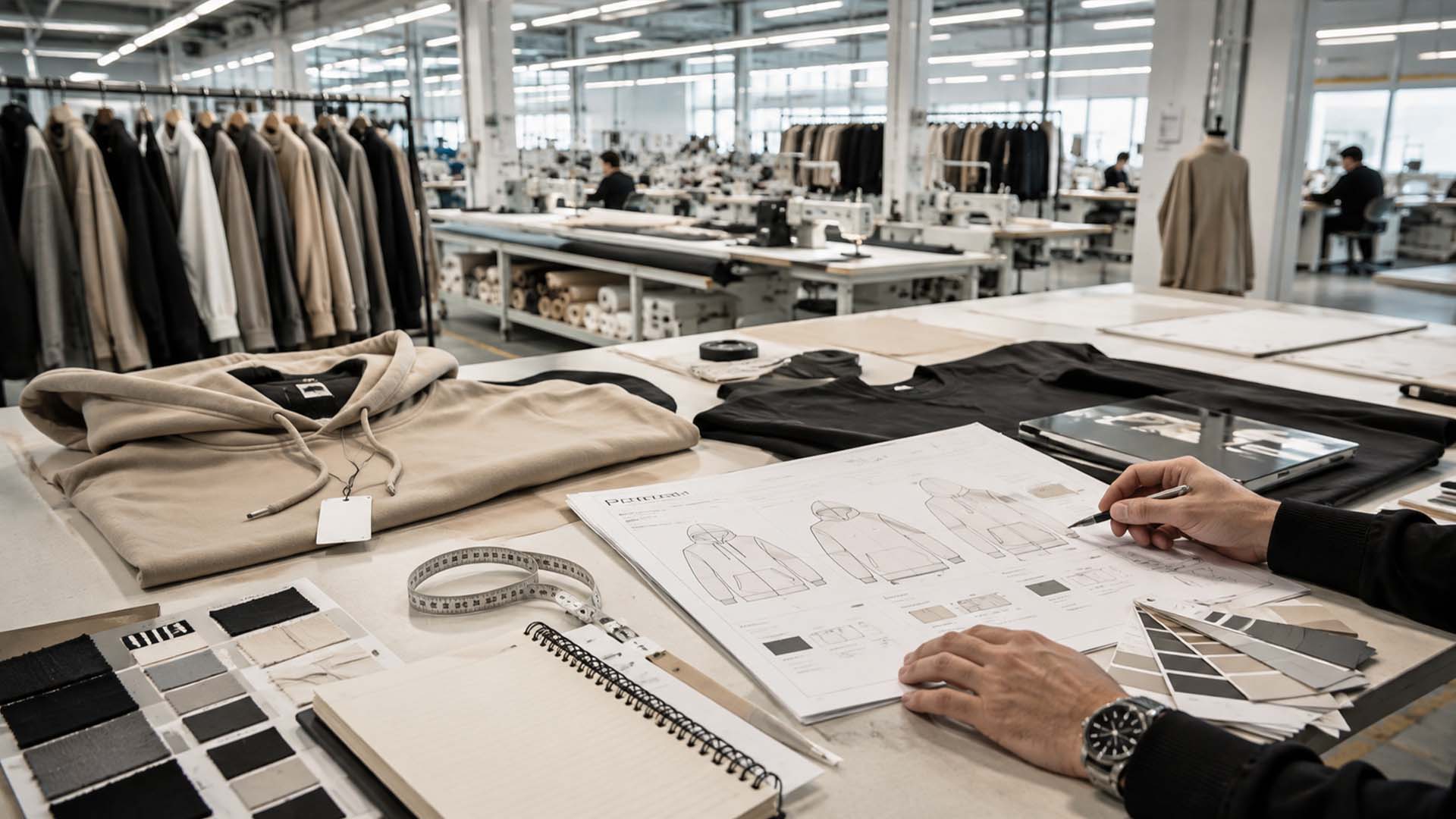
A hoodie could be:
- 280 GSM or 500 GSM
- Cotton or cotton-polyester
- Brushed fleece or French Terry
- Regular fit or oversized
- Screen printed or embroidered
- Standard color or custom dyed
- Stock-label or full private label
Each decision changes the production cost.
For that reason, pricing should come after basic product definition.
Create a Simple Product Overview
You do not need a large collection brief.
A startup can begin with a basic product list such as:
| Style | Fabric Direction | Fit | Customization |
|---|---|---|---|
| Oversized T-shirt | Heavyweight cotton jersey | Boxy | Screen print + woven label |
| Hoodie | French Terry | Oversized | Chest embroidery |
| Sweatpants | French Terry | Relaxed | Woven label |
This immediately gives the factory much more context.
Startups Often Benefit From Fewer Styles
Launching with too many styles can make product development unnecessarily complicated.
Each additional style may introduce:
- A separate pattern
- New measurements
- Additional samples
- Different fabrics
- New trim requirements
- Higher inventory exposure
For a first collection, a smaller number of well-developed products is often more manageable than a broad range that is difficult to control.
2. Use Reference Garments to Explain Fit and Quality
Reference garments are extremely useful during startup product development.
They can communicate details that are difficult to explain through email or sketches alone.
A reference garment can help demonstrate:
- Overall silhouette
- Shoulder drop
- Sleeve width
- Body length
- Collar shape
- Fabric weight
- Fabric hand feel
- Rib quality
- Pocket construction
- Stitching details
For example, you may like the fit of one hoodie, the fabric of another and the hood construction of a third.
This gives the development team practical references.
But a Reference Garment Is Not a Complete Specification
Reference garments should guide the product rather than replace your own design decisions.
Ask:
- Do we want a wider body?
- Should the sleeves be longer?
- Should the fabric feel more structured?
- Should the rib be heavier?
- Is the hood deep enough?
- Should the garment be washed?
- How should our branding be applied?
The goal is to communicate the intended result clearly while developing a garment that belongs to your own brand.
3. Prepare a Tech Pack—or Enough Information to Create One
A tech pack for clothing production is one of the most important tools in custom clothing manufacturing.
It converts a product concept into production instructions.
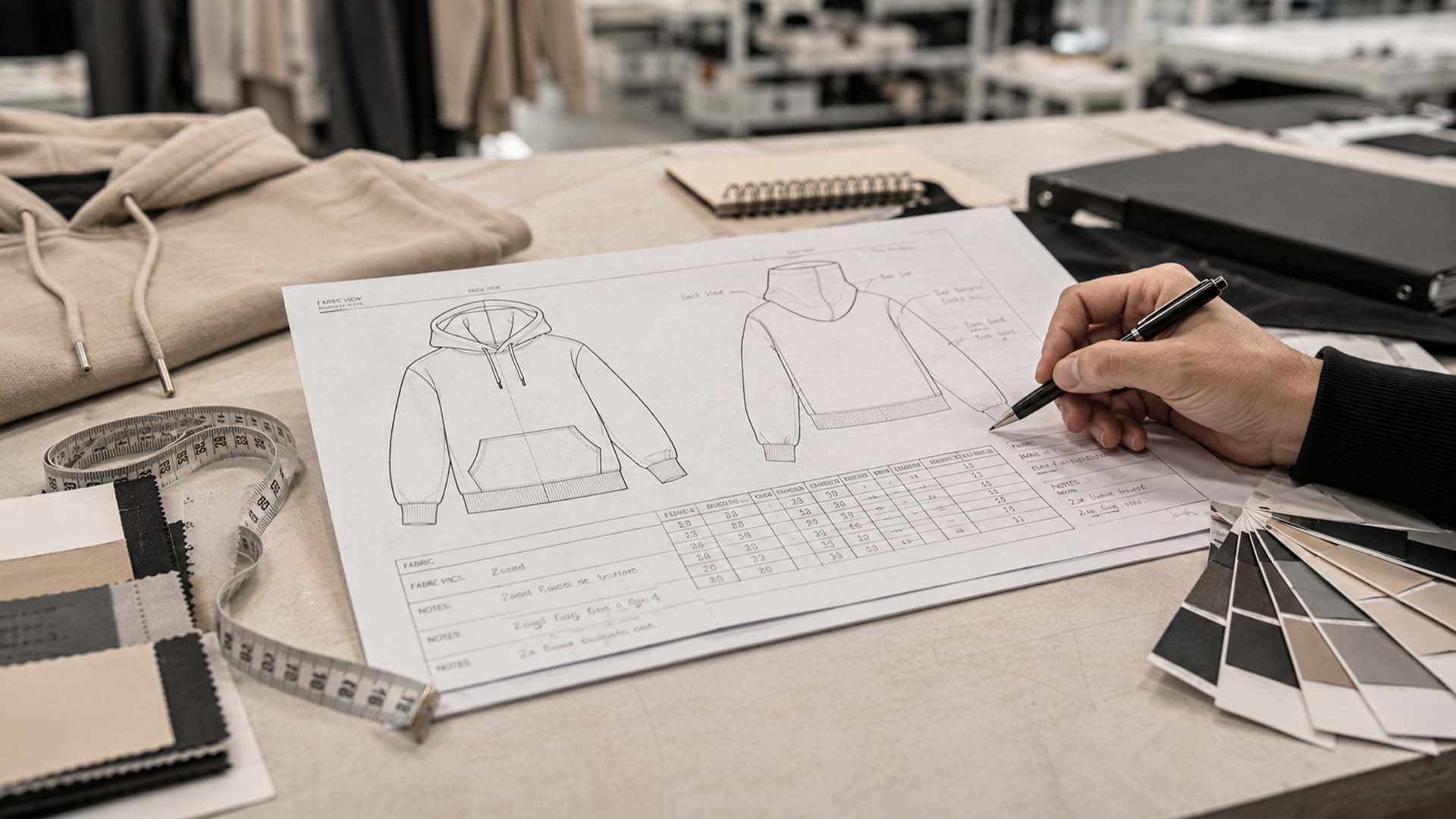
What Is a Tech Pack?
A tech pack is a technical document that tells a manufacturer how a garment should be made.
It may include:
- Flat sketches
- Measurements
- Size specifications
- Fabric composition
- Fabric weight
- Construction details
- Stitching
- Color references
- Artwork placement
- Print dimensions
- Embroidery details
- Labels
- Trims
- Packaging requirements
For established fashion brands, tech packs are usually part of the normal production workflow.
For startups, they may still be under development.
Do You Need a Tech Pack Before Contacting a Factory?
Not necessarily.
Some manufacturers that provide product-development support can begin with:
- Sketches
- Reference garments
- Measurement ideas
- Fabric preferences
- Branding files
- Product descriptions
However, the closer you move toward sampling and bulk production, the more important technical documentation becomes.
Without documented specifications, decisions can easily become unclear between the brand, pattern maker, sample room and production team.
A strong manufacturer should help reduce that ambiguity rather than rely on informal assumptions.
4. Explain Your Fabric Requirements Clearly
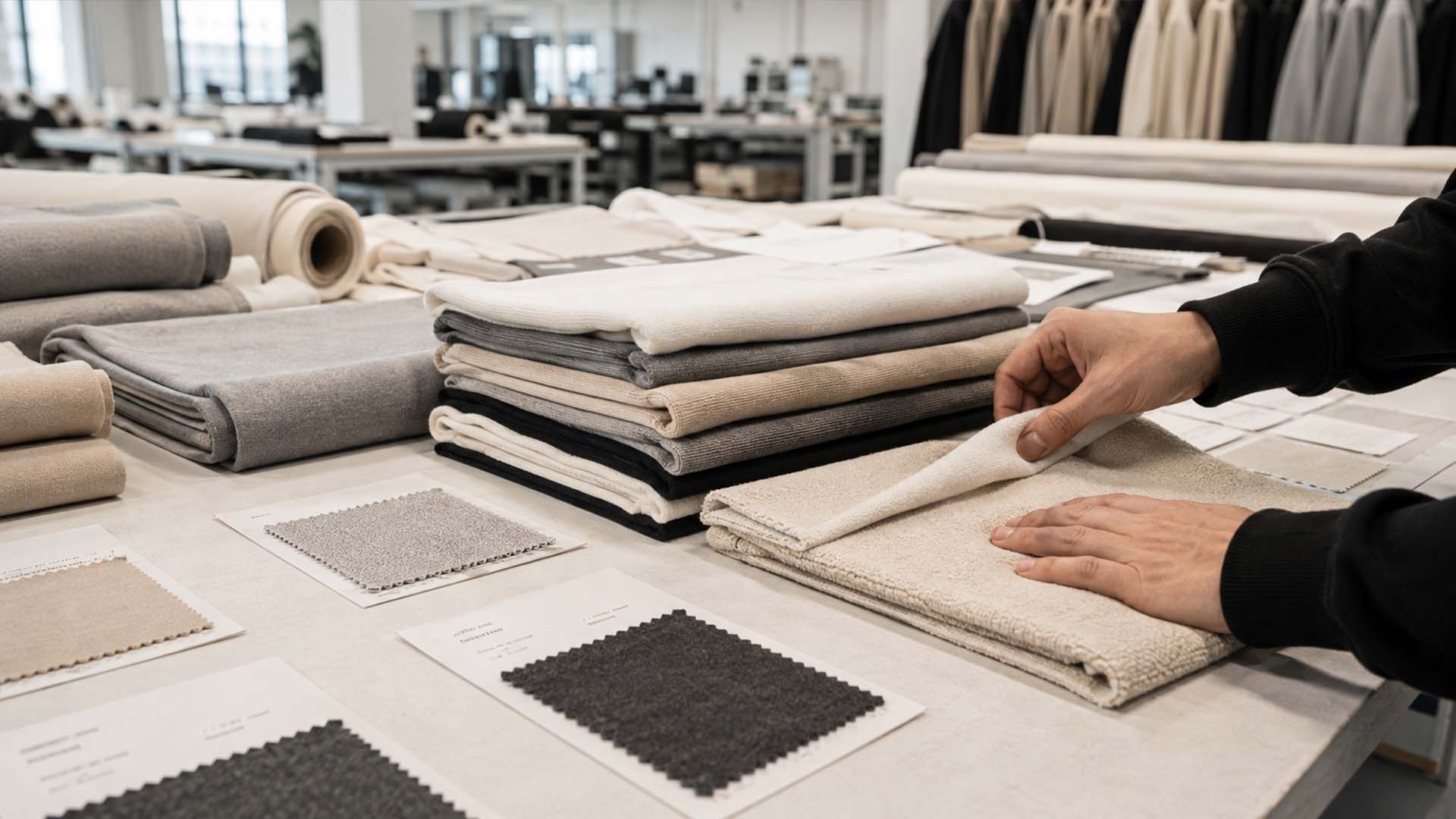
Fabric has a direct impact on:
- Garment appearance
- Hand feel
- Weight
- Durability
- Fit
- Shrinkage behavior
- Manufacturing cost
- Brand positioning
Saying that you want “high-quality cotton” is rarely enough.
Try to provide more context.
Important Fabric Information
Composition
Examples include:
- 100% cotton
- Cotton-polyester
- Cotton-elastane
- Organic cotton
- Recycled polyester
Fabric Type
Examples include:
- Single jersey
- Interlock
- French Terry
- Brushed fleece
- Rib
- Woven cotton
Fabric Weight
Fabric weight is commonly measured in GSM, or grams per square meter.
A 160 GSM T-shirt and a 260 GSM T-shirt can both be made from cotton jersey, yet feel like completely different products.
What If You Do Not Know the Exact Fabric?
Describe the performance and appearance you want.
For example:
We want a heavyweight oversized T-shirt with a structured, premium hand feel rather than a lightweight soft jersey.
That description gives the sourcing team something useful to work with.
This is where professional fabric sourcing and manufacturing support can add value. Instead of requiring the startup to source every material independently, the factory can recommend suitable options based on garment type, target quality and budget.
5. Understand MOQ Before Planning Your First Order
Understanding MOQ in clothing manufacturing is one of the first commercial realities a startup needs to address.
What Does MOQ Mean?
MOQ stands for Minimum Order Quantity. It is the lowest quantity a manufacturer or supplier is willing to produce under specific conditions.
MOQ may apply to:
- A style
- A color
- A fabric
- A trim
- A printing method
- The total order
The exact structure varies between manufacturers.
Why Do Clothing Manufacturers Have MOQs?
Custom production involves setup.
A manufacturer may need to:
- Source or produce fabric
- Dye material
- Create patterns
- Grade sizes
- Prepare cutting markers
- Set up printing or embroidery
- Order trims and labels
- Schedule sewing lines
- Carry out quality-control procedures
Producing ten fully customized garments therefore cannot usually be treated as a scaled-down version of a 1,000-piece production order.
Prepare a Realistic Quantity Breakdown
Instead of saying:
We need somewhere between 100 and 2,000 hoodies.
Provide something closer to:
Style: Oversized hoodie
Total quantity: 600 pieces
Colors: Black and Grey
Sizes: S–XL
That gives the manufacturer a much clearer basis for evaluating the project.
6. Make Sure Your Quantity Makes Sense for Your Business
Factory MOQ should not be the only factor determining your order size.
A startup should also evaluate whether it can realistically sell and finance the quantity being produced.
Consider:
- Forecast sales
- Retail price
- Wholesale plans
- Inventory risk
- Storage
- Marketing budget
- Cash flow
- Reorder strategy
A factory may be capable of producing 5,000 garments.
That does not mean a startup should order 5,000 garments.
The right production quantity should balance factory efficiency with the commercial reality of the brand.
7. Establish a Realistic Manufacturing Budget
A realistic manufacturing budget should account for development as well as bulk production. Factories cannot evaluate a project properly without understanding its specifications.
Similarly, startups should not enter manufacturing without understanding the full financial picture.
Manufacturing Costs Can Include
- Pattern development
- Sampling
- Fabric
- Dyeing
- Trims
- Main labels
- Care labels
- Printing
- Embroidery
- Garment production
- Packaging
- Quality control
- Shipping
- Import duties
The garment unit price is only one part of the overall production budget.
Budget Should Match Product Positioning
Suppose you want to manufacture:
- A heavyweight hoodie
- Premium cotton fabric
- Custom dyeing
- Embroidery
- Woven labels
- Custom packaging
If your expected factory cost is based on the price of a generic promotional hoodie, the project may never reach a realistic production plan.
A better conversation is:
Our intended retail price is around €120, and we want to understand which fabric and construction specification would make sense within that positioning.
That gives the manufacturer useful commercial context.
Experienced production partners should be able to discuss trade-offs between materials, construction, decoration and cost without automatically pushing the product toward the cheapest possible specification.
8. Expect Sampling to Be Part of Development
Professional garment sampling is not simply a formality before production.
It is where design assumptions are tested.
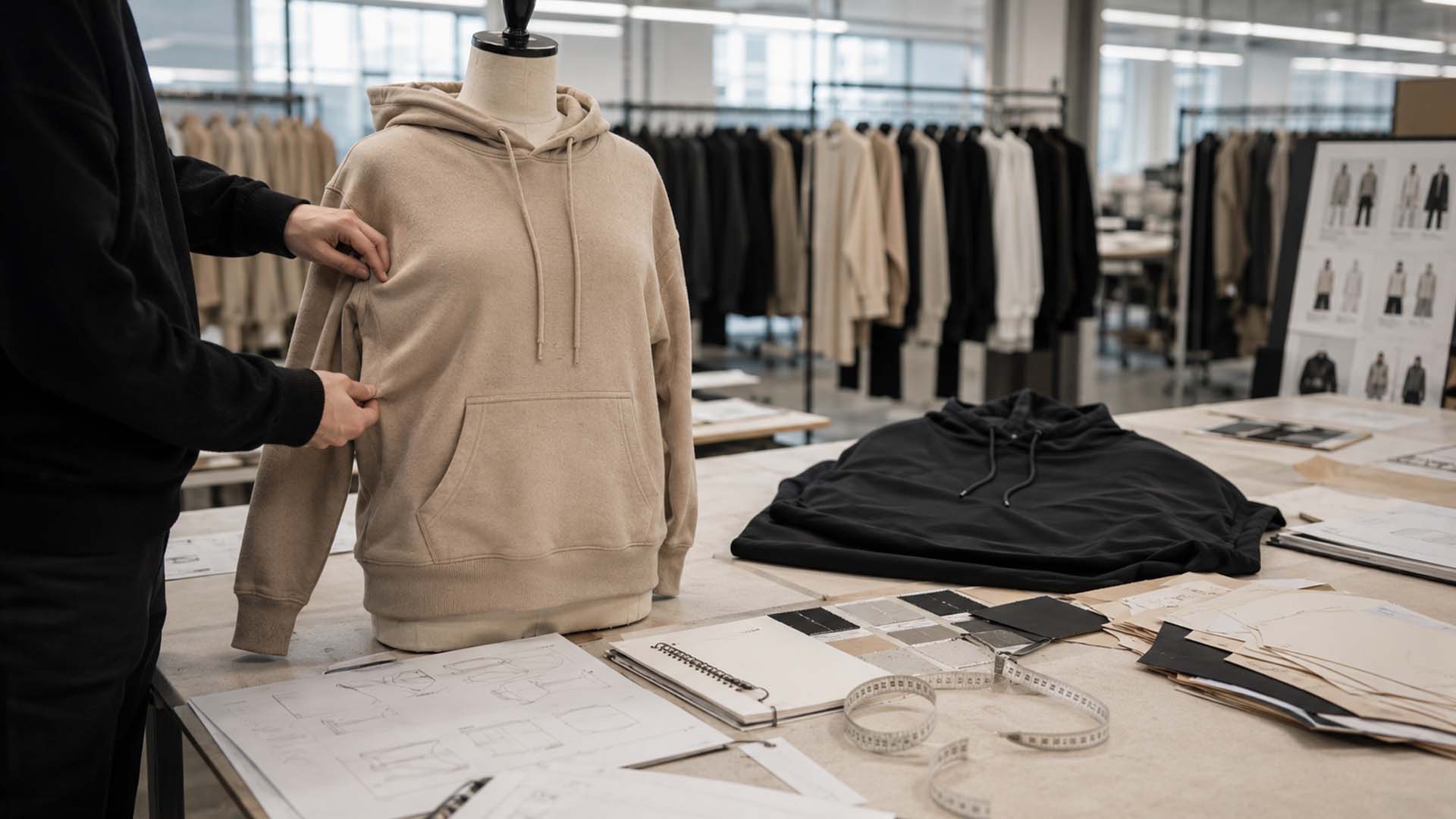
During sampling, you may discover that:
- The garment is too long
- The shoulders need more drop
- The sleeve volume is too narrow
- The fabric feels too light
- The hood needs more depth
- The embroidery is too large
- The rib recovery is too weak
These are normal development issues.
Sample Feedback Should Be Measurable
Instead of saying:
The fit is not right.
Give feedback such as:
- Increase chest width by 2 cm
- Shorten body length by 1 cm
- Increase sleeve width
- Move pocket position 1.5 cm upward
- Reduce artwork width
- Use a heavier rib
Specific feedback makes development faster and reduces unnecessary interpretation.
Do Not Rush Sample Approval
Bulk production should begin only when the important product details have been approved.
A typical development flow may look like:
Concept → Tech Pack → Fabric Sourcing → Pattern → Sample → Revisions → Approval → Bulk Production → QC → Delivery
The exact stages vary by product.
What matters is that the startup and manufacturer agree on the approved production standard before bulk manufacturing begins.
9. Define Branding and Private Label Requirements Early
A clothing manufacturer for startups may provide far more than cutting and sewing.
Private label clothing production can include:
- Main labels
- Size labels
- Care labels
- Woven labels
- Hangtags
- Patches
- Embroidery
- Screen printing
- DTF printing
- Branded packaging
These details should be discussed early because they can affect:
- Cost
- MOQ
- Development time
- Supplier requirements
- Production schedule
You do not need final artwork for every item during the first factory inquiry.
But you should be able to explain which branding elements are essential to your collection.
10. Tell the Manufacturer Where the Garments Will Be Sold
Your sales market matters.
A garment intended for customers in Germany, France, the UK or the United States may involve different considerations around labeling, packaging, sizing and market expectations.
Relevant topics may include:
- Fiber composition labels
- Care information
- Country-of-origin information
- Size presentation
- Packaging
- Market-specific documentation
Startups selling into Europe should pay particular attention to applicable textile labeling requirements.
A reliable manufacturing partner should be comfortable discussing these practical requirements before production starts.
Compliance questions are much easier to solve during product development than after thousands of garments have already been produced.
11. Prepare a Realistic Production Timeline
Many first-time fashion founders underestimate how much work happens before the sewing line starts.
Lead time can involve:
- Fabric sourcing
- Custom fabric production
- Dyeing
- Color approval
- Pattern development
- Sampling
- Sample corrections
- Trim sourcing
- Label production
- Printing preparation
- Embroidery setup
If your launch is tied to a specific season, campaign, event or wholesale deadline, tell your manufacturer immediately.
Important dates may include:
- Desired delivery date
- Website launch
- Campaign photography
- Trade show
- Retail release
- Wholesale delivery
This allows the production team to evaluate whether the timeline is achievable.
A trustworthy manufacturer should be willing to flag an unrealistic delivery expectation rather than simply promise a date that cannot reasonably be met.
12. Prepare These Questions Before Contacting a Manufacturer
A serious manufacturing conversation becomes much easier when the startup has already considered the following points.
Product
- What garments are you producing?
- How many styles?
- What fit do you want?
- Do you have tech packs?
- Do you have reference garments?
Fabric
- What composition do you prefer?
- What fabric structure do you want?
- Do you know the approximate GSM?
- Do you require certified or sustainable materials?
Quantity
- How many units?
- How many colors?
- Which sizes?
- How will units be distributed between sizes?
Branding
- Do you require printing?
- Embroidery?
- Woven labels?
- Care labels?
- Hangtags?
- Custom packaging?
Commercial
- What is your approximate production budget?
- What is the intended retail positioning?
- Where will the garments be sold?
- When do you need delivery?
You do not need perfect answers to every question.
The goal is to enter the conversation with enough information for both sides to determine whether the project is a good manufacturing fit.
What Should You Include in Your First Factory Inquiry?
A strong first inquiry can be surprisingly simple.
Include:
- Brand or company name
- Product type
- Tech packs, sketches or reference images
- Expected quantity
- Number of colors
- Fabric preferences
- Print or embroidery details
- Label and packaging requirements
- Target delivery period
- Destination country
If something has not been decided, say so clearly.
For example:
We have not finalized the GSM yet. We are looking for a heavyweight cotton jersey suitable for a structured oversized T-shirt and would appreciate your recommendation.
That signals that the specification is open for development.
It is much more useful than leaving the entire product undefined.
A Simple Startup Manufacturing Readiness Checklist
Before contacting a factory, ask whether you can answer most of these questions:
| Requirement | Ready? |
|---|---|
| Product types selected | Yes / No |
| Fit direction defined | Yes / No |
| Reference garments available | Yes / No |
| Tech pack or sketches available | Yes / No |
| Fabric direction selected | Yes / No |
| Approximate quantity known | Yes / No |
| Colors selected | Yes / No |
| Size range known | Yes / No |
| Branding requirements defined | Yes / No |
| Budget range considered | Yes / No |
| Target delivery date known | Yes / No |
| Destination market identified | Yes / No |
If most answers are “yes,” your factory conversation is likely to be productive.
If most answers are still “no,” spending more time on product definition may save considerable time later.
Common Mistakes Startup Fashion Brands Make
Asking for Pricing Too Early
Pricing without specifications is usually too vague to be meaningful.
Contacting Too Many Factories With the Same Generic Message
A copy-paste inquiry often produces equally generic replies.
Focused inquiries are more likely to generate useful responses.
Choosing the Lowest Price Without Evaluating Production Capability
Low cost is attractive, but unreliable manufacturing can create:
- Delays
- Sizing inconsistencies
- Fabric issues
- Poor printing
- High defect rates
- Unsellable inventory
Ignoring Sampling and Development Costs
Sampling requires real production resources and should be treated as part of product development.
Planning an Unrealistic Launch Date
Rushing pattern development, sampling or material approvals increases production risk.
Assuming Every Manufacturer Is Suitable for Every Product
A strong T-shirt manufacturer may not necessarily be the right choice for tailored garments.
Factory specialization matters.
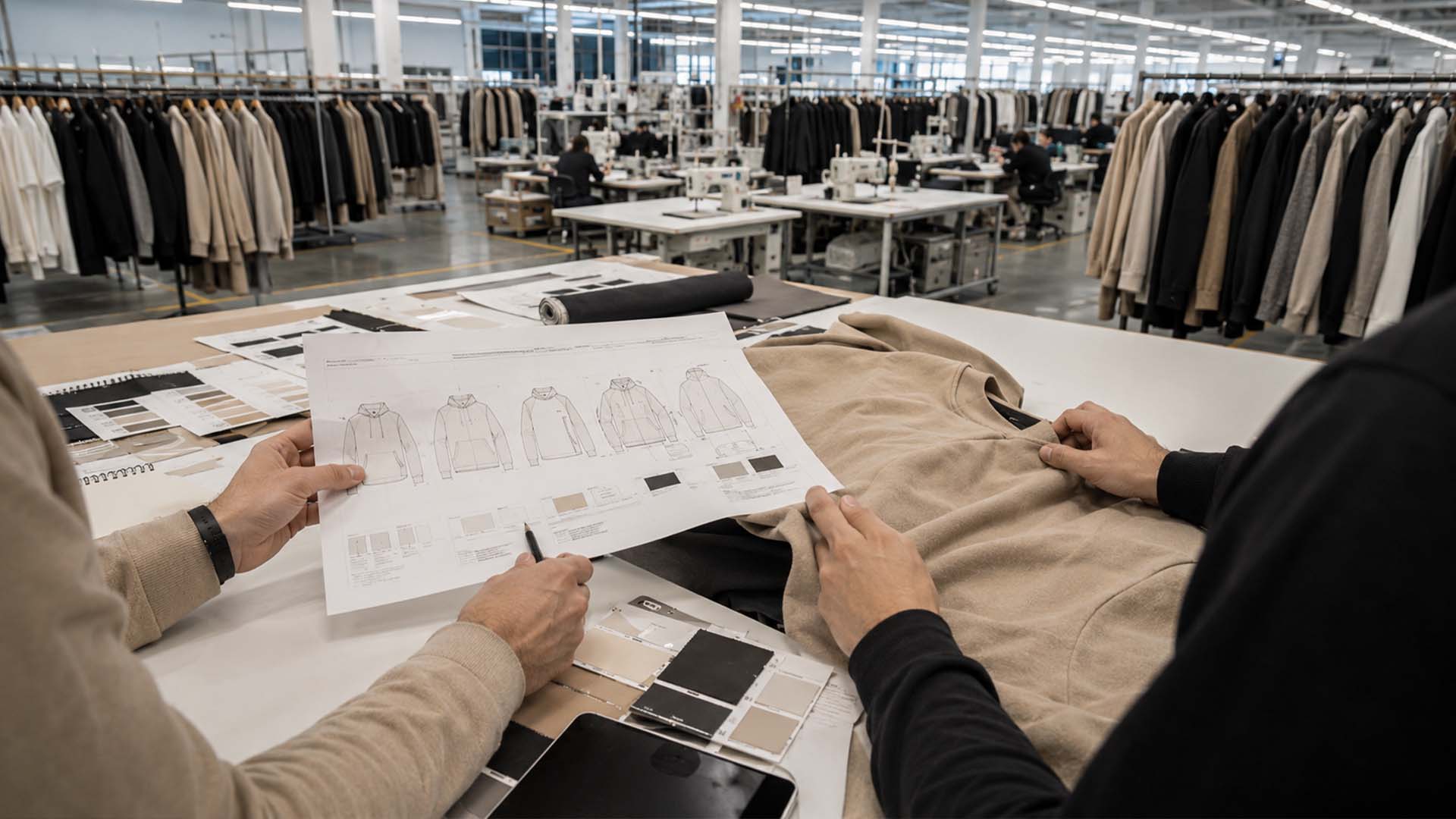
How to Evaluate a Clothing Manufacturer for Startups
The best manufacturer is not always the factory offering the lowest quote or the lowest MOQ.
Startups should evaluate several areas.
Product Experience
Has the manufacturer produced garments similar to yours?
Fabric Sourcing
Can they access materials appropriate for your quality level?
Development Support
Can they assist with sampling, patterns and technical refinement?
Communication
Are questions answered clearly and consistently?
Quality Control
How is bulk production checked before shipment?
Transparency
Does the manufacturer clearly explain MOQ, pricing, timelines and limitations?
For an emerging brand, communication quality can be particularly important.
Production almost always involves decisions and adjustments. A manufacturer that identifies risks early can be more valuable than one that simply says yes to every request.
Why Startups Consider Clothing Manufacturing in Turkey
Turkey has an established textile and garment manufacturing ecosystem and is particularly relevant for brands serving European markets.
Istanbul connects brands with a broad network of:
- Fabric suppliers
- Knitting mills
- Dye houses
- Printers
- Embroidery facilities
- Trim suppliers
- Pattern makers
- Sample rooms
- Garment manufacturers
- Quality-control teams
For startups without an internal sourcing and production team, working with a full package clothing manufacturer can make these stages easier to coordinate.
For European brands, Turkey also offers geographic proximity that can make communication, development visits and logistics more manageable than sourcing from more distant production regions.
However, location alone does not guarantee a successful production relationship.
The important factor is finding a manufacturing partner whose capabilities, quality level, MOQ and workflow match the requirements of your brand.
Working With Istanbul Factory
Istanbul Factory supports fashion brands, streetwear companies, startups and established labels looking to manufacture clothing in Turkey.
Our approach is based on understanding the product before moving into production.
Depending on the project, support can include:
- Product development
- Garment sampling
- Fabric sourcing
- Custom clothing manufacturing
- Private label production
- Print and embroidery
- Labels and trims
- Quality control
- Production coordination
We focus on projects that have reached a genuine manufacturing stage and where both the brand and production team can work from clear expectations.
If you already have tech packs, send them.
If you are still developing your specifications, sketches, reference garments and a clear project brief can also provide a useful starting point.
Ready to Discuss Your Collection?
If your startup has a defined product concept, estimated quantities and a realistic production plan, you are probably ready to begin a manufacturing conversation.
Send Istanbul Factory:
- Your product details
- Tech packs or references
- Expected quantities
- Fabric direction
- Branding requirements
- Target market
- Preferred timeline
Our team can review the project, identify any missing production details and help determine whether the collection is ready to move into sampling and manufacturing.
Frequently Asked Questions
What should I prepare before contacting a clothing manufacturer?
Prepare a clear product concept, sketches or tech packs, reference garments, fabric preferences, estimated quantities, colors, sizes, branding requirements, budget expectations and target delivery date. These details allow a manufacturer to evaluate your project more accurately.
How do I find a clothing manufacturer for a startup?
Look for manufacturers with experience in your garment category and evaluate their sampling process, fabric sourcing, quality control, communication, MOQ and production capabilities. The lowest quotation is not necessarily the best production partner.
Do I need a tech pack before contacting a manufacturer?
Not always. A tech pack is strongly recommended before bulk production, but some full-service manufacturers can begin development from detailed sketches, reference garments and product specifications.
What is MOQ in clothing manufacturing?
MOQ means Minimum Order Quantity. It is the lowest quantity a manufacturer or supplier will normally accept for a particular style, color, fabric or order. MOQs exist because custom manufacturing requires material sourcing and production setup.
Can a startup order a small quantity of custom clothing?
It depends on the factory and product. Custom fabrics, custom colors, labels, trims and decoration methods may each have minimum quantities. Startups should discuss expected quantities early in the sourcing process.
How much does clothing manufacturing cost for a startup?
There is no fixed manufacturing cost. Pricing depends on garment type, fabric, GSM, construction, order quantity, trims, labels, printing, embroidery, packaging and development requirements.
How long does clothing manufacturing take?
The total timeline depends on fabric sourcing, sampling, approvals, materials and production complexity. A custom garment project may include development, sampling, revisions and material preparation before bulk production even begins.
How many samples should be made before bulk production?
There is no fixed number. Simple garments may require fewer development rounds, while more technical products may need several revisions. Bulk production should start only when the approved sample accurately represents the intended garment.
What information should I send in my first factory inquiry?
Send the product type, tech pack or sketches, reference images, quantity, colors, size range, fabric preferences, branding requirements, target delivery date and destination market.
Is Turkey a good location for startup clothing manufacturing?
Turkey can be attractive for European and international fashion brands because it combines garment manufacturing with a developed textile supply chain, fabric sourcing, printing, embroidery and finishing capabilities. Its proximity to Europe can also support faster communication and logistics.