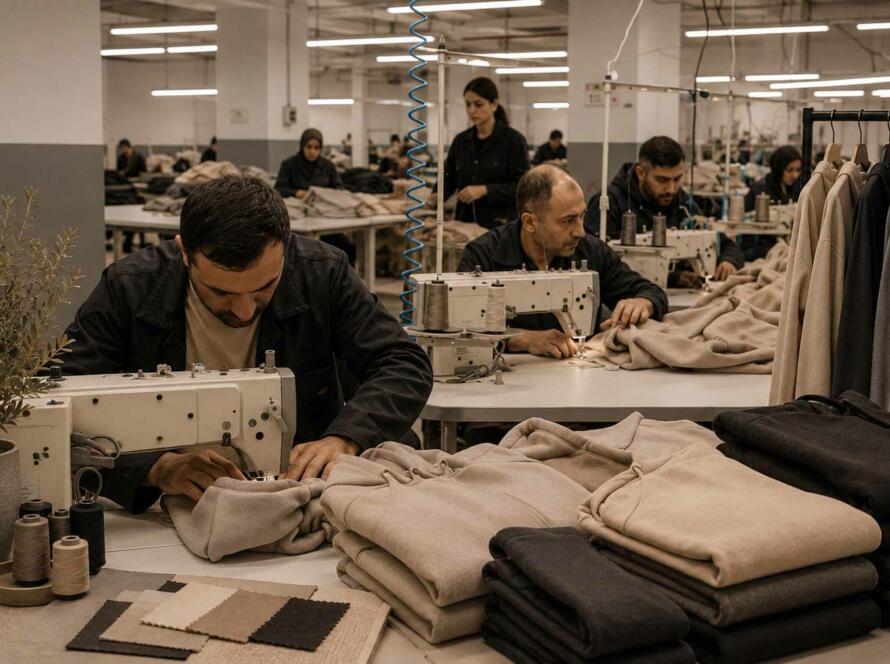


A successful garment sample is an important milestone, but it is not proof that an entire production order will arrive without problems.
Sampling and bulk production are closely connected, yet they operate under very different conditions. A sample may be cut by hand, sewn by a highly experienced sample machinist, and inspected several times before approval. Bulk production involves larger fabric quantities, multiple operators, size grading, production deadlines, machine settings, batch variations, and hundreds or thousands of repeated operations.
This is why understanding sampling vs bulk production is essential for fashion brands.
The transition from an approved sample to mass production must be carefully managed. Fit corrections need to be documented, measurements must be graded across sizes, fabrics and trims must be booked, and quality standards must be translated into repeatable production instructions.
Without that structure, even a strong sample can lead to inconsistent bulk garments.
This guide explains what happens between sample approval and bulk production, where the main risks appear, and how fashion brands can protect quality throughout the process.
What Is the Difference Between Sampling and Bulk Production?
Sampling is the development stage in which a garment is created, tested, corrected, and approved before mass production. Bulk production is the controlled manufacturing of the approved design in larger quantities and across the required size range.
The sample confirms what the product should become. Bulk production determines whether that result can be reproduced consistently.
| Sampling | Bulk Production |
|---|---|
| Produces one or a few garments | Produces hundreds or thousands of garments |
| Focuses on design, fit, construction, and feasibility | Focuses on consistency, efficiency, quality, and delivery |
| Often involves manual cutting and specialist machinists | Uses production lines, markers, size grading, and repeated operations |
| Allows frequent corrections | Changes may cause delays, waste, and additional costs |
| Tests the concept | Executes the approved specification |
The two stages should never be treated as separate projects. Decisions made during sampling directly affect fabric consumption, production cost, lead time, sizing, workmanship, and quality control during bulk manufacturing.
Why a Good Sample Does Not Guarantee Perfect Bulk Production
Fashion brands sometimes assume that once a sample looks correct, the difficult part is finished. In reality, sample approval is the beginning of production preparation.
A sample can be excellent while bulk production still develops problems such as:
- Measurement variation between garments
- Incorrect size grading
- Fabric shade differences
- Twisting or shrinkage after washing
- Uneven print placement
- Embroidery distortion
- Inconsistent stitching
- Incorrect labels or trims
- Poor pressing and finishing
- Packaging errors
The sample room is designed to solve individual garment problems. The production floor is designed to reproduce an approved garment efficiently.
To achieve the same result at scale, the manufacturer must convert the approved sample into clear patterns, measurements, operation instructions, approved materials, machine settings, inspection criteria, and production checkpoints.
The Main Stages of Garment Sampling
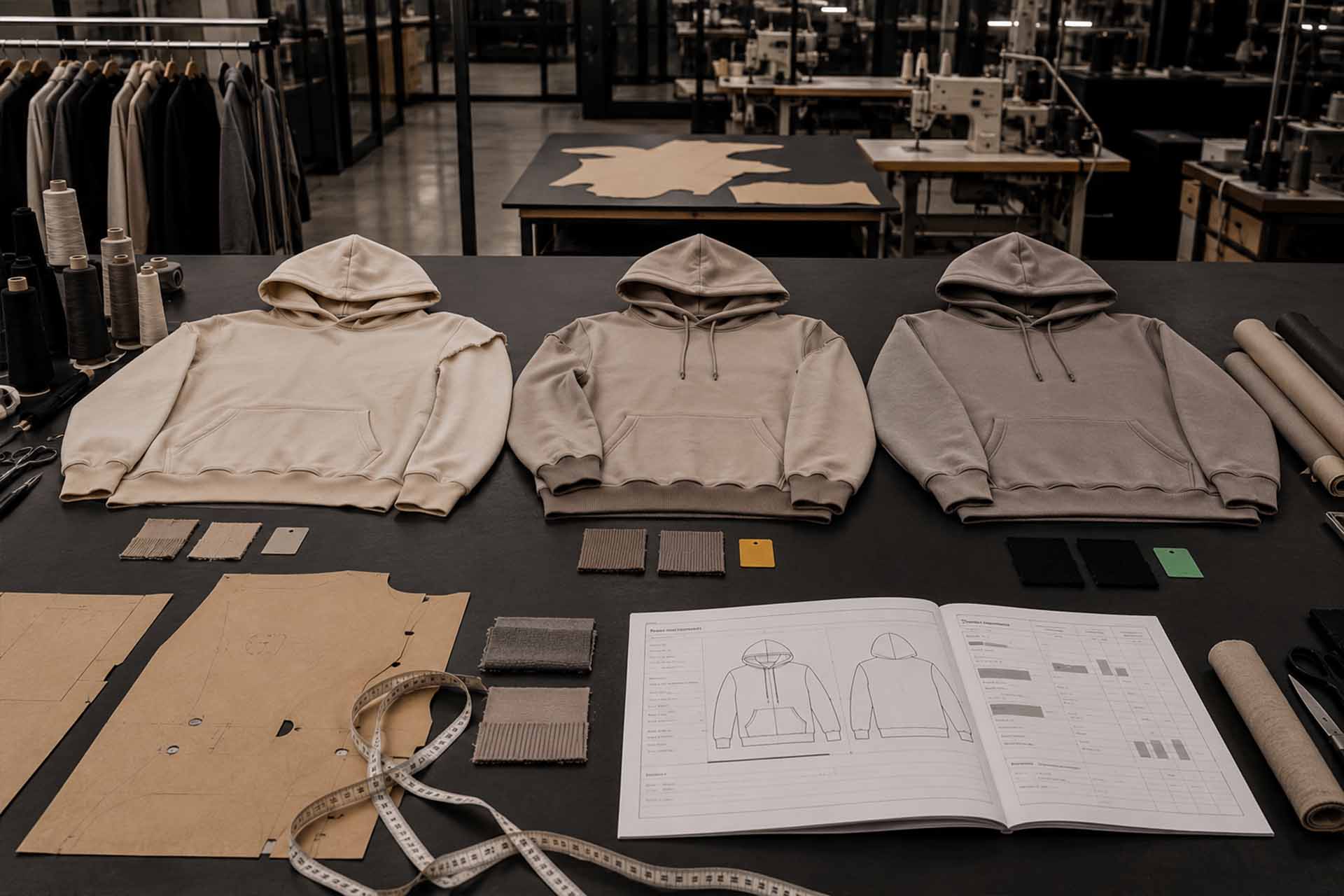
The exact sampling process depends on the product, fabric, construction, and brand requirements. A basic T-shirt may require fewer development stages than a lined jacket, washed denim garment, or technically constructed hoodie.
However, most professional clothing production projects include several of the following samples.
Prototype Sample
The prototype is the first physical interpretation of the design, technical drawing, reference garment, or tech pack.
Its purpose is to evaluate:
- General silhouette
- Construction method
- Fabric suitability
- Design proportions
- Basic measurements
- Manufacturing feasibility
A prototype is rarely expected to be perfect. It helps the brand and manufacturer identify questions that cannot be answered from drawings alone.
Fit Sample
The fit sample is used to review how the garment sits on the body or dress form.
The team may assess:
- Garment length
- Chest or body width
- Shoulder position
- Sleeve shape and length
- Neck opening
- Armhole depth
- Rise and inseam
- Waist and hip balance
- Ease and movement
- Overall silhouette
Fit comments must be specific and measurable. A comment such as “make it slightly more oversized” is open to interpretation. A better instruction would state that the chest should increase by 4 cm, the shoulder should drop by 1.5 cm, and the body length should remain unchanged.
Size-Set Sample
A size-set sample checks how the approved base size translates into other sizes.
For example, a brand may approve a hoodie in size medium and then request samples in small, large, and extra-large. These garments help confirm whether the grading rules preserve the intended proportions.
Size-set approval is especially important for:
- Oversized garments
- Fitted womenswear
- Unisex collections
- Structured jackets
- Trousers
- Complex sleeve shapes
- Extended size ranges
A base-size sample can fit perfectly while the smallest or largest sizes remain unbalanced. Size grading therefore needs to be evaluated as a technical process, not an automatic enlargement or reduction.
Pre-Production Sample
The pre-production sample, often called a PP sample, should represent the final garment as closely as possible.
It is normally made using:
- Approved bulk fabric or an agreed equivalent
- Final trims and accessories
- Approved labels
- Confirmed print or embroidery
- Final patterns
- Final measurements
- Correct construction methods
- Intended finishing or washing process
The PP sample acts as the primary reference for bulk manufacturing. Production should not begin until the relevant details are approved or clearly documented as pending.
Top-of-Production Sample
A top-of-production sample is taken from the beginning of the actual production run.
Unlike a sample-room garment, it is made under real bulk production conditions. It can reveal issues involving line handling, machine settings, workmanship, print placement, pressing, or measurements before the entire order is completed.
For higher-risk products, reviewing early production pieces can prevent a small issue from becoming a full-order defect.
What Should Be Approved Before Bulk Production?
Sample approval should never be limited to a message saying that the garment “looks good.”
A professional approval process should confirm the details that production teams need to reproduce the garment.
Fit and Measurements
The final measurement chart should include the approved dimensions and accepted tolerances.
Typical points of measurement include:
- Chest width
- Body length
- Shoulder width
- Sleeve length
- Bottom opening
- Neck width and drop
- Armhole
- Waist
- Hip
- Inseam
- Front and back rise
The brand should also confirm how measurements are taken. Measuring a curved seam differently can create apparent discrepancies even when the garment has not changed.
Pattern and Construction
The approved pattern must reflect every confirmed correction.
Construction details should cover elements such as:
- Seam type
- Stitch type
- Stitch density
- Seam allowance
- Reinforcement points
- Topstitch distance
- Pocket construction
- Rib attachment
- Zipper insertion
- Hem finish
- Lining attachment
Verbal instructions are not sufficient for complex products. Important details should be recorded in the tech pack, specification sheet, construction document, or approved sample comments.
Fabric and Trims
Bulk materials should match the approved quality in terms of:
- Composition
- Weight or GSM
- Color
- Hand feel
- Stretch and recovery
- Surface appearance
- Shrinkage
- Pilling performance
- Rib structure
- Thread quality
- Zippers, buttons, snaps, and drawcords
A garment made from substitute sample fabric may fit differently once the actual bulk fabric is used. Fabric weight, stretch, finishing, and relaxation can all influence measurements and drape.
Branding Applications
Print and embroidery approval should cover more than artwork appearance.
Brands should confirm:
- Artwork dimensions
- Placement measurements
- Thread or ink colors
- Embroidery density
- Backing material
- Print technique
- Surface finish
- Registration
- Wash durability
- Position relative to seams and garment edges
A 1 cm placement shift may be barely noticeable on one design but highly visible on a centered chest logo or symmetrical back print.
Labels and Packaging
The final approval should also include:
- Main label
- Size label
- Care label
- Country-of-origin information
- Hangtag
- Barcode
- Polybag
- Folding method
- Carton assortment
- Shipping marks
Packaging may appear secondary during development, but incorrect size stickers, barcodes, or carton ratios can create serious receiving and fulfillment problems.
Fit Corrections Must Be Closed Before Production
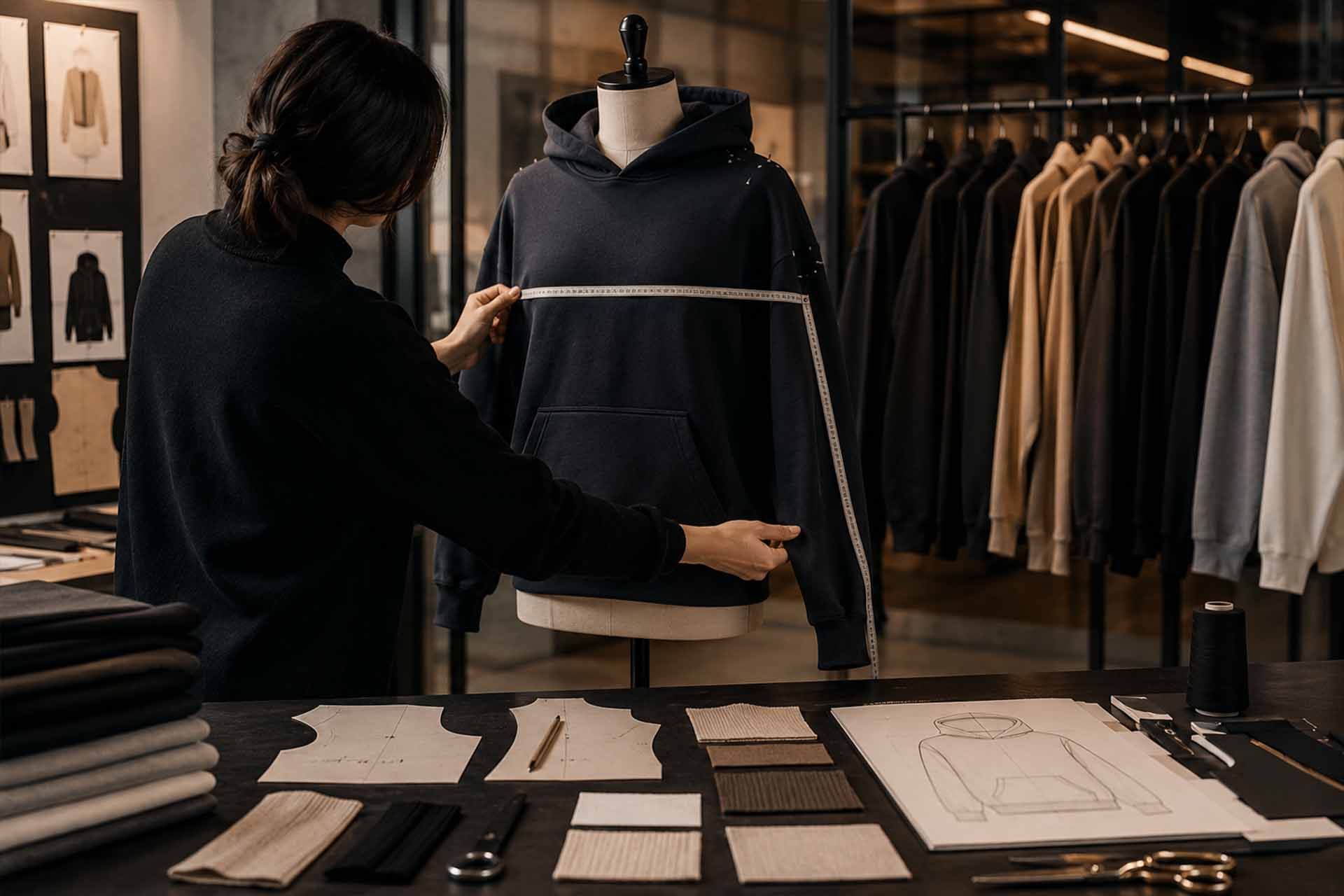
Repeated fit changes are normal during garment development. Continuing to change the fit after bulk production begins is expensive and risky.
Once fabric has been cut, many corrections are no longer possible. Increasing a body width, changing a neckline shape, or extending a sleeve may require new fabric, recutting, and a revised production schedule.
Before approving the final sample, brands should check that:
- Every previous comment has been addressed.
- The latest sample matches the latest measurement chart.
- Pattern changes are reflected in the approved specification.
- Design and fit comments do not contradict each other.
- The approved sample version is clearly identified.
- No outdated files remain in active use.
Version control matters. When several tech packs, measurement charts, and comment sheets circulate by email, production teams may accidentally work from an older document.
A clear final approval package reduces this risk.
Size Grading: Turning One Approved Size Into a Full Range
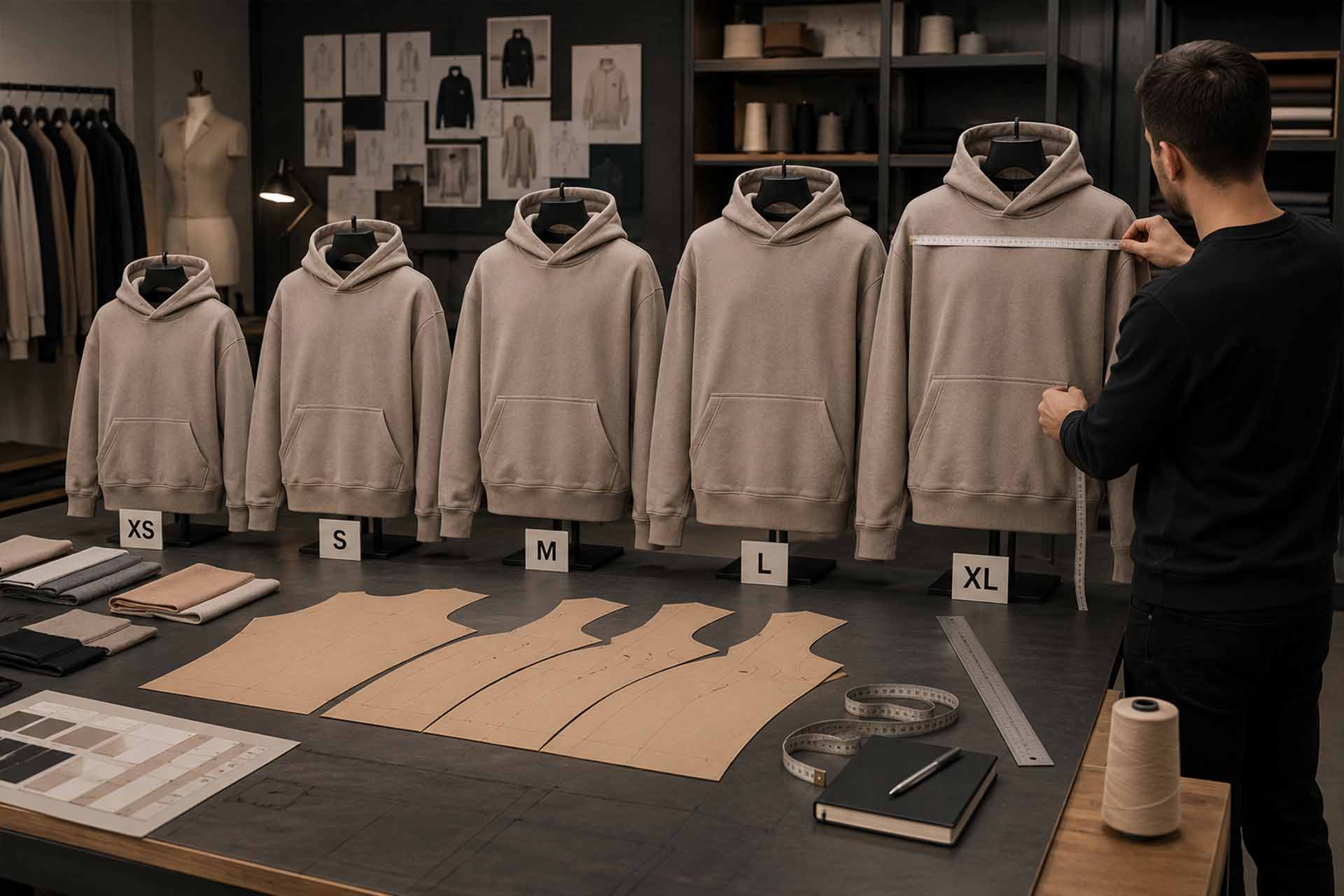
Size grading is the process of increasing or decreasing a base pattern to create additional sizes.
It is not as simple as adding the same amount to every measurement.
Different points of the garment require different grade rules. For example, the chest may increase by a larger increment than the neck width, while sleeve length may increase gradually without changing cuff dimensions.
Good grading should preserve:
- The intended silhouette
- Shoulder balance
- Pocket proportions
- Graphic placement
- Armhole comfort
- Neck shape
- Garment length
- Functional movement
Streetwear products require particular attention. An oversized medium should not become unintentionally fitted in small or excessively long in extra-large. The proportions need to remain visually consistent with the brand’s design language.
For this reason, a size-set review is recommended when the fit is unusual, the size range is broad, or the product contains complex construction.
Fabric Booking and Material Planning
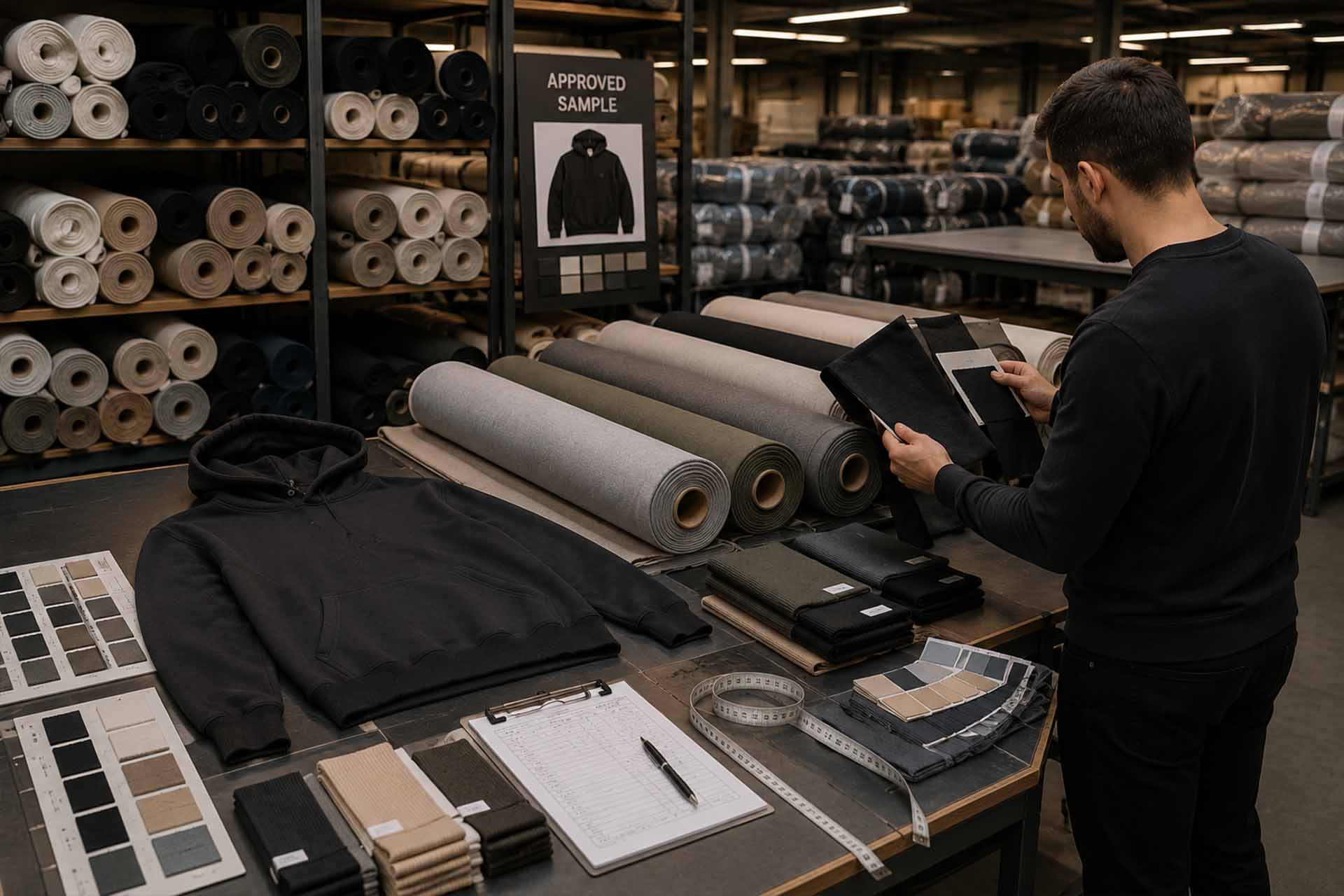
Fabric booking is one of the most important steps between sampling and bulk production.
Once the design, measurements, size range, and order quantities are confirmed, the manufacturer can calculate fabric consumption more accurately. This calculation considers:
- Marker efficiency
- Fabric width
- Garment size breakdown
- Directional patterns
- Nap or pile direction
- Matching requirements
- Expected cutting waste
- Shrinkage allowance
- Defect allowance
The fabric supplier may require a minimum order quantity, and production or dyeing may take several weeks. Delayed approval can therefore affect the garment delivery date.
Why Early Fabric Booking Carries Risk
Booking fabric before the pattern and consumption are stable may secure lead time, but it also creates exposure.
If the final garment becomes longer, wider, or more complex, the original fabric quantity may no longer be sufficient. If the brand reduces the order, excess fabric may remain.
The safest approach depends on the project. Some fabrics are stocked and can be booked after approval. Custom-dyed, custom-knitted, or specially finished fabrics may need an earlier commitment.
An experienced manufacturing partner should explain these trade-offs before the order reaches a critical deadline.
Common Risks When Moving Into Bulk Production
Fabric Batch Variation
The fabric used for development may come from a different production lot than the bulk fabric. Small differences in shade, weight, texture, stretch, or finishing can affect the final garment.
Bulk fabric should be inspected before cutting, particularly for color continuity, width, defects, and shrinkage.
Shrinkage and Relaxation
Knitted fabrics can change after resting, washing, dyeing, compacting, or garment finishing.
If shrinkage is not considered in the pattern, finished garments may fall outside the approved measurements. Fabric tests should guide pattern allowance and production handling.
Cutting Inaccuracy
Bulk cutting involves stacked fabric layers and production markers. Poor spreading, fabric tension, blade movement, or marker placement can create measurement variation across the stack.
Checks should be made before cut panels move to sewing.
Sewing-Line Variation
Multiple operators may work on different sections of the same garment. Machine tension, folder settings, handling methods, and operator technique can influence seam appearance and measurements.
Production instructions and in-line quality checks help control these differences.
Print and Embroidery Variation
Applications can shift during production because of hoop positioning, garment loading, screen alignment, fabric movement, or incorrect placement guides.
Approval of one strike-off does not eliminate the need for production monitoring.
Finishing and Pressing Problems
Over-pressing can leave shine marks or change garment dimensions. Poor trimming can leave loose threads, while inconsistent folding can affect presentation.
Final quality is influenced by every step after sewing, not simply by pattern and fabric quality.
Why Quality Control Is Essential in Bulk Production
A good sample establishes the quality target. Quality control verifies that bulk production continues to meet it.
Effective garment quality control should happen at several stages.
Incoming Material Inspection
Fabric, trims, labels, and packaging materials should be checked before use.
The inspection may include:
- Fabric color and shade
- Fabric width and weight
- Visible defects
- Shrinkage
- Trim function
- Label content
- Accessory color
- Print or embroidery materials
Pre-Production Meeting
Before sewing begins, the production, quality, pattern, cutting, and technical teams should review the approved product requirements.
This helps align everyone on:
- Critical measurements
- Construction risks
- Approved materials
- Workmanship standards
- Branding placement
- Packaging instructions
- Special testing requirements
In-Line Quality Control
In-line checks identify defects while garments are still being assembled.
Finding a seam problem after 20 garments is manageable. Finding it after 2,000 garments creates rework, delays, and potential material damage.
End-Line Inspection
Completed garments are checked before they enter finishing or packaging. This stage focuses on workmanship, measurements, appearance, and operation completeness.
Final Inspection
Final inspection evaluates finished and packed goods against the approved specifications and acceptance criteria.
Depending on the project, checks may cover:
- Measurements
- Workmanship
- Color and shade
- Print or embroidery
- Labels
- Size assortment
- Packaging
- Carton quantities
- Overall appearance
Quality cannot be added at the end. Final inspection is important, but prevention during cutting and sewing is more effective than sorting defects after production is complete.
A Practical Example: From Hoodie Sample to Bulk Order
Consider a fashion brand developing a 450 GSM oversized hoodie.
The first sample has the correct overall look, but the hood feels too small and the rib is too soft. The brand requests a deeper hood and a firmer rib with better recovery.
The second sample solves these issues, but a wash test shows that the body length shrinks by 4%. The pattern is adjusted to compensate for expected shrinkage.
A size set is then produced. The extra-large sample appears too long compared with the intended silhouette, so the length grading is reduced while the chest grading remains unchanged.
Before bulk production, the final fabric, rib, drawcord, labels, embroidery, measurements, and packaging are approved.
During the first production check, the quality team notices that the embroidery position is shifting because operators are aligning it from the pocket rather than the center front. A fixed placement guide is introduced before the remaining garments are embroidered.
The approved sample was necessary, but it did not control every production variable. The quality system protected the result at scale.
The Role of Istanbul in Fashion Manufacturing
Istanbul has developed into an important manufacturing base for European and international fashion brands because it combines textile expertise with access to fabric suppliers, knitting facilities, dye houses, print and embroidery workshops, pattern development, and garment production.
For European brands, Turkey also offers practical advantages related to communication, transport routes, development speed, and access to a broad textile supply chain.
These advantages are most valuable when the manufacturing process is properly managed. Location alone does not guarantee quality. Brands still need clear specifications, realistic timelines, material approval, production planning, and structured quality control.
A manufacturing partner with local supply-chain knowledge can coordinate these stages more effectively and respond quickly when technical adjustments are required.
How Istanbul Factory Manages the Transition to Bulk Production
Istanbul Factory supports fashion brands through both product development and bulk clothing manufacturing in Istanbul.
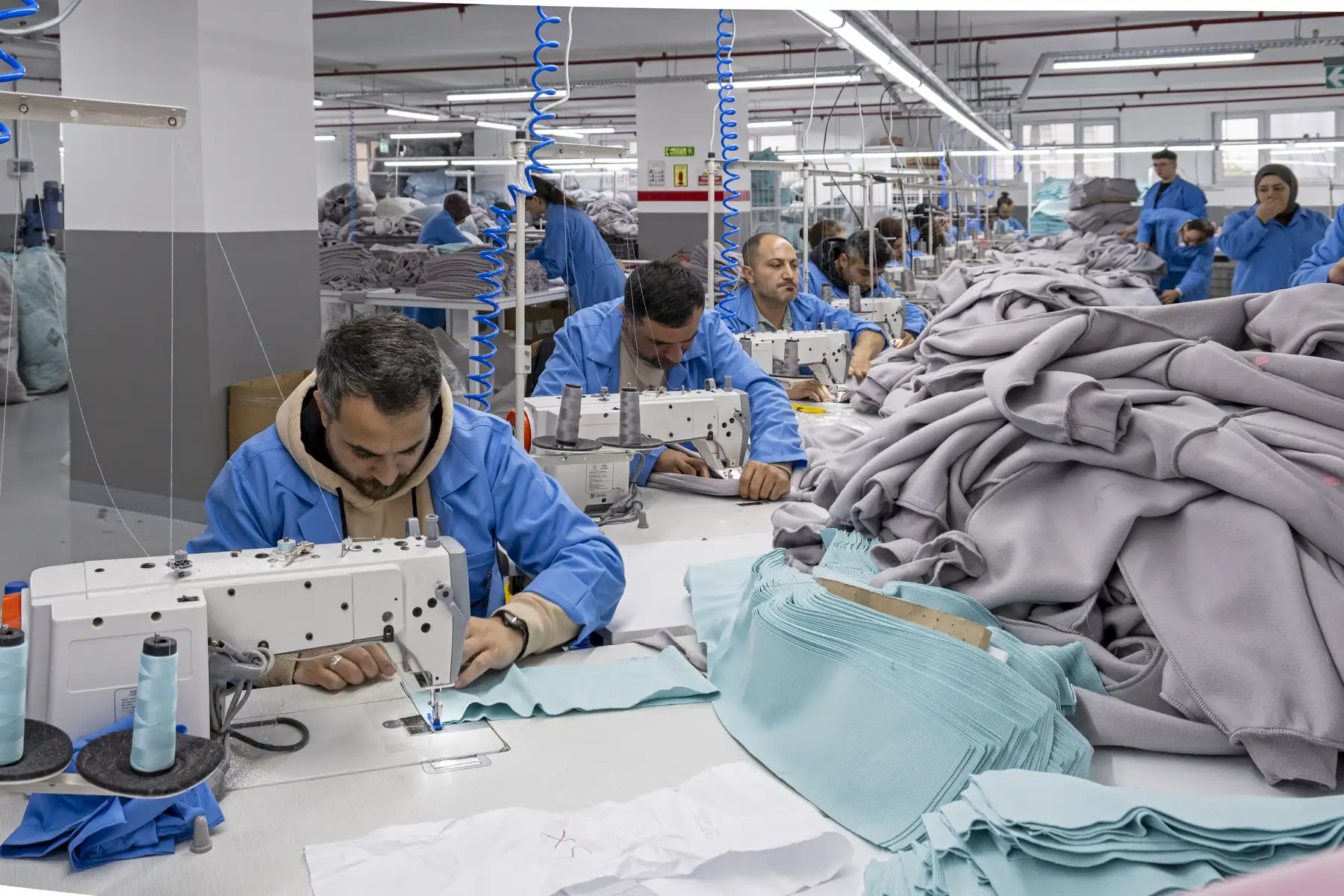
Our production process can include:
- Pattern and sample development
- Fit correction
- Fabric and trim sourcing
- Size grading
- Print and embroidery coordination
- Pre-production approval
- Bulk production planning
- In-line and final quality control
- Labeling and packaging
We work with startup brands, streetwear labels, premium fashion companies, and established businesses serving European and US markets.
The objective is not simply to produce an attractive sample. It is to create a product that can be manufactured repeatedly, inspected clearly, and delivered according to the approved requirements.
Prepare Your Collection for Reliable Bulk Production
The difference between a promising sample and a successful production order is control.
Before starting bulk manufacturing, make sure your fit is finalized, specifications are aligned, size grading has been reviewed, materials are confirmed, and quality checkpoints are defined.
Istanbul Factory helps fashion brands move from concept and sampling into structured bulk production with end-to-end manufacturing support in Istanbul.
Planning a new collection or preparing an approved sample for production? Contact Istanbul Factory to discuss your product, quantities, materials, target market, and manufacturing requirements.
Frequently Asked Questions
What is the main difference between sampling and bulk production?
Sampling develops and approves the garment’s design, fit, materials, measurements, and construction. Bulk production reproduces that approved garment in larger quantities while controlling consistency, quality, cost, and delivery.
Can bulk production start immediately after fit sample approval?
It depends on the product. Brands may still need to approve size grading, bulk fabric, trims, print or embroidery, labels, packaging, and a pre-production sample before cutting begins.
Does an approved sample guarantee identical bulk garments?
No. An approved sample provides the target standard, but bulk manufacturing introduces variables such as fabric batches, multiple operators, cutting stacks, machine settings, finishing, and size grading. Quality control is required to manage these variables.
What is a pre-production sample?
A pre-production sample is a final approval garment made using the intended fabric, trims, patterns, branding, labels, construction methods, and finishing. It serves as a key reference for bulk production.
Why is a size-set sample important?
A size-set sample confirms that the approved fit and proportions remain balanced across multiple sizes. It can reveal grading issues that are not visible in the base-size sample.
When should fabric be booked for bulk production?
Fabric should generally be booked once the design, pattern, consumption, color, order quantity, and delivery plan are sufficiently stable. Custom fabric may need to be reserved earlier because of knitting, dyeing, finishing, or supplier lead times.
What quality checks are needed during bulk clothing production?
Quality checks may include incoming fabric inspection, pre-production review, cutting checks, in-line sewing inspection, measurement control, print or embroidery checks, end-line inspection, and final inspection before shipment.
How many samples are needed before bulk production?
There is no fixed number. A simple garment may need only a few sample rounds, while a technical or highly fitted product may require prototypes, fit samples, revised samples, a size set, a pre-production sample, and an early production sample.