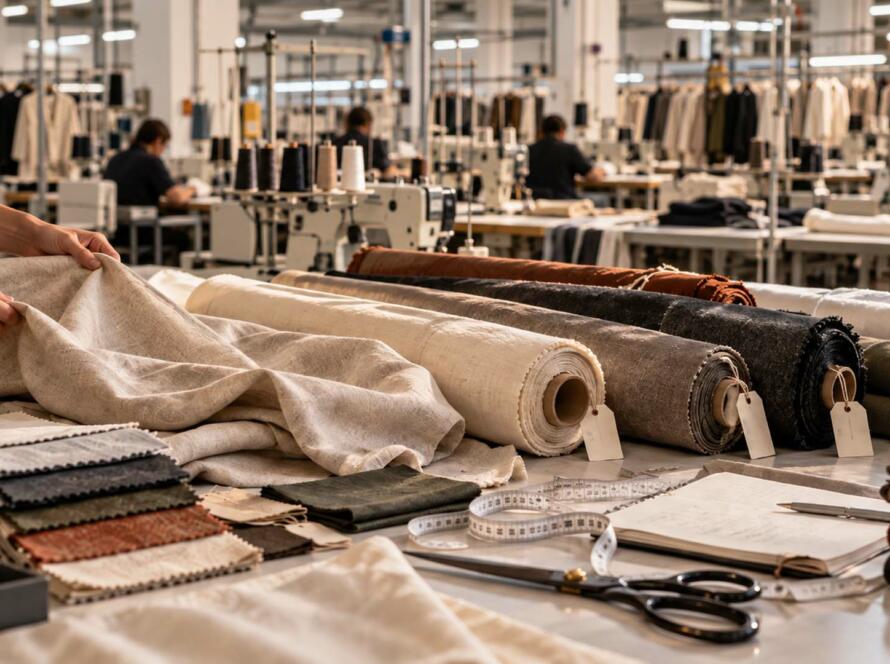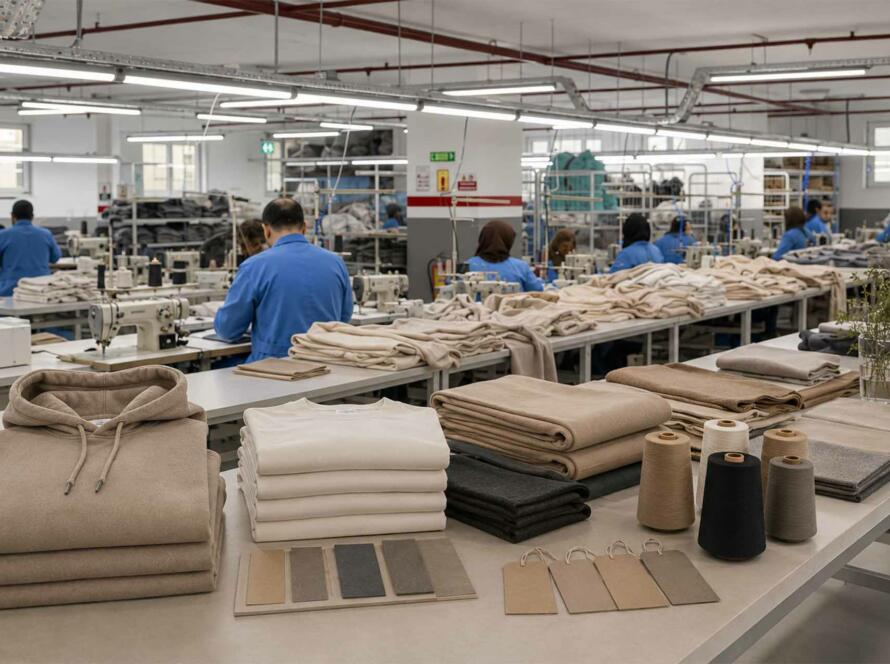


Recycled textiles have moved from niche capsule collections into mainstream fashion sourcing. Recycled cotton appears in T-shirts, sweatshirts and denim, while recycled polyester is widely used in sportswear, outerwear, linings and accessories.
For fashion brands, the appeal is understandable. Recycled fibers can reduce dependence on virgin raw materials, create value from existing waste streams and support more responsible sourcing strategies.
Yet recycled content does not automatically make a garment sustainable.
Material origin, recycling technology, durability, chemical processing, supply-chain traceability and end-of-life design all influence the real environmental value of a product. A garment made with recycled fibers may still be difficult to recycle, prone to premature wear or supported by marketing claims that disclose very little.
This guide explains the opportunities and practical limits of recycled textiles in fashion, with a focus on what European and US brands should evaluate before developing a recycled collection.
What Are Recycled Textiles?
Recycled textiles are materials made partly or entirely from waste that has been processed into usable fibers, yarns or fabrics.
The waste normally comes from one of three sources:
- Pre-consumer textile waste: Cutting scraps, rejected fabric, yarn waste and other materials left over during production.
- Post-consumer textile waste: Garments or household textiles collected after use.
- Non-textile waste: Materials such as discarded plastic bottles that are processed into fibers, particularly recycled polyester.
This distinction matters.
A polyester fabric made from plastic bottles contains recycled material, but it is not necessarily an example of textile-to-textile recycling. The bottles have moved from the packaging system into the textile system, where recycling them again may be more difficult.
According to Textile Exchange’s 2025 Materials Market Report, recycled fibers represented approximately 7.6% of global fiber production in 2024. Most came from recycled polyester made from plastic bottles, while less than 1% of the global fiber market came from recycled pre- or post-consumer textiles. Definition for Fashion Brands
Recycled textiles in fashion are fibers and fabrics produced from recovered manufacturing waste, used garments or other waste materials instead of relying entirely on virgin resources.
Their sustainability value depends on the waste source, processing method, product lifespan, traceability and ability to remain in circulation.
Why Fashion Brands Are Interested in Recycled Materials
Recycled materials can support several commercial and environmental objectives when they are selected carefully.
Reducing Dependence on Virgin Materials
Using recycled fibers can reduce demand for newly extracted fossil resources or newly cultivated natural fibers.
Recycled polyester, for example, can replace part of the virgin polyester used in performance wear, fleece, linings and technical garments. Recycled cotton can reduce the percentage of virgin cotton needed in selected jersey, denim and fleece constructions.
This does not remove every impact associated with manufacturing. Spinning, knitting, dyeing, finishing, sewing and transportation still require resources. However, it can help brands reduce reliance on virgin feedstocks.
Creating Value From Textile Waste
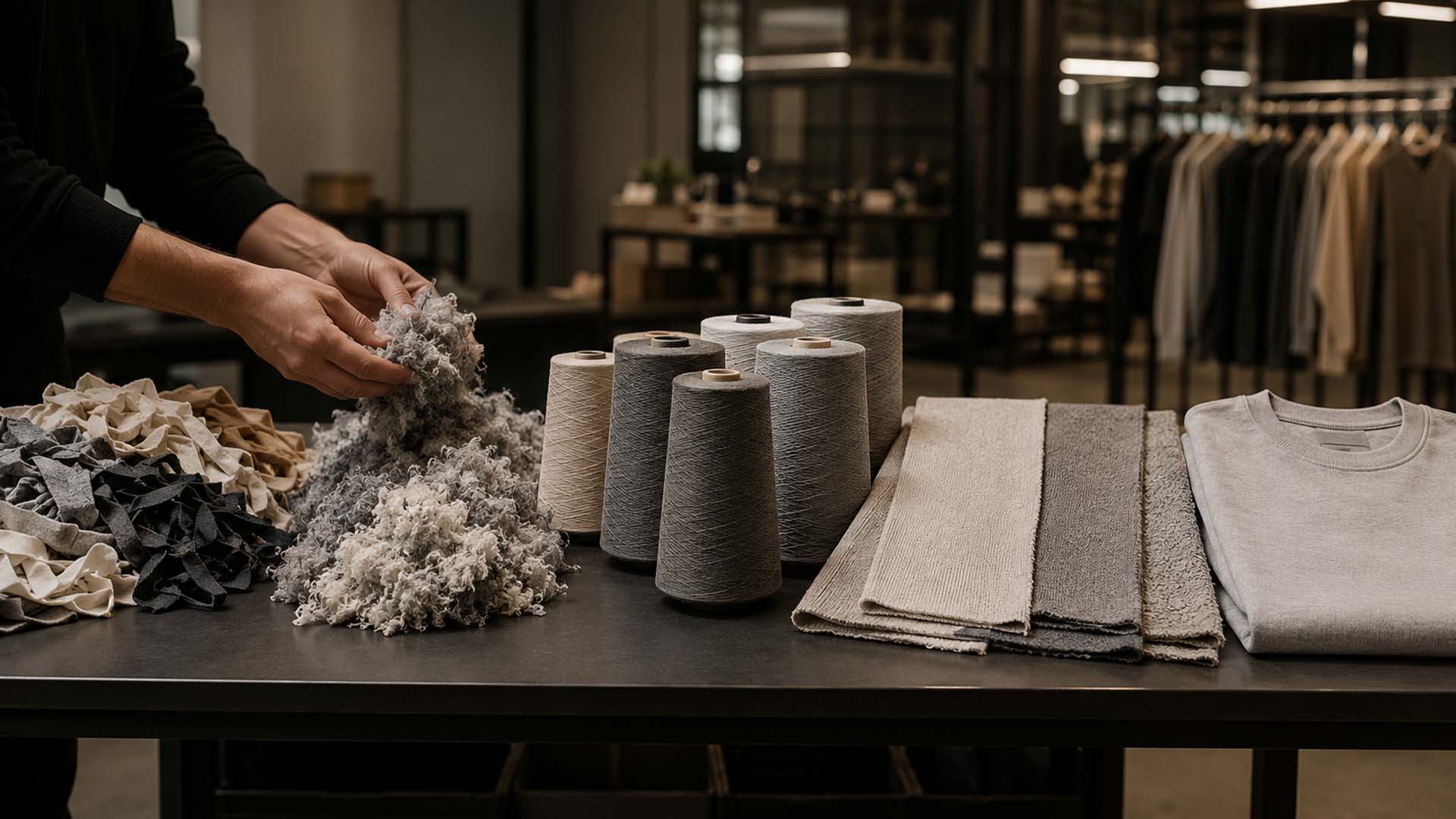
Pre-consumer waste is often easier to sort because its composition and production history are known. Cutting waste from a cotton garment factory, for example, can be separated by color and fiber type before recycling.
Post-consumer waste is more complicated. Used clothing may contain blended fibers, elastane, coatings, sewing threads, labels, zippers, prints or chemical finishes. These components make sorting and recycling more difficult.
Better collection, sorting and fiber-to-fiber recycling systems are therefore essential to a more circular textile economy. The European Environment Agency notes that less than 1% of textile waste currently returns to the clothing system as new fibers; much of the remaining non-reusable material is downcycled, incinerated or landfilled. hanging Buyer Expectations
Retailers, wholesale buyers and consumers increasingly ask brands to explain where materials come from and how environmental statements are verified.
For B2B brands, traceability is becoming especially important. A buyer may ask for:
- Fiber composition
- Recycled-content percentage
- Pre-consumer or post-consumer origin
- Certification documents
- Supplier scope certificates
- Transaction certificates
- Dyeing and finishing information
- Chemical compliance documentation
- Country of production
A credible recycled collection must therefore be supported by supply-chain evidence, rather than a material name on a hang tag.
Recycled Cotton: Benefits and Manufacturing Limits
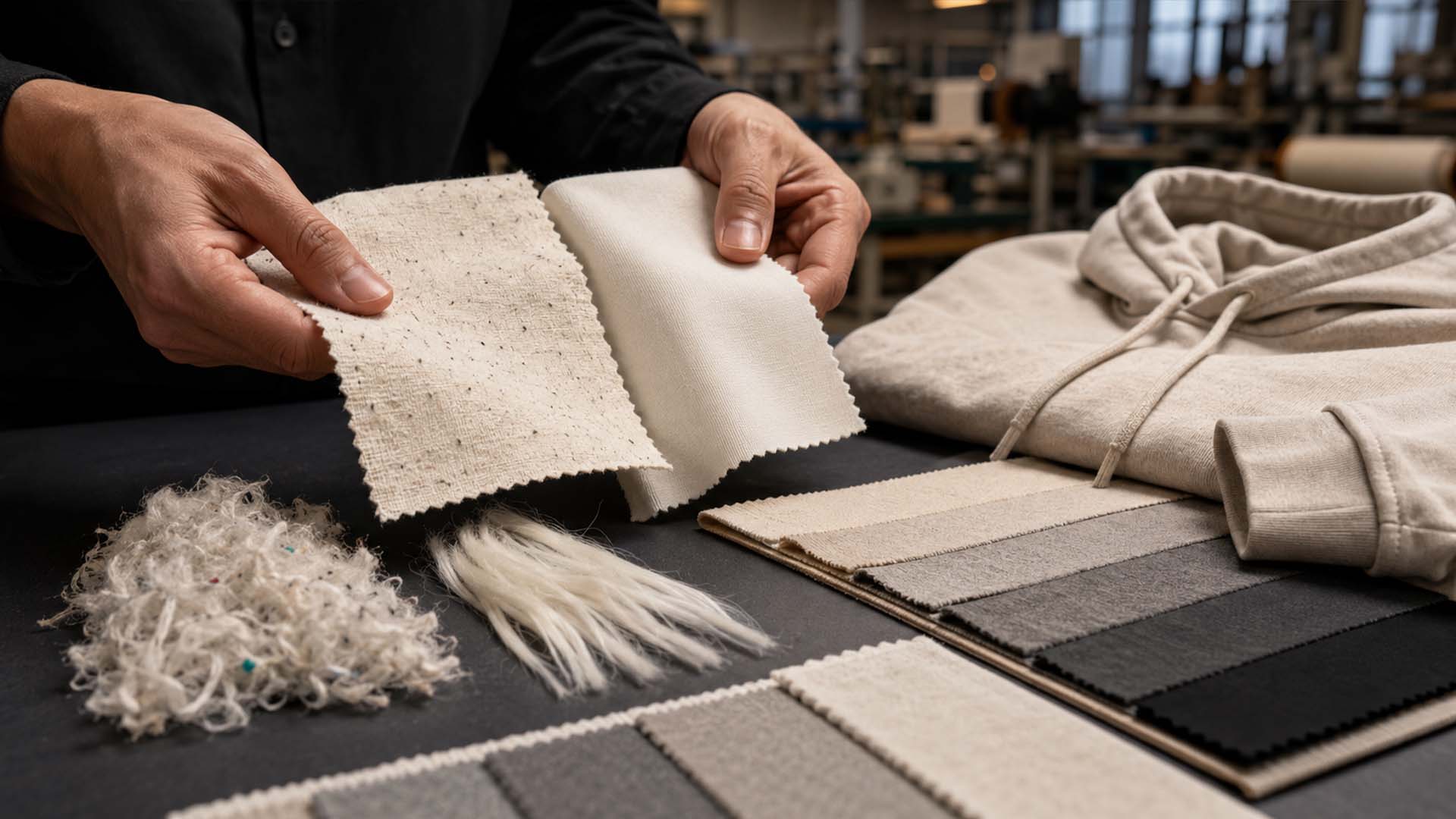
Recycled cotton is normally produced through mechanical recycling.
Cotton waste is sorted, cleaned and shredded until the fabric structure is opened back into fibers. These fibers can then be blended, spun into yarn and converted into a new fabric.
Where Recycled Cotton Comes From
Common sources include:
- Fabric cutting scraps
- Spinning and weaving waste
- Rejected cotton fabrics
- Unsold cotton products
- Used T-shirts, sweatshirts or denim
- Cotton-rich post-consumer garments
Pre-consumer material usually offers more predictable quality because the fiber composition is known and the waste has not been weakened through repeated wearing and washing.
The Main Advantage of Recycled Cotton
Recycled cotton gives existing cotton waste another use and can reduce the amount of virgin fiber required for a product.
It is particularly relevant for:
- Casual T-shirts
- Sweatshirts
- Hoodies
- Denim
- Jersey fabrics
- Mélange fabrics
- Workwear-inspired garments
- Accessories and nonwoven products
It can also create a distinctive visual character. Slight color variation, texture and surface irregularity may suit streetwear, vintage-inspired or naturally finished collections.
Why Recycled Cotton Is Often Blended
Mechanical shredding shortens cotton fibers. Shorter fibers are more difficult to spin into smooth, strong and consistent yarn.
Research on mechanically recycled cotton repeatedly identifies fiber length as a major performance constraint. Higher recycled content can increase yarn unevenness and reduce strength or abrasion resistance, depending on the waste source, yarn system and fabric construction. on, a recycled fabric manufacturer may combine recycled cotton with:
- Virgin cotton
- Organic cotton
- Recycled polyester
- Regenerated cellulose fibers
- Other longer or stronger fibers
The blend helps improve yarn cohesion, knitting performance, fabric stability and garment durability.
There is no universal ideal recycled-cotton percentage. The appropriate ratio depends on the product.
A lightweight premium T-shirt, heavyweight hoodie, denim jacket and promotional tote bag have different requirements for softness, strength, pilling, shrinkage and surface appearance.
Practical Advice for Brands
Do not select a recycled-cotton percentage based only on the largest marketing number.
A fabric containing 30% recycled cotton that performs well over repeated wear may be a more responsible commercial choice than a higher-content fabric that loses shape, pills heavily or develops holes too quickly.
Sample testing should determine the workable balance between recycled content and product performance.
Recycled Polyester: Useful, Scalable and Still Debated
Recycled polyester is usually made from recycled polyethylene terephthalate, commonly called rPET.
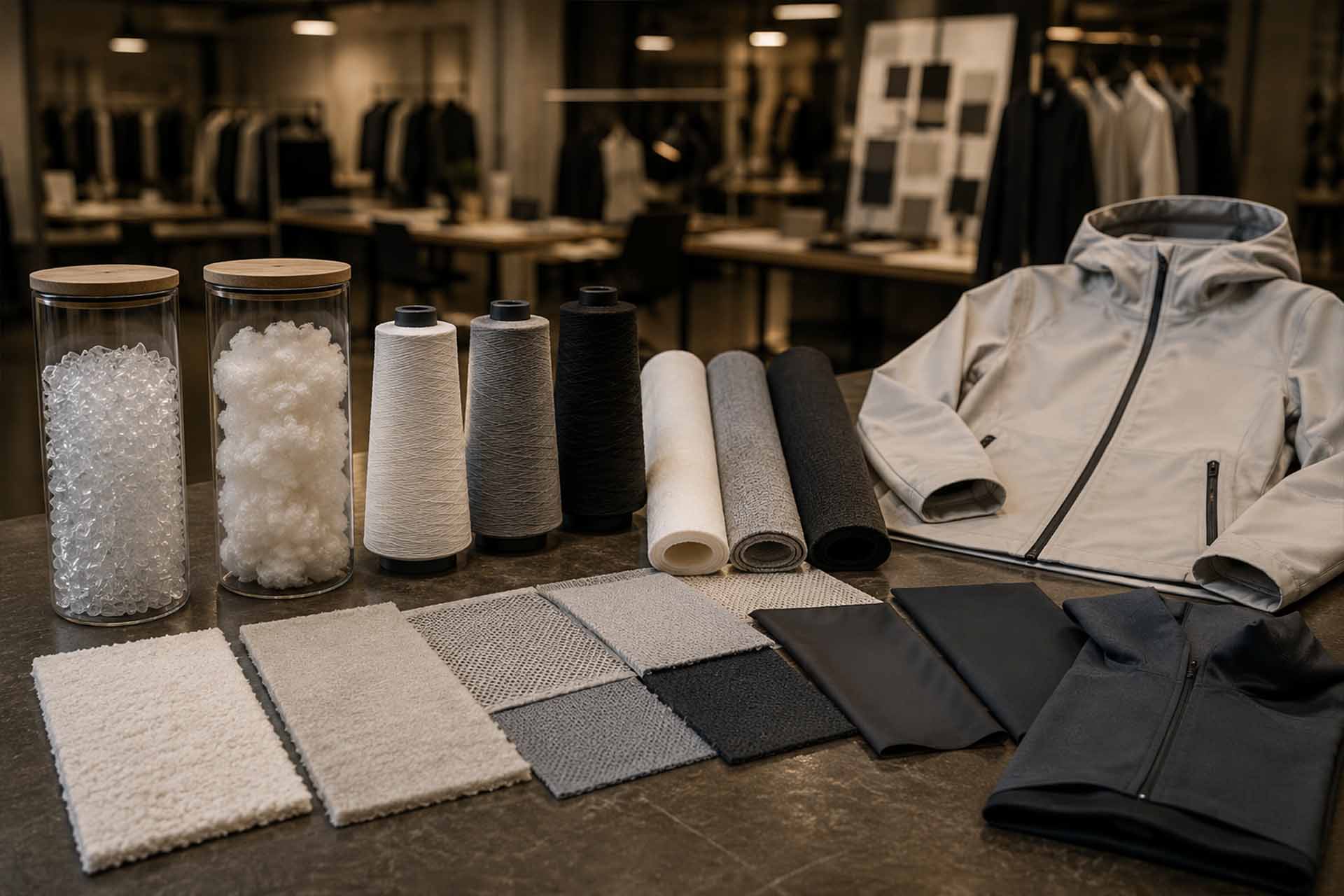
The feedstock may include:
- Plastic beverage bottles
- Packaging waste
- Industrial polyester waste
- Production scraps
- Used polyester textiles
The material is cleaned, processed and converted into chips or raw material that can be spun into polyester filament or staple fiber.
Why Recycled Polyester Is Widely Used
Recycled polyester can offer many of the practical characteristics associated with conventional polyester:
- Strength
- Dimensional stability
- Quick drying
- Wrinkle resistance
- Compatibility with performance fabrics
- Suitability for fleece and outerwear
- Consistent color and surface options
It is therefore commonly used in activewear, sportswear, jackets, fleece products, linings, bags and blended jersey fabrics.
From a sourcing perspective, recycled polyester is generally more established at scale than many emerging textile-to-textile recycling technologies.
Bottle-to-Fiber Is Not the Same as Textile Circularity
Most recycled polyester still comes from plastic bottles rather than used garments. This helps reduce demand for virgin polyester, but it does not create a closed-loop clothing system.
A bottle collected within an established packaging-recycling stream may be converted into a garment that cannot easily be recycled after use. This is sometimes described as moving material from one system into another rather than maintaining circularity within the original system.
Textile Exchange has stated that recycled polyester should replace virgin synthetic feedstocks rather than displace other fiber categories or justify continued growth in total fiber production. therefore distinguish clearly between:
- Bottle-to-fiber recycled polyester
- Pre-consumer polyester recycling
- Post-consumer textile-to-textile polyester
- Chemically recycled polyester
- Mechanically recycled polyester
Each route has different implications for traceability, quality and circularity.
Recycled Polyester and Microfiber Shedding
Recycled polyester remains a synthetic plastic-based fiber. Like virgin polyester, it may release microfibers during manufacturing, wearing and washing.
The European Environment Agency identifies synthetic textiles as a recognized source of environmental microplastic pollution throughout their lifecycle. in does not eliminate this issue.
Brands developing polyester products should also consider:
- Fabric construction
- Yarn quality
- Brushing and surface finishing
- Resistance to pilling
- Fiber shedding
- Care instructions
- Product lifespan
- End-of-life options
A dense, durable fabric designed for extended use may offer a different value proposition from a low-quality recycled-polyester garment that is quickly discarded.
Recycled Content Is Not the Same as Circularity
Circular fashion aims to keep products and materials in useful circulation for as long as possible while reducing waste and pollution.
Recycled content is one tool within that system. It is not the complete system.

A more circular garment should ideally be:
- Durable
- Repairable
- Reusable
- Resellable
- Traceable
- Easy to disassemble
- Designed for material recovery
- Free from unnecessary components that interfere with recycling
The Ellen MacArthur Foundation emphasizes designing fashion products to be physically durable, used for longer and capable of being remade or recycled at the end of use. Blends Create Challenges
Blended fabrics can improve comfort and performance, but they may make fiber separation more difficult.
Examples include:
- Cotton with polyester
- Cotton with elastane
- Polyester with elastane
- Multi-layer laminated fabrics
- Fabrics with coatings or membranes
Even a mostly mono-material garment may contain polyester sewing thread, elastane rib, printed transfers, foam padding, metal trims and mixed-material labels.
Brands should ask two separate questions:
- Does the material contain recycled fibers?
- Can the finished garment be effectively recycled after use?
The answers are not always the same.
Design Decisions Matter
Circularity begins before fabric purchasing.
Product teams can improve future recyclability by:
- Reducing unnecessary fiber blends
- Limiting elastane where performance allows
- Selecting compatible sewing threads
- Avoiding difficult-to-remove decorations
- Using detachable trims
- Documenting material composition accurately
- Designing garments that can withstand repeated use
- Planning repair or take-back services where commercially realistic
Durability Must Remain a Priority
A recycled material should still meet the technical needs of the finished garment.
The development process may need to evaluate:
- Tensile and tear strength
- Seam strength
- Abrasion resistance
- Pilling
- Shrinkage
- Colorfastness
- Spirality
- Dimensional stability
- Surface hairiness
- Stretch and recovery
- Washing performance
The correct test program depends on the fabric and product category.
For example, a recycled-cotton jersey intended for an oversized T-shirt may need shrinkage, spirality, pilling and colorfastness testing. A recycled-polyester fleece may require checks for pilling, shedding, dimensional stability and surface appearance after washing.
Sampling is essential because two fabrics carrying the same recycled-content claim can behave very differently.
The fiber source, yarn quality, knitting density, dyeing process and finishing method all affect the final result.
Certifications and Traceability
Brands should request verifiable documentation when making recycled-content claims.
Two widely used standards are the Global Recycled Standard, or GRS, and the Recycled Claim Standard, or RCS.
Both support third-party verification of recycled input and chain of custody. GRS includes additional requirements concerning processing, chemical use, environmental practices and social criteria, while RCS focuses primarily on recycled content and traceability. Brands May Need
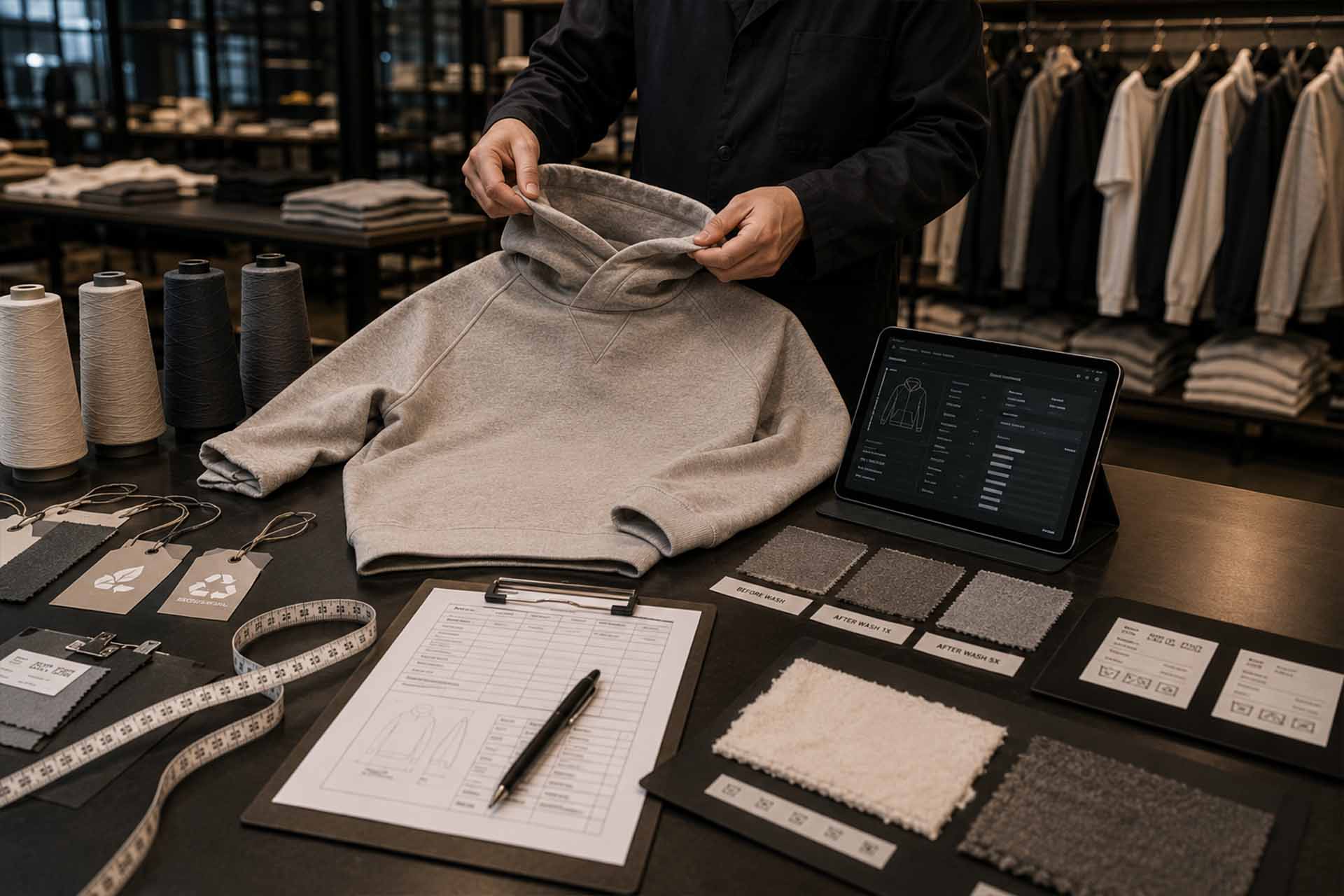
Depending on the supply chain and claim, brands may need to review:
- Valid scope certificates
- Transaction certificates
- Fiber-composition reports
- Purchase and production records
- Certified supplier details
- Yarn and fabric specifications
- Test reports
- Chemical compliance documents
- Production-lot information
A supplier’s general certificate does not automatically prove that every fabric or finished garment is certified.
The specific material, facility, production stage and transaction must be covered correctly.
Questions to Ask a Supplier
Before approving a recycled fabric, ask:
- What percentage of the fabric is recycled?
- Is the recycled input pre-consumer or post-consumer?
- Is the source textile waste, bottles or another material?
- Is the claim certified?
- Which supply-chain stages are certified?
- Can transaction certificates be provided?
- What is the remaining fiber composition?
- Has the fabric been tested after washing?
- Are there limitations on color, weight or finish?
- Can the finished garment carry a certified claim?
These questions help separate a documented sourcing program from a vague sustainability story.
Greenwashing Risks Fashion Brands Should Avoid
Recycled materials can be communicated responsibly, but environmental language must be precise.
Common problems include:
Calling a Product “Sustainable” Because of One Component
A jacket may contain recycled polyester in its outer shell while using virgin filling, mixed-material lining, metal accessories and a coating that complicates recycling.
The claim should describe what is actually verified.
A clearer statement would be:
“The outer fabric contains 60% certified recycled polyester.”
This is more credible than calling the entire jacket “100% sustainable.”
Failing to Explain the Recycled Source
“Made from recycled materials” provides limited information.
Brands should disclose whether the material comes from production scraps, used textiles, plastic bottles or another source.
Confusing Certification With Zero Impact
Certification can verify content and chain of custody. It does not mean that a product has no environmental impact.
Manufacturing still involves energy, chemicals, transport, packaging and eventual end-of-life management.
Using Vague Environmental Language
Terms such as “green,” “eco-friendly” and “planet-friendly” can create legal and reputational risks when they are not supported by specific evidence.
This is becoming particularly relevant for brands selling in the European Union. Directive (EU) 2024/825 strengthens rules concerning generic environmental claims and sustainability labels and is scheduled to apply from 27 September 2026. ing collections for the European market should ensure that recycled-content statements are specific, documented and consistent across labels, packaging, product pages and advertising.
A Practical Recycled Textile Sourcing Checklist
Before placing a bulk order, fashion brands should confirm the following:
Material and Traceability
- Exact fiber composition
- Recycled-content percentage
- Pre-consumer or post-consumer classification
- Origin of the recycled input
- Certification status
- Scope and transaction documentation
Performance
- Fabric weight and construction
- Shrinkage
- Pilling
- Abrasion resistance
- Colorfastness
- Tensile or tear strength
- Garment-wash results
- Expected appearance after repeated use
Product Design
- Number of fiber types
- Elastane percentage
- Trim compatibility
- Print or embroidery method
- Repairability
- Ease of disassembly
- End-of-life limitations
Communication
- Exact claim the brand plans to make
- Evidence supporting that claim
- Consistency between product and marketing language
- Explanation of what is recycled
- Avoidance of broad or absolute environmental promises
Why Istanbul Matters for Recycled Textile Development
Istanbul connects fashion brands with a broad textile-production ecosystem that includes yarn suppliers, knitting mills, dyeing and finishing facilities, pattern development, sampling, printing, embroidery, garment manufacturing and quality control.
For European brands, producing in Turkey can also support closer communication and shorter logistics routes than many distant sourcing regions.
The main advantage is not simply access to a recycled fabric. It is the ability to coordinate material selection with garment engineering, sampling, testing, decoration and bulk production.
That coordination is particularly important for recycled fibers because performance can vary according to the source material, blend ratio and processing method.
A fabric should be evaluated as part of the complete garment, rather than approved from a composition sheet alone.
Develop Recycled and Sustainable Textiles With Istanbul Factory
Istanbul Factory supports fashion brands, streetwear labels and established companies with end-to-end clothing production in Istanbul.
Our services include:
- Recycled and sustainable fabric sourcing
- Custom clothing manufacturing
- Private label production
- Garment sampling
- Pattern and product development
- Printing and embroidery
- Quality control
- Labels and packaging
- Bulk manufacturing
We help brands compare material options, develop production-ready samples and evaluate whether a recycled fabric is technically suitable for the intended product.
Our approach is based on practical transparency. Recycled content should improve a product’s material strategy without compromising quality, durability or customer expectations.
Planning a recycled or sustainable collection? Contact Istanbul Factory to discuss your fabrics, designs, quantities and production requirements.
Frequently Asked Questions
Are recycled textiles always more sustainable?
No. Recycled textiles can reduce dependence on virgin raw materials, but their overall value depends on the waste source, recycling process, durability, chemical use, transportation and end-of-life design. Recycled content should be assessed as part of the complete product lifecycle.
What is the difference between recycled cotton and recycled polyester?
Recycled cotton normally comes from shredded cotton production waste or used cotton textiles. Recycled polyester is commonly made from plastic bottles, industrial polyester waste or used polyester products. The two fibers have different performance characteristics, recycling technologies and end-of-life challenges.
Is 100% recycled cotton suitable for clothing?
It may be suitable for certain products and yarn technologies, but mechanically recycled cotton has shorter fibers that can reduce yarn strength and consistency. Many clothing fabrics blend recycled cotton with virgin cotton or another supporting fiber to improve performance.
Is recycled polyester made from old clothing?
Sometimes, but most recycled polyester currently comes from plastic bottles rather than discarded garments. Brands should ask whether the source is bottle-to-fiber, production waste or genuine textile-to-textile recycling.
What certification should brands request for recycled fabrics?
GRS and RCS are widely used standards for verifying recycled content and chain of custody. Brands should confirm that the relevant supplier, material and transaction are covered and request appropriate certificates for the production order.
How can fashion brands avoid greenwashing?
Use specific and verifiable statements. Disclose the recycled percentage, material component and waste source where possible. Avoid broad claims such as “completely sustainable” unless they can be supported across the product’s full lifecycle.
Can Istanbul Factory manufacture clothing with recycled fabrics?
Yes. Istanbul Factory can support recycled-fabric sourcing, sampling, private label development, custom manufacturing, printing, embroidery, quality control and bulk production for suitable projects.