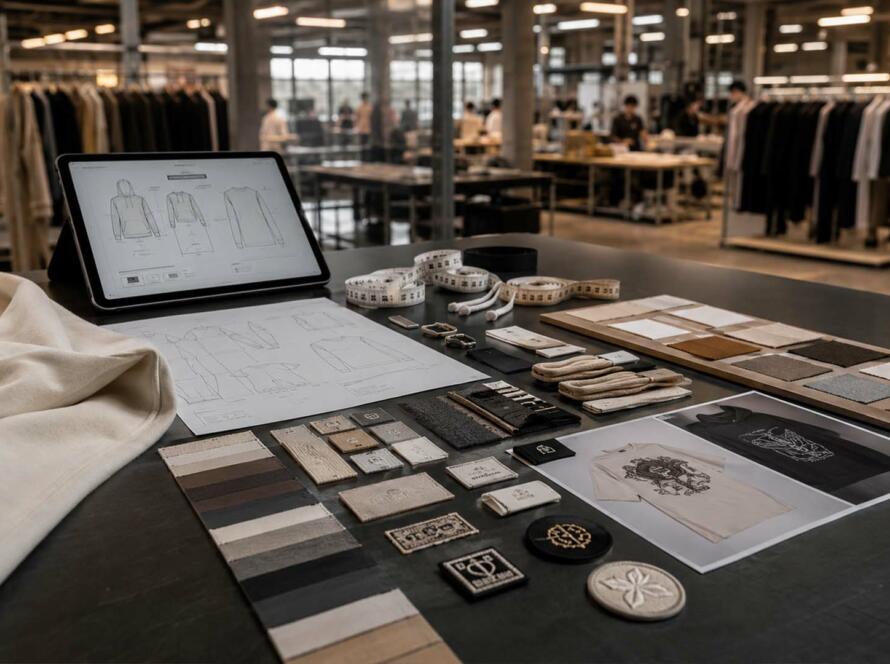


Managing apparel production involves far more than finding a factory that can sew garments. Fabrics need to be sourced, patterns developed, samples approved, trims ordered, production coordinated, quality checked, and finished garments prepared for shipment.
A full package clothing manufacturer takes responsibility for most or all of these stages under one production relationship.
For fashion brands, this model can reduce the number of suppliers they need to manage while creating clearer responsibility throughout the manufacturing process. It is particularly useful for brands that have designs and product specifications but do not want to build an entire sourcing and production operation internally.
What Is Full Package Clothing Manufacturing?
Full package clothing manufacturing is a production model in which one manufacturing partner manages the garment from development and material sourcing through bulk production, quality control, finishing, and packing.
It is also commonly called Full Package Production (FPP) or full-service apparel manufacturing.
The exact scope varies between manufacturers, so brands should never assume that every factory means the same thing by “full package.”
A typical full package service can include:
- Tech pack review
- Fabric sourcing
- Trim and accessory sourcing
- Pattern making
- Prototype development
- Size grading
- Garment sampling
- Printing and embroidery
- Cutting and sewing
- Washing or garment finishing
- Quality control
- Label application
- Folding and packing
- Shipment preparation
The brand remains responsible for the creative direction and approvals. The manufacturer manages the technical and operational work required to turn those specifications into finished garments.
How the Full Package Manufacturing Process Works
The strongest full package relationships are structured around approval stages. Production should not simply move from a sketch directly into bulk manufacturing.
1. Product and Tech Pack Review
Production usually begins with the brand providing a tech pack for clothing production, technical drawings, reference garment, or detailed product brief.
The manufacturer reviews details such as:
- Garment construction
- Measurements
- Fabric requirements
- Stitching
- Colors
- Branding
- Prints or embroidery
- Labels
- Packaging
Questions identified at this stage should be resolved before material sourcing and sampling begin.
A detailed specification reduces interpretation later in production.
2. Fabric and Trim Sourcing
Material sourcing is one of the biggest differences between full package manufacturing and basic cut-and-sew production.
A full package clothing manufacturer can source the fabrics and components required for the garment.
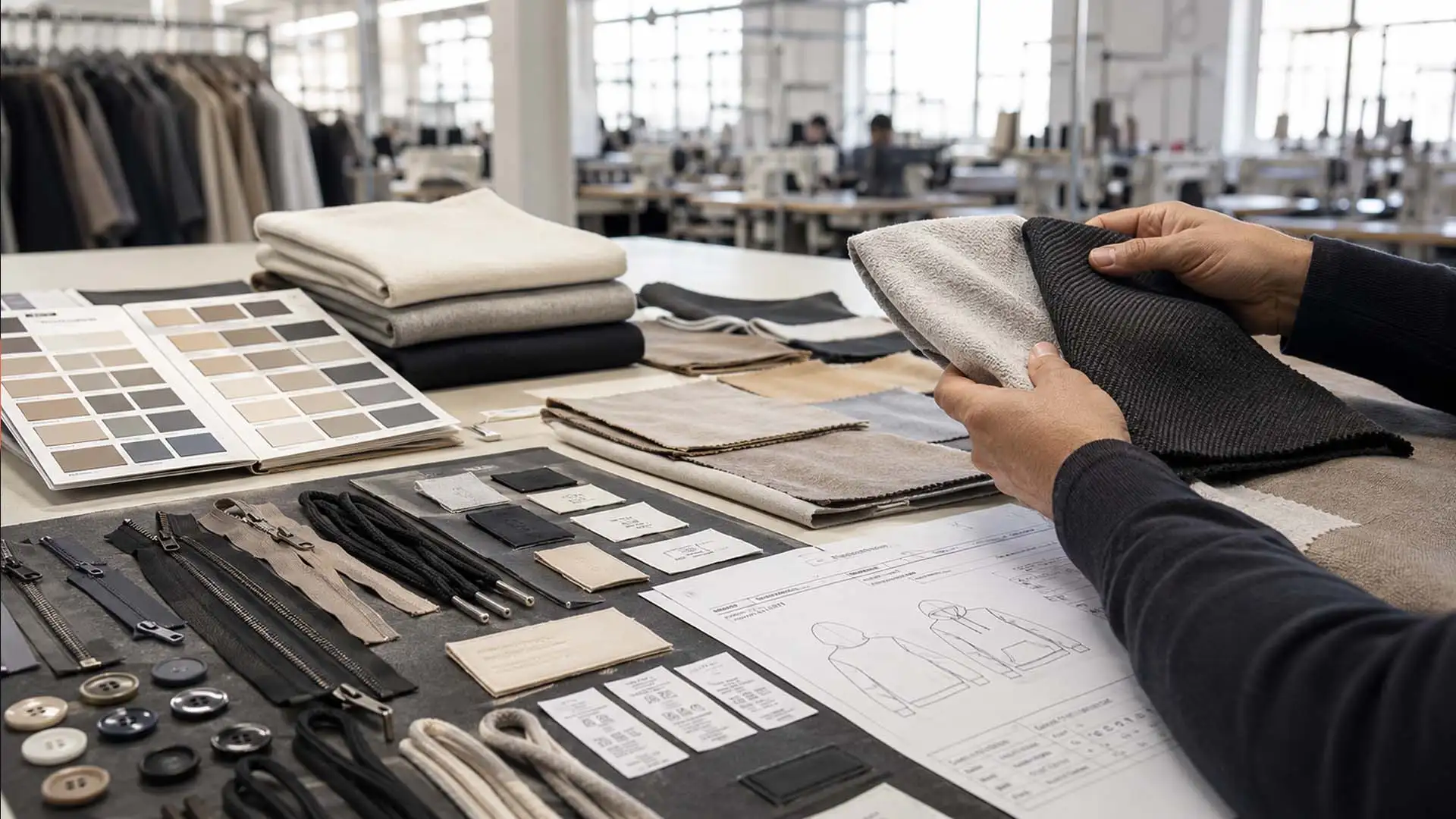
These may include:
- Jersey
- French Terry
- Fleece
- Rib
- Woven fabrics
- Linings
- Zippers
- Buttons
- Elastics
- Drawcords
- Woven labels
- Care labels
- Hangtags
Fabric selection should consider more than color and composition.
GSM, shrinkage, hand feel, stretch, recovery, dyeing method, wash performance, and consistency between production lots can all influence the final garment.
For example, two cotton French Terry fabrics may have the same stated GSM but produce noticeably different hoodies because of knitting structure, finishing, and surface feel.
3. Pattern Making and Sampling
Once the materials and construction requirements are understood, the garment moves into development.
A pattern translates the design into the individual pieces that will eventually be cut from fabric and sewn together.
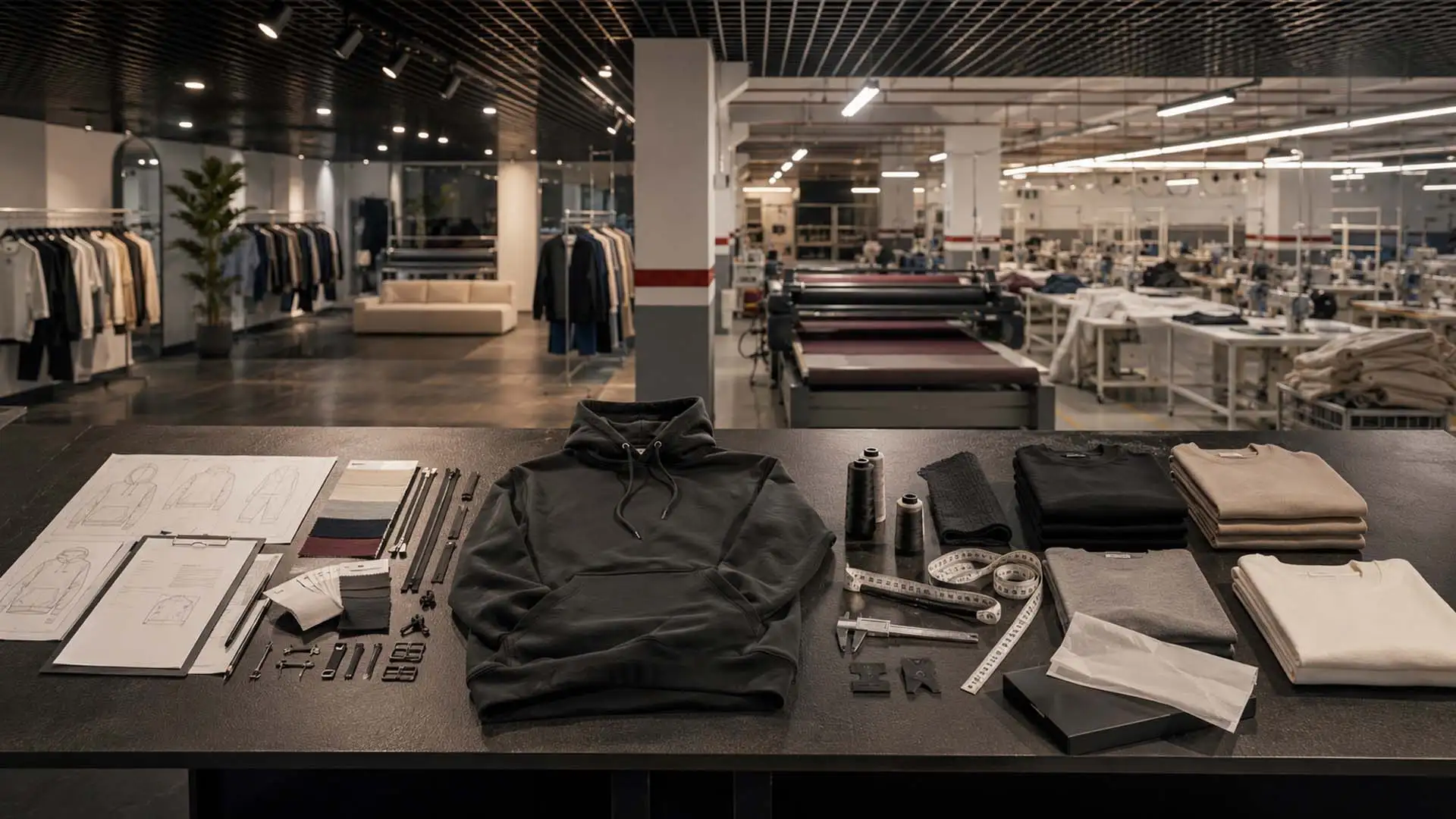
The first sample gives the brand an opportunity to evaluate:
- Fit
- Proportions
- Construction
- Fabric behavior
- Measurements
- Details
- Branding placement
Corrections may require additional sample rounds.
Trying to eliminate sampling to save time or money can create much larger costs during bulk production. A problem discovered on one sample is manageable. The same problem discovered across thousands of finished garments is not.
After the base size is approved, the pattern can be graded into the required size range.
Garment Sampling Service: Why Samples Matter Before Bulk Production
4. Printing, Embroidery and Branding
Many collections require more than sewing.
Depending on the product, full package production may include coordination of:
- Screen printing
- Digital printing
- Embroidery
- Appliqué
- Heat transfers
- Special garment treatments
- Custom labels
Placement, dimensions, thread colors, print colors, and artwork should be approved before bulk decoration begins.
For premium brands, small details matter. A logo positioned slightly too high or an embroidery density that changes the fabric surface can affect how the finished product is perceived.
5. Cutting and Sewing
After approvals are complete and bulk materials are available, production can begin.
Fabric is inspected, laid and cut according to the approved patterns and production markers.
The cut components then move through sewing operations in a planned sequence.
Depending on the garment, production may involve several specialist machines and operations, including overlock, flatlock, coverstitch, lockstitch, buttonhole, bartack, or other construction methods.
This is where good development work becomes especially valuable. The factory should be reproducing an already-approved product rather than making design decisions during bulk production.
6. Quality Control and Packing
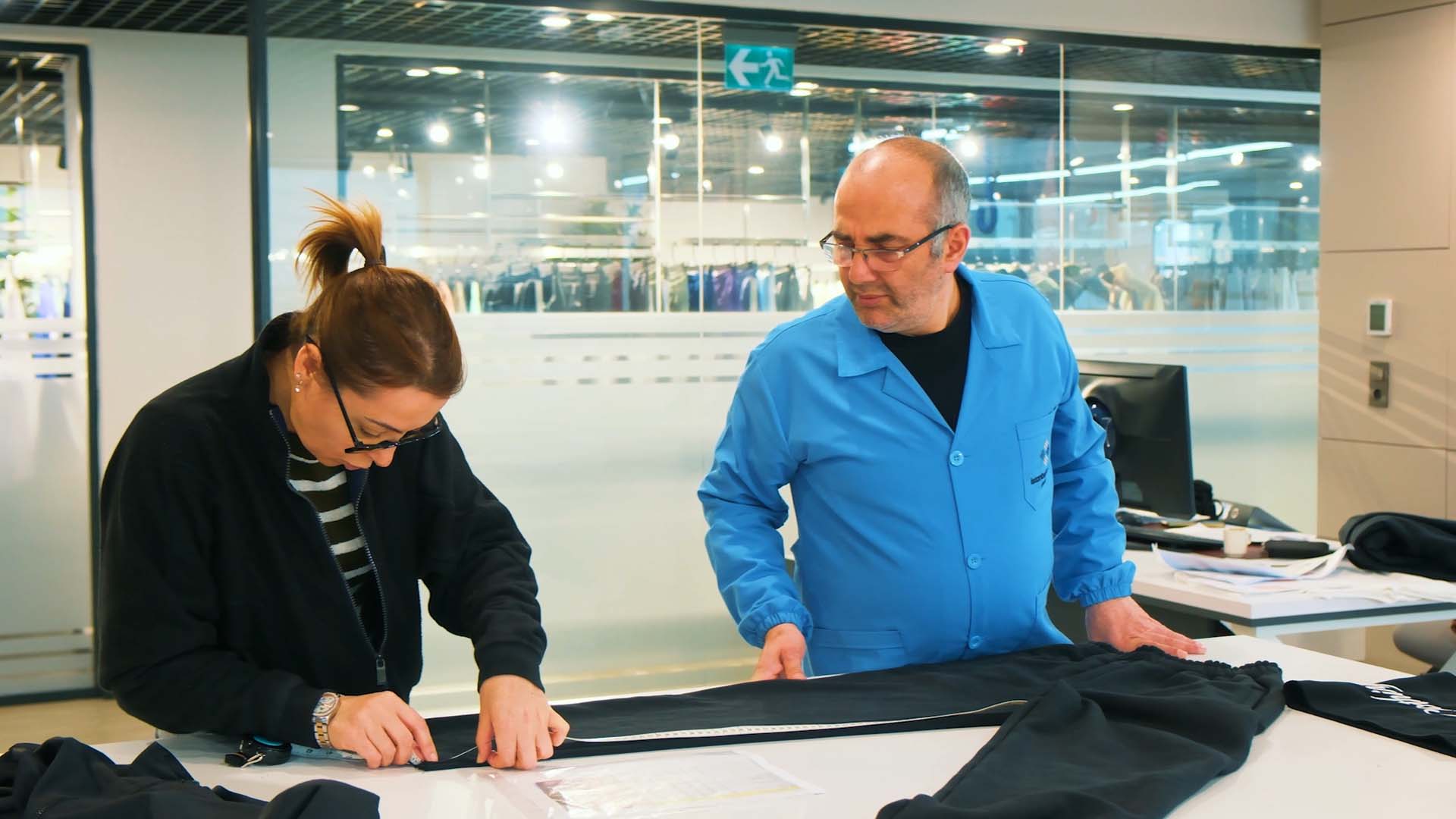
Professional textile quality control should happen throughout production rather than only after the final garment is completed.
Checks can include:
- Measurements
- Stitch quality
- Construction
- Fabric defects
- Color consistency
- Print or embroidery placement
- Labels
- Finishing
- General appearance
Final inspection is then performed against the approved specifications and quality criteria.
Approved garments are folded, tagged, packed, placed into cartons, and prepared according to the brand’s packing requirements.
Full Package Manufacturing vs CMT
One of the most common sourcing questions is whether a brand should use full package production or CMT.
CMT stands for Cut, Make and Trim.
Under a traditional CMT arrangement, the brand takes greater responsibility for supplying fabrics, trims, and production inputs. The factory mainly converts those materials into finished garments.
| Full Package Manufacturing | CMT Manufacturing |
|---|---|
| Manufacturer sources materials | Brand usually manages materials |
| Development can be included | Development may be separate |
| Sampling coordinated by manufacturer | Responsibilities vary |
| Production managed under one partner | Factory focuses mainly on manufacturing |
| Less supplier coordination for the brand | More sourcing control for the brand |
| Suitable for outsourced production management | Suitable for experienced sourcing teams |
Neither system is automatically better.
A brand with established fabric mills, sourcing staff, logistics expertise, and existing trim suppliers may prefer CMT.
A growing fashion label that wants one production partner to coordinate development, sourcing, manufacturing, and quality control will often find full package production more practical.
Which Brands Benefit Most from Full Package Production?
Full package manufacturing is particularly useful for:
Startup Fashion Brands
For brands building their first branded collection, understanding private label clothing manufacturing can also help clarify labels, packaging, customization and production responsibilities.
Working with one experienced manufacturing partner simplifies the production structure.
Growing Streetwear Brands
Streetwear collections frequently combine custom fabrics, oversized fits, garment washes, screen printing, embroidery, labels, and special trims.
Coordinating these processes through one production partner can improve consistency.
Premium Fashion Labels
Premium products depend heavily on material selection, construction quality, fitting, finishing, and small details.
A strong full package relationship gives the manufacturer visibility across the complete product rather than only the sewing stage.
Established Brands Expanding Production
Existing brands may also use full package manufacturers to add capacity, develop new product categories, or reduce the operational workload on internal sourcing teams.
Why Consider Full Package Clothing Manufacturing in Turkey?
Turkey has developed a strong position in apparel manufacturing because textile production and garment manufacturing exist within the same broader industrial ecosystem.
For European brands in particular, Istanbul provides access to fabric suppliers, knitters, dye houses, printers, embroiderers, pattern specialists, accessory suppliers, and garment manufacturers within a relatively concentrated region.
This can make coordination easier when a product requires several production processes.
Geographic proximity to Europe is another advantage. Development samples, materials, and production orders can move between Turkey and European markets without the long supply chains associated with more distant sourcing regions.
For US brands, Turkey is often considered when the priority is combining custom manufacturing capabilities with European-oriented quality expectations.
The important point, however, is to evaluate the individual manufacturer rather than choosing a sourcing country alone.
Choosing the Right Full Package Clothing Manufacturer
Before placing a production order, ask exactly what the quoted package includes.
Clarify responsibility for:
- Fabric sourcing
- Trims
- Patterns
- Samples
- Grading
- Testing
- Printing and embroidery
- Bulk production
- Quality inspections
- Packaging
- Freight documentation
You should also understand the approval process.
A professional manufacturing relationship should have clear checkpoints between development and bulk production. Important decisions should be confirmed before the next stage begins.
The real advantage of full package manufacturing is centralized responsibility. If responsibility remains unclear despite working with one supplier, much of that advantage disappears.
Full Package Clothing Manufacturing with Istanbul Factory
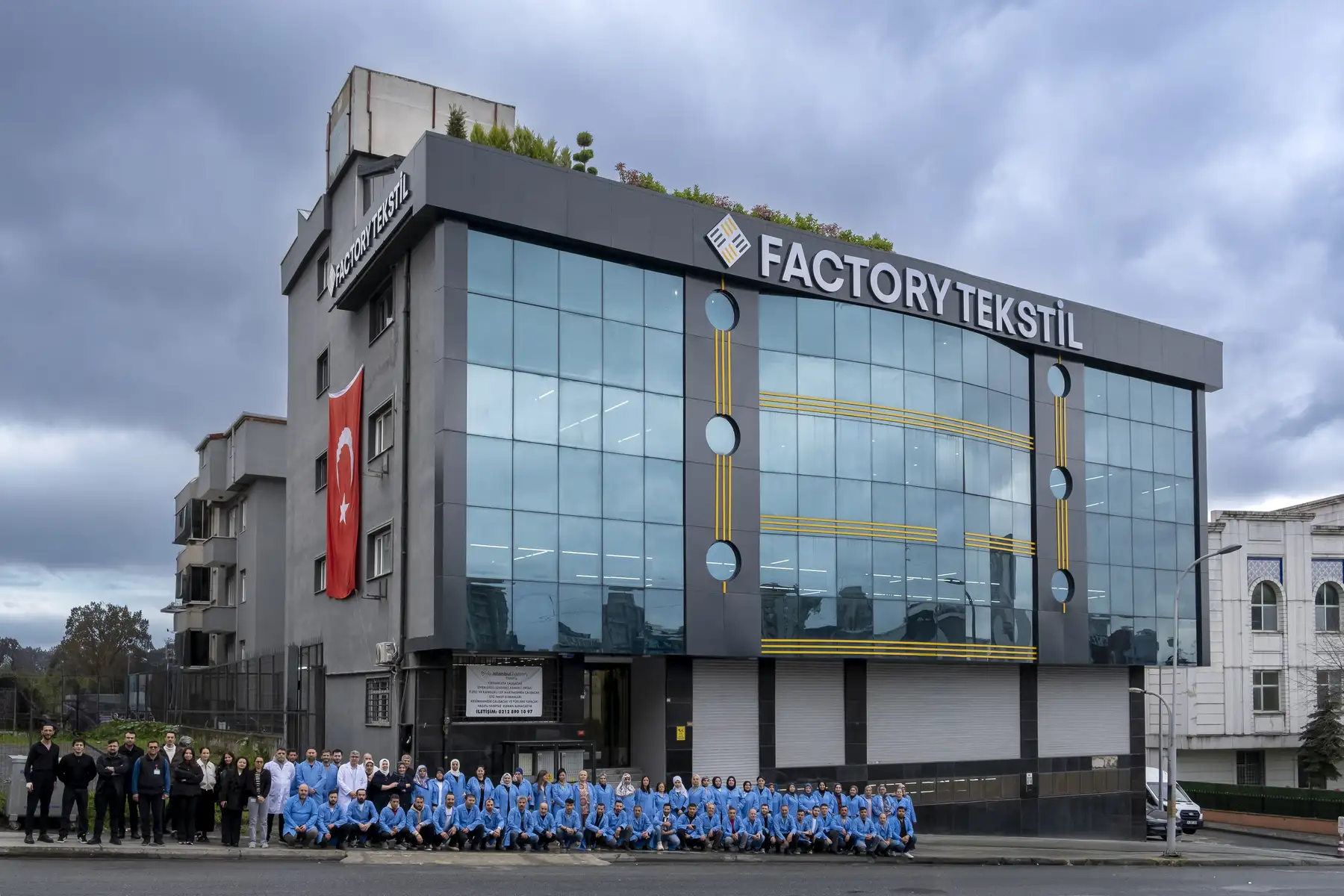
Istanbul Factory works with fashion brands, streetwear labels, startups, and established companies that want to develop and manufacture clothing in Turkey.
Our production approach can coordinate the key stages of apparel manufacturing, including fabric sourcing, garment sampling, custom clothing production, private label development, printing, embroidery, quality control, and final production preparation.
We focus on building structured manufacturing relationships rather than simply producing individual orders.
If you have a collection, tech pack, reference garment, or upcoming production project, contact Istanbul Factory to discuss your product requirements, materials, quantities, and manufacturing process.
Frequently Asked Questions
What is a full package clothing manufacturer?
A full package clothing manufacturer manages most of the apparel production process, including material sourcing, pattern development, sampling, cutting, sewing, branding, quality control, and packing.
What is Full Package Production or FPP?
Full Package Production (FPP) is a manufacturing model where the factory takes responsibility for producing the finished garment rather than providing sewing services alone.
What is the difference between full package manufacturing and CMT?
Full package manufacturing generally includes sourcing and production management. CMT stands for Cut, Make and Trim and typically requires the brand to provide or manage more of the fabrics, trims, and production inputs.
Does full package manufacturing include fabric sourcing?
In most full package programs, yes. The manufacturer can source fabrics and trims according to the brand’s specifications. However, the exact scope should always be confirmed before ordering.
Is full package manufacturing suitable for startup clothing brands?
Yes. It can be especially practical for startups that have product ideas or tech packs but do not yet have their own fabric suppliers, pattern makers, trim suppliers, and production management team.
Can a full package manufacturer produce custom clothing?
Yes. Full package manufacturing can support custom garments developed from a brand’s designs, measurements, fabrics, construction requirements, branding, and technical specifications.