


When a customer receives a garment, they do not see the full production process behind it. They see the fabric, the fit, the stitching, the color, the print, the label, the packaging, and the way the product feels in their hands.
That first impression can strengthen your brand — or damage it.
For fashion brands selling in Europe and the United States, quality is not simply a production detail. It affects customer reviews, return rates, wholesale relationships, reorder potential, and long-term brand trust. A hoodie that shrinks after washing, a T-shirt with uneven measurements, or a print that cracks too early can create problems far beyond the factory floor.
This is why textile quality control is one of the most important parts of professional clothing manufacturing.
A reliable manufacturer does not wait until the final day to check quality. Quality control should begin with fabric inspection, continue through sampling and bulk production, and finish with a structured final inspection before shipment.
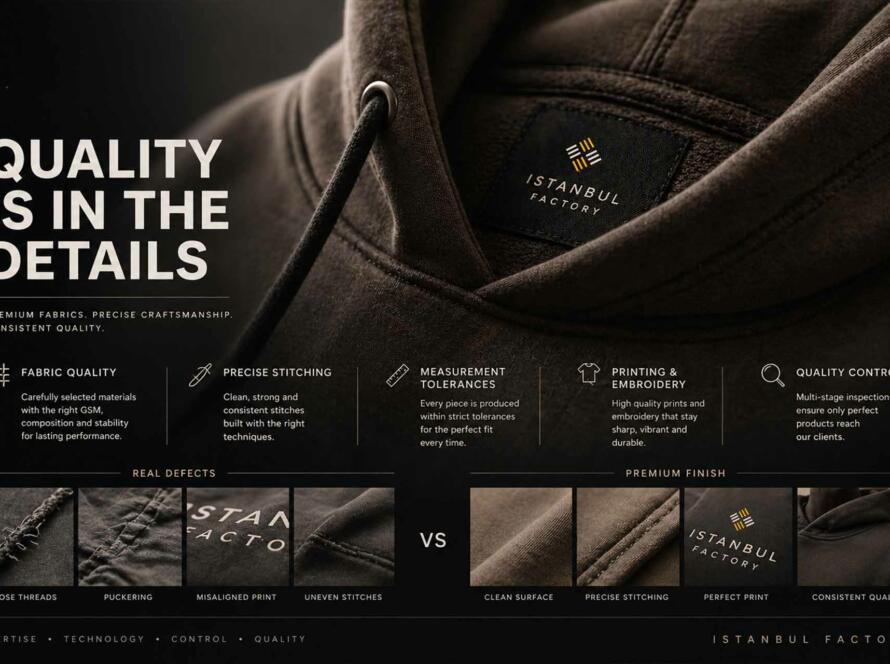
At Istanbul Factory, textile quality control is part of how we help fashion brands reduce production risk, protect their brand standards, and deliver garments that are ready for real customers.
What Is Textile Quality Control?
Textile quality control is the process of inspecting fabrics, garment construction, measurements, colors, prints, embroidery, trims, packaging, and final production to make sure clothing matches the approved specifications and brand standards.
In clothing manufacturing, textile quality control usually includes:
- Fabric inspection before cutting
- Color and shade consistency checks
- Measurement control against the size chart
- Stitching and seam inspection
- Print and embroidery quality checks
- Shrinkage and washing behavior review
- Label, trim, and branding checks
- Packaging inspection
- Final inspection before shipment
For a fashion brand, this process protects more than the product. It protects the customer experience.
A garment may look correct in one sample, but bulk production requires consistency across every size, color, and quantity. Textile quality control helps ensure that the approved sample is not treated as an isolated piece, but as the standard for the full order.
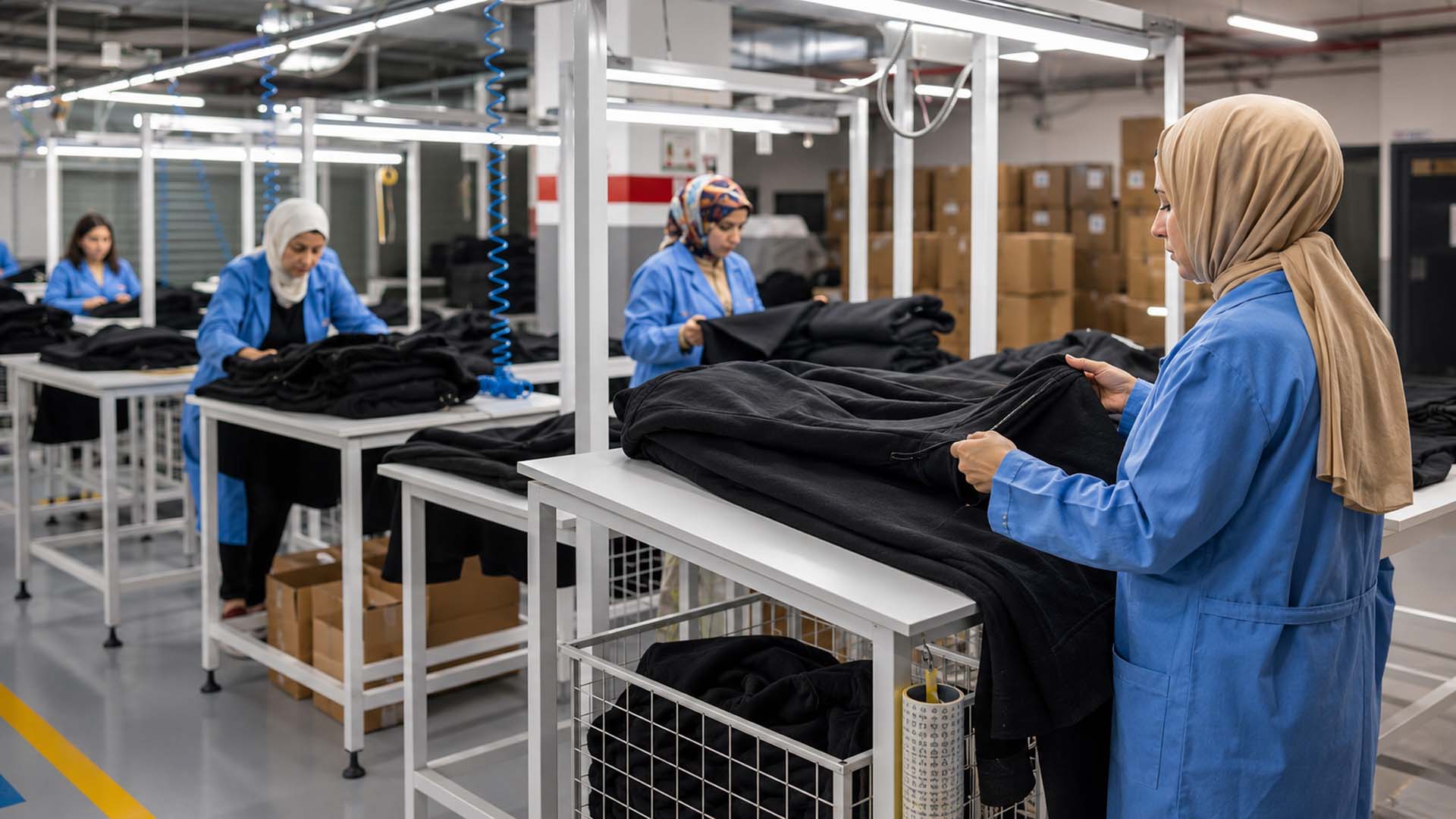
Why Textile Quality Control Matters for Fashion Brands
Quality problems are expensive because they usually appear late.
By the time a brand notices poor measurements, fabric defects, shade variation, or weak stitching, the garments may already be packed, shipped, photographed, or delivered to customers. At that point, fixing the issue becomes slower, more expensive, and more stressful.
A strong textile quality control process helps fashion brands:
- Reduce returns and complaints
- Maintain consistent sizing
- Protect product reviews
- Avoid wholesale rejection
- Improve customer satisfaction
- Keep repeat orders consistent
- Prevent shipment delays
- Protect brand reputation
- Build stronger trust with retailers and buyers
For startup clothing brands, QC reduces the risk of a first collection going wrong. For established labels, it helps maintain consistency across seasonal production and repeat orders.
In both cases, the purpose is the same: to make quality measurable, controlled, and repeatable.
Quality Control Should Start Before Bulk Production
One of the most common mistakes in apparel production is treating quality control as a final inspection only.
Final inspection is important, but it cannot solve every problem. If the wrong fabric was used, if the pattern was not corrected, or if the print placement was approved incorrectly, the issue may already be built into the full production.
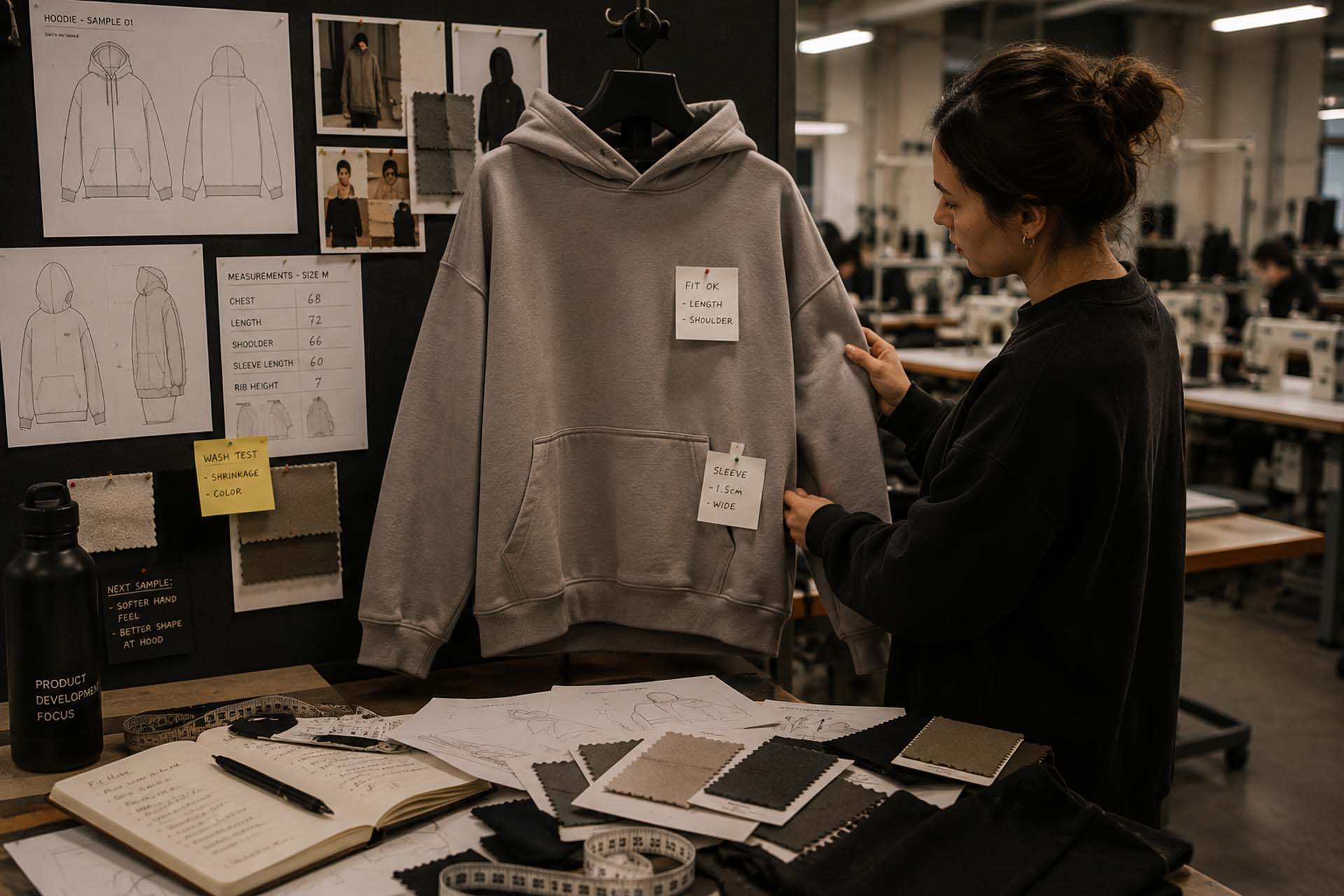
Before bulk production begins, a manufacturer should review:
- Fabric quality
- Approved sample
- Tech pack details
- Size chart
- Measurement tolerances
- Print or embroidery artwork
- Label and trim requirements
- Washing or finishing expectations
- Packaging instructions
This early review creates a shared standard between the brand and the manufacturer. It also reduces confusion during production.
For B2B fashion brands, especially those producing for e-commerce, retail, or wholesale, this clarity is essential.
Fabric Inspection: The First Layer of Quality
Fabric is the foundation of every garment. If the fabric is unstable, defective, or inconsistent, the final garment will carry those problems.
That is why fabric inspection is one of the first steps in textile quality control.
What Fabric Inspection Checks
Before cutting, fabric should be checked for:
- Holes
- Stains
- Weaving defects
- Uneven dyeing
- Shade variation between rolls
- Fabric weight consistency
- Width variation
- Surface irregularities
- Stretch and recovery
- Hand feel
- Fabric direction or nap
- Compatibility with printing, embroidery, or washing
For example, a heavyweight fleece hoodie needs more than a soft hand feel. The fabric should have stable weight, consistent width, controlled shrinkage, and the right structure for the intended fit.
If fabric defects are found before cutting, they can often be managed. If they are found after sewing, the cost is much higher.
This is why experienced manufacturers take fabric inspection seriously. It protects both the brand and the production timeline.
Color Consistency: A Critical Detail for Premium Collections
Color consistency is one of the most visible quality issues in fashion manufacturing.
Customers may not understand textile production, but they immediately notice when a hoodie and sweatpants do not match, when black looks faded in one size, or when a reorder is slightly different from the first batch.
Common Color Issues in Clothing Production
Textile quality control helps identify:
- Shade differences between fabric rolls
- Color mismatch between body fabric and rib
- Lab dip and bulk fabric differences
- Uneven dyeing
- Color changes after washing
- Print color inconsistency
- Shade differences between repeat orders
This is especially important for streetwear, premium basics, and matching sets. Neutral colors, washed tones, cream shades, charcoal, black, and muted palettes require careful control because small differences are easy to see.
A professional manufacturer should compare production against approved color references and manage shade consistency before garments are packed.
Measurement Control: Protecting Fit Across Every Size
Fit is one of the strongest reasons customers keep or return a garment.
A brand may invest heavily in design, photography, marketing, and packaging, but if sizing is inconsistent, the customer experience suffers. Measurement control helps prevent this.
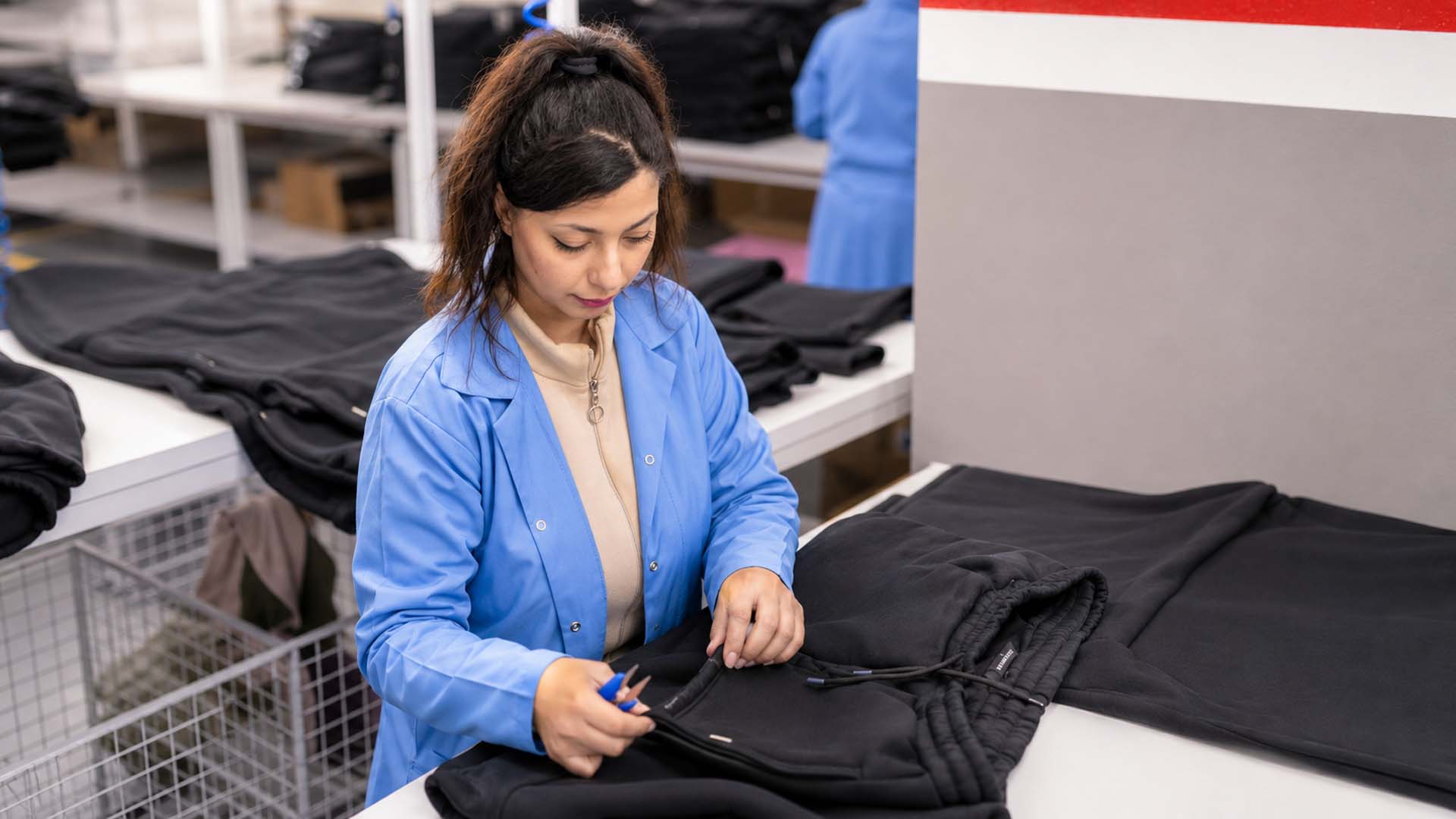
What Measurement Control Includes
Garments are checked against the approved size chart and tolerance standards. Depending on the product, this may include:
- Chest width
- Body length
- Shoulder width
- Sleeve length
- Neck opening
- Waistband width
- Hip measurement
- Inseam
- Leg opening
- Hem width
- Rib length
- Cuff opening
For streetwear brands, measurement control is especially important. Oversized fits, dropped shoulders, boxy T-shirts, wide-leg sweatpants, and relaxed silhouettes depend on proportion. A small change in shoulder width or body length can affect the entire look.
This is why measurements should be checked during production, not only at the end.
In-line measurement control allows the production team to correct small issues before they become full-order problems.
Stitching and Construction Checks
Stitching quality affects both appearance and durability.
Customers may not know the technical reason a garment feels premium, but they notice clean seams, balanced construction, and neat finishing. They also notice loose threads, twisted seams, uneven hems, and weak stitching.
What Stitching Inspection Looks For
A proper stitching inspection may check:
- Seam alignment
- Stitch density
- Stitch tension
- Skipped stitches
- Broken stitches
- Loose threads
- Seam puckering
- Reinforcement at stress points
- Collar and cuff symmetry
- Rib attachment
- Pocket placement
- Hem finishing
- Overall workmanship
For example, a sweatshirt should have clean shoulder seams, even rib attachment, secure cuffs, and stable hems. Joggers should have a strong waistband, clean pocket construction, and durable drawcord finishing.
These details may seem small, but they shape how customers judge the garment.
Good construction tells the customer that the brand cares.
Print Quality Control: Protecting Visual Identity
For many fashion and streetwear brands, print is not decoration. It is part of the product identity.
A back print, chest logo, sleeve graphic, or seasonal artwork must be positioned correctly and produced consistently. Even a small placement issue can make the garment feel wrong.
Print Inspection Should Check
Print quality control usually includes:
- Artwork placement
- Print size
- Color accuracy
- Sharpness
- Ink coverage
- Alignment
- Hand feel
- Cracking risk
- Peeling risk
- Wash durability
- Consistency across sizes
For example, a large back print on an oversized hoodie should be aligned with the body shape, hood position, and shoulder line. If the print is too high, too low, or slightly tilted, the final product may not match the approved sample.
A professional production partner should check print quality before and during bulk production, especially for large graphics, puff prints, screen prints, digital prints, and mixed techniques.
Embroidery Inspection: Small Details, High Impact
Embroidery often gives garments a premium feel, but it requires precision.
Poor embroidery can create puckering, uneven edges, loose threads, or an unbalanced logo. On premium basics, caps, polos, sweatshirts, and private label garments, these issues are easy to notice.
Embroidery Quality Control Includes
- Logo placement
- Thread color
- Stitch density
- Edge cleanliness
- Backing quality
- Symmetry
- Pulling or puckering
- Loose threads
- Consistency across pieces
- Compatibility with fabric weight
Embroidery should look intentional, clean, and stable. It should support the brand identity rather than distract from it.
For brands producing premium garments, this level of detail matters.
Shrinkage Testing and Washing Behavior
A garment is not truly tested until it performs after washing.
Shrinkage testing helps brands understand how fabric and finished garments behave after laundering. This is especially important for cotton, fleece, French terry, jersey, rib fabrics, and garment-washed products.
Why Shrinkage Testing Matters
Shrinkage issues can cause:
- Body length becoming too short
- Sleeves losing length
- Twisted side seams
- Tight rib areas
- Distorted prints
- Fit changes after washing
- Inconsistent sizing between batches
For example, a T-shirt may look perfect before shipment but become too short after the first wash. A hoodie may lose its intended oversized fit if shrinkage was not considered during development.
Professional textile quality control reduces this risk by checking fabric behavior, sample washing results, and production measurements when needed.
For fashion brands, this protects the customer experience after purchase — not just the appearance before delivery.
Label, Trim, and Branding Checks
Small branding details often carry a large part of the customer’s perception.
A premium garment with a crooked neck label, wrong care label, poor hangtag placement, or low-quality drawcord immediately feels less professional.
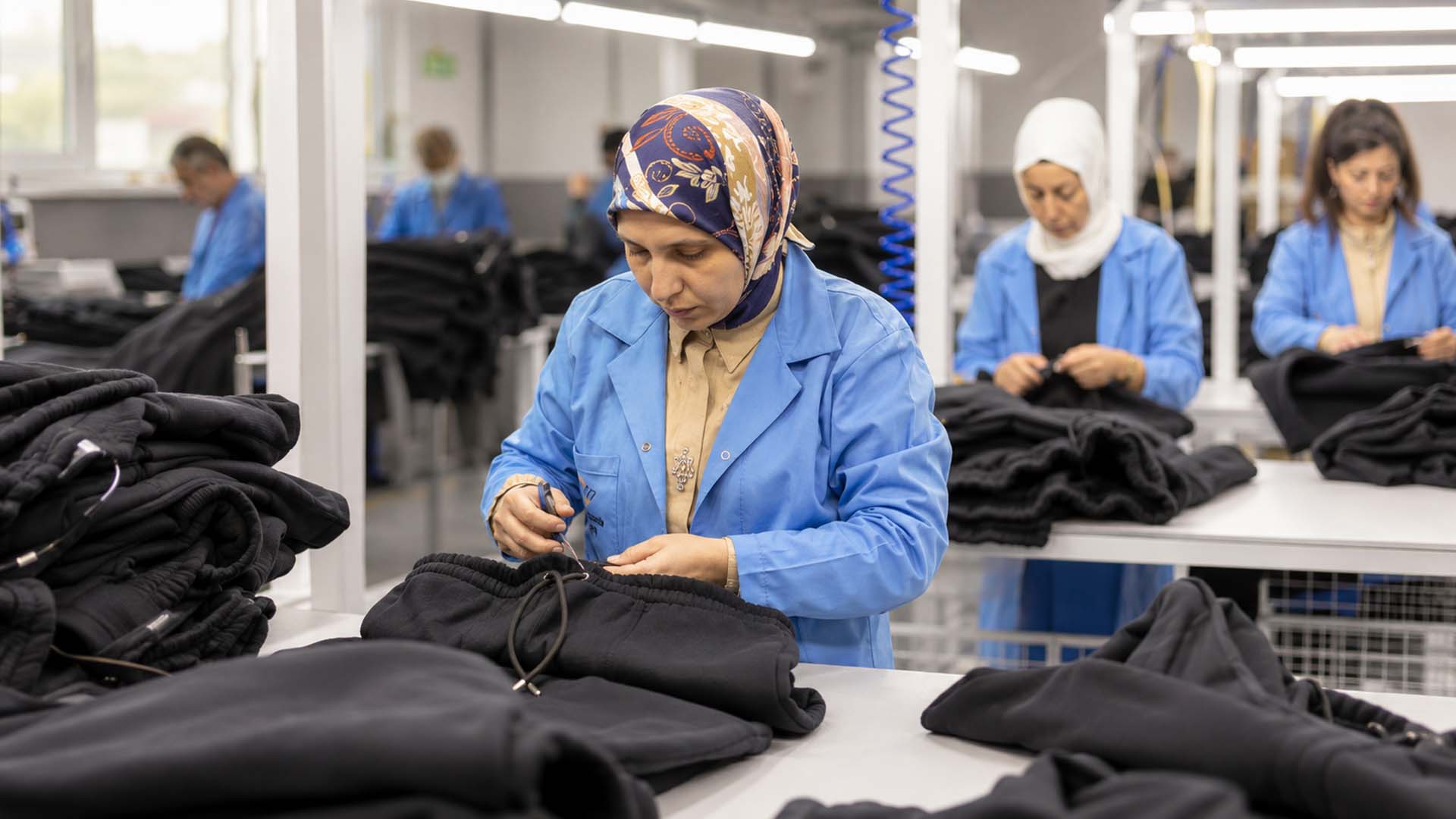
Quality control should check:
- Neck labels
- Size labels
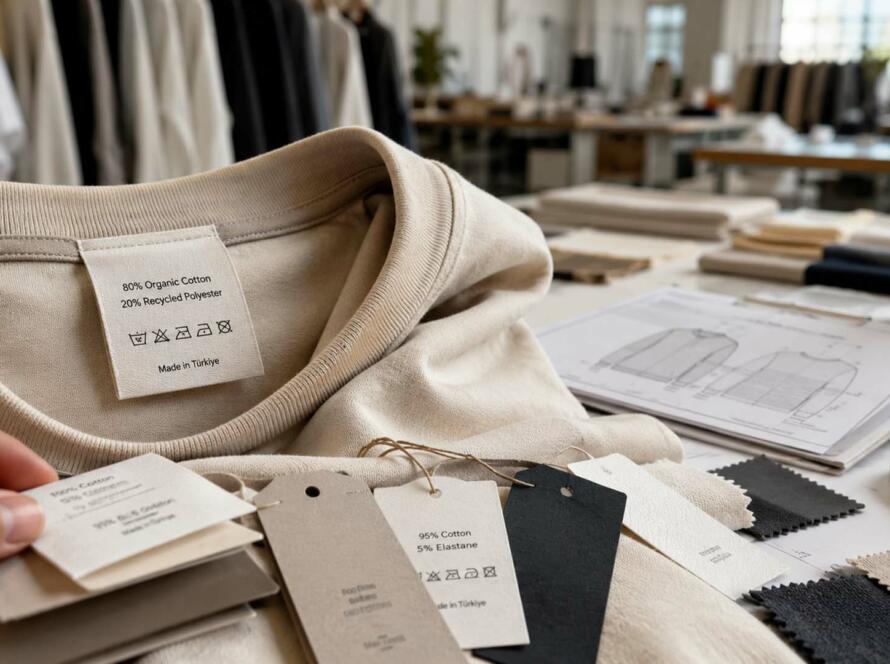
- Care labels
- Woven labels
- Hangtags
- Drawcords
- Zippers
- Buttons
- Rubber patches
- Metal accessories
- Barcode labels
- Packaging stickers
For brands selling in Europe and the United States, care label accuracy also matters. Fiber composition, washing instructions, size information, and country-of-origin details should be handled carefully according to the brand’s market needs.
A small label mistake can create unnecessary delays, especially when goods are prepared for retail or wholesale delivery.
In-Line Quality Control During Production
In-line quality control means checking garments while production is still in progress.
This is one of the most effective ways to reduce defects because it gives the production team time to correct problems early.
Why In-Line QC Is Valuable
In-line inspection helps manufacturers:
- Detect issues before they spread
- Correct measurements quickly
- Improve sewing consistency
- Reduce rejected garments
- Maintain workmanship standards
- Keep production aligned with the approved sample
- Save time before final inspection
For example, if the first production pieces show that sleeve length is slightly outside tolerance, the team can correct the issue before hundreds of pieces are completed.
This approach is more professional than simply finding mistakes at the end.
Quality control should guide production, not only judge it.
Final Inspection Before Shipment
Final inspection is the last major quality checkpoint before goods leave the factory.
At this stage, the manufacturer reviews the finished order against the approved sample, size chart, tech pack, and packaging instructions.
Final Inspection Usually Covers
- Overall garment appearance
- Measurements
- Fabric defects
- Stitching quality
- Print and embroidery
- Labels and trims
- Color consistency
- Size and quantity breakdown
- Folding
- Packaging
- Carton labeling
- Shipment preparation
For international brands, final inspection is especially important. Once goods are shipped, solving problems becomes more difficult and more expensive.
A careful final inspection gives the brand more confidence before products enter a warehouse, online store, showroom, retailer, or wholesale channel.
Packaging Checks: Quality Continues After Production
Packaging is part of the product experience.
A clean, well-folded, properly labeled garment feels more professional before the customer even tries it on. Poor packaging, on the other hand, can reduce the perceived value of an otherwise well-made product.
Packaging checks may include:
- Folding consistency
- Poly bag quality
- Size stickers
- Barcode labels
- Hangtag placement
- Carton labeling
- Carton strength
- Quantity per carton
- Protection during transport
- Cleanliness before packing
For e-commerce brands, packaging affects customer satisfaction directly. For wholesale brands, it affects warehouse handling, retailer presentation, and stock organization.
Professional manufacturers understand that packaging is not an afterthought. It is part of the brand experience.
The Role of the Tech Pack in Textile Quality Control
A tech pack is one of the most important tools for controlling garment quality.
Without a clear tech pack, production decisions become too dependent on interpretation. With a clear tech pack, the brand and manufacturer can work from the same technical standard.
A Strong Tech Pack May Include
- Technical drawings
- Size chart
- Measurement points
- Tolerance rules
- Fabric details
- GSM or fabric weight
- Color references
- Stitching instructions
- Print placement
- Embroidery details
- Label and trim specifications
- Packaging instructions
- Finishing requirements
For example, saying “oversized hoodie” is not enough. The tech pack should define the exact chest width, shoulder drop, body length, sleeve length, rib details, hood shape, fabric weight, and artwork placement.
This helps the manufacturer control production more accurately.
For startup brands, Istanbul Factory can support the development process by helping translate creative ideas into practical production details.
Common Quality Problems That Professional QC Helps Prevent
Many apparel production problems can be prevented with better communication, stronger sampling, and structured textile quality control.
Common issues include:
- Fabric shade differences
- Incorrect garment measurements
- Poor fit consistency
- Twisted seams
- Uneven stitching
- Loose threads
- Weak seams
- Poor print placement
- Cracked or peeling prints
- Embroidery puckering
- Excessive shrinkage
- Wrong labels
- Missing trims
- Inconsistent packaging
- Quantity mismatch
- Dirty or poorly finished garments
A reliable manufacturing partner should not only produce the order. They should help identify and control risks before they affect the brand.
Textile Quality Control for Streetwear and Premium Basics
Streetwear and premium basics often look minimal, but they require careful production discipline.
A heavyweight hoodie, oversized T-shirt, sweatshirt, sweatpants, or matching set depends on fabric weight, fit, stitching, shrinkage, finishing, and branding details. When the design is clean, quality becomes even more visible.
For streetwear and premium basics, QC should focus on:
- Fabric weight and structure
- Softness and hand feel
- Oversized fit accuracy
- Shoulder and sleeve proportions
- Rib quality
- Print placement
- Embroidery detail
- Color consistency across sets
- Shrinkage behavior
- Final finishing
A premium basic cannot rely on complex design to hide poor workmanship. The fabric, fit, and finishing must carry the product.
This is where strong textile quality control becomes commercially valuable.
Why Istanbul and Turkey Matter for Quality-Focused Production
Turkey has a long history in textile and apparel manufacturing. Istanbul, in particular, is a strong production hub for brands looking for a balance of quality, flexibility, communication, and access to materials.
For European and US fashion brands, working with a clothing manufacturer in Istanbul can offer several advantages:
- Established textile supply chain
- Access to fabrics, trims, and finishing services
- Skilled sewing and production teams
- Experience with streetwear and premium casualwear
- Strong export culture
- Shorter lead times for many European brands
- Easier communication compared with distant production markets
- Flexible support for growing brands
Quality control often improves when sourcing, sampling, production, finishing, and inspection are managed within a connected manufacturing network.
This is one of the reasons Istanbul remains attractive for brands that want more control over production without sacrificing professional standards.
How Istanbul Factory Approaches Textile Quality Control
Istanbul Factory works with fashion brands, streetwear labels, startups, and established companies that need reliable clothing production in Istanbul.
Our work covers:
- Fabric sourcing
- Garment sampling
- Private label clothing production
- Custom clothing manufacturing
- Print and embroidery
- Bulk production
- Quality control
- Packaging preparation
- International production support
We approach quality as a process, not a promise.
That means reviewing the garment before production, controlling important details during production, and checking the final order before shipment. The aim is to help brands receive garments that match the approved direction and meet commercial expectations.
For brands in Europe and the United States, this kind of production support can reduce uncertainty and create a smoother path from concept to delivery.
Practical Example: Quality Control for an Oversized Hoodie
To understand textile quality control in a real production context, imagine a brand producing an oversized hoodie collection.
A professional QC process may include:
1. Fabric Review
The fleece is checked for weight, softness, shade consistency, surface defects, and suitability for the intended fit.
2. Sample Approval
The brand reviews the hoodie shape, shoulder drop, sleeve length, rib quality, hood structure, print placement, and overall finishing.
3. Measurement Control
During production, key measurements such as chest width, body length, sleeve length, and shoulder width are checked against the approved size chart.
4. Stitching Inspection
The production team reviews seams, cuffs, hems, pocket attachment, hood construction, and loose threads.
5. Print or Embroidery Check
Artwork placement, color, alignment, durability, and consistency are checked before the full order is completed.
6. Final Garment Inspection
Finished pieces are checked for appearance, measurements, workmanship, labels, and packaging readiness.
7. Packing Review
Garments are folded, labeled, packed, and prepared according to the brand’s shipment requirements.
This kind of process helps protect the brand before the customer ever sees the product.
What Brands Should Ask a Manufacturer About Quality Control
Before choosing a production partner, fashion brands should ask direct questions about quality control.
Helpful questions include:
- How do you inspect fabric before cutting?
- Do you check measurements during production?
- What tolerance do you use for garment measurements?
- How do you control color consistency?
- How do you inspect print and embroidery?
- Can you check shrinkage or washing behavior?
- How do you handle problems found during production?
- Do you compare bulk production with the approved sample?
- What is included in final inspection?
- How do you control packaging and labeling?
Clear answers show experience. Vague answers usually create risk.
A professional manufacturer should be able to explain how quality is checked, when it is checked, and how problems are handled.
Featured Snippet: What Does Textile Quality Control Include?
Textile quality control includes fabric inspection, measurement checks, stitching inspection, color consistency control, print and embroidery review, shrinkage testing, label and trim checks, packaging inspection, and final inspection before shipment. It helps fashion brands make sure garments match approved samples, size charts, and production standards.
Featured Snippet: Why Is Quality Control Important in Clothing Manufacturing?
Quality control is important in clothing manufacturing because it helps prevent fabric defects, sizing problems, weak stitching, color variation, print errors, shrinkage issues, and packaging mistakes. For fashion brands, this protects customer satisfaction, reduces returns, and supports long-term brand trust.
Work With a Quality-Focused Clothing Manufacturer in Istanbul
Quality should not feel uncertain.
When you produce a collection, you need a manufacturing partner that understands fabric, fit, finishing, branding, packaging, and final inspection. You need a team that can support creative ideas while keeping production practical, controlled, and commercially reliable.
Istanbul Factory helps fashion brands develop and produce garments with a clear focus on quality and consistency.
Whether you are building premium basics, streetwear collections, private label garments, hoodies, T-shirts, sweatshirts, sweatpants, or custom apparel, our team can support your project from fabric sourcing and sampling to bulk production and shipment preparation.
If your brand is looking for a professional clothing manufacturing partner in Istanbul, Istanbul Factory can help you build garments that look right, feel right, and represent your brand with confidence.
Start your next collection with Istanbul Factory — where production quality protects brand value.
FAQ: Textile Quality Control
What is textile quality control?
Textile quality control is the process of checking fabrics, garment measurements, stitching, colors, prints, embroidery, trims, packaging, and finished production to make sure clothing meets approved specifications and brand standards.
Why is textile quality control important for fashion brands?
Textile quality control helps fashion brands protect fit, consistency, durability, customer satisfaction, product reviews, wholesale relationships, and brand reputation. It also helps reduce returns and production mistakes.
What does textile quality control include?
Textile quality control includes fabric inspection, color checks, measurement control, stitching inspection, print and embroidery review, shrinkage testing, label and trim checks, packaging inspection, and final inspection before shipment.
When should quality control happen in clothing production?
Quality control should happen before, during, and after production. It starts with fabric and sample review, continues with in-line production checks, and ends with final inspection before shipment.
What is fabric inspection in garment production?
Fabric inspection is the process of checking fabric before cutting. It helps identify defects such as stains, holes, shade variation, weaving problems, width issues, surface irregularities, and fabric weight inconsistency.
Why is measurement control important?
Measurement control ensures that garments match the approved size chart and fit expectations. It helps prevent sizing inconsistency, poor fit, customer complaints, and high return rates.
How does quality control help reduce returns?
Quality control reduces returns by identifying problems before shipment, including incorrect sizing, poor stitching, fabric defects, print errors, shrinkage issues, and packaging mistakes.
Why is shrinkage testing important in apparel production?
Shrinkage testing helps determine how fabric or garments behave after washing. It protects sizing, fit, print placement, and customer satisfaction after the product is used.
What should be checked in print and embroidery inspection?
Print and embroidery inspection should check placement, size, color, alignment, sharpness, durability, stitch density, thread quality, backing, symmetry, and consistency across all pieces.
What is final inspection in clothing manufacturing?
Final inspection is the last quality control stage before shipment. It checks finished garments, measurements, workmanship, labels, packaging, quantities, and carton preparation against the approved production requirements.
Can Istanbul Factory support textile quality control?
Yes. Istanbul Factory supports fashion brands with fabric sourcing, garment sampling, private label production, custom clothing manufacturing, print and embroidery, bulk production, packaging, and textile quality control in Istanbul, Turkey.

2 Comments