

A strong clothing collection rarely goes straight from idea to bulk production. Before fabric is cut in large quantities, before labels are attached, and before hundreds or thousands of garments are packed for delivery, one stage protects the brand from costly mistakes: garment sampling.
For fashion brands, a professional Garment Sampling Service is more than a test piece. It is where design, fit, fabric behavior, measurements, construction details, print placement, embroidery quality, trims, and production expectations are checked before the order moves into mass manufacturing.
This stage is especially important for startup clothing brands, streetwear labels, premium fashion companies, and private label brands working with manufacturers abroad. A sample allows the brand and the factory to speak the same technical language before money, fabric, and production time are committed.
At Istanbul Factory, garment sampling is part of the wider production process for brands that want reliable clothing manufacturing in Istanbul, Turkey. The goal is simple: reduce uncertainty before bulk production and help brands move forward with greater confidence.
What Is a Garment Sampling Service?
A garment sampling service is the process of creating one or more sample garments before bulk production begins. These samples are used to test the design, construction, fit, fabric, finishing, branding details, and production readiness of a clothing item.
For example, a brand may want to produce an oversized hoodie with heavyweight French terry, dropped shoulders, ribbed cuffs, embroidery on the chest, and a custom woven label. Before producing 500 or 2,000 pieces, the factory creates a sample to check whether the garment matches the intended design and quality expectations.
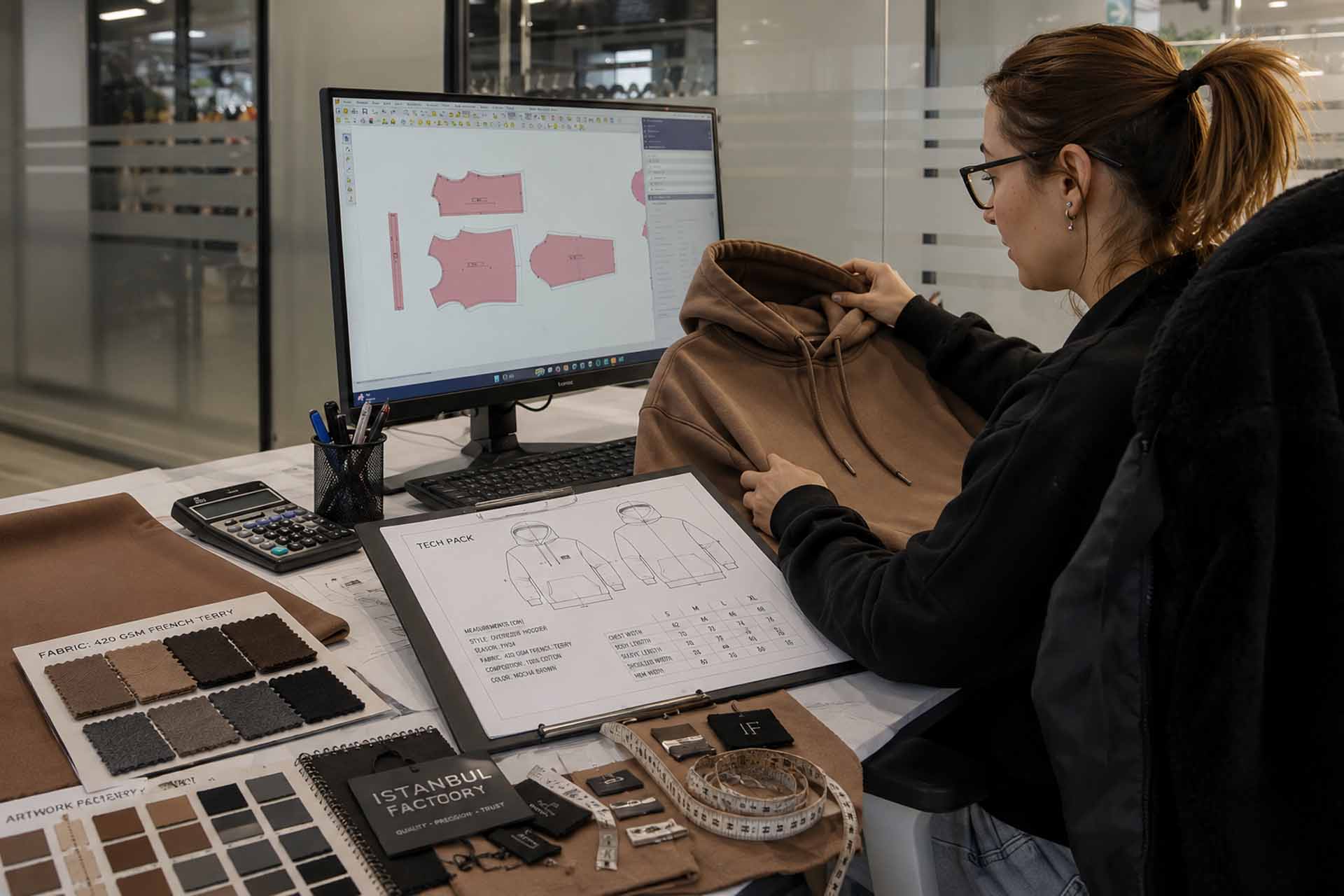
A professional sampling process may include:
- Prototype samples
- Fit samples
- Size set samples
- Pre-production samples
- Approval samples
- Fabric and trim tests
- Print and embroidery tests
- Measurement reviews
- Construction corrections
Each sample has a different role. Some are used to check the concept. Others are used to confirm the fit. Some are created close to the final production standard so the brand can approve the garment before bulk manufacturing starts.
Why Garment Samples Matter Before Bulk Production
Skipping or rushing sampling may look faster at first, but it often creates bigger problems later. Bulk production leaves little room for guessing. Once fabric is cut and garments are assembled, changes become expensive, slow, and sometimes impossible.
A garment sample helps brands answer important questions before production:
- Does the garment fit the target customer?
- Is the fabric suitable for the design?
- Are the measurements correct?
- Does the print or embroidery sit in the right position?
- Are the seams, cuffs, collars, hems, pockets, and trims properly constructed?
- Does the garment feel premium enough for the brand’s price point?
- Can the design be produced consistently in bulk?
For fashion brands selling in the US or Europe, these details directly affect customer satisfaction, return rates, brand perception, and repeat orders. A hoodie that looks good in a mockup may feel too short in real life. A T-shirt fabric may shrink more than expected. A pocket may sit too low. Embroidery may need a stronger backing. These issues are much easier to fix during sampling than after production.
The Main Types of Garment Samples
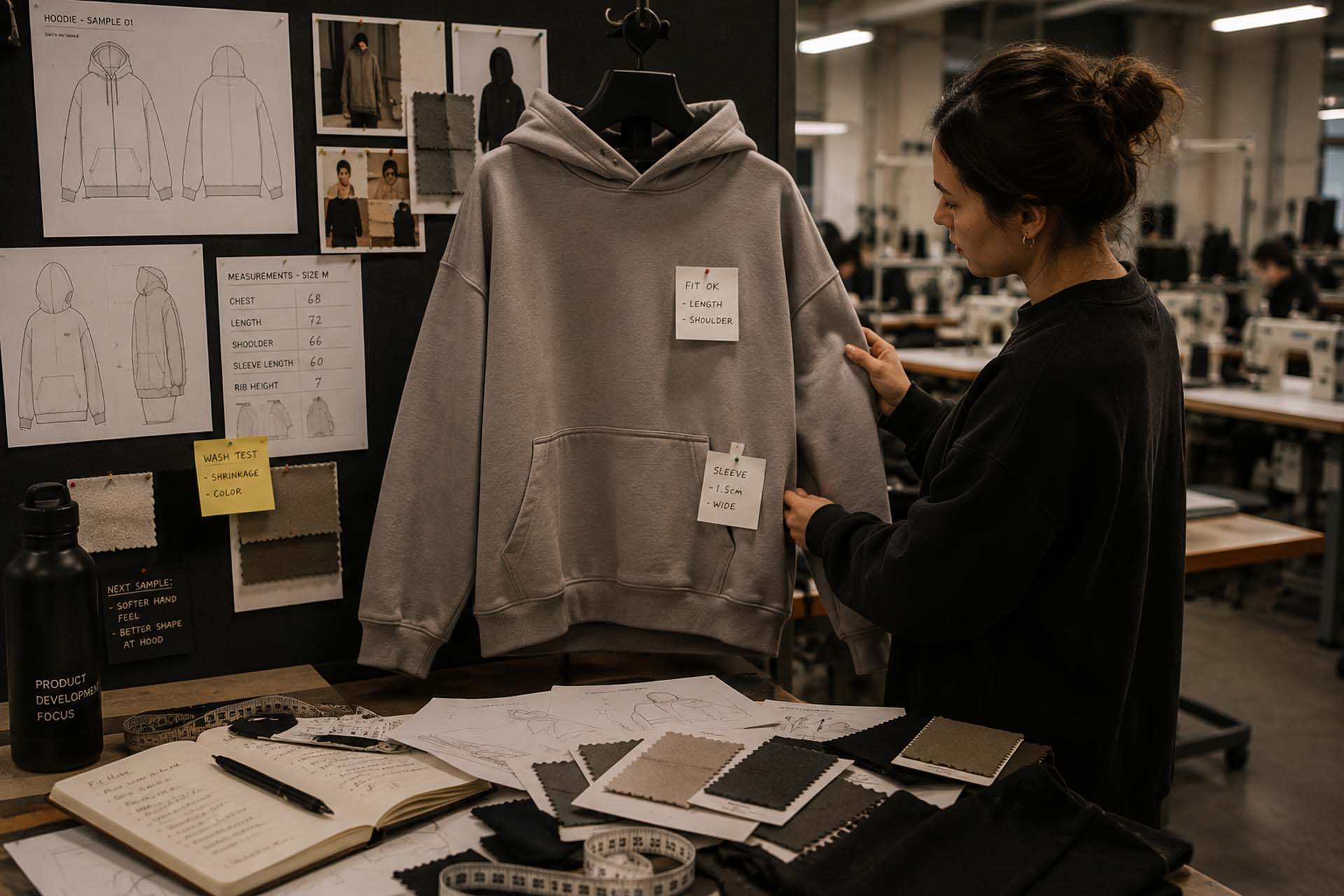
Garment sampling is not a single step. Depending on the product and the level of complexity, a brand may need different sample types before bulk production.
1. Prototype Sample
A prototype sample is usually the first physical version of the garment. It turns the design idea into a real product that can be touched, worn, measured, and reviewed.
At this stage, the sample may not be perfect. The purpose is to test the basic idea. For example, if a brand is developing a streetwear jacket, the prototype helps confirm the general silhouette, pocket placement, fabric weight, and construction approach.
A prototype sample is useful when:
- The design is new or custom
- The brand is testing a fresh silhouette
- The product has special details
- The design needs technical development
- The brand wants to compare fabric or finishing options
For startup brands, the prototype sample often reveals things that were not obvious in the sketch or tech pack. The sleeve may need more volume. The waistband may need better tension. The hood may need more structure. These findings are normal and are part of the product development process.
2. Fit Sample
A fit sample focuses on how the garment sits on the body. It is used to review measurements, proportions, comfort, and movement.
Fit is especially important in categories such as:
- Hoodies
- Sweatpants
- T-shirts
- Oversized streetwear
- Jackets
- Woven shirts
- Dresses
- Activewear
- Premium basics
A fit sample helps the brand and manufacturer check areas such as shoulder width, body length, sleeve length, chest width, armhole depth, waist position, rise, inseam, and overall balance.
For streetwear brands, fit can be part of the identity of the product. An oversized hoodie should feel intentionally oversized, not simply too large. A cropped sweatshirt should look balanced, not accidentally short. A premium T-shirt should sit cleanly on the body without twisting or pulling.
This is why a professional garment sampling service must look beyond the numbers. Measurements matter, but fit also depends on fabric weight, stretch, washing, pattern shape, and how the garment behaves when worn.
3. Size Set Sample
A size set sample is created to check how the garment fits across different sizes. Instead of approving only one sample size, the brand reviews several sizes from the size range.
For example, a brand may approve a hoodie in size M, then request size set samples in S, M, L, and XL. This helps confirm that the grading works correctly across the collection.
Size set samples are important because a garment can look good in one size and still have problems in other sizes. The sleeve may become too long in larger sizes. The body may become too wide. The neckline may lose proportion. Pants may need better grading between waist, hip, and length.
A size set sample helps brands avoid inconsistent sizing, one of the most common reasons for returns in online fashion.
4. Pre-Production Sample
A pre-production sample, often called a PPS, is one of the most important samples before bulk production. It should be made as close as possible to the final approved product.
This sample usually includes the confirmed:
- Fabric
- Color
- Measurements
- Construction
- Print or embroidery
- Labels
- Trims
- Washing or finishing
- Packaging details, if relevant
The pre-production sample acts as a final reference for the factory and the brand. Once approved, it becomes the standard that bulk production should follow.
For B2B fashion brands, this sample is a quality checkpoint. It reduces misunderstandings and gives both sides a shared physical reference before production begins.
5. Approval Sample
An approval sample is the sample that the brand signs off before production moves forward. In many cases, the approval sample may be the final pre-production sample.
The approval sample confirms that the brand accepts the garment’s design, measurements, materials, finishing, and branding details. After this point, any requested changes may affect pricing, lead time, or production planning.
Approval should be handled carefully. Brands should review the sample in detail, not only visually. It is useful to check:
- Measurements against the tech pack
- Fabric hand feel and weight
- Color accuracy
- Stitching quality
- Print or embroidery placement
- Label placement
- Fit on body or mannequin
- Washing behavior, if applicable
- Overall finish and brand alignment
A clear approval process protects both the brand and the manufacturer.
What Should Be Checked During Garment Sampling?
A good sampling process is practical and detailed. It should cover both creative and technical points.
Fabric Performance
Fabric choice affects almost every part of the garment. Weight, stretch, shrinkage, drape, texture, and hand feel all influence the final result.
For example, a 420 GSM fleece hoodie will behave differently from a lighter French terry hoodie. A cotton-elastane T-shirt will fit differently from a 100% cotton jersey. Woven fabrics may require different seam construction than knits.
During sampling, the fabric should be checked for:
- Weight and thickness
- Stretch and recovery
- Shrinkage risk
- Softness and hand feel
- Color consistency
- Suitability for print or embroidery
- Durability for the intended product
Measurements and Fit
Measurements must be reviewed carefully against the tech pack or agreed size chart. Small differences can affect the final look, especially in premium garments.
Important measurement areas may include:
- Chest width
- Body length
- Shoulder width
- Sleeve length
- Neck opening
- Waist width
- Hip width
- Inseam
- Rise
- Rib length
- Hem width
Fit should also be checked on a real body or fit model when possible. A garment can match flat measurements and still need adjustment when worn.
Construction Quality
Construction details influence durability and perceived value. Poor stitching, weak seams, uneven hems, or careless finishing can make a product feel lower quality even if the fabric is good.
Sampling allows the factory and brand to review:
- Seam strength
- Stitch type
- Hem finish
- Collar construction
- Cuff and rib quality
- Pocket placement
- Zipper or button attachment
- Inside finishing
- Overall workmanship
For premium fashion labels, these details are part of the customer experience.
Print and Embroidery Placement
Print and embroidery often define the identity of a streetwear or private label collection. Sampling helps confirm whether the artwork works on the real garment.
Things to check include:
- Artwork size
- Placement on the garment
- Color accuracy
- Embroidery density
- Thread quality
- Print technique
- Wash resistance
- Backing and stability
- Alignment with seams or panels
A chest logo that looks balanced on a digital mockup may need adjustment when placed on a real hoodie. A large back print may need testing to avoid cracking, stiffness, or poor hand feel.
Labels, Trims, and Branding
Branding details should be tested before bulk production. Neck labels, care labels, hangtags, drawstrings, buttons, zipper pulls, and packaging all contribute to the final product.
Sampling helps confirm:
- Label size
- Label placement
- Stitching method
- Care label content
- Trim quality
- Color matching
- Packaging presentation
- Brand consistency
For private label production, this stage is especially important because the product must feel like it belongs fully to the brand.
Practical Example: Sampling an Oversized Hoodie
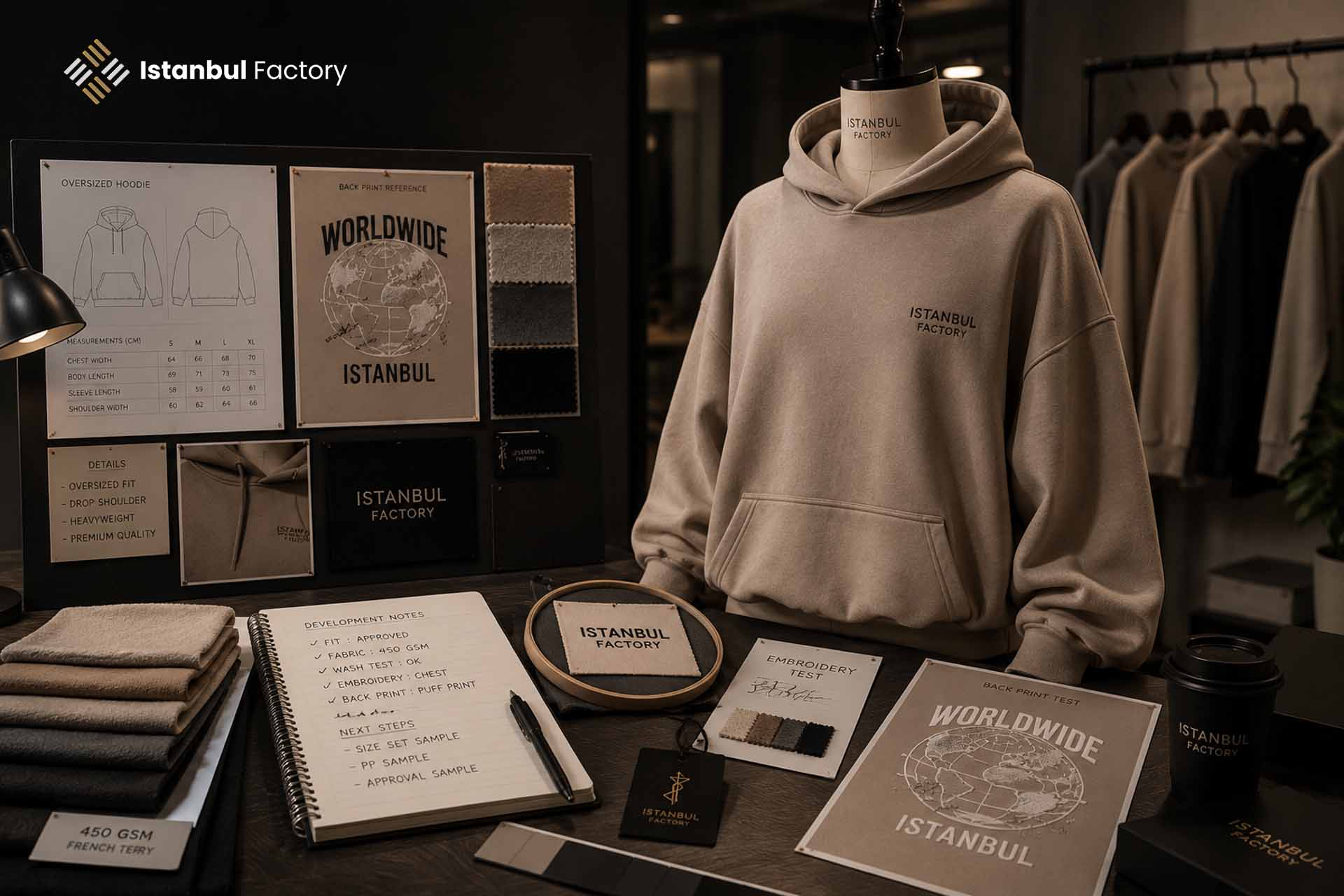
Imagine a European streetwear brand wants to produce an oversized hoodie with a boxy fit, dropped shoulders, heavyweight fleece, puff print on the back, embroidery on the chest, and a custom neck label.
The sampling process may look like this:
- The brand sends references, measurements, artwork, and fabric preferences.
- The manufacturer reviews the tech pack and suggests suitable fabric options.
- A prototype sample is created to test the silhouette.
- The brand reviews the fit and requests a slightly shorter body and wider sleeve.
- A fit sample is made with updated measurements.
- Print and embroidery tests are checked for placement and quality.
- A pre-production sample is created with final fabric, trims, labels, and artwork.
- The brand approves the final sample before bulk production.
This process may take more time than going directly to production, but it greatly reduces the risk of receiving hundreds of garments with the wrong fit, print placement, or finish.
How Sampling Supports Better Bulk Production
Sampling is not separate from production. It prepares production.
When a sample is properly approved, the factory has a clear reference for:
- Pattern
- Measurements
- Fabric
- Sewing method
- Finishing
- Print or embroidery placement
- Labeling
- Packaging
- Quality control standards
This makes bulk production more consistent. It also helps the quality control team compare finished garments against the approved sample.
For brands working internationally, this is essential. A written tech pack is important, but a physical approved sample gives everyone a clearer standard.
Common Sampling Mistakes Fashion Brands Should Avoid
Many sampling problems happen because the early information is incomplete or decisions change too late.
Here are common mistakes to avoid:
Sending Only a Moodboard
A moodboard is useful for direction, but it is not enough for production. Manufacturers need measurements, fabric details, construction references, artwork files, label details, and expected finishing.
Approving a Sample Too Quickly
A sample should be checked carefully. Brands should measure it, try it on, inspect details, and compare it with the original design intention.
Changing Fabric After Fit Approval
Changing fabric can change the fit. A garment approved in one fabric may behave differently in another. If fabric changes, another sample may be needed.
Ignoring Shrinkage
Some fabrics shrink after washing. If this is not considered, the final garment may become smaller than expected after use.
Treating Sampling as a Cost Instead of Protection
Sampling has a cost, but production mistakes cost far more. A sample protects the brand’s investment before bulk production begins.
Why Istanbul and Turkey Are Strong for Garment Sampling
Istanbul has a long textile and apparel manufacturing culture, supported by fabric suppliers, pattern makers, print houses, embroidery workshops, washing facilities, and experienced production teams.
For US and European brands, Turkey offers several advantages during sampling and production:
- Strong textile know-how
- Access to a wide range of fabrics
- Shorter distance to Europe compared with Asia
- Flexible manufacturing capabilities
- Experience with premium and streetwear production
- Faster communication between sourcing, sampling, and production teams
- Established export experience
This ecosystem is especially useful during the sampling stage. When fabric, trims, pattern development, print, embroidery, and production are close to each other, adjustments can often be handled more efficiently.
For brands developing private label clothing, streetwear, premium basics, or custom garments, Istanbul can offer a practical balance between quality, speed, and manufacturing experience.
Istanbul Factory’s Approach to Garment Sampling
Istanbul Factory works with fashion brands that need a production partner capable of supporting the process from idea to bulk manufacturing.
Our garment sampling service is designed to help brands refine the product before production starts. Depending on the project, this may include support with:
- Tech pack review
- Fabric selection and consultancy
- Pattern development
- Prototype samples
- Fit samples
- Size set samples
- Pre-production samples
- Print and embroidery testing
- Label and branding placement
- Quality control preparation
- Bulk production planning
The process is collaborative. Some brands come with complete tech packs and clear specifications. Others need guidance to turn an idea into a production-ready garment. In both cases, the sampling stage helps build a stronger foundation for manufacturing.
What Brands Should Prepare Before Requesting a Sample
To make the sampling process smoother, brands should prepare as much information as possible before contacting a manufacturer.
Useful materials include:
- Design sketches or reference images
- Tech pack, if available
- Size chart or target measurements
- Fabric preferences
- Color references
- Artwork files for print or embroidery
- Label and trim details
- Quantity expectations
- Target price range
- Desired production timeline
- Packaging requirements
A complete brief helps the manufacturer understand the product faster and provide more accurate guidance.
If a brand does not have a full tech pack yet, it can still begin the discussion. A professional manufacturing partner can explain what is missing and what needs to be developed before sampling.
How Many Samples Does a Brand Need?
There is no single answer. The number of samples depends on the product’s complexity, the quality expectations, and how many changes are needed.
A simple T-shirt with standard fit may need fewer sampling rounds. A custom hoodie with special washing, embroidery, oversized fit, and branded trims may need more development.
As a general guide:
- Simple products may need one or two samples
- Custom products may need several revisions
- New silhouettes often need fit development
- Complex garments may require prototype, fit, and pre-production samples
- Size set samples are useful before larger orders
The goal is not to create endless samples. The goal is to reach a clear, approved standard before bulk production.
Garment Sampling and B2B Trust
For fashion brands, sampling is also a trust-building stage. It shows how the manufacturer communicates, solves problems, handles details, and responds to feedback.
A strong sampling process gives brands a clearer idea of what to expect during production. It also helps both sides build a working rhythm before a larger order begins.
For manufacturers, sampling shows whether the brand’s expectations are realistic, whether the design is production-ready, and whether the project can be executed properly.
This is why sampling should be treated as a serious part of the business relationship, not just a technical step.
Start Your Garment Sampling Process with Istanbul Factory
If your brand is preparing for bulk production, the sample is the right place to begin.
Istanbul Factory supports fashion brands, streetwear labels, startups, and premium clothing companies with garment sampling, fabric sourcing, private label production, print and embroidery, quality control, and full-scale clothing manufacturing in Istanbul, Turkey.
Whether you are developing a hoodie, T-shirt, sweatshirt, sweatpants, jacket, or a complete private label collection, our team can help you move from concept to approved sample and from approved sample to bulk production.
Contact Istanbul Factory to discuss your garment sampling service and prepare your collection for production with confidence.
FAQ
What is a garment sampling service?
A garment sampling service is the process of creating sample garments before bulk production. It helps fashion brands test fit, fabric, construction, measurements, branding details, print, embroidery, and overall product quality before manufacturing larger quantities.
Why is garment sampling important before bulk production?
Garment sampling helps identify design, fit, fabric, construction, and quality issues before bulk production begins. This reduces the risk of expensive mistakes and gives the brand and manufacturer a clear approved reference for production.
What is the difference between a prototype sample and a fit sample?
A prototype sample is usually the first physical version of a design and is used to test the concept. A fit sample focuses more specifically on measurements, proportions, comfort, and how the garment sits on the body.
What is a size set sample?
A size set sample is a group of samples made in different sizes to check how the garment fits across the full size range. It helps confirm that grading, proportions, sleeve length, body width, waist, hip, and other measurements remain balanced from one size to another.
What is a pre-production sample?
A pre-production sample is a final sample made as close as possible to the approved bulk production standard. It usually includes the confirmed fabric, color, measurements, construction, labels, trims, print, embroidery, and finishing.
How many samples are needed before clothing production?
The number of samples depends on the product. A simple garment may need one or two samples, while a custom or premium garment may need prototype, fit, size set, and pre-production samples before approval.
Can garment sampling reduce production mistakes?
Yes. Garment sampling reduces production mistakes by allowing the brand and manufacturer to review the product before bulk manufacturing starts. It helps detect fit issues, fabric problems, incorrect measurements, print placement errors, and construction details early.
Does Istanbul Factory offer garment sampling for private label brands?
Yes. Istanbul Factory offers garment sampling support for private label brands, streetwear labels, startup clothing brands, and established fashion companies. The process can include fabric sourcing, pattern development, prototype samples, fit samples, print and embroidery testing, and pre-production samples.


4 Comments