

Choosing a sustainable clothing manufacturer is no longer a branding detail. For many fashion brands, it has become part of product quality, customer trust, investor confidence, and long-term supply chain stability.
Customers are asking where garments come from. Retailers are requesting clearer documentation. European and US brands are paying closer attention to materials, labor conditions, chemical safety, packaging, production waste, and traceability.
At the same time, sustainability can easily become confusing. Many manufacturers use words like “eco-friendly,” “green,” or “responsible” without explaining what those claims mean in practice.
For a fashion brand, the real question is simple:
Can this manufacturer help us produce better garments with responsible materials, ethical processes, consistent quality, and transparent communication?
This guide explains what brands should look for when choosing a sustainable clothing manufacturer, especially if they are developing private label collections, streetwear, premium basics, or custom fashion products.
What Is a Sustainable Clothing Manufacturer?

A sustainable clothing manufacturer is a production partner that reduces negative environmental and social impact across the garment production process.
That includes more than using organic cotton or recycled fabrics. A serious sustainable manufacturer looks at the full production chain:
- Fabric sourcing
- Yarn and material composition
- Dyeing and finishing processes
- Cutting and sewing efficiency
- Waste control
- Labor standards
- Quality management
- Packaging choices
- Documentation and traceability
- Long-term durability of the final product
For fashion brands, sustainability should not be treated as a separate marketing feature. It should be built into the way the garment is designed, sourced, sampled, produced, inspected, packed, and delivered.
A manufacturer that understands this can help brands avoid vague claims and build collections with real substance.
Why Sustainability Matters for Fashion Brands
Sustainability matters because the fashion market has changed.
A few years ago, many brands focused mainly on style, price, and speed. Those factors still matter, but they are no longer enough. Buyers, retailers, and consumers now expect stronger answers about how clothing is made.
For US and European fashion brands, sustainability can influence:
- Brand reputation
- Retail partnerships
- Customer loyalty
- Product pricing
- Compliance expectations
- Long-term supplier relationships
- Investor and wholesale confidence
A sustainable approach also supports better product decisions. When a brand chooses stronger fabrics, reliable stitching, responsible finishing, and controlled production, the result is often a garment that lasts longer and feels better.
That is where sustainability and premium manufacturing naturally meet.

Responsible Fabric Sourcing Comes First
Fabric is usually the most important sustainability decision in clothing production.
Before a garment reaches the cutting table, many environmental and quality choices have already been made through the selected fabric. Fiber content, weight, dyeing method, finishing treatment, shrinkage behavior, and durability all affect the final product.
A good sustainable clothing manufacturer should help your brand evaluate fabrics based on both creative and technical needs.
Key Fabric Questions Brands Should Ask
Before confirming a fabric, ask:
- What is the fiber composition?
- Is the cotton organic, conventional, recycled, or Better Cotton sourced?
- Is the polyester recycled or virgin?
- Is the fabric certified?
- What is the GSM?
- Is the fabric suitable for the intended garment?
- How does it behave after washing?
- Is it available consistently for bulk production?
- Can the supplier provide documentation?
- What are the minimum order quantities?
For example, a heavyweight hoodie made from organic cotton French terry may communicate premium quality and responsibility. A recycled polyester blend may be suitable for certain performance or outerwear products. A streetwear brand may need a specific hand feel, structure, and shrinkage control that fits both sustainability and brand identity.
The best fabric choice is not always the one that sounds most sustainable on paper. It is the one that fits the garment, performs well, can be sourced responsibly, and supports a realistic production plan.
Organic Cotton: What Brands Should Understand

Organic cotton is one of the most recognized materials in sustainable fashion. It is grown without synthetic pesticides and fertilizers commonly used in conventional cotton farming, and it is often preferred by brands that want a natural fiber story.
For fashion brands, organic cotton can be especially useful for:
- T-shirts
- Hoodies
- Sweatshirts
- Sweatpants
- Babywear
- Premium basics
- Lifestyle collections
- Minimalist streetwear
However, brands should be careful with claims. Saying “organic cotton” is stronger when supported by proper documentation, supplier transparency, and relevant certification.
A responsible manufacturer should be able to explain what type of organic cotton is available, whether certification is possible, and how that affects cost, lead time, and minimum order quantity.
Practical Example
A startup streetwear brand may want a 450 GSM oversized hoodie made from organic cotton fleece. The manufacturer should not simply say “yes.” A strong partner will check fabric availability, shrinkage behavior, color options, dyeing requirements, stitching stability, and whether the fabric can be used consistently across future restocks.
That level of technical thinking protects the brand from production surprises later.
Recycled Textiles and Recycled Fibers
Recycled textiles are another important part of sustainable clothing production. They can include recycled polyester, recycled cotton, recycled nylon, or blended fabrics containing recycled content.
Recycled fibers can help reduce dependence on virgin materials, but they also require careful handling. Not every recycled fabric is suitable for every garment.
For example:
- Recycled polyester can work well in outerwear, sportswear, linings, and some technical garments.
- Recycled cotton may be useful in jersey, fleece, denim, or blended fabrics, depending on quality.
- Recycled nylon can be relevant for jackets, bags, trims, and performance products.
The main challenge is consistency. Recycled materials can vary in hand feel, color absorption, tensile strength, and availability. A sustainable clothing manufacturer should help your brand test the fabric properly before bulk production.
What to Check with Recycled Materials
Brands should ask for:
- Recycled content percentage
- Certification or supplier documentation
- Fabric test results where available
- Color consistency
- Shrinkage results
- Pilling performance
- Suitability for print or embroidery
- Long-term availability
For premium brands, recycled fabric should still feel premium. Sustainability should support product quality, not weaken it.
Ethical Production Is Part of Sustainability
Sustainability is not only about materials. A garment made from organic cotton loses credibility if it is produced under poor labor conditions.
A responsible clothing manufacturer should operate with professional production standards, safe working conditions, fair treatment of workers, and clear internal processes.
For fashion brands, ethical production includes:
- Safe and organized production facilities
- Skilled workers
- Reasonable production timelines
- Transparent communication
- Quality control at each stage
- No unauthorized subcontracting
- Clear production planning
- Respect for agreed specifications
This matters especially for brands selling in Europe and the United States, where consumers and retailers are more sensitive to labor conditions and supply chain responsibility.
A trustworthy manufacturer should be comfortable discussing how production is managed, where garments are made, and how quality is controlled.
Waste Reduction in Garment Manufacturing
Waste reduction is one of the clearest signs of a serious sustainable manufacturer.
Garment production naturally creates waste through sampling, cutting, fabric leftovers, rejected pieces, packaging, and overproduction. The goal is not to pretend waste does not exist. The goal is to manage it intelligently.
A sustainable clothing manufacturer may reduce waste through:
- Accurate pattern making
- Efficient marker planning
- Careful fabric cutting
- Controlled sampling
- Better size grading
- Quality checks before bulk production
- Reuse or recycling of fabric leftovers where possible
- Avoiding unnecessary overproduction
- Producing according to realistic demand
For startup brands, this is especially important. Poor planning can lead to excess inventory, unsold products, and wasted budget.
A better approach is to develop the collection carefully, confirm the fit and fabric through sampling, and move into bulk production with clear specifications.
Certifications: Helpful, But Not the Whole Story
Certifications can help verify sustainability claims, but they should not be treated as the only proof of responsibility.
Common textile-related certifications and standards may relate to:
- Organic fibers
- Recycled content
- Harmful substance testing
- Chemical management
- Social responsibility
- Traceability
- Environmental processing standards
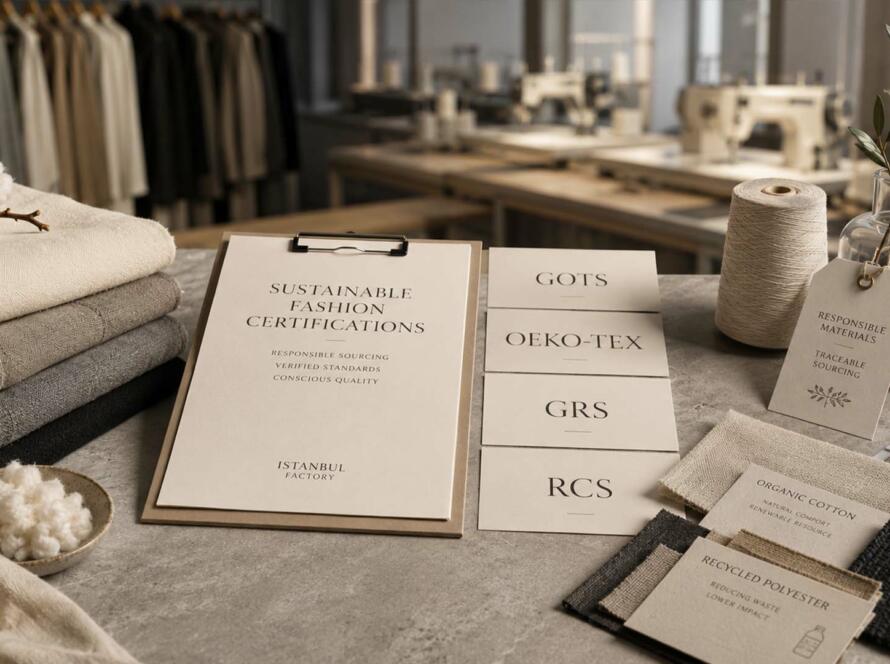
For example, brands may hear about GOTS, OEKO-TEX, GRS, OCS, RCS, Better Cotton, and other systems. Each one covers different parts of the supply chain, so it is important to understand what a certification actually proves.
Questions to Ask About Certifications
When speaking with a manufacturer, ask:
- Which certifications are available for this fabric or process?
- Does the certification apply to the fabric, the facility, or the final garment?
- Can documentation be provided?
- Is the claim valid for this specific order?
- Will certification affect MOQ, price, or lead time?
- Can the certificate be verified?
A serious sustainable clothing manufacturer will not overpromise. Instead, they will clarify what is possible and what needs to be confirmed with fabric mills, suppliers, or certification bodies.
Transparent Supply Chains Build Trust
Transparency is one of the strongest signs of a reliable manufacturing partner.
For fashion brands, transparency means knowing how decisions are made and where risks may appear. It does not always mean publishing every supplier name publicly. It means the manufacturer can explain the supply chain clearly and provide the right documentation when needed.
A transparent manufacturer should help you understand:
- Where fabrics are sourced
- Which materials are available
- What certifications apply
- How production is scheduled
- How quality control is managed
- What the realistic lead time is
- What risks may affect production
- How changes will be communicated
This is especially important for private label and custom clothing production. When a brand is developing its own products, small production choices can affect the final garment significantly.
Transparent communication reduces mistakes and creates better long-term partnerships.
Sustainable Sampling and Product Development
Sampling is one of the most important stages in sustainable clothing production.
A weak sampling process creates waste, delays, confusion, and poor final results. A strong sampling process helps the brand make better decisions before investing in bulk production.
During sampling, the manufacturer should test:
- Fit
- Fabric behavior
- Shrinkage
- Stitching quality
- Print placement
- Embroidery details
- Label positioning
- Garment measurements
- Washing or finishing effects
- Overall product feel
For a sustainable clothing manufacturer, sampling should not be rushed. It should be precise, documented, and connected to the final production plan.
Practical Example
A premium fashion brand may want a washed oversized T-shirt with a soft vintage feel. The manufacturer should test the fabric, wash effect, neck rib stability, print reaction, and final measurement changes before bulk production.
Without this step, the brand may approve a beautiful sample that becomes inconsistent in production. Sustainable manufacturing means reducing avoidable errors before they become waste.
Quality Control Supports Sustainability
Quality control is often overlooked in sustainability discussions, but it is directly connected.
Poor quality creates returns, waste, customer complaints, and damaged brand trust. A garment that falls apart quickly is not sustainable, even if the fabric has a responsible story.
A strong quality control process should include:
- Fabric inspection
- Measurement checks
- Stitching control
- Print and embroidery inspection
- Color consistency review
- Label and packaging checks
- Final garment inspection before shipment
For fashion brands, quality control should be built into the production process, not added at the end as a formality.
Premium sustainable clothing should feel good, fit correctly, wash well, and represent the brand consistently.
Why Turkey and Istanbul Matter for Sustainable Fashion Production
Turkey has become an important production destination for fashion brands that want quality, speed, flexibility, and proximity to Europe.
For European brands, Istanbul offers a practical advantage: it is geographically close, connected to strong textile supply chains, and experienced in apparel production. Compared with distant manufacturing destinations, Turkey can often support faster communication, shorter logistics routes, and more flexible production development.
Istanbul is especially relevant because it combines:
- Textile industry experience
- Fabric sourcing networks
- Skilled garment production
- Print and embroidery capabilities
- Sampling expertise
- Export experience
- Access to European markets
- Modern fashion manufacturing knowledge
For US brands, Turkey can also be attractive when quality, product development, and supplier communication are more important than simply finding the lowest production cost.
A sustainable clothing manufacturer in Istanbul can support brands that need responsible production without losing the premium feel of the product.
What Fashion Brands Should Look For in a Sustainable Clothing Manufacturer
When evaluating a manufacturer, brands should look beyond the website and sales pitch. The right partner should be able to discuss real production details.
1. Material Knowledge
The manufacturer should understand fabrics, weights, blends, shrinkage, finishing, and garment performance.
A supplier that only says “we can do everything” may not be the safest choice. You want a partner who can explain what works, what does not, and why.
2. Clear MOQ Structure
Sustainable production still needs realistic quantities. Fabric mills, dye houses, printing units, and sewing lines all have minimums.
A professional manufacturer should explain MOQ clearly by style, color, fabric, and production method.
3. Sampling Discipline
Good sampling saves money and reduces waste. Look for a partner that treats samples as technical development, not just a quick preview.
4. Documentation
Ask about fabric details, certifications, care labels, composition, production notes, and quality control records.
Documentation helps brands make accurate claims and avoid confusion.
5. Ethical Production Standards
The manufacturer should be transparent about production conditions and how garments are made.
6. Quality Control
Sustainable fashion needs durable products. Quality control should be part of the conversation from the first sample.
7. Communication
Good communication prevents costly mistakes. A reliable manufacturer should respond clearly, explain limitations, and guide the brand through production decisions.
Common Mistakes Brands Make When Choosing a Sustainable Manufacturer
Many brands want to become more sustainable, but they approach production with unrealistic expectations.
Here are common mistakes to avoid:
- Choosing fabric only because it sounds sustainable
- Ignoring MOQ and lead time realities
- Asking for certification too late
- Skipping proper sampling
- Making broad sustainability claims without documentation
- Prioritizing the cheapest supplier
- Changing product details after production starts
- Underestimating shrinkage, washing, and finishing effects
- Treating sustainability as a marketing line instead of a production system
A good manufacturer helps brands avoid these mistakes by giving practical, production-based guidance.
How Istanbul Factory Supports Sustainable Clothing Production
Istanbul Factory works with fashion brands, streetwear labels, startups, and established companies that need reliable garment production in Istanbul, Turkey.
As a fashion manufacturing partner, Istanbul Factory supports brands across the full production process, from concept development to bulk manufacturing.
Our services include:
- Clothing manufacturing
- Private label production
- Custom clothing manufacturing
- Fabric sourcing
- Garment sampling
- Print and embroidery
- Branding and labeling
- Quality control
- Sustainable textile production support
For brands focused on sustainability, Istanbul Factory helps connect creative direction with responsible production decisions. That includes fabric selection, realistic MOQ planning, product development, quality checks, and transparent communication throughout the manufacturing process.
The goal is not to use sustainability as a slogan. The goal is to help brands build garments that feel premium, perform well, and reflect a more responsible approach to fashion production.
Build Your Sustainable Collection with Istanbul Factory
If your brand is looking for a sustainable clothing manufacturer in Turkey, Istanbul Factory can help you develop and produce garments with quality, responsibility, and commercial clarity.
Whether you are creating premium streetwear, private label basics, custom apparel, or a full fashion collection, our team can guide you through fabric sourcing, sampling, production, print, embroidery, branding, and quality control.
Share your design direction, target quantity, fabric preferences, and product category with us. Istanbul Factory will help you understand what is possible, what is practical, and how to move from idea to production with confidence.
FAQ
What is a sustainable clothing manufacturer?
A sustainable clothing manufacturer is a production partner that reduces environmental and social impact through responsible fabric sourcing, ethical production, waste reduction, quality control, and transparent supply chain practices.
What should fashion brands ask a sustainable manufacturer?
Brands should ask about fabric sourcing, certifications, recycled or organic materials, MOQ, sampling process, labor standards, quality control, waste reduction, lead times, and documentation.
Is organic cotton always the best sustainable fabric?
Organic cotton can be a strong option, especially for T-shirts, hoodies, and premium basics. However, the best fabric depends on the product, performance needs, certification requirements, budget, and availability.
Are recycled textiles good for clothing production?
Recycled textiles can be useful for many garment categories, including outerwear, sportswear, streetwear, and blended fabrics. Brands should test quality, durability, color consistency, and certification before production.
Why is Turkey important for sustainable clothing manufacturing?
Turkey offers strong textile experience, fabric sourcing networks, skilled garment production, and close access to European markets. Istanbul is especially valuable for brands that need quality, communication, and flexible product development.
Does Istanbul Factory work with sustainable fashion brands?
Yes. Istanbul Factory works with fashion brands, streetwear labels, startups, and established companies looking for responsible clothing production, fabric sourcing, sampling, private label manufacturing, and quality control in Istanbul.
Can startup brands work with a sustainable clothing manufacturer?
Yes, but startup brands should understand MOQ, sampling costs, fabric availability, and production timelines before starting. A good manufacturer will help startups make realistic and responsible production decisions.
What certifications should sustainable clothing brands know?
Common textile certifications and standards include GOTS, OEKO-TEX, GRS, OCS, RCS, and Better Cotton. Each standard covers different parts of the supply chain, so brands should confirm what applies to their specific product.