


Choosing an organic cotton clothing manufacturer involves more than finding a factory that can sew cotton garments.
The cotton fibre must be sourced correctly, but brands must also consider spinning, knitting, dyeing, finishing, printing, garment production, labelling and supply-chain documentation. A garment made from organic cotton fibre is not automatically a fully certified organic textile product.
For fashion brands selling in Europe or the United States, this distinction matters. Customers, retailers and regulators increasingly expect sustainability claims to be clear, specific and supported by evidence.
A reliable manufacturing partner should therefore help you answer three questions before production begins:
- Where does the organic cotton come from?
- Which production stages are certified?
- What sustainability claims can the brand substantiate?
This guide explains what brands should verify when sourcing organic cotton clothing, how GOTS works, what production requirements may change and how to communicate sustainability without overpromising.
What Is Organic Cotton?
Organic cotton is cotton grown according to recognised organic agricultural standards.
These standards generally restrict the use of synthetic pesticides and fertilisers and require farms to follow approved organic production methods. The agricultural certification applies to the cotton crop and the raw fibre.
However, cotton passes through many additional stages before becoming a finished T-shirt, hoodie or sweatshirt:
- Ginning
- Spinning
- Knitting or weaving
- Dyeing
- Finishing
- Cutting
- Sewing
- Printing or embroidery
- Washing
- Labelling and packaging
This is why brands should distinguish between organic cotton fibre and a certified organic finished garment.
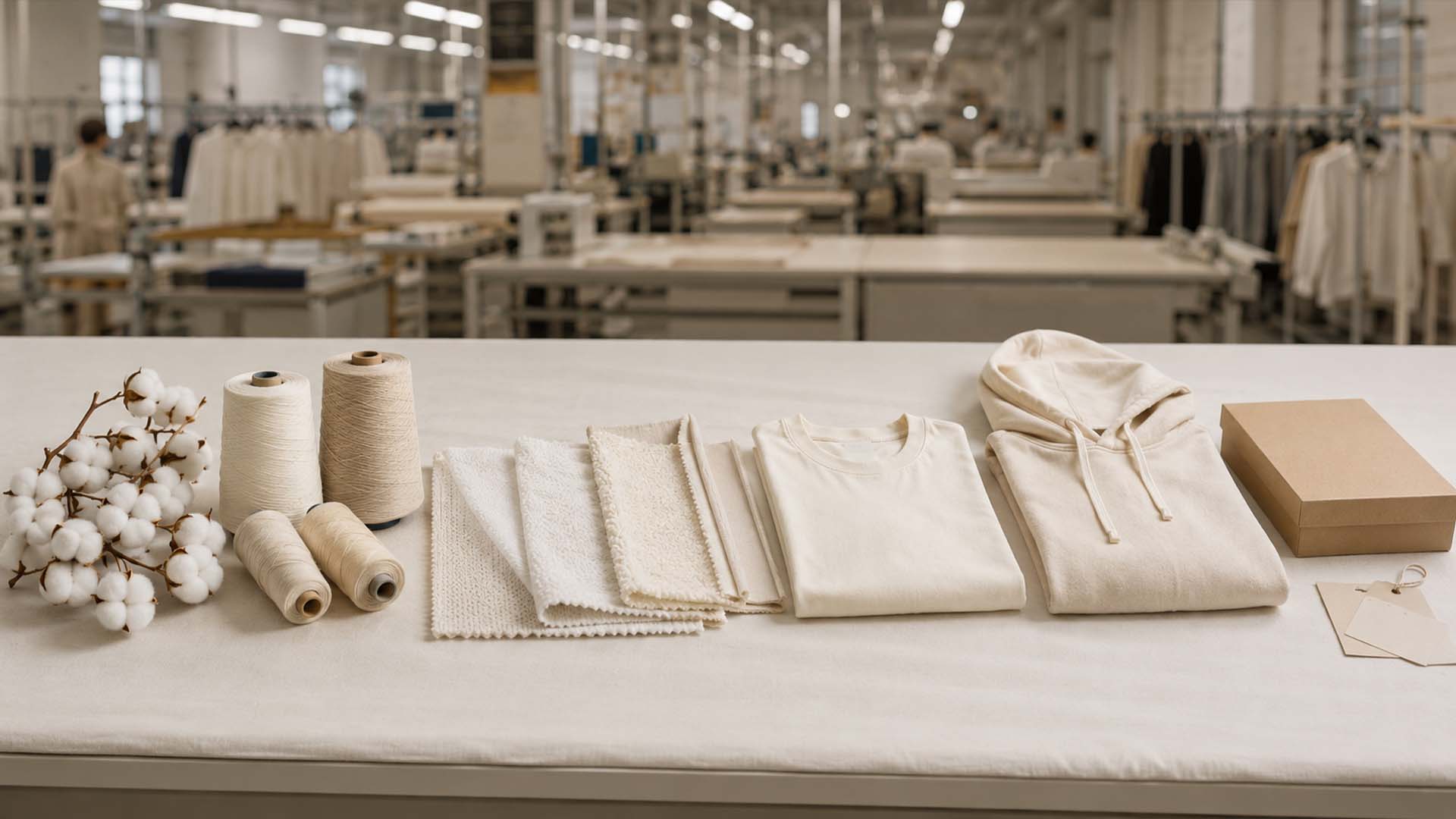
A supplier may offer fabric made with certified organic cotton, while the dye house, garment factory or printing facility is outside the relevant certification scope. The cotton content may still be organic, but the brand may not be entitled to market the finished product using a certification logo or broader certified-product claim.
Organic Cotton vs. 100% Cotton
“100% cotton” describes fibre composition. It does not explain how the cotton was grown.
A product labelled 100% cotton may contain:
- Conventional cotton
- Certified organic cotton
- Cotton in conversion to organic agriculture
- Recycled cotton
- A combination of cotton sources, depending on the applicable labelling rules
For this reason, searching for a 100% cotton clothing manufacturer is different from searching for an organic cotton specialist.
When requesting quotations, brands should specify the exact requirement:
“We require a 100% cotton single jersey made from certified organic cotton, with documentation suitable for our intended product claim.”
This is much clearer than requesting “sustainable cotton” or “eco-friendly fabric.”
The factory should then confirm the fibre standard, fabric certification, available documentation and whether the complete production chain can support the requested claim.
What Does GOTS Certification Cover?
The Global Organic Textile Standard, commonly known as GOTS, is a widely recognised processing standard for textiles made with certified organic fibres.
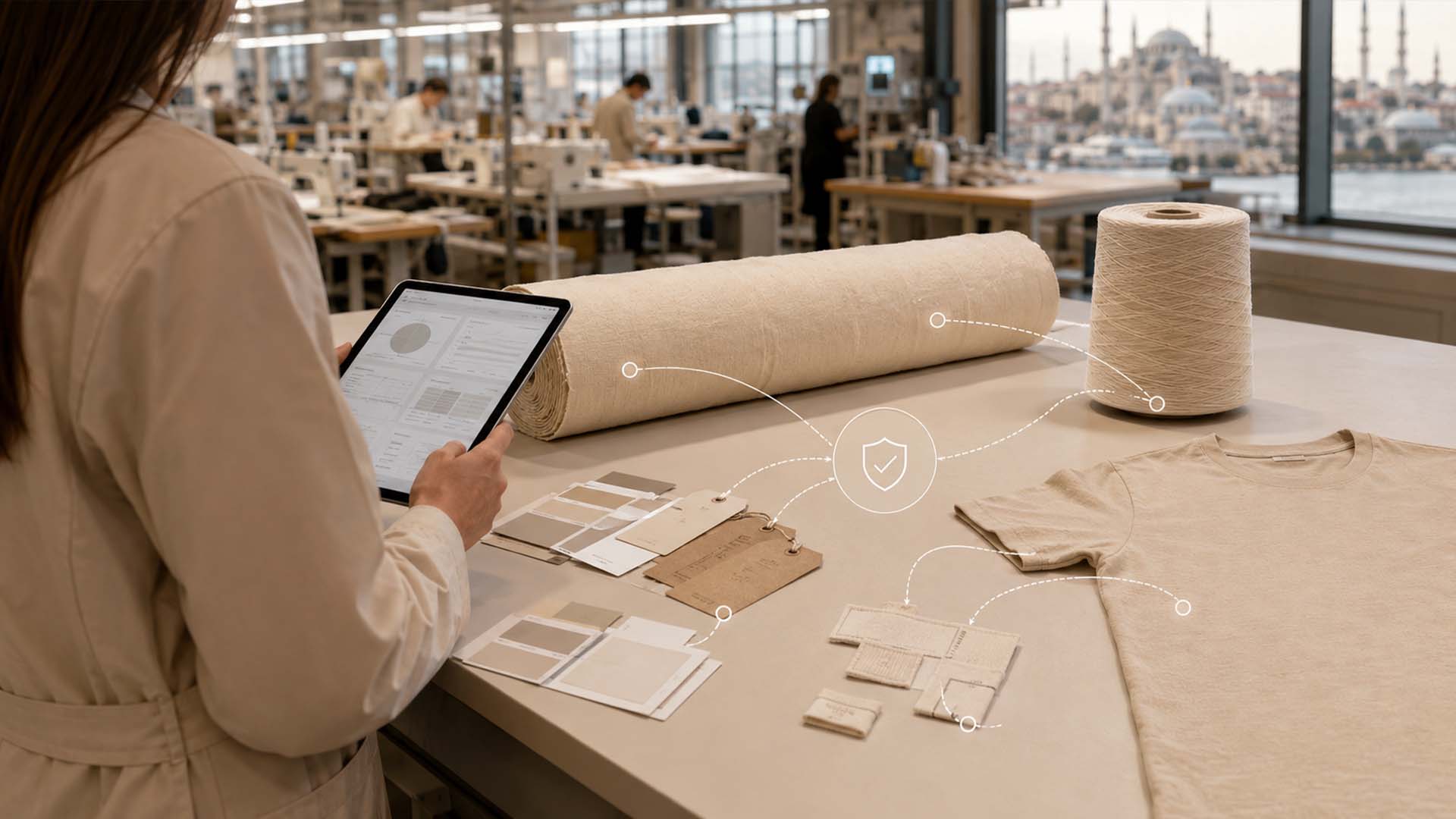
GOTS covers more than raw material content. Its scope can include processing, manufacturing, packaging, labelling, trading and distribution. It combines requirements for organic fibres with environmental criteria, chemical restrictions, social responsibility and independent certification throughout the textile supply chain.
This wider scope is one of the main differences between purchasing organic cotton fabric and producing a GOTS-certified finished garment.
The two main GOTS label grades
GOTS provides two main product label grades:
- Organic: At least 95% certified organic fibres
- Made with organic materials: At least 70% certified organic fibres
The remaining fibre content must also comply with the standard’s applicable requirements. A garment cannot carry a GOTS product label simply because one component contains organic cotton.
GOTS Version 8.0 was released in March 2026. Following its transition period, mandatory adherence to Version 8.0 begins on March 1, 2027. Brands planning certified collections should confirm which version applies to their production schedule with the relevant certification body.
GOTS certification is based on the supply chain
Certification is not limited to the final sewing factory.
Depending on the product and production route, relevant certified operations may include:
- Ginning
- Spinning
- Knitting or weaving
- Dyeing and finishing
- Printing
- Garment manufacturing
- Packing
- Trading or importing
The certification scope of each supplier should match the work it performs.
For example, a garment manufacturer may be certified for cutting, sewing and packing but not for dyeing. In that case, the dyeing facility must be appropriately covered if the finished product is intended to carry a GOTS label.
What Brands Should Ask an Organic Cotton Clothing Manufacturer
Before approving a supplier, request clear answers to the following questions.
1. Is the factory certified, or does it only source certified fabric?
These are not the same situation.
A non-certified factory may be able to manufacture garments using organic cotton fabric. However, this does not automatically make the finished garment GOTS-certified.
Ask for:
- The factory’s current scope certificate
- The certification body’s name
- The certificate validity dates
- The certified product categories
- The certified processing activities
- Confirmation that subcontractors are included where required
Certificate details should be checked against the official certified-supplier database rather than accepted only as a PDF sent by a salesperson.
2. Can the supplier provide transaction documentation?
A scope certificate shows that a company is certified for certain activities. It does not necessarily prove that a specific shipment contains certified material.
For certified production, brands may also need transaction documentation connecting the purchased fabric or garments to the relevant certified supply chain.
Discuss documentation before placing the order. Requesting it after the garments have shipped can cause delays or reveal that the original production route did not meet the intended certification requirements.
3. How is organic material separated?
Organic cotton yarns, fabrics and garments should be identified and managed carefully during storage and production.
A manufacturer should have procedures for:
- Incoming material checks
- Roll identification
- Batch tracking
- Separate storage or controlled segregation
- Cutting-room identification
- Bundle tracking
- Production-line records
- Packing and shipment records
This reduces the risk of mixing certified organic material with conventional fabric.
4. Which processes are subcontracted?
Many garment manufacturers work with external dye houses, laundries, printers or embroidery facilities.
Subcontracting is normal in the clothing industry, but it must be transparent. Brands should know which operations happen inside the main factory and which are completed by approved partners.
This is especially important for:
- Fabric dyeing
- Garment dyeing
- Enzyme washing
- Screen printing
- Digital printing
- Embroidery
- Special finishes
- Packaging
Organic Cotton Fabric Sourcing Requirements
Organic cotton sourcing begins with certification, but successful production still depends on technical fabric development.
Two organic cotton fabrics can perform very differently even when both have the same fibre composition.
Define the fabric construction
Your tech pack or material brief should specify:
- Fibre composition
- Fabric type
- Yarn count
- Fabric weight in GSM
- Knitting or weaving construction
- Width
- Stretch requirement
- Surface appearance
- Hand feel
- Colour
- Shrinkage tolerance
- Pilling requirement
- Colourfastness requirement
- Finishing process
For example, “100% organic cotton” is not enough information for an oversized streetwear T-shirt.
A more useful specification would be:
100% certified organic cotton, compact single jersey, 240 GSM, dry premium hand feel, low-twist appearance avoided, preshrunk, suitable for oversized T-shirts.
For a hoodie, the brand may require:
100% certified organic cotton French terry, 400 GSM, loopback interior, compact surface, structured hand feel and controlled shrinkage.
Confirm availability before designing the collection
Certified organic cotton fabrics may have:
- Higher minimum quantities
- Fewer stock colour options
- Longer yarn or fabric lead times
- Different price structures
- Limited availability in unusual GSM ranges
- Separate minimums for custom dyeing
Brands should therefore confirm fabric availability before finalising campaign dates, retail prices or collection launch plans.
A practical approach is to request several sourcing routes:
- Available certified stock fabric
- Custom-dyed certified fabric
- Custom-knitted fabric
- A non-certified organic-content option, when full product certification is not required
This allows the brand to compare cost, minimum order quantity, lead time and claim eligibility.
Dyeing and Finishing Organic Cotton
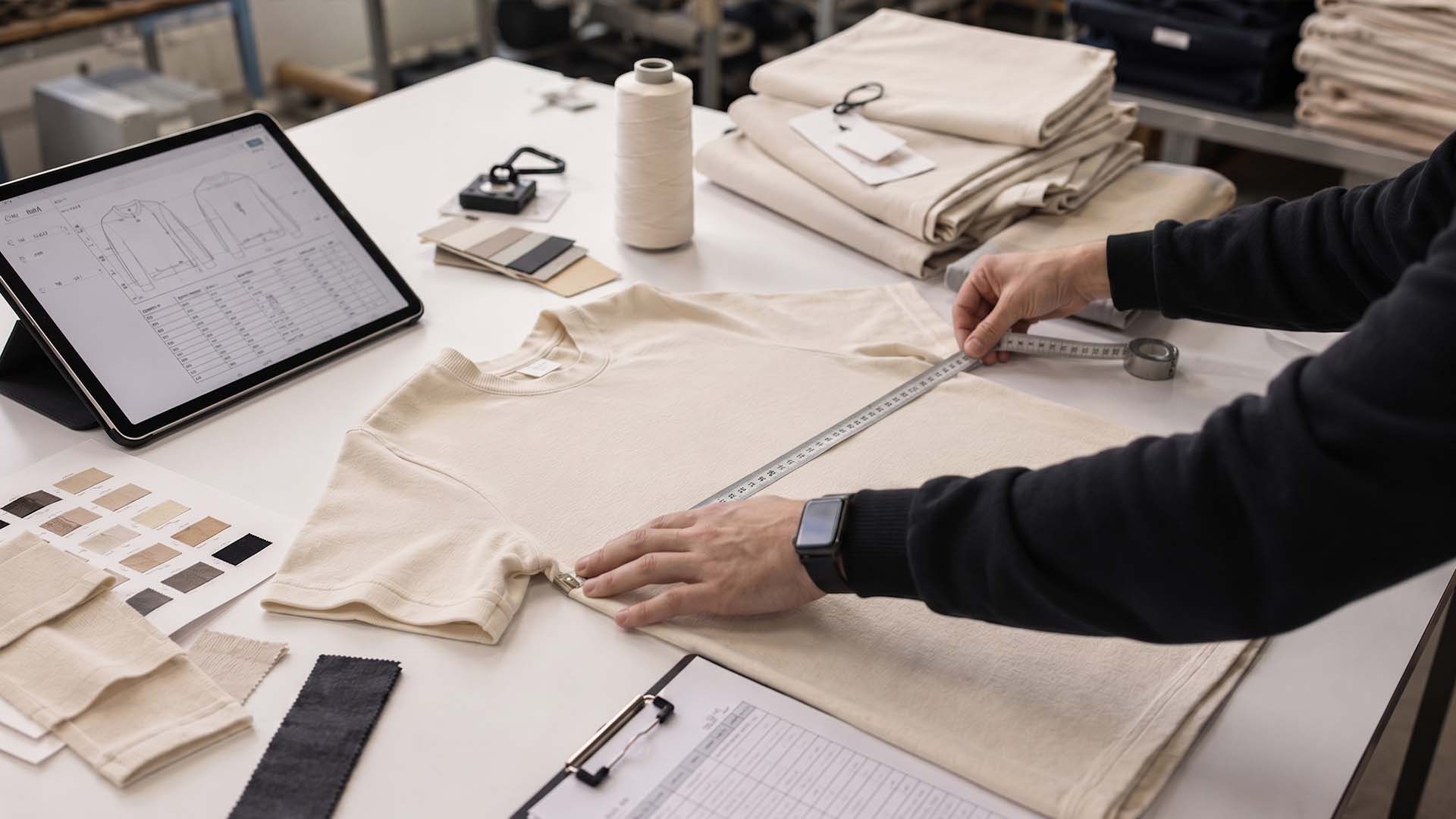
Organic fibre does not automatically mean that every dye, softener, finish or printing chemical used on the garment meets an organic textile standard.
Wet processing is one of the most important stages to examine because it can involve colourants, auxiliaries, washing agents, softeners and finishing chemicals.
For GOTS-certified production, chemical inputs used in processing must comply with the standard’s requirements and be approved through the appropriate system. The GOTS Positive List includes approved dyes, inks, enzymes and finishing auxiliaries for certified processing.
Questions to ask about dyeing
Ask your manufacturer or dyeing partner:
- Is the dye house certified for the intended process?
- Are the selected colourants approved for certified production?
- Can the target shade be achieved consistently?
- Will lab dips be prepared before bulk dyeing?
- What colourfastness testing will be performed?
- What shrinkage is expected after dyeing and finishing?
- Are softeners, enzymes or other finishes included?
- Does garment washing change certification or documentation requirements?
Deep black, fluorescent and highly saturated colours may require additional development. Shade approvals should be based on physical lab dips under controlled lighting rather than screen images.
Natural colour does not mean chemical-free
Undyed cream, ecru or natural cotton can support a minimal aesthetic, but brands should avoid describing it as “chemical-free” unless that claim can be substantiated.
The fabric may still pass through cleaning, preparation, finishing or mechanical processes. Specific claims are more credible than absolute language.
For example:
- “Made with certified organic cotton”
- “Undyed organic cotton fabric”
- “Produced without an added garment-dye process”
These statements are clearer than “completely natural” or “zero-impact.”
Sampling and Product Development
Organic cotton garments should go through the same disciplined product-development process as any premium clothing collection.
Certification does not guarantee fit, durability or construction quality.

Evaluate the first sample
During sampling, review:
- Fabric weight and hand feel
- Garment measurements
- Fit and silhouette
- Seam construction
- Collar or rib recovery
- Stitch density
- Twisting after washing
- Shrinkage
- Surface pilling
- Print appearance
- Embroidery stability
- Colour variation
- Care-label accuracy
Organic cotton can react differently depending on yarn type, knitting tension and finishing. Washing tests are particularly important for heavyweight T-shirts, sweatshirts and French terry garments.
Approve a pre-production sample
The pre-production sample should represent the approved bulk specification.
It should use, wherever possible:
- The correct bulk fabric
- Approved colour
- Final trims
- Final labels
- Production stitching
- Correct print or embroidery
- Final washing method
- Intended packaging
Production should begin only after the pre-production sample, measurement chart, artwork placement and material details are approved.
Printing, Embroidery and Accessories
A garment’s sustainability claim may be affected by components beyond the main fabric.
These can include:
- Sewing thread
- Rib fabric
- Drawcords
- Zippers
- Buttons
- Elastic
- Interlining
- Screen-printing ink
- Embroidery backing
- Woven labels
- Hang tags
- Packaging
For fully certified production, accessories and chemical inputs must be reviewed against the applicable requirements.
A common mistake is to approve certified organic cotton fabric and then select a printing ink, transfer material or accessory that is incompatible with the intended finished-product certification.
Share the complete bill of materials with the manufacturer and certification contact before production. Do not review the shell fabric in isolation.
Organic Cotton Clothing Labels
Garment labels have two separate functions:
- Providing legally required product information
- Communicating voluntary certification or sustainability claims
These should not be confused.
Fibre composition and market requirements
In the European Union, textile products must generally be labelled or marked with their fibre composition. The label should use the recognised fibre names required by the applicable textile regulation.
For the United States, most textile products must disclose fibre content, country of origin and the identity of the manufacturer or another responsible business. Apparel is also generally subject to care-labelling requirements.
Requirements may differ by market and product type. Brands should confirm final care labels with a qualified compliance specialist before printing bulk quantities.
Using the GOTS logo
The GOTS logo is not a decorative sustainability icon.
Its use is controlled and connected to certification and labelling requirements. Brands should not add the GOTS logo to neck labels, hang tags, packaging or product pages without confirming approval and licence conditions.
The label artwork may need to include:
- The correct GOTS label grade
- The certification body reference
- The certified entity’s licence number
- Approved wording and logo placement
Prepare certification artwork early. Waiting until the garments are already packed can create costly re-labelling work.
How to Communicate Sustainability Honestly
Sustainability communication should describe what can be demonstrated, rather than what sounds most impressive.
Avoid unsupported phrases such as:
- 100% sustainable
- Completely eco-friendly
- Zero environmental impact
- Chemical-free
- Ethical in every way
- Better for the planet
Broad environmental claims can mislead consumers when they are not clearly qualified. The US Federal Trade Commission advises marketers to avoid deceptive general environmental-benefit claims and to substantiate specific claims. EU consumer-protection rules are also moving toward stricter treatment of vague environmental statements and unsupported sustainability labels.
A stronger product description would be:
“Made from 100% certified organic cotton fabric and produced through the documented supply chain described on this page.”
For a certified product, the brand could identify:
- The certification standard
- The product’s certified label grade
- The certified fibre percentage
- The relevant licence information
- Which stages of production are covered
For a product that uses organic cotton but is not certified as a finished garment, the wording should stay limited to the verified fibre or fabric claim.
For example:
“The main fabric is made from 100% certified organic cotton. The finished garment is not sold as GOTS-certified.”
That level of precision builds more trust than vague green marketing.
Why Brands Manufacture Organic Cotton Clothing in Turkey
Turkey has a well-established textile and apparel production ecosystem connecting yarn suppliers, knitting mills, dye houses, garment factories, printers, embroidery specialists and packaging suppliers.
For European brands, Istanbul also offers geographical proximity compared with many long-distance production destinations. This can support faster communication, easier sample shipping and more direct production oversight.
Working with a Turkey textile factory can be especially practical for brands producing:
- Premium T-shirts
- Heavyweight streetwear
- Hoodies and sweatshirts
- Loungewear
- Private label basics
- Capsule collections
- Branded corporate apparel
- Cut-and-sew cotton products
However, location alone does not guarantee certification or quality. Brands should evaluate each manufacturer based on technical capability, transparency, documentation, quality-control procedures and the exact scope of its supplier network.
The same principle applies when comparing private label clothing manufacturers in Turkey. Some focus on ready-made blank products, while others provide custom patterns, fabric development, sampling, printing, embroidery and complete bulk production.
Working with Istanbul Factory
Istanbul Factory supports fashion brands, streetwear labels, startups and established companies with end-to-end clothing production in Istanbul.
Organic cotton projects can be developed through a structured process covering:
- Product and tech-pack review
- Organic cotton fabric sourcing
- Fabric and colour development
- Garment sampling
- Pattern and fit development
- Print and embroidery coordination
- Private label trims and packaging
- Production planning
- Quality control
- Export preparation
The correct sourcing route depends on your target fabric, quantity, colour, certification expectations and destination market.
Before quotation, brands should provide:
- Product sketches or tech packs
- Target fibre composition
- Required certification
- Fabric GSM and construction
- Colour references
- Size range
- Quantity per style and colour
- Print or embroidery files
- Packaging requirements
- Intended sales markets
Istanbul Factory can then assess available material options and develop a production route aligned with the collection’s commercial and technical requirements.
Certification availability and claim eligibility should always be confirmed for the specific product, facility and supply chain before labels or marketing materials are approved.
Planning an organic cotton collection? Contact Istanbul Factory to discuss your fabrics, designs, quantities and production requirements.
Frequently Asked Questions
What is an organic cotton clothing manufacturer?
An organic cotton clothing manufacturer produces garments using cotton sourced from certified organic agriculture. Depending on its certification scope, the manufacturer may produce garments with organic cotton fabric or manage a fully certified production chain that supports an approved finished-product label.
Is 100% cotton the same as organic cotton?
No. “100% cotton” only describes the garment’s fibre composition. The cotton may be conventional, organic, recycled or sourced through another programme. Organic cotton should be supported by recognised certification and supply-chain documentation.
Does organic cotton fabric make the finished garment GOTS-certified?
No. Certified fabric alone does not automatically make the finished garment GOTS-certified. The relevant processing, manufacturing, subcontracting, labelling and trading stages must comply with the certification requirements applicable to the product.
What percentage of organic fibre is required for GOTS?
The GOTS “Organic” label grade requires at least 95% certified organic fibres. The “Made with organic materials” grade requires at least 70% certified organic fibres, with the remaining content subject to the standard’s rules.
Is organic cotton more expensive to manufacture?
Organic cotton products can cost more because of certified raw materials, controlled supply chains, documentation, dyeing requirements and potentially higher fabric minimums. The final price also depends on GSM, fabric construction, colour, order quantity, garment complexity and finishing.
Can Istanbul Factory manufacture organic cotton clothing?
Istanbul Factory can support organic cotton fabric sourcing, product development, sampling, private label production and bulk clothing manufacturing. The certification route and documentation available should be confirmed for each project before production and marketing claims are approved.