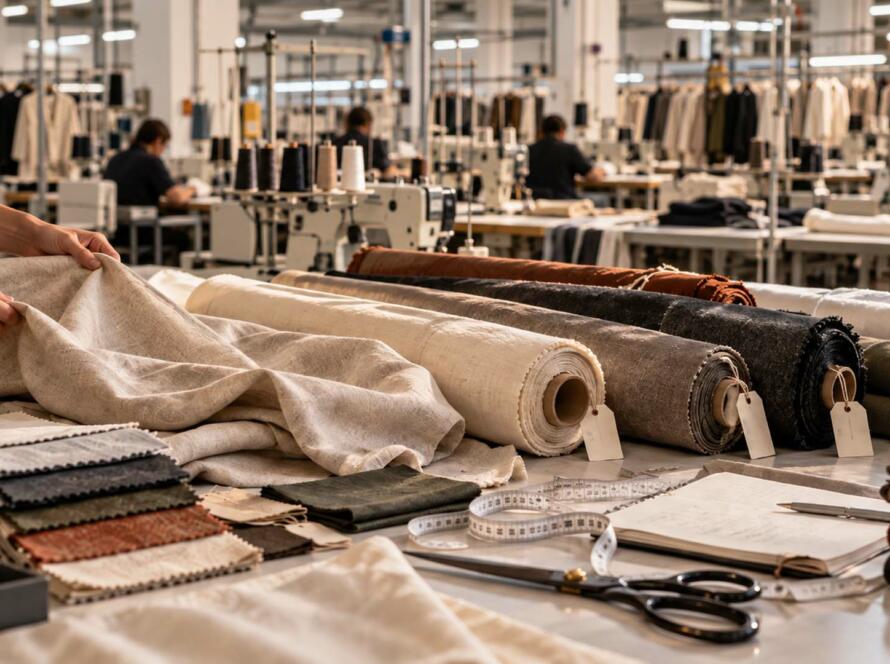


Sustainability in fashion is no longer limited to choosing an organic fabric or replacing plastic packaging. For brands, it involves a connected series of decisions covering material sourcing, product development, manufacturing, quality control, transportation, traceability, and product durability.
Turkey has become an important production location for European and international fashion brands seeking a more responsible manufacturing model. Its established textile ecosystem, geographical proximity to Europe, broad fabric capabilities, and experienced garment manufacturers allow brands to develop products without relying on fragmented supply chains spread across several distant countries.
However, choosing Turkey does not automatically make a collection sustainable.
A responsible production strategy still requires clear material requirements, verified documentation, controlled sampling, realistic order planning, and consistent quality standards.
This guide explains how sustainable clothing production in Turkey works, what brands should evaluate, and how to build a more transparent and commercially practical manufacturing process.
What Is Sustainable Clothing Production in Turkey?
Sustainable clothing production in Turkey means developing and manufacturing garments with greater control over environmental impact, material traceability, production quality, working practices, waste, and transportation.
For fashion brands, this can include:
- Sourcing certified or lower-impact fabrics
- Working with local yarn, fabric, dyeing, printing, and garment suppliers
- Reducing unnecessary transportation between production stages
- Developing accurate samples before bulk manufacturing
- Testing fabrics and garments for shrinkage, colourfastness, and durability
- Producing realistic quantities rather than creating avoidable excess stock
- Monitoring production through structured quality control
- Using recyclable or reduced packaging where practical
- Requesting documentation that supports sustainability claims
The most effective approach combines environmental responsibility with product performance and commercial reality.
A garment that uses a certified fabric but loses its shape after a few washes is not a strong sustainability outcome. Durability, fit, construction quality, and long-term usability remain central to responsible clothing production.
Why Turkey Is Important for Sustainable Fashion Manufacturing
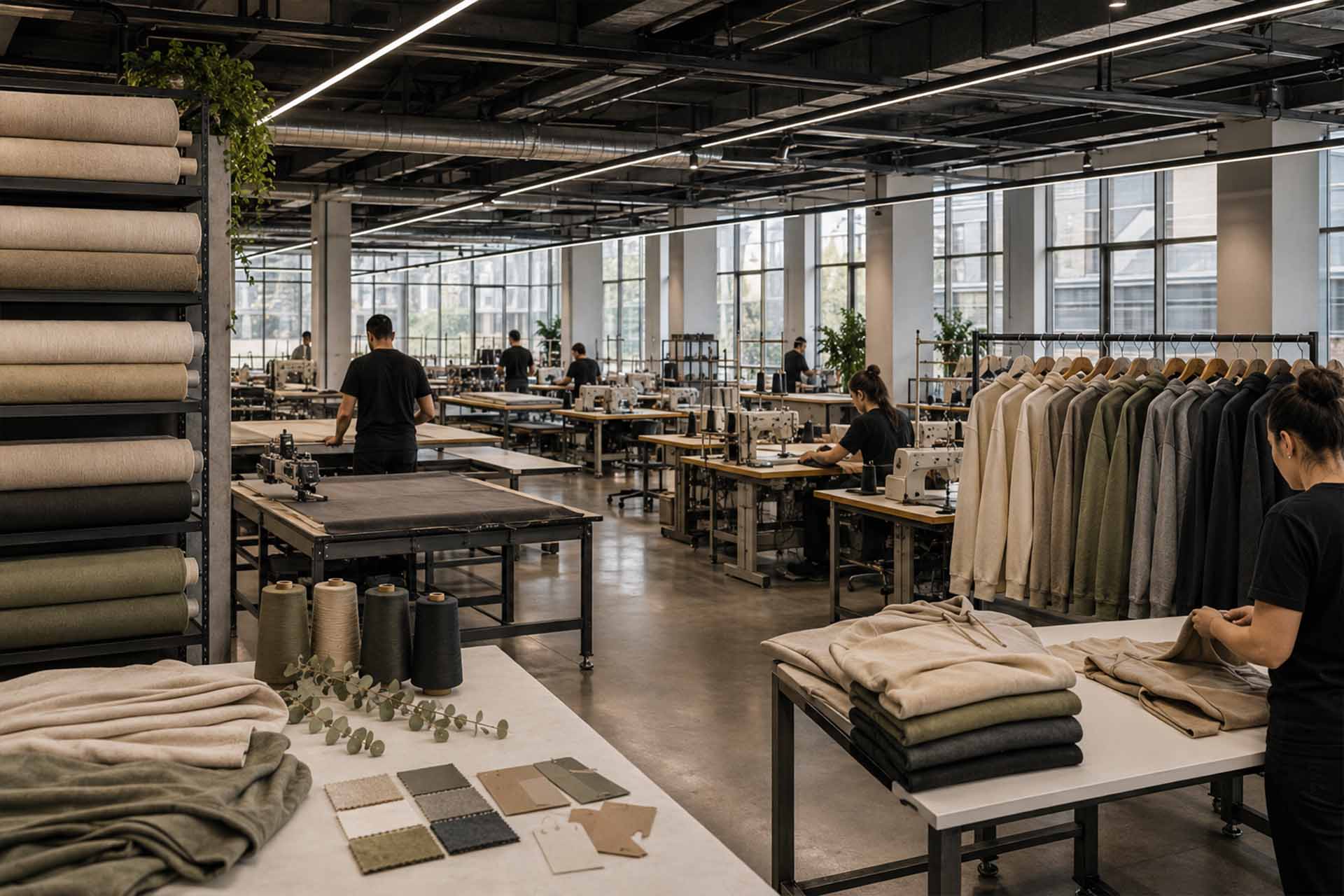
Turkey has a mature textile and apparel industry covering many stages of the fashion supply chain.
Depending on the product and manufacturing partner, brands can source yarn, knitted or woven fabric, dyeing, garment washing, printing, embroidery, labels, packaging, sampling, and bulk production within the same country.
This integrated structure can give fashion brands greater visibility and control.
An Established Textile Ecosystem
Turkey produces a wide variety of textile materials and finished garments, including:
- Cotton jersey
- French terry
- Fleece
- Rib fabrics
- Piqué
- Interlock
- Denim
- Poplin
- Twill
- Linen blends
- Wool blends
- Technical and performance fabrics
This material diversity supports different categories, from heavyweight streetwear and premium basics to casualwear, uniforms, outerwear, and private label collections.
For brands pursuing sustainability goals, local availability can reduce the need to move materials between several countries before garment production begins.
A fabric may be knitted, dyed, finished, cut, sewn, printed, checked, and packed within a comparatively concentrated production network.
Proximity to European Markets
Turkey’s location is particularly relevant for brands in Germany, France, the Netherlands, Scandinavia, the United Kingdom, and other European markets.

Shorter geographical distances can make production easier to manage through:
- Faster physical sample deliveries
- More practical factory visits
- Easier communication during product development
- Shorter transportation routes than many long-distance sourcing options
- Greater flexibility when production corrections are required
- More responsive replenishment planning
Proximity alone does not guarantee a lower environmental footprint. Shipment method, order size, material origin, packaging, and production efficiency still matter.
However, manufacturing closer to the target market can help brands avoid some of the complexity and transportation associated with highly fragmented global supply chains.
Experience with European Brand Requirements
Many Turkish textile and clothing manufacturers are familiar with the expectations of European buyers.
These commonly include detailed technical documentation, restricted substance requirements, size consistency, testing procedures, labelling rules, packaging specifications, and structured quality inspections.
This experience is valuable because sustainable production depends on control and repeatability. Environmental claims have limited value when products arrive with inconsistent sizing, incorrect fabric weights, poor finishing, or avoidable defects.
Local Sourcing and Supply Chain Efficiency
Local sourcing is one of the main advantages associated with sustainable clothing production in Turkey.
When fabric, trims, printing, embroidery, labels, and garment assembly can be coordinated within one regional ecosystem, the production process becomes easier to trace and manage.
What Can Be Sourced Locally?
Depending on the collection, Turkish suppliers may provide:
- Conventional, organic, or recycled cotton fabrics
- Recycled polyester and blended materials
- Jersey, French terry, fleece, rib, and woven fabrics
- Sewing threads
- Zippers, buttons, snaps, and drawcords
- Woven labels and printed care labels
- Hangtags
- Screen printing
- Digital printing
- Embroidery
- Garment washing and finishing
- Cartons and protective packaging
Local sourcing can reduce supplier handovers, but brands should still ask where the raw materials originate.
A fabric purchased from a local mill may contain imported fibre or yarn. That does not necessarily make it unsuitable, but the distinction matters when communicating traceability or environmental claims.
Why Supply Chain Consolidation Matters
Every additional supplier, subcontractor, and border crossing can make a production process more difficult to monitor.
A consolidated supply chain may help a brand:
- Identify the responsible party at each production stage
- Approve materials more efficiently
- Reduce sample development delays
- Investigate quality issues faster
- Maintain more consistent production records
- Avoid unnecessary movement of unfinished goods
- Coordinate testing and certification documents
The goal is not simply to use fewer suppliers. It is to create a supply chain in which responsibilities, materials, approvals, and production stages are clearly documented.
Certified Fabrics and Material Verification
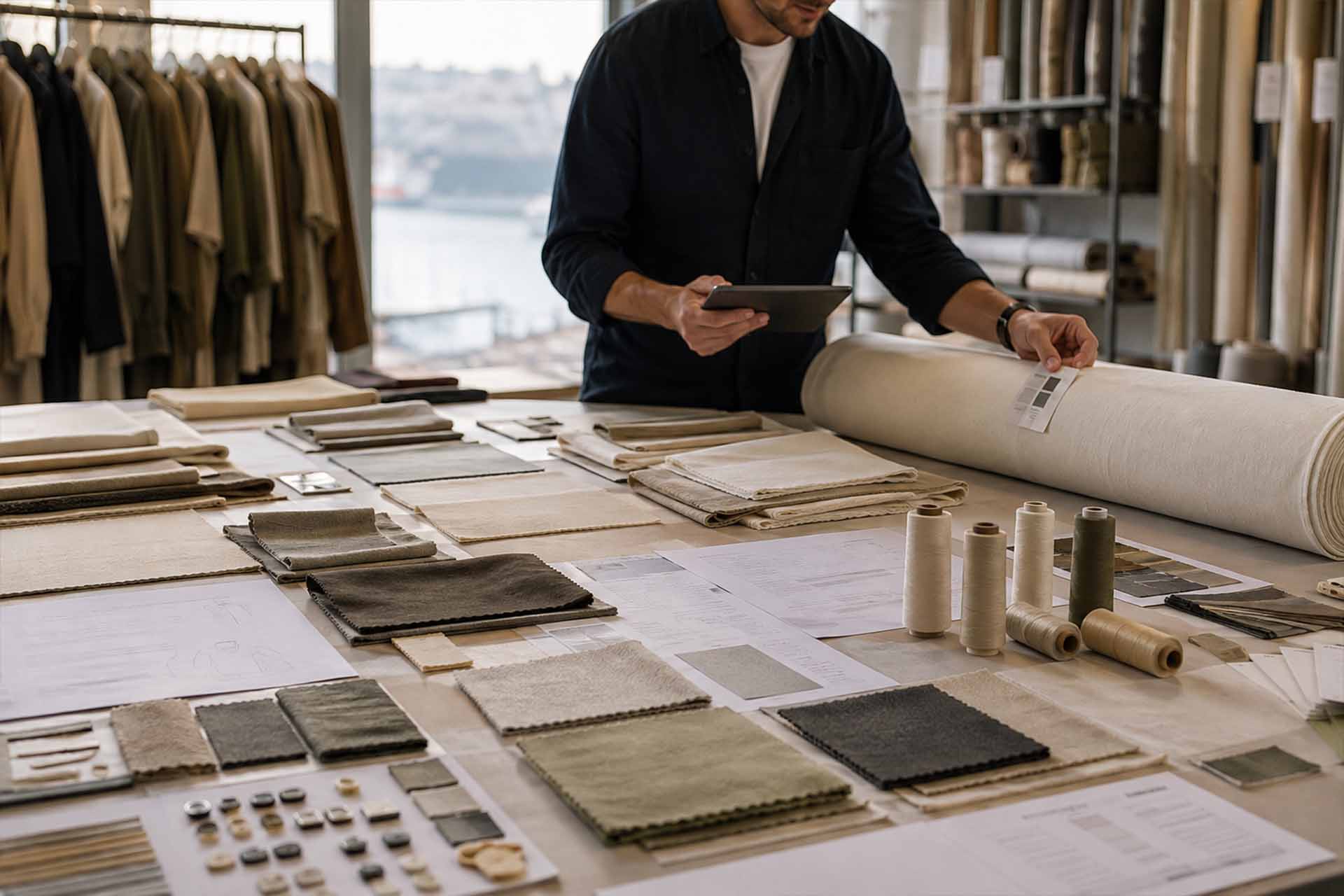
Certified materials can support a brand’s sustainability strategy, but certification must be understood correctly.
A certificate is not a general guarantee that every product from a supplier meets the same standard. Certifications may apply to a particular company, facility, process, material, or transaction.
Brands should therefore verify the scope of the documentation rather than relying on a logo or marketing statement.
Common Textile Standards
Depending on the project, brands may encounter standards such as:
GOTS
The Global Organic Textile Standard is commonly associated with certified organic fibres and defined environmental and social criteria throughout relevant processing stages.
GRS
The Global Recycled Standard applies to products containing recycled materials and includes requirements related to chain of custody, processing, environmental practices, and social considerations.
RCS
The Recycled Claim Standard is used to verify recycled content and track materials through the supply chain.
OEKO-TEX STANDARD 100
This standard relates to testing textile products for specified harmful substances. It should not be presented as proof that a material is organic or recycled.
Each standard answers a different question. A fabric can be tested for harmful substances without being organic, while a recycled material may require separate documentation to verify its recycled content.
Questions Brands Should Ask
Before approving a certified fabric, request clear answers to the following:
- Which organisation issued the certificate?
- Is the certificate currently valid?
- Which company or facility is named?
- Does the scope cover the relevant production process?
- Is the exact fabric included?
- Is a transaction certificate available when required?
- What percentage of the material is certified?
- Are blends clearly identified?
- Can the supplier provide composition and test reports?
- Are the brand’s intended marketing claims supported by the documents?
These checks help prevent vague environmental claims and reduce greenwashing risk.
Choosing Sustainable Materials for a Collection
The most sustainable-looking option is not always the best material for every garment.
Fabric selection should consider the product’s use, expected lifetime, care requirements, construction, target price, and visual identity.
Organic Cotton
Organic cotton is frequently used for T-shirts, sweatshirts, hoodies, joggers, childrenswear, and premium basics.
Brands may choose it because it can support a more responsible fibre strategy when sourced through a verified supply chain.
However, organic cotton still needs to meet the product’s technical requirements. Fabric weight, yarn quality, shrinkage, pilling, colourfastness, hand feel, and dimensional stability must be tested.
Recycled Cotton
Recycled cotton can reduce reliance on virgin fibre and create value from textile waste.
Its limitations should also be considered. Mechanical recycling can shorten fibres, which may affect strength, surface appearance, and consistency. Recycled cotton is therefore often blended with virgin cotton or another fibre to improve performance.
It can work well for selected casualwear, jersey products, sweatshirts, and fabrics where a slightly textured appearance fits the brand concept.
Organic Cotton vs Recycled Cotton: Which Is Better for Your Brand?
Recycled Polyester
Recycled polyester is used in fleece, sportswear, outerwear, linings, trims, and blended fabrics.
It can reduce demand for virgin fossil-based polyester, but brands should still evaluate shedding, end-of-life options, finishing chemicals, and the challenges associated with mixed-fibre garments.
Using recycled polyester does not make a product circular by itself.
Mono-Material Versus Blended Fabrics
Mono-material garments can be easier to manage at the recycling stage because fewer fibre types need to be separated.
Blends, however, may provide better stretch, strength, recovery, softness, or durability.
The correct choice depends on the garment.
A fashion brand should avoid reducing material decisions to simple rules such as “natural is always sustainable” or “recycled is always better.” The complete product lifecycle and required performance should guide the decision.
Responsible Product Development Before Bulk Production
Many sustainability problems begin before the bulk production line starts.
An incomplete tech pack, untested fabric, unrealistic deadline, or frequently changing design can create wasted samples, unused materials, production errors, and rejected garments.
A controlled development process reduces these risks.

Start with a Clear Tech Pack
A production-ready tech pack should include:
- Technical drawings
- Fabric composition and weight
- Colour references
- Measurement specifications
- Grading rules
- Stitching and construction details
- Artwork dimensions and placement
- Print or embroidery technique
- Labels and branding requirements
- Packaging instructions
- Testing expectations
Clear documentation helps the manufacturer calculate material consumption, prepare accurate patterns, source appropriate components, and identify technical risks early.
Use Sampling to Prevent Waste
Sampling should be treated as a quality and sustainability tool rather than a formality.
A typical development process may include:
- Prototype or development sample
- Fit sample
- Revised sample
- Size set, where required
- Pre-production sample
- Approved production reference
The exact sequence depends on the product and project complexity.
Approving fit, fabric, construction, colours, branding, and measurements before bulk production can prevent larger quantities of incorrect garments from being produced.
Test Before Approval
Relevant fabric and garment tests may include:
- Dimensional stability
- Shrinkage
- Colourfastness
- Pilling
- Abrasion resistance
- Seam strength
- Fabric weight
- Print durability
- Embroidery appearance
- Appearance after washing
Testing should reflect the actual product and intended use. A heavyweight streetwear hoodie, lightweight fashion T-shirt, workwear overshirt, and performance garment will not require identical evaluation criteria.
Quality Control Is Part of Sustainability
Quality control is sometimes treated as separate from sustainability. In practice, the two are closely connected.
Defective garments consume fabric, energy, labour, packaging, and transportation without delivering the expected value to the customer.
Products that fail quickly may also be replaced more often.
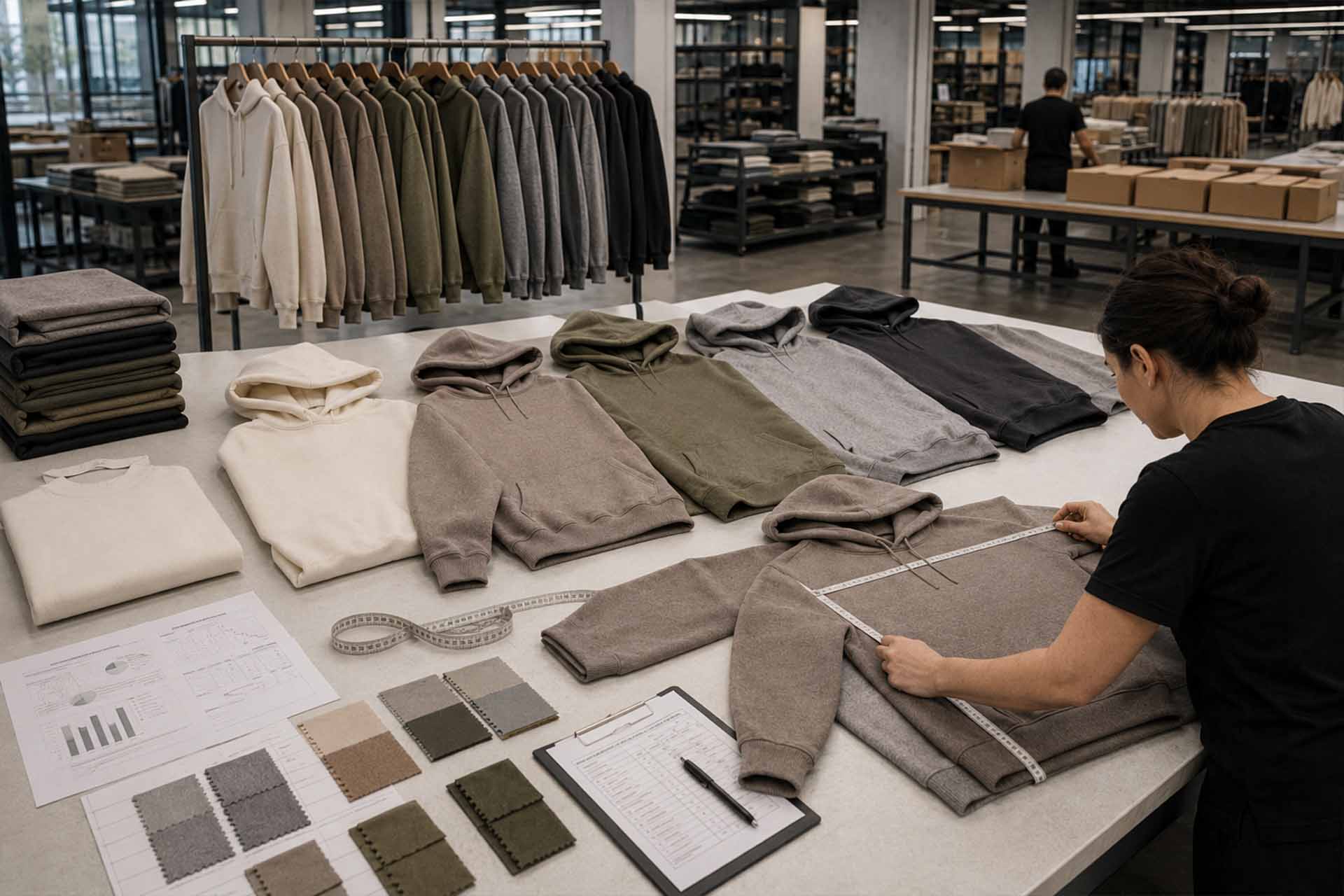
For this reason, sustainable clothing production should include quality checks throughout manufacturing rather than relying solely on a final inspection.
Quality Control Stages
A structured process may include:
Incoming material inspection
Fabric rolls, trims, labels, colours, widths, and quantities are checked before cutting.
Pre-production approval
The approved sample, measurement chart, artwork, fabric, trims, and construction details are confirmed before bulk manufacturing.
Cutting control
Fabric relaxation, marker placement, panel accuracy, shade grouping, and cut quantities are monitored.
In-line inspection
Stitching, seam construction, measurements, print placement, embroidery, and workmanship are checked while production is running.
Finishing inspection
Loose threads, stains, pressing, labels, measurements, and overall appearance are reviewed.
Final inspection
Finished garments are compared against the approved sample and order specifications before packing and shipment.
Finding an issue during production is usually less wasteful than discovering it after every garment has been completed.
Production Quantities and Overproduction
Producing more garments than the market can realistically absorb creates financial and environmental risk.
At the same time, extremely small orders can be inefficient because fabric dyeing, pattern development, sampling, cutting, printing, and production setup require minimum quantities and fixed resources.
Brands need to find a practical balance.
A responsible order strategy may include:
- Launching with a focused product range
- Reducing unnecessary colour variations
- Using shared fabrics across several styles
- Testing demand before expanding the collection
- Planning repeat production for proven products
- Maintaining realistic quantities per style and colour
- Avoiding last-minute design changes
- Reusing approved blocks, patterns, and materials
For startups, a smaller and well-developed collection is often more effective than a wide collection with limited control over fit, quality, and demand.
Printing, Embroidery, Dyeing, and Finishing
Sustainability decisions continue after the base fabric has been selected.
Printing, embroidery, garment dyeing, washing, coatings, and special finishes can affect water use, energy use, chemical inputs, recyclability, durability, and wastewater requirements.
Brands should ask manufacturers to explain:
- Which production method is being proposed?
- Why is it suitable for the design?
- Is there a lower-impact alternative?
- What approvals or tests are required?
- How will the finish change after washing?
- Does the process affect recyclability?
- Can the supplier provide relevant compliance documentation?
- Is the subcontractor identified and monitored?
A simple, durable application may sometimes be more responsible than a complex finish that requires several chemical or mechanical processes.
Design teams should involve the manufacturer early enough to compare options before artwork and collection decisions become fixed.
Packaging and Shipping Considerations
Packaging is highly visible, but it should not distract from the larger impacts created by fabric and garment production.
Still, unnecessary packaging can be reduced.
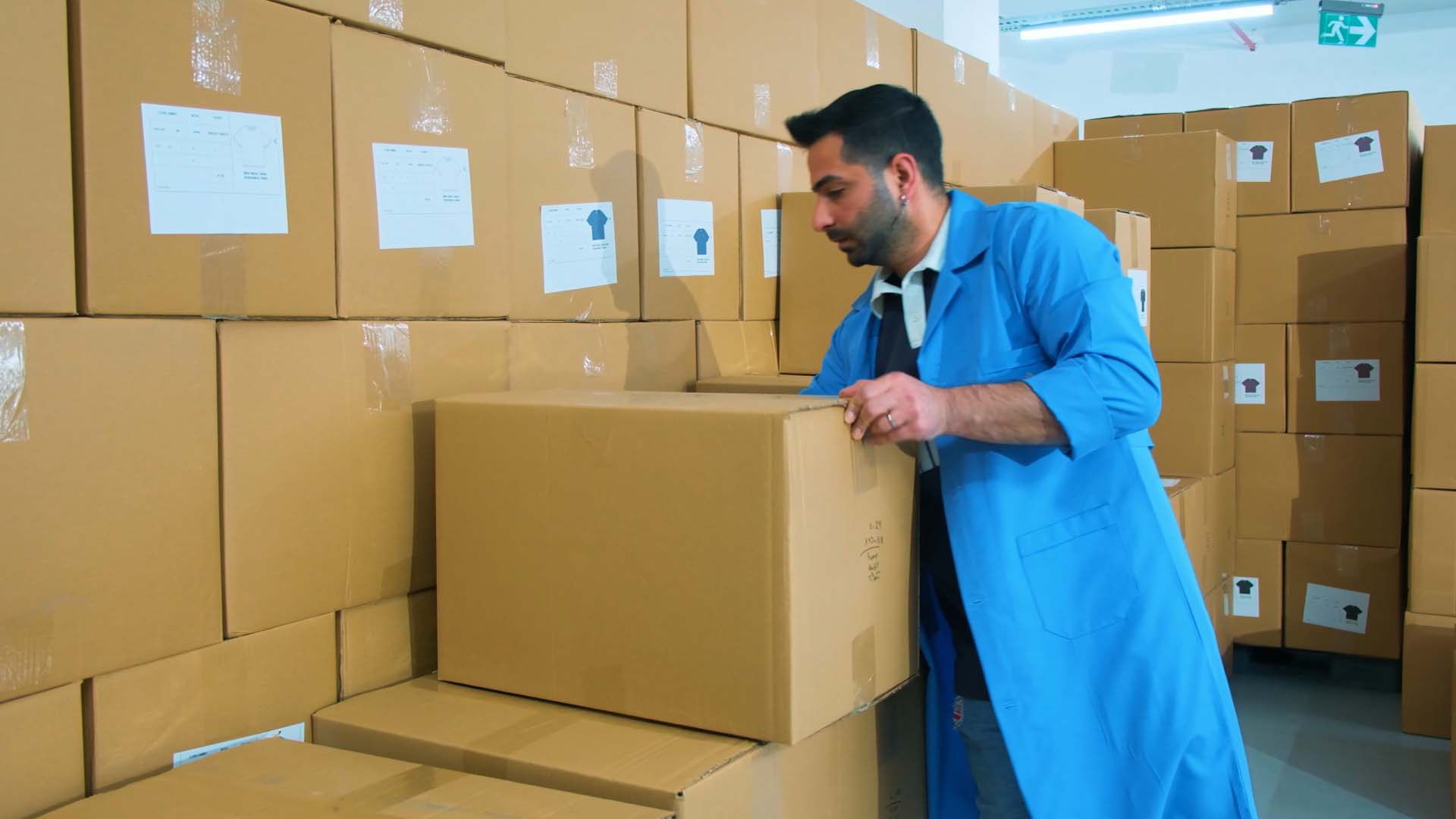
Brands can review:
- Polybag dimensions and thickness
- Recycled-content packaging options
- Recyclable materials
- Carton utilisation
- Individual versus grouped packing
- Plastic accessories
- Excess tissue paper
- Hangtag size and quantity
- Reusable shipment samples
- Avoiding oversized cartons
Garments must remain protected from moisture, dirt, and damage. Removing packaging without considering product protection can lead to damaged goods and additional waste.
The best solution is usually packaging that is minimal, functional, correctly sized, and compatible with the brand’s logistics system.
Shipping choices should also be planned early. Production delays often force brands to replace planned road or sea freight with urgent air freight. Accurate timelines, timely approvals, and realistic launch dates can reduce this risk.
Avoiding Greenwashing in Fashion Production
Greenwashing occurs when environmental communication is broader, stronger, or more certain than the supporting evidence.
Common risks include:
- Calling an entire garment sustainable because one component is recycled
- Using certification logos without permission
- Confusing chemical testing with organic certification
- Claiming local production when major production stages occur elsewhere
- Describing an unspecified percentage of recycled content as fully recycled
- Using terms such as eco-friendly without measurable support
- Presenting recyclable packaging as proof of a sustainable garment
- Ignoring durability and product quality
- Making carbon claims without a reliable calculation method
Brands should communicate specific facts rather than general promises.
For example, “This sweatshirt contains 70% certified organic cotton” is more useful and verifiable than “This is a completely sustainable sweatshirt.”
Accurate communication builds greater trust with retailers, customers, and business partners.
A Practical Sustainability Checklist for Fashion Brands
Before placing a production order in Turkey, confirm the following:
- The manufacturer understands the product category
- The fabric composition and weight are approved
- Sustainability requirements are written in the tech pack
- Certificates have been reviewed
- Certification scope matches the claim
- Material origin is understood
- Fabric and garment tests are agreed
- The fit sample is approved
- Print and embroidery samples are approved
- Packaging requirements are documented
- Production quantities are commercially realistic
- Quality checkpoints are defined
- Subcontracted processes are disclosed where relevant
- The final product can support the brand’s intended claims
- Shipping and delivery plans are realistic
Sustainability works best when it is included in the production brief from the beginning. Adding it after materials have been purchased and samples approved usually limits the available options.
Working with a Sustainable Clothing Manufacturer in Istanbul
A capable manufacturing partner should be able to discuss both the opportunities and limitations of a sustainability request.
Be cautious when a supplier promises that every material is available immediately, every process is sustainable, or every certification can be provided without checking the specific fabric and supply chain.
A more reliable manufacturer will clarify:
- Available material options
- Certification and documentation requirements
- Minimum order quantities
- Development costs
- Testing needs
- Performance limitations
- Production lead times
- Subcontracted processes
- Quality standards
- Packaging possibilities
Transparency is more valuable than broad environmental language.
Sustainable Clothing Production with Istanbul Factory
Istanbul Factory supports fashion brands, streetwear labels, startups, and established companies with end-to-end clothing production in Istanbul.
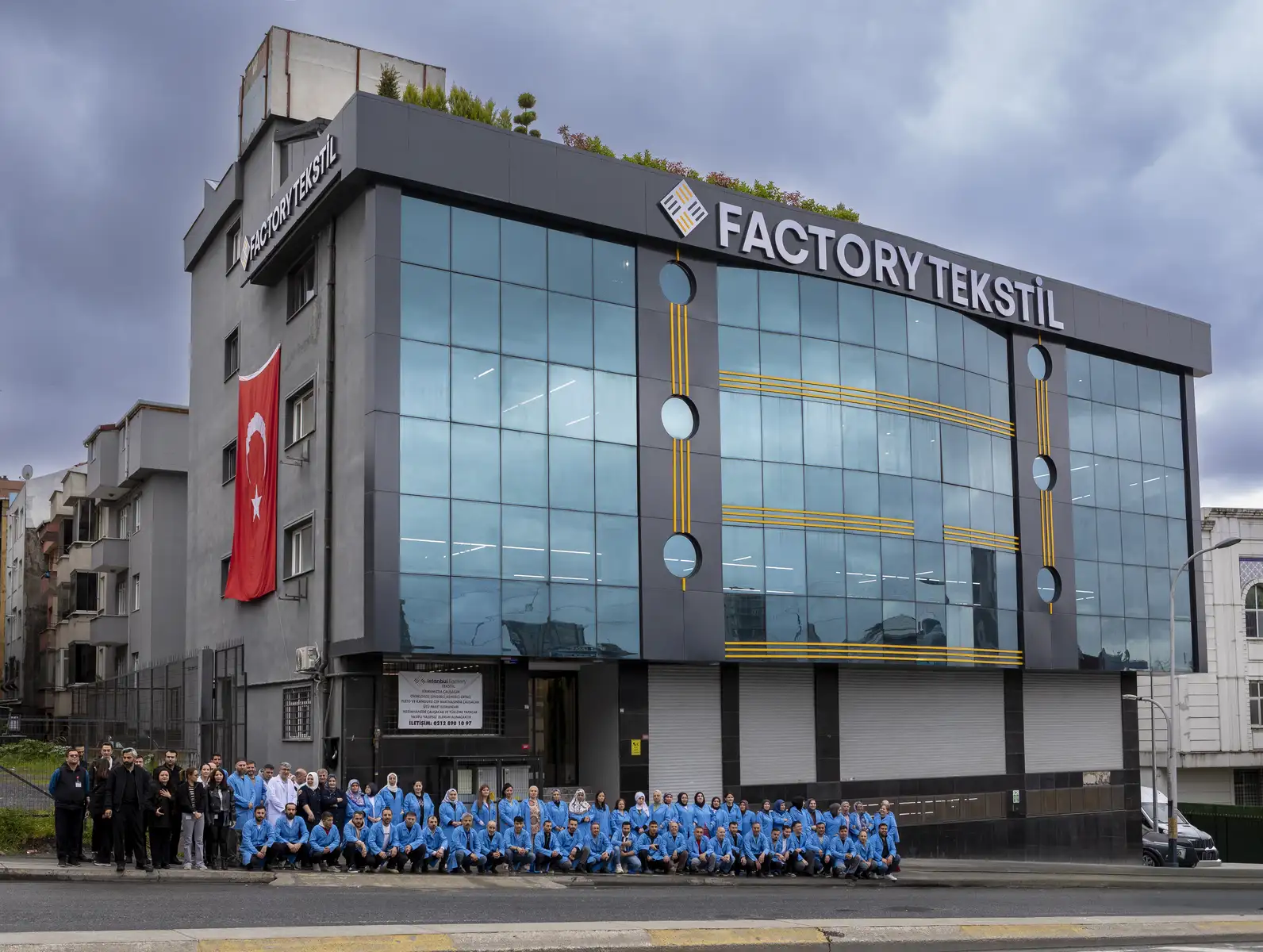
Our services include:
- Fabric and trim sourcing
- Custom clothing manufacturing
- Private label production
- Pattern and sample development
- Print and embroidery
- Label and packaging development
- Bulk manufacturing
- Quality control
- Production coordination
For brands developing a more responsible collection, we can support the sourcing of suitable fabrics and certified material options according to project requirements and supplier availability.
We also help clients evaluate fabric weight, composition, construction, decoration methods, sampling requirements, and quality expectations before bulk production begins.
Our objective is to create a production process that is transparent, technically realistic, commercially practical, and aligned with European quality expectations.
Build a More Responsible Collection in Istanbul
Sustainable fashion manufacturing requires more than selecting a fabric with an environmental label.
It depends on how materials are sourced, how products are designed, how samples are tested, how quantities are planned, how factories control production, and how accurately a brand communicates its claims.
Turkey offers European and international fashion brands access to an established textile ecosystem, experienced garment production, local sourcing possibilities, and convenient access to European markets.
With the right manufacturing partner and a clearly documented process, brands can improve supply chain visibility while producing durable, commercially viable collections.
Contact Istanbul Factory to discuss your next private label, streetwear, premium basics, or custom clothing project in Turkey.
Frequently Asked Questions
Is clothing production in Turkey sustainable?
Clothing production in Turkey can support a sustainable sourcing strategy when brands use verified materials, responsible suppliers, controlled product development, realistic quantities, and structured quality control. Manufacturing location alone does not guarantee sustainability.
What sustainable fabrics are available in Turkey?
Depending on the supplier and project, brands may source organic cotton, recycled cotton, recycled polyester, lower-impact blends, mono-material fabrics, and textiles certified under recognised standards. Availability, minimum quantities, colours, and documentation should be confirmed before sampling.
Which textile certifications should fashion brands request?
Relevant standards may include GOTS for qualifying organic textile supply chains, GRS or RCS for recycled material claims, and OEKO-TEX STANDARD 100 for specified harmful-substance testing. The correct certification depends on the claim the brand intends to make.
Does manufacturing in Turkey reduce shipping distances to Europe?
Turkey is geographically closer to many European markets than major Asian manufacturing destinations. This can shorten transportation routes and make road freight, factory visits, sample delivery, and production coordination more practical. The total impact still depends on material origin and shipment method.
How can brands verify sustainable materials?
Brands should review valid supplier certificates, scope documents, material composition reports, test reports, invoices, and transaction certificates where applicable. The documentation should relate to the actual supplier, production stage, and material used in the order.
Why is quality control important for sustainable clothing?
Quality control reduces the risk of defective garments, rejected production, returns, repairs, and premature product failure. Durable garments that maintain their fit, colour, seams, and appearance generally provide greater value over a longer useful life.
Can Istanbul Factory source certified fabrics?
Istanbul Factory can support the sourcing of certified and lower-impact fabric options based on the product, required standard, colour, quantity, performance expectations, and supplier availability. Certification requirements should be communicated before material sourcing and sampling begin.
Is Turkey suitable for sustainable streetwear production?
Turkey is well suited to streetwear products such as heavyweight T-shirts, oversized hoodies, sweatshirts, joggers, and coordinated collections. Brands can combine fabric development, custom fits, printing, embroidery, labels, garment finishing, and quality control within Turkey’s textile ecosystem.