


What Is a Tech Pack for Clothing Production?
A tech pack for clothing production is a detailed document that explains exactly how a garment should be developed and manufactured.
It acts as the main communication tool between a fashion brand and its clothing manufacturer. It brings together the technical drawings, measurements, materials, colors, construction details, branding elements, print placements, packaging instructions, and other specifications required to produce the garment correctly.
A professional tech pack helps the manufacturer understand the product before sampling or bulk production begins. It reduces assumptions, prevents avoidable errors, and creates a clear reference point throughout the development process.
For fashion brands, a tech pack is more than a design document. It is a production control document.
The stronger and clearer it is, the easier it becomes to compare samples, request corrections, confirm pricing, manage quality, and approve the final product.
Why Is a Tech Pack Important in Clothing Manufacturing?
Manufacturers cannot reliably produce a garment from a mood board, reference photograph, or basic sketch alone.
A reference image may communicate the general style, but it rarely explains:
- The exact garment measurements
- The required fabric composition
- The target fabric weight
- The stitch types
- The seam construction
- The label dimensions
- The rib width
- The print size
- The embroidery position
- The packaging method
- The tolerance allowed during production
Without this information, the factory must make assumptions. Different people may interpret the same design in different ways, leading to samples that do not match the brand’s expectations.
A well-prepared tech pack for a clothing manufacturer helps:
- Improve communication between the brand and factory
- Reduce sampling rounds
- Support more accurate costing
- Minimize production misunderstandings
- Maintain consistency across sizes
- Improve quality control
- Keep product development organized
- Protect the approved design during bulk production
The tech pack becomes the shared production reference for designers, pattern makers, fabric suppliers, sample teams, printers, embroidery specialists, quality controllers, and packaging teams.
What Should a Tech Pack for Clothing Production Include?
The exact content may vary depending on the product. A basic T-shirt requires fewer instructions than a technical jacket, tailored blazer, or multi-pocket cargo pant.
However, most professional tech packs for garment production should include the following sections.
1. Product Overview and Style Information
The first page should clearly identify the product.
This section usually includes:
- Brand name
- Product or style name
- Style number
- Product category
- Season or collection
- Target market
- Gender or fit category
- Sample size
- Date of creation
- Revision number
- Designer or product developer
- Manufacturer name, when confirmed
A unique style number is especially important. Product names can be repeated or changed, while a style number provides a consistent reference throughout sampling and production.
For example:
- Product name: Oversized Heavyweight Hoodie
- Style number: IF-HDW-024
- Sample size: Medium
- Fit: Unisex oversized
- Collection: Autumn/Winter
- Revision: Version 3
Every updated tech pack should show a new revision number or date. This helps prevent older instructions from being used accidentally.
2. Technical Flat Sketches
Technical flat sketches show the garment from a clear, two-dimensional perspective.
Unlike fashion illustrations, technical drawings focus on construction rather than artistic presentation. They should normally show the front and back of the garment. Side views, interior views, or close-up detail drawings may also be needed.
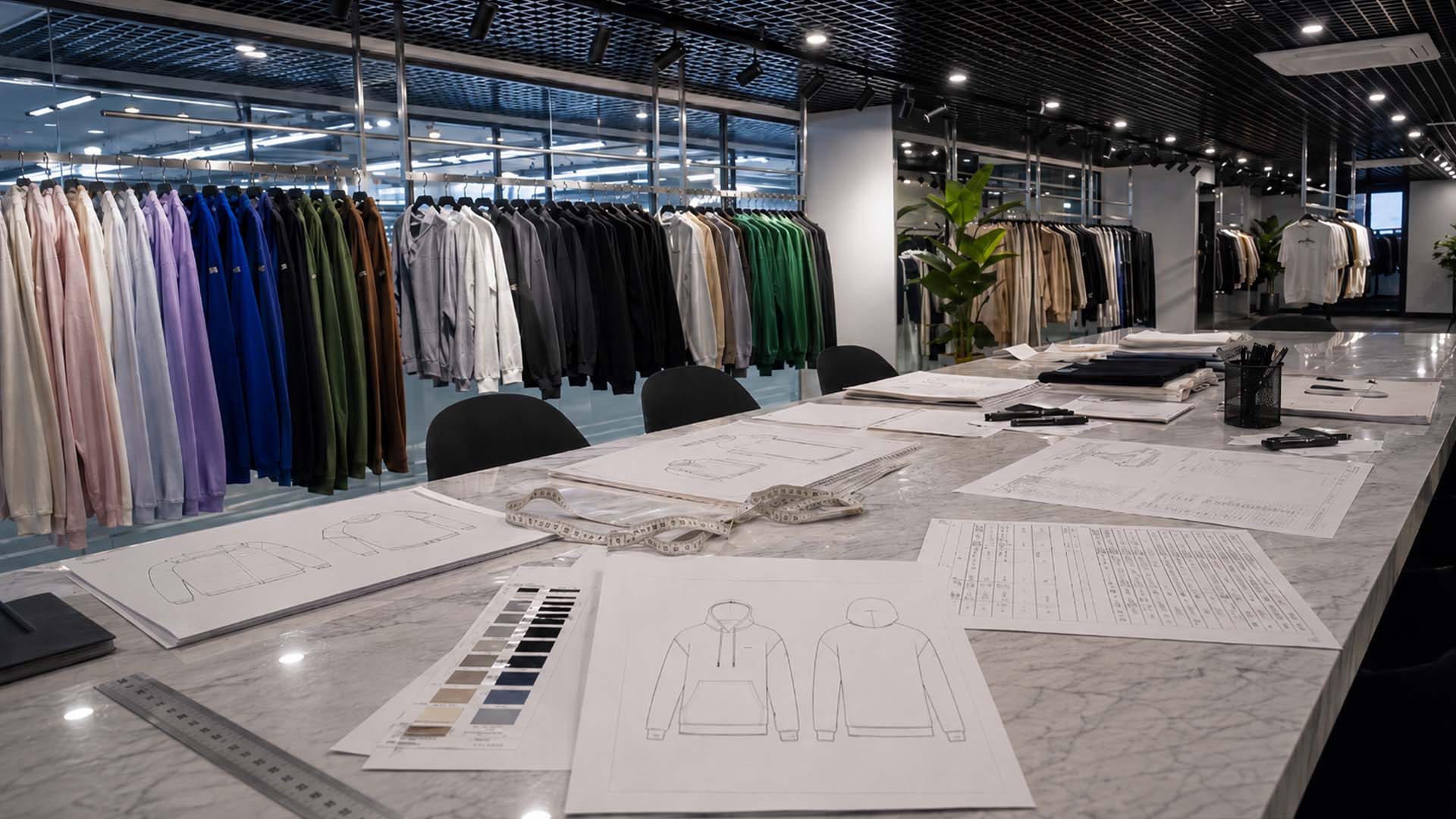
The sketches should display important elements such as:
- Neckline shape
- Sleeve construction
- Pocket position
- Seam placement
- Ribbed areas
- Cuffs and hems
- Hood construction
- Zipper placement
- Panels
- Darts
- Pleats
- Topstitching
- Drawcords
- Buttons and closures
Callouts can be added around the drawing to explain details that may not be obvious.
For example, a hoodie sketch may include notes such as:
- Double-layer hood
- Kangaroo pocket
- Dropped shoulder
- 2 × 2 rib cuff
- Coverstitch at armhole
- No drawcord
- Side seam construction
Technical sketches do not need to be highly artistic. They need to be clear, proportionate, and easy for the production team to understand.
3. Garment Measurement Specifications
The measurement specification sheet is one of the most important parts of a tech pack.
It defines the dimensions that determine the fit and shape of the garment.
Common points of measurement for a T-shirt may include:
- Chest width
- Body length
- Shoulder width
- Sleeve length
- Sleeve opening
- Armhole depth
- Neck width
- Front neck drop
- Back neck drop
- Bottom opening
A hoodie may also require:
- Hood height
- Hood width
- Pocket width
- Pocket height
- Cuff height
- Waistband height
- Bicep width
- Drawcord length
Each point of measurement should be clearly labeled and linked to a measurement diagram. This prevents confusion about where each measurement begins and ends.
Include Measurement Tolerances
Garment production involves cutting, sewing, pressing, and fabric behavior. Small variations can occur.
For this reason, the measurement chart should specify the acceptable tolerance for each point.
For example:
| Point of Measurement | Medium | Tolerance |
|---|---|---|
| Half chest | 62 cm | ±1 cm |
| Body length | 72 cm | ±1 cm |
| Shoulder width | 58 cm | ±0.7 cm |
| Sleeve length | 61 cm | ±0.7 cm |
The tolerance tells the quality control team whether a measurement variation is acceptable or requires correction.
Tolerances should be realistic. Extremely narrow tolerances can increase rejection rates and production costs, especially when working with knitted fabrics that naturally relax or stretch.
4. Fabric Specifications
The fabric section should describe the material as precisely as possible.
Simply writing “cotton” is rarely enough.
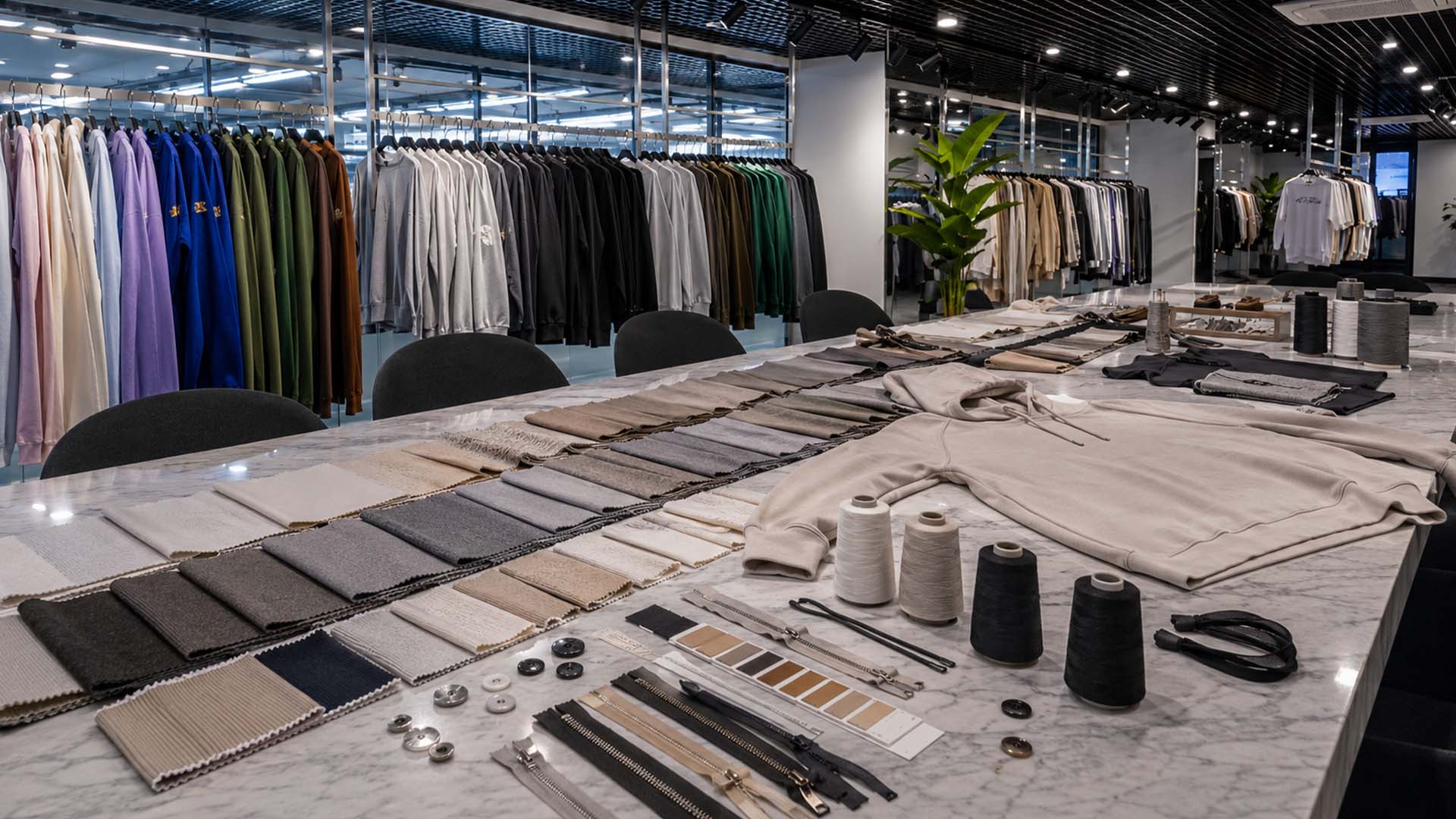
A strong fabric specification may include:
- Fabric type
- Fiber composition
- Fabric weight in GSM
- Knit or weave structure
- Stretch percentage
- Surface finish
- Brushing or peaching
- Wash treatment
- Shrinkage requirements
- Color reference
- Certification requirements
- Approved supplier or reference quality
For example:
100% combed cotton single jersey, 240 GSM, compact finish, pre-shrunk, soft hand feel, maximum shrinkage of 5% after washing.
For a sweatshirt:
80% cotton, 20% recycled polyester brushed fleece, 360 GSM, soft inner brushing, anti-pilling finish.
GSM refers to grams per square meter and indicates the weight of the fabric. It influences the garment’s structure, opacity, warmth, drape, and perceived quality.
The same design can feel completely different when produced in 160 GSM jersey instead of 260 GSM heavyweight jersey.
If the final fabric has not yet been selected, the brand should still define the expected hand feel, weight range, composition, stretch, and visual appearance. The manufacturer can then source suitable alternatives for approval.
5. Construction and Stitching Details
Construction notes explain how the garment should be assembled.
This section may include:
- Seam types
- Stitch types
- Stitch density
- Seam allowance
- Reinforcement points
- Topstitching width
- Binding details
- Overlock requirements
- Coverstitch requirements
- Bartack locations
- Pocket attachment
- Hem construction
- Neckline construction
For example:
- Five-thread overlock at side seams
- Twin-needle coverstitch at sleeve and bottom hem
- Shoulder-to-shoulder neck tape
- Reinforced bartacks at pocket openings
- 6 mm single-needle topstitch around hood edge
Brands do not always need to specify every machine type. An experienced manufacturer can recommend suitable construction methods.
However, distinctive or quality-sensitive details should be documented clearly. This is especially important when the stitching affects the appearance, strength, stretch, or comfort of the garment.
6. Trims and Accessories
Trims include the components added to the main fabric.
Depending on the product, this section may cover:
- Zippers
- Buttons
- Snaps
- Drawcords
- Elastic
- Eyelets
- Buckles
- Hooks
- Velcro
- Shoulder pads
- Interlining
- Rib fabric
- Sewing thread
- Decorative tape
- Metal accessories
Each trim should include relevant specifications, such as:
- Material
- Size
- Shape
- Color
- Finish
- Supplier reference
- Placement
- Quantity per garment
For a zipper, the tech pack may state:
Two-way metal zipper, antique silver finish, size 5, black tape, 68 cm length for sample size M.
For a drawcord:
Flat cotton drawcord, 12 mm width, body-matching color, finished with matte black metal tips.
Reference photographs or supplier codes can be included when a specific trim appearance is required.
7. Labels and Branding Details
Private label clothing production requires clear branding instructions.
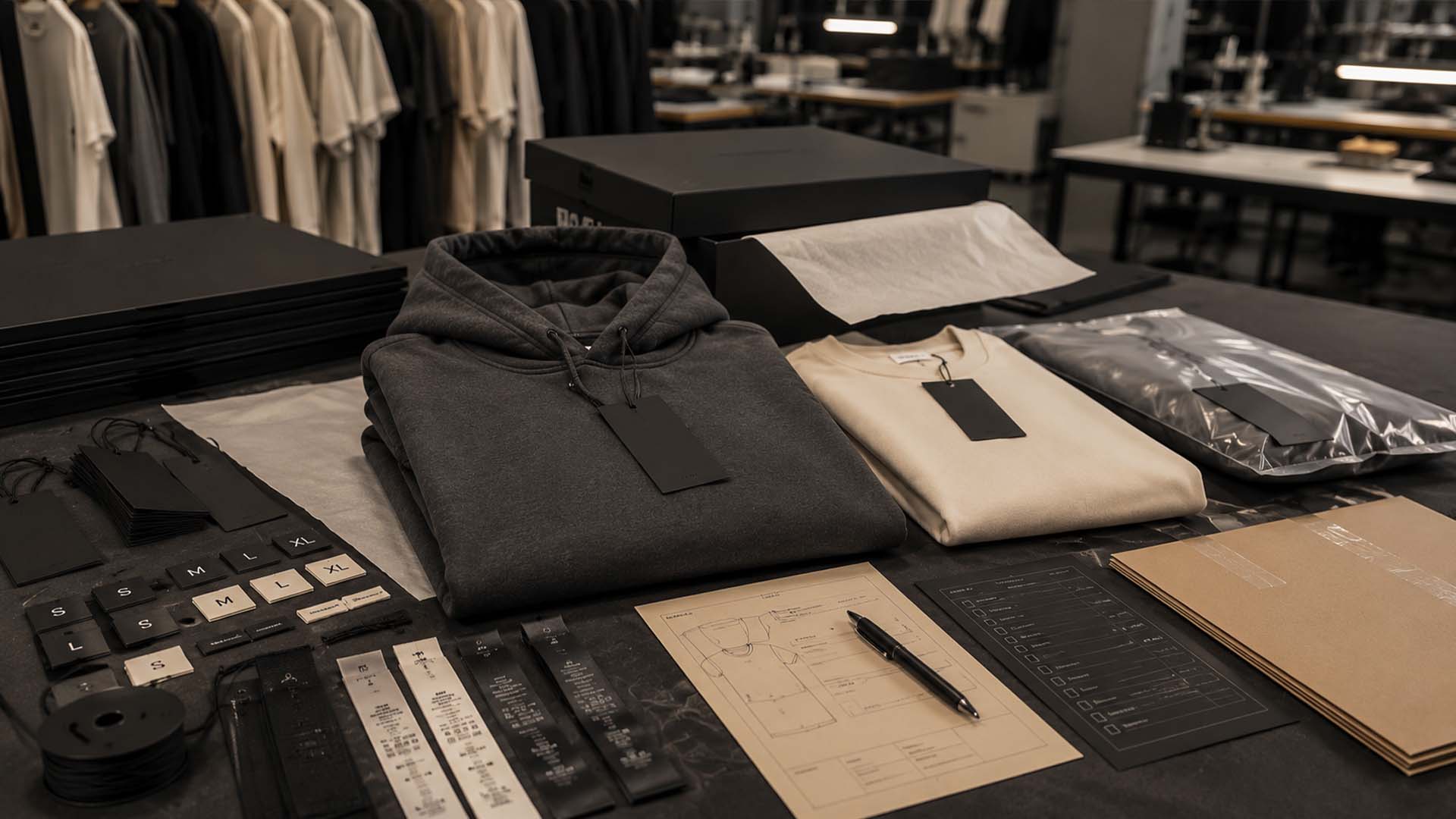
The tech pack should explain every label that will be attached to the garment, including:
- Main brand label
- Size label
- Care label
- Country-of-origin label
- Composition label
- Certification label
- Hang tag
- Barcode or sticker
- Special collection label
For each label, specify:
- Label type
- Dimensions
- Material
- Fold style
- Text or artwork
- Color
- Placement
- Stitching method
For example:
Center-fold woven main label, 55 × 25 mm when folded, black background with cream artwork, sewn into the center back neck seam.
The placement should be shown visually. “Inside the neck” may sound clear, but it does not define the exact distance from the neckline or whether the label is inserted into the seam.
Care label content should be checked carefully before production. Fiber composition, washing symbols, country of origin, importer details, and language requirements may vary by destination market.
Brands selling in Europe and the United States should confirm that their labeling information complies with the regulations of the intended sales market.
8. Color Specifications
Color names alone are subjective.
“Dark beige,” “washed black,” or “forest green” can be interpreted differently by different suppliers. For more accurate communication, the tech pack should include standardized references.
Common options include:
- Pantone references
- Physical fabric swatches
- Lab dip approvals
- Supplier color codes
- Thread color codes
- Approved sample references
Color information should cover more than the main fabric. It may also apply to:
- Rib
- Sewing thread
- Zippers
- Buttons
- Labels
- Prints
- Embroidery
- Drawcords
- Packaging
When multiple materials are used, exact color matching may not always be possible because cotton, polyester, metal, plastic, and ink reflect color differently.
The goal should be a visually coordinated result rather than assuming every material will appear identical under all lighting conditions.
9. Print and Embroidery Specifications
Artwork should never be described only as “logo on chest.”
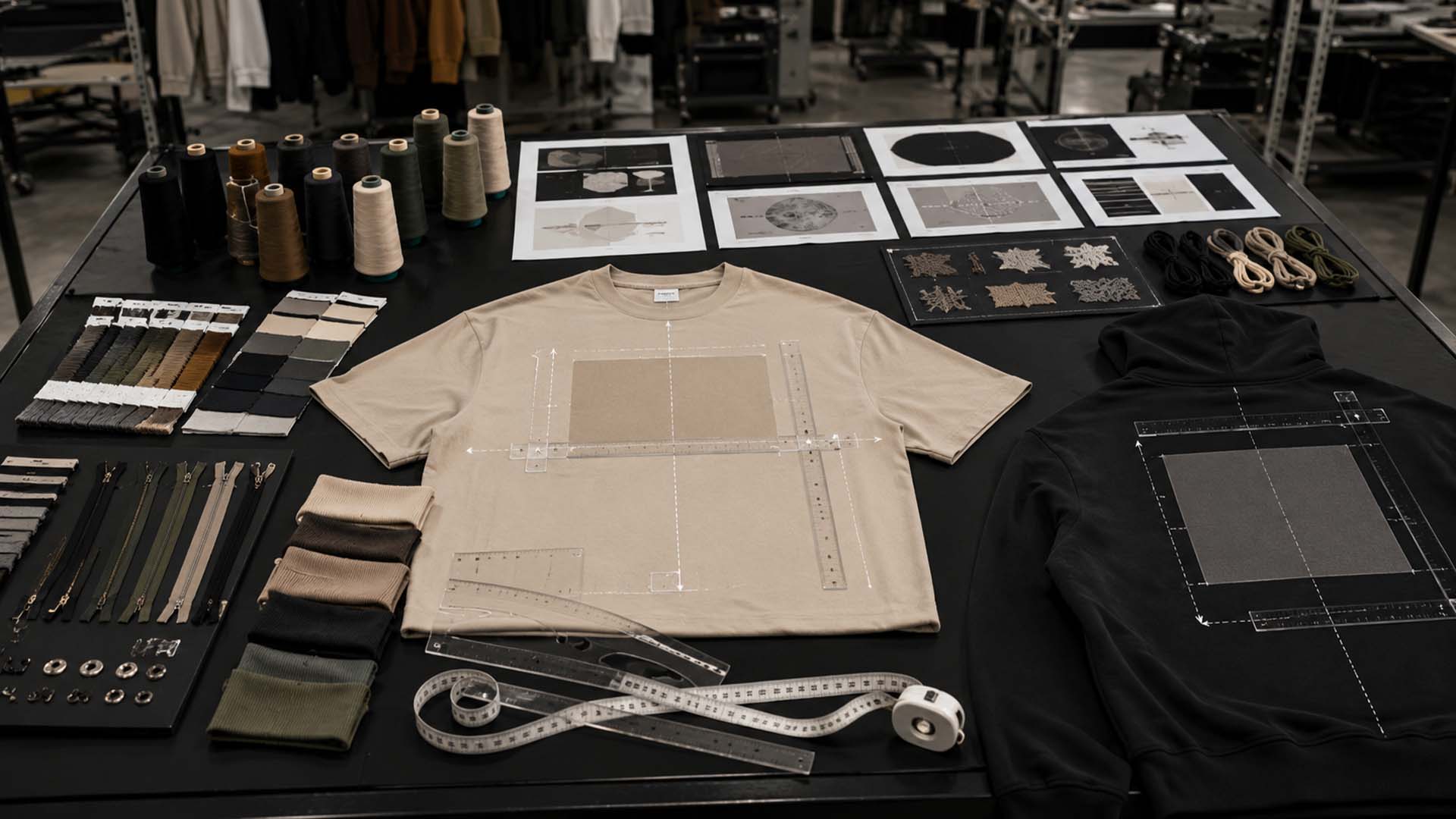
The tech pack should define:
- Artwork file
- Decoration method
- Exact dimensions
- Placement
- Distance from seams or neckline
- Color references
- Number of colors
- Print finish
- Embroidery stitch requirements
- Backing requirements
- Sample approval process
A print placement instruction could read:
Screen print centered on front body, 28 cm wide, positioned 9 cm below the highest shoulder point.
An embroidery instruction may read:
Flat embroidery, 75 mm wide, placed on the left chest, 18 cm below the shoulder seam and 9 cm from the center front.
Suitable decoration methods may include:
- Screen printing
- Water-based printing
- Plastisol printing
- Puff printing
- High-density printing
- Direct-to-garment printing
- Heat transfer
- Sublimation
- Flat embroidery
- 3D embroidery
- Appliqué
- Woven patches
The artwork file should be provided in a production-ready format whenever possible. Vector files are generally preferred for logos, screen printing, embroidery digitization, and precise resizing.
A manufacturer may need to adjust very small details, thin lines, or complex gradients to make the artwork suitable for the chosen production method.
10. Size Grading
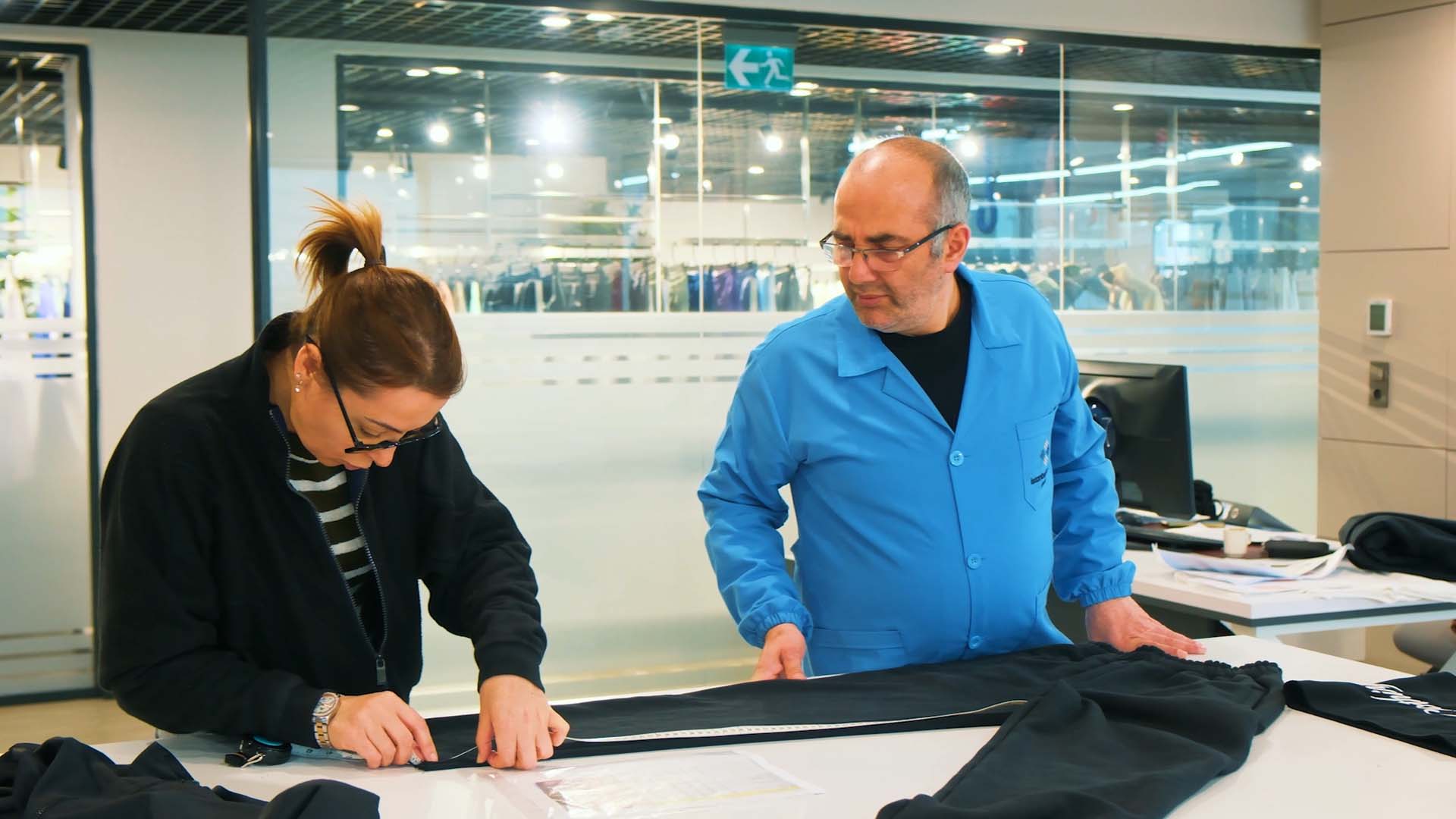
Grading is the process of increasing or decreasing garment measurements across the size range.
A size medium sample does not automatically explain how the product should fit in XS, S, L, XL, or XXL.
The grading section should show how each point of measurement changes between sizes.
For example:
| Measurement | XS | S | M | L | XL |
|---|---|---|---|---|---|
| Half chest | 54 | 57 | 60 | 63 | 66 |
| Body length | 66 | 68 | 70 | 72 | 74 |
| Sleeve length | 58 | 59 | 60 | 61 | 62 |
Grading should reflect the intended silhouette.
An oversized streetwear T-shirt may use smaller differences between sizes to maintain a loose look, while a fitted garment may require more precise grading around the chest, waist, hips, and armhole.
The pattern maker can support the grading process, but the brand should review the final graded measurement chart before bulk production.
11. Packaging Instructions
Packaging is often overlooked during product development, even though it directly affects the customer experience and shipping preparation.
Packaging notes may include:
- Folding method
- Tissue paper
- Polybag type
- Recycled packaging requirements
- Size stickers
- Barcode labels
- Hang tag attachment
- Warning text
- Carton dimensions
- Quantity per carton
- Assortment ratios
- Garment protection requirements
For example:
Fold each hoodie with sleeves positioned behind the body. Place one sheet of branded tissue paper around the garment. Pack individually in a recycled transparent polybag with the size sticker in the lower-right corner.
Clear instructions are particularly important for wholesale, e-commerce fulfillment, retail-ready production, and distribution to multiple markets.
12. Reference Images and Detail Pages
Reference images can make a tech pack easier to understand, but they should support technical instructions rather than replace them.
Useful references may show:
- Desired fit
- Pocket construction
- Wash effect
- Fabric texture
- Rib appearance
- Stitching detail
- Print finish
- Embroidery density
- Label style
- Packaging presentation
Each image should include a note explaining what the manufacturer should focus on.
For example:
Reference image for hood shape only. Do not copy the fabric, drawcord, or print.
This prevents the production team from interpreting every visible detail as part of the approved design.
Bill of Materials: Keeping Every Component Organized
A Bill of Materials, often called a BOM, lists every material and component required to produce the garment.
A BOM may contain:
- Main fabric
- Contrast fabric
- Rib
- Lining
- Interlining
- Sewing thread
- Zipper
- Buttons
- Elastic
- Main label
- Care label
- Size label
- Hang tag
- Embroidery
- Packaging materials
The BOM helps the manufacturer calculate consumption, source components, prepare pricing, and organize purchasing.
It can also identify whether materials are supplied by the brand, sourced by the manufacturer, or still waiting for approval.
How the Tech Pack Clothing Production Process Works
A typical tech pack clothing production process follows several stages.
1. Initial Tech Pack Submission
The brand sends the design information, technical drawings, measurements, artwork, fabric preferences, and references to the manufacturer.
2. Technical Review
The factory reviews the document for missing details, construction risks, material availability, and production feasibility.
Questions may be raised about fabric weight, measurements, decoration methods, trim availability, or minimum order requirements.
3. Preliminary Costing
The manufacturer prepares an estimated price based on the available specifications.
The estimate may change after fabric selection, pattern development, sampling, print testing, or trim confirmation.
4. Pattern and Sample Development
The pattern is created using the approved measurements and design details. A prototype or development sample is then produced.
5. Sample Review and Comments
The brand reviews:
- Fit
- Measurements
- Fabric
- Construction
- Color
- Trims
- Labels
- Print or embroidery
- Overall appearance
All comments should be documented clearly in the next tech pack revision.
6. Final Approval
After corrections, the brand approves the final sample, measurements, materials, colors, artwork, and packaging.
The approved tech pack should then be updated to match the final product.
7. Bulk Production and Quality Control
The production and quality control teams use the approved tech pack as the standard for bulk manufacturing and inspection.
Practical Example: An Oversized T-Shirt Tech Pack
An oversized T-shirt may look simple, but its fit depends on several connected details.
A professional tech pack should specify:
- Heavyweight cotton jersey
- Target GSM
- Chest width
- Shoulder width
- Shoulder drop
- Body length
- Sleeve length
- Sleeve opening
- Neck rib height
- Rib composition
- Neckline shape
- Shrinkage allowance
- Hem construction
- Print dimensions
- Print placement
- Main label position
- Care label position
- Packaging method
Changing only the chest width will not necessarily create a balanced oversized fit. The shoulder, sleeve, armhole, neckline, and body length must work together.
This is why clear measurements and reference images are more useful than simply writing “make it oversized.”
Common Tech Pack Mistakes to Avoid
Using Vague Descriptions
Terms such as “premium fabric,” “large print,” or “relaxed fit” are open to interpretation.
Use measurable, testable specifications wherever possible.
Missing Measurement Diagrams
A measurement called “body length” may be measured from the shoulder, center back, or neckline.
Show exactly where each measurement is taken.
Sending Low-Quality Artwork
Screenshots and small JPEG files may not be suitable for printing or embroidery.
Provide editable vector artwork where possible.
Ignoring Fabric Behavior
Measurements should account for shrinkage, stretch, recovery, washing, and finishing.
A correct pattern can still produce the wrong fit if the fabric behaves differently from the approved sample.
Failing to Update Revisions
Sample corrections should be added to the latest document. Verbal comments and scattered email messages are easy to miss.
Adding Too Much Unnecessary Information
A tech pack should be detailed, but it should also be usable.
Separate confirmed requirements from inspiration, preferences, and optional ideas. Highlight critical instructions clearly.
Can a Clothing Manufacturer Help Create a Tech Pack?
Yes. Many brands begin with sketches, reference garments, mood boards, or early product ideas rather than complete technical files.
An experienced clothing manufacturer can help develop or refine:
- Technical drawings
- Measurement charts
- Construction details
- Fabric specifications
- Trim options
- Pattern requirements
- Print and embroidery placements
- Label applications
- Packaging instructions
However, the brand still needs to communicate its intended fit, price positioning, target customer, quality level, and visual direction.
The strongest results usually come from collaboration. The brand provides the creative and commercial direction, while the manufacturer contributes technical and production knowledge.
Why Develop Clothing Products in Istanbul?
Istanbul has a well-established textile and garment manufacturing ecosystem covering fabric sourcing, pattern development, sampling, cutting, sewing, printing, embroidery, finishing, labeling, packaging, and export preparation.
For European brands, Turkey also offers geographical proximity compared with many long-distance sourcing destinations. This can make communication, sample shipping, factory visits, and production coordination more practical.
However, location alone does not guarantee quality.
Brands should still evaluate the manufacturer’s communication, technical capabilities, product experience, quality control procedures, transparency, and ability to follow an approved tech pack.
A reliable manufacturing partner should review the document carefully, identify unclear details, and discuss potential production issues before bulk manufacturing begins.
Read More: How to Find a Reliable Garment Manufacturer in Turkey?
Develop Your Product with Istanbul Factory
Istanbul Factory supports fashion brands, streetwear labels, startups, and established companies through the complete clothing development and manufacturing process in Istanbul.
Our services include:
- Custom clothing manufacturing
- Private label production
- Fabric and trim sourcing
- Garment sampling
- Pattern and product development
- Print and embroidery
- Labeling and packaging
- Quality control
- Sustainable textile production options
When a client already has a tech pack, our team reviews it from a production perspective and identifies any details that require clarification.
When the product is still at an early stage, we can support the development process using the brand’s sketches, samples, reference images, fabric direction, and commercial objectives.
A clear tech pack creates a stronger foundation for costing, sampling, quality approval, and bulk production.
Contact Istanbul Factory to discuss your collection, technical requirements, and clothing production needs in Turkey.
Tech Pack for Clothing Production Checklist
A complete tech pack should normally include:
- Product name and style number
- Front and back technical sketches
- Construction callouts
- Measurement chart
- Measurement diagram
- Tolerances
- Fabric composition
- Fabric GSM
- Fabric finish
- Color references
- Stitching instructions
- Trims and accessories
- Main label details
- Care and size labels
- Print or embroidery specifications
- Artwork files
- Size grading
- Bill of Materials
- Packaging instructions
- Reference images
- Revision date and version number
This checklist can be adjusted according to the complexity of the product.
Frequently Asked Questions
What is a tech pack in fashion?
A tech pack in fashion is a technical document that explains how a garment should be made. It includes drawings, measurements, fabrics, trims, colors, construction details, labels, artwork placements, grading, and packaging instructions.
Do I need a tech pack before contacting a clothing manufacturer?
A complete tech pack is helpful but is not always required for the first conversation. Brands can begin with sketches, reference samples, or product ideas. The manufacturer or product development team may help complete the technical specifications before sampling.
How detailed should a clothing tech pack be?
It should be detailed enough for the manufacturer to understand the product without making major assumptions. Every element that affects the fit, appearance, construction, branding, quality, or packaging should be clearly documented.
Does a tech pack include a sewing pattern?
The tech pack and sewing pattern are separate production tools. The tech pack provides the specifications and measurements, while the pattern translates those requirements into shaped pieces used for cutting and sewing.
Can a manufacturer provide an accurate price from a tech pack?
A detailed tech pack allows the manufacturer to prepare a more accurate estimate. Final pricing may still depend on fabric selection, trim availability, order quantity, print or embroidery testing, sample development, and packaging requirements.
What file format should a tech pack use?
Tech packs are commonly prepared in Adobe Illustrator, Excel, specialized fashion software, or PDF format. Manufacturers usually prefer a clearly organized PDF for review, supported by editable artwork and spreadsheet files when needed.
Should the tech pack be updated after sampling?
Yes. All approved sample corrections should be added to the latest version. The final production tech pack should match the approved garment, measurements, materials, colors, branding, and packaging.
Can Istanbul Factory help with tech pack development?
Yes. Istanbul Factory can review existing tech packs and support brands that need help developing technical details from sketches, reference garments, fabric ideas, or early product concepts.


2 Comments