


MOQ is one of the first terms a fashion brand encounters when contacting a clothing manufacturer. It can also be one of the most confusing.
A manufacturer may quote an MOQ per style, per color, per fabric, or for the entire order. One supplier may accept 100 pieces, while another requires 500 or more. These differences are not arbitrary. They reflect how fabric is purchased, how production lines are planned, how trims are manufactured, and how much setup work is required before sewing begins.
Understanding MOQ in clothing manufacturing helps brands plan more realistic collections, control their budgets, and avoid ordering more inventory than they can confidently sell.
What Does MOQ Mean in Clothing Manufacturing?
MOQ stands for minimum order quantity. It is the smallest number of garments a clothing manufacturer is prepared to produce under a specific set of conditions.
A manufacturer might define MOQ in several ways:
- 500 pieces per style and color
- 300 pieces per style across two colors
- 1,000 total pieces across several products
- A minimum fabric quantity rather than a garment quantity
- A minimum value for the complete production order
For example, a brand may want to produce an oversized T-shirt in black, cream, and burgundy. If the MOQ is 300 pieces per color, the total order would be 900 pieces.
MOQ is normally calculated at the style and color level because each variation creates additional purchasing, cutting, sewing, finishing, and quality-control requirements.
Quick Answer
MOQ in clothing manufacturing is the minimum number of garments a factory will produce for one order, style, color, or fabric. Manufacturers set MOQs to cover material purchasing, machine setup, labor, trims, printing, quality control, and production planning costs.
Why Do Clothing Manufacturers Set MOQs?
Every garment order includes fixed preparation costs, regardless of whether the factory produces 50 pieces or 5,000 pieces.
Before bulk production begins, a manufacturer may need to:
- Review and correct the tech pack
- Develop or adjust patterns
- Grade the pattern into multiple sizes
- Source and purchase fabric
- Order labels, zippers, buttons, and packaging
- Prepare print or embroidery files
- Create cutting markers
- Set up machinery
- Train the production team on the garment
- Inspect samples and production output
These activities require time and skilled labor. When the quantity is too low, the setup cost per garment becomes too high for efficient production.
MOQ allows the factory to spread those costs across enough units to make the project commercially practical.
How MOQ Affects Clothing Prices
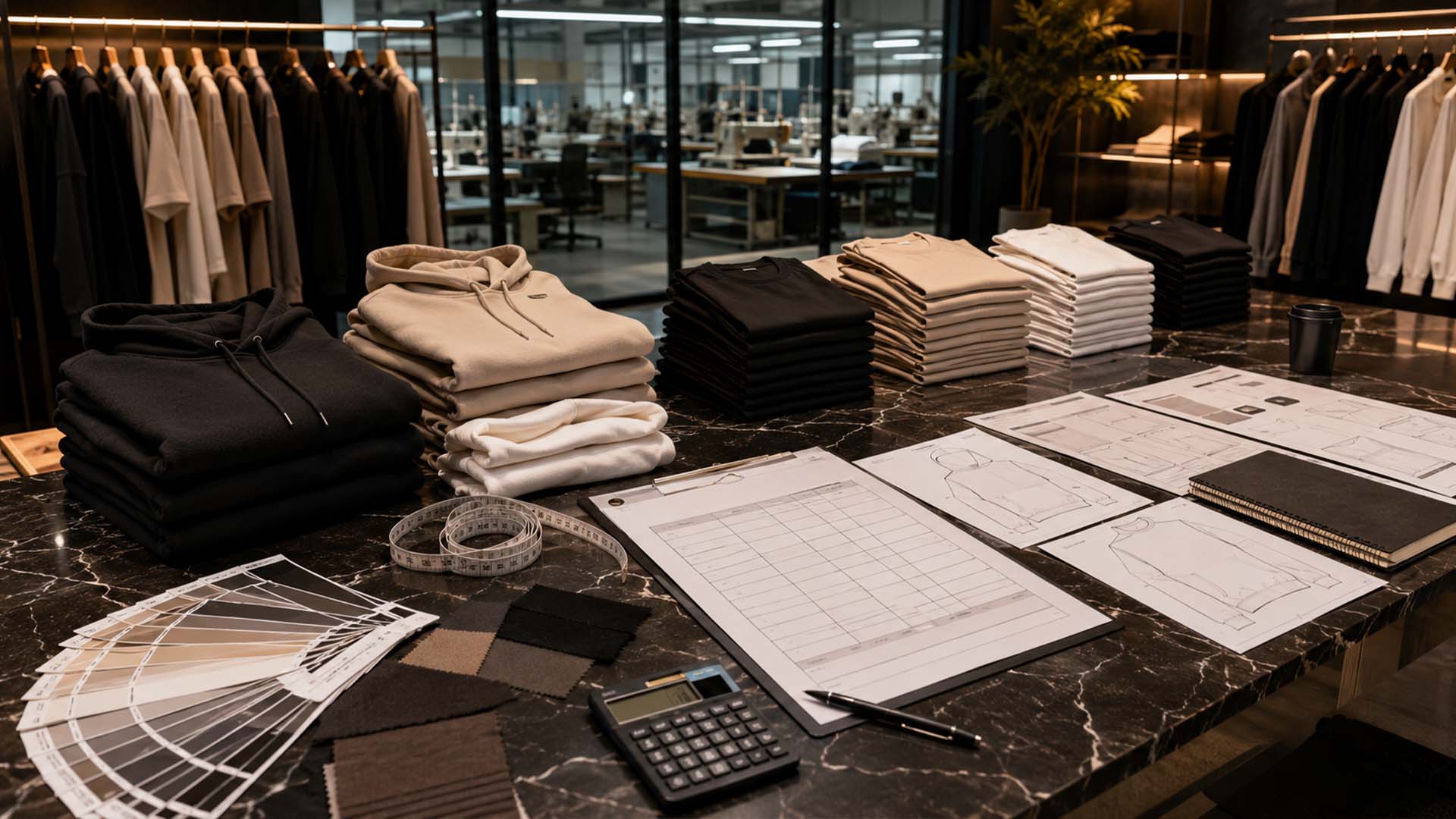
MOQ and unit price are closely connected.
In most cases, the unit price decreases as the production quantity increases. This happens because fixed development and setup costs are divided across more garments.
Consider a simplified example:
| Order Quantity | Estimated Unit Price |
|---|---|
| 100 T-shirts | €18.00 |
| 300 T-shirts | €12.50 |
| 500 T-shirts | €10.20 |
| 1,000 T-shirts | €8.70 |
These figures are illustrative. Actual prices depend on fabric, GSM, construction, washes, printing, trims, packaging, labor, and delivery terms.
The general principle remains the same: producing a small quantity often costs more per unit because the factory still needs to prepare patterns, machines, materials, and quality-control procedures.
Why a Low MOQ Is Not Always Cheaper
New brands often search for the lowest possible MOQ because they want to reduce their initial investment. That can be sensible, but a very low MOQ may create hidden costs.
A small order may result in:
- Higher garment prices
- Limited fabric choices
- Fewer custom color options
- Standard rather than custom trims
- Higher printing costs per piece
- Reduced packaging flexibility
- Less efficient freight costs
The smallest order is therefore not always the most financially efficient order. Brands should compare total investment, unit margin, inventory risk, and product quality rather than evaluating MOQ alone.
How Fabric Purchasing Influences MOQ
Fabric is one of the main reasons manufacturers set minimum order quantities.
Textile mills and fabric suppliers have their own MOQs. A mill may require a minimum number of kilograms for a custom knit, custom dye, special finish, or exclusive color.
For example, producing a custom-dyed heavyweight French terry may require several hundred kilograms of fabric. The clothing manufacturer cannot normally purchase only enough material for 40 hoodies if the fabric supplier requires a much larger dye lot.
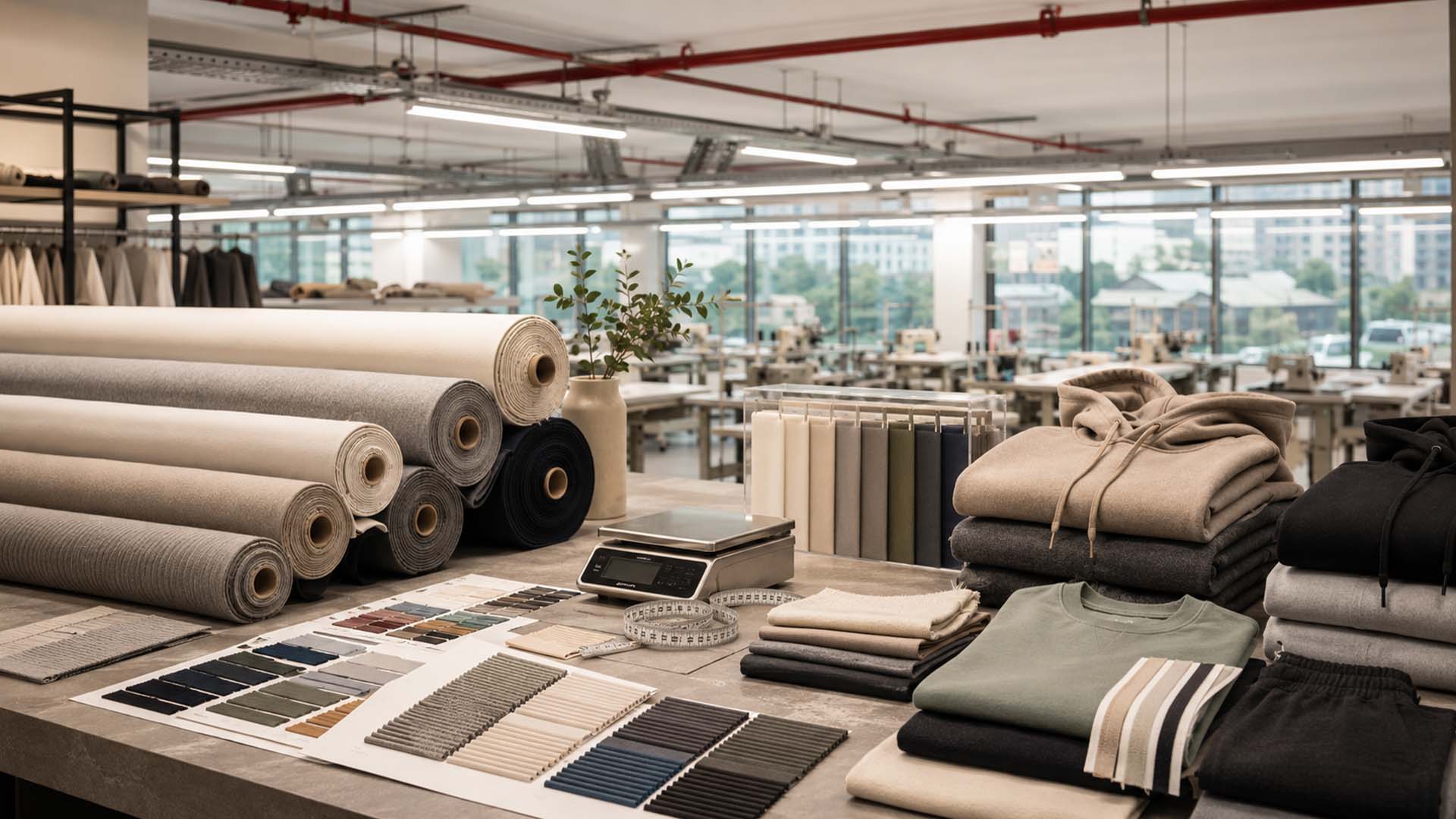
Stock Fabric vs. Custom Fabric
Using available stock fabric can sometimes reduce the production MOQ.
Stock fabric is material that has already been produced and is available in existing colors. It may allow brands to begin production without meeting a new dyeing minimum.
Custom fabric usually requires a higher commitment because it may involve:
- Custom yarn composition
- Special knitting
- Exclusive Pantone color matching
- Brushing or enzyme washing
- Water-repellent or performance finishes
- Custom fabric weight
- Laboratory testing
A startup brand can often control its first-order risk by selecting a high-quality stock fabric and introducing custom-developed fabrics after proving demand.
Fabric Consumption Also Matters
Garment size and construction affect how many units can be produced from a fabric order.
An oversized hoodie uses substantially more fabric than a fitted T-shirt. Wide-leg sweatpants, double-layer garments, large hoods, and extended sleeve shapes also increase consumption.
This means the same fabric minimum might produce:
- 800 standard T-shirts
- 500 oversized T-shirts
- 250 heavyweight hoodies
A professional clothing manufacturer calculates expected fabric consumption before confirming the final MOQ and price.
How Trims and Labels Affect Minimum Quantities
MOQ is not determined by fabric alone. Trims and branding components often have separate supplier minimums.
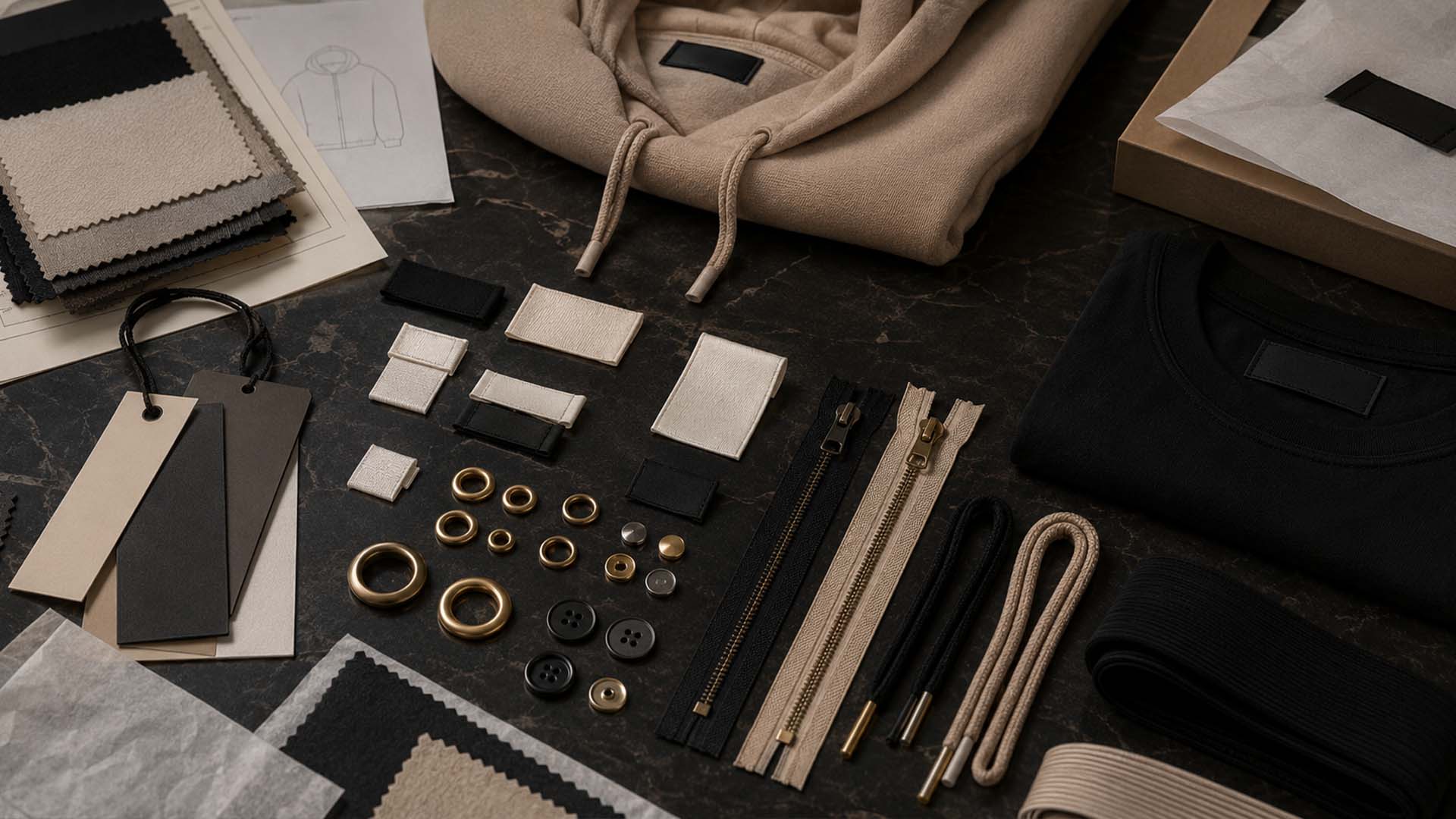
Common trims include:
- Woven brand labels
- Printed care labels
- Size labels
- Hang tags
- Zippers
- Buttons and snaps
- Drawcords
- Metal eyelets
- Elastic
- Branded packaging
- Custom tissue paper
A woven-label supplier, for example, may require 1,000 or several thousand labels. The brand may use only part of that quantity in its first production order and store the remaining labels for future orders.
Custom zippers, metal hardware, silicone patches, and molded components can create even higher minimums because special molds, finishes, or color treatments may be needed.
New brands can reduce unnecessary complexity by using the same label system, hardware, or packaging across several products.
How Printing and Embroidery Affect MOQ
Printing and embroidery require preparation before the first garment can be decorated.
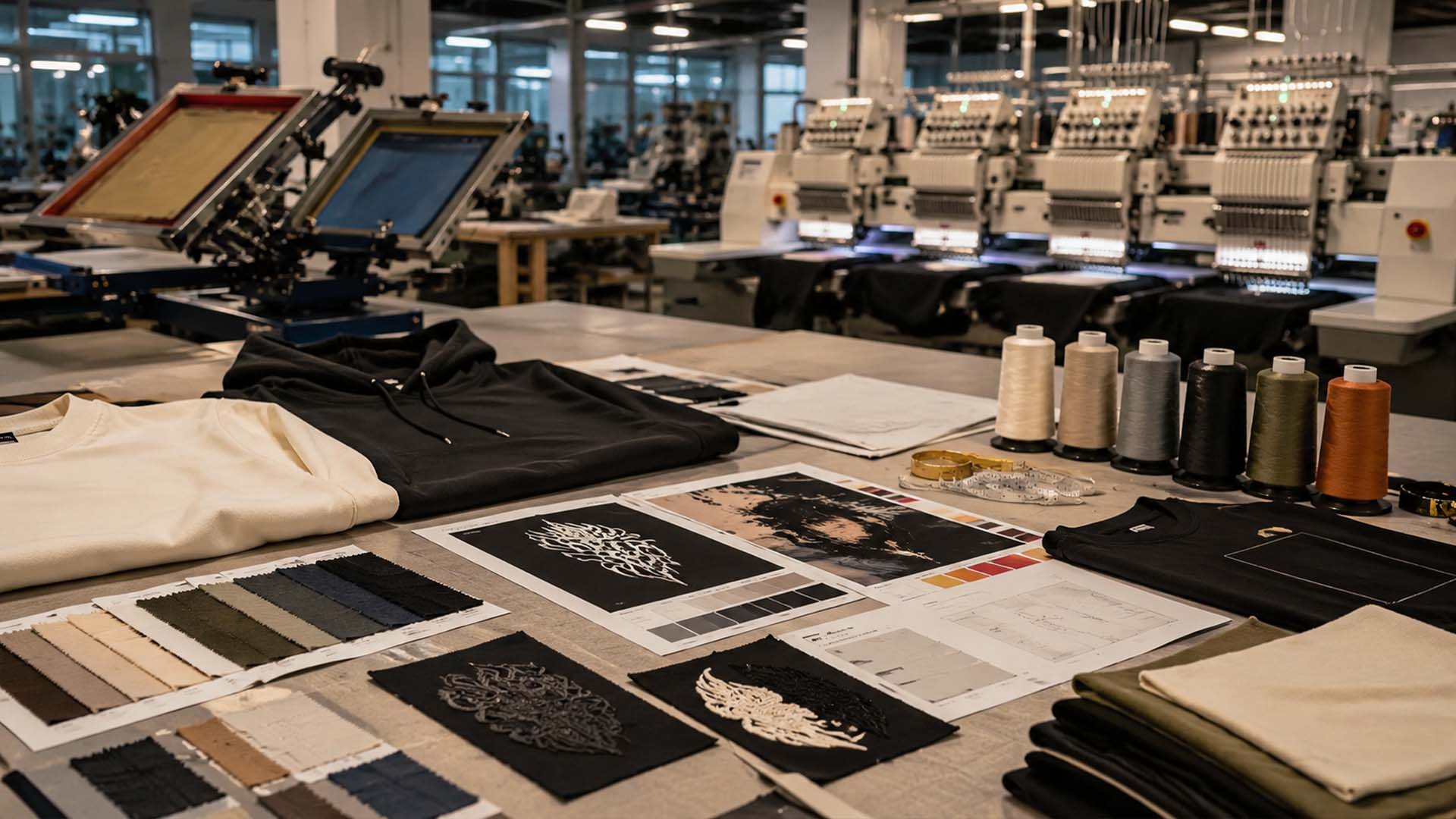
Screen printing may involve:
- Artwork separation
- One screen for each color
- Ink preparation
- Print placement testing
- Machine setup
- Curing tests
- Wash testing
A six-color graphic generally has higher setup costs than a simple one-color chest print. This can raise the practical MOQ or increase the unit price for a small order.
Embroidery also requires digitization, thread selection, machine setup, and test runs. Large, dense embroidery designs take more machine time and use more thread than small logos.
Digital printing methods may support smaller quantities, but the right method depends on the fabric, desired hand feel, color accuracy, durability, and target price.
The best decoration method should be selected based on the collection rather than MOQ alone.
MOQ and Production Planning
A clothing factory must coordinate many orders across its cutting, sewing, printing, finishing, ironing, quality-control, and packaging departments.
Very small orders can interrupt this workflow because machines and teams must be reset frequently.
For each new style, the factory may need to change:
- Sewing-machine settings
- Thread colors
- Needles and attachments
- Operation sequences
- Quality checkpoints
- Pressing instructions
- Packaging materials
Longer production runs are usually more efficient and consistent. Teams have time to establish a stable sewing rhythm, and quality controllers can identify variation more easily.
This is especially important in complex fashion clothing production, where the garment may include multiple panels, special seams, custom washes, or detailed finishing.
Common Types of Clothing Manufacturing MOQ
Brands should ask exactly how the MOQ is calculated before comparing manufacturers.
MOQ Per Style
The minimum applies to one garment design. A hoodie and matching sweatpants are normally considered two styles.
MOQ Per Color
Each garment color must reach the stated minimum. An order of 500 pieces in five colors may require 100 pieces per color, or the manufacturer may require 500 pieces for every color.
MOQ Per Fabric
Several styles may share one fabric minimum. A brand could potentially use the same French terry for hoodies, sweatshirts, shorts, and sweatpants.
MOQ Per Print or Embroidery Design
Each artwork variation may have its own minimum because it requires separate setup.
Total Order MOQ
Some manufacturers allow brands to divide a larger total order across several styles, provided the styles use similar fabrics and production processes.
These definitions can lead to very different final quantities, so they should be confirmed early.
How New Fashion Brands Can Start Without Overproducing
Starting smartly does not always mean finding the factory with the lowest MOQ. It means designing a collection that uses the available production quantity efficiently.
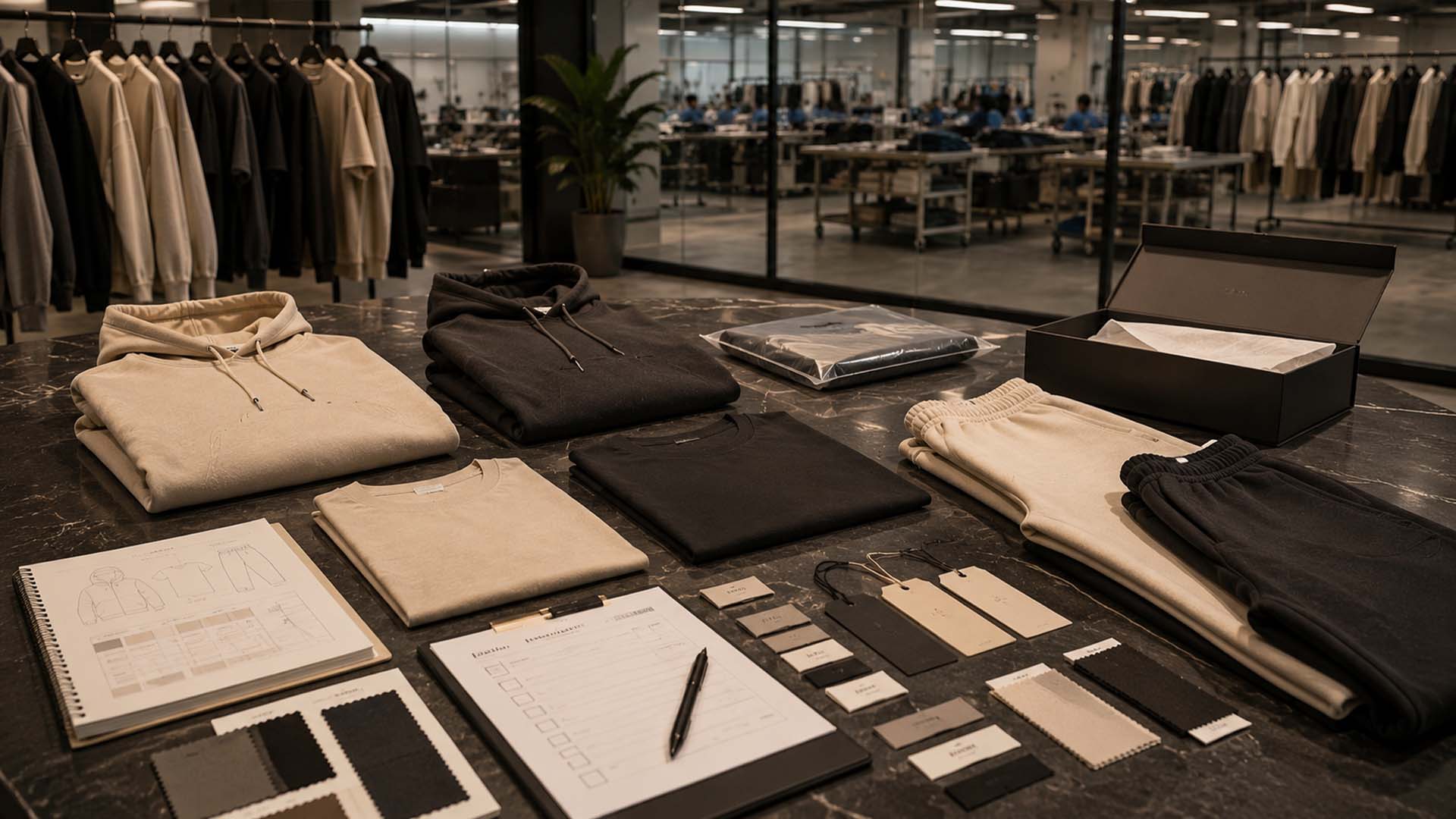
1. Launch Fewer Styles
A focused first collection is easier to develop, finance, market, and sell.
Instead of launching ten products with small quantities, a brand might begin with:
- One signature T-shirt
- One premium hoodie
- One matching bottom
A smaller product range allows more attention to fit, fabric, photography, content, and customer feedback.
2. Limit the Number of Colors
Every additional color can create a new fabric, cutting, thread, rib, trim, and quality-control requirement.
Two strong colors are often more effective than six poorly supported options.
Neutral colors such as black, off-white, grey, navy, or earth tones may also be easier to coordinate across a complete collection.
3. Use Shared Fabrics and Trims
Using one fabric across several styles can help meet fabric minimums while creating a consistent collection.
For example, the same heavyweight cotton jersey could be used for a standard T-shirt, oversized T-shirt, and long-sleeve top.
The same woven label, care label, size label, and packaging system can also be used across the range.
4. Validate Demand Before Bulk Production
Brands should test product positioning before committing to a large order.
Useful validation methods include:
- Building a pre-launch email list
- Testing content and advertising
- Showing approved samples to potential buyers
- Collecting retailer feedback
- Accepting controlled pre-orders
- Reviewing sales data from an earlier capsule
Pre-orders can reduce risk, but brands still need realistic production and delivery timelines.
5. Invest in Sampling
Skipping development to save money can lead to expensive problems during bulk production.
A proper sample process allows the brand and manufacturer to evaluate:
- Fit and proportions
- Fabric behavior
- Shrinkage
- Stitch construction
- Print placement
- Embroidery quality
- Label positioning
- Wash performance
An approved pre-production sample becomes the reference for bulk manufacturing and quality control.
6. Plan for Reorders
A successful first order should create the foundation for repeat production.
Keep accurate records of:
- Fabric references
- Pantone colors
- Measurements
- Approved patterns
- Trim specifications
- Print files
- Packaging instructions
Reorders are usually easier when the original product has been developed carefully and the same manufacturer retains the production information.
Is a Higher MOQ a Sign of a Better Manufacturer?
Not necessarily.
A high MOQ may indicate that a factory is structured for large-scale production. A low MOQ may indicate flexibility, a specialized sampling operation, or access to stock materials.
Neither number proves quality.
Fashion brands should also evaluate:
- Product specialization
- Sample quality
- Communication
- Technical knowledge
- Fabric sourcing capabilities
- Quality-control systems
- Production transparency
- Lead times
- References or previous work
- Payment and delivery terms
The right clothing manufacturer is the one whose capabilities, minimums, quality level, and production structure fit the brand’s commercial plan.
Why Brands Consider Clothing Production in Turkey
Turkey has become an important production destination for European and US fashion brands because it combines textile knowledge, established supplier networks, geographic access to Europe, and experience across different product categories.
Choosing clothing production in Turkey can give brands access to:
- Cotton jersey, French terry, fleece, rib, woven, and denim suppliers
- Printing, embroidery, washing, dyeing, and finishing specialists
- Experienced pattern and sampling teams
- Private label and custom manufacturing
- Shorter transport routes to many European markets
- Flexible development for premium and streetwear products
- Production aligned with European market expectations
Istanbul is particularly valuable because many fabric suppliers, trim producers, development studios, printing facilities, and garment factories operate within the same manufacturing ecosystem.
This proximity can improve coordination between product development and bulk production.
Questions to Ask a Manufacturer About MOQ
Before confirming an order, ask the manufacturer:
- Is the MOQ calculated per style, color, fabric, or total order?
- Can multiple sizes be included within the MOQ?
- Can several styles share the same fabric minimum?
- Are stock fabrics available?
- What happens to unused fabric and trims?
- Does the MOQ change for custom colors?
- Are printing and embroidery minimums separate?
- How does the price change at higher quantities?
- Is sampling included in the MOQ?
- What are the payment, production, and delivery terms?
Clear answers help prevent unexpected quantities and costs later in the process.
Produce Your Collection with Istanbul Factory
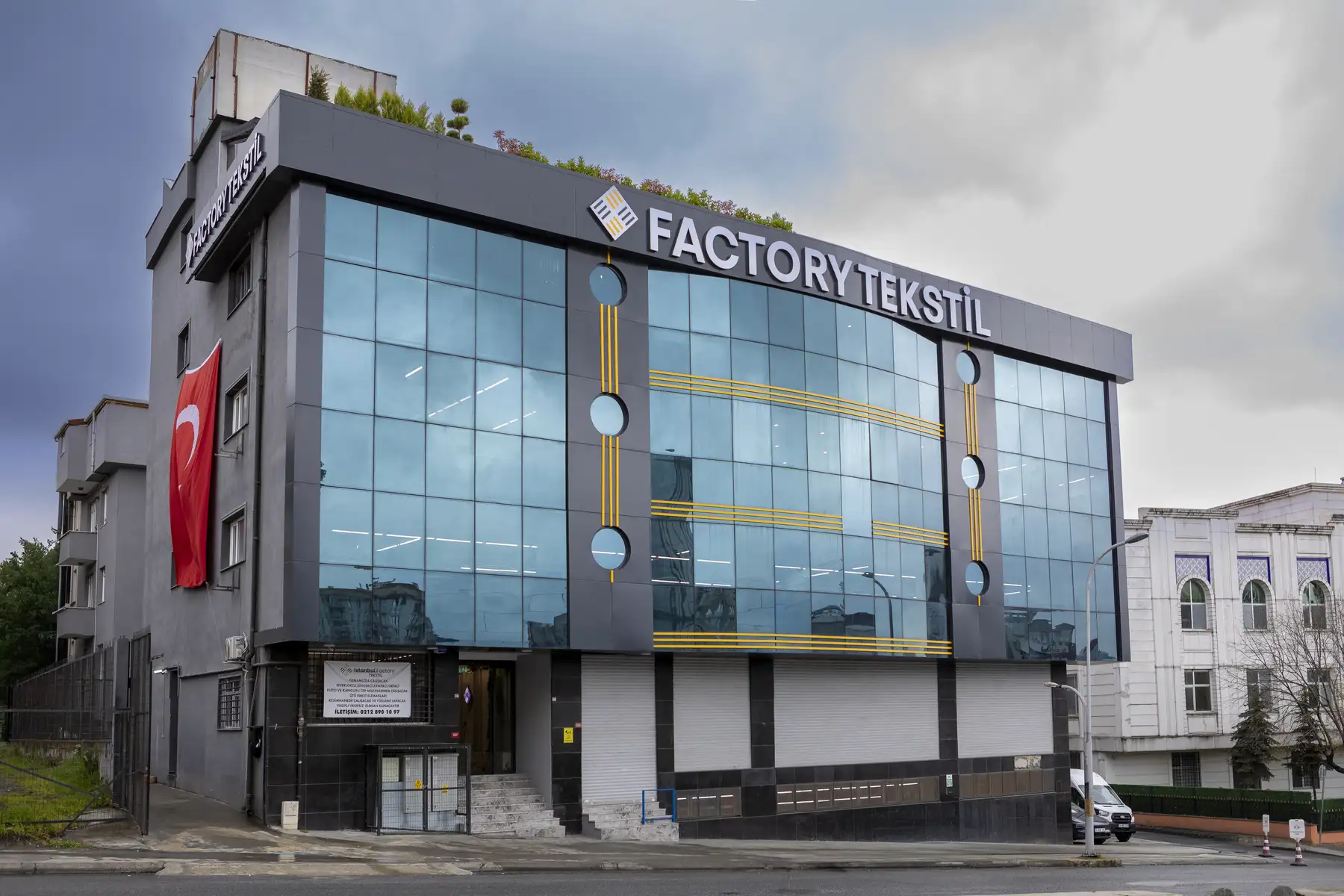
Istanbul Factory supports fashion brands, streetwear labels, startups, and established companies through an end-to-end manufacturing process in Istanbul.
Our services include:
- Garment development and sampling
- Fabric and trim sourcing
- Custom clothing manufacturing
- Private label production
- Printing and embroidery
- Measurement and workmanship control
- Branding and packaging
- Bulk production coordination
For many bulk production programs, Istanbul Factory typically works with an MOQ of approximately 500 pieces per style and color. Final requirements depend on the garment, fabric, custom dyeing, trims, decoration method, and construction complexity.
Rather than treating MOQ as an isolated number, we help brands understand how their design choices affect cost, quantity, quality, and production feasibility.
Share your tech pack, reference samples, estimated quantities, target market, and preferred delivery schedule with our team to receive a project-specific production assessment.
Frequently Asked Questions
What is MOQ in clothing manufacturing?
MOQ in clothing manufacturing is the minimum number of garments a factory agrees to produce for a style, color, fabric, or total order. It helps the manufacturer cover material purchasing, preparation, setup, labor, and quality-control costs.
What is a normal MOQ for a clothing manufacturer?
A normal MOQ can range from approximately 100 pieces to several thousand pieces. The exact quantity depends on the factory, product type, fabric availability, custom colors, trims, printing, and construction complexity.
Why do custom colors increase MOQ?
Custom colors usually require a new fabric dye lot. Textile mills set minimum dye quantities to maintain color consistency and make the dyeing process commercially viable.
Can I order different sizes within the MOQ?
Yes. Most manufacturers allow brands to divide the MOQ across sizes such as XS, S, M, L, and XL. The size ratio should be confirmed before fabric purchasing and cutting.
Does every color have a separate MOQ?
Often, yes. Each color may require separate fabric purchasing, cutting, sewing thread, rib, printing setup, and quality control. Some manufacturers allow colors to be combined when stock fabrics are available.
How can a startup reduce its production risk?
A startup can reduce risk by launching fewer styles, limiting colors, using stock fabrics, sharing trims across products, approving samples carefully, validating customer demand, and planning future reorders.
Does a lower MOQ mean lower quality?
No. MOQ describes production quantity, not quality. Brands should assess samples, fabric, construction, quality-control procedures, communication, and manufacturing experience separately.
How does MOQ affect the unit price?
Smaller orders usually have a higher unit price because development and setup costs are divided across fewer garments. Higher quantities often reduce the price per piece, although material and design choices still affect the final cost.


1 Comment