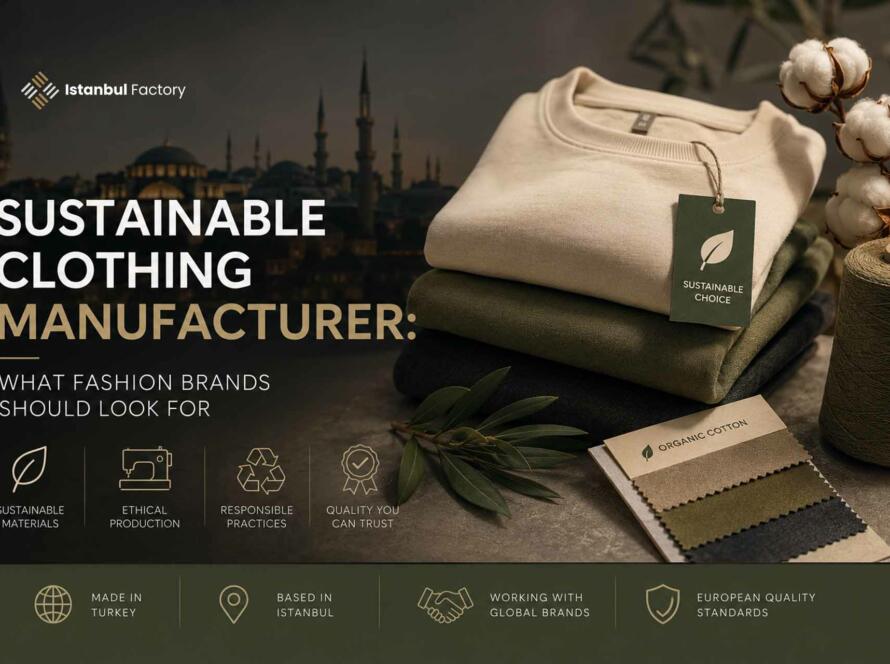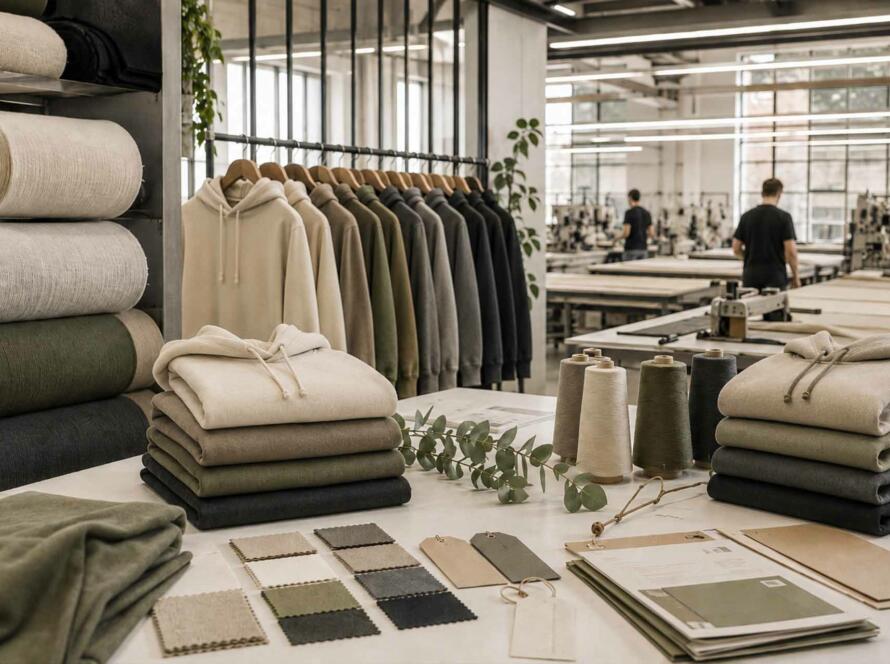


Choosing eco-friendly fabric is no longer just a branding decision. For fashion brands, it affects product quality, pricing, durability, customer satisfaction, production planning, and long-term trust.
Many brands want to build a more responsible collection, but the difficult question is practical: which sustainable fabric makes sense for the product, the customer, and the margin?
A premium hoodie, a lightweight T-shirt, a yoga set, a woven shirt, and a streetwear capsule cannot all be built from the same “eco” material. The right choice depends on comfort, GSM, shrinkage, color performance, availability, certification, and how the fabric behaves during real production.
For brands working in Private Label Clothing, fabric selection is one of the most important decisions before sampling and bulk production. A good material can make a simple silhouette feel premium. A poor material can create problems in fit, washing, print quality, and customer returns.
At Istanbul Factory, fabric sourcing is treated as a technical and commercial decision, not only a sustainability statement. The goal is to help brands choose better materials while protecting product quality, lead times, and margins.
What Does Eco-Friendly Fabric Really Mean?
Eco-friendly fabric usually refers to materials that reduce environmental impact in one or more areas:
- Lower water consumption
- Reduced chemical use
- Recycled or renewable fibers
- Better durability and longer product life
- Certified production processes
- Safer dyeing and finishing
- More responsible sourcing
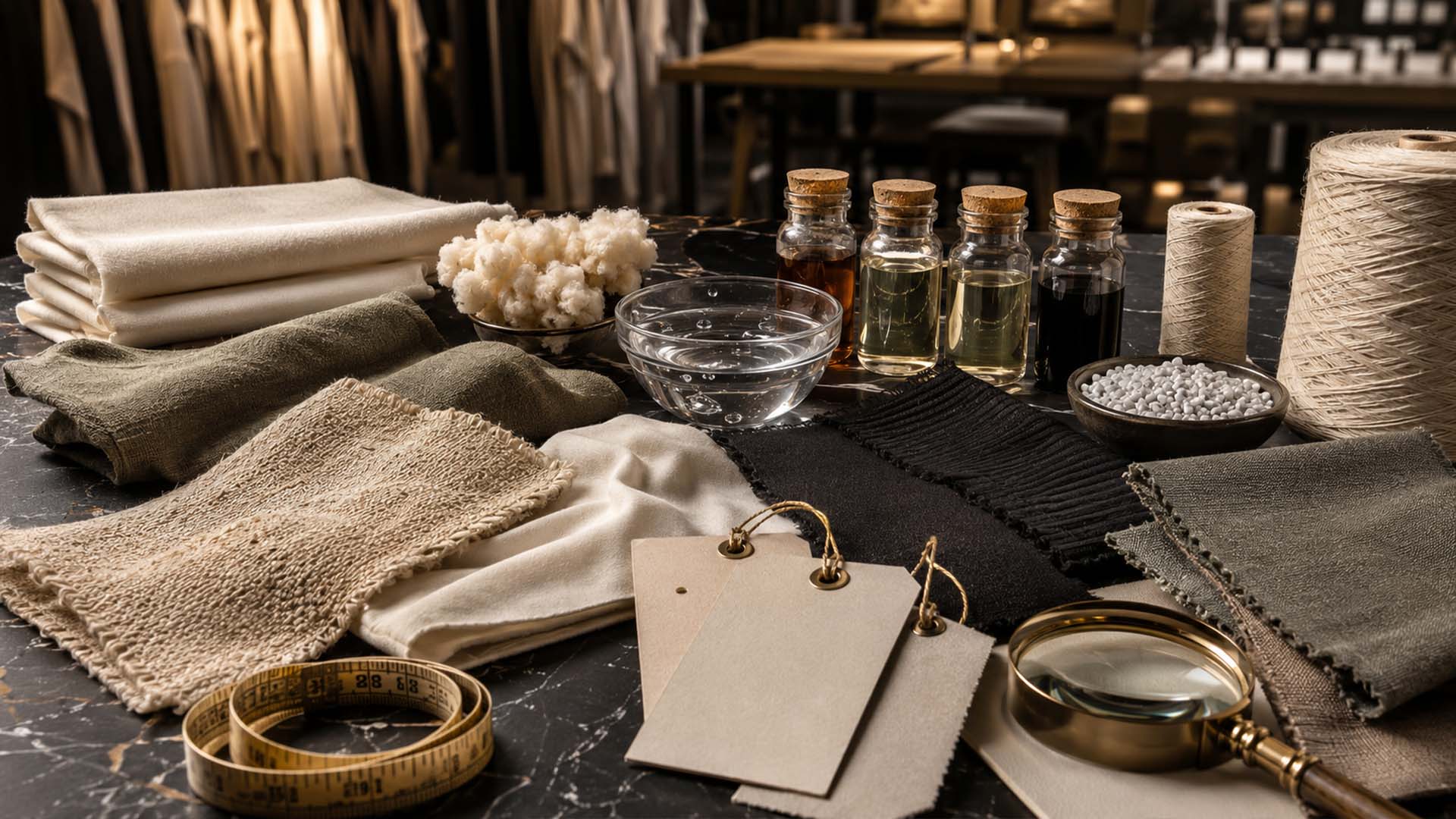
However, “eco-friendly” does not automatically mean “better” for every garment.
For example, organic cotton can be a strong choice for premium T-shirts, sweatshirts, babywear, and everyday essentials. Recycled polyester can be useful for performance wear, outerwear, linings, and blended fabrics. Tencel, modal, linen, hemp, and certified viscose can work beautifully in specific categories, but they each have different cost, care, texture, and availability considerations.
The best sustainable fabric is not always the most expensive or the most famous. It is the one that matches the garment’s purpose, quality expectations, customer price point, and production reality.
Key Factors Fashion Brands Should Compare
1. Water Use
Water consumption is one of the biggest topics in sustainable textile production.
Cotton, especially conventional cotton, is often criticized for high water use. Organic cotton may reduce chemical impact, but it still requires thoughtful sourcing. Linen and hemp are often seen as lower-impact natural fibers because they can require less irrigation depending on the region and farming method.
For fashion brands, the practical question is not only “Which fabric uses less water?” but also:
- Is the fabric suitable for the garment?
- Can it meet the required hand feel?
- Is it available in the right GSM and color?
- Will the customer accept the texture and price?
A sustainable fabric that creates poor sell-through is not a strong business decision. Better material choices must support both environmental goals and product performance.
2. Durability
Durability is one of the most underrated sustainability factors.
A garment that lasts longer is often more responsible than one that looks “eco” on paper but loses shape after a few washes. For Private Label Clothing Production, this is especially important because the customer experiences the brand through the finished product, not through the fabric description.
Durability depends on:
- Fiber quality
- Yarn structure
- Fabric construction
- GSM
- Finishing process
- Shrinkage control
- Color fastness
- Stitching and production quality
For example, a heavyweight organic cotton French terry can be excellent for premium hoodies and sweatpants if the fabric has good recovery, stable shrinkage, and a soft but structured hand feel. For a low-cost promotional hoodie, the same fabric may not fit the target price.
This is where experienced fabric sourcing matters. A Custom Clothing Manufacturer should help brands evaluate fabric performance before committing to bulk production.
3. Comfort and Hand Feel
Customers rarely describe a garment using technical language. They say it feels soft, heavy, cheap, breathable, stiff, smooth, warm, or premium.
Comfort is where many eco-friendly fabric decisions succeed or fail.
Organic cotton jersey may feel familiar and soft. Recycled polyester may need blending to improve breathability. Linen can feel elegant, but some customers may find it too textured unless it is blended or softened. Tencel and modal can feel fluid and premium, but they may require careful construction and finishing.
For new fashion founders, the best approach is to test materials through sampling rather than choosing only from a supplier catalog. The fabric may look perfect as a swatch, but the real garment can behave differently after cutting, sewing, washing, printing, and wearing.
A fabric should be judged in the final product, not only on the table.
Certification: What Should Brands Look For?
Certifications help brands verify claims and build trust with customers, retailers, and B2B partners.
Common textile certifications include:
- GOTS for organic textile standards
- OEKO-TEX for testing harmful substances
- GRS for recycled materials
- RCS for recycled content claims
- FSC-related certification for certain cellulosic fibers
- BCI-related sourcing for cotton programs
Certifications are valuable, but brands should understand what each one proves. A certified fabric may confirm fiber content, chemical safety, recycled input, or organic standards, depending on the certification type.
For US and European fashion brands, certification can be especially useful when selling through retailers, marketplaces, or premium e-commerce channels. It also helps avoid vague sustainability claims that may create trust issues later.
Still, certification should be checked alongside quality. A certified fabric that does not meet your shrinkage, GSM, color, or durability needs is not the right fabric for your collection.
Cost: How to Stay Sustainable Without Damaging Margins
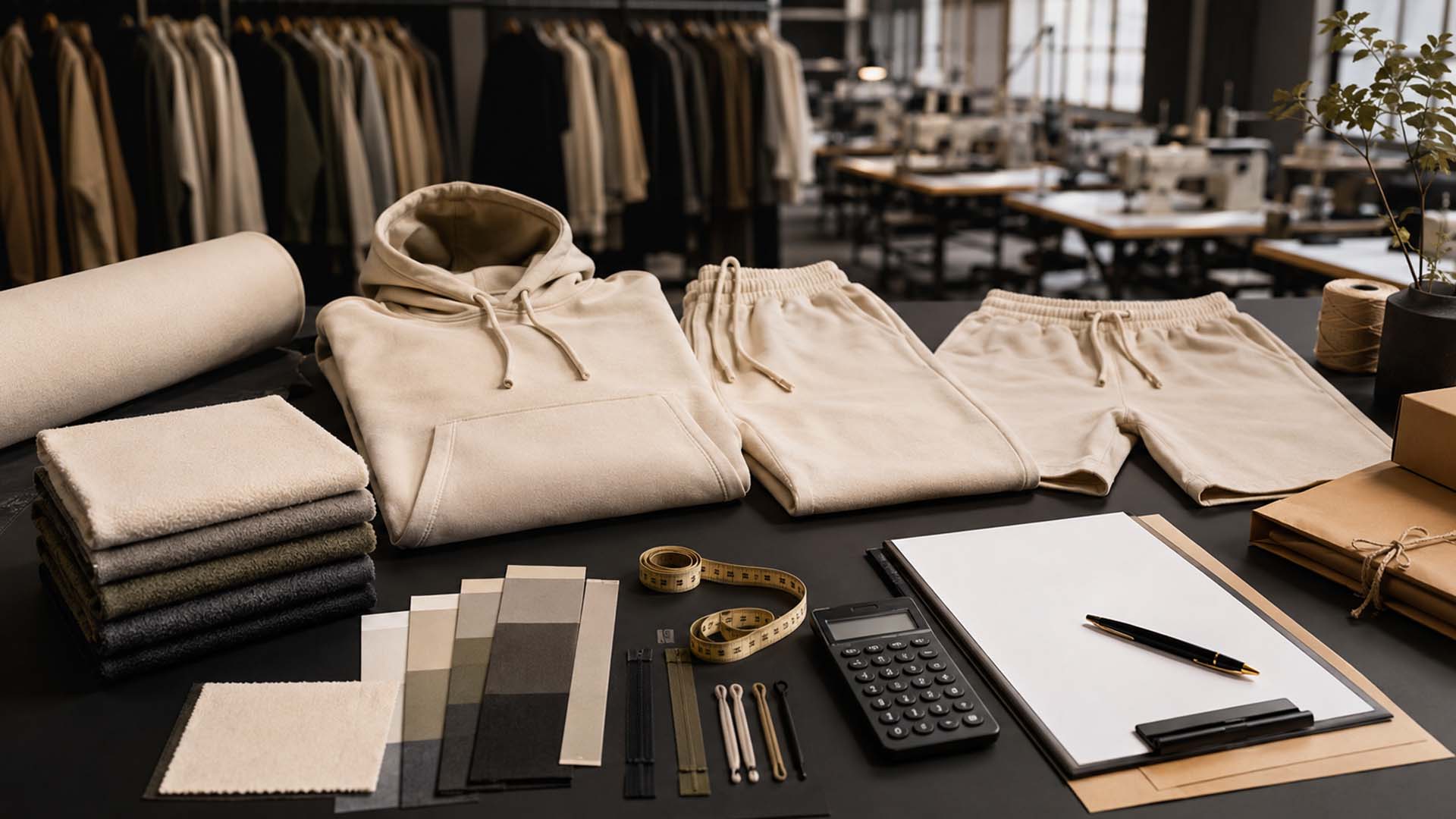
Eco-friendly fabrics often cost more than standard alternatives. The increase may come from certified fibers, controlled dyeing, recycled inputs, smaller supply chains, or limited availability.
This does not mean sustainable collections must be overpriced. Brands can protect margins by making smart decisions early.
Practical ways to manage cost:
- Use sustainable fabric for hero products first
- Choose fewer colors to reduce complexity
- Standardize fabric across multiple styles
- Avoid unnecessary trims and packaging waste
- Select a realistic GSM for the target price
- Confirm availability before design finalization
- Test fabric through samples before bulk commitment
For example, a streetwear brand may use one premium organic cotton fleece across hoodies, sweatpants, and shorts. This improves consistency, simplifies sourcing, and can support better pricing than using separate fabrics for every style.
In Private Label Clothing, margin protection often comes from disciplined development. The earlier fabric, fit, decoration, and packaging decisions are aligned, the fewer expensive changes happen later.
Availability and Lead Time Matter More Than Brands Expect
A fabric can be beautiful, certified, and commercially attractive, but if it is not available when production starts, it can delay the entire collection.
Availability is especially important for seasonal launches, influencer drops, wholesale delivery windows, and retailer deadlines.
Before approving a fabric, brands should ask:
- Is this fabric available in stock?
- Can it be reordered?
- What is the MOQ?
- How long does dyeing take?
- Are all colors available in the same quality?
- Can the same fabric be used in future collections?
For Clothing Production Turkey, one advantage is access to a strong textile ecosystem. Istanbul and nearby production regions offer fabric suppliers, dyehouses, printing facilities, embroidery units, sampling teams, and garment production partners within a relatively connected supply chain.
This can make development more flexible for European and US brands, especially compared with long-distance sourcing models where fabric and production are separated across multiple countries.
Best Eco-Friendly Fabrics by Product Type
T-Shirts and Everyday Essentials
Good options include organic cotton jersey, recycled cotton blends, cotton-modal blends, and certified cotton qualities.
For premium basics, softness, shrinkage control, and neck rib quality are critical. The fabric should feel good after multiple washes, not only during the first try-on.
Hoodies and Sweatpants
Organic cotton fleece, French terry, recycled cotton blends, and cotton-recycled polyester blends can work well.
Streetwear brands should pay close attention to GSM, brushing, rib quality, hood structure, and print or embroidery compatibility.
Activewear and Performance Products
Recycled polyester, recycled nylon, elastane blends, and technical knits may be suitable.
The main concerns are stretch recovery, moisture management, opacity, pilling, and seam performance.
Shirts, Dresses, and Light Wovens
Linen, organic cotton poplin, Tencel, modal blends, and certified viscose can be strong options.
For these garments, drape, wrinkle behavior, color depth, and wash care should be tested carefully.
A Practical Fabric Selection Process
A responsible fabric decision should follow a clear development process.
Recommended steps:
- Define the product category and target customer.
- Set the retail price and margin target.
- Choose fabric options based on performance and budget.
- Review certifications and supplier reliability.
- Develop samples before bulk production.
- Test fit, shrinkage, comfort, and decoration.
- Approve final fabric only after reviewing the finished sample.
This process is especially helpful for new fashion founders because it turns fabric sourcing into a controlled decision instead of guesswork.
Why Istanbul and Turkey Matter for Sustainable Clothing Production
Turkey has a strong position in textile and garment manufacturing because fabric sourcing, sampling, printing, embroidery, quality control, and bulk production can often be managed within one production region.
For European brands, this can mean shorter shipping routes, easier communication, faster sampling, and closer production oversight. For US brands, Turkey offers a balance between quality, flexibility, and access to experienced textile suppliers.
Istanbul Factory works with fashion brands, streetwear labels, startups, and established companies that need end-to-end support. This includes fabric sourcing, garment sampling, private label development, custom clothing manufacturing, print and embroidery, quality control, and sustainable production planning.
The aim is not to push one fabric as the “perfect” solution. The aim is to help each brand choose the material that fits the product, customer, margin, and long-term brand direction.
Build a Better Collection with Istanbul Factory
If you are developing a sustainable or eco-conscious collection, Istanbul Factory can support your project from fabric selection to finished production.
Our team helps brands compare fabric options, develop samples, control quality, and manage Private Label Clothing Production in Turkey with a focus on European quality standards.
Whether you are launching your first collection or improving an existing product line, better fabric decisions can make your garments feel more premium, last longer, and support stronger brand trust.
FAQ
What is the best eco-friendly fabric for private label clothing?
There is no single best fabric for every collection. Organic cotton, recycled cotton, recycled polyester, linen, hemp, Tencel, modal, and certified viscose can all be strong choices depending on the garment type, budget, quality expectations, and customer needs.
Is organic cotton always better than regular cotton?
Organic cotton can reduce chemical impact and support more responsible sourcing, but brands should still check GSM, softness, shrinkage, durability, certification, and availability before using it in bulk production.
Are recycled fabrics good for premium fashion brands?
Yes, recycled fabrics can work for premium fashion when the quality, texture, performance, and finishing are suitable. Recycled polyester and recycled nylon are often used in technical products, outerwear, and activewear.
How can new fashion founders choose sustainable fabrics without high risk?
New fashion founders should start with a small, focused collection, test fabrics through sampling, avoid too many colors, check MOQ and lead time, and work with a manufacturer that can guide sourcing and quality control.
Why work with Istanbul Factory for sustainable clothing production?
Istanbul Factory offers fabric sourcing, sampling, production, print and embroidery, quality control, and private label support in Istanbul, helping US and European brands develop better garments with a practical, quality-focused approach.