


For fashion brands, the garment production process is where an idea becomes a product customers can wear, photograph, review, and buy again. A strong design is important, but production decides whether that design feels premium, fits correctly, survives washing, arrives on time, and represents the brand as intended.
This is why professional garment manufacturing is never just about sewing. It is a structured process that includes design development, technical documentation, fabric sourcing, pattern making, sampling, cutting, sewing, printing, embroidery, quality control, ironing, packing, and shipping.
For startup clothing brands, this process can feel complex at first. For established labels, the challenge is usually different: consistency, speed, quality control, and reliable communication across repeated collections.
At Istanbul Factory, we support fashion brands, streetwear labels, premium clothing companies, and fashion entrepreneurs through an end-to-end production model in Istanbul, Turkey. This guide explains the full garment production process from the first concept to final delivery, with practical insights for brands that want better control over quality, timing, and cost.
What Is the Garment Production Process?
The garment production process is the complete journey of creating clothing, starting from a design idea and ending with finished garments ready for retail, e-commerce, wholesale, or distribution.
A professional garment production workflow usually includes:
- Design development
- Tech pack preparation
- Fabric and trims sourcing
- Pattern making
- Sample production
- Fit corrections
- Size grading
- Fabric cutting
- Sewing and assembly
- Printing and embroidery
- Washing or finishing, when needed
- Quality control
- Ironing and folding
- Packing and labeling
- Final shipment
Each step affects the next. A weak tech pack can create sampling problems. Poor fabric selection can affect fit and durability. Inconsistent cutting can create size issues. Missing quality control can lead to returns and damaged brand reputation.
For fashion brands, understanding this process helps create better products, avoid costly mistakes, and communicate more clearly with manufacturers.
Step 1: Design Development
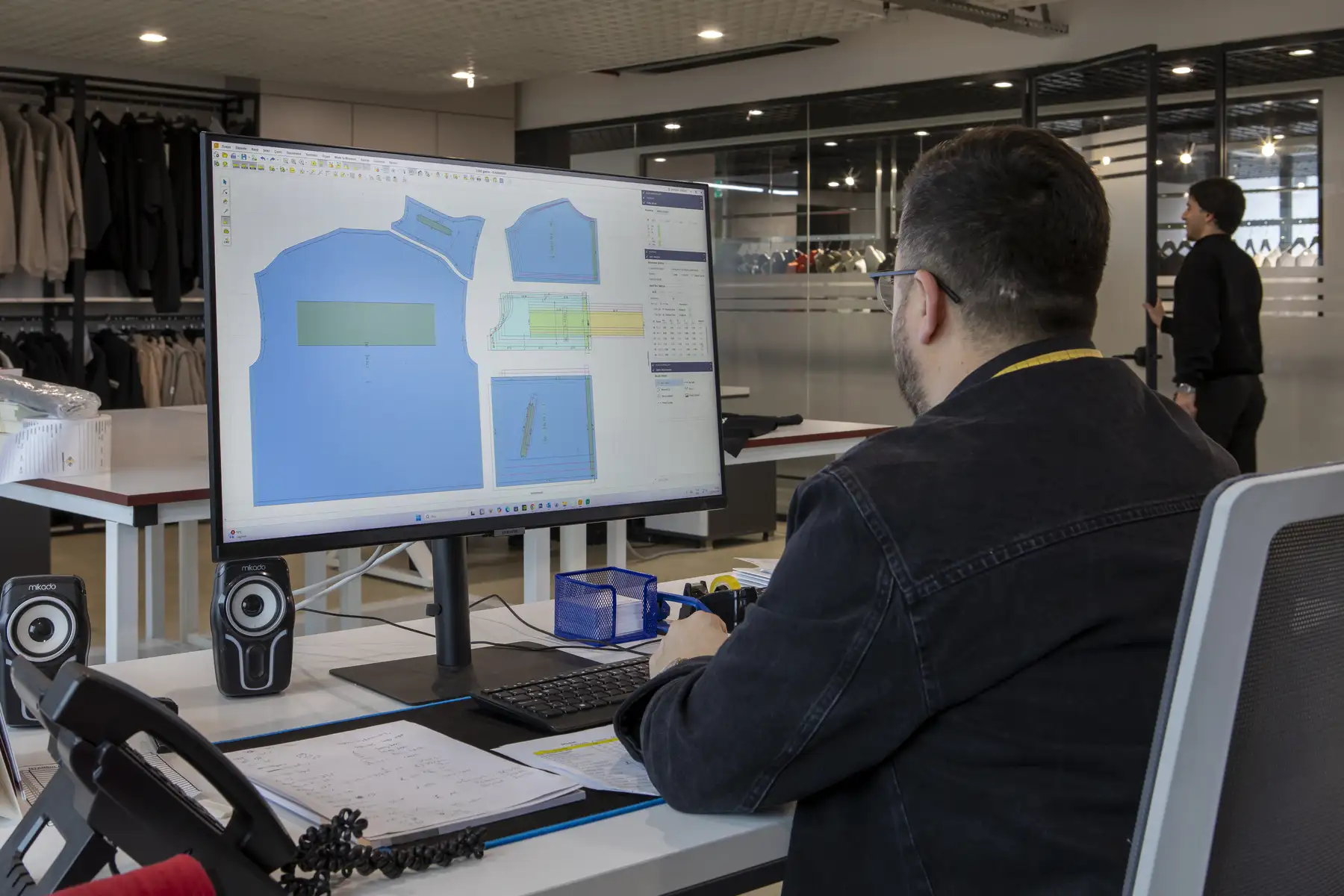
Every garment begins with a design direction. This may come from a sketch, moodboard, reference garment, seasonal collection plan, or a fully developed concept from the brand.
At this stage, the brand defines the product’s identity:
- What type of garment is being produced?
- Is it streetwear, casualwear, activewear, outerwear, or premium basics?
- What fit should it have?
- What fabric feeling is expected?
- What colors, prints, embroidery, labels, and trims are needed?
- What price level should the final product match?
For example, a streetwear brand may want an oversized hoodie with heavyweight fleece, dropped shoulders, puff print artwork, and custom woven labels. A premium basics brand may need a clean T-shirt with compact cotton, stable stitching, minimal branding, and excellent wash performance.
The design stage should balance creativity with production reality. A design may look strong on screen, but the manufacturer must check whether the fabric, construction, print method, and finishing can work together in real production.
This is where an experienced production partner can add value early. Istanbul Factory helps brands refine ideas before production begins, so the garment is not only visually attractive but also technically achievable.
Step 2: Tech Pack Preparation
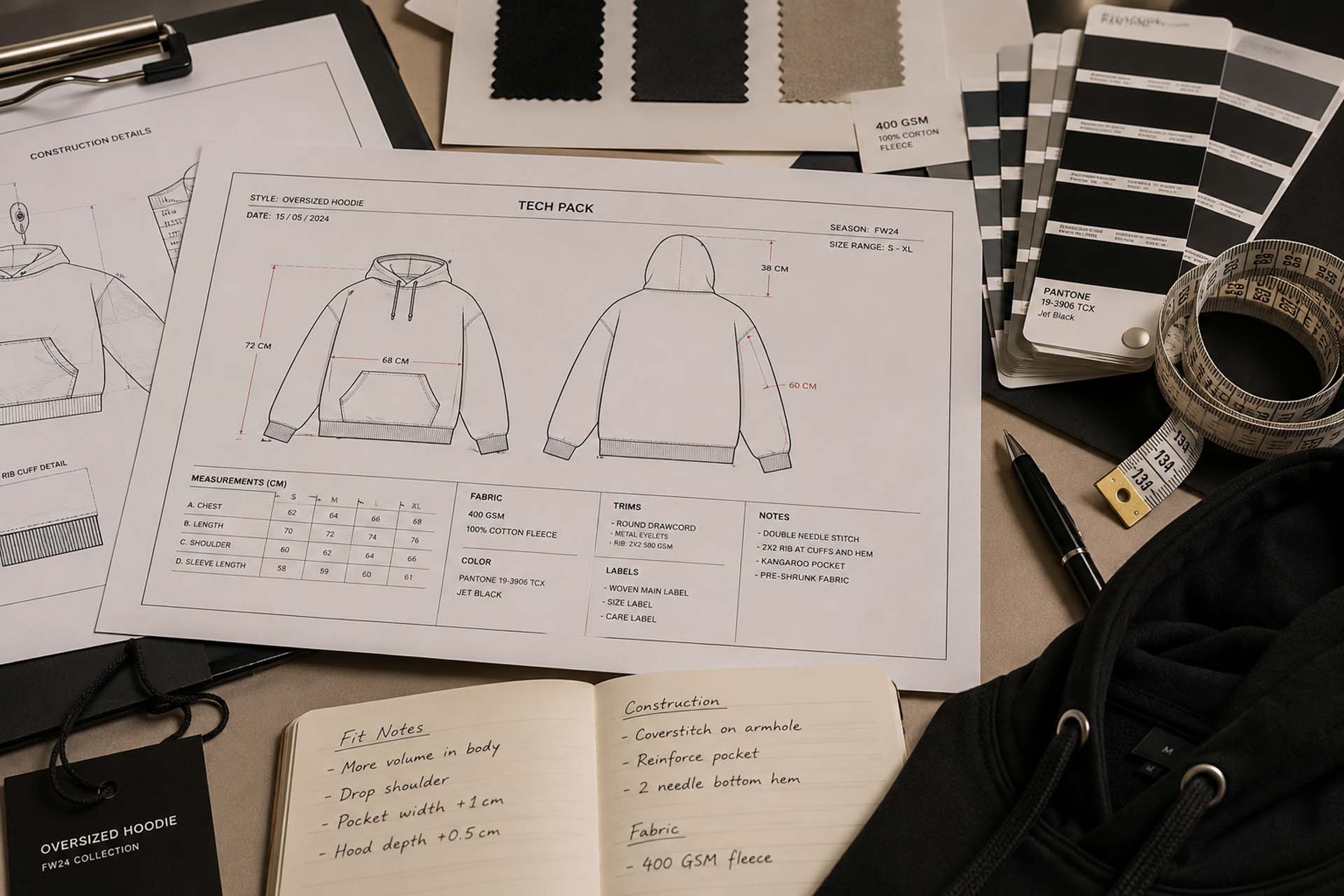
A tech pack is the technical document that guides the manufacturer. It reduces misunderstandings and gives the production team clear instructions.
A strong tech pack usually includes:
- Technical drawings
- Measurements
- Size chart
- Fabric details
- Stitching instructions
- Print or embroidery placement
- Label and branding details
- Trims and accessories
- Color codes
- Packaging requirements
- Reference images
- Special finishing notes
For professional garment production, the tech pack acts like a blueprint. Without it, factories may need to guess details, which can lead to delays, wrong samples, inconsistent sizing, or unexpected costs.
For startup brands, a tech pack does not need to be overly complicated at the beginning, but it must be clear. Even a simple hoodie should include body length, chest width, sleeve length, rib details, pocket placement, hood structure, fabric GSM, and logo placement.
At Istanbul Factory, tech pack review is often part of the early production conversation. If a detail is unclear, unrealistic, or missing, it is better to solve it before sampling rather than after bulk production begins.
Step 3: Fabric Sourcing
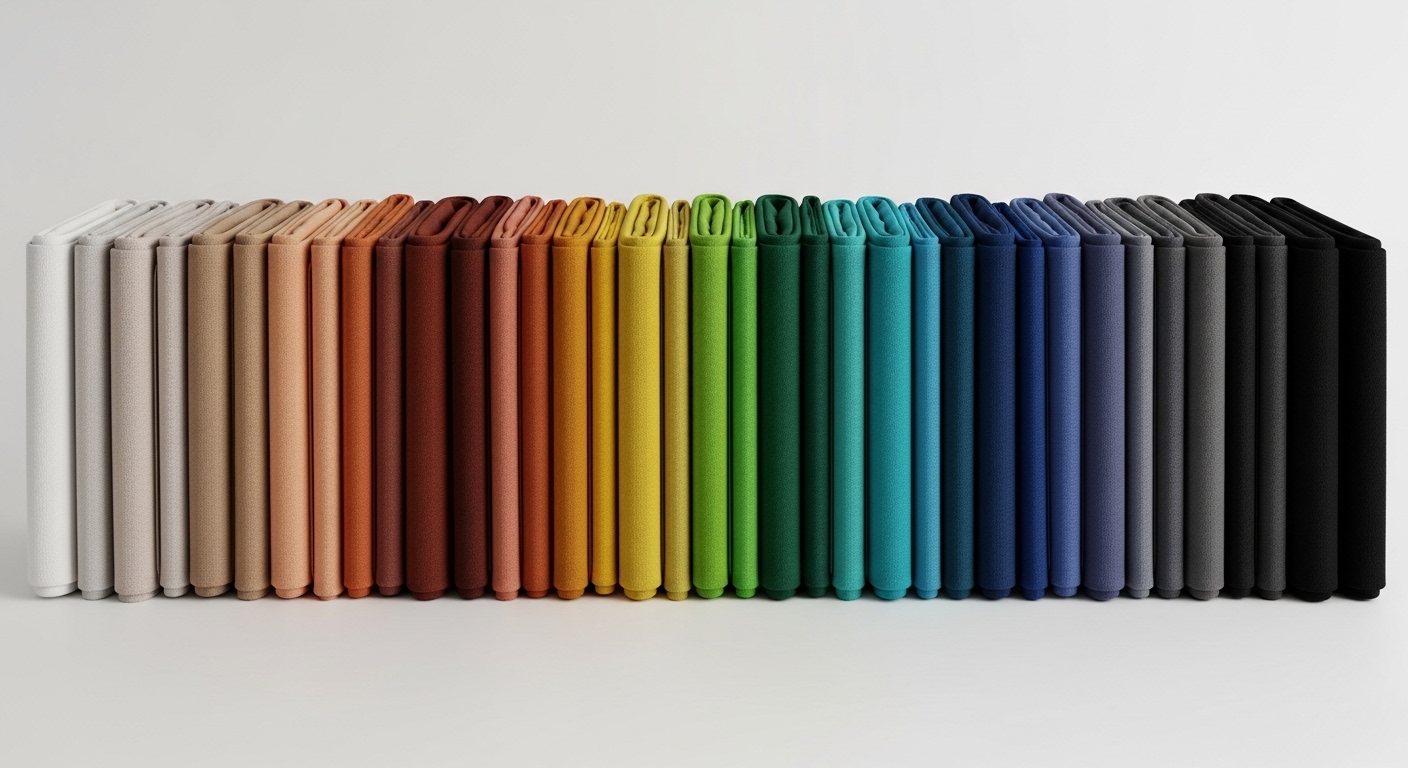
Fabric sourcing is one of the most important parts of the garment production process. The fabric affects fit, comfort, price, durability, printing quality, washing behavior, and the overall feeling of the product.
Common fabric decisions include:
- Cotton, organic cotton, polyester, viscose, modal, linen, wool, or blends
- Knitted or woven fabric
- Fabric weight, often measured in GSM
- Stretch level
- Texture and hand feel
- Color availability
- Shrinkage behavior
- Sustainability requirements
- Minimum order quantities
- Lead time
For example, a 240 GSM cotton jersey may be suitable for a premium T-shirt, while a 400 GSM brushed fleece may be better for a heavyweight hoodie. A streetwear brand may prefer a structured fabric that holds shape, while a lifestyle brand may choose something softer and lighter.
Turkey has a strong textile supply network, which makes Istanbul a strategic location for fabric sourcing. Brands can access a wide range of fabrics, trims, dyeing options, printing techniques, and finishing services without relying on long overseas supply chains.
At Istanbul Factory, fabric selection is handled with both creative and commercial goals in mind. The right fabric should match the brand identity, target price, quality expectations, and production timeline.
Step 4: Trims, Labels, and Branding Materials
Garment production is not only about the main fabric. Trims and branding details play a major role in how the final product feels.
These may include:
- Neck labels
- Care labels
- Size labels
- Hangtags
- Zippers
- Buttons
- Drawcords
- Metal tips
- Elastic bands
- Patches
- Packaging bags
- Stickers
- Barcode labels
For private label clothing production, these details are especially important. A simple garment can feel much more professional when the labels, packaging, and finishing are consistent with the brand identity.
For example, a premium streetwear hoodie may use a woven neck label, thick cotton drawcords, custom metal aglets, branded polybags, and a hangtag with collection information. These details help turn a basic product into a branded retail item.
Step 5: Pattern Making
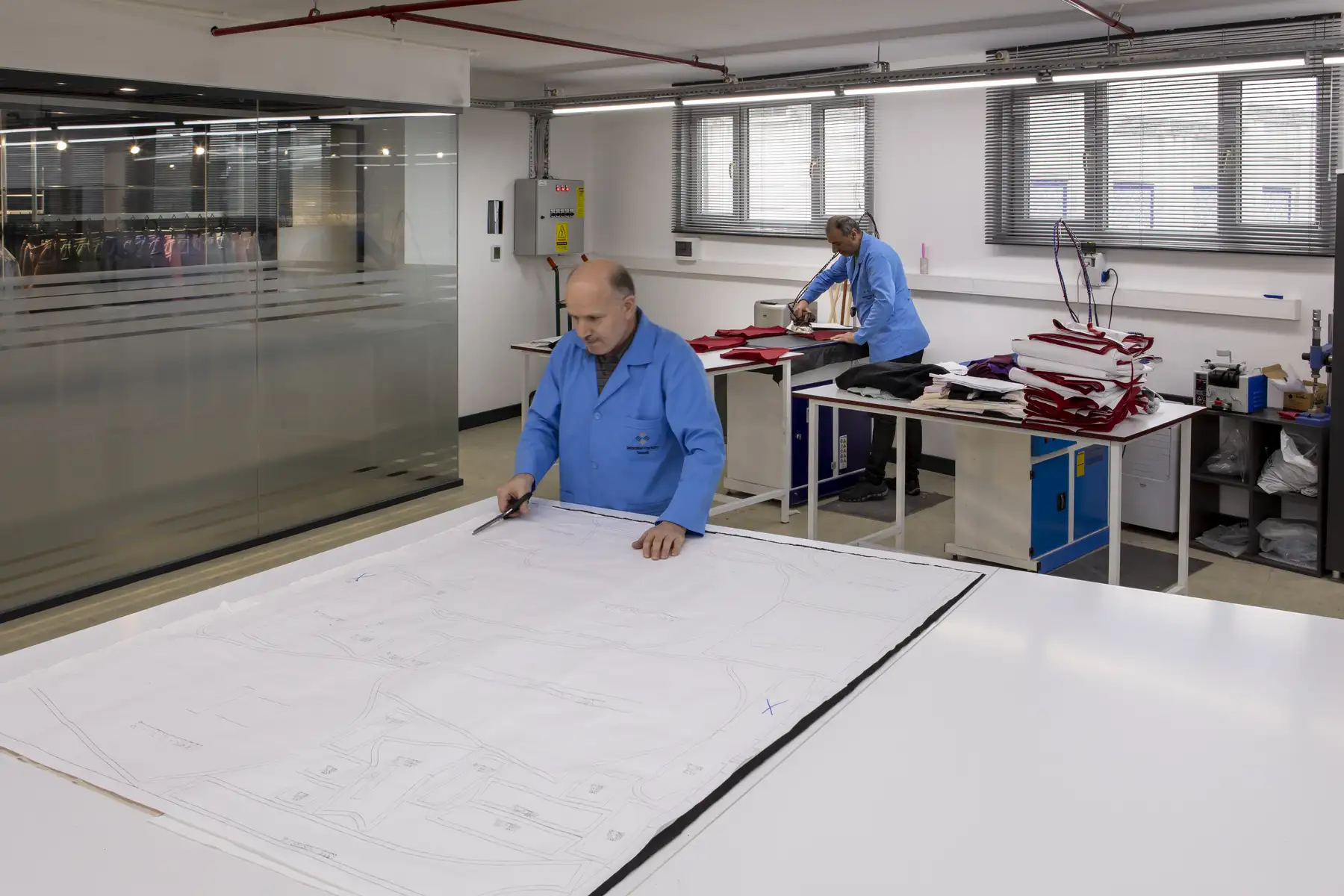
Pattern making turns the design into garment parts that can be cut and sewn. A pattern defines the shape, fit, and structure of the garment.
This stage is highly technical. Even small changes in the pattern can affect how a garment sits on the body. Shoulder slope, armhole depth, sleeve width, collar shape, and body length all influence the final fit.
Pattern making is especially important for:
- Oversized streetwear
- Tailored garments
- Jackets and outerwear
- Pants and trousers
- Dresses
- Fitted tops
- Custom silhouettes
A good pattern helps avoid problems such as twisting seams, uncomfortable sleeves, poor shoulder balance, or inconsistent sizing.
For brands, the pattern stage is where fit identity starts to become real. A brand may want a boxy T-shirt, a relaxed hoodie, a cropped sweatshirt, or a structured jacket. The pattern must translate that vision accurately.
Step 6: Garment Sampling
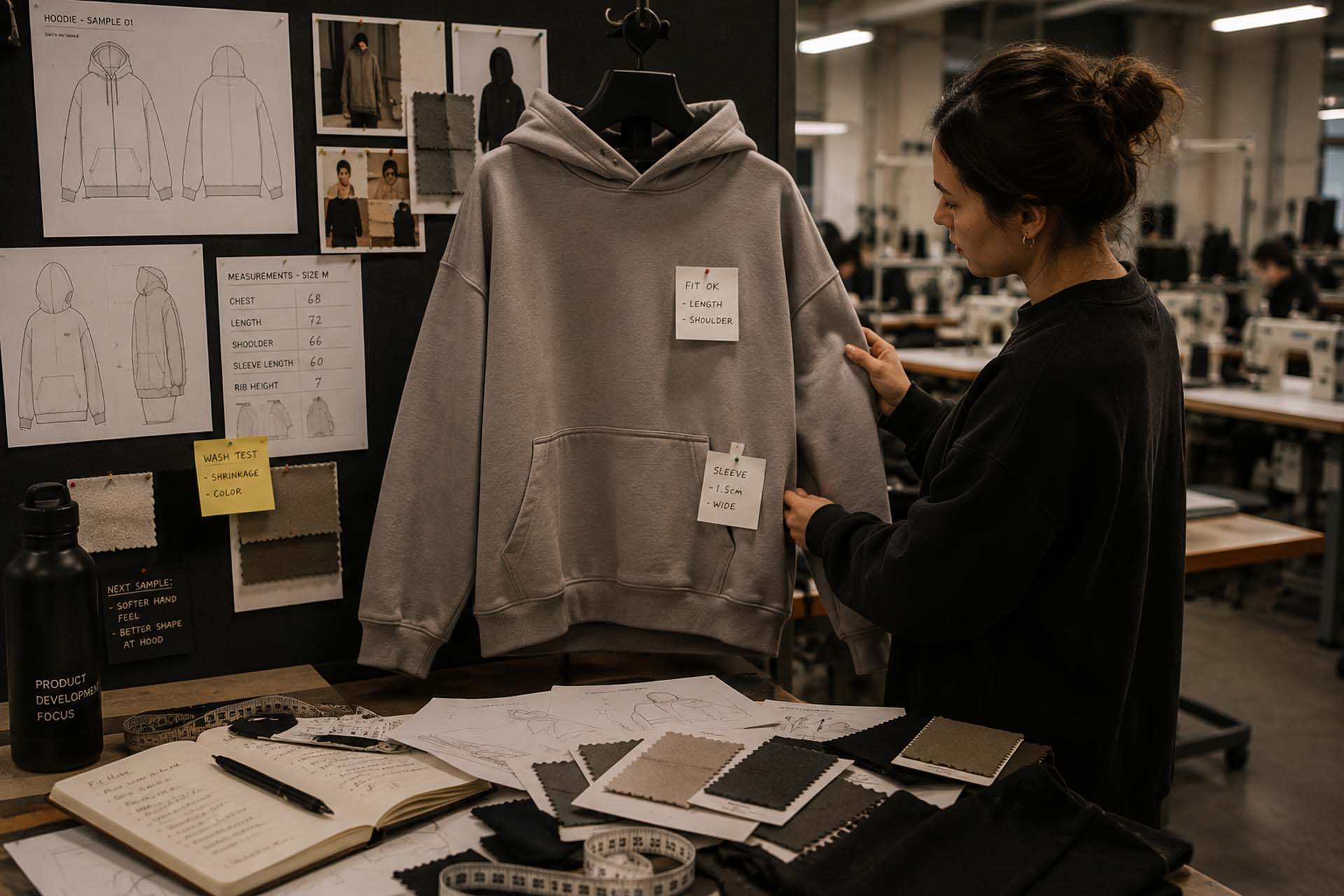
Sampling is the first physical version of the garment. It allows the brand and manufacturer to test the design before bulk production.
A sample helps check:
- Fit
- Measurements
- Fabric behavior
- Stitching quality
- Print or embroidery placement
- Color accuracy
- Label position
- Overall garment feeling
- Production feasibility
Most garments need at least one sample before bulk production. Some products may require several rounds, especially if the design is complex or the brand has very specific fit requirements.
For example, a hoodie sample may reveal that the sleeves are too wide, the hood is too small, the rib is too loose, or the print placement needs adjustment. These corrections should happen before the order moves into mass production.
Sampling protects the brand from expensive mistakes. It is better to adjust one sample than to discover the same issue across hundreds or thousands of finished pieces.
Step 7: Fit Review and Corrections
After the first sample is produced, the brand reviews it carefully. This stage is not only about liking or disliking the garment. It should be a structured review.
The brand should check:
- Does the garment match the intended fit?
- Are the measurements correct?
- Does the fabric feel right?
- Are the seams clean?
- Is the branding placed correctly?
- Does the product match the collection direction?
- Are there any comfort issues?
- Does it look good on body?
Clear feedback is essential. Instead of saying “make it better,” a brand should give specific comments such as:
- Increase body length by 2 cm
- Reduce sleeve width by 1.5 cm
- Move chest print 3 cm higher
- Use heavier rib at cuffs
- Adjust neckline opening
- Make the fit more boxy
Once corrections are confirmed, the pattern and tech pack are updated. This creates a stronger foundation for size grading and bulk production.
Step 8: Size Grading
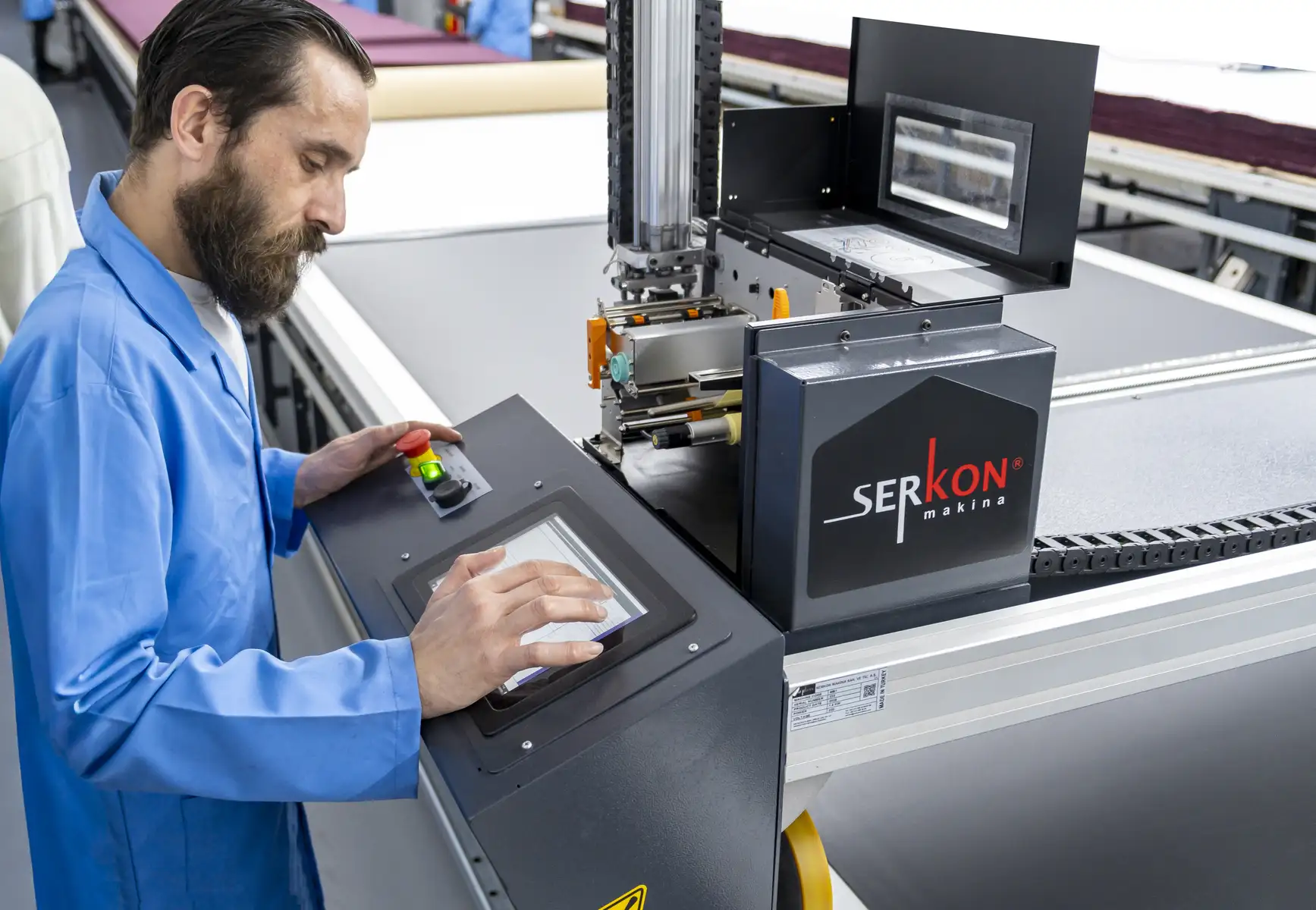
Size grading means creating different sizes from the approved base pattern. For example, if the sample is approved in size M, the manufacturer grades the pattern into XS, S, M, L, XL, and other required sizes.
Good grading keeps the fit consistent across the size range. Poor grading can create problems where smaller sizes feel too tight or larger sizes become too long, too wide, or unbalanced.
This is especially important for brands selling in Europe and the United States, where customer expectations around sizing can be different. A streetwear brand may prefer relaxed sizing, while a premium basics brand may need a more controlled fit.
A clear size chart helps the manufacturer produce consistent garments and helps the brand reduce returns.
Step 9: Fabric Cutting
Once the fabric, pattern, and sizing are approved, production moves to cutting. Fabric cutting must be accurate because every garment piece depends on this stage.
The cutting process usually includes:
- Fabric inspection
- Fabric relaxation, when needed
- Layering
- Marker planning
- Cutting
- Bundling cut pieces by size and color
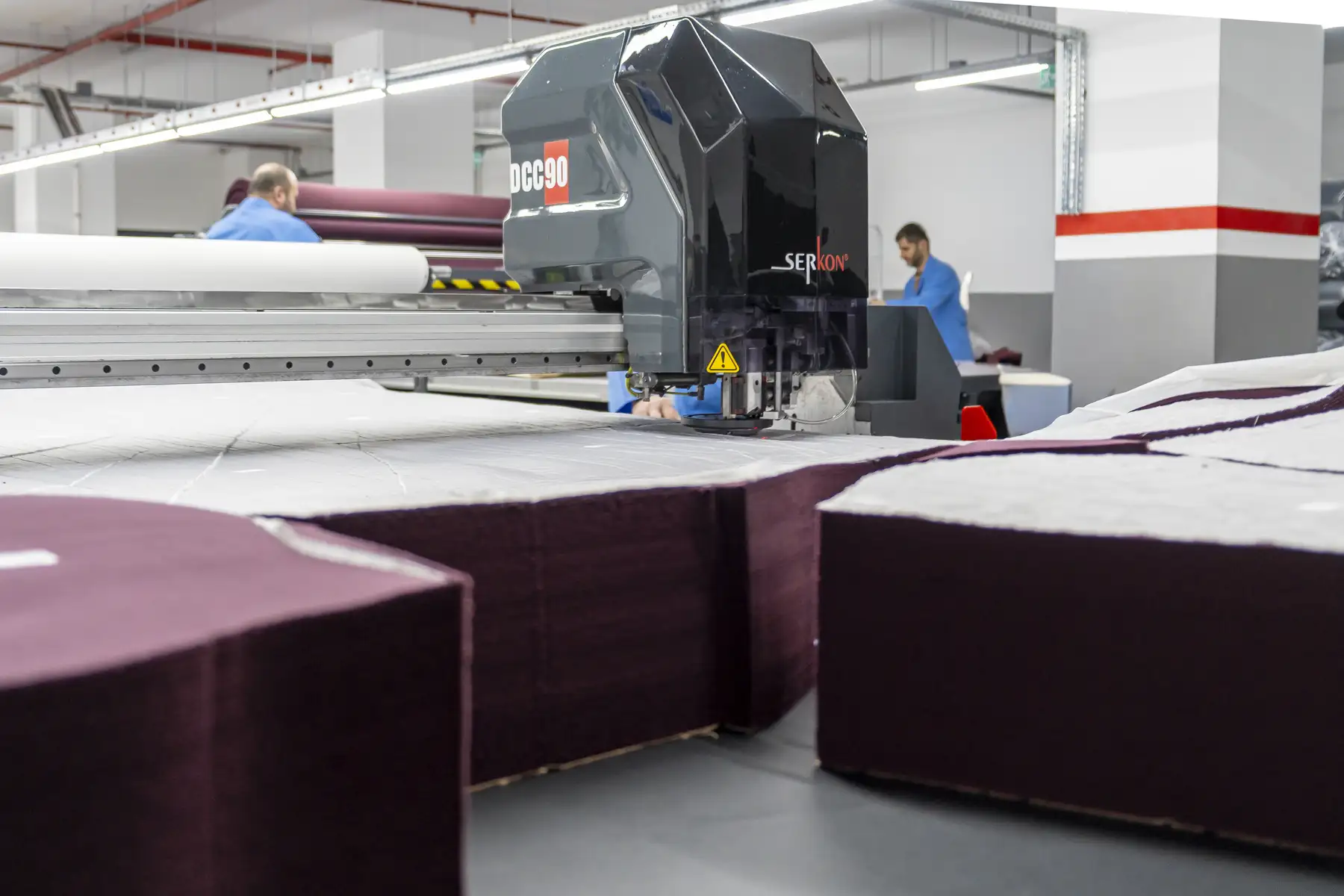
Accuracy is critical. If the fabric is not cut correctly, the sewing team cannot fix the problem later. Incorrect cutting can lead to uneven hems, twisted garments, size inconsistencies, or wasted fabric.
Marker planning also affects cost. Efficient marker placement reduces fabric waste, which is important for both profitability and sustainability.
Step 10: Sewing and Assembly
Sewing is where the garment takes its final shape. Different machines and stitch types are used depending on the garment.
Common sewing operations include:
- Shoulder joining
- Side seams
- Sleeve attachment
- Collar attachment
- Rib attachment
- Hemming
- Pocket construction
- Zipper attachment
- Waistband sewing
- Overlock stitching
- Coverstitching
- Reinforcement stitching
The sewing stage requires skill, consistency, and supervision. A premium garment is not defined only by fabric quality. Stitch density, seam strength, thread choice, symmetry, and finishing all influence the final result.
For fashion brands, this is where production experience becomes visible. Clean stitching, balanced seams, and consistent construction create products that customers trust.
Step 11: Printing and Embroidery
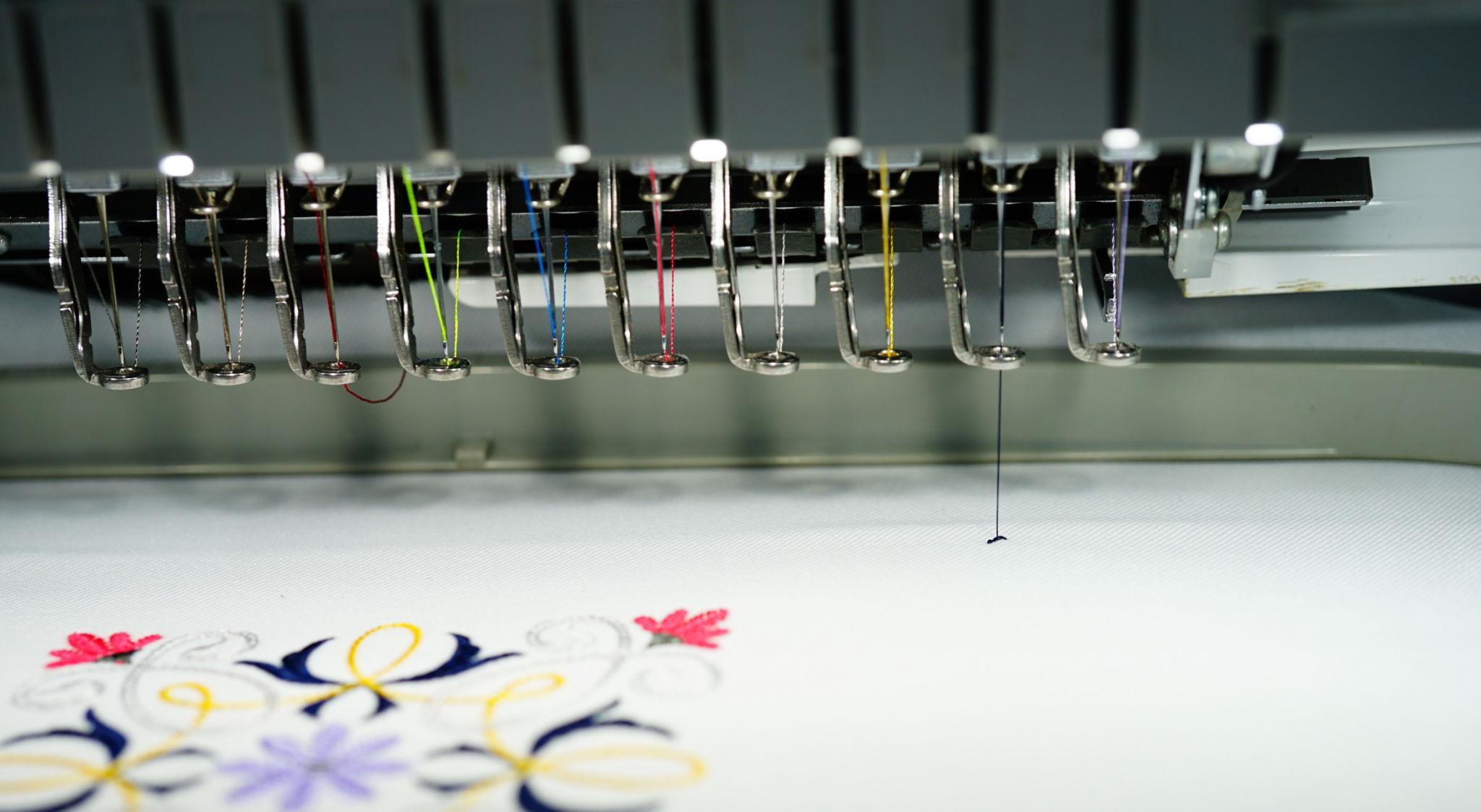
Printing and embroidery are key parts of garment branding, especially for streetwear, private label clothing, and fashion collections with strong visual identity.
Common printing methods include:
- Screen printing
- Digital printing
- Direct-to-film printing
- Puff print
- Rubber print
- Heat transfer
- Discharge print
Common embroidery options include:
- Flat embroidery
- 3D embroidery
- Patch embroidery
- Appliqué
- Small logo embroidery
- Large back embroidery
The right method depends on the artwork, fabric, order quantity, budget, and desired finish.
For example, a bold streetwear graphic may work well with screen printing or puff print. A premium minimalist brand may prefer small tonal embroidery on the chest or sleeve. A sportswear-inspired piece may use patches or mixed techniques.
Print and embroidery placement should always be tested carefully during sampling. A design that looks perfect on a digital mockup may need adjustment once applied to real fabric.
Step 12: Washing, Finishing, and Special Treatments
Some garments require washing or finishing before final quality control. This may be done for appearance, softness, shrinkage control, or special design effects.
Finishing options may include:
- Garment washing
- Enzyme wash
- Stone wash
- Softening
- Brushing
- Distressing
- Dyeing
- Special surface treatments
For example, a vintage-style T-shirt may need garment dyeing and washing to create a softer, worn-in look. A fleece hoodie may require brushing for a warm inner surface. Denim or outerwear may need more complex finishing.
Finishing must be planned carefully because it can affect measurements, color, texture, and shrinkage. Brands should confirm finishing effects through samples before bulk production.
Step 13: Quality Control

Quality control is one of the most important parts of the garment production process. It protects the brand, the manufacturer, and the end customer.
A professional quality control process may check:
- Measurements
- Stitching quality
- Fabric defects
- Color consistency
- Print and embroidery accuracy
- Label placement
- Loose threads
- Holes or stains
- Seam strength
- Size ratio
- Packing accuracy
- Overall appearance
Quality control should not happen only at the end. Strong manufacturers check quality during different stages of production, including fabric inspection, cutting, sewing, finishing, and final packing.
For European and US fashion brands, quality control is directly connected to customer satisfaction. A poorly finished product can lead to returns, negative reviews, and loss of trust. A consistent product helps build brand loyalty.
Istanbul Factory places strong emphasis on quality audit and production supervision, especially for brands that need European quality standards and reliable B2B production.
Step 14: Ironing, Folding, and Final Presentation
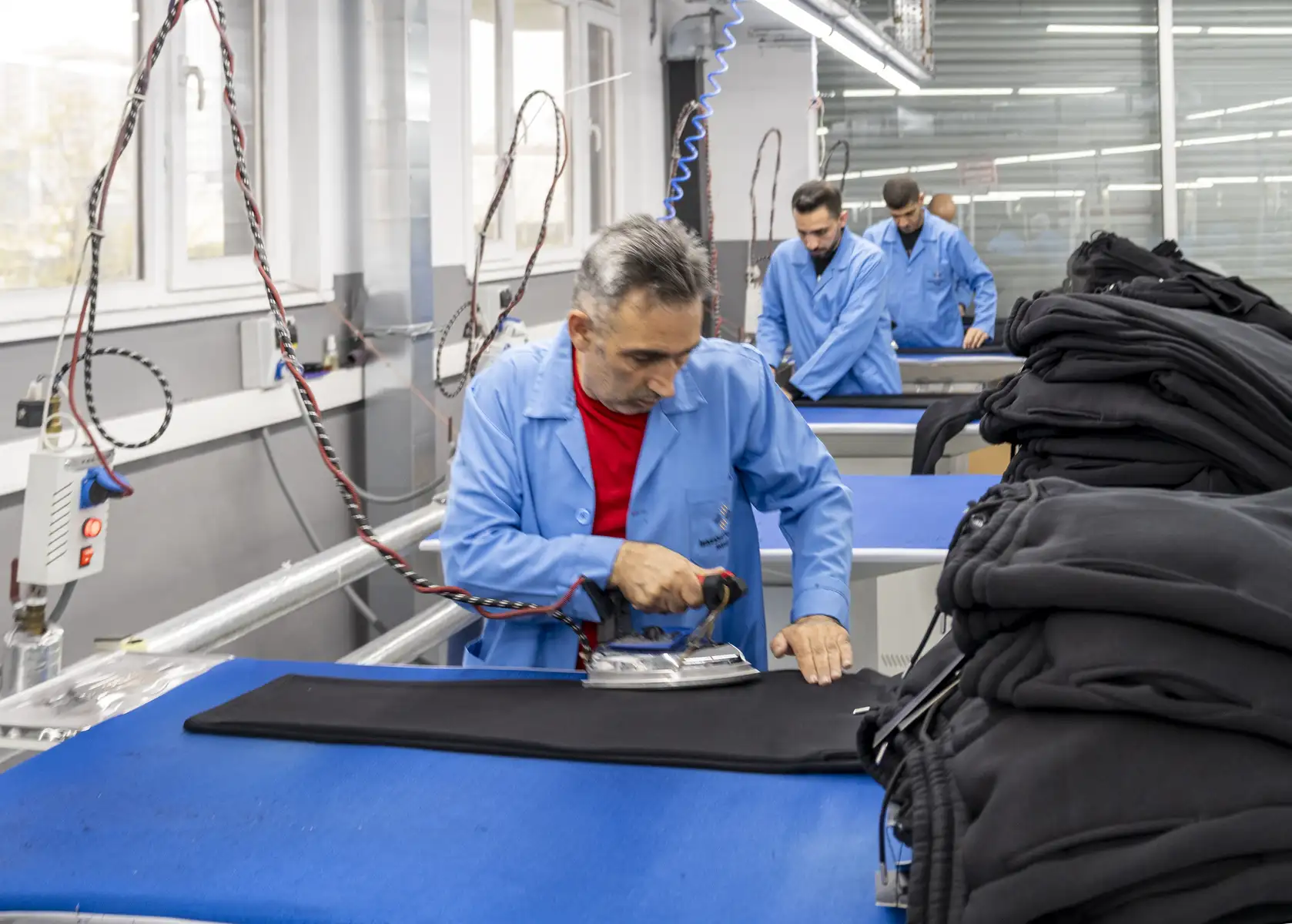
After quality control, garments are prepared for packing. This stage may sound simple, but it affects how the product is received by the brand, retailer, or customer.
Final preparation may include:
- Steam ironing
- Thread trimming
- Folding
- Size sorting
- Label checking
- Hangtag attachment
- Polybag packing
- Carton packing
- Barcode or SKU labeling
Presentation matters. A clean, well-folded, correctly labeled garment gives a stronger impression and makes warehouse or retail handling easier.
For e-commerce brands, packaging can also become part of the customer experience. Branded packaging, neat folding, and accurate labeling help the product feel more professional from the moment it arrives.
Step 15: Packing and Shipping
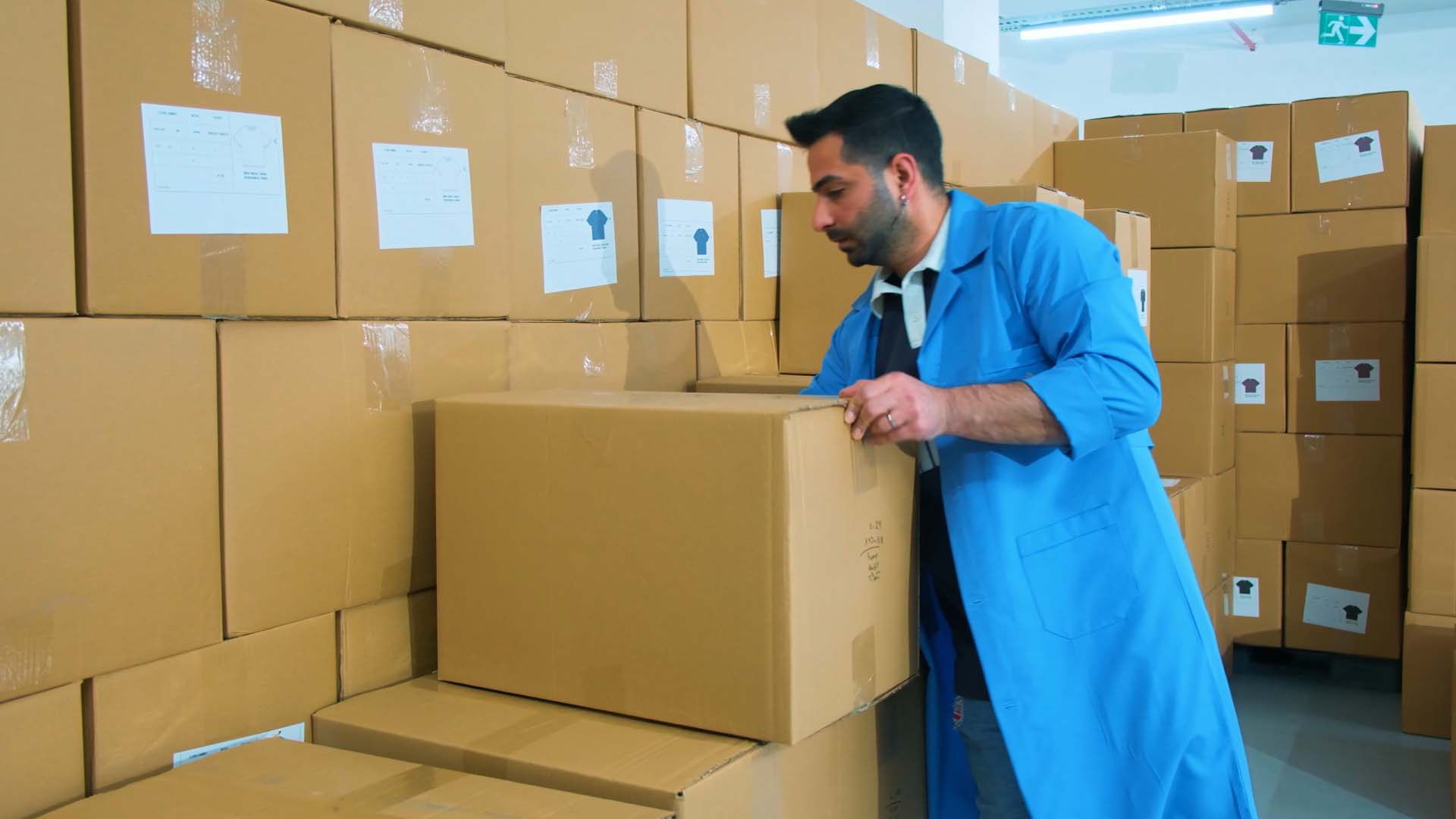
The final step is preparing the garments for delivery. This includes carton planning, packing lists, shipping documents, and logistics coordination.
Depending on the brand’s needs, garments may be shipped to:
- Brand headquarters
- E-commerce warehouses
- Retail stores
- Fulfillment centers
- Wholesale partners
- Distribution hubs
Shipping requirements can vary depending on destination, order size, product type, and delivery timeline.
For US and European brands, Turkey offers a strong logistical advantage compared with many long-distance manufacturing regions. Istanbul’s location supports faster access to European markets and practical shipping routes for international brands.
This can be especially valuable for brands that need shorter lead times, smaller production runs, faster replenishment, or closer communication during production.
Why Istanbul and Turkey Matter in Garment Production
Turkey has a long history in textiles and apparel manufacturing. For fashion brands, Istanbul offers a combination of production knowledge, supplier access, logistics, and quality-focused manufacturing.
Several factors make Istanbul important for garment production:
- Strong textile and fabric sourcing network
- Skilled garment production workforce
- Experience with European fashion standards
- Faster delivery to Europe compared with distant production hubs
- Flexible production options for growing brands
- Access to printing, embroidery, washing, trims, and packaging suppliers
- Strong position between Europe, Asia, and the Middle East
For startup brands, this can make production more manageable. For established brands, it can support better communication, quality control, and supply chain flexibility.
Istanbul Factory uses this local manufacturing ecosystem to support brands from concept to delivery, combining design support, sourcing, sampling, production, quality control, and logistics coordination.
Practical Example: Producing a Streetwear Hoodie
To understand how the garment production process works in practice, imagine a European streetwear brand wants to produce an oversized hoodie.
The process may look like this:
- The brand shares reference images, logo artwork, and desired fit.
- A tech pack is prepared with measurements, fabric GSM, print placement, and trims.
- A heavyweight fleece fabric is sourced.
- Rib, drawcords, labels, and packaging materials are selected.
- A pattern is created for the oversized fit.
- A sample hoodie is produced.
- The brand reviews the sample and requests small fit changes.
- The corrected sample is approved.
- The size range is graded.
- Fabric is cut for bulk production.
- Hoodies are sewn and assembled.
- Prints or embroidery are applied.
- Quality control checks measurements, seams, and branding.
- Garments are ironed, folded, labeled, and packed.
- The final order is shipped to the brand’s warehouse.
This process may sound detailed, but every step reduces risk. The more clearly each stage is managed, the more consistent the final product becomes.
Common Mistakes Brands Should Avoid
Many production problems can be avoided with better preparation. Some of the most common mistakes include:
- Starting production without a complete tech pack
- Choosing fabric based only on price
- Skipping sampling to save time
- Giving vague feedback after sample review
- Ignoring shrinkage and washing behavior
- Using low-quality trims on premium garments
- Approving print placement without testing
- Rushing bulk production before fit approval
- Focusing only on unit price instead of total quality
- Working without clear quality control standards
A reliable production partner should help the brand identify these risks early. Good manufacturing is not only about executing orders. It is also about preventing avoidable mistakes.
How Istanbul Factory Supports the Full Garment Production Process
Istanbul Factory works as a textile and clothing manufacturing partner for brands that need a reliable production process from idea to final delivery.
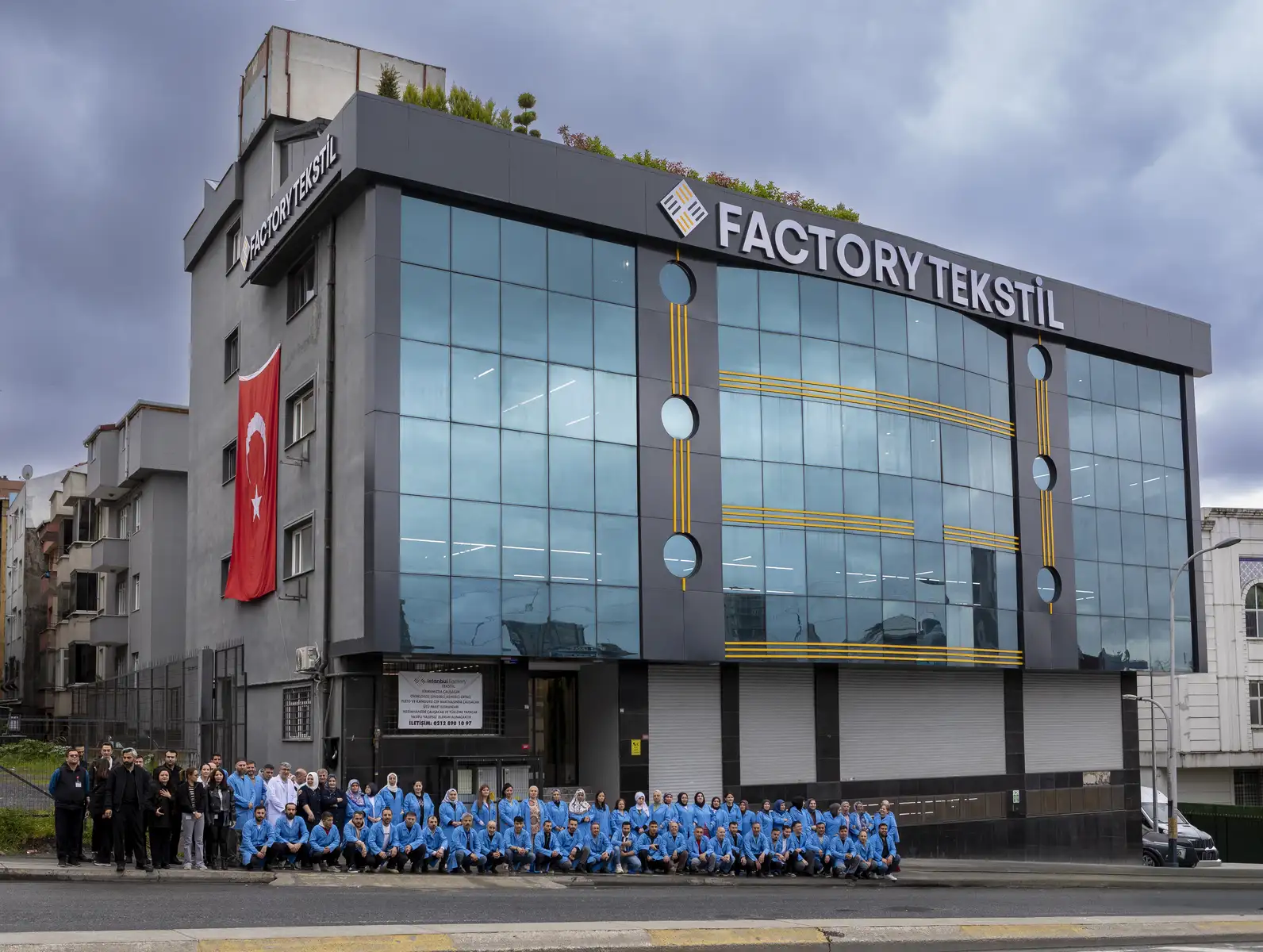
Our services support each key stage of garment manufacturing, including:
- Design and draft support
- Fabric selection and consultancy
- Garment sampling
- Custom clothing manufacturing
- Private label production
- Print and embroidery
- Branding and labeling
- Quality audit
- Bulk production
- Packing and delivery coordination
We work with fashion brands, streetwear labels, startups, and established companies that want professional production in Istanbul with a focus on quality, communication, and long-term cooperation.
Whether you are preparing your first collection or scaling an existing brand, a structured production process helps protect your investment and improve the final product.
Start Your Garment Production with Istanbul Factory
A successful clothing collection needs more than a good idea. It needs the right fabric, accurate patterns, clean sampling, skilled production, strong quality control, and reliable delivery.
Istanbul Factory helps fashion brands turn concepts into finished garments through a clear, professional, and quality-focused production process in Istanbul, Turkey.
If you are looking for a garment manufacturing partner for streetwear, private label clothing, custom apparel, or premium fashion production, Istanbul Factory can support your project from design to final delivery.
Contact Istanbul Factory to discuss your next collection and build a production process that fits your brand’s goals.
FAQ
What is the garment production process?
The garment production process is the complete workflow of creating clothing, from design and tech pack preparation to fabric sourcing, sampling, cutting, sewing, quality control, packing, and final delivery.
Why is a tech pack important in garment production?
A tech pack gives the manufacturer clear technical instructions, including measurements, fabric details, stitching, branding, trims, and packaging requirements. It helps reduce mistakes, delays, and misunderstandings.
How many samples are needed before bulk production?
Most garments need at least one sample before bulk production. More complex garments may require two or more sample rounds to correct fit, fabric behavior, construction, or branding details.
What is the difference between sampling and bulk production?
Sampling creates a small test version of the garment for approval. Bulk production starts after the sample, pattern, fabric, and details are confirmed, allowing the manufacturer to produce the full order.
Why is fabric sourcing important?
Fabric sourcing affects the garment’s quality, fit, comfort, price, durability, and overall appearance. Choosing the wrong fabric can lead to production issues, poor customer experience, or higher return rates.
What does quality control include in garment manufacturing?
Quality control includes checking measurements, stitching, fabric defects, print or embroidery accuracy, label placement, loose threads, stains, packing, and overall garment appearance.
Why do fashion brands produce garments in Turkey?
Turkey offers strong textile expertise, skilled garment production, fabric sourcing options, and faster access to European markets. Istanbul is especially valuable for brands that need quality, flexibility, and reliable communication.
Does Istanbul Factory support startup clothing brands?
Yes. Istanbul Factory works with startup clothing brands, streetwear labels, fashion entrepreneurs, and established brands, supporting them through design, sourcing, sampling, production, quality control, and delivery.


2 Comments