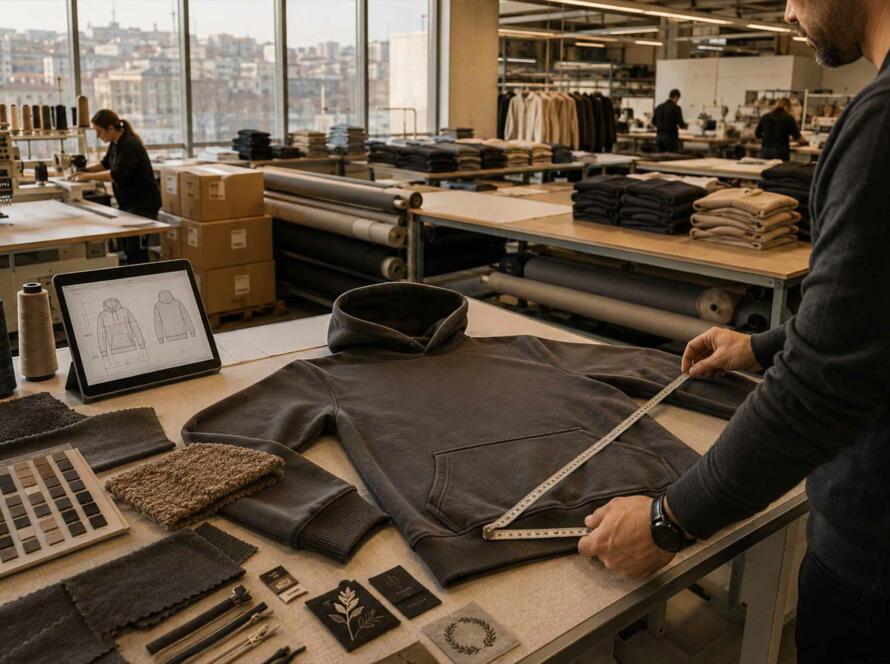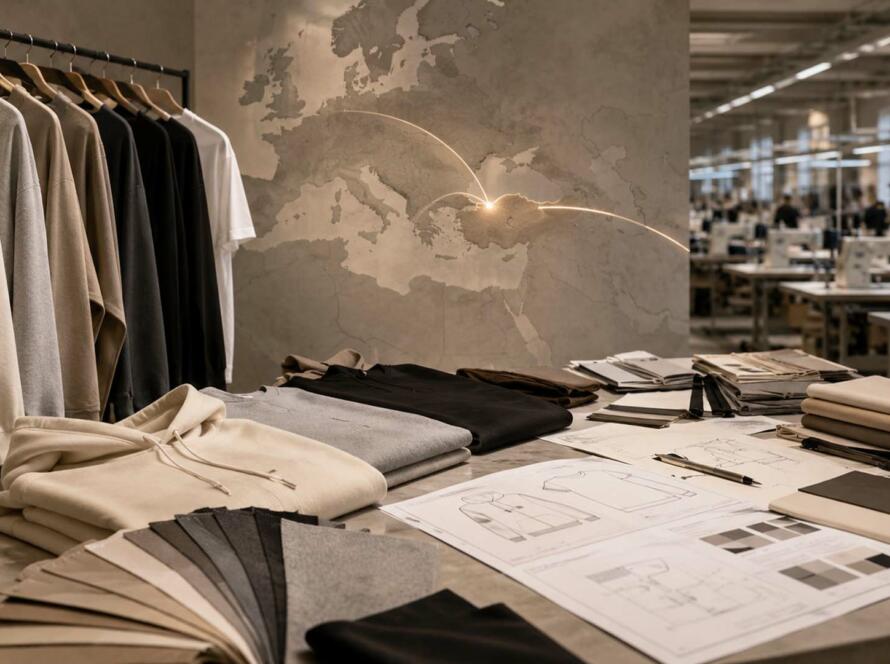


Working efficiently with a Turkish clothing manufacturer depends on more than finding a factory with the right machinery or production capacity.
The strongest manufacturing relationships are built around a clear workflow: accurate technical information, controlled sample feedback, defined approval stages, documented quality requirements and realistic production planning.
When those elements are in place, the manufacturer spends less time interpreting incomplete instructions, the brand can make faster decisions, and both sides have a clearer view of what has been approved and what still needs attention.
For European and international fashion brands, this is especially important when managing production remotely.
A good workflow should answer four questions at almost every stage:
- What has already been approved?
- What is still waiting for a decision?
- Who is responsible for the next action?
- Could that decision affect cost or delivery?
This guide explains how fashion brands can structure that process from the first tech pack to final shipment.
How Do You Work Efficiently With a Turkish Clothing Manufacturer?
The most effective approach is to manage production through clearly defined stages rather than relying on continuous informal communication.
A practical workflow usually follows this sequence:
- Prepare the technical product information.
- Confirm fabric and trim requirements.
- Develop and review samples.
- Consolidate sample comments.
- Approve fit, materials, colors and artwork.
- Freeze the production specification.
- Monitor bulk production through agreed milestones.
- Document quality checks.
- Prepare shipment requirements before production finishes.
Each stage should have a clear outcome before the next critical stage begins.
This sounds simple, but many production delays start because one of these steps remains partially unresolved while the project continues moving forward.
1. Start With Complete Technical Information
Efficient clothing production begins before fabric is cut or a sample is sewn.
A manufacturer needs enough technical information to understand what the brand expects without filling important gaps through assumption.

For most garments, the development package should include:
- Technical drawings
- Measurement specifications
- Fabric composition
- Target GSM or fabric weight where relevant
- Color references
- Print or embroidery artwork
- Label specifications
- Trim details
- Construction instructions
- Stitching requirements
- Size range
- Packaging requirements
- Estimated order quantities
Ideally, these details should be organized in a structured tech pack.
A good tech pack does more than describe the garment. It becomes the reference document used during sampling, costing, production and quality control.
Why incomplete specifications create delays
Suppose a brand sends a hoodie sketch today, the measurements two days later, the embroidery artwork through WhatsApp and the care-label instructions after the first sample has already been made.
The factory may still be able to develop the garment, but the process becomes harder to control.
Questions increase. Sample revisions become more likely. Different departments may work from different versions of the information.
A better method is to create one controlled specification package per style.
For example:
Style: HD-2401
Tech Pack: Version 04
Status: Approved for bulk production
Last Revision: 14 September
That small amount of version control becomes increasingly valuable when a collection contains multiple styles, fabrics and colorways.
2. Use Clear Communication Channels
Efficient communication does not mean sending more messages.
It means ensuring that important information is easy to find, understand and verify later.
Before development begins, agree on which communication channel will be used for different types of information.
A practical system might look like this:
- Email: approvals, quotations and formal production decisions
- Shared folders: tech packs, artwork, measurement charts and reports
- Messaging platforms: short operational questions
- Video calls: complex product-development discussions
- Production reports: progress updates and milestone tracking
There is no universal software that every brand must use.
Consistency matters more than the platform.
Document important decisions
If a fabric, color or sample is approved during a call, confirm the decision afterward in writing.
For example:
Approved for bulk: 330 GSM brushed fleece, charcoal lab dip C, black embroidery thread and revised hood construction from Sample V3.
That message creates a production record.
A comment such as “yes, that one looks good” may seem sufficient in the moment, but it becomes difficult to interpret several weeks later.
3. Give Actionable Sample Comments
Sampling is where the product moves from design into a physical garment.
It is also one of the stages where unclear feedback can create unnecessary development rounds.
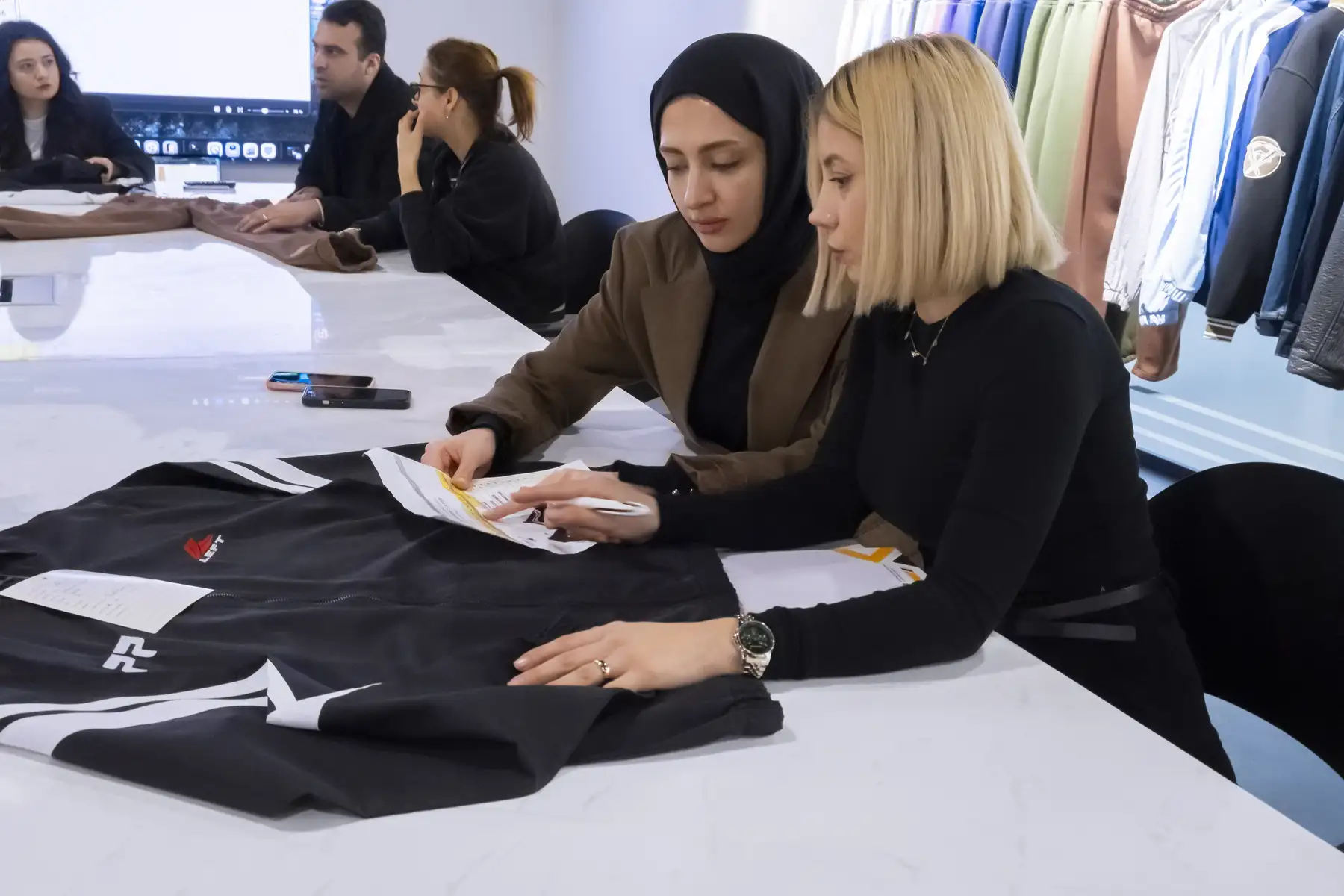
Comments such as:
- “The fit feels wrong.”
- “Make the hood better.”
- “The sleeve is too big.”
- “The print should move slightly.”
leave too much room for interpretation.
Instead, comments should be measurable whenever possible.
For example:
- Reduce half-chest measurement by 2 cm.
- Shorten body length by 1.5 cm.
- Increase hood depth by 2 cm.
- Move front embroidery 1 cm upward.
- Reduce cuff height from 7 cm to 6 cm.
The goal is not to make communication overly technical. It is to make the requested correction unambiguous.
Use one consolidated sample comment sheet
Whenever possible, send one complete round of comments instead of several messages over multiple days.
For example:
| Area | Sample Result | Required Change |
|---|---|---|
| Chest | 62 cm | Reduce to 60 cm |
| Body length | 72 cm | Reduce to 70.5 cm |
| Hood | Too shallow | Increase depth by 2 cm |
| Embroidery | Slightly low | Move 1 cm upward |
| Cuff | Too wide | Reduce width by 1 cm |
This helps the sample team understand the full revision in one pass.
It also gives the brand a useful development history from Sample V1 to the approved version.
4. Define Approval Stages Before Bulk Production
One of the simplest ways to reduce production risk is to establish approval gates before development begins.
A typical apparel project may require approval of:
- Technical specifications
- Fabric quality
- Fabric color
- Trims and accessories
- Print or embroidery
- Fit sample
- Pre-production sample
- Bulk production standard
- Final quality inspection
- Packing and shipment
The exact sequence varies depending on the garment.
A basic jersey T-shirt may require fewer steps than a heavily washed jacket with custom trims and embroidery.
The important principle is this:
Do not allow unresolved critical decisions to move unnoticed into bulk production.
For example, starting bulk fabric before a custom color is fully approved may appear to save time.
But if the shade is later rejected, the cost of that shortcut can be much greater than the few days originally saved.
5. Manage Fabric and Color Approvals Carefully
Fabric selection and sourcing have a major influence on the final appearance, fit and performance of a garment.
Even when the pattern and measurements are correct, the garment may behave differently if the production fabric has a different weight, stretch, shrinkage or finishing.
Before bulk fabric is confirmed, brands should review the relevant characteristics.

These may include:
- Fiber composition
- GSM
- Knit or weave structure
- Stretch
- Recovery
- Hand feel
- Surface appearance
- Shrinkage
- Color
- Dyeing or finishing
- Pilling or performance requirements where relevant
Approving custom colors
For custom dyeing, the manufacturer may present several lab dips or swatches.
The approval should identify the selected option clearly.
Instead of:
“Number two is fine.”
use:
Lab Dip B approved for bulk dyeing.
For color-sensitive products, brands may also compare the sample with the official reference under appropriate lighting conditions.
Clear color approval is particularly important when the same color appears across several styles or fabric qualities.
6. Control Changes After Production Approval
Changes are normal during product development.
They become expensive when they continue after the production specification has already been approved.
Late changes can affect:
- Patterns
- Material consumption
- Cutting markers
- Fabric orders
- Purchased trims
- Printing screens
- Embroidery programs
- Production scheduling
- Packaging
- Delivery dates
This is why brands should establish a clear point at which the style becomes production approved.
Before that point, revisions are part of development.
After that point, every change should be evaluated against its effect on cost, timing and work already completed.
Freeze the final production specification
A useful practice is to create a final approved production package containing:
- Final tech pack
- Approved measurement chart
- Approved fabric
- Approved color
- Approved artwork
- Approved trims
- Approved labels
- Approved sample reference
- Packaging instructions
This becomes the working standard for bulk production and QC.
7. Agree on Meaningful Production Updates
Brands need visibility into production, but asking the factory for updates every day rarely improves efficiency.
A better approach is to agree on milestone-based reporting.
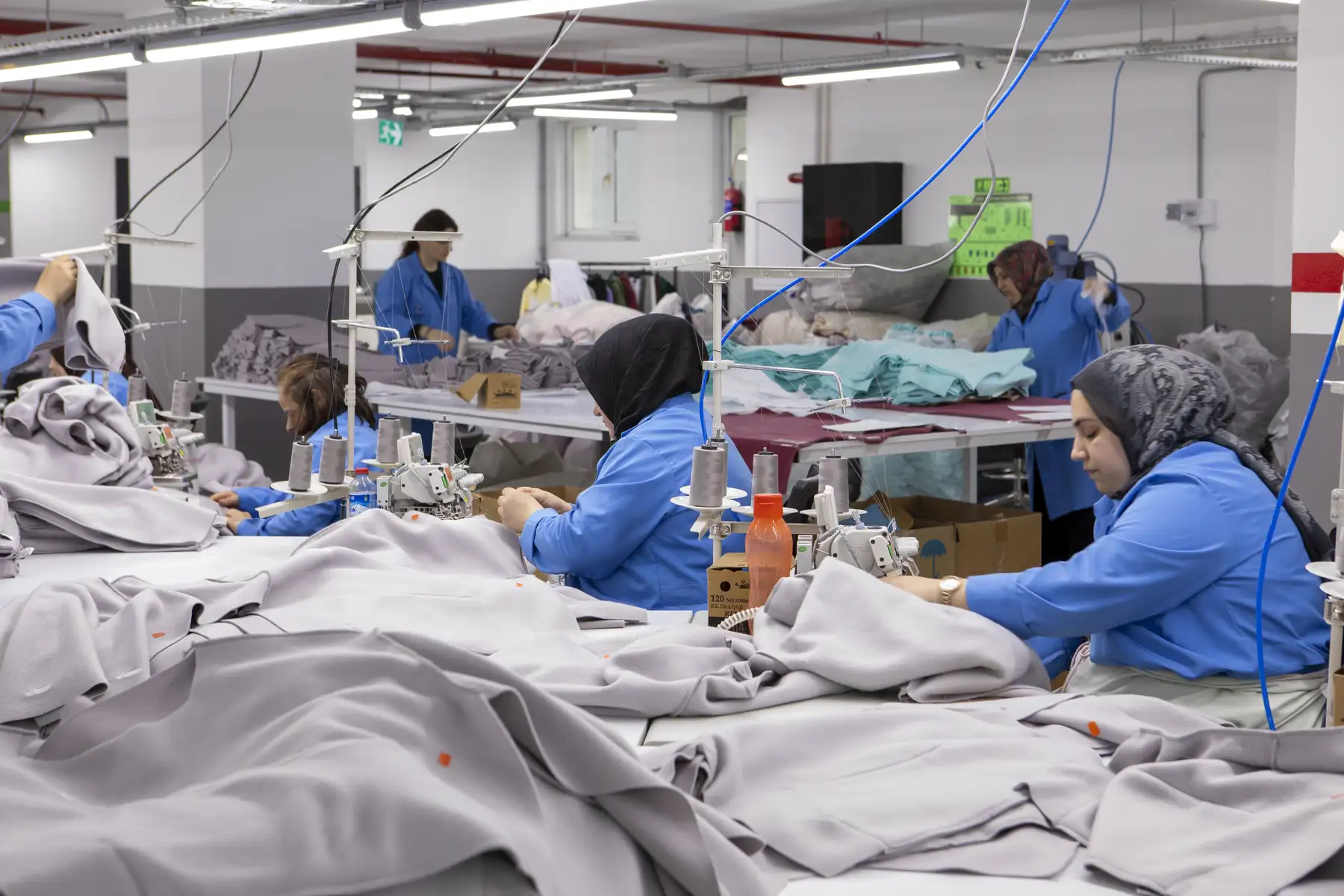
Useful milestones may include:
- Bulk fabric ordered
- Fabric received
- Fabric inspection completed
- Cutting started
- Printing completed
- Embroidery completed
- Sewing started
- Sewing completed
- Finishing started
- Final QC completed
- Packing completed
- Shipment ready
The purpose of an update should be to communicate useful production information rather than simply prove that activity is taking place.
Good production updates provide context
A photograph of garments on sewing machines can be useful, but it does not necessarily show whether production is 10% or 90% complete.
A stronger update might say:
Cutting: Completed
Embroidery: Completed
Sewing: Approximately 70% complete
Finishing: Planned to begin Thursday
Open issue: None currently affecting shipment
This allows the brand to understand the real production position.
8. Treat Quality Control as Part of Production
Quality control should not begin when finished garments are already packed into cartons.
By that point, correcting systematic production problems can be expensive or impractical.
A better approach is to build quality checks into the production workflow.
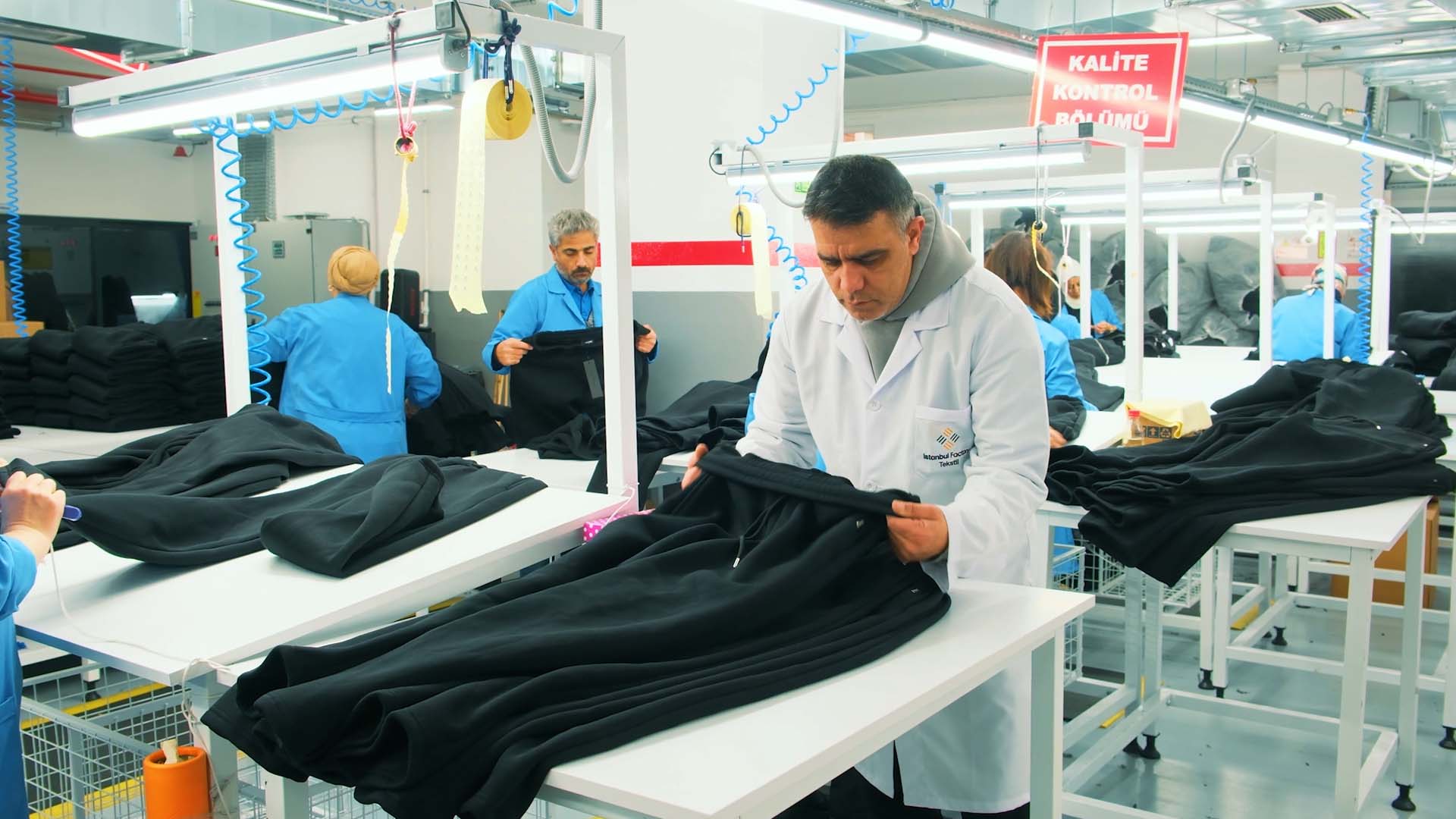
Depending on the product, quality control may include:
- Fabric inspection
- Shrinkage testing
- Measurement checks
- First production pieces
- Stitching inspection
- Print placement checks
- Embroidery checks
- Workmanship inspection
- Finishing inspection
- Final measurement checks
- Packing inspection
- Final random inspection
Define critical measurements early
Different garments have different measurements that strongly influence fit.
For a hoodie, for example, the most important points may include:
- Chest width
- Body length
- Sleeve length
- Shoulder width
- Hood depth
- Rib dimensions
- Pocket position
- Print or embroidery placement
These requirements should be defined before bulk production.
Discussing tolerances after garments have already been completed creates unnecessary commercial tension between the brand and manufacturer.
The clearer the quality standard is in advance, the easier it becomes to inspect objectively.
9. Create an Approval and Decision Log
For more complex collections, a simple approval tracker can prevent confusion.
A brand might maintain a table such as:
| Item | Status | Date | Approved By |
|---|---|---|---|
| Fabric quality | Approved | 2 Sept | Product Team |
| Navy color | Approved | 4 Sept | Designer |
| Embroidery | Revision requested | 5 Sept | Creative Director |
| Fit Sample V2 | Approved | 8 Sept | Technical Designer |
| Packaging | Pending | — | — |
This type of tracker becomes particularly useful when several people from the brand are involved.
It reduces one common manufacturing problem: different stakeholders giving conflicting instructions.
Ideally, the manufacturer should know who has final approval authority for technical, design and commercial decisions.
10. Plan Shipping Before Garments Are Finished
Shipment planning should begin before the final carton is packed.
Depending on the order, brands may need to prepare:
- Shipping method
- Packing ratios
- Carton dimensions
- Carton labels
- Freight-forwarder details
- Delivery address
- Export documents
- Commercial invoice information
- Packing list requirements
- Preferred dispatch window
For European brands manufacturing in Turkey, logistics can often be easier to coordinate than production from more distant sourcing regions because of geographic proximity and established trade routes.
However, finished goods should not sit unnecessarily in a warehouse while basic shipping decisions are still being made.
That time can usually be avoided through earlier planning.
11. Use One Production Calendar
A production calendar makes the relationship between approvals and delivery much easier to understand.
A simplified development and production plan might look like:
Stage 1: Technical review
Stage 2: Fabric sourcing and sample development
Stage 3: Sample review and corrections
Stage 4: Final product approvals
Stage 5: Bulk material preparation
Stage 6: Cutting and production
Stage 7: Finishing and quality control
Stage 8: Packing and shipment
The exact duration of each stage depends on the product, fabric, quantity, production complexity and factory schedule.
The important point is the dependency between them.
For example:
If a fabric approval is delayed, bulk fabric may be delayed.
If bulk fabric is delayed, cutting may move.
If cutting moves, the planned shipment date may also need to move.
A realistic production calendar therefore needs responsibility from both the factory and the brand.
12. Understand That Lead Time Is Shared
Brands often ask manufacturers:
How long will production take?
That is an important question, but the factory’s production time is only one part of the full project timeline.
Development can also be affected by:
- Late tech packs
- Delayed sample comments
- Slow color approvals
- Missing artwork
- Changes to measurements
- Unconfirmed labels
- Material availability
- Late packaging decisions
- Shipment planning
A reliable manufacturer should manage its production responsibilities professionally.
The brand should also make decisions within the agreed development schedule.
The best manufacturing partnerships treat delivery as a shared operational process rather than a deadline controlled by only one side.
Common Causes of Delay When Working With a Clothing Manufacturer
Many apparel-production delays can be prevented.
The most common avoidable causes include:
Incomplete tech packs
Missing measurements, artwork or construction information creates questions during development.
Fragmented sample feedback
Sending comments individually over several days may create additional sample rounds.
Slow approvals
Fabric, color or trim approvals can prevent the manufacturer from ordering production materials.
Late design changes
Changing measurements, trims or artwork after bulk preparation has begun can affect both timing and cost.
Unclear decision authority
When several people from the brand provide contradictory instructions, production can stop while the manufacturer waits for clarification.
Late logistics planning
Completed goods can still be delayed if shipping documents, packing requirements or freight arrangements are unresolved.
The solution is rarely “more communication.”
Usually, it is better-structured communication.
A Practical Workflow for Fashion Brands
A simple production-management checklist can look like this:
Before sampling
- Finalize technical drawings.
- Prepare measurements.
- Define fabric requirements.
- Prepare artwork.
- Identify trims and labels.
- Confirm estimated quantities.
During sampling
- Review the full garment.
- Consolidate comments.
- Record measurement changes.
- Track sample versions.
- Approve materials and colors.
Before bulk production
- Confirm final tech pack.
- Approve sample.
- Approve fabric.
- Approve artwork.
- Approve trims.
- Confirm packaging.
- Freeze production specifications.
During production
- Monitor agreed milestones.
- Review QC documentation.
- Address problems early.
- Avoid non-essential specification changes.
Before shipment
- Confirm final QC.
- Confirm packing quantities.
- Prepare shipping documents.
- Coordinate the freight forwarder.
- Verify delivery information.
This system is straightforward, but it solves many of the communication problems that slow apparel projects down.
Why European Fashion Brands Work With Manufacturers in Turkey
Turkey sits close to major European fashion markets and has a well-developed textile and garment-production ecosystem.
Depending on the product, brands can source services related to:
- Yarn and fabric production
- Knitting
- Weaving
- Dyeing
- Fabric finishing
- Cutting
- Sewing
- Printing
- Embroidery
- Washing
- Garment finishing
- Packaging
- Export preparation
For European brands, shorter geographic distance can also make factory visits, sample shipments and logistics easier to manage compared with more distant sourcing regions.
However, geography alone does not guarantee efficient production.
Turkey’s manufacturing advantages create the most value when they are combined with disciplined technical development, clear approvals and reliable production management.
Working With Istanbul Factory
At Istanbul Factory, we work with fashion brands, streetwear labels, startups and established companies looking for structured clothing manufacturing support in Turkey.
Our role can cover different stages of the production process, including:
- Fabric sourcing
- Garment development and sampling
- Private label production
- Custom clothing manufacturing
- Printing and embroidery
- Production coordination
- Quality control
- Finishing and shipment preparation
We believe a productive brand-manufacturer relationship should be transparent enough that both sides understand the technical standard, approval status and next production step.
That approach helps reduce misunderstandings before they become expensive production problems.
Planning a Collection in Turkey?
If you are evaluating a Turkish clothing manufacturer, the best time to discuss the production workflow is before bulk manufacturing begins.
Send Istanbul Factory your product type, tech pack or design information, expected quantities, fabric requirements and target market.
We can review the project from a manufacturing perspective and identify the key development, sourcing, sampling and approval stages that should be resolved before production.
Talk to Istanbul Factory about your next clothing production project in Turkey.
Frequently Asked Questions
How should a fashion brand work with a Turkish clothing manufacturer?
The most effective approach is to use a structured workflow covering technical specifications, sampling, fabric and color approvals, bulk-production approval, quality control and shipment planning. Important decisions should be documented rather than managed only through informal messages.
What information should I send to a Turkish clothing manufacturer?
Fashion brands should normally provide technical drawings, measurement specifications, fabric requirements, colors, artwork, labels, trims, construction details, size ranges, expected quantities and packaging requirements. A structured tech pack is the preferred format.
How can fashion brands reduce clothing production delays?
Brands can reduce delays by providing complete technical information, responding quickly to sample and material approvals, consolidating comments, avoiding late design changes and arranging shipping before production is completed.
How many sample rounds are normally required before production?
There is no fixed number. The number of sample rounds depends on product complexity, the quality of the initial specifications and the extent of design revisions. Clear tech packs and consolidated feedback usually make development more efficient.
Should bulk production start before the final sample is approved?
Critical product specifications should generally be approved before full bulk production begins. Starting too early can increase the risk of expensive corrections if fit, construction, materials, colors or artwork later change.
What should be approved before clothing production starts?
Approvals may include the final tech pack, measurements, fit, fabric quality, fabric color, trims, artwork, labels, print or embroidery details, packaging and the agreed production sample.
How often should a clothing factory send production updates?
Updates should normally follow meaningful production milestones rather than arbitrary daily reporting. Typical milestones include fabric arrival, cutting, printing or embroidery, sewing, finishing, final inspection, packing and shipment readiness.
How should brands manage sample comments?
Sample comments should be consolidated into one structured feedback document. Whenever possible, comments should specify measurable corrections such as changes to garment measurements, artwork position or construction details.
Why do European fashion brands manufacture clothing in Turkey?
Turkey offers a mature textile and garment-production ecosystem, manufacturing expertise, access to fabrics and processing services, and geographic proximity to European markets. These advantages can make product development and logistics easier to coordinate.
What quality documents should fashion brands request?
Depending on the product and production agreement, useful documentation may include measurement reports, fabric inspection results, shrinkage tests, workmanship checks, print or embroidery evaluations, final inspection reports and packing records.