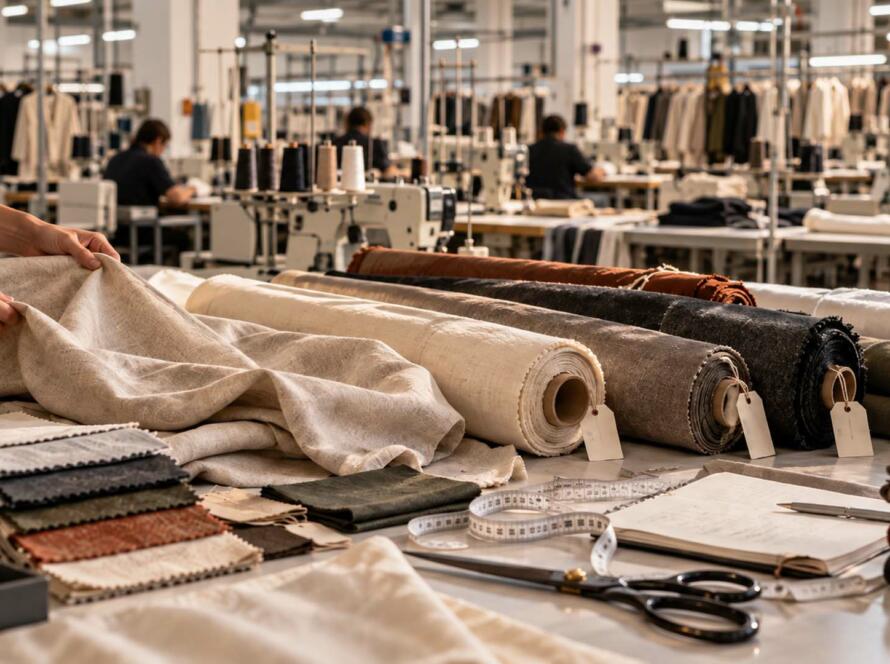


Choosing organic cotton, recycled polyester or another preferred material is an important sourcing decision. But the environmental profile of a garment does not end with the fiber.
Before a finished T-shirt, hoodie, sweatshirt or fashion piece reaches the customer, the textile may be prepared, dyed, washed, softened, printed, treated or mechanically finished. These processes influence color, hand feel, shrinkage, appearance and performance—and they can also influence water use, chemical inputs, energy demand and wastewater quality.
For fashion brands, this means a more useful sustainability question is not simply:
“What is this fabric made from?”
It is also:
“How was this fabric dyed, washed and finished?”
A practical approach to sustainable textile dyeing therefore requires looking beyond sustainability labels and understanding the production process itself.
Why Dyeing and Finishing Matter
Dyeing and finishing sit within what the textile industry commonly calls wet processing.
Depending on the material and desired result, this stage can include preparation, bleaching, dyeing, rinsing, washing, softening and other chemical or mechanical treatments.
These processes are important because they create many of the characteristics customers actually experience: the exact shade, softness, washed appearance, dimensional stability and surface performance of the garment.
They can also introduce environmental risks when water, chemicals and wastewater are poorly managed.
For this reason, European sustainability policy increasingly looks at textile products across their lifecycle rather than evaluating sustainability only by fiber choice. The EU Strategy for Sustainable and Circular Textiles, for example, includes the objective that textile products placed on the EU market should be produced with greater consideration for environmental impact and hazardous substances.
For brands, the lesson is straightforward: a preferred fiber does not automatically create a low-impact finished garment.
What Does Sustainable Textile Dyeing Mean?
Sustainable textile dyeing is better understood as a system of improvements rather than a single dye or technology.
A responsible dyeing strategy aims to reduce unnecessary resource use and chemical risk while still achieving the required color, durability, repeatability and commercial quality.
That can involve better process control, more appropriate dye selection, improved chemical management, efficient rinsing and washing, responsible wastewater treatment, reliable testing and clear supplier documentation.
The goal should not be to chase one impressive sustainability claim.
The goal should be to create a dyeing and finishing process that is measurable, controlled and appropriate for the product being manufactured.
Water Use: Look at the Process, Not Just the Claim

Water is central to many conventional textile preparation, dyeing and washing processes.
However, asking a supplier whether it “uses less water” provides very little useful information by itself.
Brands should understand where water is being used and how the process is controlled.
A mill may need water for preparation, dye baths, rinsing, washing or equipment cleaning. The efficiency of these steps can differ considerably depending on machinery, fiber type, dye chemistry, batch size, shade requirements and operating procedures.
Reducing impact can therefore involve measures such as improving bath efficiency, avoiding unnecessary rinse cycles, optimizing recipes, controlling batch consistency and reusing or recovering water where technically appropriate.
Just as important is what happens after the water has been used.
Wastewater management should be part of supplier evaluation, especially when significant wet processing is involved.
The current ZDHC Wastewater Guidelines provide harmonized parameters, test methods and expectations for wastewater and sludge generated by textile, apparel and footwear production facilities.
For a fashion brand, this moves the conversation from vague claims such as “eco-friendly dyeing” toward something much more useful:
What is measured, how is it treated, and what documentation is available?
Chemical Management Starts Before Dyeing Begins
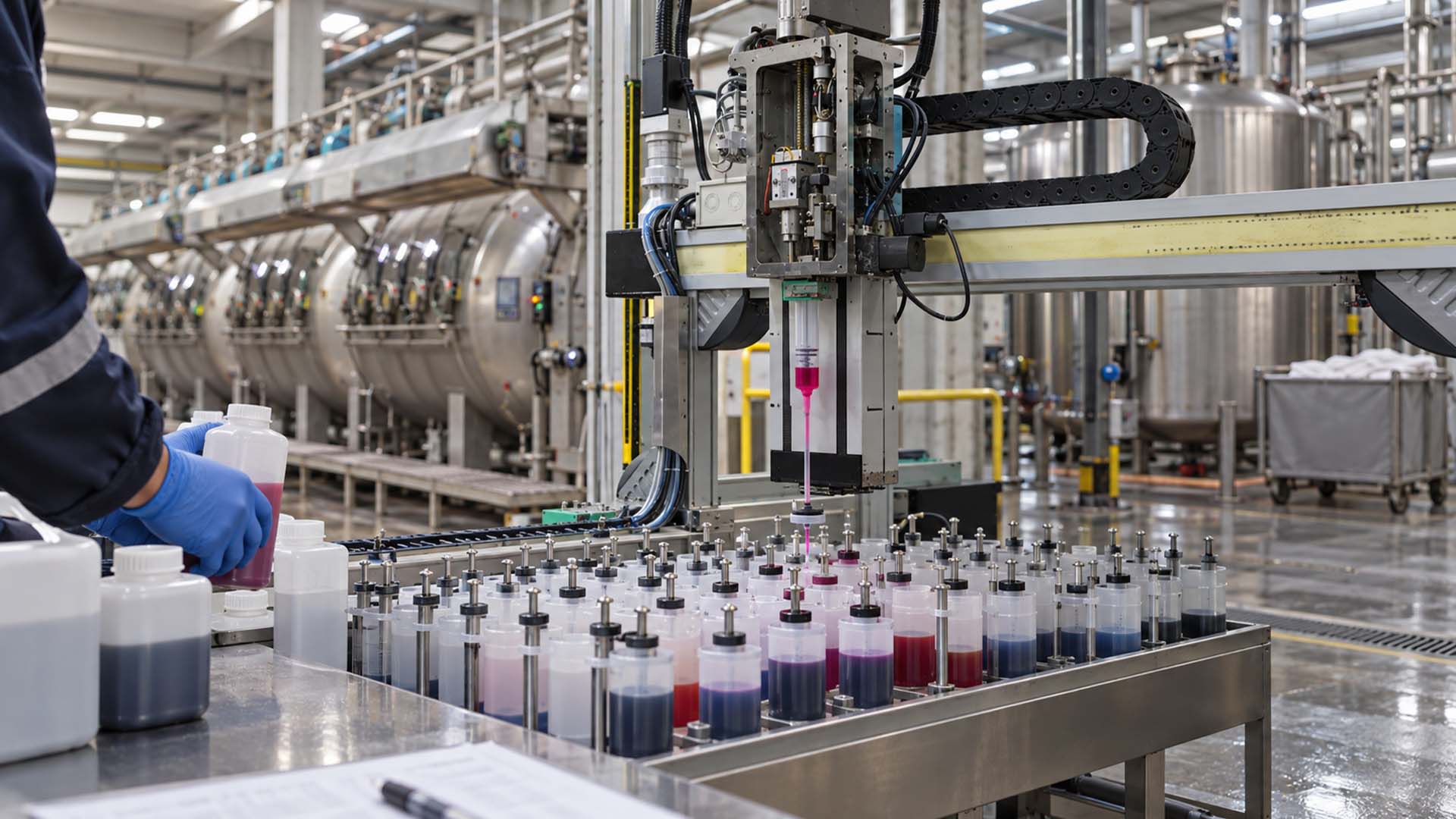
Chemical management is one of the most important parts of responsible textile processing.
Dyes are only one category of chemical input. Wet processing may also involve auxiliaries, detergents, fixing agents, softeners, bleaching agents, enzymes and other formulations depending on the required result.
A strong system therefore manages chemical inputs before they enter production.
This is the principle behind the ZDHC Manufacturing Restricted Substances List (MRSL). Unlike an RSL focused primarily on restricted substances in the finished product, the MRSL addresses chemicals restricted from intentional use during manufacturing.
This distinction matters.
Testing a finished garment can help identify product compliance problems. Good chemical management attempts to reduce the risk earlier by controlling what enters the production process.
Brands working with dyeing and finishing suppliers should therefore ask how chemicals are purchased, approved, stored, documented and monitored.
A supplier should be able to explain its process more clearly than simply saying its chemicals are “safe.”
Dye Selection Should Match the Fiber and Performance Requirement
There is no universal dye that is automatically the most sustainable choice for every garment.
Different fibers require different dye classes and processing conditions.
Cotton, polyester, nylon and other materials behave differently during coloration. Dark shades may require a different process from pale shades. Performance expectations such as wash fastness, rubbing fastness and light fastness can also influence the recipe.
This is why dye selection should begin with the technical requirements of the garment.
For example, choosing an alternative dye route that performs poorly and causes garments to fade prematurely would create another sustainability problem: a product with a shorter useful life.
The better objective is to balance chemical selection, process efficiency, compliance and durability.
Where specific certification is required, brands should understand how sustainable fashion certifications apply to the material, processing stage and finished product. GOTS Version 8.0, released in 2026, for example, defines restrictions and requirements for dyes, pigments, auxiliaries and other chemical inputs used in certified textile processing.
Certification should therefore be checked at the relevant processing stage, rather than assumed from the fiber description alone.
Fabric Dyeing vs. Garment Dyeing
Fashion brands often encounter two different production routes: dyeing the fabric before garment construction or dyeing the completed garment.
Neither method should automatically be described as more sustainable. The better option depends on the product, order structure, equipment and desired aesthetic.
Fabric Dyeing
With fabric dyeing, textile material is dyed before cutting and sewing.
This route is widely used for garments that require consistent shade control across production. It can be suitable when colors, fabric constructions and volumes are planned clearly in advance.
For brands producing repeat styles or larger coordinated runs, fabric dyeing can provide strong consistency when properly controlled.
Garment Dyeing
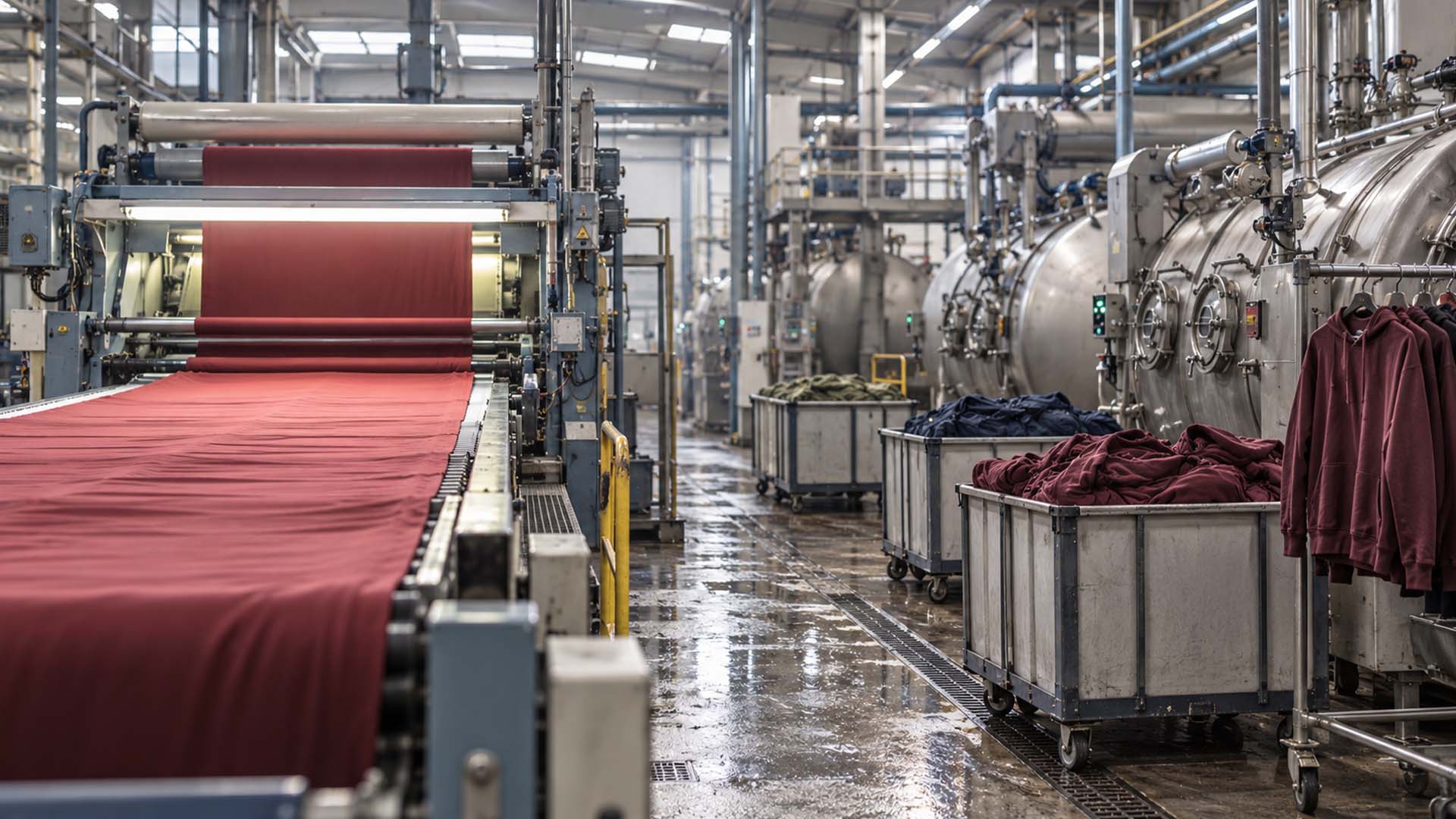
Garment dyeing colors the product after sewing.
It can create the washed, slightly irregular and lived-in appearance often associated with premium casualwear and streetwear. It can also offer production flexibility in certain situations because some color decisions can occur later in the development process.
But garment dyeing introduces technical considerations.
Shrinkage, seam behavior, trims, labels, thread, zippers and other components must be compatible with the dyeing and washing process. Poor development can create shade variation, dimensional problems or inconsistent finishing.
A garment-dyed hoodie, for example, should be engineered for garment dyeing from the sampling stage rather than treated as a standard hoodie that happens to be dyed later.
Washing and Finishing Deserve the Same Attention
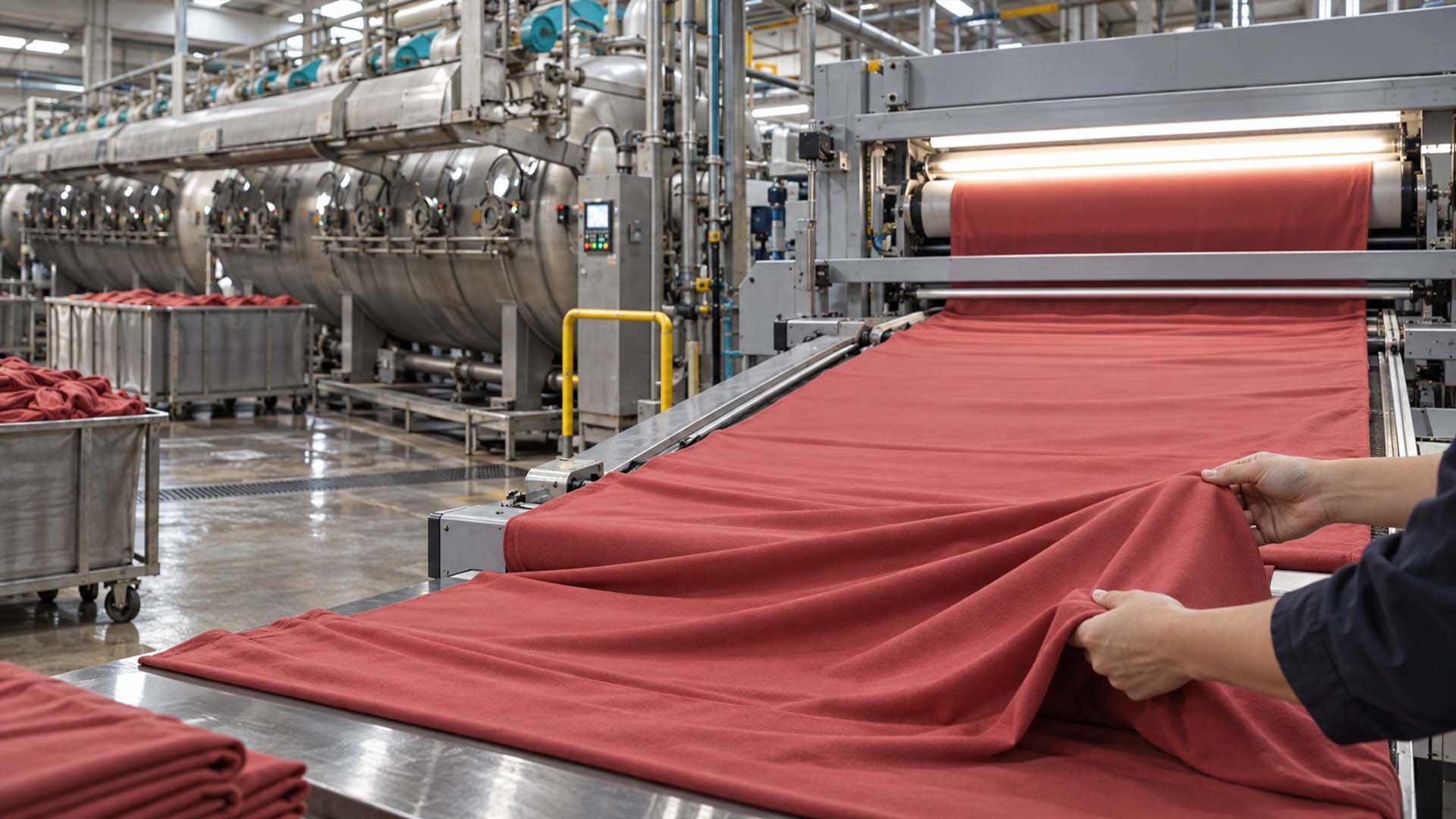
Many fashion brands focus heavily on the dyeing stage while treating finishing as a minor detail.
That can be a mistake.
Finishing influences the final appearance, touch and performance of the textile. Depending on the garment, the process may involve softening, washing, enzyme treatments, mechanical effects, heat setting or other specialized treatments.
Streetwear provides a good example.
A brand may request a heavy washed sweatshirt with a vintage appearance and very soft hand feel. Achieving that result could require additional processing compared with a standard solid-color sweatshirt.
Every additional process should have a clear purpose.
Rather than applying multiple finishes automatically, brands can ask:
Which finishing steps are necessary to achieve the product specification, and which ones can be simplified or eliminated?
Sometimes reducing impact comes from sophisticated technology. In other cases, it comes from removing an unnecessary process.
Do Not Separate Sustainability From Quality
Lower-impact processing still has to produce a commercially viable garment.
Color consistency, fabric shrinkage testing, wash fastness, rubbing fastness, dimensional stability and overall appearance remain important.
A dyeing process that reduces one environmental parameter but repeatedly produces rejected batches is not an efficient production system.
This is where sampling and testing become especially valuable.
Before bulk production, brands should approve relevant color standards and evaluate how the material or garment behaves after the intended dyeing, washing and finishing process.
For custom colors, clear communication through approved lab dips, color references or other agreed standards can reduce unnecessary corrections and repeat processing.
Sustainability and quality control should reinforce each other. Producing correctly the first time is usually better than correcting preventable mistakes later.
Supplier Documentation Is More Valuable Than Broad Claims
Words such as green, eco, responsible and low impact are easy to use.
Documentation is harder to fake.
Brands do not necessarily need hundreds of pages of paperwork for every production order. They should, however, know what evidence is relevant to their sustainability claims and sourcing requirements.
Depending on the product and supply chain, useful evidence may include chemical-management procedures, certificates, chemical input documentation, wastewater testing information, test reports and details identifying the actual processing facility.
For brands selling into Europe, structured supplier documentation can also support future Digital Product Passport for textiles requirements.
Facility-level systems can also provide additional evidence. OEKO-TEX STeP, for example, evaluates production facilities across areas including chemical management, environmental performance, environmental management, quality, health and safety and social responsibility.
The important point is to verify the scope.
A certificate held somewhere in the supply chain does not automatically prove that every fabric, dyeing process or finished garment is covered by it.
Questions Fashion Brands Should Ask Manufacturers
Before approving a dyeing or finishing route, brands can use a focused supplier checklist:
- Where will the fabric or garment be dyed and finished?
- Is the process fabric dyed, yarn dyed or garment dyed?
- Which chemical-management system does the processing facility follow?
- Are chemical inputs screened against relevant MRSL requirements?
- What wastewater treatment and testing procedures are used?
- Which certifications apply to the actual facility or material?
- Can current documentation be provided when required?
- How are color consistency and color fastness tested?
- What washing or finishing treatments will be applied?
- Can unnecessary finishing processes be removed?
- How is shrinkage controlled after dyeing and washing?
- Are trims, threads and labels compatible with garment dyeing if that route is used?
- How are bulk shades approved against the sample or lab dip?
- What traceability is maintained between the order and the dyeing or finishing supplier?
The manufacturer may not operate every wet-processing stage internally. That is normal in many textile supply chains.
What matters is whether the production partner knows where the process takes place, what specifications are being followed and how the result is verified.
Why Turkey Can Be Relevant for European Fashion Brands
Turkey has an established textile and apparel supply chain covering fabric development, dyeing, finishing and garment manufacturing.
For European brands, geographic proximity can also make supplier communication, development visits and production coordination more practical than in some distant sourcing regions.
But location alone should never be treated as proof of sustainability.
A Turkish dye house can have strong environmental and chemical-management systems, while another may operate differently. The same principle applies to suppliers in any manufacturing country.
Brands should evaluate the actual facility and process, not make assumptions based on geography.
A capable manufacturing partner can add value by coordinating the different stages of the supply chain and helping a brand understand which mills, dyeing facilities and finishing processes are appropriate for its product requirements.
How Istanbul Factory Approaches Dyeing and Finishing Projects
At Istanbul Factory, textile development is considered as part of the complete garment-production process.
Fabric sourcing, color development, sampling, printing, embroidery, washing, finishing and quality control need to work together. Decisions made during one stage can affect the next.
For example, a brand developing a garment-dyed French terry sweatshirt needs more than a preferred color.
The fabric construction, sewing thread, rib, labels, shrinkage allowance, dye process and final measurements must all be considered as part of the same product.
Our role as a clothing manufacturing partner in Istanbul is to help fashion brands turn their design and sourcing requirements into a production process that is practical, traceable and suitable for commercial manufacturing.
For brands with specific sustainability or certification requirements, those expectations should be defined before sourcing and sampling begin. This gives the manufacturing team a clearer basis for selecting appropriate materials and processing partners.
Build Sustainability Into the Production Specification
The most effective sustainability decisions are usually made before bulk production starts.
If low-impact dyeing, restricted chemical requirements, certification, wastewater documentation or a particular finishing method matters to your brand, add those requirements to the sourcing brief and technical discussion from the beginning.
Do not wait until the garments are already in production to ask how they were dyed.
A strong specification can connect design, performance, sustainability and quality requirements before the first bulk fabric is processed.
Planning a collection in Turkey?
Istanbul Factory works with fashion brands, streetwear labels, startups and established companies on fabric sourcing, garment development, sampling, custom manufacturing, print and embroidery, quality control and production coordination.
Contact our team to discuss your fabric, color, finishing and manufacturing requirements before beginning development.
Frequently Asked Questions
What is sustainable textile dyeing?
Sustainable textile dyeing is an approach to coloration that aims to reduce environmental and chemical impacts while maintaining the required color, quality and performance. It can involve responsible chemical selection, efficient water and energy use, controlled processing, wastewater management and documented supplier practices.
Is garment dyeing more sustainable than fabric dyeing?
Not automatically. The environmental performance of either method depends on the material, equipment, process efficiency, chemical inputs, batch structure and required finishing. The best option should be evaluated for the specific garment.
Can a garment made from sustainable fabric still have a high production impact?
Yes. Fiber choice is only one part of the garment’s lifecycle. Dyeing, washing, finishing, transportation, durability and production efficiency can all influence the product’s overall environmental profile.
What is an MRSL in textile manufacturing?
An MRSL, or Manufacturing Restricted Substances List, defines chemicals that are restricted from intentional use during manufacturing. It focuses on controlling chemical inputs during production rather than looking only at restricted substances in the finished product.
What should brands request from a dyeing supplier?
Useful information can include details of the processing facility, chemical-management procedures, relevant certifications, wastewater testing, chemical documentation, color-fastness testing and traceability between the material and the facility performing the dyeing.
Does low-impact dyeing affect garment quality?
It should not mean accepting poor quality. A properly developed process should still meet requirements for shade consistency, color fastness, shrinkage, dimensional stability and appearance. Testing and sampling are essential before bulk production.