


Fashion brands searching for custom apparel in Istanbul are usually looking for more than a factory that can sew garments. They need access to fabrics, pattern makers, sample rooms, printing specialists, embroidery workshops, finishing services and reliable production management.
Istanbul brings these capabilities together within one connected manufacturing environment.
For European and US fashion brands, this makes the city particularly valuable during product development. Fabrics can be sourced, prototypes can be produced, corrections can be discussed and bulk manufacturing can be coordinated without sending every stage to a different country or production region.
This connected structure is one of the main reasons Istanbul has become an important manufacturing base for streetwear labels, premium basics brands, startup clothing companies and established fashion businesses.
Why Do Fashion Brands Manufacture Custom Apparel in Istanbul?
Fashion brands choose Istanbul because the city combines several manufacturing advantages in one location:
- Access to a wide selection of knitted and woven fabrics
- Experienced pattern makers and sample rooms
- Private label and custom clothing production
- Specialist printing and embroidery services
- Garment washing, dyeing and finishing capabilities
- Proximity to labels, packaging and trim suppliers
- Flexible development for different product categories
- Strong transport connections with international markets
- Practical communication between brands and production teams
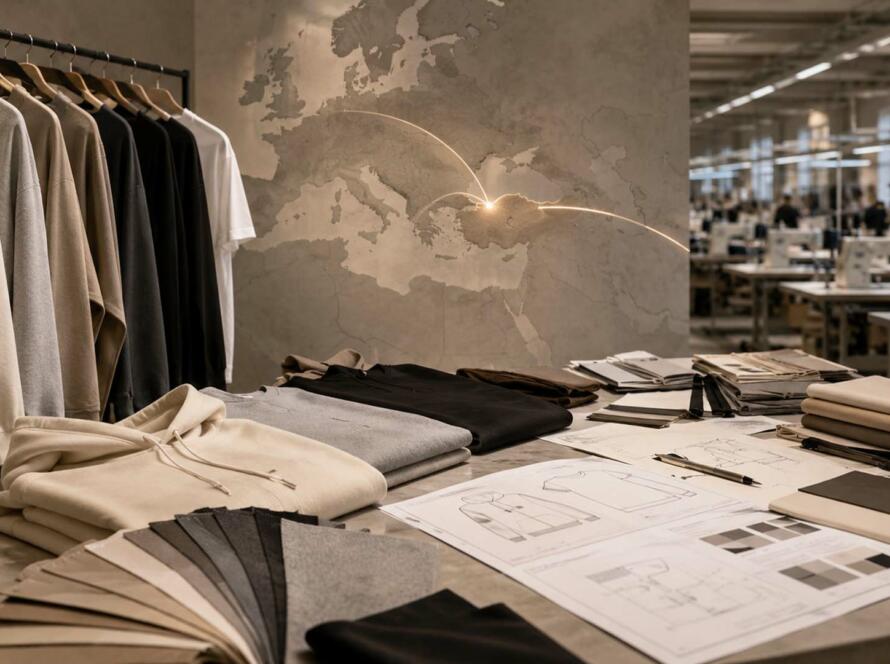
The real advantage is coordination. A manufacturer can work with local fabric suppliers, trim producers and specialist workshops while managing the complete development process for the client.
This reduces the operational gaps that often appear when fabric sourcing, sampling, decoration and garment production take place in separate regions.
Istanbul’s Position Within Turkey’s Clothing Industry
Turkey has a broad textile and apparel supply chain covering yarn production, fabric knitting and weaving, dyeing, garment manufacturing, finishing and export logistics.
Istanbul plays a distinctive role within this structure.
Many textile processes take place across different Turkish manufacturing regions, but Istanbul acts as a major commercial, development and coordination centre. The city is home to clothing factories, textile showrooms, sourcing offices, sample rooms, exporters and specialist production workshops.
For an international fashion brand, this means Istanbul can provide access to the wider Turkish textile industry through a single manufacturing relationship.
A custom clothing manufacturer in Istanbul may source fabric from a specialised mill, arrange dyeing or washing through an established partner, develop patterns internally and coordinate printing, embroidery and packaging close to the garment production facility.
This model is especially useful for brands that need custom development rather than standard catalogue products.
A Connected Network of Fabric and Trim Suppliers
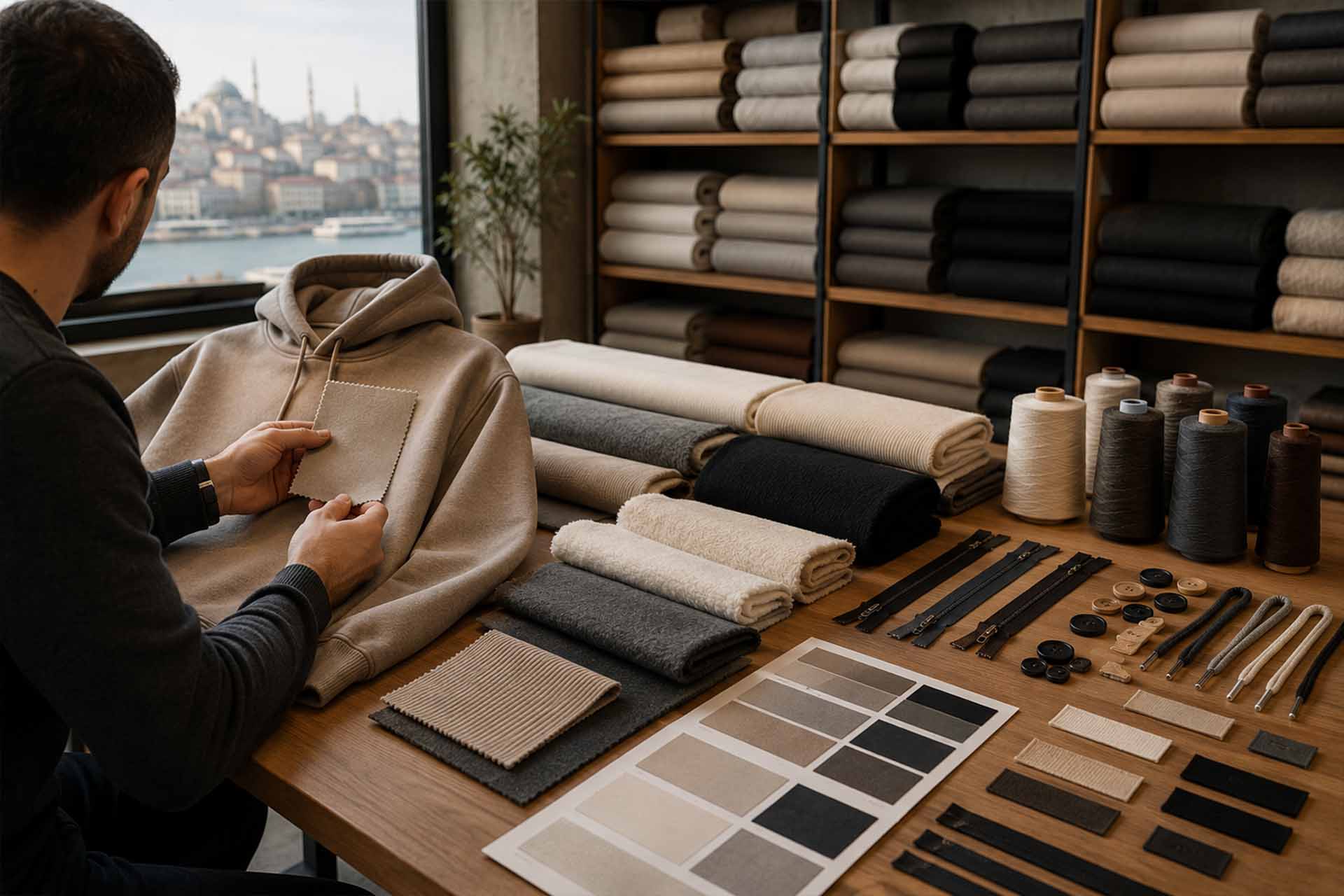
Fabric selection has a direct effect on fit, structure, comfort, shrinkage, durability and final garment cost.
Istanbul gives manufacturers access to a broad network of suppliers working with materials such as:
- Cotton jersey
- Heavyweight jersey
- French terry
- Brushed fleece
- Rib fabrics
- Piqué
- Interlock
- Organic cotton fabrics
- Recycled fibre blends
- Selected woven fabrics
- Performance and technical blends
A streetwear brand developing a heavyweight hoodie, for example, may need a structured French terry or fleece fabric, matching rib, reinforced drawcords, metal eyelets and a specific garment wash.
A premium basics brand may focus on soft hand feel, stable colour, low shrinkage and consistent fabric weight across repeat orders.
Because fabric and accessory suppliers operate close to the city’s manufacturing network, production teams can compare alternatives and request swatches without relying entirely on long-distance sourcing.
Access to Trims and Branding Components
Custom apparel development also depends on details that are easy to underestimate.
These include:
- Main labels
- Size labels
- Care labels
- Woven patches
- Hangtags
- Drawcords
- Zippers
- Buttons
- Snaps
- Elastic
- Packaging
- Custom polybags and boxes
When these components are developed close to the garment factory, approvals can move more efficiently. The manufacturer can check label dimensions, colour matching, placement and compatibility before bulk production begins.
This helps prevent situations where a correct garment is delayed because a zipper, label or packaging component does not meet the approved specification.
Custom Apparel Development Versus Ready-Made Products
Custom apparel manufacturing means developing a garment according to a brand’s own design, measurements, fabric requirements and construction standards.
It is different from adding a logo to a ready-made blank.
A true custom apparel project may involve:
- Reviewing the tech pack
- Evaluating the design for production
- Selecting or developing the fabric
- Creating the pattern
- Producing a prototype
- Correcting fit and construction
- Testing printing or embroidery
- Approving labels and trims
- Preparing size grading
- Starting bulk production after approval
This approach gives fashion brands more control over the final product.
The brand can define the silhouette, sleeve shape, body length, hood construction, rib quality, stitching details, graphic placement and finishing method.
For companies building a recognisable product identity, this control is usually more valuable than choosing from standard blanks.
Private Label Production in Istanbul
Private label production allows a fashion business to manufacture garments under its own brand name.
Depending on the project, private label manufacturing in Istanbul may include:
- Product development
- Fabric sourcing
- Pattern making
- Sampling
- Custom colour development
- Printing and embroidery
- Branded labels
- Hangtags and packaging
- Quality control
- Bulk manufacturing
- Export preparation
Private label production can be suitable for new brands launching their first structured collection and for established companies expanding into new product categories.
The key distinction is how much customisation the manufacturer offers.
Some suppliers use “private label” to describe standard garments with a new label. Others provide full custom development from the tech pack to the finished collection.
Brands should clarify this difference before requesting quotations.
Sampling and Prototyping Capabilities
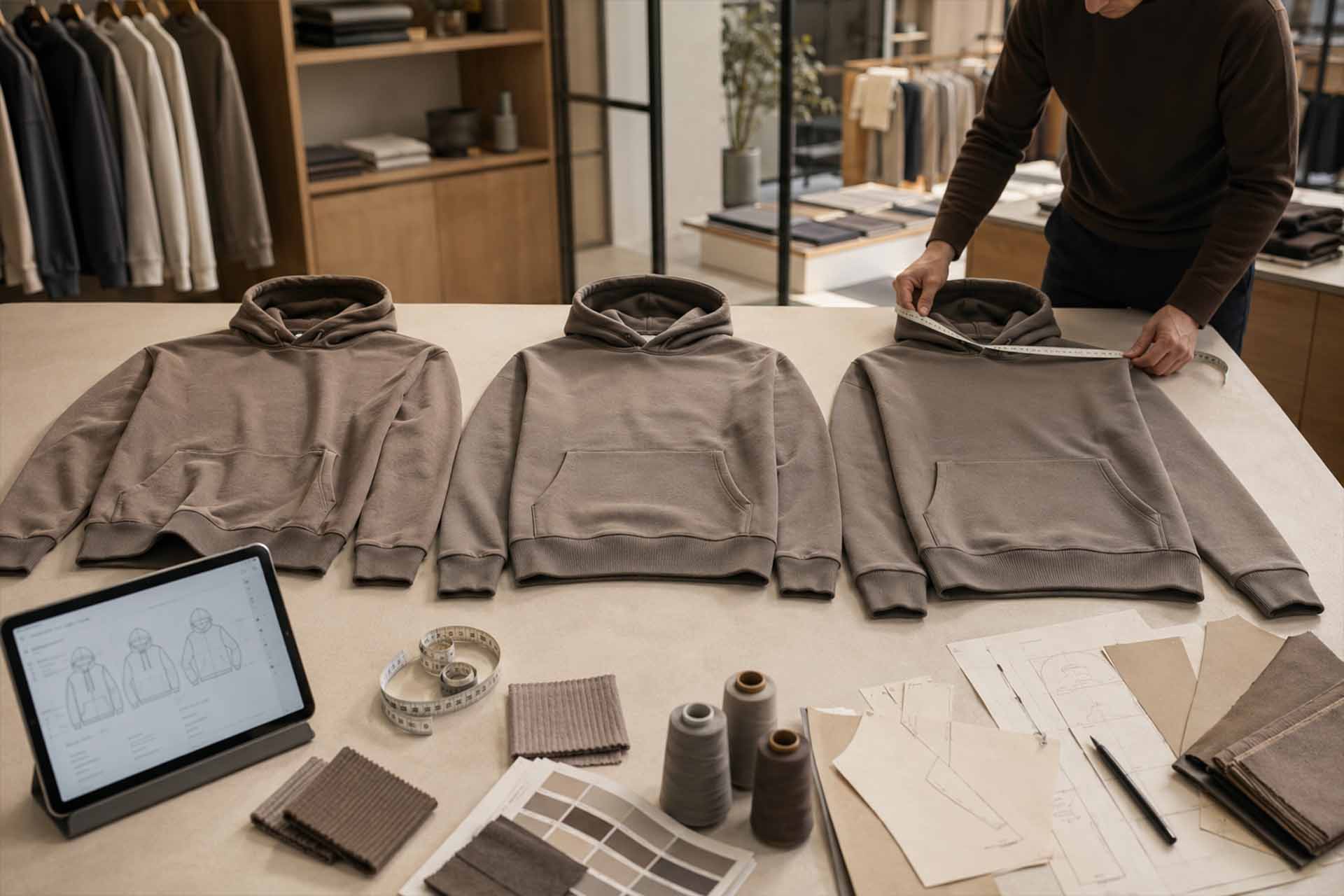
Sampling is where a product moves from an idea into a physical garment.
A professional sample process allows the brand and manufacturer to evaluate:
- Fit
- Proportions
- Fabric behaviour
- Construction
- Stitching
- Trim selection
- Graphic scale
- Print placement
- Embroidery quality
- Wash effects
- Overall appearance
Istanbul’s network of pattern makers, sample rooms and specialist workshops makes the city well suited to development-heavy projects.
For example, a brand may receive a first hoodie prototype and decide that the body is too long, the hood needs more volume and the chest embroidery should move slightly higher.
The revised sample can then be produced using the corrected measurements and artwork placement.
This development stage should never be treated as an unnecessary delay. It is far less expensive to correct one prototype than hundreds or thousands of finished garments.
What Brands Should Approve Before Bulk Production
Before manufacturing begins, brands should confirm:
- Final measurements
- Fit and silhouette
- Fabric quality and weight
- Fabric colour
- Shrinkage expectations
- Stitching and seam construction
- Rib structure
- Print or embroidery placement
- Label position
- Packaging method
- Size grading
- Approved sample
Clear approvals protect both the brand and the manufacturer. They create a shared production reference for quality control.
Printing, Embroidery and Specialist Finishes
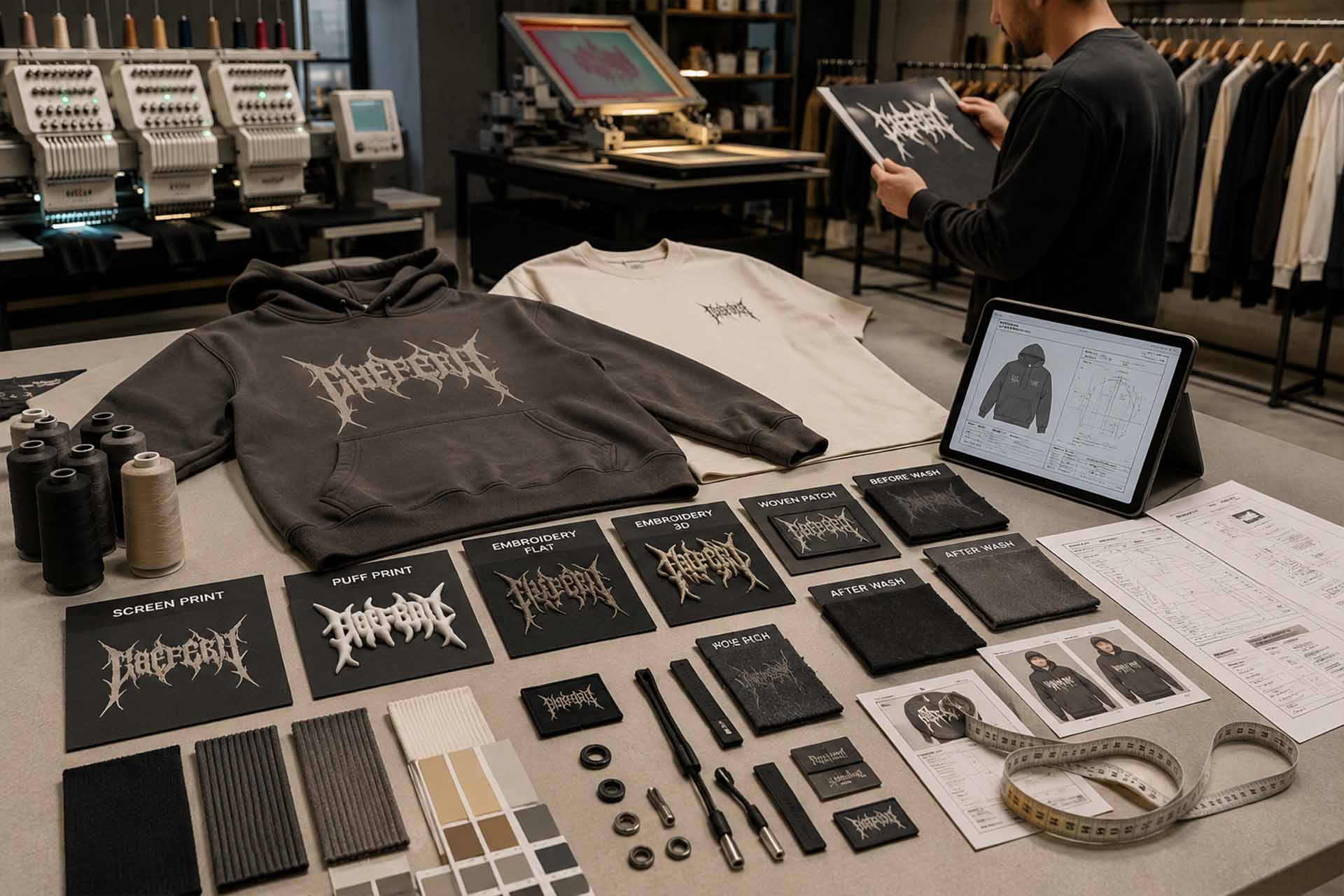
Many fashion products require additional processes after the garment has been cut and sewn.
Istanbul has a wide network of workshops specialising in decoration and garment finishing.
Common services include:
- Screen printing
- Water-based printing
- Puff printing
- High-density printing
- Digital garment printing
- Transfer applications
- Flat embroidery
- 3D embroidery
- Appliqué
- Woven and embroidered patches
- Garment dyeing
- Enzyme washing
- Stone washing
- Softening treatments
- Vintage and faded effects
The correct method depends on the garment, fabric composition, artwork and expected appearance.
A large graphic on a heavyweight T-shirt requires a different production decision from a small tonal logo embroidered on a premium hoodie.
The manufacturer should consider how the decoration will behave during washing, whether the fabric can support the embroidery density and how the finish will affect the garment’s measurements.
Why Decoration Samples Matter
Artwork shown on a computer screen cannot fully predict the production result.
Brands should approve print strike-offs, embroidery samples or decorated garment prototypes before bulk manufacturing.
This makes it possible to check:
- Actual colours
- Graphic dimensions
- Placement
- Surface texture
- Edge quality
- Embroidery density
- Fabric distortion
- Wash durability
A few millimetres can make a visible difference in logo placement, especially on minimalist premium garments.
Production Flexibility for Different Fashion Categories
Istanbul’s manufacturing ecosystem supports a wide range of brand directions.
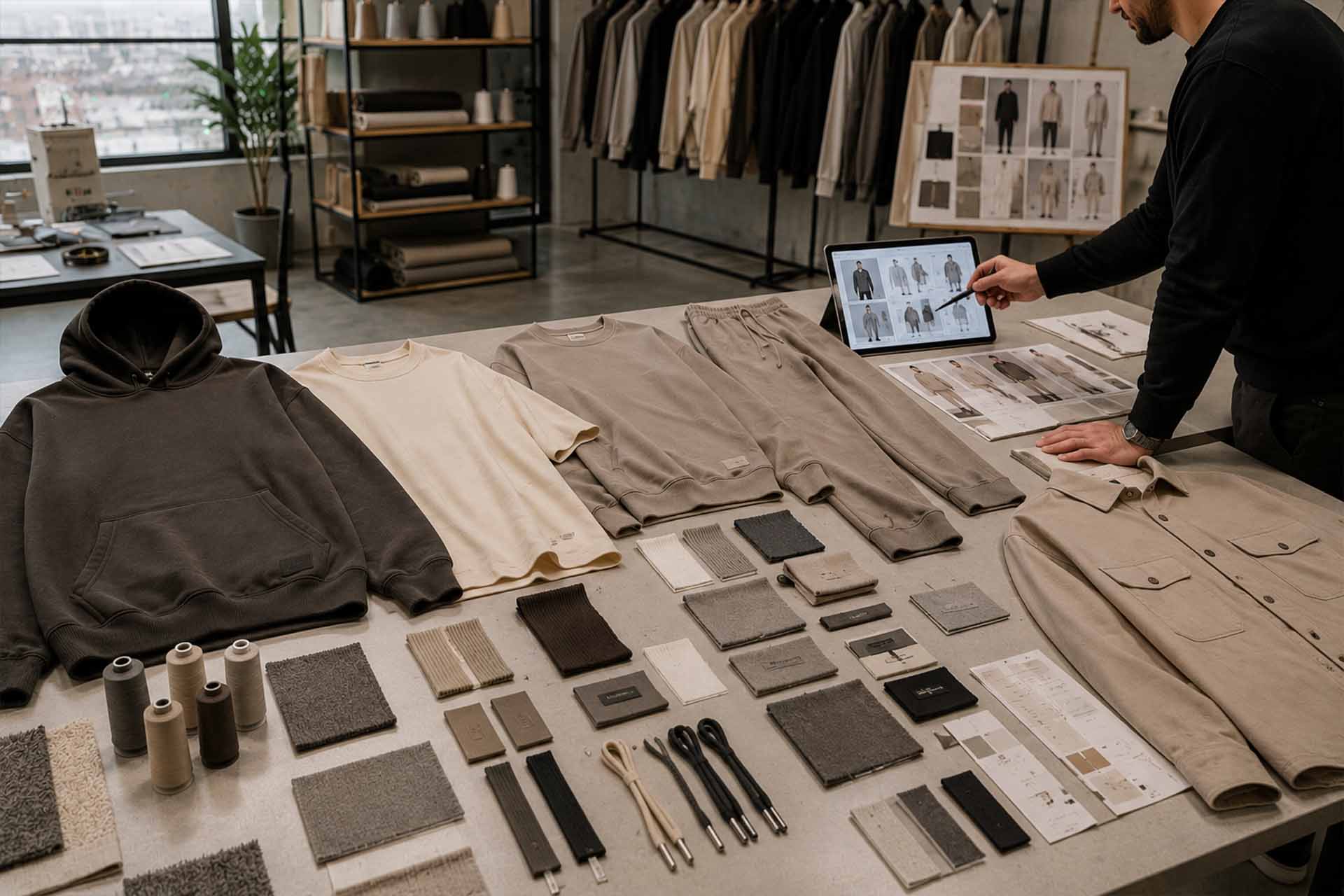
Streetwear
Streetwear projects often require oversized fits, heavyweight fabrics, garment washes, large graphics, patches and detailed branding.
These collections may appear simple, but achieving the correct proportions and fabric structure requires careful pattern development.
Premium Basics
Premium basics depend on consistency.
The fabric must feel right, seams must remain clean, collars and ribs must recover properly, and measurements should remain within tolerance after washing.
For these products, quality often comes from controlled details rather than visible decoration.
Fashion Collections
Seasonal fashion collections may combine several garment types, materials and finishing techniques.
This creates more complex sourcing and production requirements. A coordinated manufacturer can help brands organise development across multiple styles while maintaining common colours, trims and branding elements.
Startup Collections
New brands often need support translating creative concepts into production-ready specifications.
An experienced manufacturing partner can identify construction risks, suggest realistic fabric options and explain how design decisions affect cost, minimum quantities and lead times.
The manufacturer should support the brand’s vision without hiding the practical limits of production.
Communication and Accessibility for International Buyers
Good manufacturing depends on accurate communication.
International buyers need clear updates on:
- Fabric availability
- Sample progress
- Required approvals
- Production timelines
- Technical questions
- Quality issues
- Packing
- Shipping preparation
Istanbul works well for European brands because travel is relatively practical and business hours overlap significantly.
US brands also benefit from Istanbul’s export experience, although time-zone differences require organised communication. Written approvals, structured progress reports and clear production documentation are especially important.
English is commonly used in international textile business, but language ability alone does not guarantee effective project management. Brands should evaluate how clearly a manufacturer explains technical issues and whether important decisions are documented.
Transport Connections With Europe, the UK and the US
Istanbul is a major transport and export hub.
For brands in Europe and the UK, road freight can provide practical access for many production programmes. Air freight is available for urgent samples or smaller shipments, while sea freight may be considered for larger international orders.
For US buyers, Istanbul’s air cargo and sea freight connections support both development shipments and commercial production.
The most suitable method depends on:
- Order volume
- Garment weight
- Delivery deadline
- Destination
- Freight cost
- Customs requirements
- Whether the shipment is a sample or bulk order
Brands should discuss delivery terms before production begins. A low garment price can lose its advantage when freight, duties, customs handling and local delivery are added without proper planning.
How Istanbul Can Reduce Development Delays

Custom clothing projects rarely follow a perfectly linear path.
A fabric may need to be replaced. A print may require resizing. An embroidery test may pull the fabric. A wash treatment may change the garment measurements.
Delays become more difficult to control when each supplier operates in a separate country.
Istanbul’s concentrated manufacturing network can make corrections easier to coordinate.
A production team may be able to visit the fabric supplier, speak directly with the embroidery workshop and compare the revised sample with the approved pattern within the same local network.
This does not mean every project will move quickly. Sampling still requires decisions, testing and approvals. The advantage is that the manufacturing partners are physically closer and can resolve many technical issues without lengthy international transfers.
Advantages of Custom Apparel Manufacturing in Istanbul
The main advantages include:
- A mature textile and clothing supply chain
- Access to fabrics, trims and specialist services
- Strong sampling and development capabilities
- Experience with European fashion expectations
- Flexible production across multiple fashion categories
- Easier factory visits for European buyers
- Coordinated print, embroidery and finishing
- Established export infrastructure
- Practical balance between quality, flexibility and cost
These strengths make Istanbul particularly attractive to brands that value product development and production control.
Limitations Brands Should Consider
Istanbul is not the right production location for every project.
Brands should also consider the potential limitations.
Minimum Order Quantities
Custom fabric colours, specialised trims and efficient production lines often require minimum quantities.
Very small orders may be difficult to manufacture at a commercially realistic price.
Complex Sourcing Requirements
Some highly technical, patented or unusual materials may need to be imported. This can affect cost, minimum quantities and lead times.
Development Takes Time
Custom manufacturing requires sampling and approval.
Brands expecting immediate production from an incomplete sketch may face delays that could have been avoided with a detailed tech pack.
Cost Is Not Based on Labour Alone
Garment pricing depends on fabric, construction, quantities, decoration, trims, washing, quality requirements and packaging.
Istanbul may not be the lowest-price option for basic high-volume products. Its value is stronger when brands need coordinated development, quality oversight and product customisation.
Supplier Capabilities Vary
Being located in Istanbul does not automatically make a supplier reliable.
Brands should assess the manufacturer’s communication, sample quality, technical knowledge, production capacity and quality-control procedures before placing a bulk order.
How to Evaluate a Custom Apparel Manufacturer in Istanbul
Before choosing a manufacturing partner, ask practical questions.
- Do you produce fully custom garments or decorate ready-made blanks?
- Which products do you manufacture internally?
- How are fabrics sourced and approved?
- Is pattern making handled in-house?
- How many sampling rounds are normally required?
- Who manages printing, embroidery and washing?
- What are the minimum order quantities?
- How is quality checked during production?
- Can you provide measurement and inspection reports?
- Which delivery terms do you use?
- How are delays or failed quality checks handled?
- Who will manage communication throughout the project?
The answers should be specific. A reliable manufacturer will explain its process, responsibilities and limitations clearly.
Custom Apparel Manufacturing With Istanbul Factory
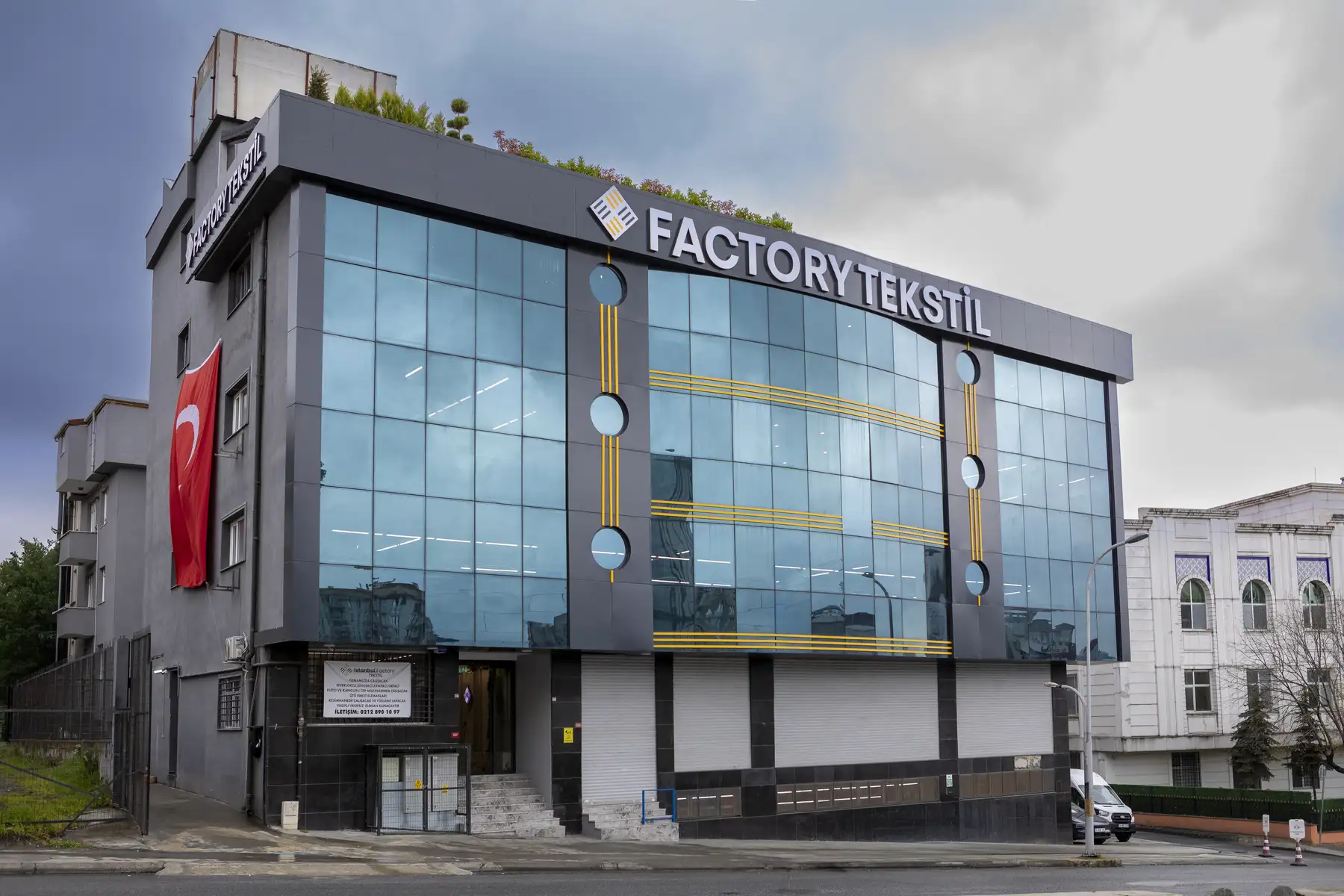
Istanbul Factory works with fashion brands, streetwear companies, startup labels and established businesses looking for coordinated clothing production in Turkey.
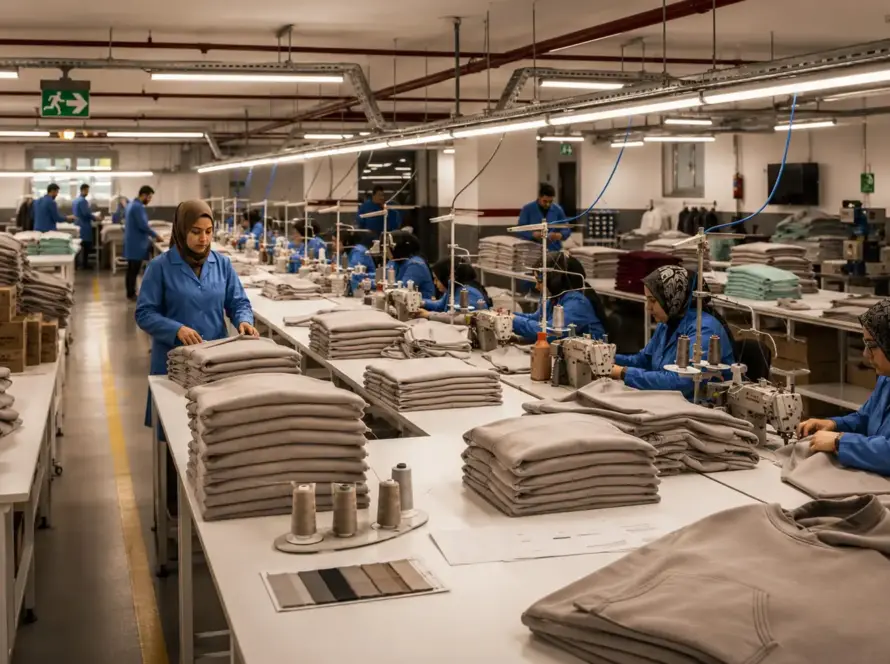
Our services cover the development and manufacturing process from initial product review to finished bulk production.
Depending on the project, this can include:
- Tech pack review
- Fabric sourcing
- Pattern development
- Garment sampling
- Custom clothing manufacturing
- Private label production
- Printing and embroidery
- Labels and branding
- Quality control
- Packing and export preparation
Our approach focuses on clear approvals, realistic production planning and quality standards suited to international fashion brands.
Rather than treating sampling, sourcing and bulk production as separate transactions, we manage them as connected parts of the same product-development process.
Develop Your Next Collection in Istanbul
Choosing a manufacturer is ultimately a decision about control, communication and product quality.
Istanbul gives brands access to an established clothing-production network where fabrics, patterns, samples, decoration and bulk manufacturing can be coordinated within one city.
For brands that need more than standard garments, this connected structure can improve development visibility and reduce avoidable production gaps.
Contact Istanbul Factory to discuss your collection, production requirements, target quantities and development schedule.
Frequently Asked Questions
Why is Istanbul popular for custom apparel manufacturing?
Istanbul combines clothing factories, fabric suppliers, pattern makers, sample rooms, trim producers and specialist finishing workshops within one connected manufacturing centre. This helps brands coordinate product development and bulk production more efficiently.
What types of clothing can be manufactured in Istanbul?
Manufacturers in Istanbul can produce products such as T-shirts, hoodies, sweatshirts, joggers, streetwear, premium basics and selected fashion garments. Capabilities vary between factories, so brands should confirm product specialisation before starting development.
Can Istanbul manufacturers produce fully custom garments?
Yes. Many manufacturers offer custom development based on a brand’s tech pack, measurements, fabric requirements, artwork and branding. Brands should confirm whether the supplier provides true cut-and-sew manufacturing or only customises ready-made blanks.
Is Istanbul suitable for startup clothing brands?
Istanbul can be suitable for startups that have clear product concepts, realistic quantities and a structured development budget. New brands should prepare a detailed tech pack and allow enough time for sampling, corrections and approvals.
Does custom apparel production include labels and packaging?
Private label production can include main labels, care labels, size labels, hangtags, branded packaging and other identity components. These requirements should be specified before quotation and sampling.
How long does custom clothing production take in Istanbul?
The timeline depends on fabric availability, product complexity, sampling rounds, order quantity, decoration and finishing requirements. Development time and bulk-production time should be planned separately.
Should brands visit the factory before manufacturing?
A factory visit can be valuable, especially for complex or high-value collections. It allows the brand to review samples, discuss technical details, understand production capabilities and evaluate quality-control procedures. Well-organised remote production is also possible when communication and approvals are properly documented.

1 Comment