

Embroidery can completely change how a garment is perceived.
A small flat logo on a heavyweight T-shirt can feel refined and understated. A raised 3D puff design on a cap creates a stronger visual identity. Chenille lettering can give a varsity jacket a premium collegiate look, while appliqué allows brands to create large graphics without relying entirely on dense stitching.
For fashion brands, choosing between the different types of embroidery for clothing is therefore more than a decoration decision. The embroidery technique needs to work with the fabric, garment construction, logo complexity, production quantity and desired price positioning.
The right method should look intentional, remain stable after washing and complement the garment rather than overpower it.
This guide explains the main embroidery techniques used in clothing manufacturing and how brands can choose the most suitable option for their collection.
What Are the Main Types of Embroidery for Clothing?
The most common embroidery methods used by fashion and streetwear brands are:
- Flat embroidery – traditional stitched embroidery with a relatively flat surface
- 3D puff embroidery – raised embroidery created using foam underneath the stitches
- Chenille embroidery – textured, looped embroidery commonly associated with varsity styles
- Appliqué embroidery – fabric shapes stitched onto another garment
- Patch embroidery – designs embroidered separately and attached to the garment
Each method creates a different texture, level of detail and visual impact.
The best choice depends primarily on the garment fabric, artwork and brand aesthetic, as well as the capabilities of the print and embroidery process used during production.
1. Flat Embroidery
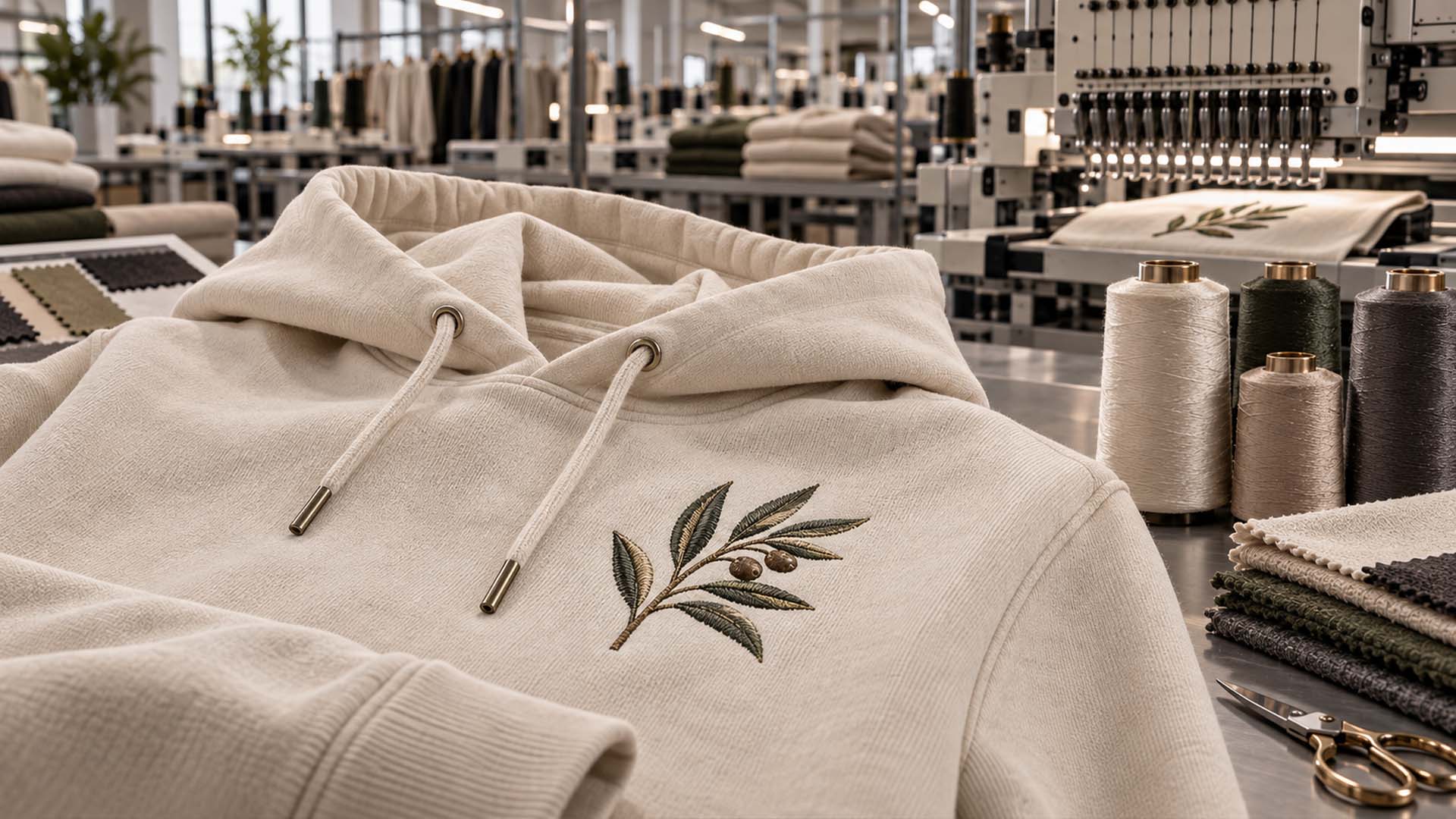
Flat embroidery is the most widely used embroidery technique in fashion manufacturing.
The design is digitized into a stitch file and embroidered directly onto the garment using embroidery thread. The stitches lie relatively close to the fabric surface, allowing detailed logos, lettering and symbols to be reproduced cleanly.
Where Flat Embroidery Works Best
Flat embroidery is particularly suitable for:
- T-shirts
- Polo shirts
- Sweatshirts
- Hoodies
- Shirts
- Caps
- Jackets
- Workwear
It works especially well for chest logos, sleeve branding, small back-neck logos and subtle premium details.
Advantages of Flat Embroidery
Brands often choose flat embroidery because it offers:
- Good logo definition
- Strong durability
- A professional appearance
- Broad fabric compatibility
- Multiple thread color options
- Small and medium-sized design possibilities
Compared with printing, embroidery also adds physical texture to the garment.
For premium basics, even a relatively small embroidered logo can make the product feel more substantial.
Where Brands Need to Be Careful
Very thin fabrics can become distorted when a design contains too many stitches.
A lightweight jersey T-shirt, for example, may require additional backing and a lower-density embroidery design compared with a heavyweight sweatshirt.
Artwork also matters. Extremely thin lines or tiny text may need to be simplified before digitization.
2. 3D Puff Embroidery
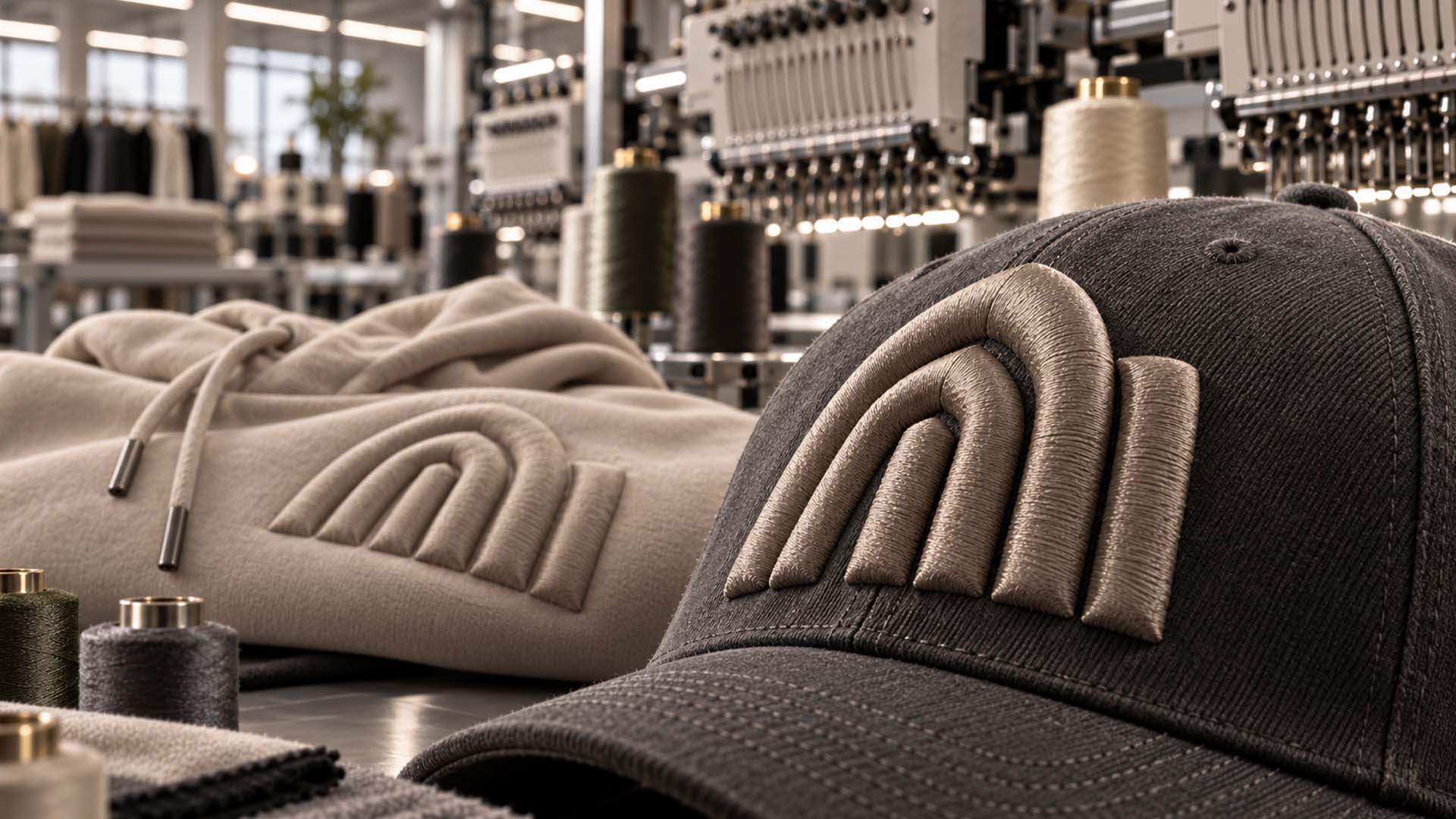
3D puff embroidery creates a raised, three-dimensional effect.
During production, a layer of special embroidery foam is placed underneath the design. Dense stitches cover the foam, producing a sculpted surface above the fabric.
The technique is especially popular in streetwear.
Best Applications for 3D Puff Embroidery
Common applications include:
- Baseball caps
- Snapbacks
- Heavyweight hoodies
- Sweatshirts
- Varsity jackets
- Streetwear accessories
Bold lettering, initials and relatively simple logos normally work best.
Why Streetwear Brands Use 3D Puff
The depth of the embroidery gives logos greater visual presence.
A simple wordmark can become much more distinctive when raised several millimeters above the garment surface.
For brands developing premium streetwear collections, 3D puff embroidery can therefore create a stronger branded finish without requiring a large graphic.
Logo Limitations
3D puff embroidery is not ideal for every design.
Very small details, narrow lines and complex artwork may disappear or become uneven once the foam is covered.
The best designs generally use:
- Thick letters
- Clean outlines
- Limited fine detail
- Strong geometric shapes
If a logo contains both bold and detailed elements, manufacturers may combine flat embroidery with puff embroidery in the same design.
3. Chenille Embroidery
Chenille has one of the most recognizable textures among the different types of embroidery for clothing.
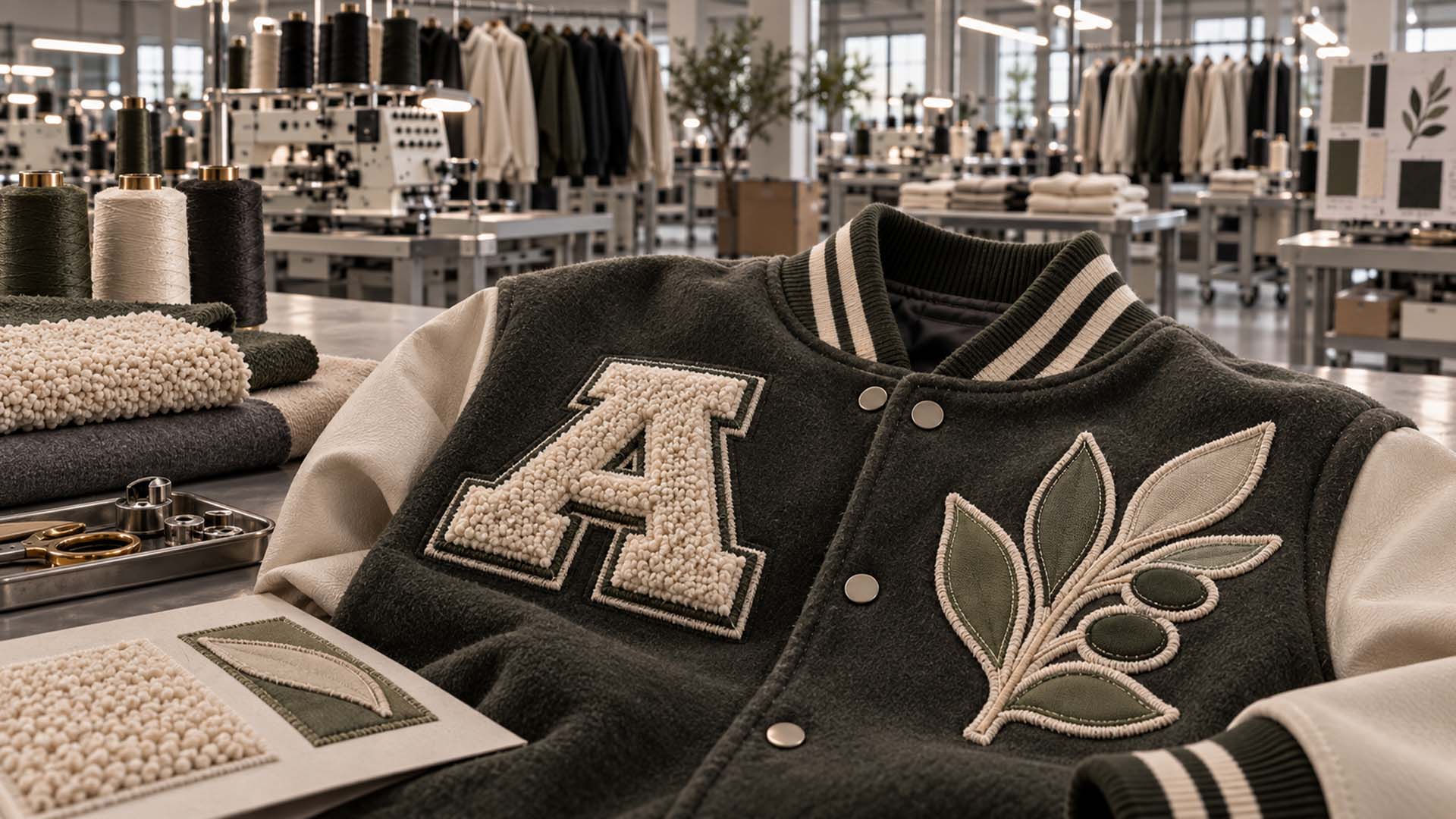
Instead of creating a smooth stitched surface, chenille produces soft loops with a slightly fuzzy appearance.
It is strongly associated with American varsity jackets, collegiate clothing and heritage sportswear.
Common Chenille Applications
Fashion brands use chenille for:
- Varsity jackets
- College-style sweatshirts
- Hoodies
- Overshirts
- Large initials
- Numbers
- Mascots
- Heritage-inspired logos
The technique works particularly well when the embroidery is intended to become a major design element rather than a small logo.
Why Chenille Feels Premium
Chenille creates more depth and texture than standard embroidery.
Large letters across the chest or back can become a structural part of the garment design.
That makes the technique particularly interesting for premium streetwear brands looking for a tactile finish with a vintage or collegiate character.
However, chenille usually requires larger artwork. Small lettering and intricate details are generally better produced using conventional flat embroidery.
4. Appliqué Embroidery
Appliqué combines fabric and embroidery.
Instead of building the entire design with thread, pieces of fabric are cut into specific shapes and stitched onto the garment.
Embroidery is normally used around the edges to secure the appliqué and add visual definition.
Why Use Appliqué?
Large embroidered designs can require thousands of stitches.
Appliqué allows brands to create larger graphics while using fabric to form much of the design area.
This can create:
- Strong visual contrast
- Layered textures
- Large logos
- Large lettering
- Premium varsity graphics
- Mixed-material effects
For example, a heavyweight sweatshirt could feature felt lettering attached using satin-stitch embroidery around the edges.
Fabric Choices for Appliqué
Possible appliqué materials include:
- Felt
- Twill
- Cotton fabric
- Fleece
- Denim
- Synthetic fabrics
- Specialty textured materials
The contrast between the base garment and appliqué material can become an important design feature.
5. Patch Embroidery
An embroidered patch is produced separately from the garment and attached afterward.
Depending on the product, patches may be sewn directly onto the garment or produced with alternative backing systems.
For fashion production, sewn patches generally provide a clean and durable result.
When Embroidered Patches Make Sense
Patch embroidery is useful for:
- Jackets
- Workwear
- Denim
- Caps
- Overshirts
- Uniform-inspired clothing
- Streetwear collections
Patches also allow brands to use the same embroidered branding element across several garment styles.
For example, one logo patch could appear on a jacket, cap and overshirt within the same collection.
This helps maintain visual consistency while simplifying decoration planning.
Flat vs 3D Puff vs Chenille vs Appliqué
| Embroidery Type | Appearance | Best For | Design Detail | Typical Fashion Use |
|---|---|---|---|---|
| Flat embroidery | Clean and refined | Most garments | High | Logos, text, symbols |
| 3D puff | Raised and bold | Caps, hoodies | Medium | Streetwear branding |
| Chenille | Soft and textured | Heavy garments | Low–medium | Varsity and collegiate styles |
| Appliqué | Layered fabric effect | Large graphics | Medium | Jackets, hoodies, sweatshirts |
| Patch embroidery | Separate embroidered badge | Structured garments | Medium–high | Workwear, streetwear, outerwear |
There is no single embroidery method that is best for every clothing brand.
The correct technique depends on what the design needs to achieve.
Choosing Embroidery Based on Fabric
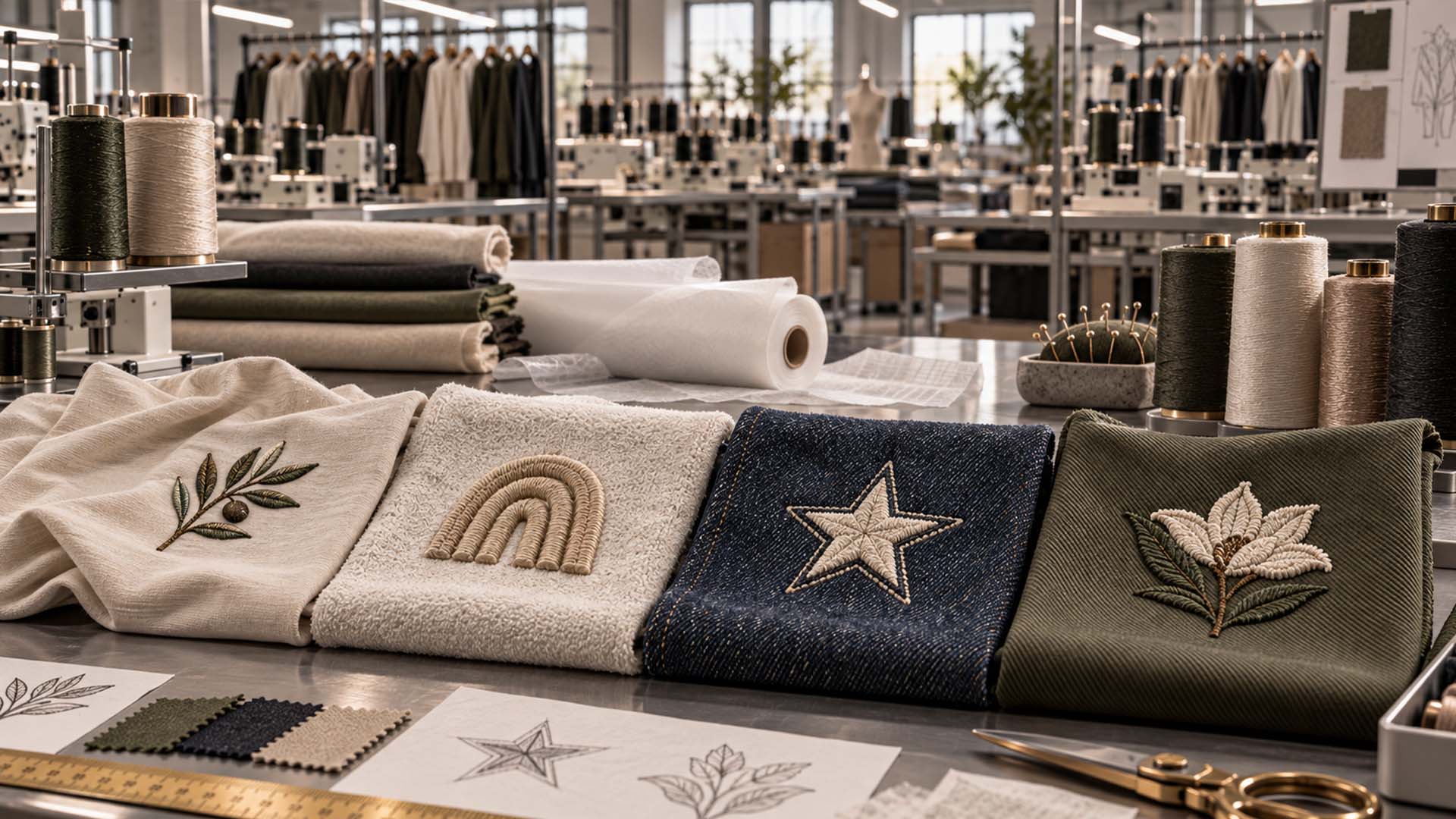
Fabric selection can influence embroidery quality just as much as the logo.
Brands still defining their material specifications can also review our guide to fabric sourcing for fashion brands before approving embroidery.
Heavyweight Sweatshirts and Hoodies
French Terry, fleece and other structured sweatshirt fabrics can normally support:
- Flat embroidery
- 3D puff embroidery
- Appliqué
- Chenille
- Large embroidered patches
Their weight and stability make them suitable for more substantial decoration.
T-Shirt Jersey
Jersey requires greater care because the fabric can stretch.
Small or medium flat embroidery usually works best.
Proper stabilizers and correct embroidery density are important to reduce puckering around the design.
Denim and Jackets
Structured woven fabrics provide a stable base for embroidery.
They are suitable for:
- Flat embroidery
- Large back embroidery
- Patches
- Appliqué
- Chenille
Caps
Caps are commonly decorated using both flat and 3D puff embroidery.
Logo placement, seam position and cap construction should be considered during digitization.
Logo Complexity and Embroidery Digitization
A logo file cannot simply be sent directly to an embroidery machine.
The artwork must first be converted into a stitch-based embroidery file through a process known as digitization.
The digitizer determines:
- Stitch direction
- Stitch density
- Underlay
- Thread sequence
- Entry and exit points
- Compensation for fabric movement
- Suitable stitch types
Good digitization can make a significant difference to the final result.
A visually complex logo may need adjustments before production. Tiny lettering may need to become slightly larger, while very thin graphic elements may need to be thickened.
For this reason, testing the artwork during the garment sampling and prototyping process is valuable before bulk production.
Choosing Embroidery Thread
Thread affects both appearance and production performance.
Polyester embroidery thread is widely used because it offers strong durability, color consistency and good resistance during washing.
Brands can also experiment with different effects depending on the project, including:
- Matte finishes
- High-sheen finishes
- Metallic threads
- Tonal embroidery
- Contrasting colors
- Multicolor designs
Thread choice should complement the fabric and overall garment concept.
For premium minimalist clothing, tonal embroidery can create a subtle effect. Streetwear collections may instead use strong contrast or multiple thread colors.
Embroidery for Premium Streetwear
Embroidery works especially well within premium streetwear because it introduces texture without necessarily creating an oversized graphic.
These details are particularly important when developing products with an experienced streetwear manufacturer that understands heavyweight fabrics, oversized fits and decoration placement.
Popular combinations include:
- Tonal flat embroidery on heavyweight hoodies
- 3D puff logos on caps
- Chenille initials on varsity jackets
- Large appliqué lettering across sweatshirts
- Embroidered patches on denim or outerwear
- Small sleeve embroidery combined with screen printing
Brands can also combine several decoration techniques within one collection.
The important point is consistency. Thread colors, placement, scale and embroidery style should support the broader visual identity of the brand.
Why Produce Embroidered Clothing in Turkey?
Turkey has a well-established textile and apparel manufacturing ecosystem, making it particularly relevant for European brands sourcing fashion products closer to their primary markets.
Istanbul provides access to garment manufacturers, fabric suppliers, embroidery workshops, printing specialists and finishing services within the same production ecosystem.
This can simplify projects where the garment requires several manufacturing processes.
For example, a premium hoodie may involve:
- Fabric sourcing
- Fabric testing
- Pattern development
- Garment sampling
- Embroidery digitization
- Embroidery sampling
- Bulk garment production
- Embroidery application
- Quality inspection
- Packing and export preparation
Coordinating these processes correctly is especially important when embroidery is a central part of the garment design.
Develop Embroidered Clothing With Istanbul Factory
At Istanbul Factory, we work with fashion brands, streetwear labels, startups and established companies developing custom clothing collections in Turkey.
Our production services can include garment development, fabric sourcing, sampling, embroidery, printing, garment manufacturing and quality control.
When evaluating embroidery for a new product, we look at more than the artwork alone.
We consider the relationship between the fabric, garment construction, embroidery technique, stitch density, logo size and final positioning.
Whether your collection requires subtle flat embroidery, raised 3D puff logos, chenille varsity graphics, appliqué or embroidered patches, testing the design during sampling helps establish the correct production method before bulk manufacturing.
Planning a custom clothing collection with embroidery? Contact Istanbul Factory to discuss your designs, fabrics and production requirements.
Frequently Asked Questions
What are the main types of embroidery for clothing?
The main types of embroidery used by clothing brands include flat embroidery, 3D puff embroidery, chenille, appliqué and embroidered patches. Each technique produces a different texture and is suitable for different fabrics and design styles.
What is the best embroidery for clothing brands?
Flat embroidery is the most versatile option for most clothing brands because it works on many garments and can reproduce relatively detailed logos. 3D puff, chenille and appliqué are better when brands want a stronger three-dimensional or textured design.
Is 3D puff embroidery suitable for hoodies?
Yes. Heavyweight hoodies and sweatshirts can provide a suitable base for 3D puff embroidery, especially for bold lettering and simple logos. The design should avoid extremely thin lines and excessive small detail.
What fabric is best for embroidery?
Stable fabrics such as sweatshirt fleece, French Terry, denim, twill and structured woven fabrics generally support embroidery well. Lightweight or stretchy fabrics can also be embroidered but may require suitable backing, lower stitch density and careful digitization.
What is the difference between chenille and embroidery?
Traditional flat embroidery uses stitches to create a relatively smooth design. Chenille creates a thicker, looped texture with a soft appearance. It is commonly used for large letters, varsity jackets and collegiate-style garments.
What is appliqué embroidery?
Appliqué embroidery uses pieces of fabric to create part of a design. The fabric is placed on the garment and secured with embroidery stitches, allowing large graphics and lettering to be produced with layered textures.
Should clothing brands make an embroidery sample before bulk production?
Yes. Sampling allows the brand and manufacturer to evaluate logo size, placement, stitch density, thread colors, fabric stability and overall appearance before committing to bulk production.