

When a supplier says a fabric is “traceable,” what can they actually prove?
For fashion brands, that question is becoming increasingly important.
Textile traceability should mean more than knowing which factory sewed a garment. A useful traceability system connects the finished product with the materials, suppliers, processes and production records behind it—from fibre and yarn to fabric, dyeing, finishing and garment manufacturing.
The objective is not to collect documents simply for the sake of having them. It is to create a reliable evidence trail that helps a brand verify product information, investigate problems, support responsible sourcing claims and respond to growing compliance requirements.
For buyers, the practical question is therefore:
What should your clothing manufacturer actually be able to document?
What Is Textile Traceability?
Textile traceability is the ability to track and document a textile product, its materials and relevant manufacturing processes through different stages of the supply chain.
Depending on the product and the required level of traceability, this may include:
- fibre origin
- yarn supplier
- fabric mill
- fibre composition
- dyeing and finishing facilities
- certification information
- fabric and dye batch numbers
- purchase records
- production orders
- inspection records
- subcontractors
- finished-goods shipment information
Traceability is therefore different from simply having a supplier list.
A supplier list tells you who may have participated.
Traceability documentation helps establish which material or production batch was actually used for a specific order.
That distinction becomes especially important when a brand makes claims such as “organic cotton,” “recycled polyester,” “responsibly sourced” or other statements that depend on evidence further upstream.
The Textile Traceability Chain Brands Should Document
There is no single document that proves an entire garment supply chain.
Instead, brands should think in terms of connected evidence.

1. Fibre Origin
The first question is where the raw material came from.
For natural fibres, useful information may include the fibre type, source country, supplier and certification documentation when applicable.
For synthetic or recycled fibres, brands may need information about the material producer, recycled content, feedstock or certified chain of custody depending on the claim being made.
Not every garment requires farm-level or raw-material-level traceability. The required depth should depend on the brand’s risk profile, market, sourcing policy and product claims.
But when fibre origin forms part of the marketing story, there should be evidence behind it.
Ask your manufacturer:
- Can the fibre source be identified?
- Which upstream supplier provided the material?
- What documentation supports the claimed origin?
- Is traceability available to country, producer, supplier or batch level?
2. Yarn and Fabric Suppliers
A garment manufacturer will often purchase fabric from a textile mill, agent or nominated supplier rather than manufacture the textile itself.
Brands should therefore understand where the yarn and fabric entered the supply chain.
Useful records can include:
- mill or supplier name
- fabric reference
- purchase order
- invoice
- technical specification
- lot or roll information
- relevant certification records
For higher-risk or certified products, the brand may also want visibility into the spinning mill and other upstream suppliers.
The important point is continuity: documentation should allow the material received by the garment factory to be connected with the fabric ordered for that particular style.
3. Fabric Composition
A specification stating “80% cotton / 20% polyester” is helpful, but it is not always sufficient evidence on its own.
Brands should request technical documentation showing the declared fibre composition and, where required, appropriate testing or supplier declarations.
This information affects:
- product labels
- customs documentation
- care expectations
- performance
- sustainability claims
- recycling considerations
- legal compliance
In the United States, for example, the FTC Textile Fiber Rule requires covered textile products to disclose information including generic fibre names and percentages by weight, together with manufacturer or marketer identification and country of processing or manufacture.
Reliable composition documentation therefore begins upstream, before labels are printed and garments are shipped.
4. Dyeing and Finishing Records
A fabric’s story does not end at the mill.
Processes such as:
- dyeing
- washing
- printing
- coating
- brushing
- softening
- enzyme treatments
- water-repellent treatments
- other functional finishes
may involve additional facilities.
Brands seeking deeper textile traceability should know which companies performed important wet-processing and finishing operations, particularly when environmental or chemical-related claims are involved.
For each significant process, ask whether the supplier can identify the facility and connect that process to the relevant fabric lot or production order.
This becomes particularly useful if a colour, shrinkage, hand-feel or performance problem appears after production.
5. Certifications — and What They Actually Prove
Certifications can strengthen traceability, but brands should avoid treating every certificate as interchangeable.
A material certification may support one type of claim.
A product safety test may support another.
A social compliance audit evaluates different issues again.
None automatically proves the entire supply chain.

For certified materials, check:
- certification scheme
- certificate holder
- certificate number
- validity period
- scope
- certified facility
- certified material or process
- transaction or chain-of-custody documentation when required by the relevant scheme
This distinction matters.
A certificate showing that a factory meets a particular standard does not necessarily prove that the fabric used in your order was certified.
The strongest traceability system connects documentation to the actual material and production transaction.
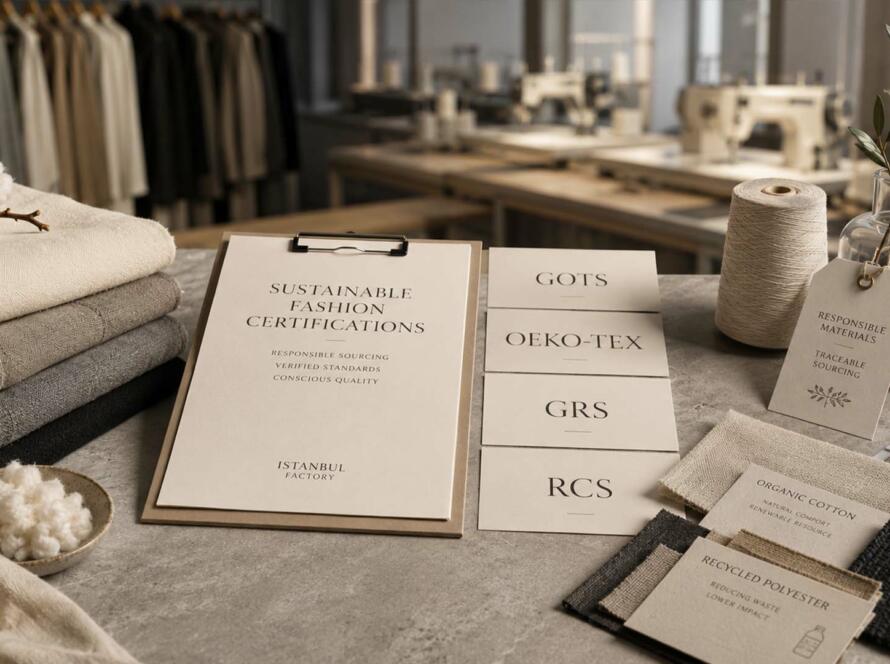
Sustainable Fashion Certifications Explained: GOTS, OEKO-TEX, GRS and RCS
6. Batch and Lot Information
Batch information is one of the most practical parts of textile traceability.
Imagine that 3,000 hoodies are produced and customers later report colour variation.
Without dye-lot or fabric-roll information, investigating the problem becomes difficult.
With proper records, the manufacturer may be able to determine that the affected garments came from a particular:
Fabric lot → dye batch → roll group → cutting batch → sewing order → shipment
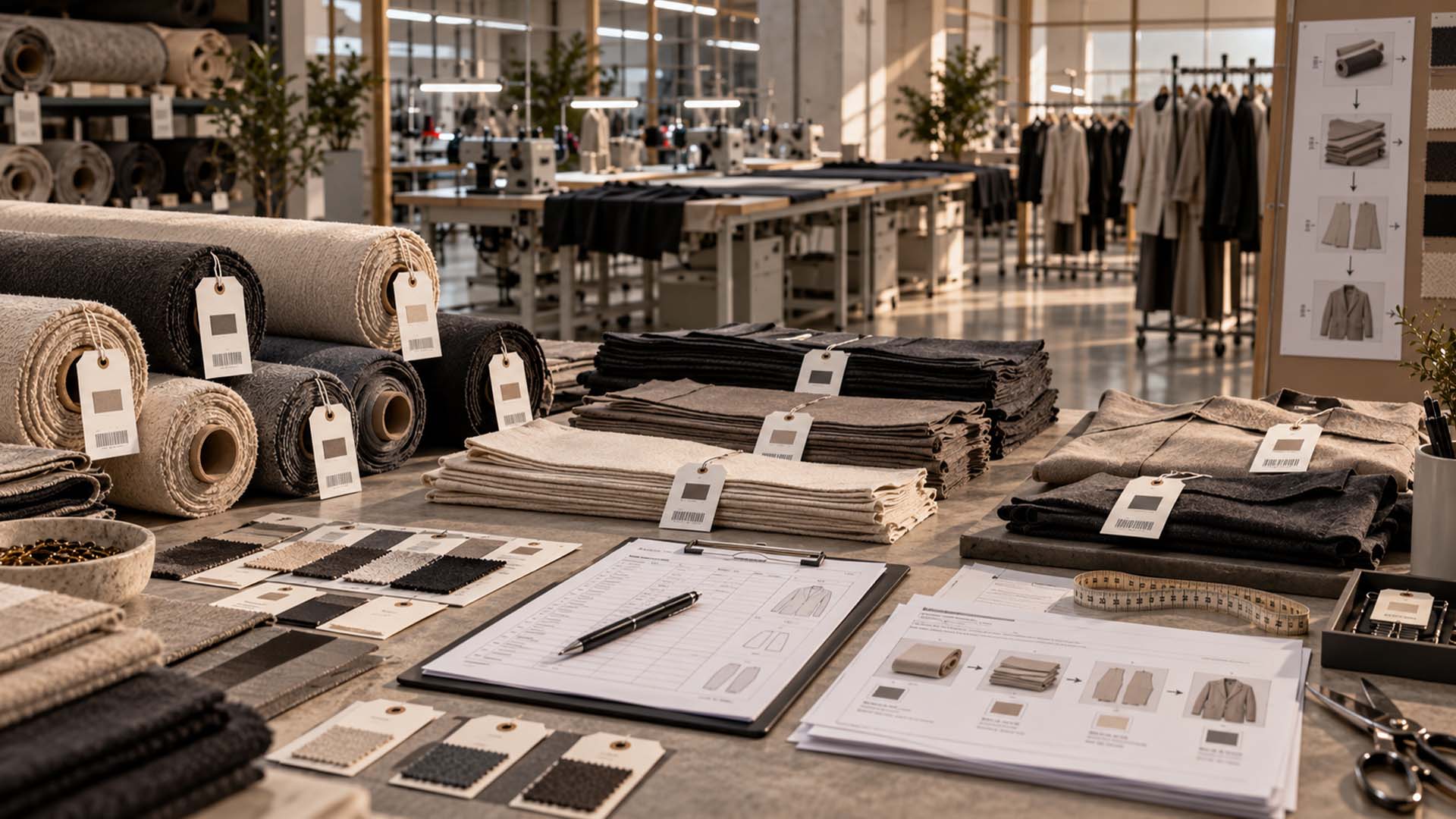
Useful identifiers include:
- fabric lot numbers
- dye-lot numbers
- roll numbers
- production order numbers
- cutting records
- bundle numbers
- inspection batches
- carton or shipment references
Traceability is valuable because it allows problems to be narrowed down rather than treating an entire production run as one unidentified group.
7. Garment Production Records
The manufacturing stage should create its own documentation trail.
Depending on the order, this could include:
- approved tech pack
- approved sample
- bill of materials
- purchase orders
- material receiving records
- production order
- cutting records
- print or embroidery records
- sewing-line information
- inline inspection reports
- final quality-control reports
- packing lists
- shipment documents
Brands do not necessarily need every internal factory document.
They do, however, need enough information to reconstruct the production history if a quality, compliance or sourcing question arises later.
8. Supplier and Subcontractor Documentation
One common weak point in traceability appears when processes are outsourced.
A garment factory may manage sewing internally but use specialist partners for embroidery, printing, washing or certain finishing operations.
Brands should therefore ask:
Which production stages are performed internally, and which are subcontracted?
Subcontracting is normal within the apparel industry. The problem is not outsourcing itself; the problem is undocumented outsourcing.
A responsible production partner should have visibility over the important facilities participating in the order and maintain appropriate supplier documentation.
A Practical Textile Traceability Checklist
Before placing production, fashion brands can ask manufacturers for a traceability file covering the following areas:
| Area | Documentation to Request |
|---|---|
| Fibre | Origin and supplier information where available |
| Yarn | Spinner or yarn supplier where required |
| Fabric | Mill, specification, purchase and lot information |
| Composition | Supplier declaration and relevant testing |
| Dyeing | Dyeing facility and dye-lot information |
| Finishing | Facility and process information |
| Certifications | Scope, validity and transaction evidence where applicable |
| Production | Production order and batch records |
| Quality Control | Inspection and testing reports |
| Subcontracting | Relevant external processing facilities |
| Shipping | Packing and shipment references |
The exact level should be adapted to the product.
A basic cotton T-shirt sold without special material claims may require a different documentation level from a certified recycled garment marketed around verified recycled content.
Why Textile Traceability Matters for Compliance
Traceability and compliance increasingly overlap.
In the US, textile rules require important product information such as fibre content and country of origin, while FTC guidance also describes recordkeeping that establishes a traceable line between raw materials and finished textile products.
In Europe, the direction is toward greater availability of structured product information. The EU’s Ecodesign for Sustainable Products Regulation establishes the framework for Digital Product Passports, including provisions intended to improve product traceability along the value chain. Textiles/apparel are among the priority product groups in the ESPR implementation programme.
Fashion brands selling internationally should therefore build better supplier-data practices before additional information requests become urgent.
Traceability records can also support broader supply-chain due diligence. The OECD’s garment and footwear guidance provides a recognised framework for companies seeking to identify and address risks throughout their supply chains.
Digital Product Passport for Textiles: What Fashion Brands Should Prepare For
Traceability Makes Sustainability Claims More Defensible
Consider two statements:
“We use sustainable materials.”
and
“This style uses fabric supplied under documented material specifications, supported by supplier and certification records linked to the production order.”
The second statement is far more useful internally because the brand knows what evidence exists.
The principle is simple:
The stronger the sustainability claim, the stronger the supporting documentation should be.
Brands should therefore avoid developing marketing claims first and searching for proof later.
Sourcing, documentation and marketing teams should work from the same verified information.
Why Manufacturing in Turkey Can Support Better Supply-Chain Visibility
Turkey has a well-developed textile and apparel manufacturing ecosystem covering activities such as knitting, weaving, dyeing, finishing, printing, embroidery and garment production.
For European and international brands, sourcing several production stages through a coordinated regional network can make supplier communication and documentation easier.
However, manufacturing location alone does not guarantee traceability.
What matters is whether the production partner actively collects, connects and maintains the relevant information across suppliers.
At Istanbul Factory, we believe brands should discuss documentation requirements during sourcing and product development—not after production is already completed.
When traceability expectations are defined early, material sourcing, supplier selection, certifications, batch records and quality documentation can be planned around the requirements of the collection.
Build Traceability Into Your Production Process
Textile traceability works best when it is designed into production from the beginning.
Before placing an order, tell your manufacturer what your brand needs to verify:
- material origin
- composition
- certifications
- specific upstream suppliers
- processing facilities
- batch information
- quality records
- sustainability claims
- market-specific documentation
This allows both sides to establish what information can realistically be collected and how it should be maintained.
Istanbul Factory works with fashion brands, startups, streetwear labels and established companies seeking structured clothing manufacturing in Turkey.
From fabric sourcing and sampling to private-label production, print, embroidery and quality control, our goal is to build production processes around clear specifications, reliable communication and appropriate supplier documentation.
If textile traceability is important to your collection, discuss your documentation requirements with us before fabric sourcing begins.
Frequently Asked Questions About Textile Traceability
What is textile traceability in fashion?
Textile traceability is the ability to identify and document materials, suppliers and production stages associated with a textile product. It can cover fibre origin, yarn, fabric production, dyeing, finishing, garment manufacturing, quality control and shipment records.
What documents should clothing manufacturers provide for traceability?
Depending on the product, manufacturers may provide fabric specifications, supplier information, purchase records, composition declarations, certification documents, batch numbers, production records, inspection reports and shipping documentation.
Is a sustainability certificate enough to prove traceability?
No. A certificate proves only what falls within its specific scope. Brands should confirm which facility, material, process or transaction is covered and obtain chain-of-custody or transaction documentation where the certification scheme requires it.
Why are fabric batch numbers important?
Batch and lot numbers help connect finished garments to particular fabrics, dye lots or production runs. This makes quality investigations, recalls and supplier verification more precise.
Does textile traceability help with legal compliance?
Yes. Traceability can help brands support fibre-composition information, country-of-origin records, supplier due diligence and other documentation requirements. Exact obligations vary by product and market.
What is the difference between traceability and transparency?
Traceability concerns the ability to follow and verify a product or material through the supply chain. Transparency concerns what information a company chooses or is required to disclose. A company can possess detailed traceability records without making all of that information public.
Should small fashion brands implement textile traceability?
Yes, but the system can be proportionate to the business. Start with basic supplier, fabric, composition, certification and production-batch records. More detailed upstream traceability can then be added when the product, claim or target market requires it.