

Scaling from a first production run of 500 garments to an order of 5,000 pieces is an important milestone for a fashion brand. It usually means a product has proven demand and the business is ready for larger purchasing, broader distribution or faster replenishment.
But production volume does not scale cleanly by multiplying the original order by ten.
At 5,000 pieces, decisions around fabric availability, size ratios, colour allocation, production capacity, quality control and inventory become significantly more important. A small specification error that affects 50 garments in a trial order can become a costly problem when repeated across thousands of units.
The safest way to scale private label production is therefore to treat the next order as a new planning stage rather than simply a larger purchase order.
How Do You Scale Private Label Production Successfully?
To scale private label production from 500 to 5,000 pieces, a brand should first identify proven products, analyse sales by style, colour and size, update the tech pack, lock approved materials, forecast quantities, reserve production capacity and introduce stronger quality-control checkpoints.
A practical scaling process usually follows this sequence:
- Analyse the performance of the first production run.
- Identify the strongest styles and colours.
- Correct and update technical specifications.
- Lock approved fabrics, trims, patterns and colours.
- Build a realistic size and colour forecast.
- Reserve materials and manufacturing capacity.
- Confirm samples before bulk production.
- Add in-line and final quality-control checkpoints.
- Plan packaging, inventory and shipping.
- Increase volumes gradually when demand remains uncertain.
This structured approach protects both product consistency and working capital.
1. Scale the Products That Have Already Proven Demand
Your first order gives you something that the development stage cannot provide: real customer behaviour.
Before increasing quantities, review actual sell-through rather than assuming that every product in the collection should grow equally.
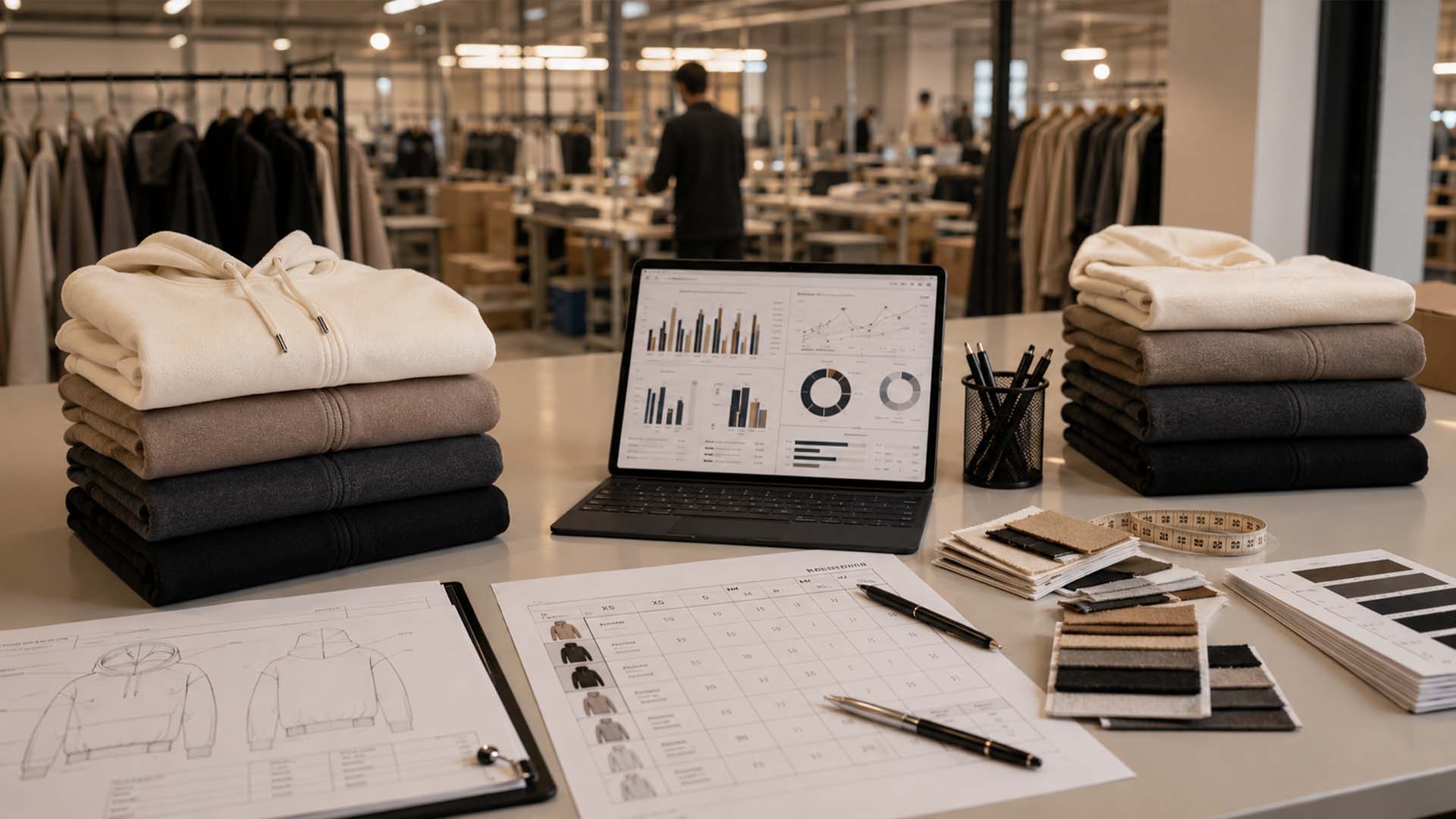
Look at performance by:
- Style
- Colour
- Size
- Market
- Sales channel
- Return rate
- Time required to sell through inventory
For example, a brand may initially produce four hoodie colours in similar quantities. After several months, black and charcoal may account for 70% of sales, while two seasonal colours move much more slowly.
In that situation, increasing every colour tenfold would create unnecessary inventory risk.
A better approach is to scale the proven colours more aggressively and keep less predictable options at controlled quantities.
Practical rule
Scale winners first. Test uncertain products separately.
This is especially important for younger brands that still have limited sales history.
2. Update the Tech Pack Before the Next Order
The first bulk production often reveals small improvements that were not obvious during product development.
Perhaps the sleeve length should be adjusted slightly. The rib may require stronger recovery. An embroidery placement could be moved a few millimetres. A tolerance may need to be clarified after final measurements are reviewed.
These changes should be documented before the next production begins.
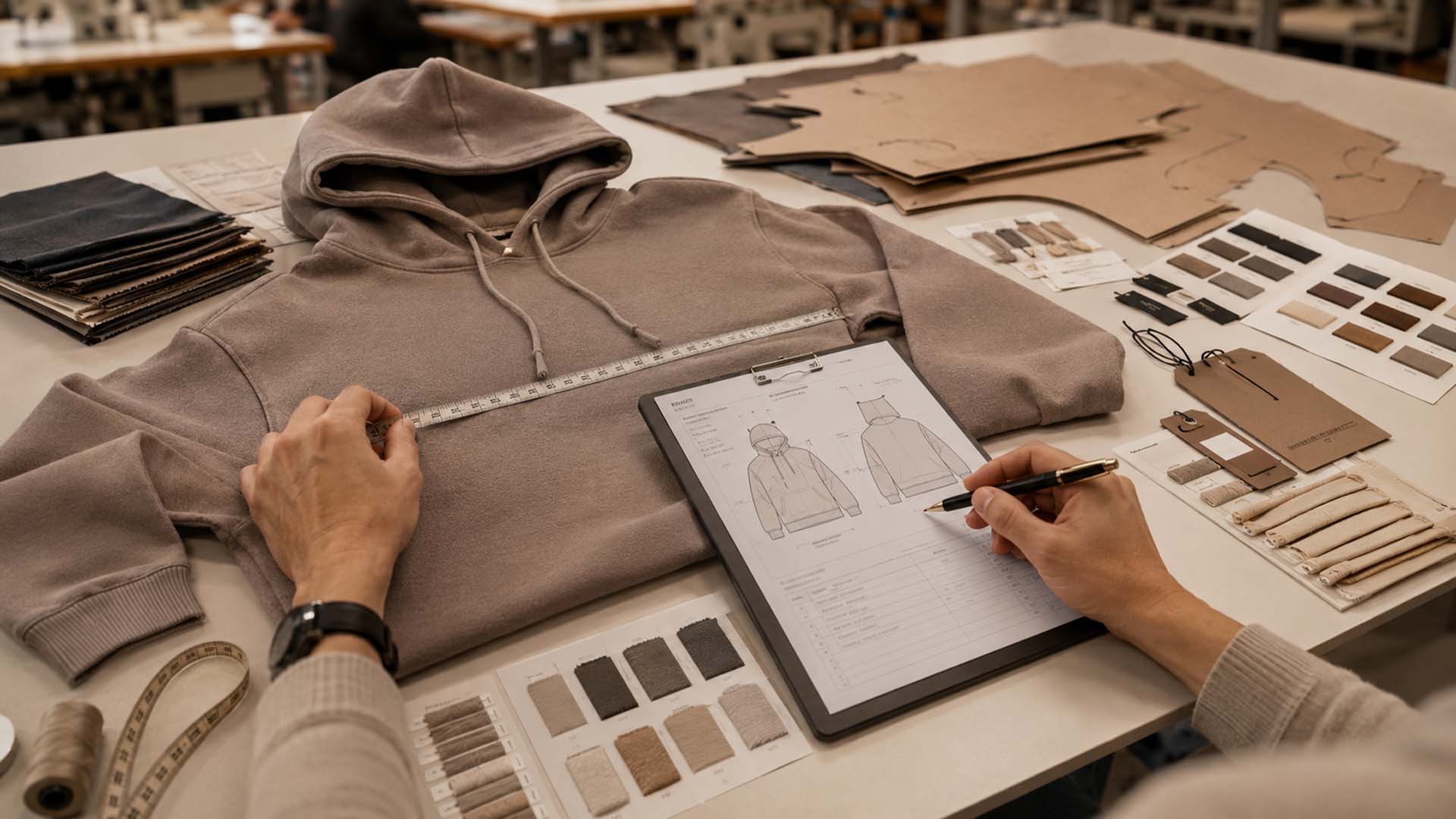
An updated tech pack should clearly define:
- Garment measurements
- Measurement tolerances
- Construction details
- Stitching requirements
- Fabric specifications
- Rib and trim specifications
- Print or embroidery placement
- Label positioning
- Finishing requirements
- Packing instructions
Once an order reaches several thousand units, production teams should not have to rely on memory, messages or informal explanations.
The technical file should represent the exact product the brand wants repeated.
3. Lock the Approved Product Before Increasing Volume
Scaling works best when the core product has already been stabilised.
That means locking the approved:
- Pattern
- Grading
- Fabric
- GSM
- Fibre composition
- Colour standard
- Trims
- Branding
- Construction method
Making several product changes while simultaneously increasing the order size creates unnecessary manufacturing risk.
For fabrics, specifications should be precise. Terms such as “premium cotton” or “heavyweight fleece” are not enough for repeat production.
A production-ready fabric specification may include fibre composition, weight, knitting or weaving construction, finishing, shrinkage performance and approved colour reference.
The clearer the approved standard, the easier it becomes to reproduce the same product consistently.
4. Forecast by Style, Colour and Size
A 5,000-piece order should never be treated as one number.
It is a collection of individual inventory decisions.
A useful forecast should break the order down as:
Style × Colour × Size
Suppose a previous hoodie order shows that:
- Medium and Large sell fastest.
- Black represents 45% of demand.
- Charcoal represents 30%.
- Cream performs well online but less strongly in wholesale.
- Extra Small sells primarily in one European market.
That information should shape the next production ratio.
Consider:
- Historical sales
- Current stock levels
- Wholesale orders
- Seasonal demand
- Marketing campaigns
- Expected market growth
- Product launch schedules
Forecasting cannot remove uncertainty, but it can prevent production decisions from being based solely on enthusiasm.
5. Reserve Fabric Earlier
Fabric planning becomes much more important as production grows.
A supplier may have enough stock for 500 garments but not enough for 5,000.
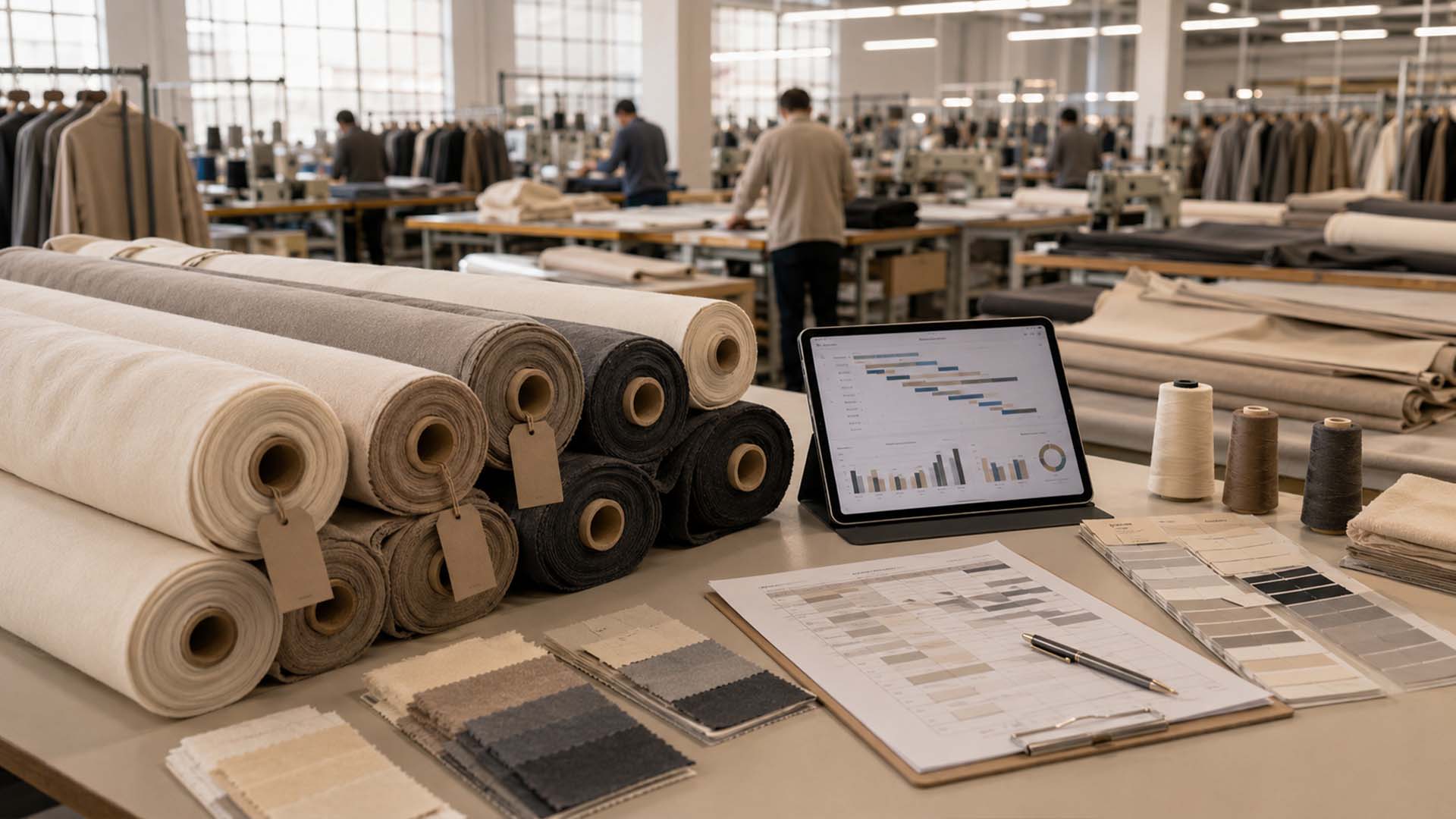
At higher volumes, fabric may need to be:
- Knitted or woven specifically for the order
- Dyed in dedicated lots
- Finished according to agreed requirements
- Tested before cutting
This adds lead time.
Brands should therefore discuss expected production volumes with their manufacturer before the final purchase order is issued.
Early fabric reservation also helps reduce the risk of producing different batches from slightly different qualities or colour lots.
For repeat products, consistency is often more valuable than sourcing a marginally cheaper replacement fabric.
6. Reserve Manufacturing Capacity, Not Just Materials
Larger production orders require space in the production calendar.
The sewing operation is only one part of that schedule.
A 5,000-piece order may involve:
- Fabric production
- Dyeing
- Cutting
- Printing
- Embroidery
- Sewing
- Washing or finishing
- Quality control
- Pressing
- Packing
If several suppliers are involved, one delayed component can affect the entire timeline.
For that reason, brands planning significant growth should share forecasts with their production partner early.
At Istanbul Factory, larger private label programs are planned across fabric sourcing, sampling, garment manufacturing, print and embroidery, quality control and packaging so that each stage can be coordinated around the approved delivery schedule.
7. Use Volume Pricing Carefully
Increasing production quantity can reduce the unit cost.
There are several reasons for this. Fabric purchasing may become more efficient, setup costs are distributed across more garments, and cutting or production lines can operate more efficiently.
However, a lower unit price should never come from weakening the approved product.
When comparing volume quotations, check whether the price assumes changes to:
- Fabric quality
- GSM
- Trims
- Stitch construction
- Print method
- Packaging
- Inspection requirements
A strong manufacturing partner should be able to explain where savings come from.
The goal is to gain genuine economies of scale while protecting the garment that customers originally purchased.
8. Strengthen Sampling Before Bulk Production
Previous production experience does not eliminate the need for approvals.
Before a larger repeat order, brands should confirm that the bulk production still matches the approved product.
Pre-Production Sample
The pre-production sample confirms the final combination of fabric, trims, labels, construction and branding before bulk manufacturing starts.
Size-Set Sample
A size set helps verify grading and fit across selected sizes, particularly if the previous order revealed measurement or fit issues.
Production Sample
A production sample taken from actual bulk manufacturing can confirm that the production line is reproducing the approved standard correctly.
These checkpoints are particularly valuable when production quantities increase substantially.
9. Increase Quality Control as Volume Grows
One recurring defect can affect hundreds or thousands of garments before it is discovered.
That is why larger orders require quality control during production, not just at the end.
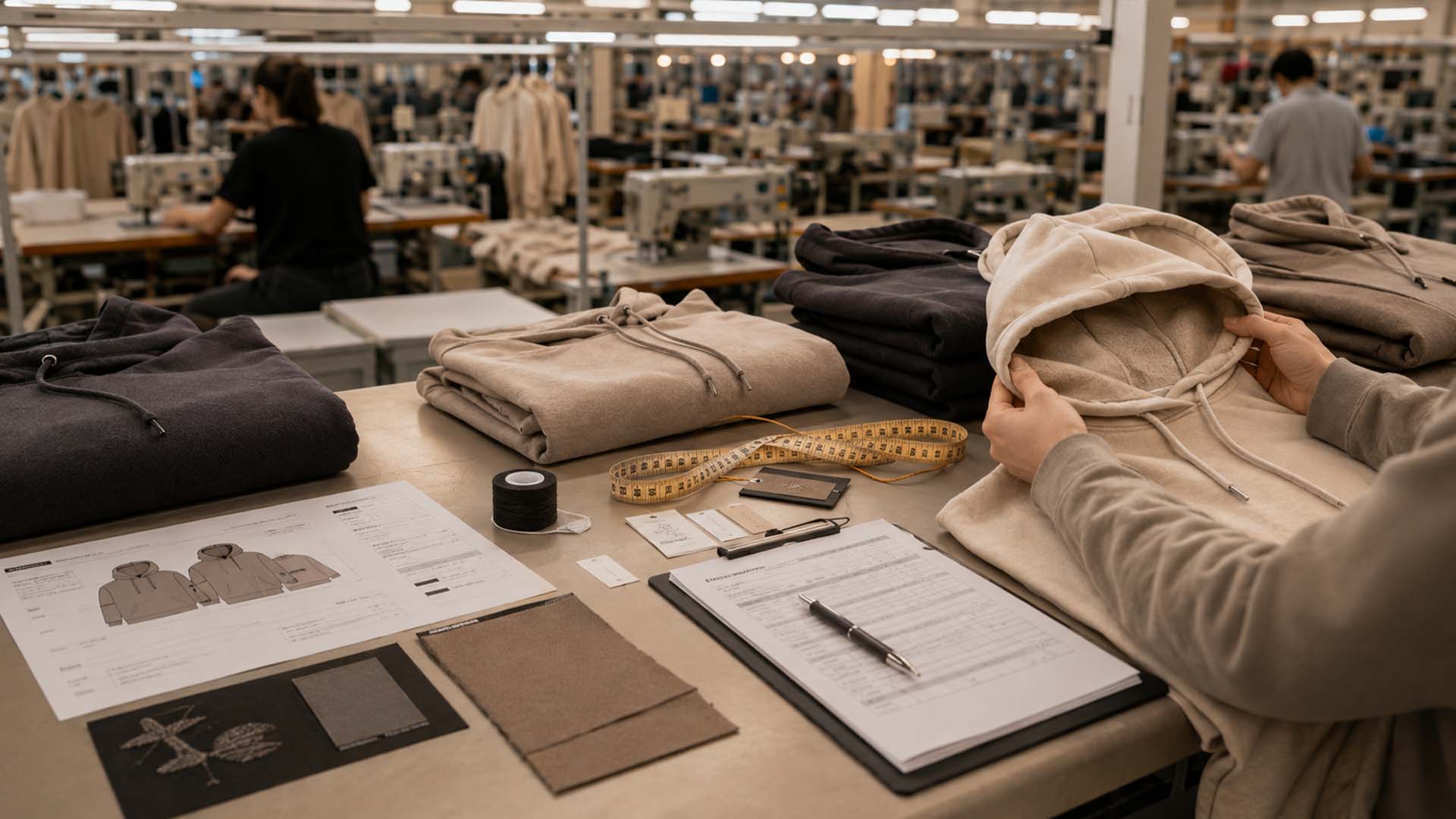
Typical checkpoints may include:
- Fabric inspection
- Cutting checks
- Measurement checks
- Print and embroidery approval
- In-line sewing inspection
- Random finished-garment checks
- Final packing inspection
The earlier a problem is identified, the easier and less expensive it usually is to correct.
For B2B brands, this is especially important because quality failures can affect retail launches, wholesale commitments and customer relationships at the same time.
10. Plan Inventory and Shipping Before Production Finishes
Scaling production also means scaling logistics.
Five thousand garments occupy more warehouse space, require more cartons and tie up substantially more working capital than 500 garments.
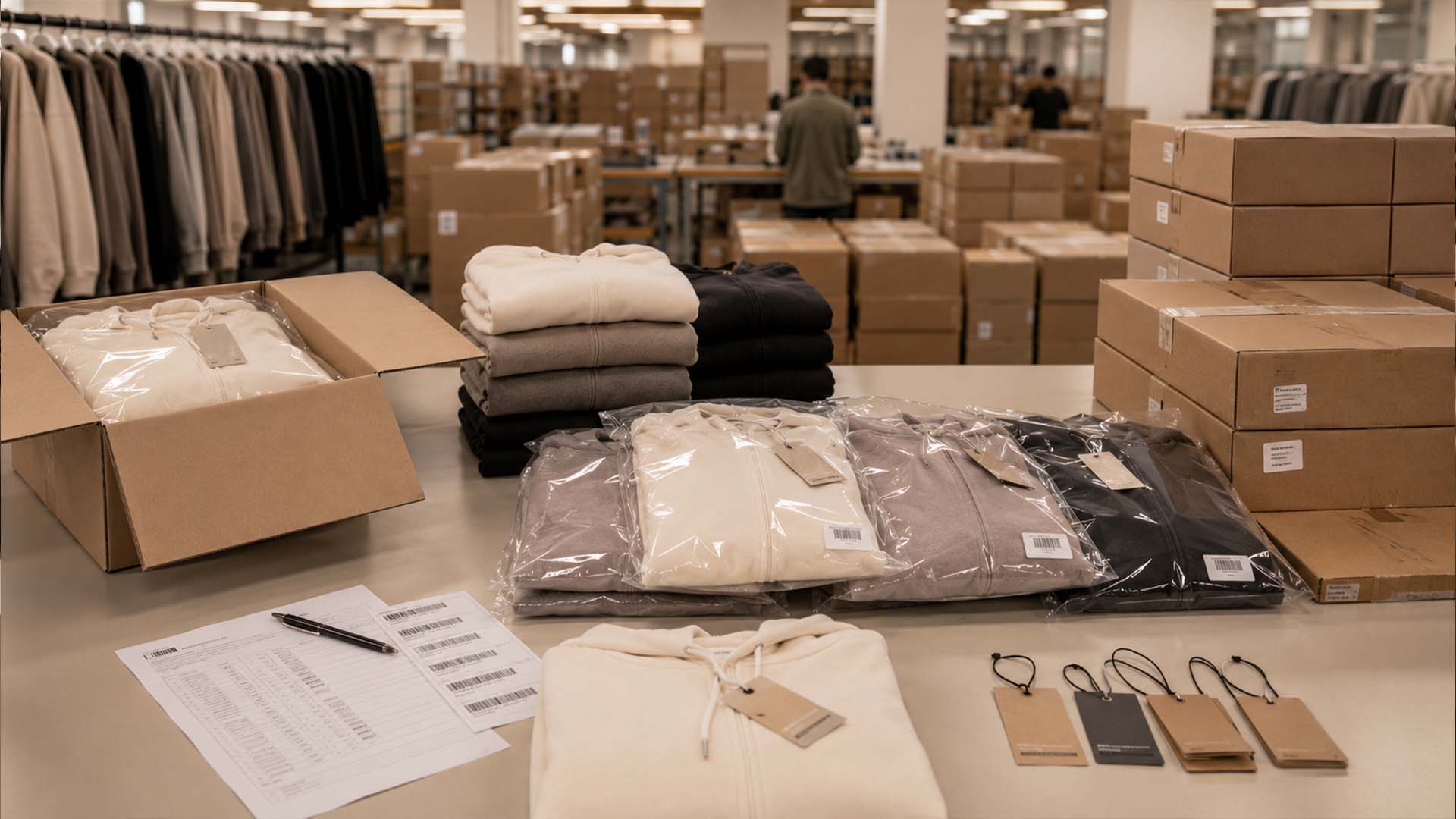
Before confirming production, decide:
- Where the goods will be stored.
- Whether production should ship in one delivery or several.
- How cartons should be labelled.
- Whether wholesale and e-commerce orders need different packing.
- How much safety stock is necessary.
- When freight, duties and final production payments become due.
Inventory planning is part of manufacturing strategy, not an issue to solve after the garments are finished.
Should You Scale Directly From 500 to 5,000 Pieces?
Sometimes. But not always.
A brand with strong sales history, confirmed wholesale orders and predictable replenishment may comfortably make a large increase.
A younger company may benefit from a staged approach such as:
500 → 1,500 → 3,000 → 5,000 pieces
Gradual scaling makes sense when:
- Demand is still developing.
- New colours have limited sales history.
- The business depends heavily on paid advertising.
- Cash flow needs careful management.
- The collection contains many SKUs.
- Seasonal demand is difficult to predict.
A slightly higher unit cost on a smaller repeat order may be financially healthier than producing thousands of garments that remain in storage.
Why Turkey Can Work Well for Growing European Fashion Brands
Turkey offers a strong manufacturing environment for brands that need both production capability and relatively responsive supply chains.
Istanbul has access to established networks for:
- Knitted and woven fabrics
- Dyeing and finishing
- Labels and trims
- Printing
- Embroidery
- Garment manufacturing
- Packaging
For European companies, Turkey’s geographic proximity can also make factory communication, production visits and replenishment planning more practical than sourcing from more distant manufacturing regions.
The advantage is particularly relevant when a brand needs to scale successful products while maintaining close control over quality and timing.
Scale Production Without Losing Control
The objective of scaling is not simply to manufacture more garments.
It is to reproduce a successful product at a larger volume while keeping its measurements, fabric, colour, construction and finishing consistent.
That requires stronger forecasting, earlier material planning and more disciplined quality control.
Istanbul Factory works with fashion brands, streetwear labels and established B2B clients that need structured private label and custom clothing production in Istanbul.
From fabric sourcing and garment sampling to bulk production, print and embroidery, quality control and final packing, our team can help brands prepare for larger production runs without treating growth as a simple quantity increase.
If you already have a successful product and are planning your next production stage, speak with Istanbul Factory about your styles, target quantities and technical requirements. We can help you assess what needs to be locked, tested and planned before moving into a larger order.
Frequently Asked Questions
How do you scale private label production from 500 to 5,000 pieces?
Start with sales data from the first production run. Identify the strongest styles, colours and sizes, update the tech pack, lock approved materials and patterns, forecast quantities accurately and reserve fabric and production capacity before increasing the order.
Should you scale every style at the same time?
Usually not. It is generally safer to increase proven products first and keep weaker or untested styles at smaller quantities until demand becomes more predictable.
What is the biggest risk when scaling clothing production?
One of the biggest risks is multiplying a small technical, quality or forecasting mistake across thousands of garments. Strong specifications, sampling and in-line quality control reduce this risk.
Does ordering 5,000 pieces reduce production costs?
Higher quantities can reduce certain per-unit costs through improved material purchasing and production efficiency. The exact saving depends on fabric, garment complexity, colours, trims, branding and order structure.
When should fabric be reserved for a larger production run?
Fabric should be discussed and reserved as early as possible once the brand has a reliable production forecast. Larger volumes may require dedicated knitting, dyeing or finishing rather than purchasing available stock.
What samples should be approved before larger bulk production?
Depending on the product, brands may use a pre-production sample, size-set sample and production sample. These approvals help confirm construction, sizing, materials and production consistency before or during bulk manufacturing.
Is it better to scale gradually from 500 to 5,000 pieces?
For brands with limited sales history, gradual scaling can reduce inventory and cash-flow risk. Moving through intermediate quantities allows the business to improve forecasting before committing to a much larger order.
Why choose Turkey for private label clothing production?
Turkey combines a mature textile supply chain with access to fabrics, garment manufacturing, printing, embroidery and finishing. Its proximity to European markets can also support more responsive production and replenishment strategies.