


Choosing the right printing method can affect far more than how a graphic looks on a T-shirt. It influences production cost, minimum quantities, fabric selection, color consistency, durability, sampling, and ultimately how efficiently a collection can be manufactured.
For fashion brands, the DTG vs screen printing decision usually comes down to the artwork, garment type, required quantity, and expected finish.
Direct-to-garment printing is particularly useful for highly detailed designs and smaller production runs, while screen printing is often better suited to larger quantities, strong solid colors, and repeat production.
Neither method is automatically better.
The right choice depends on what your brand is producing.
DTG vs Screen Printing: Quick Comparison
For brands that need a fast answer:
| Factor | DTG Printing | Screen Printing |
|---|---|---|
| Best for | Detailed, multicolor artwork | Bold graphics and larger quantities |
| Setup | Low setup requirement | Requires screens and preparation |
| Small quantities | Very suitable | Less economical |
| Large quantities | Can become costly | Usually more efficient |
| Fine detail | Excellent | Very good with proper artwork |
| Color gradients | Excellent | More complex |
| Solid colors | Good | Excellent |
| Fabric suitability | Best on cotton-rich fabrics | Works across a wider fabric range |
| Print feel | Usually soft | Depends on ink and technique |
| Durability | Good when correctly produced | Excellent when properly cured |
| Artwork changes | Easy | New screens may be required |
A fashion brand producing 30 sample T-shirts with photographic artwork may prefer DTG. A brand producing 2,000 hoodies with the same two-color chest and back graphic will often find screen printing more practical.
If your brand is also evaluating transfer-based printing, see our guide to DTF vs screen printing.
What Is DTG Printing?
DTG stands for direct-to-garment printing.
The process works in a similar way to a specialized inkjet printer. Instead of printing onto paper, a DTG machine applies textile inks directly to the garment.
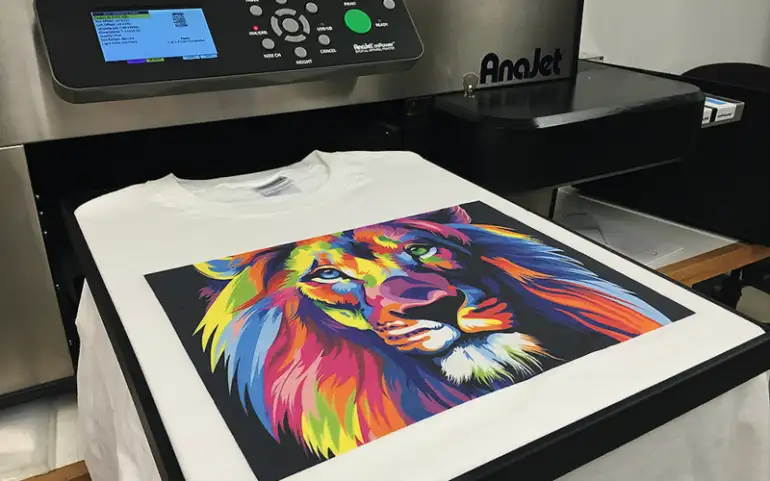
A typical DTG production process includes:
- Preparing the artwork digitally
- Pretreating the garment when required
- Positioning the garment on the DTG printer
- Printing the design directly onto the fabric
- Curing the ink using heat
Because the design is prepared digitally, there is no need to manufacture separate screens for each color.
This makes DTG particularly useful for designs containing:
- photographs
- gradients
- shadows
- illustrations
- very fine details
- many colors
- small text elements
It can also be practical during development when a brand wants to test several graphic variations without preparing a complete screen-printing setup.
What Is Screen Printing?
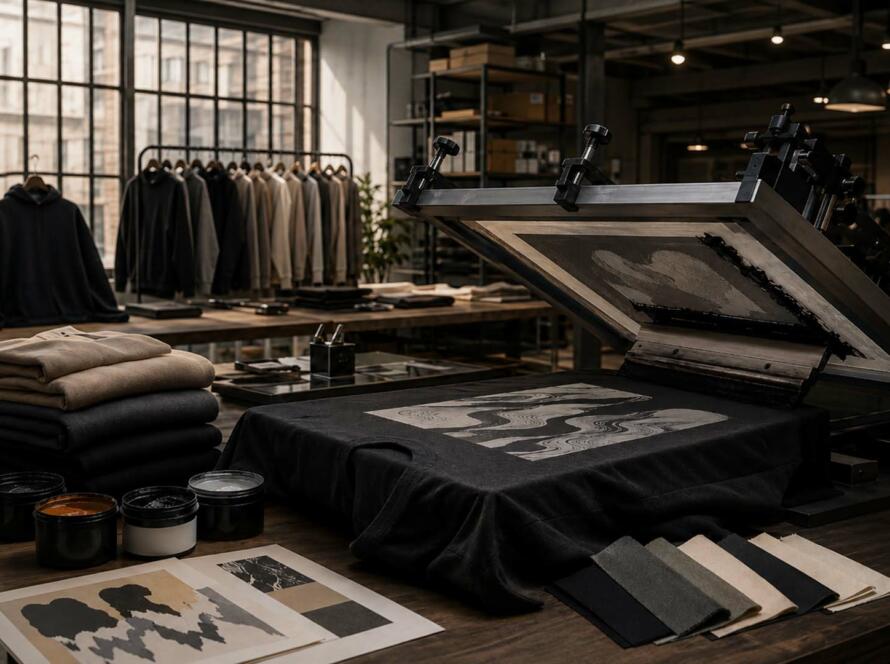
Screen printing applies ink through a fine mesh screen onto the garment.
Each print color generally requires its own screen. The printer transfers one color at a time until the complete design is formed.
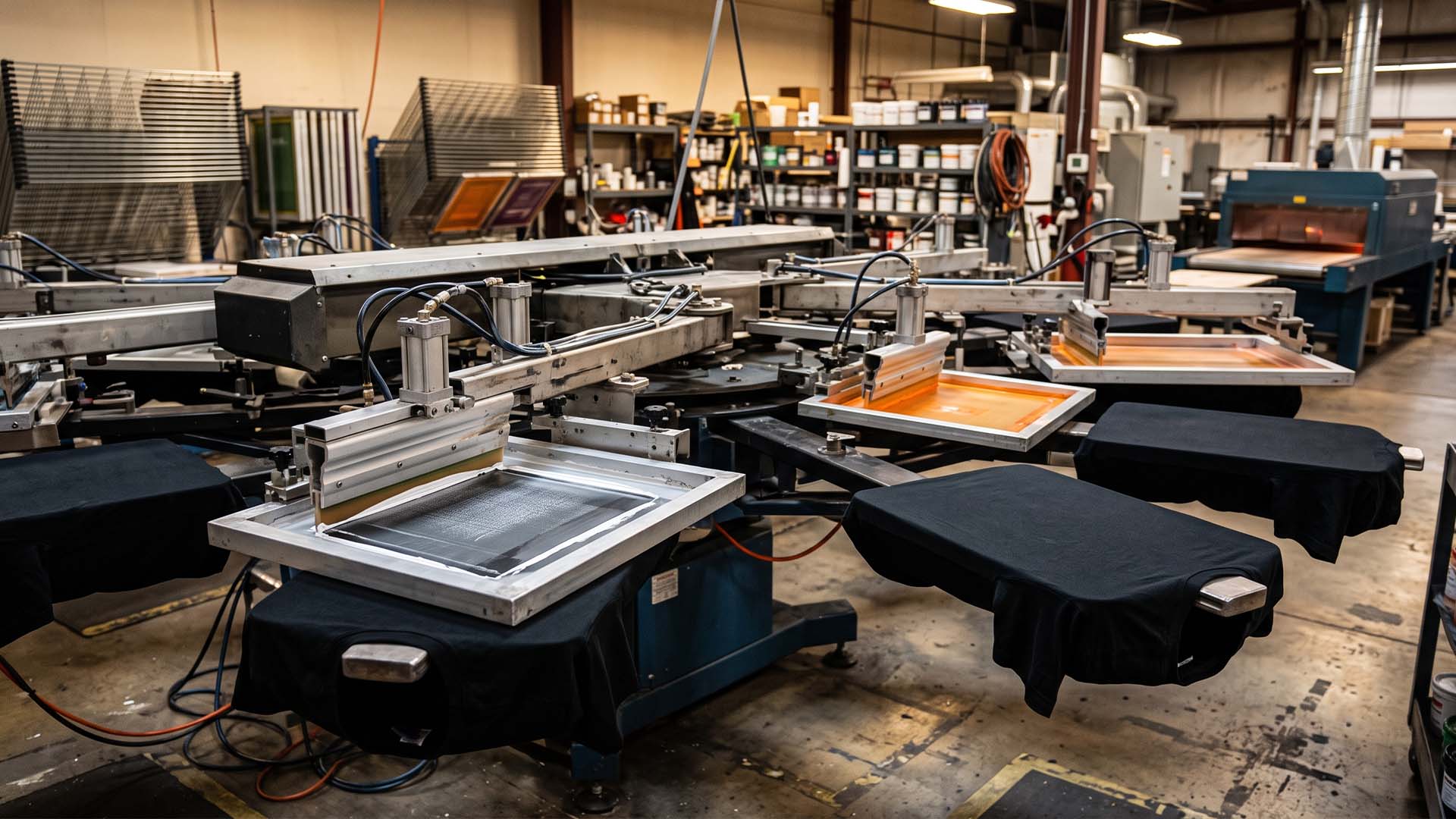
The basic process typically includes:
- Separating the artwork into printable colors
- Preparing screens for each color
- Registering the screens
- Applying ink through each screen
- Flash-curing between colors when necessary
- Fully curing the final print
Screen printing requires more preparation than DTG, but once production is set up correctly, it can be extremely efficient for repeated quantities.
This is why it remains one of the most widely used printing techniques for fashion, merchandise, streetwear, workwear, and private-label clothing.
DTG vs Screen Printing for Detailed Artwork
Artwork complexity is one of the first things a manufacturer should evaluate.
DTG for Fine Details and Complex Graphics
DTG is especially strong when an artwork contains many colors or photographic detail.
Imagine a graphic T-shirt featuring a highly detailed photograph with dozens of color shades.
With DTG, that image can be processed digitally and printed without creating dozens of separate physical screens.
This makes it suitable for:
- photographic graphics
- artistic illustrations
- watercolor effects
- complicated gradients
- detailed artwork with many tones
Screen Printing for Defined Graphics
Screen printing performs extremely well with clearly separated colors and bold graphic designs.
Typical examples include:
- logos
- typography
- streetwear graphics
- geometric artwork
- large back prints
- simple two- or three-color graphics
Highly detailed screen printing is certainly possible, but complex artwork may require halftones, color separations, additional screens, and more production preparation.
Which Method Reproduces Color Better?
Both methods can produce attractive results, but they reproduce color differently.
DTG Color Reproduction
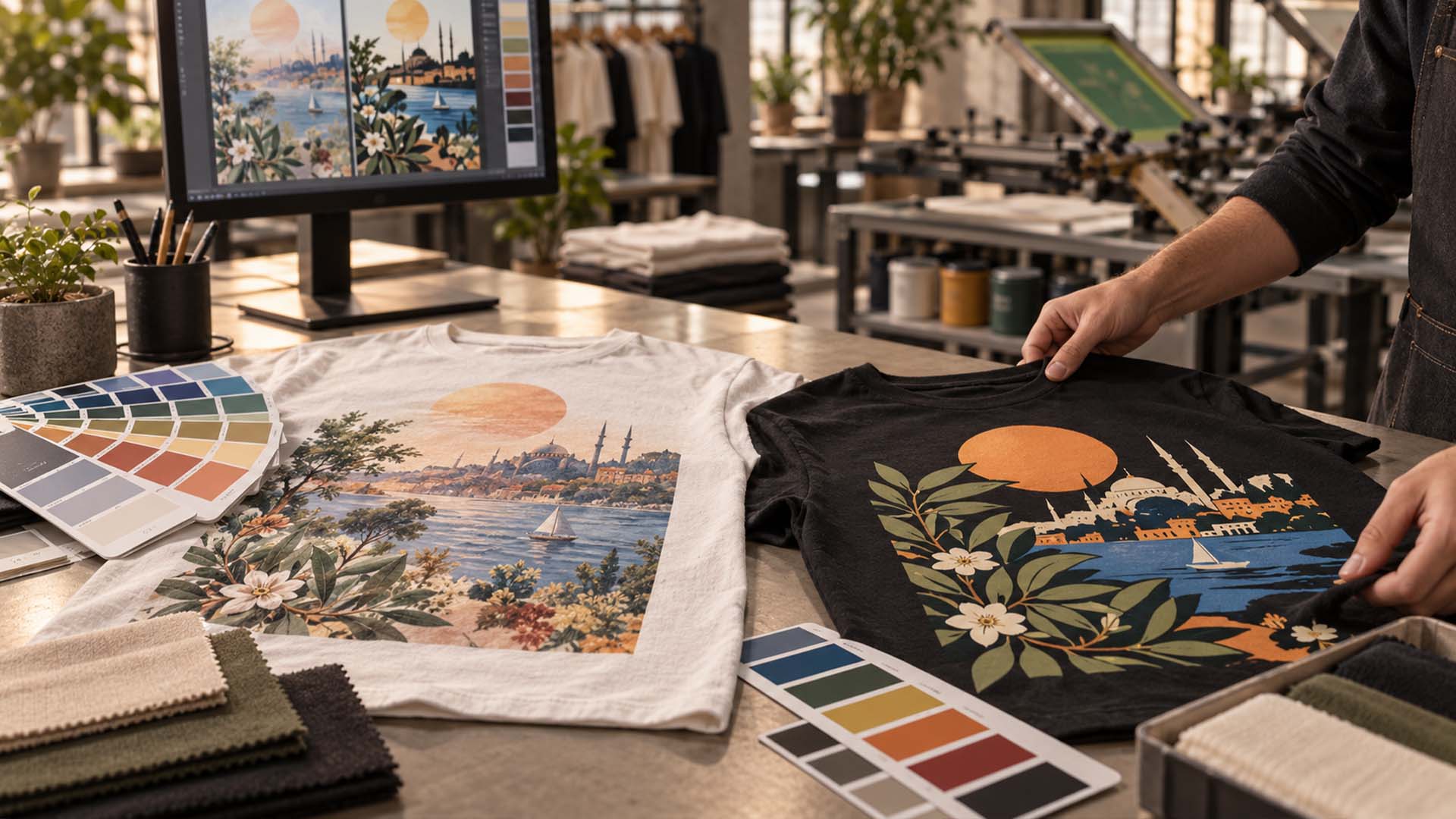
DTG printers use digital color mixing, making them well suited to artwork containing many shades.
They perform particularly well with:
- gradients
- photographic imagery
- subtle tonal transitions
- complicated multicolor illustrations
However, the final color can be influenced by the garment color, fabric composition, pretreatment, printer calibration, and ink system.
Screen Printing Color Reproduction
Screen printing gives manufacturers greater control over individual ink colors.
That makes it especially suitable when brands want strong, consistent solid colors across a larger production run.
Pantone-based color matching is also commonly associated with professional screen-printing workflows where specific brand or artwork colors need to be reproduced consistently.
For a premium clothing brand, this distinction matters.
A photographic design may benefit from DTG’s digital color range, while a recognizable brand graphic using two exact colors may be better suited to screen printing.
Fabric Compatibility
Fabric composition can significantly affect print performance.
DTG Fabric Compatibility
DTG generally performs best on garments with a high cotton content.
Cotton fibers absorb water-based DTG inks effectively and can produce sharp, vibrant results.
Common applications include:
- cotton T-shirts
- cotton sweatshirts
- cotton hoodies
- cotton jersey garments
Blended fabrics can also be printed, but results may vary depending on fiber composition and the printing system.
Polyester-rich fabrics can require more specialized preparation and may not always be ideal for standard DTG production.
Screen Printing Fabric Compatibility
Screen printing offers greater flexibility because different ink systems can be selected for different fabrics.
Depending on the printing technique, it can be used on:
- cotton
- cotton-polyester blends
- polyester
- jersey
- French terry
- fleece
- performance fabrics
Manufacturers must still select the correct ink, curing temperature, and printing method for the fabric being used.
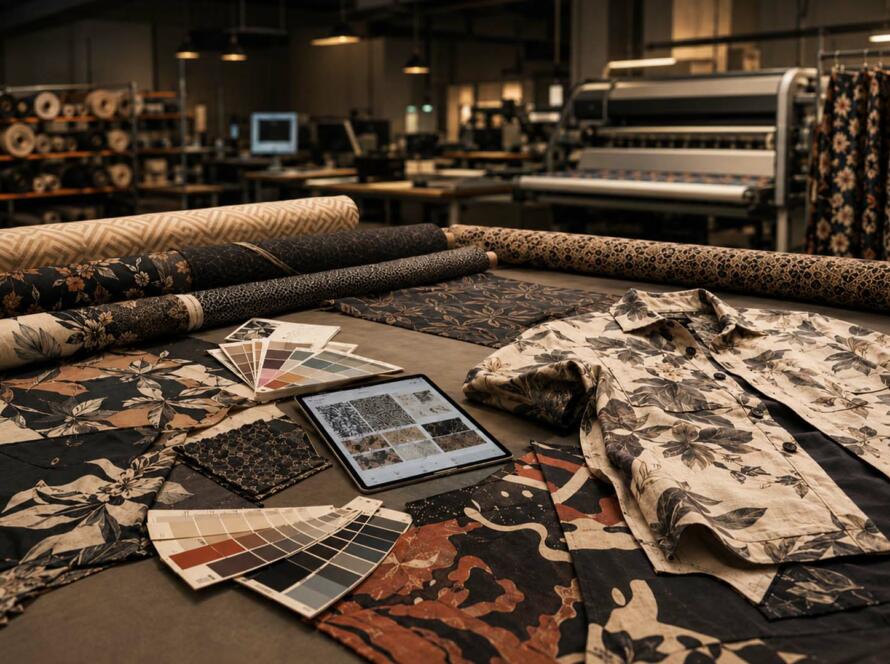
This is why printing should never be decided independently from fabric sourcing.
The garment fabric and printing method should be evaluated together during product development.
DTG vs Screen Printing Durability
Durability is important for fashion brands because poor print performance can lead to customer complaints after washing.
Both DTG and screen printing can provide durable results when correctly produced.
The main variables include:
- ink quality
- pretreatment
- curing temperature
- curing time
- fabric composition
- washing conditions
- print thickness
A professionally cured screen print is known for excellent durability and is particularly suitable for garments expected to undergo frequent wear.
Modern DTG prints can also perform very well, especially on high-quality cotton garments when pretreatment and curing are properly controlled.
The printing technique alone does not determine quality.
Structured textile quality control matters just as much.
Which Is Better for Small Production Quantities?
DTG usually has an advantage for low-volume production.
Because screens do not need to be prepared for every color, production can begin with relatively little setup.
For example, a startup brand testing:
- 25 black T-shirts
- 25 white T-shirts
- three graphic variations
may find DTG useful for early validation.
This allows the brand to test demand before committing to larger quantities.
Screen printing can still be used for smaller runs, but the screen preparation cost must be distributed across fewer garments.
That can increase the cost per piece.
Which Is Better for Large Production Quantities?
Screen printing generally becomes more efficient as production quantities increase.
Once the screens are prepared and the printing machine is set up, the same artwork can be reproduced repeatedly at high speed.
For example, producing 1,500 T-shirts with a two-color graphic usually gives screen printing a much stronger production advantage than producing 30 pieces.
This is one of the most important considerations when comparing DTG vs screen printing.
Brands should not evaluate print cost based solely on one sample.
They should calculate the method against the expected production quantity.
DTG vs Screen Printing Cost Differences
There is no universal price difference because cost depends on several factors.
For DTG, manufacturers may consider:
- print size
- print coverage
- garment color
- pretreatment
- ink consumption
- number of printed locations
- production quantity
For screen printing, cost may depend on:
- number of colors
- number of screens
- artwork separation
- print size
- placement
- special inks
- production quantity
Simple Example
Consider two orders.
Order A
50 T-shirts with a full-color photographic print.
DTG may be commercially attractive because screen preparation for many colors would add significant setup work.
Order B
2,000 T-shirts with a simple two-color logo.
Screen printing may offer a lower production cost per unit because the initial screen setup is spread across thousands of garments.
The best quotation therefore comes from evaluating the complete product rather than asking, “Which printing method is cheaper?”
Print Feel and Fashion Positioning
Fashion brands should also consider the physical feel of the print.
DTG ink typically penetrates more deeply into cotton fibers, which can create a relatively soft print feel.
Screen printing can produce different finishes depending on the ink system and application.
Possible results range from soft water-based prints to heavier, more tactile printed surfaces.
This becomes particularly important for premium and streetwear collections where print texture may intentionally contribute to the design.
Some brands want the graphic to feel almost invisible to the touch.
Others intentionally want a thicker, more substantial print.
Your manufacturer should understand that distinction before production begins.
Sampling Before Bulk Production
Brands should approve a print sample before committing to bulk manufacturing whenever the artwork, fabric, or printing technique is new.
A print sample helps evaluate:
- artwork size
- placement
- color
- detail
- opacity
- hand feel
- interaction with the chosen fabric
For dark garments, it is especially important to review how the print appears against the base color.
Sample approval creates a clear production reference for the manufacturer and the buyer.
It also reduces misunderstandings later in production.
When Should a Brand Choose DTG?
DTG is often a strong option when:
- production quantities are relatively small
- artwork contains many colors
- designs include photographs or gradients
- several design variations need to be tested
- the garment is primarily cotton
- reducing setup complexity is important
For startup brands developing early samples or testing multiple graphics, these advantages can be valuable.
When Should a Brand Choose Screen Printing?
Screen printing is often preferable when:
- production volumes are medium or large
- the same design will be repeated many times
- artwork uses a limited number of solid colors
- strong opacity is required
- specific ink effects are needed
- long-term repeat production is expected
For established brands manufacturing recurring collections, screen printing can provide a highly scalable production workflow.
Why Printing Should Be Planned With Your Manufacturer
One of the most common product-development mistakes is selecting a printing method after the garment has already been designed and the fabric ordered.
Printing should be considered earlier.
Artwork, fabric, garment construction, print placement, and production quantity are interconnected.
A manufacturer may recommend changing:
- fabric composition
- garment color
- print size
- artwork separation
- printing technique
to achieve a better result.
This early technical evaluation can save both time and unnecessary sampling costs.
Garment Printing and Clothing Manufacturing in Istanbul
Turkey has a well-established textile and apparel manufacturing ecosystem, making Istanbul a practical production location for brands sourcing garments, fabrics, trims, printing, embroidery, sampling, and bulk manufacturing within one supply chain.
For European fashion brands in particular, coordinating garment manufacturing and decoration through the same production partner can simplify communication.
Instead of sourcing blank garments from one supplier and sending them elsewhere for printing, brands can develop the complete product as part of one manufacturing workflow.
That means the fabric, garment construction, artwork, printing method, and quality expectations can be evaluated together.
DTG and Screen Printing With Istanbul Factory
At Istanbul Factory, print and embroidery are approached as part of garment development rather than as separate decorative steps.
We work with fashion brands, streetwear labels, startups, and established companies developing custom clothing and private-label collections in Istanbul.
Depending on the project, the production process can include:
- fabric sourcing
- garment sampling
- custom clothing manufacturing
- DTG or screen printing evaluation
- embroidery
- label and trim development
- quality control
- bulk production
Before selecting a printing technique, we consider the artwork, garment fabric, required quantity, visual result, and commercial requirements of the collection.
The goal is to choose a production method that works technically and makes sense at the intended scale.
Planning a Printed Clothing Collection?
If you are developing printed T-shirts, hoodies, sweatshirts, streetwear, or private-label garments, send Istanbul Factory your artwork, garment references, fabric preferences, and expected quantities.
We can review the project and help determine whether DTG, screen printing, or another decoration technique is the most suitable approach for your production.
Frequently Asked Questions
Is DTG better than screen printing?
Neither method is universally better. DTG is often more suitable for smaller quantities and highly detailed multicolor graphics, while screen printing is usually more efficient for larger quantities and designs using a limited number of solid colors.
Is DTG printing durable?
Yes. Properly produced and cured DTG prints can provide good wash durability. Performance depends on fabric composition, pretreatment, ink quality, curing, and garment care.
Does screen printing last longer than DTG?
Screen printing is known for excellent durability, but a professionally produced DTG print can also last well. Manufacturing quality and curing conditions are more important than comparing the printing methods alone.
Is DTG good for hoodies?
DTG can work well on cotton or cotton-rich hoodies, depending on the fabric surface and printing equipment. A production sample should be tested before bulk manufacturing.
Which printing method is cheaper?
DTG is often economically attractive for small quantities and complex multicolor artwork. Screen printing generally becomes more cost-efficient as quantities increase, particularly when the design contains only a few colors.
Can screen printing reproduce photographs?
Yes, photographs can be screen printed using techniques such as halftones and color separation. However, the process is usually more complex than printing photographic artwork using DTG.
What fabric is best for DTG printing?
High-cotton fabrics are generally preferred because cotton fibers interact well with common water-based DTG ink systems. Results on blends and synthetic fabrics depend on the exact material and printing process.
Should I choose printing before selecting fabric?
Ideally, fabric selection and printing method should be evaluated together. Fabric composition, surface texture, color, and finishing can all affect how a print performs.

1 Comment