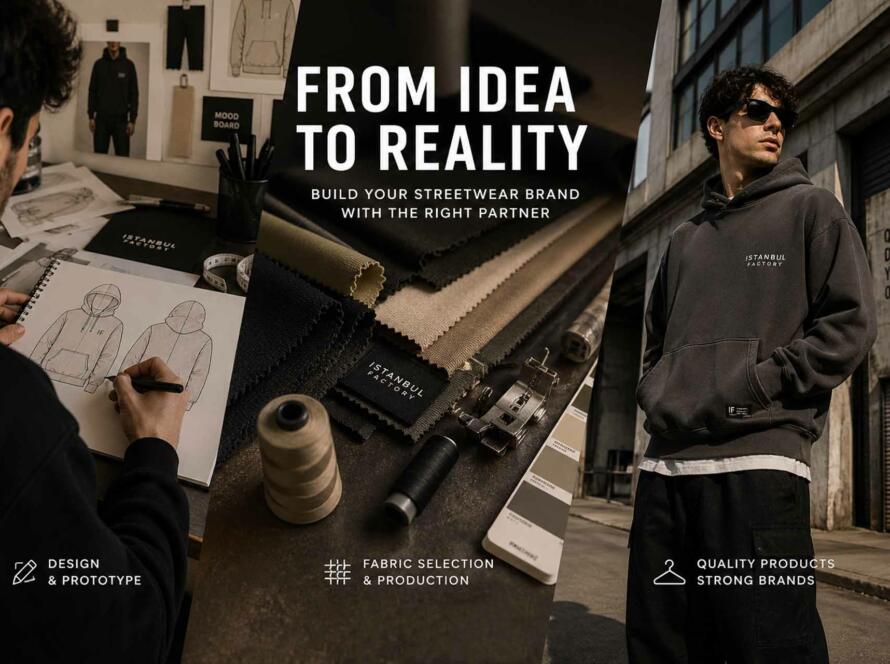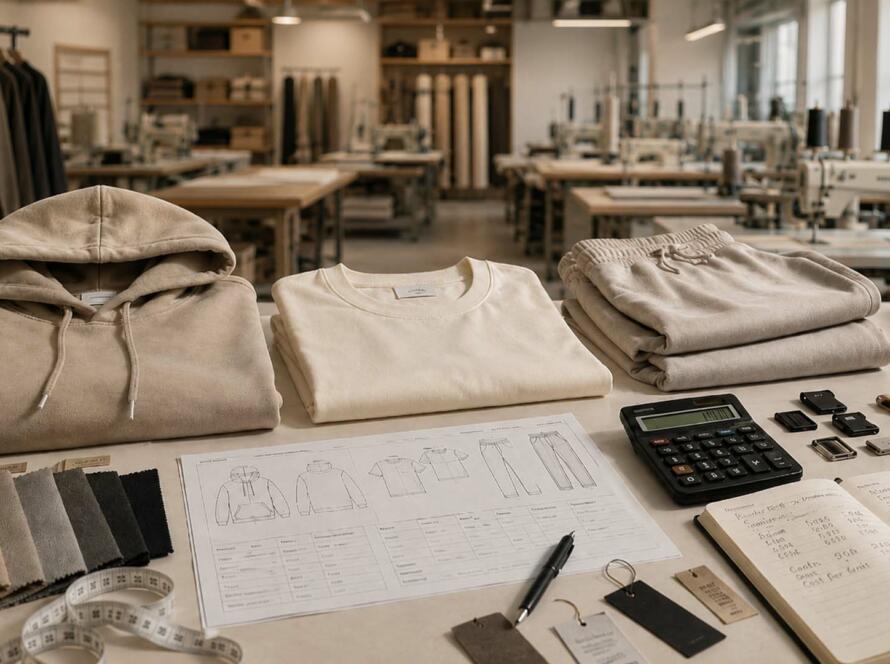


A good clothing collection starts with creativity, but it becomes commercially viable only when that creativity is translated into a clear production plan.
For fashion brands, this means deciding more than which garments look good together. You also need to define which products belong in the collection, how fabrics will be shared, which colors will repeat across styles, what size range makes sense, and how quantities should be distributed.
These decisions affect sampling, sourcing, production minimums, costs, quality control and delivery planning.
Understanding how to plan a clothing collection properly helps brands move from creative direction to manufacturing with fewer unnecessary samples, fewer sourcing complications and better control over the final product.
The goal is not to make the collection less creative.
The goal is to make it manufacturable.
What Does It Mean to Plan a Clothing Collection?
Clothing collection planning is the process of turning a creative concept into a structured range of garments that can be sourced, sampled, priced and manufactured efficiently.
A production-ready collection usually defines:
- collection concept and target customer
- product categories
- hero and supporting pieces
- fabric families
- color palette
- size range
- style-color combinations
- production quantities
- construction and decoration requirements
- sampling priorities
These elements should be planned together because one decision often affects several others.
For example, adding another color may require a separate fabric dye lot, additional trims, another sample or a higher production commitment.
Likewise, introducing a new garment category may mean developing a different pattern block, fabric quality or sewing process.
For this reason, experienced brands do not treat every style as an isolated product. They build a collection as a coordinated production system.
1. Start With a Clear Collection Concept
Before deciding how many hoodies, T-shirts, trousers or jackets to produce, define what the collection is meant to achieve.
A strong collection concept should answer questions such as:
- Who is the customer?
- What season or selling period is the range designed for?
- What price level is the brand targeting?
- What lifestyle or aesthetic does the collection represent?
- Which product categories matter most commercially?
- Which design elements should make the collection recognizable?
For example, a streetwear collection may focus on oversized jersey, heavyweight fleece and strong graphic applications.
A premium essentials range may rely on cleaner silhouettes, restrained colors and carefully selected fabrics.
A summer lifestyle collection may combine lightweight jersey, woven shirts and shorts.
The clearer the concept is at the beginning, the easier it becomes to make good production decisions later.
Think in Systems, Not Individual Designs
One of the most common planning mistakes is developing each garment independently.
A hoodie is designed around one fleece.
A sweatshirt uses another fleece with only a small difference in weight.
Three T-shirts are developed using three separate jersey qualities.
Colors are added one style at a time.
Individually, every decision may seem reasonable. Together, they can make sourcing and production far more complicated than necessary.
A more practical approach is to identify shared systems across the collection.
The same fabric family can often support several products. The same core colors can repeat across multiple styles. Similar trims and decoration methods can also be consolidated.
This creates a more coherent collection and usually makes production easier to manage.
2. Build the Product Architecture
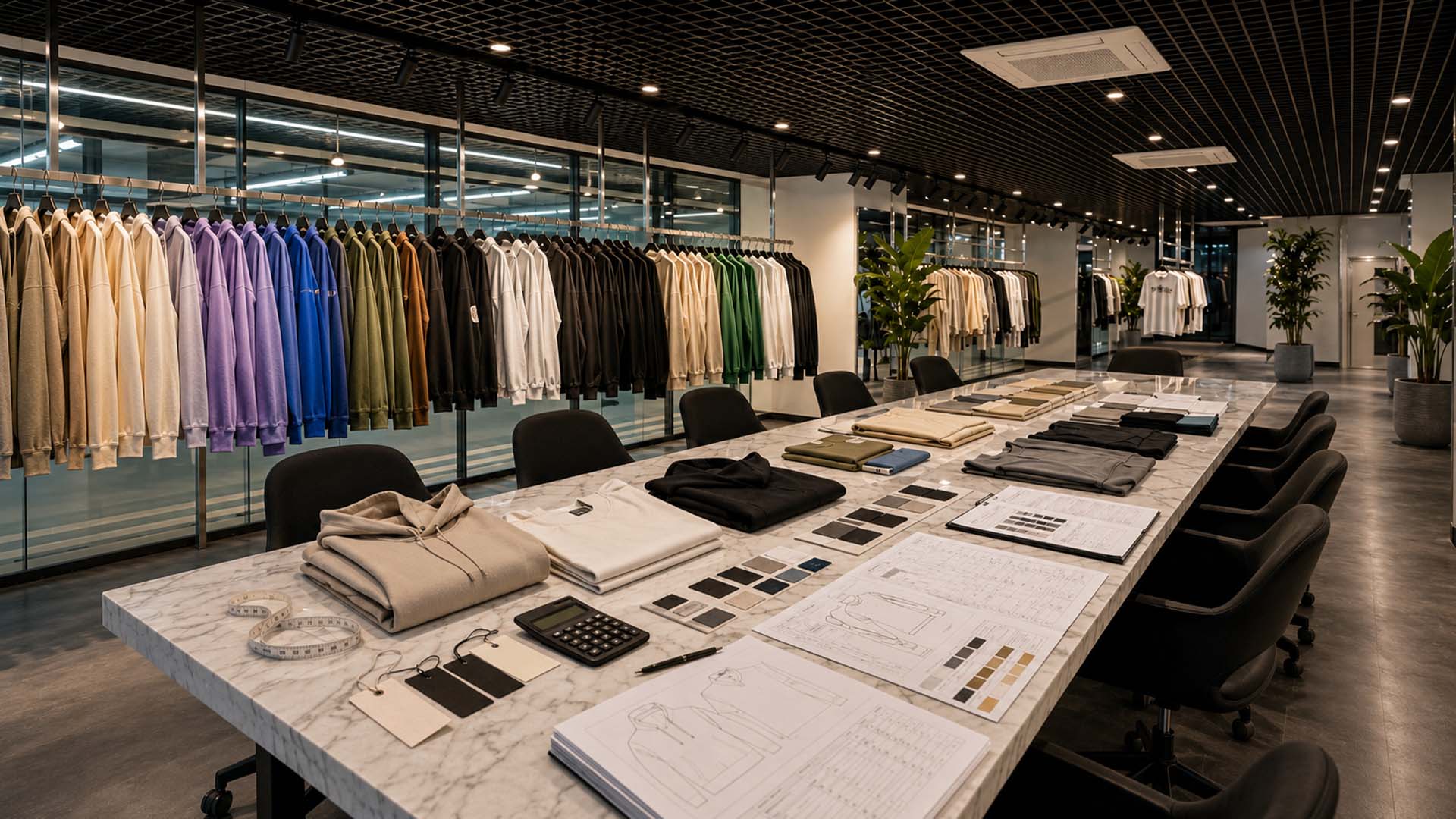
Product architecture is the structure of the range: which garments are included, how they relate to one another and what role each one plays.
Instead of asking:
Which designs do we want to create?
Ask:
Which products does the collection actually need?
A focused streetwear range, for example, could include:
- 2 T-shirts
- 1 long-sleeve T-shirt
- 2 hoodies
- 1 sweatshirt
- 1 sweatpant
- 1 short
That is already enough to create a meaningful collection with several styling combinations.
Choosing the right number of products depends on your budget, market, sales channels and production model.
More styles do not automatically create a stronger collection.
Every additional style can add:
- pattern development
- fit work
- sampling costs
- fabric requirements
- trims and labels
- production planning
- photography
- inventory risk
- working capital
A better question is:
How many products can we develop, sample, manufacture and sell properly?
That question usually leads to a healthier first production run.
3. Separate Hero Pieces From Supporting Products
Most well-balanced collections have a hierarchy.
Some garments carry the strongest visual identity of the range. Others support them commercially.
Hero Pieces
Hero products are the styles that communicate the collection most clearly.
Examples may include:
- a heavyweight oversized hoodie
- a statement embroidered sweatshirt
- a technical jacket
- a signature cargo trouser
- a distinctive knit or woven outer layer
These pieces often require more development because they may involve custom fabrics, special construction, embroidery, hardware or complex trims.
Supporting Pieces
Supporting garments make the collection easier to wear, merchandise and sell.
Typical examples include:
- T-shirts
- long-sleeve tops
- tanks
- basic sweatshirts
- sweatpants
- shorts
These products may be simpler, but they often contribute strongly to repeat sales and collection consistency.
A collection built entirely around complex statement pieces can become expensive to develop.
A collection built entirely around basics may lack differentiation.
The strongest product architecture usually combines both.
4. Group Products Into Fabric Families
Fabric planning has a major influence on production efficiency.
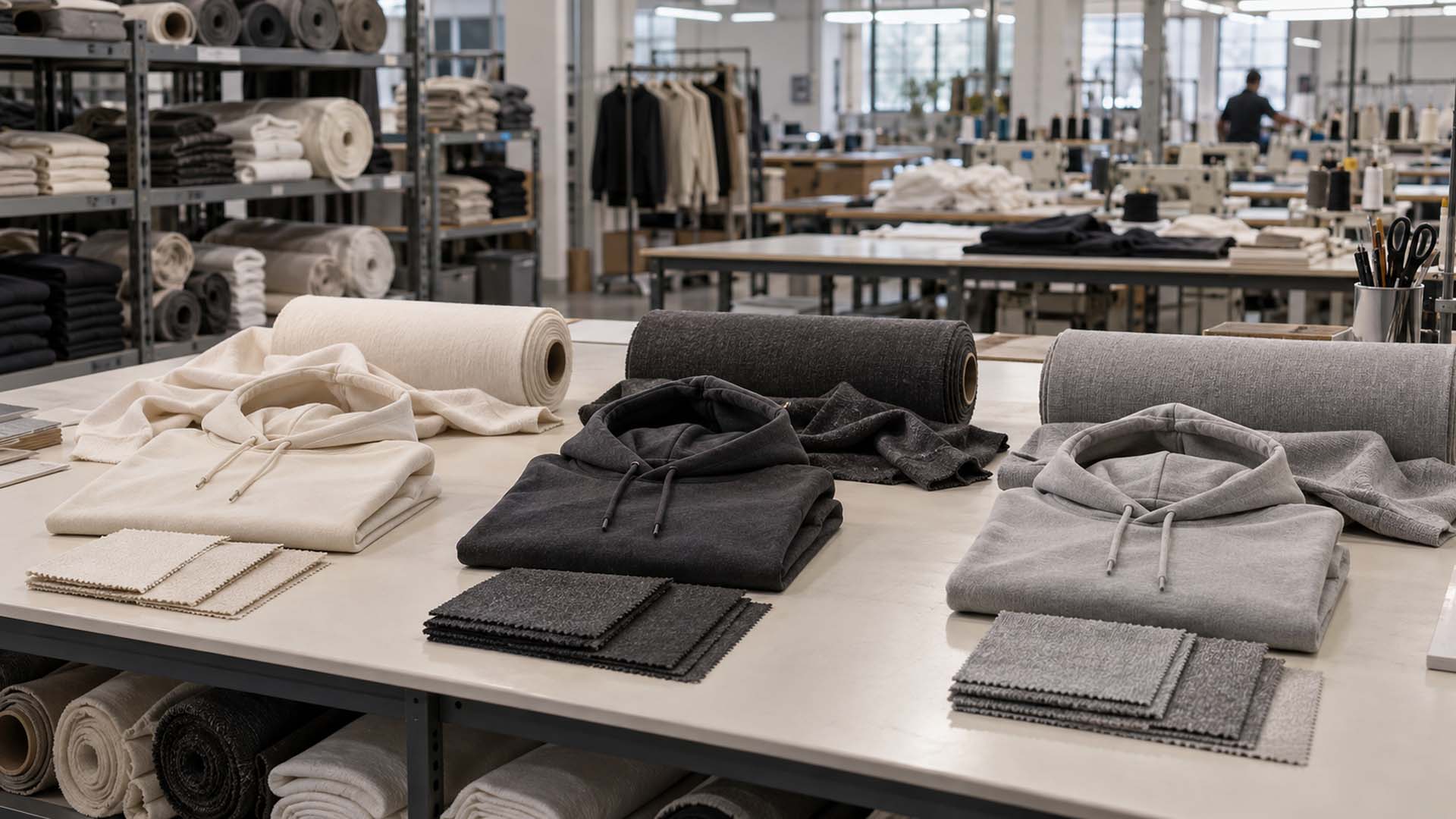
Where possible, several styles should share the same fabric quality or fabric family.
For example:
French Terry or Fleece Family
- hoodie
- sweatshirt
- sweatpant
- short
Jersey Family
- T-shirt
- long-sleeve T-shirt
- tank top
Using shared fabric families can simplify:
- sourcing
- color matching
- laboratory approvals
- shrinkage testing
- fabric ordering
- production minimums
It can also reduce the risk of buying small quantities across too many different fabric qualities.
Do Not Choose Fabric by GSM Alone
Fabric weight matters, but GSM is only one part of the specification.
Brands should also evaluate:
- fiber composition
- yarn type
- knitting or weaving structure
- stretch and recovery
- shrinkage
- width
- surface appearance
- handfeel
- finishing
- color performance
Two fabrics with the same GSM can behave very differently in production and after washing.
A 300 GSM French Terry from one supplier may feel compact and structured, while another may feel softer, looser or more elastic.
For that reason, fabric should be evaluated physically before final production decisions are made.
5. Build a Controlled Color Palette
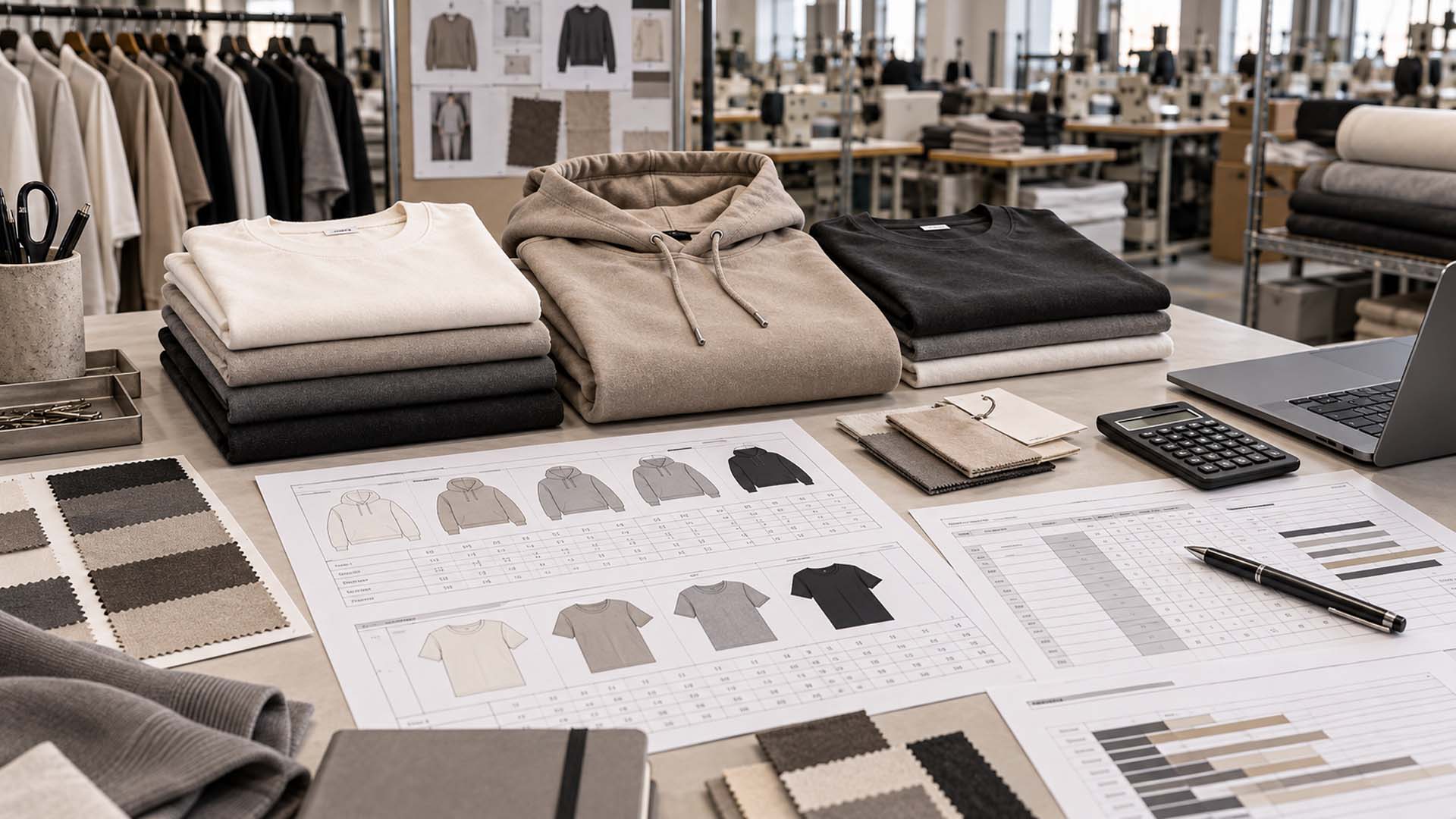
Color is one of the easiest areas in which collection complexity can grow unnoticed.
Imagine a collection with eight styles and four colors per style.
That creates up to 32 style-color combinations.
From a merchandising perspective, that may look attractive.
From a manufacturing perspective, it can spread production quantities too thinly.
A better approach is to build a coordinated color system.
For example:
Core Colors
- black
- off-white
- charcoal
Seasonal or Accent Colors
- muted green
- burgundy
Core colors can appear across most of the range, while seasonal colors are used more selectively.
This gives the collection variety without creating unnecessary production fragmentation.
Plan by Style-Color Combination
Factories rarely look only at the total number of styles.
They also need to understand each individual style-color combination.
A hoodie offered in black, cream and green is effectively three separate production variations.
Each color may require separate:
- fabric allocation
- cutting
- labeling
- quality control
- packing
- inventory management
For this reason, style-color planning is one of the most important steps in collection development.
6. Define the Size Range Early
Size planning should be settled before final production quantities are confirmed.
Common adult ranges include:
- XS–XL
- S–XL
- S–XXL
The right range depends on your target customer, fit direction and market positioning.
A unisex streetwear label may use a different distribution from a fitted womenswear brand.
The size range also affects grading.
Once the base fit has been approved, the pattern must normally be graded across the selected sizes.
Changing the size range late in development can therefore create additional pattern work and delay production planning.
Plan a Realistic Size Ratio
Production quantities rarely need to be divided equally across every size.
A hypothetical 500-piece order could be allocated like this:
- S: 15%
- M: 30%
- L: 30%
- XL: 20%
- XXL: 5%
This is only an example.
Established brands should use their own sales data whenever possible.
A new brand without historical sales can start with a reasoned estimate based on its target audience, then refine future orders using actual sell-through data.
7. Plan Quantities at Style-Color Level
Quantity planning is one of the most important parts of learning how to plan a clothing collection for production.
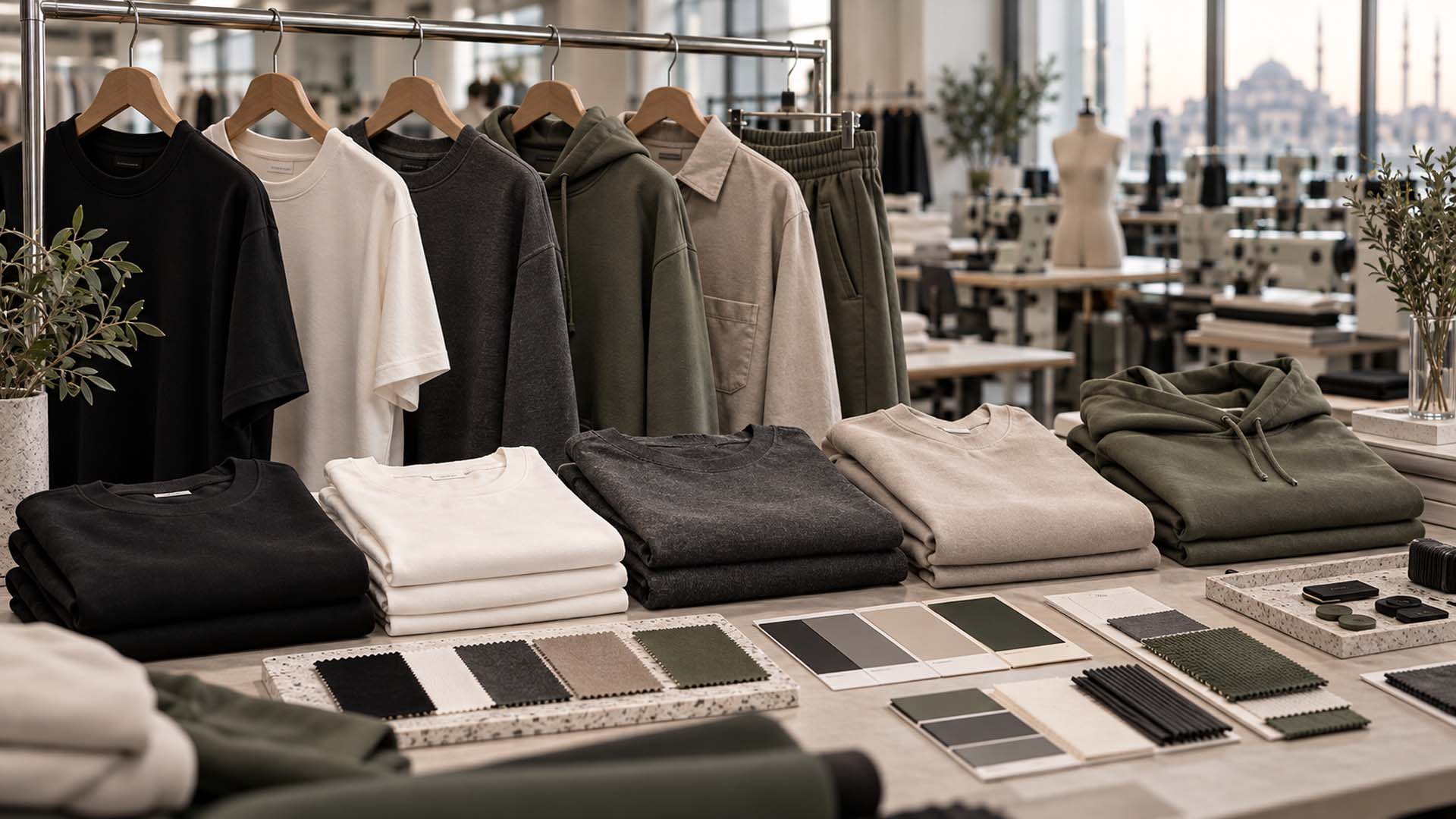
A brand may start by saying:
“We want to produce 4,000 pieces.”
That is useful, but it is not enough for manufacturing planning.
The important question is how those 4,000 pieces are divided.
For example:
| Product | Colors | Quantity per Color | Total |
|---|---|---|---|
| T-Shirt 01 | 3 | 500 | 1,500 |
| T-Shirt 02 | 2 | 500 | 1,000 |
| Hoodie 01 | 2 | 500 | 1,000 |
| Sweatpant 01 | 1 | 500 | 500 |
| Total | 4,000 |
This structure is relatively straightforward.
Now imagine the same 4,000 pieces spread across eight products and five colors each.
The number of style-color combinations increases sharply, while the quantity per combination falls.
That can create problems with:
- fabric minimums
- dyeing minimums
- trims
- printing
- embroidery
- cutting efficiency
- production economics
For Istanbul Factory projects, production planning typically starts around 500 pieces per style and color, depending on the garment, fabric and technical requirements.
This is why MOQ planning should be discussed while the collection is still being structured, rather than after every design has already been finalized.
8. Check Manufacturing Feasibility Before Sampling the Full Range
A garment can look excellent in a sketch and still create unnecessary complications in production.
Before sampling every style, review the collection from a manufacturing perspective.
Important questions include:
- Is the proposed fabric commercially available?
- Does the fabric minimum match the planned quantity?
- Is the construction realistic for bulk production?
- Is the embroidery suitable for the selected fabric?
- Does the print technique fit the artwork?
- Are custom trims or hardware required?
- Are the quantities realistic for the specification?
- Does the garment require specialist machinery?
- Is the target price compatible with the design?
This stage is especially important for startups because many expensive sampling problems can be identified before the first prototype is made.
Manufacturing feasibility does not mean removing the character of the product.
Often, a small technical adjustment can preserve the design intent while making the garment easier to produce consistently.
That is where early communication with an experienced manufacturing partner can add real value.
9. Prepare the Collection Properly for Sampling
Once the product architecture, fabrics, colors and quantities are reasonably clear, the collection can move into sampling.
Each style should ideally have enough technical information for the manufacturer to understand exactly what is required.
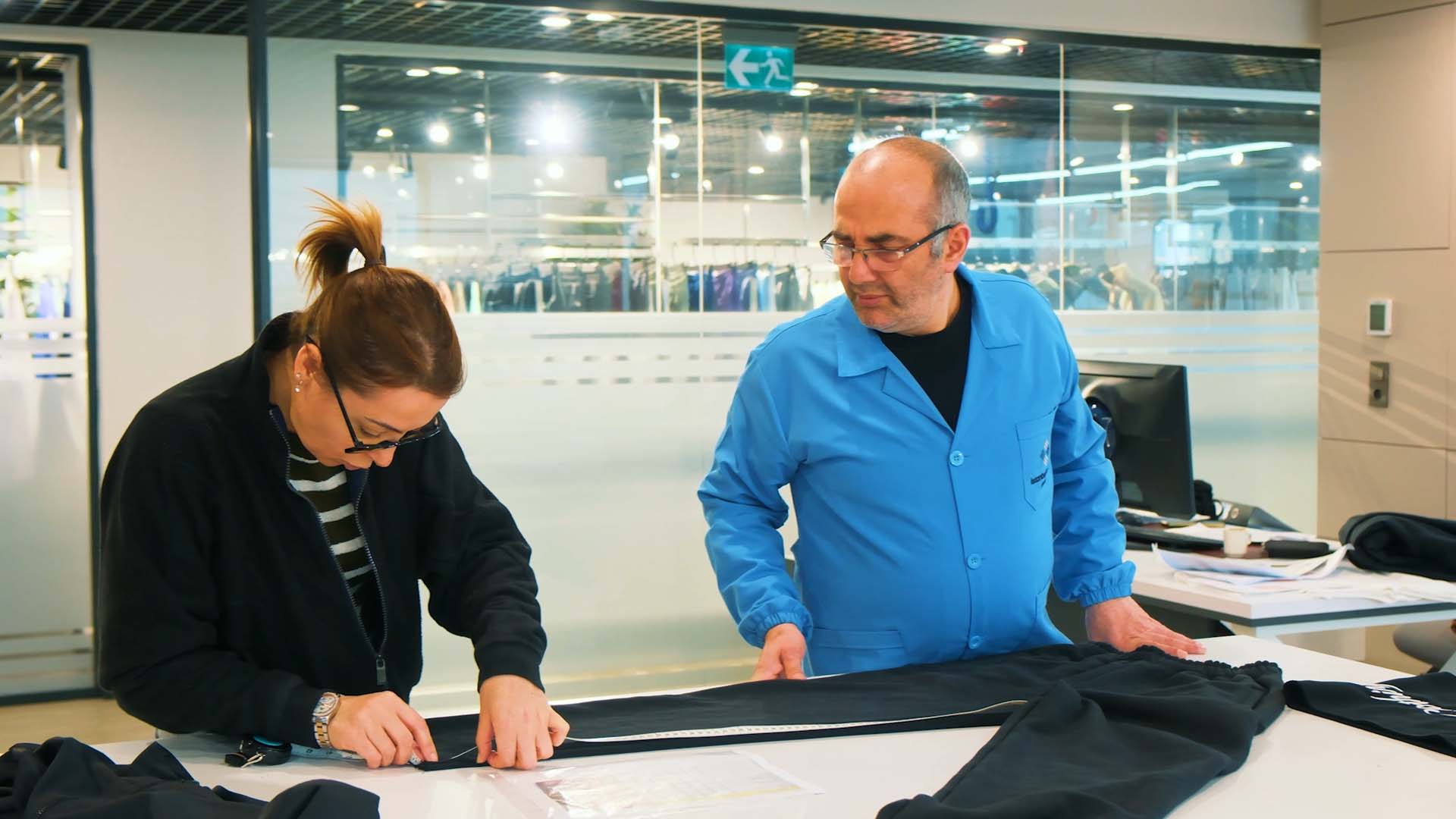
A useful development package may include:
- technical drawings
- measurement specifications
- fit references
- fabric composition and weight
- color references
- print artwork
- embroidery files or placements
- trims
- labels
- stitching details
- construction notes
These details are normally organized into a tech pack.
The clearer the technical information is, the less room there is for interpretation.
That does not mean every detail must be perfect before the first sample. Sampling is part of the development process.
However, clear starting information usually leads to better first samples and fewer unnecessary revisions.
Prioritize the Most Important Decisions
You do not always need to sample every color immediately.
Early sampling should focus on validating:
- fit
- proportions
- fabric
- construction
- important design details
- decoration placement
Once those elements are approved, secondary colors and variations can usually be developed more efficiently.
10. Build a Collection Production Matrix
One of the simplest ways to keep a collection under control is to create a production matrix.
For example:
| Style | Fabric | Color | Sizes | Quantity | Decoration |
|---|---|---|---|---|---|
| Hoodie 01 | 400 GSM Fleece | Black | S–XXL | 500 | Embroidery |
| Hoodie 01 | 400 GSM Fleece | Cream | S–XXL | 500 | Embroidery |
| Tee 01 | 240 GSM Jersey | Black | S–XXL | 500 | Screen Print |
| Tee 01 | 240 GSM Jersey | White | S–XXL | 500 | Screen Print |
This simple table quickly shows:
- number of styles
- number of colorways
- fabric families
- size ranges
- quantities
- decoration methods
It can later be expanded with:
- target cost
- sample status
- fabric approval
- trim status
- production status
- delivery date
For many brands, this becomes the practical link between the creative team and the manufacturer.
A Practical Example: Planning a Small Streetwear Collection
Consider a new streetwear brand preparing its first serious production run.
Instead of launching 15 different garments, the brand starts with:
- 2 heavyweight T-shirts
- 2 hoodies
- 1 sweatshirt
- 1 sweatpant
The collection uses two main fabric families:
- heavyweight cotton jersey
- brushed cotton fleece
The brand then selects three colors:
- black
- stone
- dark green
However, every style does not need to be produced in every color.
Black appears across the full range.
Stone is used on selected T-shirts, hoodies and sweatpants.
Dark green is limited to one hoodie and one T-shirt.
This creates variety while keeping production manageable.
The sampling budget can then be focused on what matters most:
- fit
- fabric quality
- garment construction
- print execution
- embroidery quality
That is a much stronger use of development resources than spreading the same budget across an oversized collection.
Why Turkey Works Well for Collection Development
Turkey has a well-established textile and garment production ecosystem, particularly for brands supplying European markets.
Manufacturing capabilities include:
- jersey and knit fabrics
- woven fabrics
- dyeing and finishing
- garment production
- embroidery
- screen printing
- digital printing
- washing
- trims
- packaging
For European brands, Turkey’s geographic proximity can also make communication, development visits and logistics more practical than sourcing from more distant production markets.
Istanbul is especially useful for brands that want to coordinate several stages of development within one sourcing region.
That can include fabric sourcing, sampling, decoration, garment manufacturing and quality control.
For US brands, Turkey can also be relevant when the priority is premium textile capability, flexible product development and access to experienced garment production suppliers.
How European Fashion Brands Can Work Efficiently With a Turkish Clothing Manufacturer
How to Plan a Clothing Collection: A Simple Checklist
For brands looking for a quick planning framework, the process can be summarized in eight steps:
- Define the customer and collection concept.
- Build the product architecture.
- Choose hero and supporting pieces.
- Group styles into fabric families.
- Create a controlled color palette.
- Define the size range and size ratios.
- Plan quantities by style and color.
- Check manufacturing feasibility before full sampling.
If these eight areas are clear, the collection is usually in a much stronger position to move into product development.
From Collection Planning to Production With Istanbul Factory
A well-planned collection is easier to source, easier to sample and easier to manufacture consistently.
It also gives the manufacturer a clearer understanding of your priorities before production begins.
At Istanbul Factory, we work with fashion brands, streetwear labels, startups and established companies that need support turning a collection concept into a production-ready range.
Our work can include:
- fabric sourcing
- garment sampling
- pattern and product development
- private label production
- custom clothing manufacturing
- print and embroidery
- quality control
- production coordination
Where possible, we prefer to review the collection before bulk production decisions are locked in.
That gives both the brand and the manufacturer an opportunity to identify practical issues involving fabrics, quantities, construction, decoration or timelines early in the process.
If you are preparing a new collection, the best starting point is a clear product list showing your planned styles, fabrics, colors, sizes and expected quantities.
From there, the collection can be reviewed for sourcing, sampling and production feasibility before moving into development.
Frequently Asked Questions
How do you plan a clothing collection?
Start by defining the target customer and collection concept. Then decide which products the range needs, group them into fabric families, create a controlled color palette, select the size range, plan quantities by style and color, and review manufacturing feasibility before sampling.
How many products should a clothing collection have?
There is no fixed number. A focused first collection may contain around five to ten styles, while established brands may operate much larger ranges. The right number depends on budget, production minimums, retail strategy and the brand’s ability to develop each product properly.
How many colors should a clothing collection have?
A practical approach is to use a small number of core colors across several garments and introduce seasonal colors selectively. This gives the collection visual variety while reducing unnecessary production complexity.
Should I choose fabrics before designing a collection?
The initial design concept can come first, but fabric selection should happen early. Fabric affects fit, construction, price, minimum quantities, print compatibility, shrinkage and overall garment performance.
How should clothing production quantities be planned?
Plan quantities at the style-color level rather than relying only on the total order quantity. After that, divide each style and color across the chosen size range using a realistic size ratio.
What is a style-color combination?
A style-color combination is one garment design produced in one specific color. A hoodie available in black, cream and green creates three separate style-color combinations for production planning.
What should be prepared before garment sampling?
Brands should prepare technical drawings, garment measurements, fabric specifications, color references, artwork, trims, labels, fit references and construction details. These are normally organized in a tech pack.
Why should a clothing manufacturer be involved early?
Early manufacturer input can identify problems involving fabric availability, MOQs, construction, printing, embroidery, trims, pricing and production feasibility before the brand spends heavily on sampling.
Why are fabric families important in collection planning?
Using the same fabric across several compatible products can simplify sourcing, color matching, testing and production planning. It can also reduce the number of small fabric orders required across a collection.