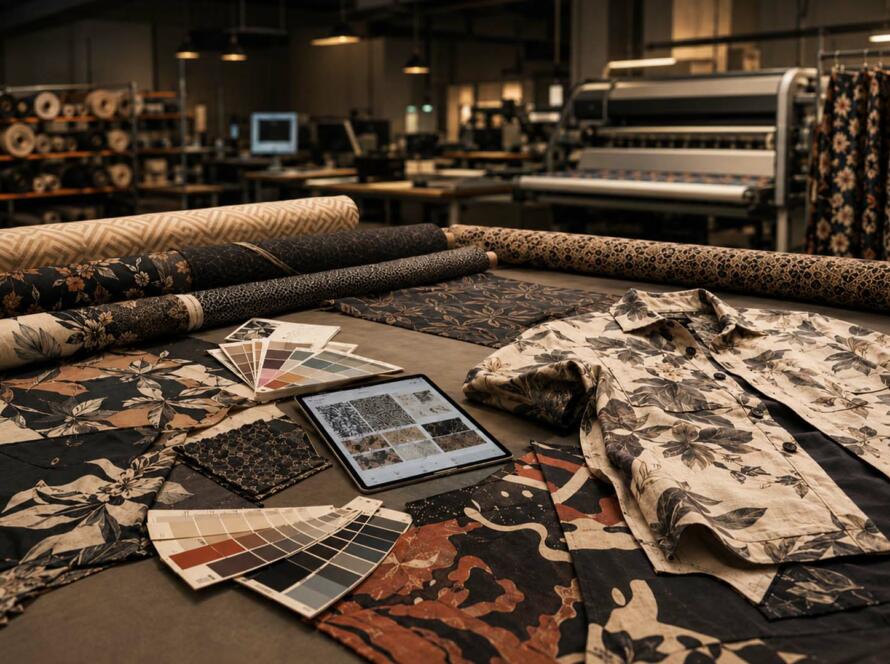


Screen printing can produce everything from an almost invisible vintage graphic to a bold, highly opaque streetwear print. Much of that difference comes down to the ink system.
For fashion brands, the water based vs plastisol ink decision affects more than appearance. It influences print feel, opacity, wash performance, color reproduction, production efficiency, fabric compatibility, and ultimately how the finished garment feels in the customer’s hands.
Water-based ink is often chosen for soft, premium prints and washed or vintage aesthetics. Plastisol is known for reliable opacity, strong color and production flexibility. Modern formulations, however, have made the distinction less simple than it once was.
The right choice depends on the garment, artwork and intended result.
Water-Based vs Plastisol Ink: The Short Answer
Water-based ink is usually the better fit when a brand wants a soft print that becomes part of the fabric, particularly on cotton garments and designs with a premium or vintage character.
Plastisol ink is often preferred when strong opacity, bright colors, predictable production and printing over dark garments are priorities.
But neither system is automatically superior.
A heavyweight black streetwear T-shirt with a distressed graphic may benefit from water-based discharge printing. A black hoodie requiring a crisp, bright white chest logo may be better suited to a high-opacity plastisol or a specialized high-solids water-based system.
The substrate and artwork should determine the ink—not the other way around.
Brands comparing completely different decoration methods can also review our guide to DTF vs screen printing.
What Is Water-Based Screen Printing Ink?
Water-based textile ink uses water as a major part of its carrier system. During drying and curing, much of that water evaporates, leaving the binder and pigment associated with the fabric.
This allows manufacturers to produce prints with significantly less surface build-up than many traditional plastisol applications.
Modern water-based systems are available for cotton, cotton blends and, with specialized formulations or blockers, some polyester applications. Technical water-based ink systems can also provide high opacity and sophisticated special effects.
The result fashion brands notice most is the hand feel.
Instead of sitting as a noticeable layer on top of the garment, a well-executed water-based print can feel much more integrated with the textile.
That makes it especially attractive for:
- Premium T-shirts
- Fashion basics
- Vintage graphics
- Large-area prints
- Streetwear
- Washed garments
- Designs where softness matters
What Is Plastisol Ink?
Plastisol has long been one of the standard ink systems used in textile screen printing.
It is valued by printers because it is stable on press, can achieve strong opacity and does not dry in the screen in the same way as water-based ink. This makes production easier to control during long runs and complex multicolor jobs. Avient, for example, notes that its plastisol systems can remain in screens during production without the screen-drying issue associated with water-based inks.
Once properly cured, plastisol forms a durable ink film on the surface of the garment.
Modern plastisol should not be treated as one single technology. There are high-opacity formulations, softer fashion bases, stretch systems, low-cure products and inks developed specifically for polyester and dye-migration control.
Water-Based vs Plastisol Ink: Key Differences
| Factor | Water-Based Ink | Plastisol Ink |
|---|---|---|
| Print feel | Usually very soft | Typically more noticeable |
| Fabric integration | Penetrates or sits closely within fibers | Forms more of a surface ink film |
| Opacity | Depends heavily on system and substrate | Traditionally very strong |
| Dark garments | May require underbase, high-solids or discharge system | Generally straightforward with opaque inks |
| Vintage look | Excellent | Possible with specialized techniques |
| Large prints | Comfortable due to softer hand | Can feel heavier depending on ink deposit |
| Press behavior | Can dry in screen | Usually remains open longer |
| Production control | Requires experienced process management | Generally forgiving and predictable |
| Polyester | Requires appropriate system and migration control | Specialized low-cure/bleed-resistant options available |
This is why comparing water-based and plastisol only by asking which one “looks better” misses much of the manufacturing decision.
Which Ink Has the Softer Print Feel?
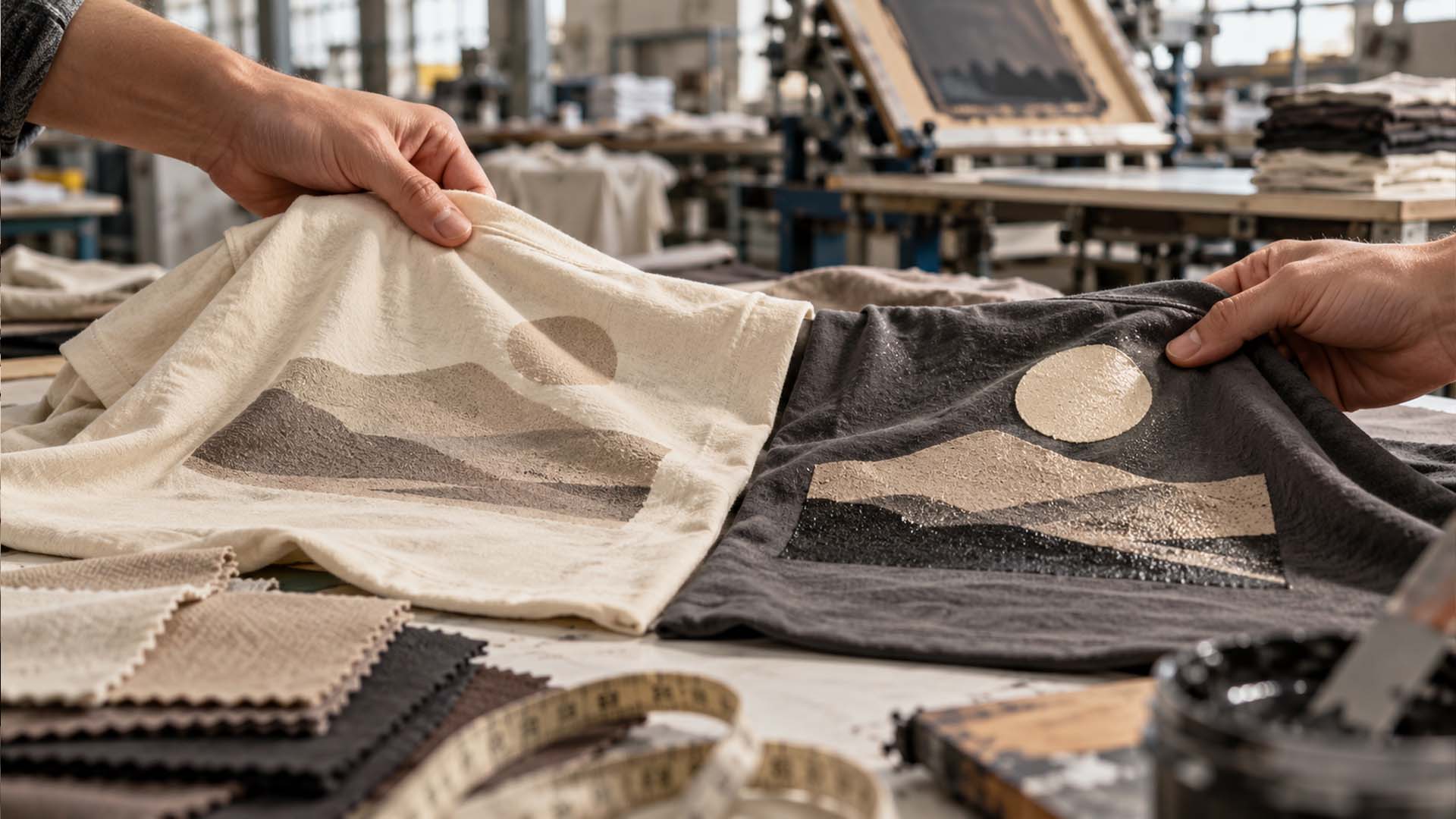
Water-based ink generally wins when soft hand feel is the priority.
Manufacturers can create prints that remain flexible and light even when the artwork covers a substantial area of the garment. Water-based acrylic and discharge systems are specifically developed to provide very soft finishes.
Imagine a large graphic covering most of the back of a T-shirt.
With a heavy ink deposit, the wearer may clearly feel the printed area against the body. A softer water-based application can reduce that contrast between printed and unprinted fabric.
This matters particularly for premium fashion products, where the tactile experience is part of perceived quality.
Plastisol can also be engineered for a softer hand through thinner deposits, higher mesh counts and fashion-soft bases, so “plastisol equals heavy print” is no longer universally accurate. Avient lists dedicated fashion-soft plastisol bases among its current ink systems.
Which Has Better Opacity?
Traditionally, plastisol has had the advantage in opacity, especially when printing bright colors over black, navy or other dark garments.
A dense white plastisol underbase can create a clean foundation for subsequent colors, allowing graphics to retain brightness instead of being influenced by the garment underneath.
Modern high-solids water-based systems have narrowed that gap considerably. Water-based formulations are now available specifically for dark garments and can use dedicated white underbases or blockers.
The practical question for a fashion brand therefore becomes:
How opaque does the artwork actually need to be?
A vintage cream graphic may look better with slight interaction between ink and fabric. A bright red streetwear logo intended to visually jump off a black hoodie may require much greater opacity.
What Works Best on Dark Fabrics?
Dark fabrics are one of the most important considerations when choosing screen-printing ink.
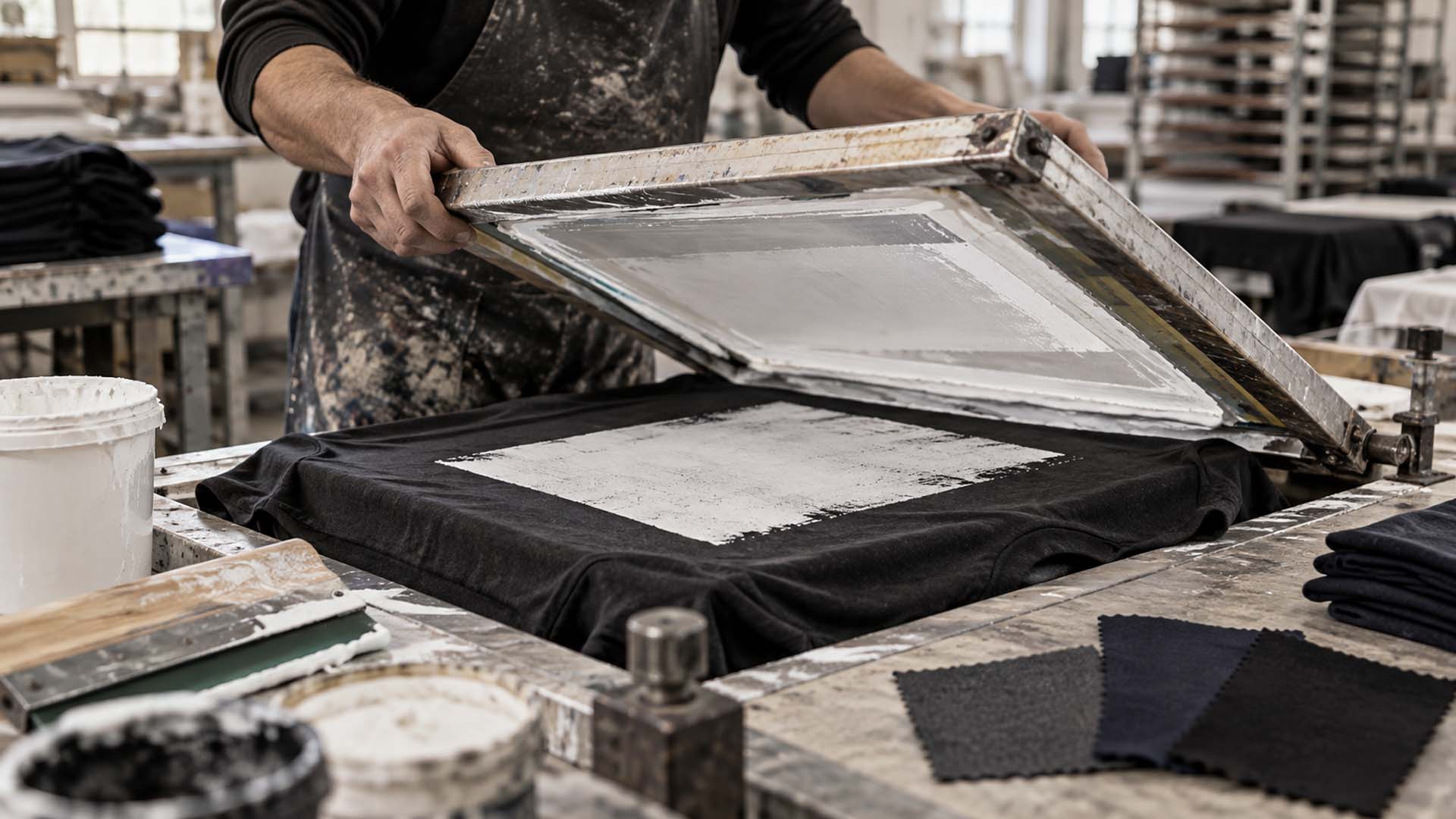
Plastisol on Dark Garments
Plastisol is widely used because highly opaque whites and colors can cover dark substrates effectively.
Depending on the artwork, printers may first print a white underbase, flash it, and then print the final colors over it.
This makes plastisol particularly useful for bold graphics where color accuracy and contrast are important.
Water-Based Ink on Dark Garments
Water-based printing requires more planning.
One option is a high-opacity water-based underbase. Another is discharge printing.
Discharge ink works differently from simply covering the original garment color. On compatible dyed cotton fabrics, the discharge process removes or alters the underlying dye while depositing the new print color.
This can create an extremely soft print because less heavy ink coverage is required.
Water-based discharge systems are specifically marketed for dark cotton substrates and soft-hand applications.
However, discharge results depend on the fabric and dye chemistry. Brands should approve production tests rather than assuming every black garment will discharge to the same shade.
Which Is Better for Vintage and Washed Effects?
For many fashion and streetwear collections, perfect solid coverage is not the goal.
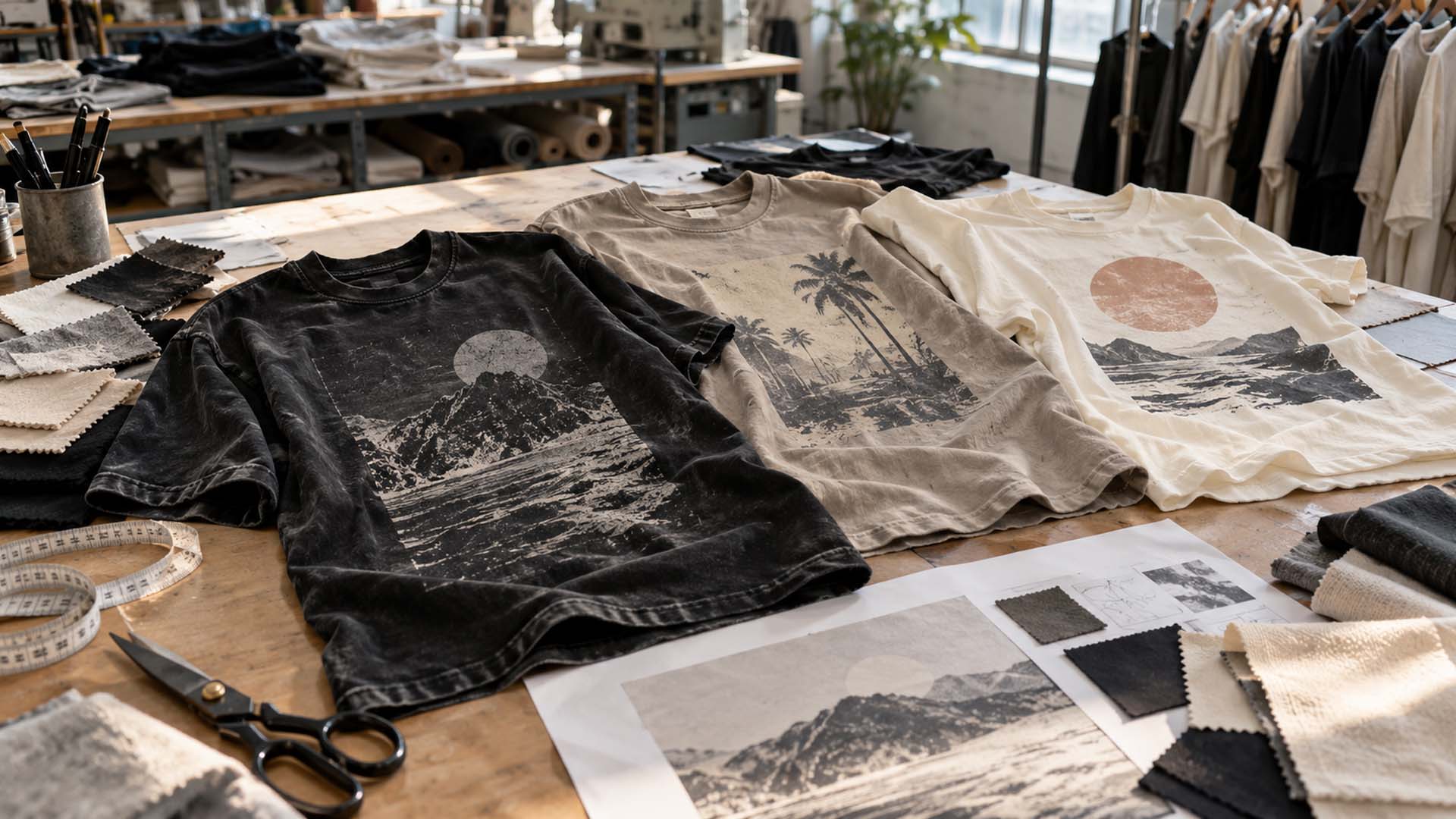
The desired print might need to feel:
- Faded
- Washed
- Distressed
- Soft
- Slightly irregular
- Integrated with the garment
Water-based and discharge printing are especially effective for this aesthetic.
A graphic on a garment-dyed or washed cotton T-shirt can feel as though it belongs to the garment instead of having been added afterward.
This makes the technique particularly useful for brands developing vintage-inspired collections, premium basics and understated streetwear.
Plastisol can reproduce distressed artwork as well, but the tactile result usually depends more heavily on ink deposit and print technique.
Which Ink Is More Durable?
Both systems can produce durable commercial prints when correctly formulated, applied and cured.
The ink category alone does not determine durability.
Curing is critical. Under-cured prints can crack, lose performance or change after washing. Avient specifically identifies cracking and noticeable changes after washing as signs that plastisol has not been properly cured.
Water-based systems also require manufacturers to control drying and curing conditions carefully, and some formulations use additives or fixers to improve wash fastness.
For brands, this means wash testing is more valuable than relying on broad claims such as “water-based lasts longer” or “plastisol is more durable.”
The finished print should be tested as part of the actual garment construction.
Color Fastness Testing for Clothing: How Brands Avoid Fading and Bleeding
What About Polyester and Dye Migration?
Polyester introduces another challenge: dye migration.
Heat during curing can cause dyes in polyester fabric to migrate into the printed ink, turning a bright white print pink, grey or another unwanted shade.
This problem can occur regardless of whether a brand initially prefers water-based or plastisol.
Manufacturers may need:
- Low-cure inks
- Migration-resistant inks
- Dedicated blocker layers
- Controlled flash temperatures
- Fabric-specific testing
Specialized systems exist for both ink families. Avient recommends low-cure inks and bleed-blocking underbases for problematic polyester substrates, while MagnaColours produces water-based migration blockers designed for polyester and poly-cotton fabrics.
For performance garments, therefore, the question should rarely be simply “water-based or plastisol?”
The better question is:
Which ink system has been tested for this exact polyester fabric and dye?
Water-Based vs Plastisol for Streetwear Brands
Streetwear uses both technologies extensively because the visual language is so broad.
Consider three products.
A 240 GSM washed black T-shirt with an oversized vintage back graphic may work beautifully with water-based or discharge printing because softness supports the washed aesthetic.
A heavyweight hoodie with a compact bright white logo may benefit from plastisol or a high-opacity water-based system because crisp coverage matters more than achieving the absolute softest print.
A multicolor graphic with strong saturated colors on a dark garment may favor an ink system designed for opacity, accurate registration and predictable production.
The printing method should support the brand’s design language.
That is why print development should happen alongside fabric selection and garment sampling rather than being treated as a final decoration decision.
Production Considerations Fashion Brands Often Miss
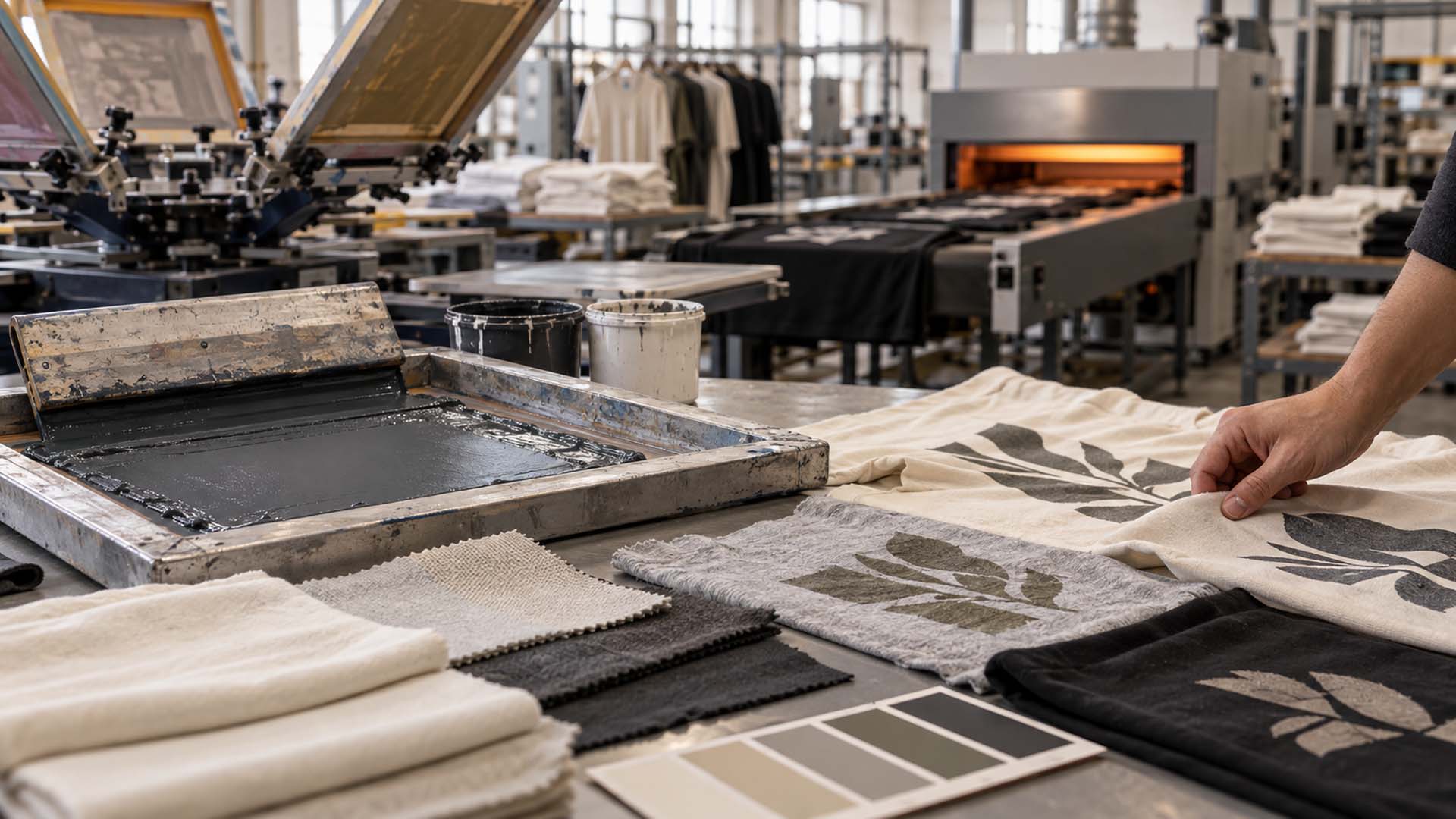
Water-based ink demands disciplined press management because evaporation can cause ink to begin drying in the screen. Manufacturers need suitable screens, humidity/process control, appropriate additives and experienced operators.
Plastisol is usually more forgiving on press because it remains workable until sufficient heat is applied during curing.
Brands should also consider:
Artwork complexity: Fine detail, halftones, solid areas and the number of colors can influence ink selection.
Fabric composition: Cotton, cotton/polyester blends and performance polyester behave differently.
Garment color: Dark garments may require an underbase, discharge process or migration blocker.
Print area: Large prints make hand feel much more noticeable.
Wash requirements: The actual production garment should be tested rather than relying only on ink specifications.
Production volume: Repeatability and press efficiency become increasingly important on larger orders.
These details are normally resolved during development and sampling.
Textile Quality Control: How Professional Manufacturers Protect Your Brand
Is Water-Based Ink Always More Sustainable?
No.
Water-based printing is frequently associated with sustainability because many modern systems are PVC-free and are designed to meet demanding chemical standards.
But the word water-based alone does not guarantee that an ink or printing process is environmentally preferable in every situation.
Brands should evaluate the complete system: chemical formulation, restricted substances, curing requirements, wastewater practices, ink usage, garment substrate and relevant certifications.
Plastisol technology has also evolved. Modern non-phthalate systems and even plastisol formulations containing bio-derived materials are now commercially available.
A serious sustainability assessment should therefore focus on verified chemistry and production practices rather than simply choosing an ink because of its category name.
Screen Printing Clothing in Turkey
Turkey is particularly well positioned for European brands that want garment manufacturing and decoration handled within the same production ecosystem.
When fabric sourcing, garment sampling, sewing, printing, finishing and quality control are coordinated together, print decisions can be tested directly against the actual production fabric.
That matters because the same artwork can behave differently on lightweight jersey, heavyweight cotton, fleece, cotton-polyester blends and performance fabrics.
At Istanbul Factory, screen-printing decisions can be evaluated as part of the complete garment development process rather than as an isolated decoration step.
Choosing the Right Printing Method With Istanbul Factory
When developing a printed garment, Istanbul Factory evaluates the requirements of the product before recommending a production approach.
Important factors include:
- Fabric composition
- Fabric color
- Artwork dimensions
- Number of print colors
- Required opacity
- Desired hand feel
- Vintage or clean finish
- Wash performance
- Order quantity
- Brand positioning
For fashion brands, this reduces the risk of choosing an ink based purely on appearance from a digital mockup.
The goal is to create a print that works with the garment—not against it.
Planning a printed clothing collection?
Istanbul Factory supports fashion brands with fabric sourcing, garment sampling, screen printing, embroidery, private label manufacturing, bulk production and quality control in Istanbul.
Share your garment design, fabric requirements and artwork with our team to determine the most suitable printing approach before bulk production.
Frequently Asked Questions
Is water-based ink better than plastisol?
Neither is universally better. Water-based ink is often preferred for a softer hand and vintage-style prints, while plastisol is widely used when strong opacity, bright colors and predictable production are priorities.
Does water-based ink work on black shirts?
Yes. Dark garments can be printed using high-opacity water-based systems, suitable underbases or discharge printing. The correct approach depends on the fabric, dye chemistry and desired appearance.
Is plastisol more durable than water-based ink?
Both can deliver strong wash durability when correctly formulated, printed and cured. Production quality and curing conditions are often more important than the ink category itself.
Which ink is better for streetwear?
Both are widely suitable. Water-based printing works especially well for soft, oversized and vintage-style graphics, while plastisol is useful for highly opaque logos and saturated graphics. The best choice depends on the garment and design.
Can water-based ink be used on polyester?
Yes, but polyester often requires specialized inks, blockers and curing conditions to control dye migration. Testing the actual production fabric before bulk printing is recommended.
Why does water-based printing feel softer?
Much of the water evaporates during curing, allowing the remaining ink system to sit more closely within or around the textile fibers. This can create less surface build-up than a conventional heavy plastisol print.