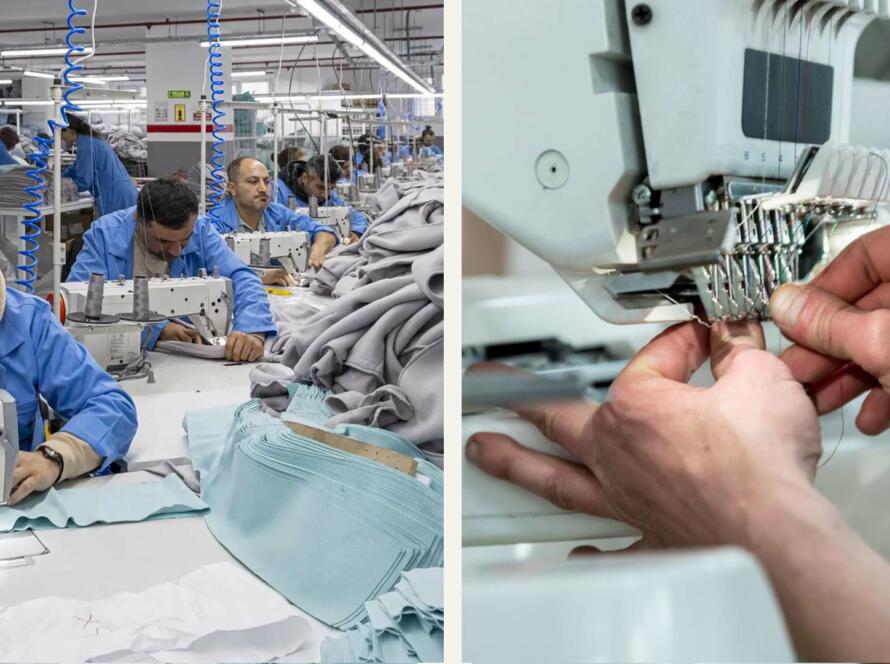


Turkey is an established sourcing destination for UK fashion brands, offering access to experienced garment manufacturers, diverse fabric suppliers, and production capabilities for everything from basic T-shirts to premium streetwear collections.
However, manufacturing your garments is only part of the process. Before your finished products reach a UK warehouse, they must pass through export procedures in Turkey and import customs clearance in the United Kingdom.
If you plan to import clothing from Turkey to UK, understanding customs duties, preferential origin rules, import VAT, and shipping documentation can help you avoid unexpected costs and delivery delays.
The UK–Turkey Free Trade Agreement offers potential tariff advantages, but these benefits are not automatic. Your garments must meet the relevant origin requirements, and the correct documentation must accompany the shipment.
This guide explains the process from production in Istanbul to customs clearance and delivery in the UK.
How Does Importing Clothing from Turkey to the UK Work?
Importing clothing from Turkey to the UK involves arranging international transport, completing customs declarations, checking tariff eligibility, and accounting for applicable import duties and VAT.
For most commercial clothing shipments, the process follows six steps:
- Complete production and quality inspection with your Turkish clothing manufacturer.
- Confirm the commodity codes and origin status of the finished garments.
- Prepare shipping documents, including the commercial invoice, packing list, and applicable origin declaration.
- Arrange transport by road, sea, or air under agreed Incoterms.
- Submit the UK import declaration and account for applicable duties and VAT.
- Release and deliver the garments to your warehouse or fulfilment partner.
Although a customs broker can manage the formalities, the UK importer remains responsible for ensuring that the information supplied is accurate.
Understanding the UK–Turkey Free Trade Agreement
The United Kingdom and Turkey have operated under a bilateral Free Trade Agreement (FTA) since January 2021, following the UK’s departure from the European Union.
The agreement provides preferential tariff treatment for qualifying products, including clothing, subject to the relevant rules of origin.
Can You Import Clothing from Turkey Duty-Free?
Yes, qualifying clothing may enter the UK with 0% customs duty under the UK–Turkey Free Trade Agreement. However, the garments must satisfy the agreement’s origin rules, and the importer must hold valid supporting evidence.
Three conditions matter:
- The product must qualify for preferential treatment under the agreement.
- The manufacturing process must satisfy the applicable product-specific rule of origin.
- The importer must correctly claim the preference using an acceptable origin declaration.
Simply purchasing garments from a Turkish supplier does not automatically make them eligible for duty-free treatment.
If preferential origin cannot be established, the UK Global Tariff or another applicable tariff measure determines the duty payable.
Rules of Origin: What Makes Clothing Turkish-Origin?
Rules of origin determine whether a product qualifies as originating in Turkey for preferential customs treatment.
For apparel manufacturers, origin is particularly important because fabric, yarn, trims, and accessories may come from several countries.
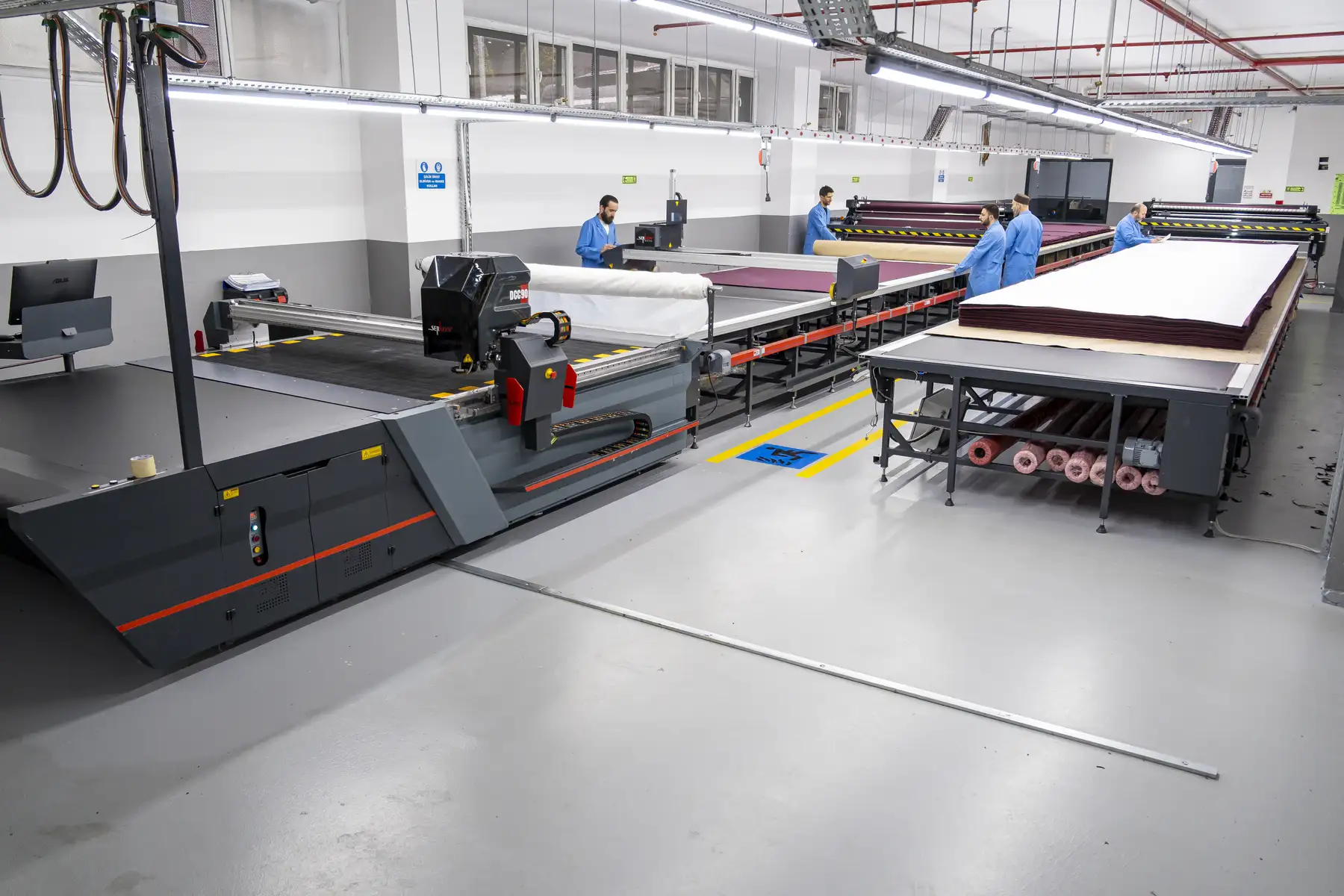
Manufacturing Location Is Not Enough
Consider two clothing production scenarios.
Scenario A:
A Turkish manufacturer sources qualifying materials and carries out the necessary production processes in Istanbul. The finished garments satisfy the applicable product-specific origin rule.
These products may qualify for preferential Turkish origin.
Scenario B:
A manufacturer imports finished fabric from another country and cuts and sews it into hoodies in Turkey.
The garments are manufactured in Turkey, but whether they qualify for preferential origin depends on the precise tariff classification, applicable processing rule, and any permitted cumulation.
This distinction matters because some textile origin rules require specific manufacturing stages.
Can Turkish Manufacturers Use Imported Fabrics?
Yes. Turkish clothing manufacturers can use imported fabrics, but doing so may affect preferential origin eligibility.
The UK–Turkey agreement includes provisions for qualifying materials and permitted cumulation, including certain use of EU materials or processing where the relevant conditions are satisfied.
Before production begins, fashion brands should ask their manufacturer to verify:
- Where the main fabric and yarn originate.
- Which manufacturing operations take place in Turkey.
- Whether the finished garment meets its product-specific origin rule.
- What supplier and production records support the origin claim.
Keeping reliable records of materials, suppliers, and manufacturing processes is an essential part of textile traceability.
Origin verification should happen before shipment, ideally during fabric sourcing and production planning.
What Proof of Origin Is Required?
To claim preferential customs duty, the UK importer generally needs an origin declaration prepared by the Turkish exporter.
The declaration can be included on a commercial invoice or another qualifying commercial document that adequately identifies the goods.
The prescribed wording and any applicable exporter authorisation details must follow the agreement’s requirements.
For imports into the UK, an origin declaration is generally valid for 24 months from the date it is issued.
Is an A.TR Certificate Required?
No. An A.TR movement certificate is associated with the EU–Turkey Customs Union and demonstrates that goods are in free circulation within that arrangement.
It is not the required proof for claiming preferential treatment under the UK–Turkey Free Trade Agreement.
Similarly, an EUR.1 movement certificate should not be substituted for the origin declaration required under the UK–Turkey agreement.
This is one of the most important differences between importing Turkish clothing into the EU and importing it into the UK.
Required Documents for Clothing Imports
A properly prepared shipment normally includes several commercial and transport documents.
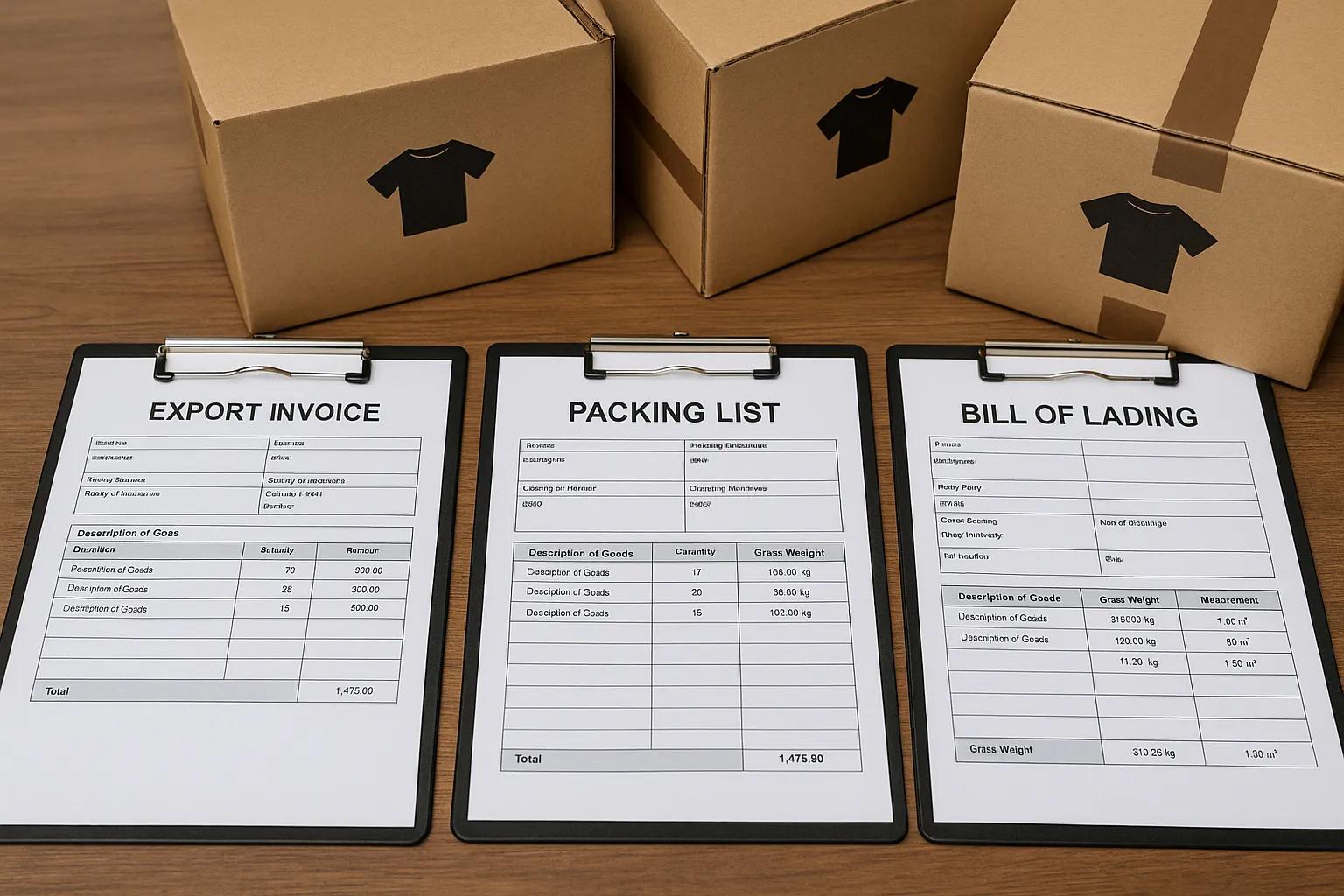
1. Commercial Invoice
The commercial invoice identifies the transaction and provides information needed for customs valuation.
It should include:
- Exporter and importer details.
- Product descriptions and quantities.
- Unit prices, total values, and currency.
- Relevant commodity codes.
- Country of origin information.
- Agreed delivery terms (Incoterms).
A vague description such as “clothing” can create problems. More specific descriptions, such as “men’s knitted cotton T-shirts”, help customs agents classify the products correctly.
2. Packing List
The packing list explains how the garments are packaged.
It normally includes carton quantities, item descriptions, sizes, weights, and package dimensions.
For collections containing multiple styles and colours, a detailed carton breakdown simplifies warehouse receiving and customs inspections.
3. Transport Document
The required transport document depends on the shipping method:
- CMR consignment note: Road freight.
- Bill of Lading: Sea freight.
- Air Waybill: Air freight.
4. Origin Declaration
Where preferential treatment is claimed, the exporter must provide the required origin declaration supported by evidence of the garments’ originating status.
Additional documents may be necessary depending on the product, transport route, customs procedure, or specific regulatory requirements.
UK Customs Requirements: EORI, Commodity Codes and Declarations
Do You Need an EORI Number?
Yes. A business importing commercial goods into England, Scotland, or Wales generally needs an EORI number beginning with GB.
An EORI number identifies the business for customs purposes.
Importing into Northern Ireland may involve different requirements, including an XI EORI number in relevant circumstances.
Choosing the Correct Commodity Code
Every imported product requires an appropriate commodity classification.
Clothing typically falls within two chapters of the Harmonized System:
- Chapter 61: Knitted or crocheted garments.
- Chapter 62: Garments that are not knitted or crocheted, including many woven clothing products.
Understanding the differences between knit vs woven fabrics can help fashion brands describe garments more accurately when preparing customs documentation.
A knitted cotton hoodie and a woven polyester jacket may have different classifications and tariff treatments.
Use the official UK Trade Tariff to confirm the full commodity code, applicable duty rate, and any relevant restrictions.
Submitting the Import Declaration
UK import declarations are generally handled through HMRC’s Customs Declaration Service (CDS).
Most fashion brands appoint a customs agent or freight forwarder to submit declarations.
The declaration includes information such as the commodity code, customs value, exporter and importer details, and any claimed tariff preference.
How Much Are UK Import Duties and VAT?
The final import cost depends on the product classification, preferential origin, customs value, and applicable VAT treatment.
Customs duties and import VAT should be calculated separately from private label production costs in Turkey to build a realistic purchasing budget.
Customs Duty
Customs duty is commonly calculated as a percentage of the customs value.
For qualifying Turkish-origin garments, preferential treatment may reduce the duty to zero.
For garments that do not qualify, the applicable standard tariff must be checked against the current UK Trade Tariff.
Import VAT
Most adult clothing imported into the UK is subject to 20% VAT, while qualifying children’s clothing may be zero-rated.
Import VAT is generally calculated using the customs value, applicable customs duties, and relevant additional expenses, including eligible transport and handling costs.
VAT-registered businesses may be able to use Postponed VAT Accounting (PVA), allowing import VAT to be accounted for through their VAT return rather than paid immediately at importation.
Practical Cost Example
Imagine a UK streetwear brand imports 1,000 hoodies from Istanbul.
The customs value is £20,000.
If the garments qualify for a 0% preferential duty rate, no ordinary customs duty is payable under that preference.
If they do not qualify and the applicable standard duty is hypothetically 12%, the customs duty would be £2,400.
The example illustrates why verifying preferential origin before production can materially affect landed costs. The 12% figure is illustrative; actual rates must be checked by commodity code.
Import VAT and other clearance or transport charges must be calculated separately.
Shipping Clothing from Turkey to the UK
The best shipping method depends on shipment size, delivery requirements, and budget.

Road Freight
Road transport is a practical option for many clothing shipments from Istanbul to the UK.
It accommodates cartons and palletised goods, with full-truckload and groupage options available.
Road shipments often transit European countries, making correct transit procedures and transport documentation important.
Sea Freight
Sea freight can be suitable for larger clothing shipments where transport cost is more important than speed.
Goods may be shipped in full containers or consolidated with other cargo.
Brands should allow for port handling, customs clearance, and onward delivery.
Air Freight
Air freight is generally the fastest option but usually carries higher transport costs.
It can be appropriate for urgent samples, small replenishment orders, or time-sensitive collection launches.
Incoterms: Who Handles Customs and Delivery?
Incoterms determine how transport responsibilities, costs, and risks are allocated between buyer and seller.
For example:
- EXW (Ex Works): The buyer assumes extensive responsibility for collection and onward transport, including export arrangements.
- FCA (Free Carrier): The seller delivers to an agreed carrier or location and handles export clearance.
- DAP (Delivered at Place): The seller arranges transport to an agreed destination, while the buyer generally handles import clearance and applicable import charges.
For brands buying on EXW terms, it is especially important to clarify how Turkish export formalities will be handled.
The agreed Incoterm should appear consistently in the commercial contract and invoice.
UK Clothing Labelling and Product Compliance
Customs clearance does not automatically mean garments are ready for retail.
UK fashion brands must also consider textile labelling and product safety requirements.
For garments sold in Great Britain, relevant obligations include accurate textile fibre composition labelling and compliance with applicable product safety legislation.
Brands selling in both markets should also review EU textile labelling requirements, while checking UK-specific obligations separately.
Brands should review labels, care instructions, product traceability, and any product-specific testing requirements before approving bulk production.
Northern Ireland follows certain different product safety rules, so brands selling across the entire UK should review both markets.
Common Customs Mistakes That Delay Clothing Shipments
Many avoidable import problems begin before the garments leave the factory.
1. Assuming Turkish manufacture guarantees preferential origin
Confirm the specific origin rule and supporting evidence before claiming reduced duty.
2. Using incorrect commodity codes
Provide accurate fabric compositions, garment constructions, and product descriptions.
3. Missing origin declarations
Check the required wording and exporter details before dispatch.
4. Inconsistent paperwork
Invoice quantities, carton counts, values, and transport documents should agree.
5. Unclear shipping responsibilities
Agree on Incoterms, customs agents, export arrangements, and import charges in advance.
6. Ignoring UK labelling requirements
Approve fibre-content and other required product information during sampling rather than after delivery.
A simple pre-shipment documentation review can prevent many avoidable delays.
Why Istanbul Is a Practical Sourcing Location for UK Fashion Brands
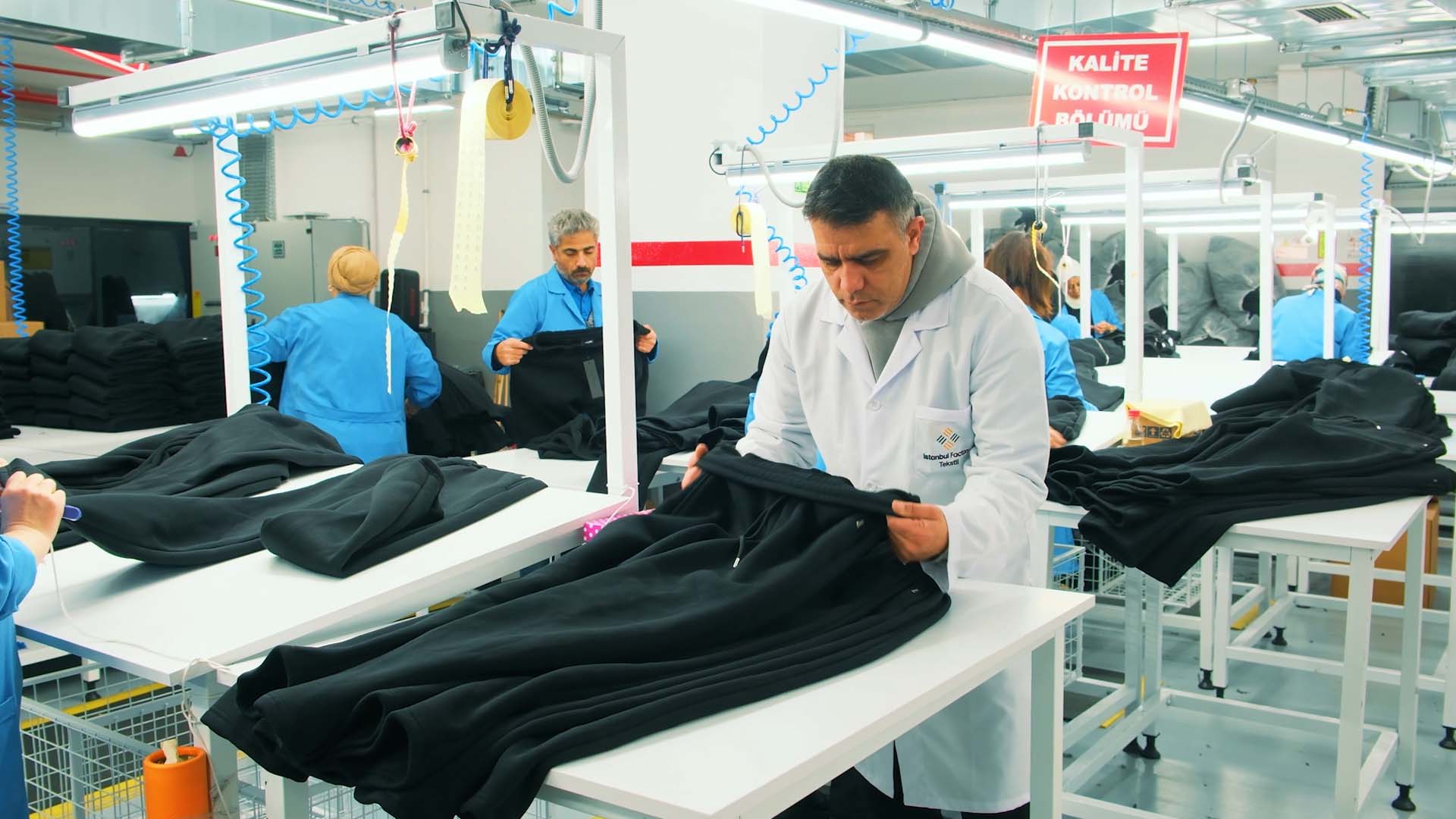
Istanbul combines garment production expertise with access to textile suppliers, decoration services, sampling facilities, and international logistics networks.
A closer look at Istanbul’s textile manufacturing ecosystem shows how fabric sourcing, garment production, finishing, and export preparation can be coordinated.
For UK brands producing hoodies, T-shirts, sweatpants, or coordinated collections, working with a manufacturing partner in Istanbul can simplify communication across different stages of production.
The advantage is particularly relevant when a collection requires fabric sourcing, sampling, printing, embroidery, and quality control before export.
However, efficient sourcing depends on more than production quality. Documentation accuracy and early origin verification should form part of the manufacturing plan.
Manufacture Your Next Collection with Istanbul Factory
At Istanbul Factory, we work with fashion startups, streetwear brands, and established labels seeking reliable clothing manufacturing in Turkey.
Our end-to-end services cover fabric sourcing, garment development, sampling, custom clothing production, print and embroidery, and quality control.
For brands looking to coordinate the entire process with one manufacturing partner, our guide to full package clothing manufacturing explains how these stages work together.
For UK brands, planning a collection with manufacturing specifications, realistic production timelines, and clear shipping responsibilities helps create a more predictable purchasing process.
Our team can coordinate production-related information and documentation with the relevant parties, while customs brokers and import specialists handle customs advice and declarations.
Planning to manufacture clothing in Turkey for the UK market?
Contact Istanbul Factory to discuss your collection, production requirements, and the information needed to prepare for international shipping.
Frequently Asked Questions
Can I import clothing from Turkey to the UK without paying customs duty?
Yes, certain clothing products can qualify for 0% preferential customs duty under the UK–Turkey Free Trade Agreement. The garments must satisfy the applicable rules of origin, and the importer must hold valid proof to claim the preference.
Do I need an A.TR certificate when importing clothing from Turkey to the UK?
No. An A.TR certificate is used in the EU–Turkey Customs Union and is not the required proof of preferential origin under the UK–Turkey Free Trade Agreement. The applicable proof is generally an exporter-issued origin declaration.
What documents are needed to import clothing from Turkey?
Commercial imports normally require a commercial invoice, packing list, transport document, and customs declaration. A valid origin declaration is also needed when claiming preferential tariff treatment. Additional documents may be required for particular products or procedures.
Is UK VAT charged on clothing imported from Turkey?
Most adult clothing is subject to 20% UK import VAT, even when preferential customs duty is zero. Qualifying children’s clothing may be zero-rated. Eligible VAT-registered businesses may use postponed VAT accounting.
Do UK clothing brands need an EORI number?
Yes. Businesses importing commercial clothing into Great Britain generally need a GB EORI number. Different EORI requirements may apply to imports into Northern Ireland.
Does clothing manufactured in Turkey automatically qualify as Turkish-origin?
No. Preferential origin depends on the applicable product-specific rules, manufacturing processes, material origins, and permitted cumulation. Clothing assembled in Turkey from imported materials does not automatically qualify for preferential treatment.