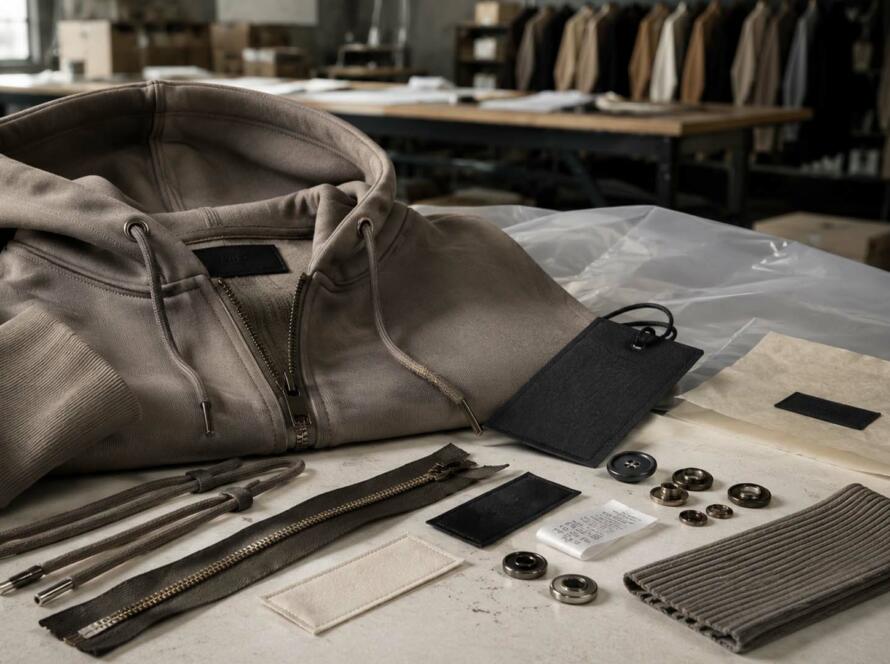


Manufacturing in Turkey connects European fashion brands with skilled garment makers, fabric suppliers and transport routes into the EU. Yet finished garments still need accurate paperwork, customs clearance and a delivery plan before reaching your warehouse.
If you plan to import clothing from Turkey to EU markets, first establish who handles each document. One easily misunderstood detail is the A.TR movement certificate: it can eliminate customs duty on qualifying shipments but does not prove where a garment was made.
Here is how to plan the journey, from approving samples in Istanbul to receiving finished stock in Europe.
How do you import clothing from Turkey to the EU?
Quick answer: Agree on the production specifications and delivery terms, confirm the EU importer’s EORI number, classify the garments, prepare the invoice and packing list, arrange transport and any applicable A.TR certificate, then submit an EU import declaration. After customs release and settlement of applicable charges, the shipment can be delivered to your warehouse.
1. Confirm the order before production
Your purchase order should specify fabrics, size ranges, colours, quantities, branding, packaging and price. Approve final samples, label artwork and quality requirements before bulk cutting.
Confirm which entity will invoice you and whether the garments qualify for an A.TR.
2. Agree on Incoterms and importer responsibilities
Incoterms allocate delivery responsibilities. Under FCA Istanbul, the seller hands goods to the carrier at the agreed point. Under DAP, the seller arranges delivery while the buyer generally handles EU import clearance and charges.
“Shipping included” may exclude VAT and brokerage. With DDP, confirm importer eligibility and VAT handling. Specify the Incoterm and named place in writing.
3. Obtain an EORI number and classify the garments
The EU business handling customs operations normally needs an Economic Operators Registration and Identification (EORI) number. Apply before dispatch.
Each garment needs an appropriate commodity code. Knitted T-shirts and woven shirts may fall under different headings; give your broker precise fabric and construction details. The European Commission confirms that EORI registration is required for relevant EU customs operations.
4. Check the finished goods and shipment details
Use a documented textile quality control process to inspect garments against the approved sample. Reconcile packed quantities by style, size and colour with carton labels and the packing list.
5. Prepare export and shipping paperwork
The Turkish exporter and forwarder coordinate export formalities and transport documents. If applicable, arrange the A.TR and send the document pack to your EU broker before arrival.
6. Complete EU customs clearance
The importer or customs representative declares the classification, customs value, origin and supporting documents. Customs may inspect the shipment. After release for free circulation, the goods can move onward within the EU.
7. Receive, reconcile and retain records
Compare receipts with the packing list, record damage and retain invoices, transport documents, declarations and A.TR records for accounting and customs checks.
Which documents are needed to import clothing from Turkey?
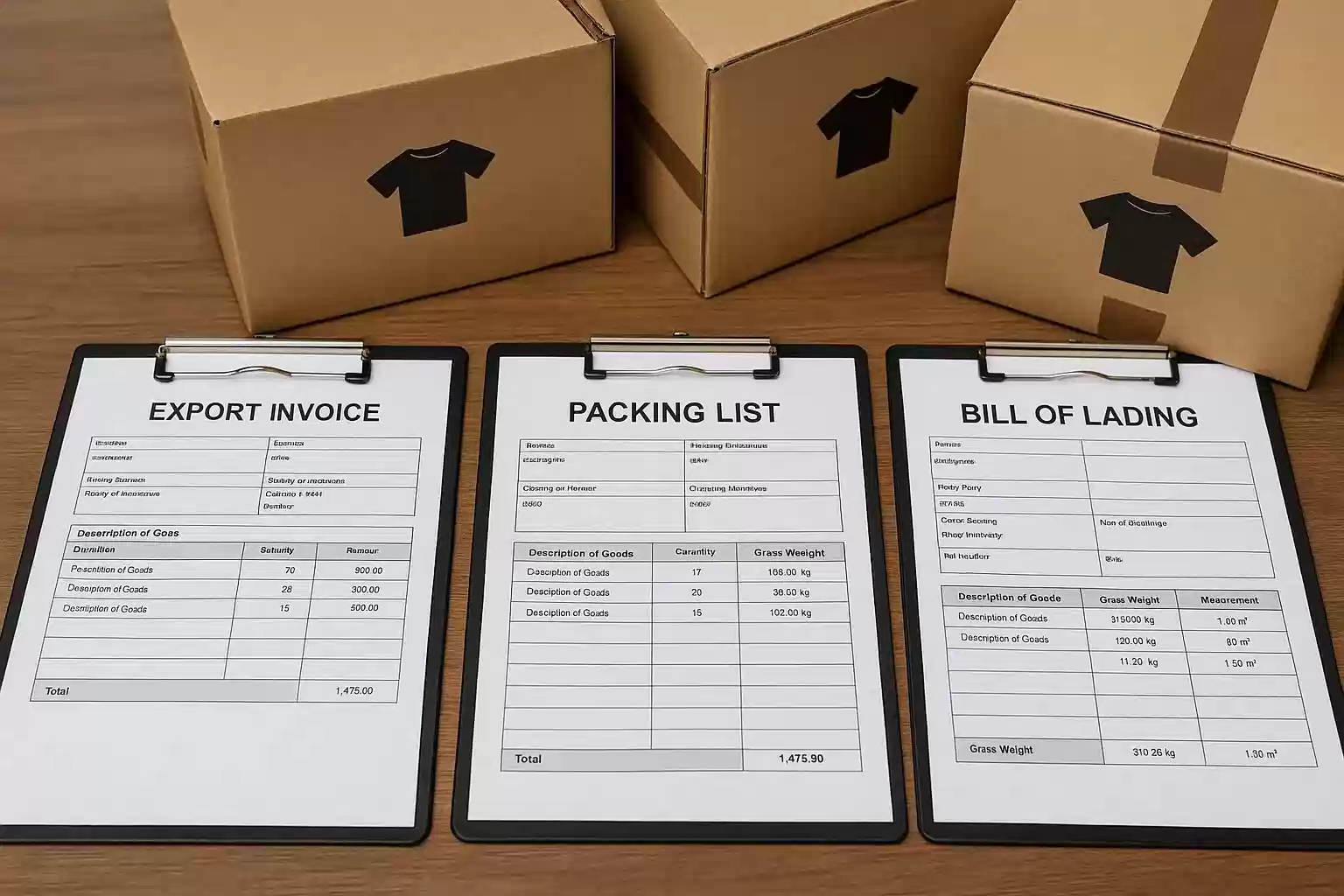
For most commercial clothing shipments, prepare the following document set:
-
Commercial invoice: Seller and buyer details, invoice number and date, garment descriptions, quantities, unit and total prices, currency, Incoterm and relevant country-of-origin information.
-
Packing list: Carton count, SKU and size breakdown, net and gross weights, packaging details and marks that correspond to the physical boxes.
-
Transport document: A CMR consignment note for international road freight, bill of lading for sea freight or air waybill for air cargo, as appropriate.
-
A.TR movement certificate: Where applicable, evidence that goods qualify for the EU–Türkiye customs union’s free-circulation treatment.
-
Customs declarations: Turkish export formalities and the EU import declaration, generally completed by the respective parties or their representatives.
-
Supporting records: Freight and insurance information, plus any origin, product-compliance or other documents required for the particular goods.
If your invoice lists 1,200 hoodies but your packing list totals 1,180, customs may ask questions. Reconcile both against the packed stock.
What is an A.TR certificate for clothing imports?
The EU and Türkiye operate a customs union covering most industrial goods, including ordinary clothing. An A.TR movement certificate demonstrates that covered goods have the required free-circulation status. When accepted for an eligible shipment, it generally allows entry into the EU without the normal customs duty under that customs-union arrangement.
It does not remove VAT, customs formalities, product rules or applicable trade restrictions.
EU authorities have accepted electronically issued Turkish A.TR certificates bearing QR codes since July 2024.

A.TR versus a certificate of Turkish origin
These documents answer different questions:
| Document | What it establishes | Why it matters |
|---|---|---|
| A.TR movement certificate | Qualifying goods are in free circulation within the EU–Türkiye customs union | Supports customs-union duty treatment for covered products |
| Proof of origin | The economic nationality of the goods under applicable origin rules | Supports the origin declared to customs and any origin-specific requirements |
Imported fabric may be cut and sewn in Türkiye, but the finished garment’s origin still depends on applicable origin rules. A.TR eligibility separately depends on customs status. An A.TR alone cannot justify a “Made in Turkey” claim.
EU import declarations require an origin determination, but a separate non-preferential certificate of origin is not automatically required for every clothing shipment. Ask your broker when additional evidence is necessary.
HS codes, customs duties and import VAT
How are clothing HS codes chosen?
The Harmonized System (HS) uses six-digit headings; the EU extends these through eight-digit Combined Nomenclature (CN) codes and TARIC measures. Garment type, construction and fibres affect classification.
Do not use one code for an entire collection without review. Consult the Commission’s tariff classification guidance and your broker.

Will you pay import duty or VAT?
For qualifying industrial clothing with a valid A.TR, customs duty is generally zero under the EU–Türkiye customs union. Without that treatment, the applicable tariff and other measures must be checked against the specific product and origin. Do not rely on a generic “clothing duty rate.”
Import VAT is a separate charge. It is determined under the rules of the EU country of importation and normally uses the customs value plus applicable duties and certain additional costs. A registered business’s ability to deduct or defer that VAT depends on national rules and its tax position.
Consider a simplified example: a Berlin streetwear brand purchases €20,000 of hoodies and pays €1,000 for freight and insurance included in customs value. If the shipment qualifies for duty-free treatment with an A.TR, ordinary customs duty may be €0. Import VAT can still be payable or accounted for; its rate and tax base must be confirmed for the actual import.
Also budget for brokerage, storage and potential inspections.
Check EU clothing compliance before shipment
EU textile rules generally require fibre-composition labels using permitted fibre names and the appropriate market language. Verify that labels match actual fabric specifications.
Importers must consider the General Product Safety Regulation, traceability and chemical restrictions. Children’s clothing, trims and prints may need extra checks. Manufacturer test records help, but importers retain legal responsibilities.
Common mistakes that delay clothing imports
-
Requesting A.TR too late. Discuss eligibility before production and agree who obtains the certificate.
-
Vague invoice descriptions. “Fashion goods” is not a substitute for a clear description such as “men’s knitted cotton T-shirts.”
-
Mismatched quantities. Reconcile invoice lines, packing lists, SKU totals and carton labels after the final inspection.
-
Using the wrong commodity code. Distinguish knitted from woven products and verify classifications style by style.
-
Forgetting VAT and local charges. Include them in cash-flow planning even where customs duty is zero.
-
Unclear delivery terms. Specify who books freight, appoints the broker and pays import charges.
Send a pre-shipment document pack to your forwarder and EU broker before goods leave Istanbul.
Why work with a manufacturing partner in Istanbul?
Istanbul lets brands coordinate fabric sourcing, sampling, private label trims, printing, embroidery, bulk production and quality control within one programme. Road freight connections offer practical options for European delivery.
At Istanbul Factory, we support startups, streetwear labels and established brands with European quality expectations in mind. Clear specifications and early logistics coordination make import planning easier.
Plan your next collection with Istanbul Factory
Whether you are developing your first private label capsule or scaling an existing collection, the best time to discuss shipping documents is before production begins.
Contact Istanbul Factory to talk through your garments, fabric choices, sampling, manufacturing timeline and export-document coordination. We can help prepare the production side of your order while your customs broker confirms the requirements for your EU destination.
Frequently asked questions
Can I import clothing from Turkey to the EU without paying customs duty?
Often, yes. Ordinary clothing generally falls within the EU–Türkiye customs union. If the goods qualify and the required A.TR is accepted, normal customs duty is generally eliminated. Import VAT and other applicable charges can still arise.
Is an A.TR certificate the same as a certificate of origin?
No. An A.TR supports free-circulation status for covered trade between Türkiye and the EU. A certificate or other proof of origin concerns where goods originate under the relevant rules. The two should not be confused.
Do I need an EORI number to import clothing from Turkey?
An EU business acting in customs operations generally needs an EORI number. Apply through the relevant EU country’s customs authority before your shipment arrives. Your customs representative will need the appropriate importer and declaration details.
What documents should my Turkish clothing manufacturer provide?
Typically, the commercial invoice, detailed packing list and appropriate export-side information, with an A.TR where eligible. The freight provider supplies the relevant transport document. Agree responsibilities early and let your customs broker check the complete pack.
Does A.TR remove import VAT?
No. A.TR can support zero customs duty for qualifying goods, but it does not exempt the shipment from import VAT. VAT accounting and possible recovery depend on the country of importation and the importing business’s circumstances.
Can a US fashion brand import Turkish clothing into an EU warehouse?
Yes, but it must establish a workable EU import arrangement. EORI, importer-of-record eligibility, customs representation, VAT registration and delivery responsibilities should be reviewed with a broker and tax adviser before shipping.