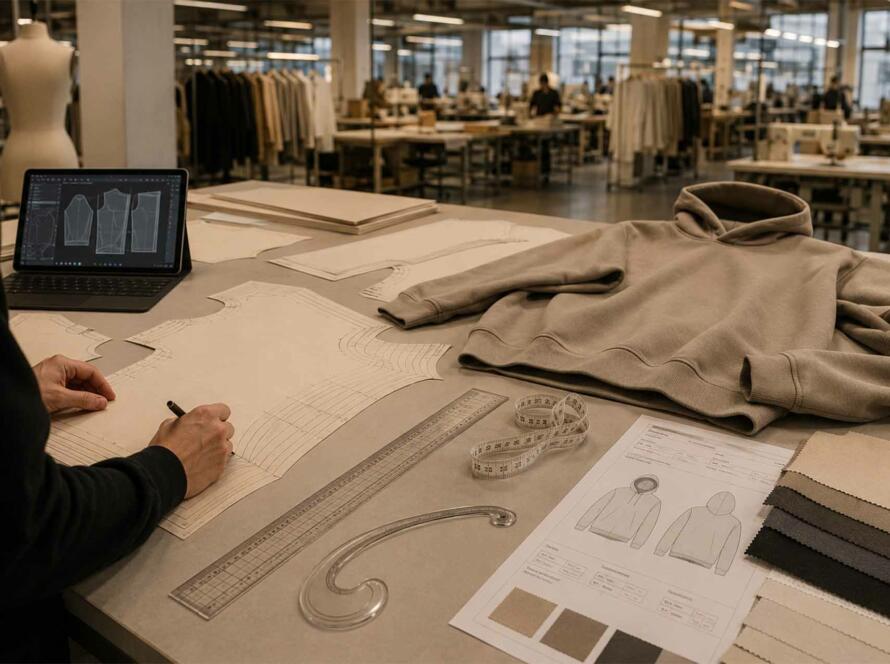


A clothing collection can look perfect on paper and still run into problems during production. Fabrics arrive later than expected, finished garments differ from approved samples, or a shipment becomes ready just as the brand’s launch deadline approaches.
These situations do not always indicate a bad manufacturer. Often, they reveal something more fundamental: the brand and its production partner never clearly agreed on what should happen when circumstances change.
A well-structured clothing manufacturing contract helps prevent those misunderstandings.
For fashion startups, streetwear labels, and established brands working with overseas manufacturers, written agreements establish expectations for product specifications, payments, production schedules, quality standards, and responsibilities.
The goal is not to complicate the relationship. It is to give both parties a reliable framework for working together.
This guide explains the essential terms to discuss before starting clothing production, with practical examples relevant to brands sourcing garments from Turkey.
What Is a Clothing Manufacturing Contract?
A clothing manufacturing contract is a written agreement between a fashion brand and a manufacturer that defines how garments will be produced, inspected, paid for, and delivered.
It establishes the commercial and technical responsibilities of both parties, including what happens if production is delayed or finished products do not meet the agreed specifications.
A manufacturing agreement typically addresses:
- Product specifications and approved samples
- Order quantities and pricing
- Deposits and payment milestones
- Production and delivery deadlines
- Quality standards and inspection procedures
- Defective goods and corrective actions
- Design ownership and confidentiality
- Shipping responsibilities and dispute resolution
The agreement may take the form of a detailed manufacturing contract, a signed purchase order (PO) with incorporated terms and conditions, or a master manufacturing agreement covering multiple orders.
For recurring production, a master agreement supported by individual purchase orders can provide consistency without requiring every commercial term to be renegotiated.
Why Written Manufacturing Agreements Matter
A quotation confirms what a manufacturer proposes to produce and at what price. It does not necessarily resolve what happens when production conditions change.
Consider a brand ordering 1,000 heavyweight hoodies.
The manufacturer quotes an attractive unit price and an estimated four-week production period. However, the quotation does not explain whether those four weeks begin after deposit payment, fabric arrival, or final sample approval.
If the brand expects delivery within four weeks of placing the order, while the manufacturer calculates production time from material approval, a dispute can arise before the first garment is finished.
A written agreement removes much of that uncertainty.
It also protects manufacturers from last-minute design changes, unclear approvals, and unexpected demands that were never included in the original quotation.
A strong manufacturing contract should protect the commercial interests of both parties while defining measurable production expectations.
Essential Terms to Include in a Clothing Manufacturing Contract
Before signing a production agreement, confirm that the following elements are documented.
| Contract element | What should be agreed |
|---|---|
| Product scope | Styles, quantities, sizes, colors, and technical specifications |
| Pricing | Unit prices, currency, inclusions, and additional charges |
| Payments | Deposit amount, milestones, and balance conditions |
| Samples | Approved reference samples and approval procedures |
| Quality | Defect classifications, tolerances, and inspection criteria |
| Schedule | Production start, milestones, and delivery commitments |
| Logistics | Delivery location, Incoterms, and shipping responsibilities |
| Intellectual property | Ownership and permitted use of designs and patterns |
| Disputes | Corrective actions, applicable law, and resolution procedures |
The purchase order should also identify the contracting legal entities, product references, and the exact version of any technical documents.
If a purchase order, quotation, and manufacturing agreement contain conflicting terms, the parties should specify which document takes priority.
Production Specifications and Approved Samples
The Tech Pack as a Contractual Reference
One of the most important attachments to a clothing manufacturing agreement is the technical specification package, commonly called a tech pack.
A complete tech pack can include:
- Fabric composition, weight, and construction
- Measurements and grading specifications
- Stitching and seam construction
- Print and embroidery placement
- Pantone or approved color references
- Labels, trims, and packaging requirements
- Measurement tolerances and testing requirements
For example, specifying a “premium cotton hoodie” leaves significant room for interpretation.
A more reliable specification would identify a 400 GSM French Terry fabric, agreed fiber composition, measurement tolerances, rib construction, and approved finishing.
The contract should reference the latest approved tech pack by version and date.
Why the Approved Sample Matters
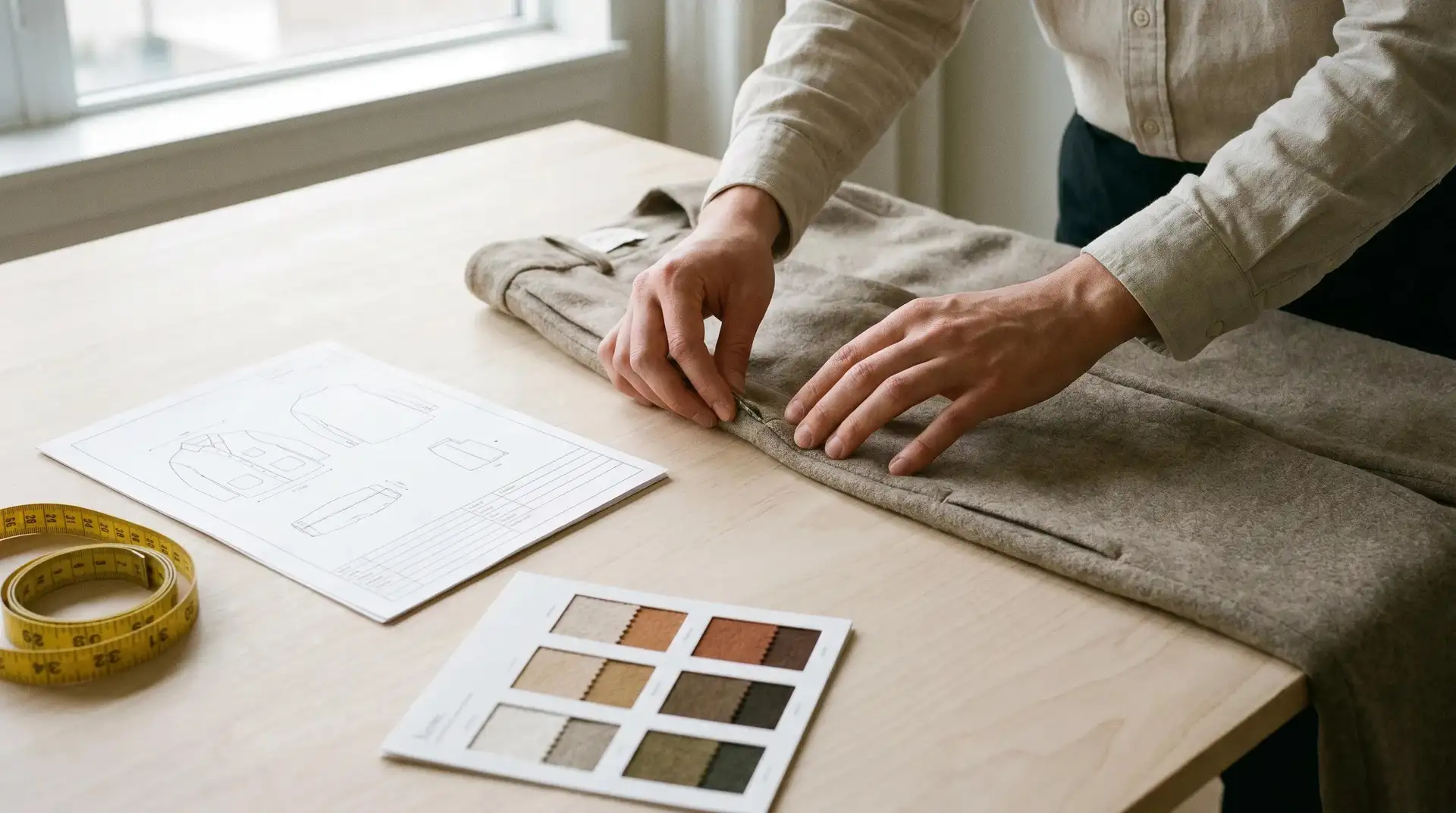
The approved pre-production sample establishes a physical reference for bulk manufacturing.
Before production begins, both parties should confirm:
- Which sample is the approved production reference.
- Who has authority to approve changes.
- Which variations are acceptable during bulk production.
- Whether material substitutions require written approval.
A signed sample approval record can be especially valuable when disputes concern garment fit, finishing, or visual appearance.
Practical insight: Store approved sample photographs, measurements, fabric references, and written comments together. An informal approval message without a clear sample version can create unnecessary uncertainty.
Payment Terms: Deposits, Milestones and Final Balances
Payment arrangements are among the most sensitive parts of international clothing production.
Manufacturers often need advance funding to purchase fabrics, trims, and other materials. Brands, meanwhile, want reasonable assurance that the goods will meet their requirements before releasing the remaining payment.
Common Payment Structures
Several arrangements are possible:
50% deposit / 50% balance
The brand pays an initial deposit after order confirmation, with the remaining balance due at an agreed milestone, commonly before shipment or collection.
Milestone-based payments
Payments are divided between contract confirmation, material procurement, production progress, and final completion.
Payment after inspection
The agreement links the final payment to an agreed inspection or acceptance milestone.
The appropriate structure depends on order value, material commitments, production complexity, and the relationship between the parties.
Before choosing payment milestones, brands should understand the cost of private label production in Turkey and the expenses associated with materials and manufacturing.
What Should Be Written into the Payment Clause?
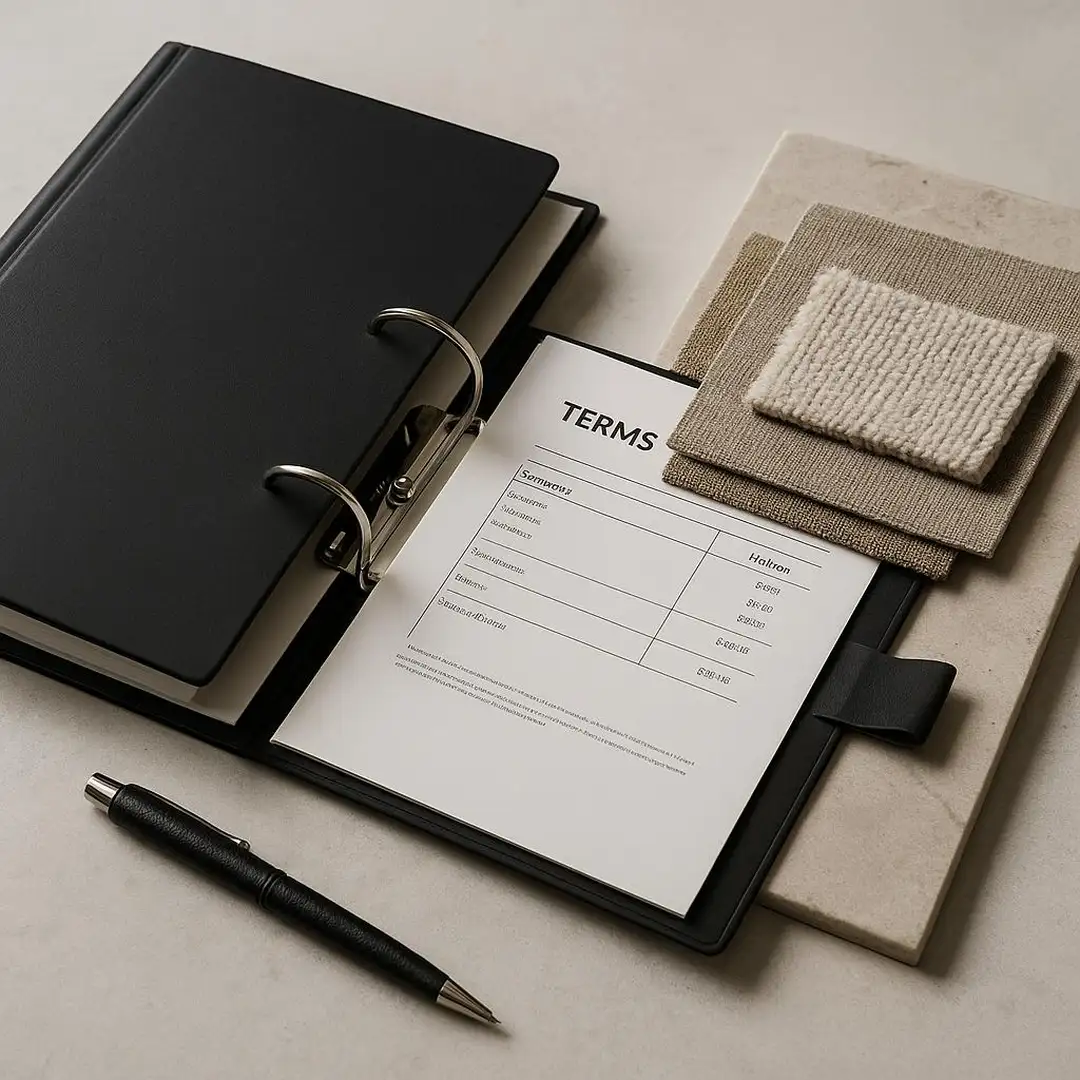
A well-defined payment provision should specify:
- Deposit percentage and due date
- Currency and approved payment method
- Events that trigger each payment
- Responsibility for bank charges
- Treatment of approved changes and additional costs
- Consequences of overdue payments
- Procedures for disputed amounts
For example, a contract might require a 50% deposit upon confirmation and the remaining 50% after successful pre-shipment inspection, before goods are released.
Importantly, the parties must agree on what counts as a successful inspection and how any rejection affects the final payment date.
Production Deadlines and Manufacturing Delays
A delivery deadline becomes meaningful only when the agreement explains how it is calculated.
Understanding how long clothing manufacturing takes helps brands establish realistic production deadlines before signing an agreement.
In clothing manufacturing, production depends on several connected stages: technical approval, fabric sourcing, sampling, cutting, sewing, finishing, inspection, and packing.
Define When the Production Clock Starts
A contract may state that the production period begins only after:
- The required deposit is received.
- The final tech pack is approved.
- The pre-production sample is confirmed.
- Required materials are available or approved.
These conditions should be agreed before the order is accepted.
It is also important to distinguish the factory completion date from the shipment date and the expected arrival date in the destination market.
What Happens If Production Is Delayed?
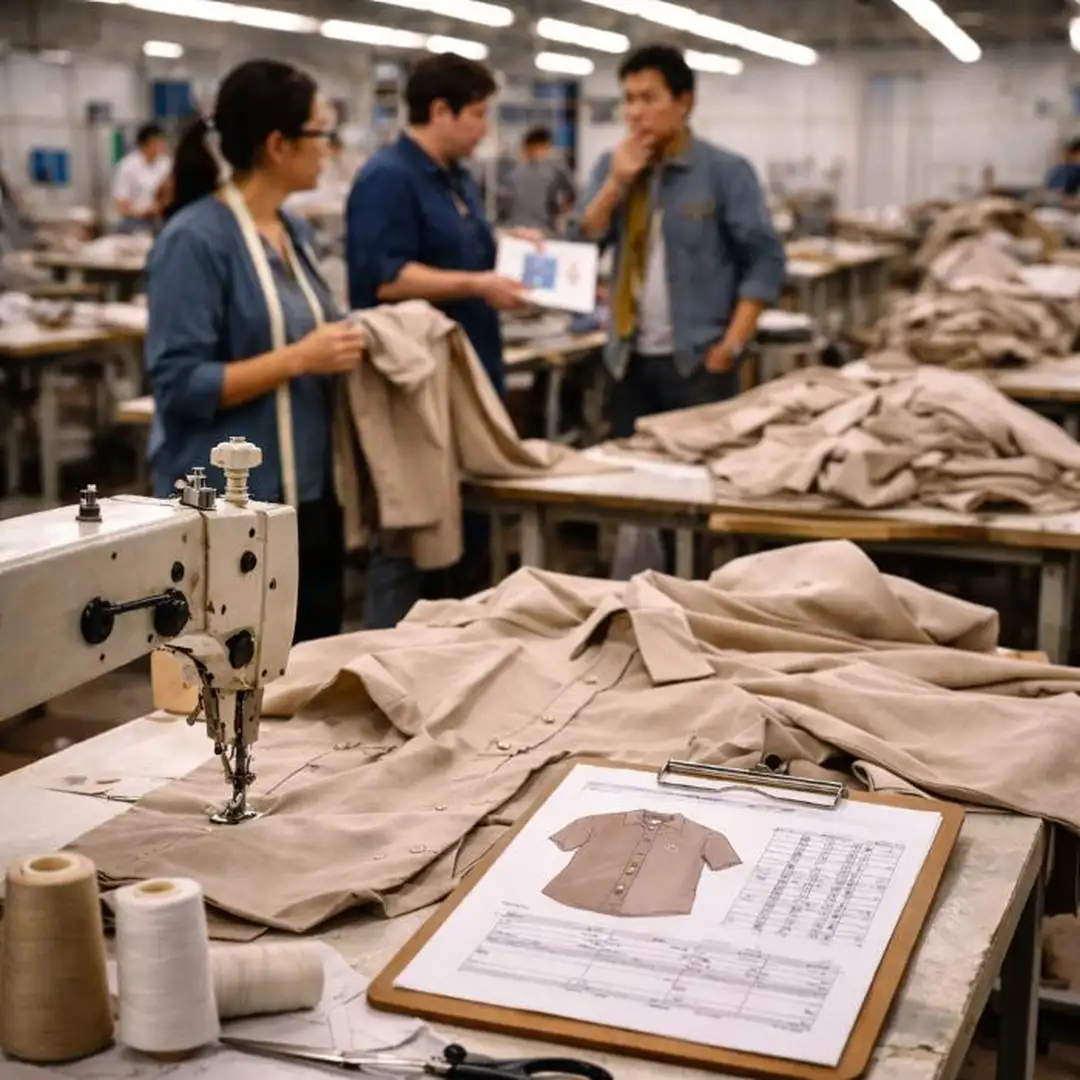
A balanced delay clause should address notification requirements, revised schedules, responsibility for the delay, and available remedies.
Possible contractual remedies include an agreed extension, expedited production at the responsible party’s expense, negotiated price adjustments, or termination for a sufficiently serious delay.
The contract should distinguish delays caused by the manufacturer from those resulting from buyer-requested changes, late approvals, or extraordinary events beyond reasonable control.
Any agreed delay charges should be clearly drafted and reviewed for enforceability under the applicable law.
Quality Control and Defective Garments
Quality disagreements become difficult when the contract uses descriptions such as “excellent quality” or “premium finishing” without measurable criteria.
A professional manufacturing agreement should establish how quality will be assessed.
Define Defect Categories
A practical inspection framework distinguishes among:
- Critical defects: Problems that create significant safety or regulatory concerns.
- Major defects: Issues that substantially affect garment appearance, function, or saleability.
- Minor defects: Smaller workmanship or appearance deviations within an agreed classification system.
Examples include incorrect garment measurements, damaged stitching, misplaced embroidery, inconsistent color, or missing care labels.
AQL Inspection and Acceptance Criteria
Many apparel buyers use Acceptance Quality Limit (AQL) sampling to evaluate production batches.
The current ISO 2859-1:2026 standard provides sampling schemes indexed by AQL for lot-by-lot inspection.
However, referencing AQL alone is insufficient.
The contract should specify the chosen sampling plan, inspection level, acceptance criteria, defect classification rules, and responsibility for inspection costs.
AQL sampling does not guarantee that every garment in an accepted shipment is defect-free. It provides a structured method for deciding whether a production lot passes or fails an agreed sampling inspection.
What Happens When an Inspection Fails?
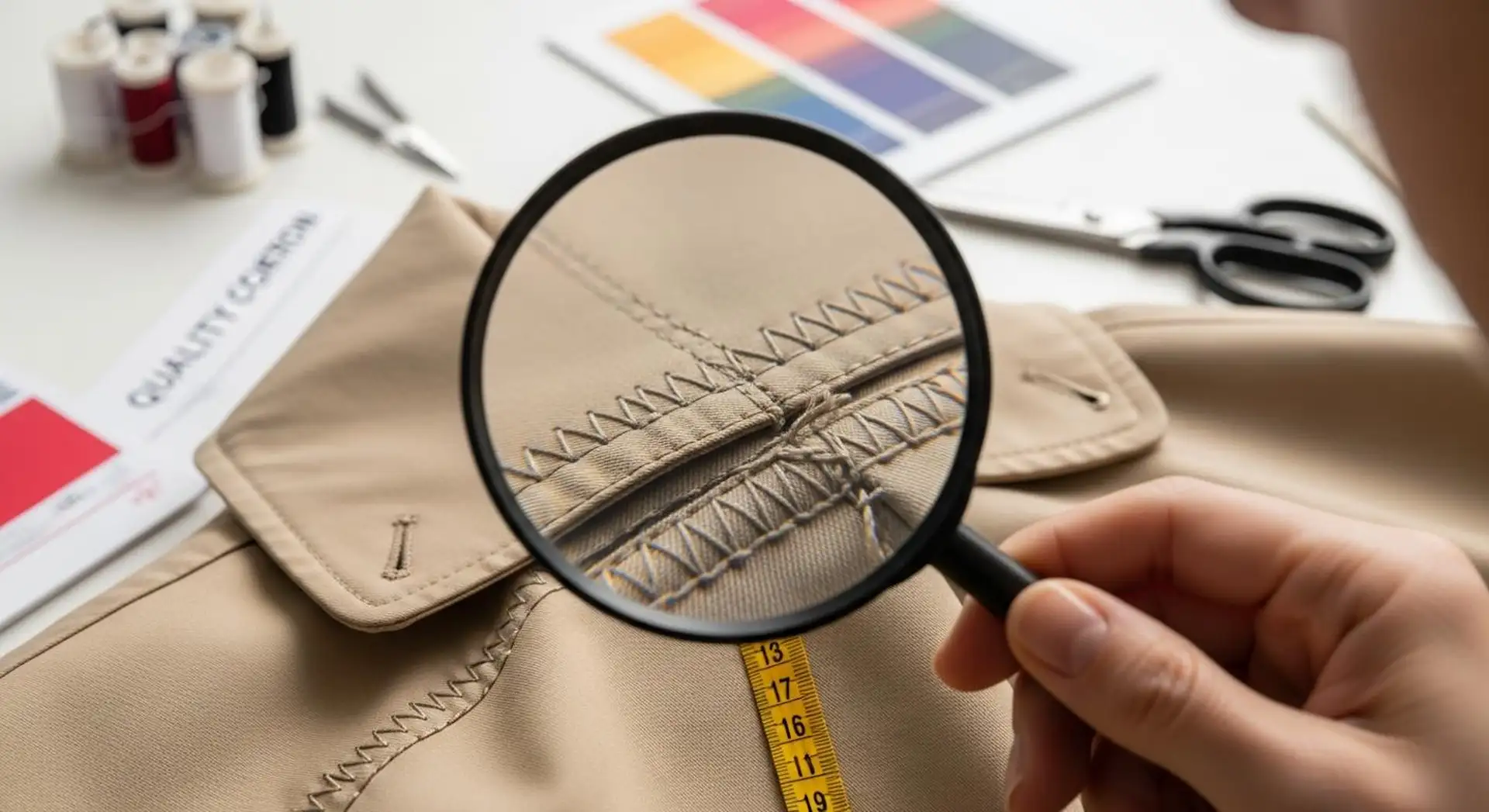
The agreement should establish a corrective-action procedure before bulk production begins.
Potential outcomes include:
- Repairing garments that can be corrected.
- Reworking or replacing nonconforming products.
- Conducting another inspection after corrective work.
- Negotiating an adjustment for specifically accepted deviations.
- Rejecting affected goods where the contract and applicable law permit.
The parties should define who pays for rework, repeat inspections, replacement production, and related shipping expenses.
Practical example: If embroidery placement falls outside the approved tolerance on a batch of sweatshirts, the agreed remedy might involve reworking the affected units and conducting a follow-up inspection before shipment.
The contract should also establish a reasonable claims process for defects discovered after delivery, including documentation requirements and treatment of latent defects.
Intellectual Property, Confidentiality and Pattern Ownership
For private label and custom clothing brands, intellectual property protection deserves particular attention.
A manufacturer may receive original artwork, garment designs, technical drawings, logos, sizing systems, and commercially sensitive product information.
The agreement should distinguish between intellectual property supplied by the brand and materials independently developed by the manufacturer.
Who Owns the Patterns and Designs?
Ownership should never be assumed simply because a brand paid for sampling or product development.
A manufacturing contract should clarify:
- Ownership of brand-supplied designs and artwork
- Ownership of newly developed patterns and grading files
- Whether development fees include ownership rights
- Permitted use of logos and technical information
- Restrictions on unauthorized production or disclosure
- Return or deletion of confidential files after termination
Where ownership transfers are intended, an appropriately drafted assignment provision may be necessary.
Confidentiality provisions can also restrict the use of unreleased designs in portfolios, marketing materials, or projects for other customers.
For emerging brands investing heavily in distinctive silhouettes and graphics, these provisions can be commercially significant.
Shipping Terms and International Responsibilities
Clothing manufacturing contracts involving European or US buyers should distinguish manufacturing obligations from transportation responsibilities.
Incoterms® 2020, published by the International Chamber of Commerce, define important delivery, cost, and transport-risk responsibilities.
Common arrangements include:
- EXW (Ex Works): The seller makes the goods available at the named location, while the buyer assumes substantial collection and export-related responsibilities.
- FCA (Free Carrier): The seller delivers goods to the nominated carrier or party at the agreed location, with export clearance generally handled by the seller.
- DAP (Delivered at Place): The seller arranges transport to the named destination, while import clearance and duties generally remain the buyer’s responsibility.
The contract should specify the exact named location and the applicable Incoterms version.
Importantly, Incoterms do not replace the manufacturing agreement or independently determine product quality, title transfer, or payment terms.
Resolving Manufacturing Disputes Professionally
Even well-managed production projects can experience disagreements.
The contract should establish a practical resolution process rather than leaving every problem for immediate legal action.
A reasonable procedure might begin with written notification identifying the disputed issue and supporting evidence.
Both parties can then review inspection reports, approved samples, production records, and relevant correspondence.
If the issue remains unresolved, the agreement may require escalation to senior management, followed by mediation, arbitration, or court proceedings as appropriate.
For international agreements, the parties should specify the governing law, dispute-resolution forum, language, and any agreed procedural requirements.
The United Nations Convention on Contracts for the International Sale of Goods (CISG) may apply to qualifying cross-border goods transactions, including some involving Turkish, European, and US businesses. Its application should be assessed rather than assumed.
Dispute provisions should be reviewed by qualified legal counsel familiar with the relevant jurisdictions.
Practical Example: A Streetwear Brand Ordering 500 Hoodies
Consider a European streetwear label preparing its first 500-piece hoodie production order in Istanbul.
The brand has approved the design, chosen its fabric, and agreed on a launch calendar.
Before bulk production, the purchase order and manufacturing agreement confirm:
- The approved hoodie sample and technical specifications
- The quantity, size breakdown, unit price, and payment schedule
- The production start conditions and factory completion date
- The agreed measurement tolerances and inspection criteria
- Responsibility for corrective work if products fail inspection
- The named delivery location and shipping arrangements
- Ownership of artwork, labels, and any custom-developed patterns
If a problem occurs, both parties can refer to documented requirements instead of relying on conflicting recollections.
That clarity protects the brand’s collection launch while giving the manufacturer a consistent production brief.
Why Manufacturing Agreements Matter When Producing in Turkey
Istanbul is an established apparel manufacturing center serving international fashion brands.
Its textile ecosystem includes fabric suppliers, garment production facilities, printing and embroidery specialists, and supporting logistics services.
For European buyers, Turkey’s geographic proximity can support efficient communication, sampling, and production coordination.
This geographical advantage is one reason nearshore clothing manufacturing in Türkiye is an important consideration for European fashion brands.
However, location alone does not guarantee successful manufacturing.
A reliable partnership still depends on approved specifications, realistic production schedules, documented quality expectations, and transparent commercial agreements.
Brands comparing manufacturers should evaluate how clearly each prospective partner communicates responsibilities before committing to bulk production.
Build a More Reliable Production Partnership with Istanbul Factory
At Istanbul Factory, we work with fashion startups, streetwear labels, and established brands looking for a structured clothing manufacturing partnership in Turkey.
Our end-to-end services support the journey from product development and fabric selection to sampling, custom clothing production, print and embroidery, and quality control.
We believe successful manufacturing begins with clear expectations.
Discussing specifications, approvals, production timelines, and commercial terms early helps brands plan their collections with greater confidence.
Planning your next clothing collection?
Contact Istanbul Factory to discuss your designs, production requirements, target quantities, and manufacturing expectations.
Request a Clothing Manufacturing Quote
Frequently Asked Questions About Clothing Manufacturing Contracts
1. Do I need a contract with a clothing manufacturer?
A written agreement is strongly recommended. It documents product specifications, pricing, payments, delivery schedules, quality standards, and responsibilities. Whether a particular agreement must be in writing depends on the applicable law and circumstances, but written terms provide valuable evidence when disagreements occur.
2. What payment terms are common in clothing manufacturing?
An initial deposit followed by a balance payment is common, with 50/50 arrangements being one possible structure. Other orders use milestone payments or inspection-linked balances. The final arrangement should be negotiated and recorded before production begins.
3. What happens if a clothing manufacturer delivers defective products?
The outcome depends on the manufacturing agreement and applicable law. Possible remedies include repair, replacement, reinspection, negotiated price adjustments, or rejection of nonconforming goods. Clear inspection criteria and claims procedures make resolution easier.
4. Who owns clothing designs and patterns created during manufacturing?
Ownership depends on existing rights, the agreement, and applicable intellectual property law. Brands should expressly document ownership of supplied artwork, newly developed patterns, grading files, and other custom materials rather than assuming payment automatically transfers every right.
5. Can a clothing brand cancel an order if production is delayed?
Cancellation rights depend on the contract, the seriousness and cause of the delay, and applicable law. Agreements should define notice procedures, opportunities to correct delays, and circumstances permitting termination.
6. Is a purchase order enough for clothing manufacturing?
A purchase order may form part of a binding agreement when accepted, but a basic PO may omit important terms. Brands can use a master manufacturing agreement alongside individual purchase orders to establish consistent rules for quality, intellectual property, payments, and disputes.